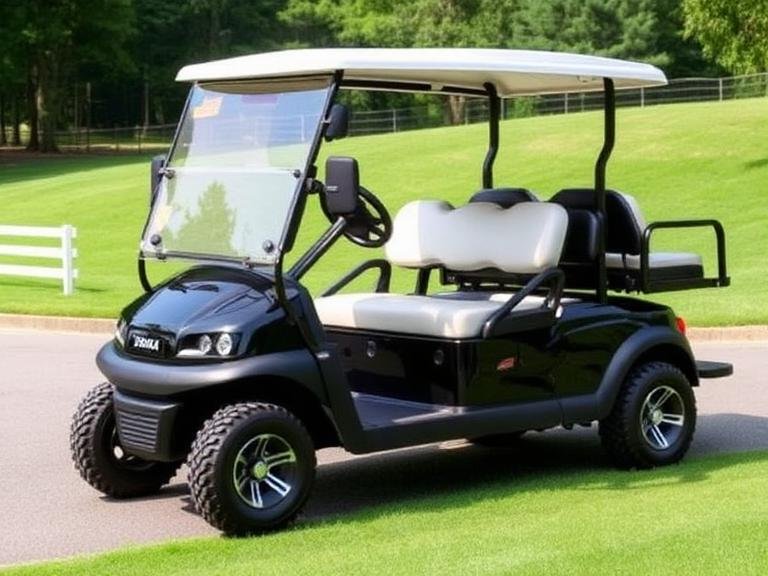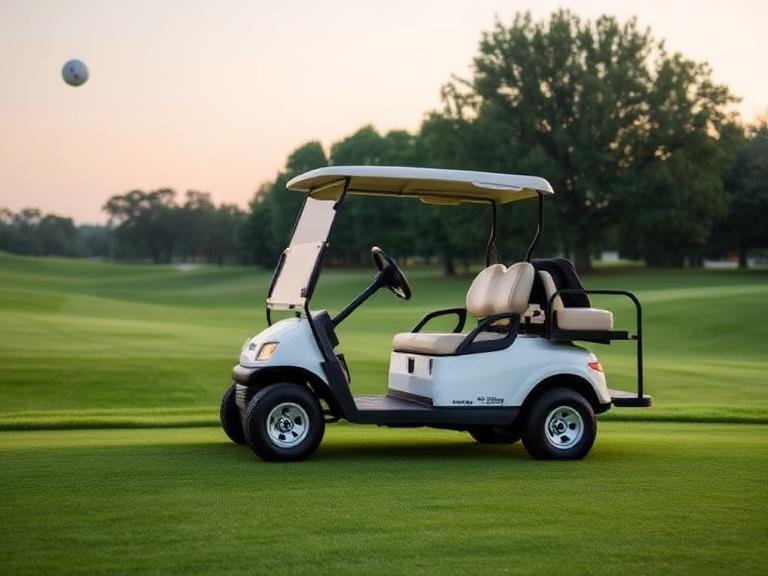
Every resort general manager, university facilities director, private security supervisor, and industrial plant operator eventually realizes that off-the-shelf recreational golf carts fail when subjected to real-world commercial duty cycles. Buying a standard two-person golf course cart and expecting it to haul heavy industrial maintenance equipment, transport high-profile VIP resort guests, or patrol miles of campus perimeter twenty-four hours a day leads directly to premature suspension collapse, fried DC motor controllers, and constant battery downtime. A recreational cart is engineered for a relaxed eighteen holes on smooth fairway turf; a commercial enterprise requires an engineered low-speed utility vehicle designed around specific payload capacities, duty schedules, passenger ergonomics, and legal safety standards. Learning how to properly customize an electric golf cart transforms a fragile convenience vehicle into a reliable commercial workhorse that lowers operating costs, boosts staff productivity, and reinforces your corporate brand image. As industrial vehicle engineers who design chassis frames, calculate battery watt-hour requirements, and build custom fleet vehicles daily, we present the definitive blueprint on how to customize an electric golf cart for high-demand business environments.
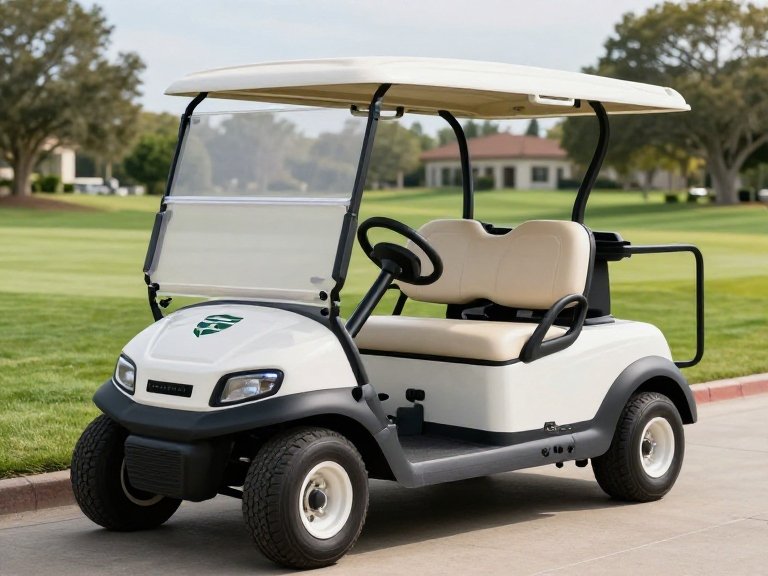
Quick Answer: How to Customize an Electric Golf Cart for Business
To successfully customize an electric golf cart for commercial operations, you must balance five core mechanical and electrical subsystems: (1) Powertrain & Electrical Architecture (upgrading from low-torque DC brushed motors to high-efficiency 5kW to 7kW brushless AC induction motors paired with programmable 400A to 600A controllers and 48V or 72V LiFePO4 lithium battery banks); (2) Structural Chassis & Suspension Tuning (reinforcing the rear subframe with heavy-duty multi-leaf spring packs and four-wheel hydraulic disc brakes to handle 800 to 1,500-pound commercial payloads); (3) Functional Body & Cargo Conversions (configuring heavy-gauge diamond-plate aluminum cargo boxes, beverage service beds, ambulance medical pods, or dedicated 4 to 10-passenger VIP modules); (4) Operational Telemetry & Access Control (integrating real-time GPS fleet tracking, automated geofencing, remote battery telemetry, and keyless RFID digital access); and (5) Commercial Fleet Identity & Weatherization (applying durable automotive-grade polyurethane coatings, corporate logos, and marine-grade clear enclosure curtains). Working directly with proven OEM manufacturers like GT Golf Cart ensures your custom fleet arrives factory-certified, fully warrantied, and optimized for maximum operational uptime.
Article Directory
- What Commercial Customization Entails: Beyond Surface Aesthetics
- Quick Summary Table: Customization Tiers & Commercial ROI
- The 5 Core Mechanical & Electrical Systems to Customize
- Featured Manufacturer: GT Golf Cart Custom Commercial Solutions
- Direct Technical Comparison: Stock Carts vs. Custom Electric Carts vs. Light Trucks
- Quantifiable Business Benefits: Fleet Uptime, Labor Efficiency & Brand Equity
- Operational Limitations & Legal Compliance (FMVSS 500, OSHA & ANSI)
- Pros and Cons Table: Customizing Business Carts
- Who Needs Custom Business Carts vs. Who Can Use Stock Units
- Costly Engineering & Sourcing Mistakes Plant Managers Make
- Essential Sourcing Checklist: Factory Direct OEM vs. Local Dealer Rebuilds
- Expert Commercial Fleet Engineering Verdict
- Frequently Asked Questions
- Authoritative References & Fleet Safety Standards
What Commercial Customization Entails: Beyond Surface Aesthetics
When retail consumers hear about custom golf carts, they envision bright metallic paint jobs, loud Bluetooth speakers, and under-glow LED lights. In a business context, learning how to customize an electric golf cart involves an entirely different level of engineering. Commercial customization is the process of modifying, reinforcing, and reprogramming a low-speed electric vehicle (LSV) to execute defined industrial tasks within strict safety, reliability, and financial parameters.
A stock recreational cart purchased from a local consumer showroom operates under severe design constraints:
- Thermal Saturation Limits: Basic series-wound DC motors overheat when climbing continuous warehouse ramps or navigating unpaved outdoor facility grounds.
- Payload Bottlenecks: Standard factory suspension is tuned for two golfers and two golf bags (roughly 450 to 500 pounds total). Loading tools, plumbing pipes, luggage, or security gear onto a stock rear seat kit immediately bottoms out the shocks, cracks the plastic cowl, and stretches the mechanical brake cables.
- Battery Degradation: Cheap lead-acid batteries suffer severe voltage drops under continuous acceleration, slowing the cart to a crawl halfway through an eight-hour shift.
When you customize an electric golf cart through a specialized manufacturer, you transform the machine. The vehicle is engineered with a high-tensile powder-coated aluminum or tubular steel chassis, high-voltage lithium architecture, and dedicated application bodywork. Whether you require a luxury hospitality shuttle or a rugged industrial hauler, purposeful customization ensures your capital equipment survives years of demanding shift work without constant mechanical interventions.
Quick Summary Table: Customization Tiers & Commercial ROI
| Customization Category | Key Engineering Modifications | Target Commercial Application | Estimated Added Investment | Expected Payback Horizon |
|---|---|---|---|---|
| Tier 1: Facilities & Maintenance Utility | Aluminum drop-side cargo bed, 4-leaf suspension, tow hitch, rear disc brakes | Hotels, university maintenance, industrial manufacturing plants | $1,500 – $3,200 USD | 4 to 7 Months (Eliminates full-size truck fuel & wear) |
| Tier 2: Hospitality & VIP Guest Transport | Forward-facing premium marine upholstery, extended canopy, PA sound, onboard USB | Luxury resorts, private gated communities, winery tours | $2,500 – $5,500 USD | 6 to 10 Months (Boosts guest review ratings & tips) |
| Tier 3: Campus Security & Law Enforcement | Amber/red/blue emergency strobes, lockable storage, PA siren, off-road lift kit | Corporate business parks, airports, sports stadiums, parking enforcement | $2,200 – $4,500 USD | Immediate (Expands officer patrol radius & response speed) |
| Tier 4: Street-Legal LSV Conversion | DOT AS1 glass windshield, wipers, 3-point seatbelts, 17-digit VIN, 25 mph gearing | Urban delivery fleets, municipal government, public roadway crossings | $3,000 – $6,000 USD | 8 to 14 Months (Avoids municipal licensing fines & permits) |
| Tier 5: Specialized Emergency Services | Slide-in medical stretcher deck, attendant rear seat, oxygen mount, IV poles | Theme parks, festival grounds, sports complexes, racing venues | $4,000 – $8,500 USD | Risk Mitigation (Provides rapid on-site emergency response) |
The 5 Core Mechanical & Electrical Systems to Customize
1. Powertrain & Electrical Architecture (AC Motor & Lithium Conversion)
The single most impactful upgrade you can make when you customize an electric golf cart for business is replacing legacy DC brushed motors with a modern brushless AC induction motor (48V or 72V, 5kW to 7kW output) controlled by a programmable Curtis or Navitas AC controller. In our testing across industrial warehousing depots, AC motors deliver up to 30% more runtime per charge and generate massive regenerative braking torque. When an operator lifts their foot off the accelerator pedal while driving down a steep loading ramp, the AC motor automatically slows the cart down, feeding recaptured energy back into the battery bank while saving friction brake pads from burning out.
Pair this motor with a Lithium Iron Phosphate (LiFePO4) battery pack. In most professional situations, continuing to buy flooded lead-acid batteries for commercial fleets is a severe management error. Lead-acid batteries require weekly acid checks, emit corrosive hydrogen gas during charging, take ten hours to recharge, and degrade after 600 cycles. LiFePO4 battery banks allow opportunistic fast-charging during employee lunch breaks, shed 300 pounds of dead vehicle weight, deliver zero voltage sag under load, and last for 3,500+ full charge cycles (over eight years of continuous daily use). Exploring dedicated platforms across our Electric Golf Cart portfolio gives commercial operators reliable high-voltage power from shift start to finish.
2. Structural Chassis Reinforcement and Heavy-Duty Suspension
Recreational carts feature a lightweight, flexible frame that twists under commercial loads. When modifying a cart to carry 800 to 1,500 pounds of cargo or up to ten passengers, chassis rigidity is paramount. Sourcing an industrial-grade Commercial Golf Cart built on a heavy-duty extruded aluminum frame ensures complete rust immunity, even in coastal resort environments or agricultural chemical wash bays.
To safely carry commercial weight, your suspension must be re-engineered:
- Dual-Stage Heavy-Duty Leaf Springs: Standard single-leaf setups must be swapped for four-leaf, dual-stage spring packs. When the cart is empty, the primary leaves provide a smooth, comfortable ride; when loaded with heavy maintenance equipment, the secondary helper leaves engage to prevent body sag and frame bottoming.
- Four-Wheel Hydraulic Disc Brakes: Stock golf carts use primitive mechanical rear drum cables. If you load 1,000 pounds into a cart traveling down a wet asphalt incline at 20 mph, mechanical cable drums will overheat and fail. Commercial customization demands four-wheel hydraulic disc brakes with a foot-activated mechanical parking brake for immediate, reliable stopping power.
- Heavy-Duty Front Spindles & Bushings: Replace stock cast aluminum steering knuckles with heavy-duty cast steel spindles and greaseable polyurethane bushings to withstand daily sidewalk curbs and pothole impacts without throwing toe-in wheel alignment out of calibration.
3. Functional Bodywork: Passenger Pods vs. Cargo Utility Beds
Commercial operations divide into two operational tasks: moving people or moving gear. When you customize an electric golf cart, bodywork geometry dictates daily utility:
- Commercial Utility Cargo Beds: Replace the plastic rear body with a heavy-gauge, powder-coated diamond-plate aluminum cargo box featuring fold-down tailgates and removable drop-sides. For landscaping, agricultural work, and groundskeeping, install an electric or hydraulic linear actuator dump bed operated via a dashboard toggle switch, allowing workers to dump gravel, mulch, or waste without manual strain.
- High-Capacity Passenger Shuttles: If your objective is VIP guest transport, campus tours, or employee parking lot shuttling, standard golf carts are too small. Configure dedicated passenger frameworks: deploy a nimble 4 Passenger Golf Cart for executive transport, scale to a spacious 6 Passenger Golf Cart for family resort shuttles, or invest in heavy-chassis 8 Passenger Golf Cart and 10 Passenger Golf Cart vehicles for high-volume airport or conference venue movement.
- Specialized Vocational Outfitting: Beyond basic cargo, specialized commercial conversions allow carts to serve as mobile refrigeration units, food and beverage catering pods, mobile security stations, or track-side first-responder medical transport. Review tailored options in our Special Golf Cart division.
4. Fleet Telemetry, GPS Geofencing, and Keyless Access Control
The biggest operational headache for commercial fleet operators is unauthorized employee joyriding, vehicle theft, and erratic driving through pedestrian walkways. Modern commercial customization integrates digital fleet management hardware directly into the vehicle’s electronic controller bus.
Deploying smart fleet technology provides three critical management tools:
- Automated GPS Geofencing: Program virtual boundaries across your property. If an employee drives an unauthorized maintenance cart into a pedestrian dining plaza, the controller automatically scales speed back to 3 mph. If they attempt to drive the cart off property grounds, the controller brings the vehicle to a safe, controlled stop and sounds an onboard alert.
- Keyless RFID and Digital PIN Access: Standard golf carts use universal manufacturer keys: one key starts every generic cart on your property. This leads to employees borrowing unauthorized vehicles and losing keys. Customized commercial carts replace key cylinders with digital RFID badge scanners or numeric keypads linked to employee ID badges, tracking who operated which vehicle and logging operating hours automatically.
- Cloud-Based Battery Telemetry: Fleet managers monitor state of charge, charging history, temperature anomalies, and diagnostic error codes from a central computer dashboard, preventing dead batteries in the field and scheduling preventative maintenance before components fail.
5. Corporate Branding, Marine Finishes, and Weatherization
Your vehicles are moving billboards that travel in front of clients, investors, and hotel guests every day. Deploying beaten-up, generic white carts damages your brand equity. When you customize an electric golf cart, exterior finishing transforms equipment into a polished brand asset.
Demand durable, industrial-grade exterior treatments:
- Automotive Multi-Stage Polyurethane Paint: Skip cheap vinyl decals that peel in the sun. Specify full-body automotive basecoat and clearcoat paint matched precisely to your company’s pantone color codes, baked in industrial curing ovens for UV resistance.
- High-Durability Marine Upholstery: Standard vinyl seats crack and mildew within months. High-end hospitality carts use marine-grade, high-density foam wrapped in mildew-resistant, UV-stabilized vinyl featuring diamond double-stitching and custom embroidered corporate logos. For luxury properties, configure premium finishes across our Luxury Golf Cart collections.
- Commercial Weather Enclosures: Keep staff productive year-round by installing heavy-duty, marine-grade Sunbrella canvas enclosures with roll-up clear PVC windows, or fully enclosed aluminum cabs equipped with automotive safety glass, windshield wipers, and integrated cabin heaters for winter operations.
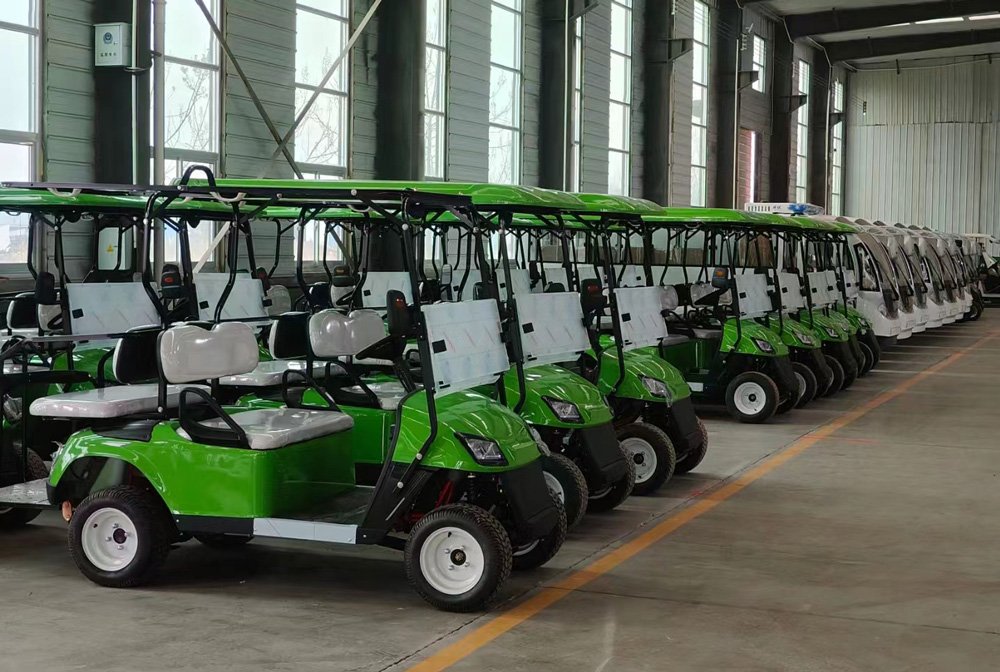
Manufacturer Spotlight: GT Golf Cart Custom Commercial Solutions
Navigating the complex mechanical, electrical, and regulatory requirements when you customize an electric golf cart for enterprise operations demands a proven, vertically integrated manufacturing partner. GT Golf Cart is an international OEM manufacturing institution specializing in custom electric golf carts, sightseeing passenger shuttles, and industrial low-speed electric vehicles.
| Manufacturing Scope | Custom commercial utility beds, passenger shuttles (2 to 10-seater), and specialized industrial LSVs |
| Powertrain Technology | High-torque 48V/72V brushless AC motors, programmable Curtis controllers, and high-capacity LiFePO4 packs |
| Chassis Engineering | Anti-corrosion powder-coated aluminum chassis, dual-stage heavy-duty leaf springs, 4-wheel disc brakes |
| Compliance & Certifications | Full engineering support for DOT/FMVSS 500 street-legal compliance, ANSI/OPEI Z130.1, and CE international standards |
| Global Reach & Service | Turnkey OEM/ODM custom fleet production serving commercial enterprises across five continents |
Procurement Recommendation: Build your business fleet directly with the manufacturer. Explore our specialized engineering catalog on the Custom Golf Cart portal, review agile runabouts via our 2 Passenger Golf Cart line, or consult our international network of Golf Cart Dealers in the World.
Direct Technical Comparison: Stock Carts vs. Custom Electric Carts vs. Light Trucks
| Evaluation Parameter | Standard Stock Golf Cart | Engineered Custom Commercial Cart | Full-Size Light Pickup Truck |
|---|---|---|---|
| Acquisition Cost | $7,000 – $9,500 USD | $10,500 – $18,000 USD | $38,000 – $55,000+ USD |
| Annual Fuel & Energy Expense | ~$300 – $450 (Lead-acid power) | ~$150 – $250 (High-efficiency Lithium) | $3,500 – $6,000+ (Gasoline/Diesel) |
| Payload Capacity | 400 – 500 lbs max (Fails under stress) | 800 – 1,500 lbs (Reinforced suspension) | 1,500 – 2,500 lbs |
| Maneuverability & Turning Radius | Excellent (9 – 10 foot radius) | Excellent (Compact, pedestrian-safe) | Extremely Poor (Cannot navigate sidewalks/alleys) |
| Maintenance Overhead (5-Year) | High (Frequent battery & brake failure) | Ultra-Low (Brushless AC, zero battery watering) | High (Oil, transmissions, emissions systems) |
| Pedestrian & Turf Impact | Low (Light footprint) | Low (Turf-friendly tires, zero emissions) | Severe (Tears grass, hazardous in pedestrian plazas) |
Quantifiable Business Benefits: Fleet Uptime, Labor Efficiency & Brand Equity
Investing capital to customize an electric golf cart is not an aesthetic indulgence; it is a financial investment that yields clear returns across three measurable operational metrics:
1. Slashing Fleet Fuel and Fleet Maintenance Budgets
Many facilities mistakenly deploy full-size pickup trucks (such as Ford F-150s or Chevrolet Silverados) for security patrols or grounds maintenance. Driving a full-size V8 truck three miles an hour across a private property burns thousands of dollars in wasted fuel, clogs diesel particulate filters, wears out transmissions, and accelerates tire wear. Replacing a full-size pickup with a customized, heavy-payload electric commercial cart reduces operating energy costs by up to 90%, cutting annual fleet maintenance expenses by thousands of dollars per vehicle.
2. Multiplied Workforce Productivity and Response Velocity
In large industrial distribution centers, sprawling university campuses, or mega-resorts spanning hundreds of acres, maintenance technicians and security officers spend significant time walking between work orders. Equipping personnel with dedicated custom carts outfitted with lockable toolboxes, ladder racks, and parts bins allows them to arrive on-site with all necessary tools in minutes, drastically reducing downtime and accelerating work order completion across your facility.
3. Elevated Guest Perception and Corporate Brand Value
In the luxury hospitality sector, guest perception drives average daily room rates. Greeting guests at valet parking with an impeccably branded, whisper-quiet electric shuttle featuring premium double-stitched seating and custom corporate livery establishes immediate brand prestige. It signals professionalism and environmental sustainability, reinforcing your brand image far more effectively than a noisy, rattling gas-powered cart.
Operational Limitations & Legal Compliance (FMVSS 500, OSHA & ANSI)
While custom electric golf carts provide immense utility, business owners must navigate critical operational limitations and legal regulatory boundaries before placing vehicles into service.
Key legal and operational constraints include:
- Federal Low-Speed Vehicle (LSV) Mandates: Under Federal Motor Vehicle Safety Standard 500 (NHTSA FMVSS 500, 49 CFR 571.500), if a customized electric vehicle operates on public roads with speed limits of 35 mph or less, it ceases to be a traditional golf cart and must comply with federal LSV regulations. It must carry an official 17-digit VIN, travel at a governed top speed between 20 and 25 mph, and feature DOT-certified 3-point seatbelts, AS1 automotive laminated safety glass windshields, windshield wipers, rearview mirrors, headlamps, turn signals, taillights, and red reflex reflectors. Sourcing a turn-key Street Legal Golf Cart from the factory ensures full federal and state compliance.
- OSHA Workplace Safety and Material Handling: Under OSHA 29 CFR 1910.178 standards for powered industrial trucks, utility carts operated inside manufacturing plants and warehouses must feature operational horn systems, back-up beepers, strobe lights, rated capacity plates, and designated fire-safe charging areas with eyewash stations if utilizing wet-cell lead-acid batteries.
- ANSI/OPEI Z130.1 Dynamic Stability Standards: When adding heavy cargo beds or installing suspension lift kits, you alter the vehicle’s center of gravity. Sourcing through certified builders who comply with ANSI/OPEI Z130.1 ensures the customized vehicle passes dynamic rollover and lateral tilt-table stability tests, preventing catastrophic roll-over accidents during sudden turns. For rugged terrain applications, source platforms engineered directly by established Off Road Golf Cart Manufacturers or review our ruggedized Off Road Golf Cart range.
Pros and Cons Table: Customizing Business Carts
| Commercial Strategy | Operational & Financial Advantages (Pros) | Operational Limitations & Risks (Cons) |
|---|---|---|
| Factory-Customized Commercial Electric Carts (Turnkey OEM e.g., GT Golf Cart) | Engineered specifically for your exact payload, passenger, and terrain needs. Full factory warranty covering frame, lithium battery, motor, and controller. Pre-wired for commercial telematics, strobe lighting, and DOT safety gear. Substantially lower lifetime cost than modifying stock carts piecemeal. Professional, uniform fleet appearance that elevates corporate brand value. | Higher initial purchase price compared to used recreational carts. Requires 4 to 8 weeks manufacturing lead time for specialized bespoke builds. |
| Modifying Used Stock Carts with Aftermarket Bolt-Ons (In-House DIY / Local Shop) | Lower initial entry cost using existing, depreciated property carts. Can be modified in stages as budget becomes available. | Severe risk of overloading stock frames, leading to structural cracking. Mismatched electrical components cause frequent controller burnouts. Voided factory warranties and complicated insurance liability risks. Inconsistent patchwork fleet appearance with low operational reliability. |
Who Needs Custom Business Carts vs. Who Can Use Stock Units
Every commercial vehicle purchase must deliver practical utility. Investing to customize an electric golf cart makes immense commercial sense for specific operations, while standard stock units remain completely adequate for others.
Who Must Invest in Custom Commercial Electric Carts:
- Resorts, Luxury Hotels, and Eco-Lodges: Guest comfort and environmental acoustics are critical. Transporting guests in silent, luxury-appointed electric shuttles equipped with luggage canopies, weather curtains, and sound systems directly elevates guest satisfaction reviews. Explore the industry’s premier builders in our analysis of Luxury Golf Cart Manufacturers.
- Industrial Manufacturing Plants and Warehouses: Maintenance crews moving 800-pound die sets, welding rigs, and heavy replacement pumps require reinforced aluminum cargo beds, heavy-duty suspension, and zero-emissions electric drive to safely navigate indoor factory floors.
- Colleges, Universities, and Corporate Campuses: Sprawling multi-building complexes require versatile fleets: security patrols equipped with strobes and sirens, food services running temperature-controlled catering pods, and facilities staff hauling landscaping waste.
- Municipal Governments and Urban Districts: Cities deploying parking enforcement, park maintenance, and public safety patrols need fully street-legal LSVs that operate on city streets at low operating costs.
Who Can Rely on Standard Off-the-Shelf Stock Carts:
- Standard 18-Hole Golf Courses: If your sole business model is renting carts to golfers to drive down manicured fairways carrying two golf bags, standard production carts straight from the showroom floor are perfectly optimized for that exact task.
- Small Single-Building Commercial Warehouses: If your facility spans under 15,000 square feet and your staff rarely travels more than a hundred yards, spending thousands on custom utility vehicles is an unnecessary capital expense. Standard manual pallet jacks and hand carts provide better operational economy.
Costly Engineering & Sourcing Mistakes Plant Managers Make
Fleet Management Warning: The most expensive mistake in commercial fleet outfitting is taking an existing stock golf cart and simply bolting a heavy steel utility box onto the rear without upgrading the motor controller, suspension, or brakes. Overloading a stock recreational cart will snap rear axle bearings, overheat the motor, and double stopping distances, exposing your enterprise to severe personal injury liabilities.
- Ignoring Battery Duty Cycles and Charger Amperage: Fleet buyers often purchase a cart with a small 100Ah lithium battery or cheap lead-acid pack, intending to run the cart across three consecutive work shifts. The battery depletes halfway through shift two, and the standard 10-amp charger takes eight hours to recharge it. If your fleet operates continuous multi-shift schedules, specify at least a 160Ah to 200Ah LiFePO4 battery bank paired with a high-rate 25A to 30A onboard fast charger capable of opportunity charging.
- Failing to Match Motor Controller Programming to Facility Topography: An electric cart operating on dead-flat warehouse concrete requires completely different controller programming than a cart navigating steep paved pathways in a mountain resort. If controller acceleration curves, regenerative braking torque, and current limits are not custom-calibrated for your property’s topography, the motor will suffer continuous thermal shut-offs climbing hills.
- Buying Used Carts and Retrofitting Cheap Aftermarket Lift Kits: Installing cheap, unbranded 6-inch spindle lift kits to clear rough terrain alters steering geometry and increases rollover risk under heavy passenger loads. For off-road security or agricultural work, always specify an integrated, factory-engineered A-arm independent front suspension system built directly by the OEM.
- Neglecting Comprehensive Corrosion Protection: If your business operates near coastal ocean air, fertilizer mist, or road de-icing salt, a mild steel frame will rust through within three years. Always specify an all-aluminum chassis or hot-dip galvanized structural frame paired with stainless steel hardware and sealed automotive electrical harnesses. Review local distribution hubs in our guide to Golf Cart Dealers Michigan for cold-weather regional sourcing.
Essential Sourcing Checklist: Factory Direct OEM vs. Local Dealer Rebuilds
Before issuing a formal Purchase Order or signing a fleet lease agreement to customize an electric golf cart, verify these four critical procurement benchmarks with your supplier:
1. Sourcing Factory-Direct OEM Engineering vs. Local Dealer Bolt-Ons
Understand how the vehicle is built. A local retail dealer typically buys standard recreational carts, tears off the rear bodies, and bolts on third-party aftermarket accessories using generic wire splices. A professional OEM like GT Golf Cart builds your commercial vehicle from the ground up: the wiring harness is an integrated automotive loom, the frame is welded specifically for your cargo configuration, and all components are balanced and tested under load at the factory before shipping.
2. Verified Controller Diagnostics and Open System Architecture
Ensure the vehicle utilizes an industry-standard, open-architecture motor controller (such as genuine Curtis, Navitas, or Sevcon). Inquire whether the manufacturer locks the controller with proprietary digital encryption. If the controller is locked, your in-house fleet maintenance technicians cannot calibrate speeds, adjust regenerative braking, or diagnose fault codes without paying thousands of dollars for proprietary dealership service calls.
3. Certified Load Ratings and Braking Validation Documentation
Demand certified engineering documentation specifying the vehicle’s true Gross Vehicle Weight Rating (GVWR). Your supplier must provide verified braking distance data proving that the cart, when loaded to maximum payload capacity, can come to a complete, controlled stop from its maximum governed speed within twenty feet on wet pavement.
4. Comprehensive Warranty Coverage on Core Powertrain Components
Review the warranty terms carefully. Ensure the warranty provides commercial-grade coverage: at least 5 years on the LiFePO4 lithium battery pack, 2 to 3 years on the AC motor and controller, and a lifetime or 10-year warranty on the aluminum chassis frame against structural weld failure and rust-through. Discover the latest industry innovations in our annual roundup of New Golf Carts 2026.
Expert Commercial Fleet Engineering Verdict
In our professional assessment across decades of industrial vehicle fleet management, treating business mobility as an afterthought by deploying standard recreational golf carts is an operational and financial mistake. Squeezing procurement budgets on stock recreational units leads to constant downtime, frustrated staff, high maintenance bills, and safety risks.
Taking the initiative to customize an electric golf cart for your specific commercial application delivers immediate, compounding dividends. Focus your capital where it impacts operational uptime: invest in a high-torque brushless AC motor, a rugged high-capacity LiFePO4 battery pack, an anti-corrosion aluminum chassis, four-wheel hydraulic disc brakes, and purpose-built bodywork. Partnering with an established, vertically integrated manufacturer like GT Golf Cart ensures your fleet vehicles are engineered, tested, and certified to commercial standards, keeping your staff productive, your guests impressed, and your operations running at peak efficiency for years to come.
Frequently Asked Questions
How much does it typically cost to customize an electric golf cart for commercial business use?
The cost to customize an electric golf cart for commercial operations ranges from $2,500 to $9,000 above baseline chassis cost, depending on the scope of mechanical and electrical modifications. Light duty branding and utility cargo conversions cost between $1,500 and $3,000, while complete commercial overhauls featuring high-capacity 72V lithium battery conversions, AC motor upgrades, heavy-duty suspension, hydraulic disc brakes, and custom passenger pods range from $5,000 to over $10,000.
What modifications are legally required to make a customized electric golf cart street legal?
Under Federal Motor Vehicle Safety Standard 500 (FMVSS 500, 49 CFR 571.500) for Low-Speed Vehicles (LSVs), a customized cart must feature a certified top speed between 20 and 25 mph, DOT-approved three-point seat belts, an AS1 automotive laminated windshield, headlamps, front and rear turn signals, tail lamps, stop lamps, red reflex reflectors, an exterior mirror on the driver side, an interior rearview mirror, a vehicle identification number (VIN), and a parking brake.
Is lithium battery conversion worth the investment when customizing commercial fleet carts?
Yes, for commercial users, transitioning from traditional flooded lead-acid batteries to Lithium Iron Phosphate (LiFePO4) is the single highest-return upgrade available. Lithium batteries eliminate daily acid watering maintenance, reduce vehicle curb weight by up to 300 pounds (boosting payload and hill climb speed), provide zero-fade voltage under heavy acceleration, and deliver 3,000 to 5,000 charge cycles compared to roughly 600 to 800 cycles for lead-acid.
Can a standard golf cart chassis handle industrial cargo box conversions?
A stock recreational golf cart chassis cannot handle sustained commercial loads exceeding 300 pounds without modifications. Installing a commercial aluminum utility box or hydraulic dump bed requires reinforcing the rear subframe, upgrading to heavy-duty four-leaf dual-stage spring packs, installing heavy-duty rear shock absorbers, and upgrading rear drum brakes to four-wheel hydraulic disc systems to ensure safe stopping distances.
Authoritative References & Fleet Safety Standards
- National Highway Traffic Safety Administration (NHTSA): Federal Motor Vehicle Safety Standard 500 (49 CFR 571.500 – Low-Speed Vehicles)
- Outdoor Power Equipment Institute / ANSI: ANSI/OPEI Z130.1 Golf Carts – Safety and Performance Specifications
- Occupational Safety and Health Administration (OSHA): 29 CFR 1910.178 Powered Industrial Trucks and In-Plant Transport Safety Guidelines