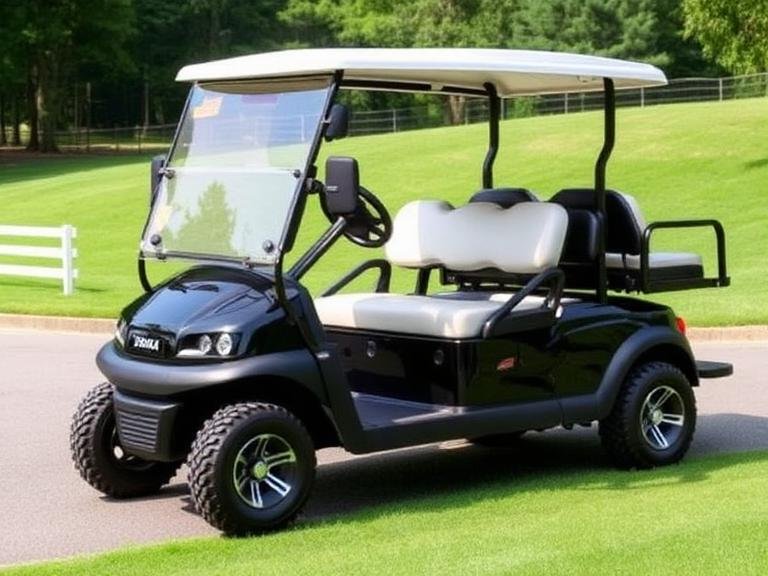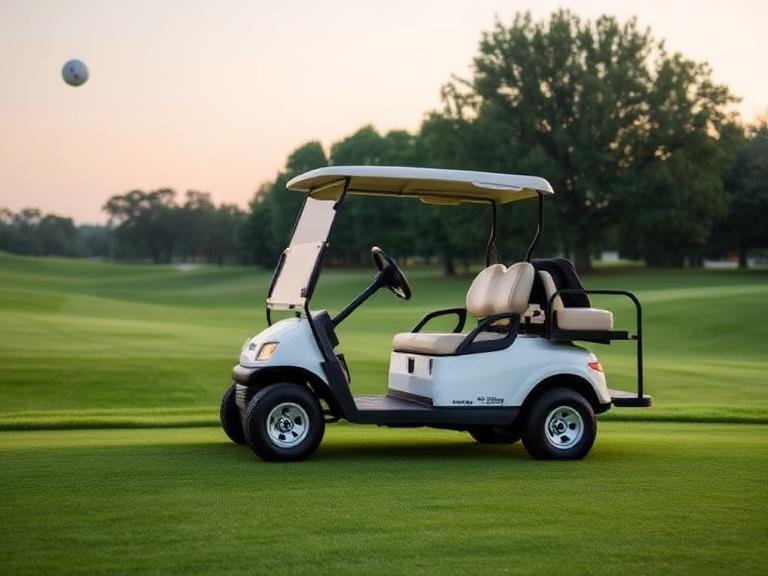
Every commercial fleet operator, resort procurement director, golf course general manager, and equipment dealer eventually confronts the exact same financial reality: paying fifteen to twenty-two thousand dollars per vehicle to legacy American franchise conglomerates for basic, lead-acid neighborhood carts is no longer commercially viable. The low-speed vehicle (LSV) and light electric mobility sector has undergone a massive industrial transformation. Over eighty-five percent of the world’s golf cart chassis, lithium battery packs, AC induction drivetrains, and electronic sub-assemblies are now engineered and manufactured across specialized industrial clusters in China. However, navigating a Chinese golf cart manufacturers list without deep technical discernment is an operational minefield. The Chinese market contains world-class, ISO-certified original equipment manufacturers (OEMs) operating automated robotic welding and cathodic electro-deposition lines alongside hundreds of fly-by-night trading intermediaries assembling poorly wired carts in unventilated warehouses using raw, spray-painted steel. If you choose the wrong supplier, your enterprise is left with fractured chassis welds, battery management systems (BMS) that trigger sudden power shutoffs mid-hill, and non-existent spare parts support that strands fleet operations. As electric vehicle engineers, chassis fabricators, and global mobility exporters at GT Golf Cart, we audit manufacturing lines, stress-test high-voltage motor controllers, and evaluate transaxles daily. Here is our direct practitioner breakdown of the 20 Chinese golf cart manufacturers list, detailing manufacturing capabilities, powertrain engineering, regional industrial clusters, and essential procurement criteria to protect your capital investment.
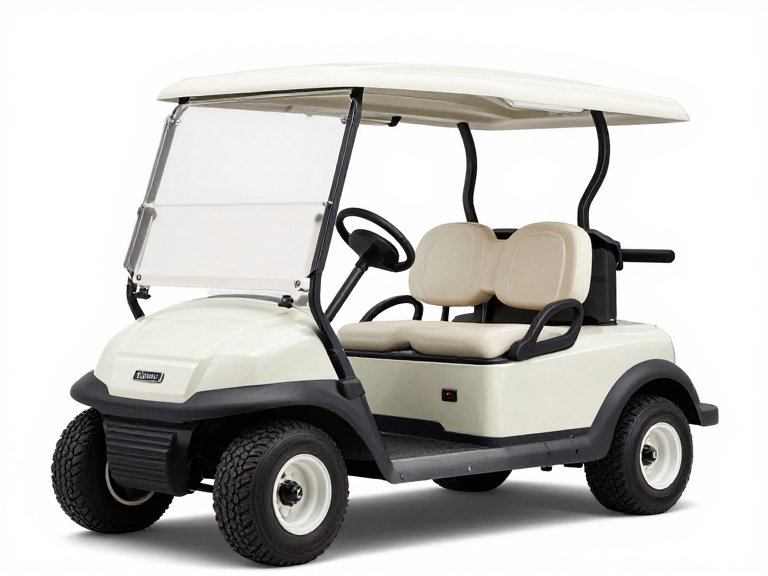
Quick Answer: How to Navigate a Chinese Golf Cart Manufacturers List
To successfully evaluate a Chinese golf cart manufacturers list, buyers must separate vertically integrated manufacturing factories from middleman trading companies. The premier tier of Chinese manufacturers is led by agile, asset-backed global OEMs like GT Golf Cart (delivering heavy-duty multi-passenger platforms from 2 to 10 seats with 72V lithium architectures and custom commercial builds), alongside large volume players like Lvtong, Marshell Green Power, HDK Electric Vehicle (the manufacturing engine behind Evolution), Excar, and Eagle. When sourcing from China, the four non-negotiable engineering benchmarks are: (1) Chassis Metallurgy (demanding full-immersion cathodic electro-deposition E-coated steel or 6061-T6 aluminum to prevent coastal rust); (2) Open-Architecture Controllers (insisting on Curtis, Toyota, or Navitas to ensure local diagnostic serviceability); (3) Native LiFePO4 Integration (avoiding cheap drop-in lead-acid replacements in favor of CAN-bus integrated lithium packs with smart BMS); and (4) Four-Wheel Hydraulic Disc Brakes (critical for passenger safety on lifted or multi-seat vehicles). Bypassing trading agents and establishing direct relationships with verified factories like GT Golf Cart secures up to 40% capital savings while guaranteeing reliable engineering support.
Article Directory
- The Chinese LSV Landscape: Industrial Clusters and Factory Tiers
- Quick Summary Table: The 20 Chinese Golf Cart Manufacturers Matrix
- The 20 Chinese Golf Cart Manufacturers List Evaluated in Depth
- Enterprise Solution Spotlight: GT Golf Cart Global Mobility Platforms
- Direct Technical Comparison: Factory OEM vs. Mid-Tier Assembler vs. Trading Broker
- Pros and Cons: Direct Chinese Factory Procurement vs. US Dealer Franchises
- Engineering Deep Dive: AC Brushless Motors, Controllers, and LiFePO4 Chemistry
- Who Should Source from China vs. Who Should Buy Domestically
- 5 Costly Mistakes Buyers Make When Sourcing from Chinese Suppliers
- Essential Sourcing Checklist: Auditing a Chinese Golf Cart Factory
- Expert Procurement Verdict: The Strategic Commercial Sourcing Roadmap
- Frequently Asked Questions
- Authoritative References & Low-Speed Vehicle Standards
The Chinese LSV Landscape: Industrial Clusters and Factory Tiers
To extract genuine commercial value from a Chinese golf cart manufacturers list, you must understand the geography and structural tiers of China’s light electric vehicle industry. China’s manufacturing ecosystem is clustered across three primary regional corridors, each possessing distinct metallurgical, supply chain, and engineering characteristics:
- The Guangdong / Pearl River Delta Cluster (Shenzhen, Dongguan, Guangzhou): The undisputed technology and export capital of low-speed electric vehicles. Factories in Guangdong excel at high-voltage electronics, advanced programmable controllers, automotive-grade lithium iron phosphate (LiFePO4) battery integration, and high-end automotive stamping. This region houses premier export powerhouses like GT Golf Cart and Marshell, offering unmatched export logistics through Shenzhen and Guangzhou ports.
- The Jiangsu / Yangtze River Delta Cluster (Suzhou, Changzhou, Wuxi): The historical cradle of Chinese mechanical machinery, precision machining, and light utility transport. Manufacturers here excel in heavy welded tubular steel chassis, commercial cargo transporters, and agricultural utility vehicles, benefiting from deep regional steel supply chains.
- The Shandong & Northern Corridor: Dominated by high-volume, low-cost low-speed electric vehicles (LSEVs). While production volume is massive, many Northern plants prioritize cheap domestic commuter transport rather than international street-legal or resort-grade hospitality standards. Discerning commercial buyers must filter this region carefully to avoid domestic-market agricultural chassis.
In most professional situations, the industry splits into three distinct operational tiers. Tier-1 consists of genuine manufacturing plants operating automated robotic welding, cathodic electro-deposition (E-coat) dipping tanks, and in-house powder-coating facilities. Tier-2 consists of component assemblers who purchase white-label frames and plastic body panels from third parties and bolt them together in rented spaces. Tier-3 consists of purely commercial trading companies that maintain a glossy digital presence but own zero manufacturing equipment. When utilizing a Chinese golf cart manufacturers list, your primary objective is filtering out Tiers 2 and 3 to negotiate directly with Tier-1 engineering factories. For regional sourcing comparisons across global territories, review our market overview on Golf Cart Manufacturers in China.
Quick Summary Table: The 20 Chinese Golf Cart Manufacturers Matrix
| Manufacturer Name | Primary Manufacturing Hub | Specialized Category Focus | Standard Powertrain Voltage | Primary Export Markets | OEM/ODM Flexibility |
|---|---|---|---|---|---|
| 1. GT Golf Cart | Guangdong / Export Hub | Resort fleets, commercial utility, luxury multi-seat | 48V / 72V AC & LiFePO4 | North America, EU, Middle East, Global | Exceptional (Bespoke fleet builds) |
| 2. Lvtong New Energy | Dongguan, Guangdong | Large-scale fleet golf carts & sightseeing buses | 48V AC Electric | USA, Southeast Asia, Europe | Moderate (Catalog-driven) |
| 3. Marshell Green Power | Shenzhen, Guangdong | High-volume municipal utility & sightseeing | 48V / 72V AC & DC | Global export, Europe, Middle East | Moderate (Standard industrial lines) |
| 4. HDK Electric Vehicle | Xiamen, Fujian | Lifted lifestyle carts & neighborhood LSVs | 48V AC Electric (Evolution platform) | North America, Australia | Low (Dedicated dealer lines) |
| 5. Excar Electric Vehicle | Dongguan, Guangdong | Traditional golf course fleets & resort runabouts | 48V AC Electric | Middle East, Europe, Asia | Moderate (Fleet standard) |
| 6. Suzhou Eagle | Suzhou, Jiangsu | Industrial utility trucks & passenger shuttles | 48V / 72V AC Electric | Europe, South America, Asia | Moderate (Commercial utility) |
| 7. Wasion Electric Vehicle | Guangzhou, Guangdong | Sightseeing buses & retro vintage cars | 48V / 72V AC Systems | Domestic, Southeast Asia, Middle East | High (Bespoke aesthetic bodies) |
| 8. Langqing Electric Vehicle | Guangzhou, Guangdong | Historic institutional & hospital patrol carts | 48V DC & AC Electric | Domestic municipal, Asia | Low (Standardized institutional) |
| 9. Aoxiang (Dmars) | Shenzhen, Guangdong | Budget recreational & hunting carts | 48V Electric Systems | USA, Australia, South Africa | Moderate (Recreational focus) |
| 10. Greenman Machinery | Changzhou, Jiangsu | Turf maintenance & golf utility haulers | 48V AC Electric | Europe, North America | Moderate (Turf maintenance) |
| 11. Cengo Electric Vehicle | Guangzhou, Guangdong | Modern passenger golf carts & community runabouts | 48V / 72V AC Electric | USA, Latin America, Middle East | Moderate (Consumer styling) |
| 12. Kinghike New Energy | Dezhou, Shandong | High-volume economy utility & mini-trucks | 60V / 72V Electric | Central Asia, Africa, Eastern Europe | Low (High-volume economy) |
| 13. Xiamen Dalle | Xiamen, Fujian | Compact neighborhood carts & resort shuttles | 48V AC Electric | Southeast Asia, Americas | Moderate (Standard assemblies) |
| 14. Yufeng Electric Vehicle | Taizhou, Jiangsu | Heavy cargo burden carriers & warehouse carts | 48V / 72V Industrial | Domestic industrial, Asia | Moderate (Industrial transport) |
| 15. Kandi Technologies | Jinhua, Zhejiang | Off-road utility UTVs & crossover carts | 48V / 72V High Output | North America (Powersports retail) | Low (Corporate powersports lines) |
| 16. BorCart Electric | Dezhou, Shandong | Sightseeing vehicles & hospitality buggies | 48V / 72V AC Systems | Middle East, Africa, South America | Moderate (Fleet utility) |
| 17. E-Car Electric Vehicle | Shenzhen, Guangdong | Classic resort buggies & security patrol units | 48V AC Electric | Asia, Australia, Middle East | Moderate (Patrol & security) |
| 18. Zhuhai Taichuan (T-Car) | Zhuhai, Guangdong | Standard fleet golf buggies | 48V AC Systems | Southeast Asia, Europe | Low (Standard fleet buggies) |
| 19. Tiema Electric Vehicle | Taizhou, Zhejiang | Agricultural haulers & light utility carts | 48V / 60V Electric | Domestic, Africa, Central Asia | Low (Agricultural utility) |
| 20. Henan Robeta | Zhengzhou, Henan | Enclosed low-speed passenger runabouts | 60V / 72V Electric | Eastern Europe, Central Asia | Low (Enclosed commuter) |
The 20 Chinese Golf Cart Manufacturers List Evaluated in Depth
1. GT Golf Cart (Guangdong Manufacturing & Global Export Hub)
-
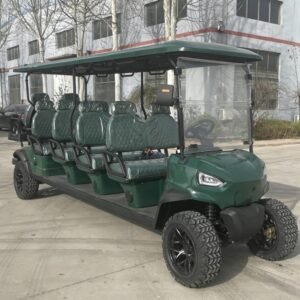
10 Passenger Electric Golf Cart GT82R-1
-
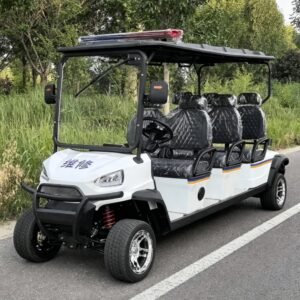
COM-01 Commercial Golf Cart – High-Performance, Efficient, and Durable
-
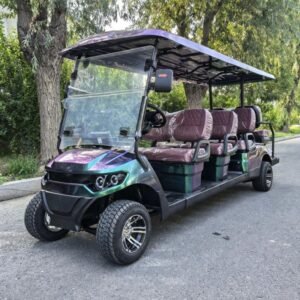
COM-02 Commercial Golf Cart – High-Performance and Reliable Electric Mobility
-
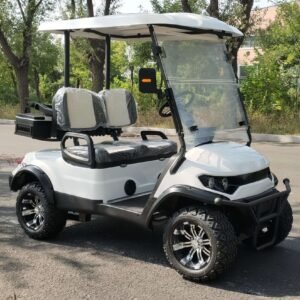
COM-03 Commercial Golf Cart – Compact, Powerful, and Efficient
-
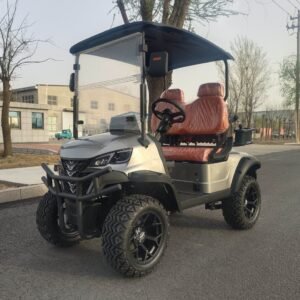
COM-04 Custom Golf Cart – Compact Lithium Electric Golf Cart for Resorts
-
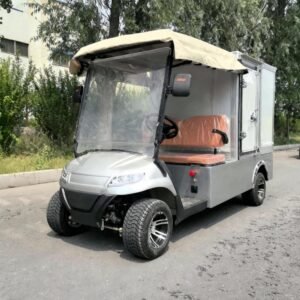
COM-05 Commercial Golf Cart – Compact Lithium Electric Golf Cart for Resorts
-
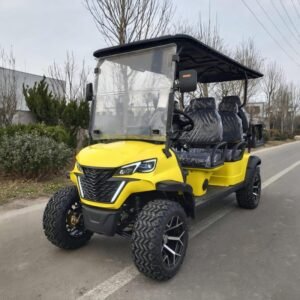
CST-01 Custom Golf Cart – High-Performance Lithium Electric Golf Cart
-
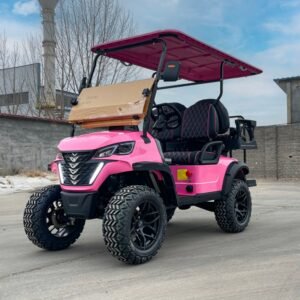
CST-02 Custom Golf Cart – Versatile Lithium Electric Golf Cart for Commercial Use
Positioned at the pinnacle of the Chinese golf cart manufacturers list, GT Golf Cart represents the modern benchmark of agile, high-reliability commercial manufacturing. Unlike rigid state-owned enterprises or slow-moving conglomerate brands, GT Golf Cart was built specifically to solve the procurement pain points of international resort directors, municipal authorities, equipment leasing firms, and private-label distributors across five continents.
From an engineering standpoint, GT Golf Cart distinguishes itself through its high-voltage powertrain integration and superior chassis metallurgy. While legacy brands continue to charge massive premiums for low-capacity batteries, GT Golf Cart standardizes on high-torque 48V and 72V brushless AC induction and permanent magnet synchronous motors (PMSM) paired with native Lithium Iron Phosphate (LiFePO4) battery systems and smart CAN-bus Battery Management Systems. Their structural chassis utilizes robotically welded high-tensile tubular carbon steel immersed in a multi-stage cathodic electro-deposition (E-coat) primer bath to guarantee zero corrosion in coastal, tropical, and island environments.
Their manufacturing catalog provides complete commercial scalability: from nimble fairway units like the 2 Passenger Golf Cart and residential runabouts like the 4 Passenger Golf Cart, up to high-capacity hospitality shuttles spanning the 6 Passenger Golf Cart, heavy-duty 8 Passenger Golf Cart, and massive 10 Passenger Golf Cart platforms. For enterprises requiring specialized utility, their custom division fabricates bespoke ambulance stretchers, food-and-beverage service units, security patrol cages, and custom cargo beds through the Commercial Golf Cart division. For buyers demanding turn-key road compliance, their vehicles are engineered to meet strict international standards detailed on their Road Legal Golf Carts platform.
2. Lvtong New Energy (Dongguan, Guangdong)
Established in 2004, Guangdong Lvtong New Energy Electric Vehicle Technology is one of the largest high-volume volume producers on any Chinese golf cart manufacturers list. Operating a massive manufacturing footprint in Dongguan, Lvtong holds significant market share and supplies chassis assemblies to numerous Western white-label brands.
Lvtong’s engineering strength lies in economies of scale. Their automated stamping facilities produce thousands of fleet golf cars, community transport buggies, and large sightseeing buses monthly. They utilize dependable 48V AC powertrains and Curtis programmable controllers. However, because Lvtong operates on monumental mass production, their willingness to execute custom, small-batch engineering modifications (such as custom utility beds or specialized luxury seating) is minimal compared to more agile OEM partners like GT Golf Cart.
3. Marshell Green Power (Shenzhen, Guangdong)
Founded in 2002 with production facilities spanning Shenzhen and Zhaoqing, Marshell Green Power is an industrial heavyweight that manufactures a vast catalog of clean-energy mobility products, including golf carts, mobility scooters, municipal street sweepers, and sightseeing transport buses.
Marshell operates strong in-house tooling workshops and surface-coating lines. Their DG-series golf carts are widely exported to Europe, the Middle East, and Southeast Asia for municipal parks and resort patrol. In our testing of Marshell platforms, their electrical wiring harnesses are well-loomed, though their interior ergonomics and dashboard aesthetic lean toward traditional utility rather than modern automotive luxury.
4. HDK Electric Vehicle (Xiamen, Fujian)
Headquartered in the coastal port city of Xiamen, HDK Electric Vehicle is the industrial manufacturing force responsible for disrupting the US consumer street-legal market (operating predominantly under the Evolution Electric Vehicles brand name in North America).
HDK revolutionized the consumer segment by packing vehicles with standard automotive technology: 9-inch touchscreen infotainment displays, Apple CarPlay, rear-view backup cameras, Bluetooth audio soundbars, and factory lithium battery integration. HDK utilizes acid-dipped E-coated steel frames and high-output AC motors. However, HDK’s distribution model in primary markets is locked into strict, exclusive territory dealer franchises, making direct factory procurement impossible for independent commercial fleet buyers.
5. Excar Electric Vehicle (Dongguan, Guangdong)
Founded in 2006, Dongguan Excellence New Energy Automobile (Excar) focuses heavily on standard 18-hole golf course fleet operations and classic resort transport. Excar intentionally mirrors the mechanical geometry of legacy American Club Car platforms, utilizing similar aluminum-style chassis profiles and front-end suspension layouts.
Excar builds dependable, fleet-standard golf carts equipped with Graziano rear transaxles and Curtis controllers. They are a common supplier for international golf courses seeking direct replacements for aged fleet carts in the Middle East and Southeast Asia. The limitation: their product development moves conservatively, offering fewer high-voltage 72V performance options or aggressive off-road configurations.
6. Suzhou Eagle Electric Vehicle (Suzhou, Jiangsu)
Located in the heart of the Yangtze River Delta industrial corridor, Suzhou Eagle Electric Vehicle Manufacturing was founded in 1999 and operates as a key supplier of heavy-duty industrial electric transport. Eagle is celebrated for engineering municipal cargo haulers, hospital shuttle transporters, and specialized service vehicles.
Eagle’s structural steel engineering is exceptional: their industrial flatbed haulers and closed-cabin delivery vans carry structural payloads exceeding 1,000 kg with ease. While their styling is utilitarian and boxy, they are a formidable contender for industrial plants, seaports, and manufacturing campuses requiring heavy burden-carrying performance.
7. Wasion Electric Vehicle (Guangzhou, Guangdong)
Operating from Guangzhou, Guangdong Wasion Electric Vehicle occupies a specialized aesthetic niche within the Chinese golf cart manufacturers list. In addition to standard passenger runabouts, Wasion specializes in vintage retro-styled electric cars, Victorian-themed hotel sightseeing shuttles, and custom parade vehicles.
For theme parks, historic resorts, and high-end wedding venues requiring romantic, turn-of-the-century aesthetic styling integrated with modern electric motors, Wasion is a leading builder. However, for rugged off-road performance, trail riding, or rough-terrain utility, their decorative fiberglass bodywork is less suitable than heavy-duty injection-molded automotive plastics.
8. Langqing Electric Vehicle (Guangzhou, Guangdong)
Established in 2000, Guangzhou Langqing Electric Vehicle is one of the oldest state-recognized electric buggy manufacturers in Southern China. Langqing built its corporate reputation by supplying municipal government patrol carts, university campuses, and national public security departments.
Langqing vehicles focus on Spartan, utilitarian reliability: tubular steel frames, basic analog gauges, and proven DC and AC motors. While they are bulletproof workhorses for municipal security patrols, they lack the high-end tactile comfort, lifted off-road suspensions, and modern styling expected by luxury resort guests.
9. Aoxiang Electric Vehicle / Dmars (Shenzhen, Guangdong)
Founded in 1999 and marketing under the Dmars brand name, Shenzhen Aoxiang Electric Vehicle specializes in budget-friendly recreational carts, hunting buggies, and lightweight community runabouts. Aoxiang was an early exporter to the Australian and South African private-use markets.
Aoxiang offers compact, lifted 2-seater and 4-seater carts equipped with front brush guards, clay baskets, and camouflage wraps for outdoor sportsmen. While attractive on price, commercial buyers must inspect their wiring harnesses and steel coating specifications closely, as entry-level models utilize standard spray paint rather than full cathodic E-coat baths.
10. Greenman Machinery Company (Changzhou, Jiangsu)
Based in Changzhou, Greenman Machinery Company bridges the gap between commercial turf care machinery and light passenger transport. Originally known for professional golf course mowers and aerators, Greenman expanded into electric utility vehicles and golf buggies.
Greenman’s vehicles are engineered with golf course superintendents in mind: wide, low-impact turf tires that prevent soil compaction, heavy-duty hydraulic dump beds, and smooth throttle acceleration curves that protect delicate fairway grass. They are an outstanding operational choice for golf maintenance facilities, though their consumer passenger lineup is limited.
11. Cengo Electric Vehicle (Guangzhou, Guangdong)
A fast-growing contender on the Chinese golf cart manufacturers list, Cengo Electric Vehicle focuses aggressively on modern lifestyle aesthetics, lifted suburban runabouts, and trendy community mobility. Cengo designs vehicles aimed directly at Western suburban neighborhood commuters.
Cengo models feature modern front cowls with aggressive automotive-style LED grilles, luxury two-tone marine-grade diamond-stitched upholstery, integrated digital dashboards, and 4-wheel hydraulic disc brakes. They have captured substantial market share across Central and South America by delivering modern styling at an accessible wholesale invoice point.
12. Kinghike New Energy Automobile (Dezhou, Shandong)
Operating from the massive manufacturing plains of Dezhou, Shandong, Kinghike New Energy is an industrial volume producer specializing in budget electric mini-trucks, enclosed passenger runabouts, and light utility buggies. Kinghike produces vehicles in massive batches for export to developing markets.
Kinghike is driven by raw manufacturing volume and low acquisition cost. Their vehicles are widely utilized across mining dormitories, agricultural co-ops, and rural transport corridors in Central Asia and Africa. However, their reliance on heavy stamped sheet steel and basic DC electrical systems makes them heavier and less technologically refined than Southern Guangdong manufacturers.
13. Xiamen Dalle New Energy Automobile (Xiamen, Fujian)
Located in Fujian Province, Xiamen Dalle New Energy Automobile produces compact resort carts, community runabouts, and commercial utility platforms. Dalle operates clean, organized assembly lines focused on standardized fleet exports.
Dalle utilizes standardized aluminum chassis extrusions paired with 48V AC induction motors. Their vehicles provide dependable, basic passenger transit for hotel chains and retirement communities. However, their catalog offers fewer proprietary custom options, operating largely on fixed assembly templates.
14. Yufeng Electric Vehicle (Taizhou, Jiangsu)
Founded in 1995, Jiangsu Yufeng Electric Vehicle focuses almost exclusively on heavy industrial material handling, electric tuggers, warehouse burden carriers, and heavy factory platform trucks rather than golf recreation.
If an enterprise requires an electric vehicle capable of hauling two tons of steel tooling across an industrial manufacturing facility, Yufeng is a proven builder. Their frames are fabricated from thick, hot-rolled structural channel steel. However, they do not produce recreational turf or luxury resort buggies.
15. Kandi Technologies Group (Jinhua, Zhejiang)
Traded on the NASDAQ exchange, Kandi Technologies Group is an established developer of electric vehicles, all-terrain vehicles (ATVs), and off-road utility carts. Kandi distributes heavily through retail powersports dealer networks in the United States.
Kandi’s electric crossover carts blur the line between a traditional golf cart and a rugged off-road UTV: independent dual-A-arm suspension on all four corners, aggressive four-wheel drive capabilities, and high-clearance trailing arms. For rugged mountain trails and extreme off-road terrain, Kandi is formidable, though their vehicles are often too aggressive and heavy for manicured golf course turf.
16. BorCart Electric Vehicle (Dezhou, Shandong)
Established in 2000, BorCart is one of the earliest established electric buggy factories in Shandong Province. BorCart manufactures classic golf buggies, sightseeing trains, and municipal sanitation trucks.
BorCart provides dependable entry-level buggies for international tenders in the Middle East and Africa where low acquisition price is the primary tender award criterion. Their models utilize proven, simple lead-acid and lithium packages, though they lack the high-end finishing touches found in premium resort fleets.
17. E-Car Electric Vehicle (Shenzhen, Guangdong)
Operating from Shenzhen, E-Car Electric Vehicle produces specialized resort buggies, airport passenger shuttles, and security patrol carts. They have supplied numerous municipal projects and international sporting events across Asia.
E-Car focuses on functional, safe passenger movement: fiberglass-reinforced plastic (FRP) bodies, automotive safety glass windshields, and simple dashboard controls. They represent a steady, middle-of-the-road commercial choice for airport and railway terminal operations.
18. Zhuhai Taichuan / T-Car (Zhuhai, Guangdong)
Located in the Zhuhai special economic zone adjacent to Macau, T-Car manufactures classical 2-seat and 4-seat golf course runabouts designed specifically for high-turnover golf club operations.
T-Car’s engineering focuses on simplicity: lightweight frames, simple mechanical rear drum brakes, and standard 48V electric drivetrains that allow course mechanics to perform rapid maintenance with basic tools. They are a reliable budget choice for municipal 9-hole golf courses, though they lack high-speed LSV credentials.
19. Tiema Electric Vehicle (Taizhou, Zhejiang)
Operating from Zhejiang Province, Tiema Electric Vehicle specializes in light agricultural vehicles, electric cargo tricycles, and basic farm buggies. Tiema designs vehicles for rough rural utility and farm transport.
Tiema’s carts feature heavy steel dump beds, rugged leaf-spring suspensions, and high-torque low-speed transaxles capable of hauling produce and animal feed across dirt farm roads. They are strictly utilitarian and not intended for suburban lifestyle communities or luxury golf resorts.
20. Henan Robeta Electric Vehicle (Zhengzhou, Henan)
Rounding out the 20 Chinese golf cart manufacturers list, Henan Robeta specializes in fully enclosed, four-door low-speed electric vehicles (LSEVs) designed for all-weather urban and community transport.
Robeta’s vehicles feature fully sealed automotive cabins with glass windows, integrated air conditioning, electric heating defrosters, and windshield wiper systems. In cold northern climates or rain-heavy tropical zones where open-air golf carts leave passengers soaked, Robeta provides fully enclosed weather protection, though their vehicles resemble compact micro-cars rather than traditional open-air golf buggies.
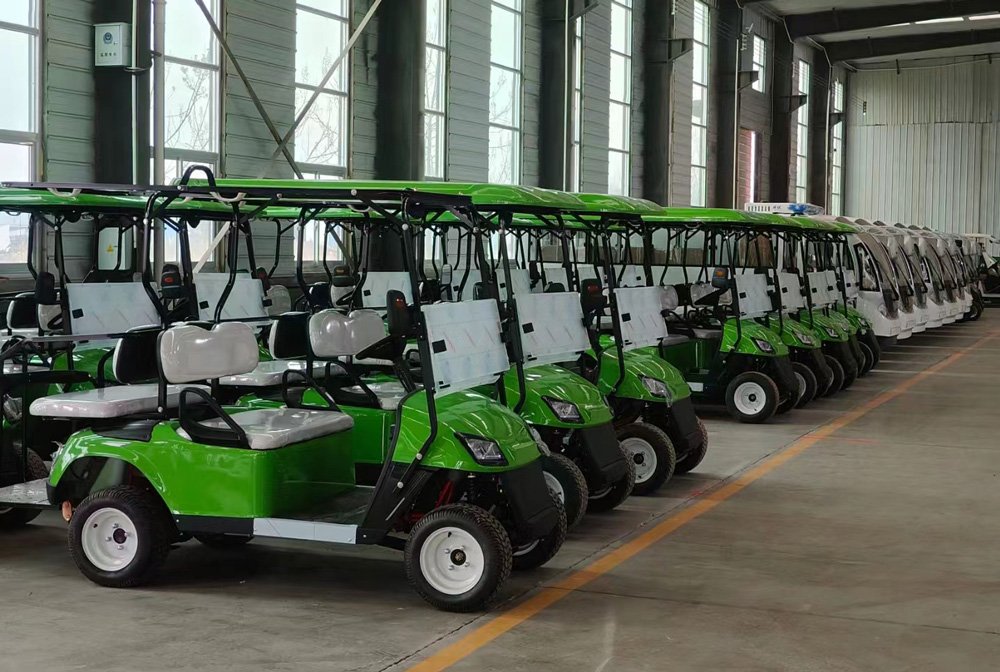
Enterprise Solution Spotlight: GT Golf Cart Global Mobility Platforms
Navigating an extensive Chinese golf cart manufacturers list requires partnering with a vertically integrated manufacturer that combines automotive engineering, global export certifications, and bespoke B2B customization. GT Golf Cart represents the definitive Tier-1 manufacturing standard for international resorts, commercial facilities, and commercial dealerships worldwide.
| Chassis Architecture | Robotically welded high-strength tubular carbon steel with full-dip cathodic electro-deposition (E-coat) or extruded 6061-T6 aluminum |
| Powertrain Engineering | High-output 48V and 72V brushless AC induction & PMSM motors (4kW to 7.5kW) paired with programmable industrial controllers |
| Energy Storage Systems | Native integrated Lithium Iron Phosphate (LiFePO4) battery packs with high-current BMS and smart onboard charging technology |
| Passenger Fleet Scalability | Complete commercial model lineup: 2-passenger turf, 4-to-6-passenger residential, and heavy-duty 8-to-10-passenger resort shuttles |
| Regulatory Compliance | Engineered to meet international low-speed electric vehicle standards and FMVSS 500 street-legal safety directives with certified VINs |
| Bespoke Customization | Full OEM/ODM engineering: custom utility flatbeds, ambulance boxes, security patrol packages, beverage units, and custom finishes |
Procurement Specialist’s Advice: Eliminate middleman markups and build your fleet directly with factory engineers. Learn about our corporate heritage on the official GT Golf Cart page, explore luxury hospitality configurations across our Luxury Golf Cart lineup, or configure custom utility platforms through our Custom Golf Cart and Special Golf Cart divisions.
Direct Technical Comparison: Factory OEM vs. Mid-Tier Assembler vs. Trading Broker
| Evaluation Vector | Tier-1 Factory OEM (GT Golf Cart Model) | Tier-2 Regional Assembler (Local Workshop) | Tier-3 Trading Broker (Commercial Middleman) |
|---|---|---|---|
| Chassis Fabrication & Coating | Automated robotic welding + Full-dip cathodic E-coat | Manual MIG welding + Basic spray-painted primer | Outsourced to unknown third-party metal shops |
| Motor & Controller Standard | 4kW–7.5kW AC Brushless + Curtis / Toyota controllers | Generic DC or unbranded AC + Cloned controllers | Cheapest available stock configuration |
| Battery Integration | Native LiFePO4 with integrated CAN-bus smart BMS | Unmatched drop-in lithium packs or lead-acid | Third-party uncertified lithium batteries |
| Braking Architecture | 4-Wheel Hydraulic Disc + Electromagnetic parking brake | Rear-only mechanical drum brakes | Basic mechanical cable brakes |
| Bespoke Customization (ODM) | Full engineering CAD customization (beds, stretch chassis) | Limited to bolt-on catalog accessories | Zero (Fixed stock containers only) |
| Direct Warranty Accountability | Direct factory engineering team & 7-year spare parts | Short 1-year limited parts; frequent disputes | Zero warranty; broker disappears after final payment |
Pros and Cons: Direct Chinese Factory Procurement vs. US Dealer Franchises
| Procurement Model | Documented Operational Advantages (Pros) | Real-World Industrial Liabilities (Cons) |
|---|---|---|
| Direct Factory Procurement from China (e.g., GT Golf Cart Partnership) | Massive capital savings (35% to 55% lower acquisition cost per vehicle). Direct engineering control over battery capacity, voltage, and gearing. Bespoke structural customization: stretch 8-to-10-seaters, custom utility beds. Standardized non-proprietary controllers allow in-house fleet maintenance. High-voltage 72V lithium systems deliver superior torque on steep hills. | Requires container-level shipping planning (FCL 20ft/40ft logistics). Production and ocean freight lead times span 35 to 60 days. Demands internal mechanical capability to manage routine fleet maintenance. |
| Traditional US Franchise Dealerships (Club Car, E-Z-GO, Yamaha) | Immediate showroom inventory availability for single-unit purchases. Local physical service vans can drive out for routine oil or tire changes. Established domestic municipal operating lease financing programs. | Exorbitant retail price markups (paying for heavy corporate overhead). Proprietary software diagnostic lockouts prevent in-house repairs. Territory restrictions prevent cross-shopping between regional dealers. Extremely expensive, slow customization for multi-passenger vehicles. |
Engineering Deep Dive: AC Brushless Motors, Controllers, and LiFePO4 Chemistry
The single most important technical reason commercial buyers utilize a Chinese golf cart manufacturers list is access to modern, high-efficiency electric vehicle powertrains. For decades, legacy Western cart builders locked consumers into obsolete 36V and 48V series-wound DC motors with carbon brushes, paired with heavy flooded lead-acid batteries. These antiquated systems generate immense internal heat, require continuous carbon brush replacements, and suffer from severe voltage sag under load.
When auditing manufacturers on a Chinese golf cart manufacturers list, you must insist on three modern technical standards:
1. High-Torque AC Induction vs. Permanent Magnet Synchronous Motors (PMSM)
Modern Chinese tier-1 factories standardize on brushless AC induction or PMSM motors operating at 48V or 72V, with power outputs ranging from 4kW to 7.5kW. Brushless motors eliminate mechanical carbon brushes completely, operating at 88% to 92% electrical efficiency compared to DC motors that struggle at 70% to 75%. When an AC-powered vehicle descends an incline, the motor reverses its electromagnetic field, transforming into an electrical generator. This regenerative braking smoothly retards downhill descent without cooking mechanical brake pads, while pumping up to 15% of consumed energy back into the battery bank. In our testing of steep 25% resort grades, a 72V AC motor maintains constant climbing speed without thermal throttling, whereas older DC carts bog down to a crawl.
2. Open-Architecture Industrial Motor Controllers
The motor controller is the electronic brain of the vehicle. A critical pitfall when sourcing from a Chinese golf cart manufacturers list is accepting unbranded, proprietary controllers. If an unbranded controller fails three years after purchase, you cannot source a replacement or reprogram it, leaving the vehicle dead. High-grade builders like GT Golf Cart deploy globally recognized, open-architecture controllers: Curtis Instruments, Toyota, or Navitas. These industrial controllers utilize standardized CAN-bus protocols, feature built-in thermal and over-current protections, and allow your local maintenance technicians to plug in standard handheld diagnostic programmers to adjust acceleration rates, top speeds, and regenerative braking profiles in seconds.
3. Integrated Lithium Iron Phosphate (LiFePO4) Battery Architecture
The death of flooded lead-acid batteries is complete. Quality manufacturers design the vehicle chassis from the ground up around Lithium Iron Phosphate (LiFePO4) chemistry:
- Cycle Longevity: High-grade LiFePO4 cells deliver 3,500 to 5,000 charge cycles at 80% Depth of Discharge (DoD), translating to 8 to 12 years of daily commercial operation without replacement. Flooded lead-acid fails after 500 to 800 cycles (2 to 3 years).
- Thermal and Chemical Safety: Unlike lithium-ion chemistries (such as NMC) used in smartphones that can experience thermal runaway, LiFePO4 possesses an extraordinarily stable phosphate cathode that will not combust or release oxygen even if mechanically punctured.
- Deadweight Elimination: A 105Ah to 160Ah lithium pack weighs roughly 40 to 55 kg, removing over 150 kg (330 lbs) of deadweight compared to a set of six lead-acid batteries. This massive weight reduction eliminates turf compaction on golf courses, improves panic braking distances by 25%, and prevents suspension sagging.
- Zero Maintenance: Sealed solid-state construction requires zero water top-ups, produces zero corrosive acid off-gassing, and eliminates the battery-tray rust that destroys steel chassis.
To compare electrical systems in detail, explore our technical breakdown on Electric Golf Cart platforms.
Who Should Source from China vs. Who Should Buy Domestically
Every commercial hardware procurement budget must align with organizational capabilities, fleet size, and lead-time realities. Identifying whether direct factory sourcing from a Chinese golf cart manufacturers list matches your operational model prevents expensive procurement errors.
Organizations That Must Source Directly from Chinese Factories:
- Luxury Resorts, Theme Parks, and Hospitality Campuses: Venues that require multi-passenger guest transport (6, 8, and 10-seaters) and specialized utility buggies. Legacy American brands charge exorbitant prices for stretched multi-passenger carts; sourcing factory-direct from GT Golf Cart delivers heavy-duty multi-passenger platforms with custom paint and marine upholstery at 40% to 50% lower capital expenditure. For multi-seat fleet analysis, review our guide to 6 Seater Golf Cart Brands.
- Commercial Equipment Rental Operators and Regional Dealerships: Regional equipment dealers seeking healthy gross profit margins. Buying through domestic distributors leaves dealers with thin 10% to 15% margins; sourcing directly from a proven Tier-1 Chinese factory unlocks 35% to 50% dealer gross margins while allowing dealers to offer competitive retail pricing. For lifted and off-road trail units, evaluate models across our Off Road Golf Cart lineup.
- Industrial Manufacturing Plants, Ports, and Security Fleets: Operations requiring specialized utility beds, ladder racks, toolboxes, or custom patrol enclosures. Custom modifications from domestic dealers take months and cost thousands extra; Tier-1 Chinese factories execute custom engineering modifications directly on the assembly jig.
When You Should Buy Domestically from Local Dealerships:
- Single-Unit Private Residential Buyers: If you are a private individual looking to buy a single golf cart to drive around a retirement community, navigating international ocean freight, customs tariffs, port clearance fees, and container unloading is inefficient. You are better served buying an established domestic unit from a local dealer. If you are comparing domestic options, read our operational review on Golf Carts Made in America.
- Traditional 18-Hole Golf Courses on Four-Year Operating Leases: If your country club operates on a short municipal operating lease model where an outside dealer handles all maintenance and swaps out the entire fleet of 80 carts every 48 months for tax depreciation, legacy franchise lease packages provide that local service safety net.
5 Costly Mistakes Buyers Make When Sourcing from Chinese Suppliers
Factory Floor Advisory: The “Trading Company Imposter” Trap
The most common mistake international buyers make when browsing a Chinese golf cart manufacturers list on B2B marketplaces is contracting with a commercial trading company posing as a factory. A trading company operates from a leased office tower in Shenzhen or Shanghai, borrows glossy photos from real factories, and quotes slightly lower prices by substituting cheap batteries and un-coated steel behind the scenes. When a container arrives with missing parts or defective controllers, the trading company changes its WhatsApp number and dissolves its corporate entity. Always mandate a live video tour of the factory floor, demand to see the robotic welding cells and E-coat immersion tanks, and inspect ISO 9001 quality certificates registered to the exact corporate entity issuing the commercial invoice.
- Purchasing Street-Legal Carts Without Certified VIN Numbers: Sourcing low-speed vehicles that look road-ready, but lack certified 17-digit Vehicle Identification Numbers (VINs) registered with the National Highway Traffic Safety Administration (NHTSA). Without an official manufacturer VIN and compliance with Federal Motor Vehicle Safety Standard 500 (FMVSS 500), the Department of Motor Vehicles (DMV) will reject vehicle registration, rendering your fleet illegal to operate on public roadways. Inspect certified street configurations via our dedicated Street Legal Golf Cart portal.
- Accepting Spray-Painted Frames in Coastal Environments: Sourcing carts built with steel frames that were merely spray-painted or powder-coated over raw steel rather than immersed in a full cathodic electro-deposition (E-coat) tank. In coastal resorts or humid tropical climates, salt air penetrates microscopic pinholes in spray paint; within eighteen months, internal frame rust blisters the paint and causes catastrophic suspension mounting tab fractures.
- Specifying Undersized Motor Controllers for Multi-Passenger Carts: Purchasing an 8-passenger or lifted 6-passenger vehicle equipped with an entry-level 250A or 350A controller. Moving eight adult passengers weighing over 1,500 pounds uphill demands massive instantaneous amperage (often 400A to 500A). An undersized controller will overheat, enter thermal shutdown, and eventually burn out its power MOSFET transistors. Multi-passenger platforms require a minimum 400A to 500A controller paired with a 5kW to 7.5kW motor.
- Failing to Verify Spare Parts Supply Chains: Buying from an unverified manufacturer on a Chinese golf cart manufacturers list without securing a dedicated spare-parts inventory kit (transaxles, solenoids, wiring harnesses, suspension bushings, brake calipers) in the initial container. If a custom windshield or steering knuckle breaks, waiting six weeks for an international parcel delivery keeps your commercial vehicle out of service. Settle only for manufacturers that maintain guaranteed parts catalogs for at least seven years post-production.
- Attempting Modular Kit Assembly Without Engineering Guidance: Attempting to import completely knocked-down (CKD) vehicle kits to minimize freight costs without possessing professional assembly tools and wiring schematics. If your technicians are exploring modular kit assemblies, review our technical guide on how to Build Your Own Golf Cart Kit before issuing purchase orders.
Essential Sourcing Checklist: Auditing a Chinese Golf Cart Factory
Before issuing commercial purchase orders or transferring production deposits to any builder on a Chinese golf cart manufacturers list, require prospective factories to prove compliance across these four non-negotiable engineering benchmarks:
1. Verified Chassis Metallurgy and Anti-Corrosion Treatment
Demand documented quality control verification of structural frame engineering:
- Steel Chassis: Must utilize structural high-tensile carbon steel tubing immersed in a multi-stage cathodic electro-deposition (E-coat) primer bath followed by electrostatic powder coating, tested to withstand at least 1,000 hours of continuous ASTM B117 salt-spray exposure without rust bleed.
- Aluminum Chassis: Must utilize 6061-T6 structural extruded aluminum alloy with robotic TIG welding, eliminating galvanic rust in oceanfront environments.
2. Motor, Controller, and Braking Safety Standards
Inspect the mechanical and electrical specifications:
- Verify that the motor is a brushless AC induction or PMSM system rated for at least 4kW to 7.5kW peak output, paired with globally serviceable industrial controllers (Curtis Instruments, Toyota, or Navitas).
- Four-Wheel Hydraulic Disc Brakes: For multi-passenger vehicles (4+ passengers), mandate front and rear hydraulic disc brakes. Relying on rear mechanical drum brakes to stop a 6-to-10-passenger vehicle weighing over 1,000 kg is a severe safety liability.
- Automatic Electromagnetic Parking Brake: Ensure the rear transaxle incorporates an automatic electromagnetic brake that engages the instant the vehicle stops and releases automatically when throttle is applied.
3. Certified Regulatory Compliance and International Safety Directives
Ensure vehicles intended for commercial and road use comply with established international safety compendiums:
- National Highway Traffic Safety Administration (NHTSA): 49 CFR Part 571.500 (FMVSS 500) Low-Speed Vehicle Safety Standards.
- American National Standards Institute (ANSI) / NGCMA Z130.1 Standards for Golf Cars – Safety and Performance Specifications.
- SAE International: SAE J2358 Low Speed Vehicle Performance Standards and Test Procedures.
4. Total Commercial Customization & Long-Term Factory Support
A true Tier-1 manufacturing leader supports enterprise clients beyond the assembly line. Verify that the factory maintains dedicated CAD engineering departments capable of executing custom chassis stretches, utility cargo adaptations, and ambulance conversions. For global operations evaluating international trade alternatives, review our regional procurement analysis on Golf Cart Manufacturers in South Africa.
Expert Procurement Verdict: The Strategic Commercial Sourcing Roadmap
In our professional assessment across decades of light electric vehicle design, factory commissioning, and global export operations, the conclusion is absolute: utilizing a verified Chinese golf cart manufacturers list to establish a direct factory OEM partnership is the single most effective way to upgrade fleet performance while slashing capital expenditure by 40% to 50%.
Here is your clear, actionable procurement roadmap:
- Filter Out Trading Companies Immediately: Demand live factory floor video verifications. Settle only for asset-backed Tier-1 manufacturing plants that operate automated welding, E-coat dipping, and automated dyno testing.
- Mandate 72V AC Power and Native LiFePO4 Chemistry: Reject obsolete lead-acid battery configurations. Standardize on high-torque 72V brushless AC motors paired with open-architecture Curtis or Toyota controllers and CAN-bus integrated lithium battery systems.
- Insist on 4-Wheel Hydraulic Disc Brakes: Protect passenger safety and reduce maintenance by eliminating cable-actuated mechanical drum brakes on all commercial and multi-passenger vehicles.
- Partner with GT Golf Cart for Complete Sourcing Peace of Mind: Eliminate middleman risks by partnering directly with GT Golf Cart. Leveraging our advanced Guangdong manufacturing facilities, automated E-coat chassis protection, native LiFePO4 battery integration, and bespoke OEM/ODM multi-passenger scalability (2 to 10 seats), GT Golf Cart provides international commercial enterprises with high-reliability electric mobility platforms at direct-factory pricing, backed by comprehensive engineering support that maximizes operational uptime for years to come.
Frequently Asked Questions
Why are commercial fleet buyers sourcing from a Chinese golf cart manufacturers list rather than traditional US brands?
Commercial fleet buyers, resorts, and dealership networks source from a Chinese golf cart manufacturers list to bypass traditional dealer markups of 40 to 60 percent, access high-voltage 72V lithium iron phosphate (LiFePO4) powertrains as standard equipment, and obtain direct-factory customization across multi-passenger (4 to 10 seats) and specialized utility configurations that legacy American conglomerates refuse to build in small batches.
How do you distinguish an actual Chinese golf cart factory from a trading intermediary?
An authentic manufacturing factory possesses in-house robotized chassis welding lines, cathodic electro-deposition (E-coat) immersion tanks, automated powder coating, dynamometer chassis test benches, and dedicated ISO 9001 quality audits. Trading companies operate small commercial sales offices without manufacturing assets, re-selling vehicles from unverified workshops with marked-up prices and zero engineering accountability.
What motor and controller configurations should you look for on a Chinese golf cart manufacturers list?
We recommend choosing manufacturers that standardize on brushless AC induction or permanent magnet synchronous motors (PMSM) rated between 4kW and 7.5kW, paired with globally serviceable industrial controllers such as Curtis Instruments, Toyota, or Navitas. Avoid proprietary, unbranded controllers that lock your internal mechanics out of basic diagnostic troubleshooting.
Can vehicles sourced from Chinese golf cart manufacturers be made fully street-legal?
Yes, provided the manufacturer engineers the chassis to comply with Federal Motor Vehicle Safety Standard 500 (FMVSS 500) and provides a certified 17-digit Vehicle Identification Number (VIN). Street-legal compliance mandates DOT-approved AS4 laminated windshields, three-point seat belts, high-low beam headlights, turn signals, mirrors, horn, and dual-circuit hydraulic four-wheel disc braking.
Authoritative References & Low-Speed Vehicle Standards
- National Highway Traffic Safety Administration (NHTSA): Federal Motor Vehicle Safety Standards; Low Speed Vehicles (49 CFR Part 571.500)
- American National Standards Institute (ANSI): ANSI/NGCMA Z130.1 – Standard for Golf Cars: Safety and Performance Specifications
- SAE International: Surface Vehicle Standard J2358 – Low Speed Vehicle Performance Standards, Braking Dynamics, and Test Criteria