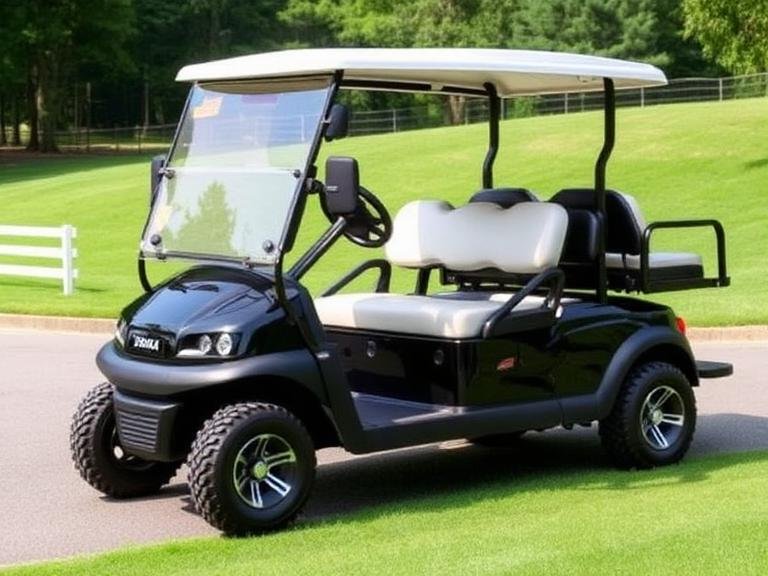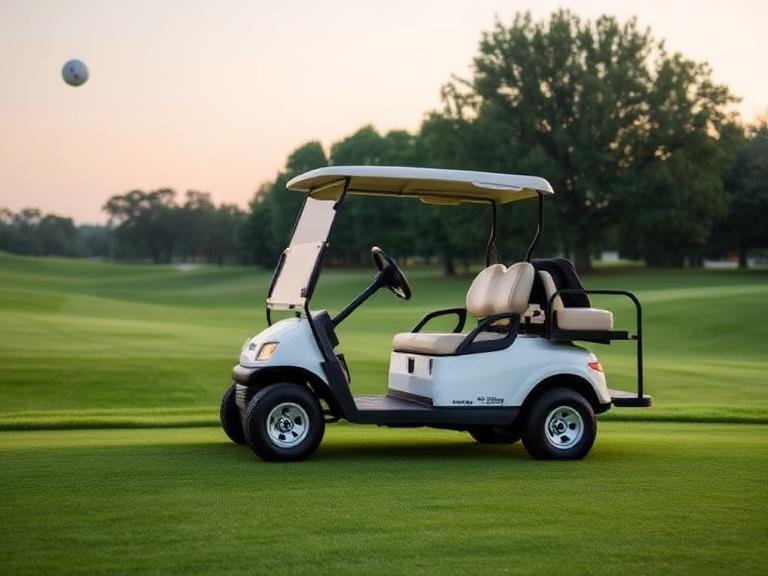
Every resort facilities manager, acreage property owner, community commuter, and off-road enthusiast eventually confronts the severe ground clearance limitations of a factory golf cart. A standard factory vehicle sits roughly four inches off the turf, designed for manicured fairways and flat asphalt paths. The moment you drive that vehicle across rutted pasture trails, steep gravel access roads, or sandy coastal terrain, the undercarriage scrapes, the transaxle hangs on protruding tree roots, and standard 18-inch turf tires spin helplessly in mud. Raising your ride height is the definitive solution, but navigating the market for Custom Lift Options lifted golf carts requires far more than picking the tallest, cheapest kit available online. Lifting a vehicle fundamentally alters its suspension kinematics, center of gravity (CG), scrub radius, brake cable tension, and high-speed steering stability. Slapping a poorly engineered bolt-on spindle kit onto a multi-passenger vehicle will transform a comfortable cruiser into an unstable, bone-jarring machine that eats through front tires in six months. As low-speed vehicle (LSV) chassis engineers and industrial manufacturers who design heavy-duty suspensions, calculate rollover thresholds, and build custom fleet vehicles daily, we provide an unvarnished technical breakdown of the six most popular Custom Lift Options lifted golf carts utilize today, analyzing ride quality, structural integrity, and commercial return.
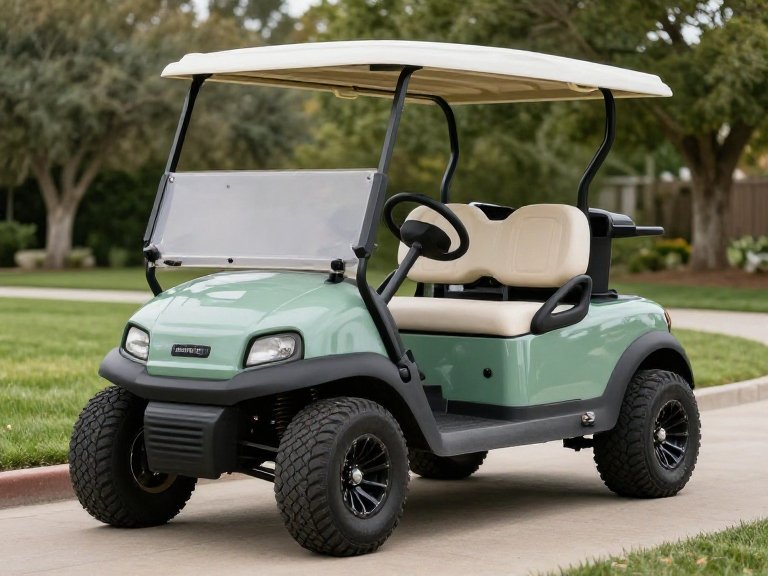
Quick Answer: The 6 Best Custom Lift Options for Lifted Golf Carts
To safely clear larger tires and navigate rugged terrain without compromising structural safety, the six primary Custom Lift Options lifted golf carts deploy are: (1) A-Arm Lift Kits (the definitive industry gold standard for ride comfort, extreme durability, and full camber/toe alignment adjustability); (2) Spindle Lift Kits (the most popular, budget-friendly bolt-on option that extends steering knuckles while retaining stock springs); (3) Drop Axle Lift Kits (a rugged, economical solution that replaces the front axle beam to lengthen wheelbase and clear 22-inch tires on traditional suspension setups); (4) Long Travel Suspension Lift Kits (the ultimate high-performance off-road setup featuring dual boxed control arms, progressive coil-overs, and up to 10 inches of wheel articulation); (5) Block Lift Kits (an entry-level economy spacer option primarily used to level rear leaf springs, though unsuitable for aggressive off-roading); and (6) Pneumatic / Air-Ride Adjustable Lift Systems (a high-end luxury setup delivering on-the-fly adjustable ride height for show vehicles, enclosed garage clearances, and variable loading). For commercial applications, fleet utility, and serious trail riding, we recommend an A-Arm Lift Kit or a factory-integrated Off Road Golf Cart chassis from GT Golf Cart over basic spindle spacers.
Article Directory
- Suspension Physics: What Lifting Actually Does to an Electric Golf Cart
- Quick Summary Table: The 6 Custom Lift Options Compared
- The 6 Popular Custom Lift Options Analyzed in Detail
- Manufacturer Spotlight: GT Golf Cart Factory-Engineered Lifted Solutions
- Direct Technical Comparison: Lift Height, Tire Clearance & Handling
- Pros and Cons Table: Lifted Golf Carts vs. Standard Ride Height
- Commercial Benefits vs. Operational Realities of Lifted Carts
- Who Needs a Custom Lift Kit vs. Who Should Keep Stock Ride Height
- Costly Engineering Mistakes When Modifying Lifted Carts
- Essential Sourcing Checklist: Steering Geometry, Brakes & Gearing
- Expert Chassis Practitioner’s Final Sourcing Verdict
- Frequently Asked Questions
- Authoritative References & Vehicle Safety Standards
Suspension Physics: What Lifting Actually Does to an Electric Golf Cart
Before selecting among Custom Lift Options lifted golf carts require, every fleet manager and private buyer must understand the mechanical trade-offs of raising a light electric chassis. A golf cart is not simply a miniature pickup truck. It features a short wheelbase (typically 65 to 70 inches) and a narrow track width (around 38 to 42 inches). When you alter ride height, you directly manipulate classical vehicle dynamics.
The engineering variables break down into four critical physical interactions:
- Center of Gravity (CG) Elevation & Rollover Threshold: Raising a vehicle’s chassis by 4 to 6 inches, coupled with mounting taller 23-inch tires, elevates the total center of mass by several inches. Under the static and dynamic rollover thresholds governed by ANSI/OPEI Z130.1 standards, an elevated center of gravity reduces the lateral tilt-table tip-over angle. To preserve stability, quality custom lift kits deliberately widen the vehicle’s track width by 2 to 4 inches total, creating a broader, more stable footprint.
- Scrub Radius & Steering Feedback: When a lift kit uses offset wheel spindles or wheel spacers to clear suspension members, it alters the steering axis inclination (SAI) relative to the tire contact patch. This creates positive scrub radius. In our testing, excessive positive scrub radius causes steering wheel kickback when rolling over rocks or potholes and accelerates front tire shoulder wear if toe-in is misaligned.
- Effective Gear Ratio Changes & Motor Torque: Stock golf carts use 18×8.5-8 tires. Upgrading to a 23-inch tire via a 6-inch lift increases the outer rolling circumference by nearly 28%. According to rotational physics, this acts as a taller final gear ratio: it boosts top-end speed by roughly 3 to 4 mph on flat pavement, but it reduces mechanical climbing torque by 20% to 25%. A stock DC brushed motor and standard 250-amp controller will struggle on hills and draw heavy thermal current spikes, requiring an upgrade to a high-output Electric Golf Cart powertrain.
- Suspension Articulation vs. Camber Curve: Primitive lift designs lift the chassis by simply forcing the stock leaf springs downward, locking the suspension into a rigid, non-compliant state. Modern engineered lift options replace the linkages entirely, introducing independent travel that absorbs surface shocks while maintaining near-zero dynamic camber changes throughout the suspension cycle.
From our experience on the test track, deciding to lift a golf cart is not just about choosing aesthetic height; it is about selecting the suspension architecture that matches your terrain, passenger load, and daily duty cycle.
Quick Summary Table: The 6 Custom Lift Options Compared
| Lift Kit Architecture | Standard Lift Heights | Max Recommended Tire Size | Ride Comfort & Compliance | Installation Complexity | Best Overall Application |
|---|---|---|---|---|---|
| 1. A-Arm Lift Kits | 4″ – 6″ | 22″ – 23″ All-Terrain | High (Independent Coil-Over Action) | Moderate (Direct Bolt-On Frame Mount) | All-around trail utility, neighborhood cruisers, farms |
| 2. Spindle Lift Kits | 3″ – 6″ | 20″ – 22″ Street/All-Terrain | Moderate (Retains Factory Springs) | Low (Replaces Steering Spindles Only) | Budget-conscious street cruising, light pasture use |
| 3. Drop Axle Lift Kits | 3″ – 5″ | 20″ – 22″ All-Terrain | Stiff to Moderate (Heavy-Duty Beam) | Moderate (Replaces Front Axle Tube) | Industrial fleet utility, commercial cargo hauling |
| 4. Long Travel Kits | 6″ – 8″+ | 23″ – 25″ Extreme Mud/Lug | Exceptional (Maximum Articulation) | High (May Require Welding / Full Tear-Down) | Extreme off-roading, dune riding, technical rocks |
| 5. Block Lift Kits | 2″ – 4″ | 20″ – 21″ Street Turf | Stiff (Body Spacers / Spring Blocks) | Very Low (Spacers on Axle Seats) | Minor tire up-sizing, flat pavement leveling |
| 6. Air / Pneumatic Systems | 0″ – 8″ (Variable) | 20″ – 23″ Dependent on Ride Height | Fully Adjustable (Airbag Pressure Governed) | Very High (Plumbing, Compressors, Wiring) | Show vehicles, custom builds, low-clearance garages |
The 6 Popular Custom Lift Options Analyzed in Detail
1. A-Arm Lift Kits: The Proven Engineering Gold Standard
When engineering directors and custom builders evaluate Custom Lift Options lifted golf carts depend on for everyday reliability, the A-Arm lift kit is uncontested as the industry’s premier all-around suspension design. Instead of reusing the cart’s rigid factory components, an A-Arm kit completely discards the factory front leaf spring and steering knuckles.
The kit replaces them with an engineered independent front suspension assembly featuring tubular steel upper and lower control arms (A-arms), heavy-duty steering knuckles, and dual adjustable coil-over shock absorbers. This architecture delivers three immediate performance benefits:
- Full Alignment Adjustability: Unlike cheap spindle lifts, quality A-arm kits incorporate threaded heim joints or eccentric cam bolts that allow mechanics to dial in precise camber and toe-in angles. This eliminates erratic tire scrub and ensures high-speed tracking stability on a modern Street Legal Golf Cart.
- Progressive Spring Damping: Replacing stiff factory leaf springs with heavy-duty coil-over shocks absorbs washboard gravel roads, tree roots, and curbs without sending shockwaves through the steering column into the driver’s hands.
- Structural Rigidity: Thick-walled DOM steel tubing resists bending forces when climbing over rocks or navigating muddy ruts. For commercial utility and serious trail riding, an A-Arm lift is the most reliable long-term investment.
2. Spindle Lift Kits: The Cost-Effective, High-Volume Option
For beginners and budget-conscious private owners seeking an aggressive stance without a complex suspension overhaul, spindle lift kits represent the most widely purchased custom lift category on the consumer market. A spindle kit works through a straightforward mechanical premise: you retain the entire factory front leaf spring, axle beam, and steering assembly, replacing only the stock steering knuckles with extended, cast or fabricated steel spindles.
Because the new spindle relocates the wheel hub centerline lower relative to the chassis, it pushes the body upward by 3, 4, or 6 inches. The primary advantages are low acquisition cost and simple installation (taking an experienced DIY mechanic under two hours with standard hand tools). Furthermore, spindle kits push the front hubs outward by 1.5 to 2.5 inches per side, widening the track width to help offset the raised center of gravity. However, in our testing, spindle kits retain the stiff, harsh factory leaf-spring ride quality and offer limited camber adjustability, making them best suited for light trail driving, suburban neighborhoods, and visual styling rather than punishing industrial terrain.
3. Drop Axle Lift Kits: Rugged Simplicity for Utility Fleets
Drop axle lift kits are the traditional heavy-duty choice, particularly for older fleet models and commercial work vehicles with beam-style front suspensions. A drop axle kit completely unbolts and replaces the factory front axle assembly with a heavy-duty, drop-formed tubular or fabricated steel axle that features lowered spindle mounting horns.
In most professional situations, we recommend drop axle kits for commercial groundskeeping, industrial plants, and agricultural operations. Why? Because a drop axle replaces the weak factory axle with an oversized, reinforced steel member while lengthening the wheelbase slightly, creating a rugged front end that withstands direct strikes against rocks, stumps, and concrete curbs. It delivers a cleaner, more rigid factory appearance than spindle extensions. The primary limitation is that it continues to use the stock front leaf spring, meaning vertical suspension articulation remains limited. It is a workhorse, not a high-speed desert runner.
4. Long Travel Suspension Lift Kits: Extreme Articulation and Desert Prerunner Geometry
For aggressive off-roaders, hunting camp expeditions, and extreme terrain crawling, standard 6-inch kits fall short. Long travel suspension lift kits represent the pinnacle of off-road engineering for Custom Lift Options lifted golf carts can be fitted with. Inspired by Baja prerunners and high-performance UTVs, a long travel kit re-engineers the entire front chassis.
These systems deploy elongated, boxed dual A-arms paired with long-stroke, remote-reservoir gas-charged coil-over shocks. This setup yields up to 8 to 10 inches of independent vertical wheel articulation. When one wheel climbs over a 10-inch boulder, the control arms articulate independently while the chassis remains completely level, preventing rollover. Long travel kits allow fitment of massive 24-inch or 25-inch extreme mud tires. However, the commercial reality is that long travel kits are expensive (often costing $1,500 to $2,800 USD for the kit alone), require extensive installation time, widen the track significantly (making it difficult to load the cart onto standard pickup beds or utility trailers), and require heavy-duty steering upgrades.
5. Block Lift Kits: Entry-Level Spacers for Minor Tire Clearance
Block lift kits are the simplest and least expensive lift option available. On a golf cart, block lifts are rarely used as standalone front systems; instead, they are primarily deployed on the rear axle in combination with minor front leveling spacers. The system inserts heavy-duty steel or extruded aluminum riser blocks between the rear axle housing and the leaf spring perches, secured with extended U-bolts.
Providing 2 to 3 inches of lift, block kits are designed for one purpose: providing just enough fender clearance to replace tiny 18-inch golf turf tires with 20-inch low-profile street tires without rubbing. In our testing, block lifts are unsuitable for heavy off-roading. Adding a tall block spacer on top of an axle creates a longer mechanical lever arm, increasing axle wrap under heavy acceleration and braking. We advise using block spacers only for mild street leveling, never for severe trail use.
6. Air Suspension / Electronic Adjustable Lift Systems: The Ultimate Luxury Showpiece
For custom builders who refuse to compromise between slammed street styling and off-road trail clearance, bespoke pneumatic air-ride systems represent the cutting edge of Custom Lift Options lifted golf carts feature. An air suspension kit replaces traditional coil springs with heavy-duty vulcanized rubber air bladders (air springs) linked to an onboard 12V air compressor, reserve air tank, and digital manifold valve block.
Controlled via dash switches or wireless key fobs, an air-ride system allows the operator to adjust ride height on the fly:
- Slammed Stance (0″ to 2″ lift): Lowers the vehicle to the ground for easy boarding by elderly passengers and allows the cart to slide underneath low 6-foot garage openings or toy-hauler camper doors.
- Maximum Ground Clearance (6″ to 8″ lift): Airs up the bags in seconds to clear mud ruts, boat ramps, and curbs.
While delivering exceptional versatility and a plush, floating ride quality, air-ride systems carry high capital expense, complex electrical plumbing, and require routine maintenance to prevent pneumatic airline leaks in freezing weather. For most functional utility users, mechanical A-arm systems provide better durability with zero maintenance overhead.
Manufacturer Spotlight: GT Golf Cart Factory-Engineered Lifted Solutions
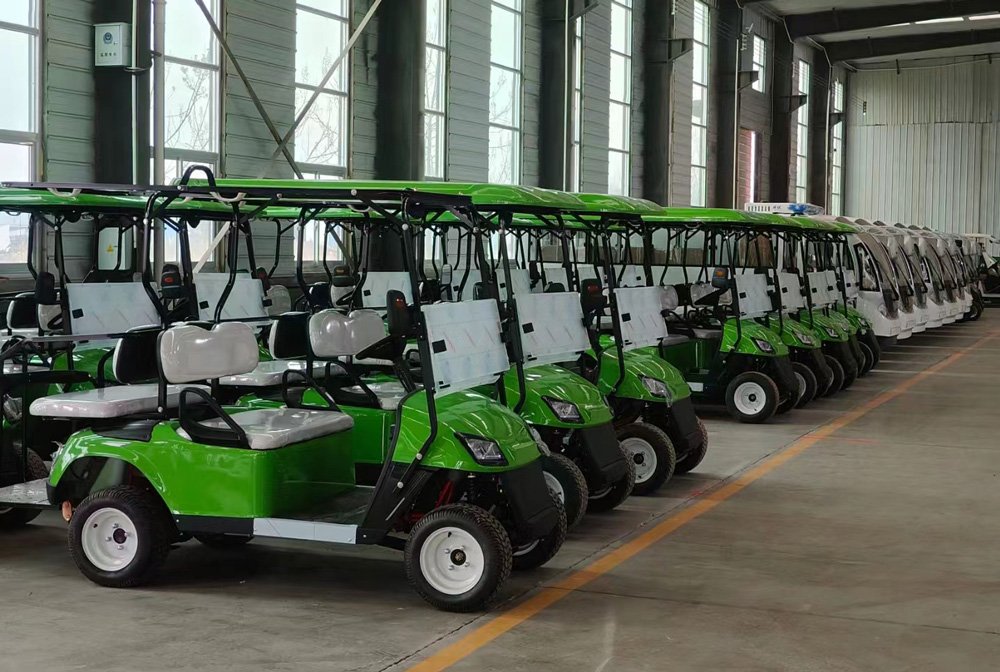
Rather than struggling with aftermarket bolt-on kits that stress factory frames and void manufacturer warranties, sourcing a factory-engineered lifted vehicle from GT Golf Cart guarantees integrated chassis geometry, validated rollover stability, and commercial-grade durability from day one.
| Corporate Profile | Professional OEM/ODM manufacturer specializing in electric golf carts, low-speed vehicles, and sightseeing utility fleets |
| Suspension Engineering | Factory-integrated heavy-duty independent double A-arm front suspension with adjustable coil-overs |
| Chassis Architecture | Hot-dip galvanized structural tubular steel or corrosion-immune aircraft-grade extruded aluminum chassis |
| Braking & Safety | Four-wheel hydraulic disc brakes, regenerative electric motor braking, electromagnetic parking brakes |
| Powertrain Technology | High-torque 48V/72V brushless AC drive systems (5kW to 7kW) paired with high-capacity LiFePO4 lithium batteries |
| Global Certification | Full compliance with ANSI/OPEI Z130.1 safety specifications, DOT/FMVSS 500 LSV standards, and CE directives |
Fleet Engineering Guidance: Eliminate aftermarket fitment failures by ordering direct from the source. Explore custom trail platforms on our Custom Golf Cart portal, review agile family transports via the 4 Passenger Golf Cart line, or configure high-capacity shuttles across our 6 Passenger Golf Cart portfolio.
Direct Technical Comparison: Lift Height, Tire Clearance & Handling
| Lift Option | Track Width Expansion | Camber / Toe Alignment | High-Speed Stability (20+ mph) | Hardware Stress Points | Average Kit Price (USD) |
|---|---|---|---|---|---|
| A-Arm Lift Kit | +2.0″ to +3.5″ per side | Fully Adjustable (Heim joints/cams) | High (Excellent road tracking) | Control arm bushings (greaseable) | $450 – $850 |
| Spindle Lift Kit | +1.5″ to +2.5″ per side | Fixed / Minimal adjustment | Moderate (Can dart on ruts) | Kingpin bolts, spindle weldments | $250 – $450 |
| Drop Axle Kit | +1.0″ to +2.0″ per side | Toe adjustable; Camber fixed | Moderate (Stiff beam compliance) | Axle weld points, kingpin bushings | $280 – $500 |
| Long Travel Kit | +3.5″ to +5.0″ per side | Full race-grade micro-tuning | Exceptional (Soaks high-speed bumps) | Shock mounts, tie-rod heim ends | $1,500 – $2,800 |
| Block Lift Kit | 0″ (Maintains stock width) | Zero adjustability | Poor (Elevates CG without wider track) | Extended U-bolts (axle wrap stress) | $120 – $220 |
| Air-Ride Suspension | Variable dependent on linkage | Requires specialized 4-link setup | Moderate to High (Pressure-tuned) | Airbags, compressor valves, lines | $2,200 – $4,500+ |
Pros and Cons Table: Lifted Golf Carts vs. Standard Ride Height
| Vehicle Setup | Operational & Aesthetic Advantages (Pros) | Mechanical Liabilities & Realities (Cons) |
|---|---|---|
| Custom Lifted Golf Cart (4″ – 6″ Suspension Lift) | Clears 22″ to 23″ all-terrain tires to conquer mud, sand, and steep trails. Eliminates undercarriage frame scraping on rocks and drainage dips. Delivers an aggressive, commanding presence and elevated driving visibility. Expands operational terrain capability for farming, hunting, and resorts. Increases top-end ground speed by 2 to 4 mph due to taller tire rollout. | Elevated center of gravity reduces lateral rollover resistance in sharp turns. Reduces climbing hill torque and drains battery range 10% to 18% faster. Higher step-in entry height makes boarding harder for young kids and elderly. May exceed overhead garage door or enclosed trailer clearance limits. |
| Standard Factory Height Cart (Stock Suspension & 18″ Turf Tires) | Lowest center of gravity: maximum rollover stability during cornering. Maximum battery efficiency: lighter rotational mass maximizes drive range. Low step-in height allows effortless passenger boarding. Fits easily under low parking barriers and standard home garages. Zero added expense on suspension modifications and custom alignment. | Severely limited ground clearance: high-centers easily on mild trail ruts. Restricted to smooth asphalt, concrete, and dry, level grass turf. Cannot fit aggressive off-road tire treads without severe body rubbing. Standard visual styling that lacks custom character and distinct presence. |
Commercial Benefits vs. Operational Realities of Lifted Carts
Investing in Custom Lift Options lifted golf carts utilize is not just a cosmetic upgrade; it is a mechanical modification that directly alters how the vehicle operates across commercial and recreational environments.
The Real Commercial & Functional Benefits:
- Unlocking Unpaved Property Access: In massive commercial agricultural acreage, multi-building industrial campuses, and coastal eco-resorts, unpaved gravel trails, drainage ditches, and washed-out pathways trap low-riding stock golf carts. A lifted cart equipped with 22-inch all-terrain tires rolls smoothly over obstacles that would otherwise high-center a standard vehicle, keeping security patrols and maintenance crews moving without vehicle rescue calls. Review operational utility in our Commercial Golf Cart lineup.
- Higher Resale Value and Market Desirability: In the secondary personal transportation market, lifted electric carts consistently command higher resale pricing and trade-in premiums than bare-bones fleet returns. Buyers gladly pay thousands more for a tastefully lifted vehicle equipped with quality wheels, custom fender flares, and heavy-duty suspension. For real-world market metrics, inspect our research on Golf Cart Cost analysis.
- Improved Line of Sight and Road Presence: In master-planned residential communities where low-speed electric vehicles share neighborhood roadways with full-sized pickup trucks and SUVs, an elevated ride height places the driver at eye-level with oncoming passenger vehicles. This enhanced visual profile significantly boosts passive visibility and driver confidence at intersections.
The Inherent Operational Constraints:
- Rotational Drag and Battery Range Depletion: When you replace lightweight 18-inch turf tires with heavy 23-inch four-ply all-terrain tires, the rotational moment of inertia increases dramatically. The motor requires significantly more energy to accelerate from a dead stop. In our testing, lifting an electric golf cart without upgrading the battery chemistry to Lithium (LiFePO4) reduces driving range by 15% to 20%.
- Height Clearance Constraints in Garages: A standard golf cart with an extended canopy sits roughly 69 to 71 inches tall, easily clearing standard 7-foot residential garage door openings. A 6-inch lift kit paired with 23-inch tires elevates the roofline to 77 or 79 inches. If your garage door tracks hang low, a lifted cart may not fit inside without trimming the roof struts or deflating the tires.
- Accelerated Suspension Component Wear: Altering suspension geometry places extra mechanical leverage on factory steering racks, tie-rod ends, and wheel bearings. If you install an aggressive lift kit on an aging chassis without replacing worn kingpins and bushings, front-end wobble (death wobble) can emerge at speeds exceeding 18 mph. Review performance parameters in our report on 6 Seater Golf Cart Speed dynamics.
Who Needs a Custom Lift Kit vs. Who Should Keep Stock Ride Height
Every dollar allocated to custom vehicle outfitting should deliver tangible utility. Determining whether you should invest in Custom Lift Options lifted golf carts require depends strictly on your terrain, passenger demographic, and daily use case.
Who Must Invest in a Custom Lifted Golf Cart:
- Ranchers, Farmers, and Acreage Property Owners: Navigating pastures, carrying fencing tools across rough fields, or checking irrigation lines requires true ground clearance. Stock carts will bottom out on rocks and high-center in soft soil. A lifted cart with aggressive tires transforms your electric vehicle into a silent, zero-emissions farm utility vehicle.
- Hunting Camp and Outdoor Sports Enthusiasts: Driving silently into deer blinds or hauling waterfowl gear across muddy timber trails requires high approach and departure angles, aggressive mud-tread traction, and water-crossing clearance that only a 5-inch to 6-inch lift can provide.
- Coastal Beach and Dune Community Residents: Standard small tires sink instantly in loose coastal sand. Fitting wide 22×11-10 or 23×10.5-12 low-pressure flotation tires over a custom lift kit allows the vehicle to glide across soft beach sand without digging ruts or burning out the controller.
Who Should Stay with Standard Factory Ride Height:
- Traditional Golf Course Country Club Members: Most formal golf courses strictly ban lifted carts equipped with aggressive knobby all-terrain tires because the deep tread lugs and heavy weight distribution chew up delicate bentgrass fairways and putting greens.
- Retirement Communities with Elderly Passengers: If your vehicle’s primary passengers are elderly family members, individuals with limited mobility, or small children, a 6-inch lift creates a high, awkward step-in height that increases slip-and-fall boarding risks. Keeping a standard ride height ensures effortless, flat ingress and egress.
- Strictly Paved Neighborhood Commuters: If you drive exclusively on smooth, paved 25 mph city streets to drop kids off at school or pick up groceries, lifting the cart adds rotational drag, increases rollover risk, and stiffens the ride with zero off-road benefit. A standard-height vehicle optimized with low-profile street radial tires delivers superior handling and battery range.
Costly Engineering Mistakes When Modifying Lifted Carts
Chassis Engineering Advisory: The single most dangerous mistake made when lifting a golf cart is installing a 6-inch front lift kit while neglecting to upgrade the rear leaf springs. When you add rear passengers on a flip-flop seat kit or haul cargo in a lifted cart with weak factory single-leaf springs, the rear suspension sags severely under load. The rear tires rub violently against the fender wells, and the front end points upward, destroying steering control and blinding oncoming traffic with misaligned headlights.
- Failing to Align Front Toe-In and Camber After Installation: Every lift kit installation alters front tie-rod geometry. If you bolt on a lift kit and drive away without a proper wheel alignment, the front wheels will likely suffer extreme toe-in or toe-out. In our testing, driving an unaligned lifted cart for just two weeks will scrub the outer rubber off brand-new all-terrain tires, leaving them bald and causing dangerous high-speed darting. Always align front wheels with an exact 1/8-inch to 1/4-inch toe-in.
- Stretching Factory Mechanical Brake Cables: When raising the rear axle by 5 or 6 inches, stock brake cables stretch to their absolute physical limit. When the rear suspension articulates over a bump or a ditch, the taut cable inadvertently pulls the brake shoes, causing uncommanded rear wheel lockups while driving. Always install extended heavy-duty brake cables or use supplied brake-line relocation drop brackets.
- Overlooking Powertrain Gearing and Controller Demands: Bolting heavy 23-inch tires onto an older 36V or 48V electric cart with a tired 225-amp DC motor controller will overheat the electrical system. The motor cannot generate enough low-end torque to turn the oversized tires on hills, causing the controller to enter thermal shutdown or burning out the directional forward/reverse contactor switch. If you lift, budget for a minimum 400-amp to 500-amp programmable controller or invest in a modern brushless AC drive platform.
- Using Cheap Low-Grade Hardware on Steering Spindles: Never reuse worn, rusted factory cotter pins or low-grade hardware on steering knuckles. The lateral shock loads on a lifted spindle are substantially higher than on a stock cart. Always use Grade 8 (Class 10.9) zinc-plated bolts with nylon-insert locknuts torqued strictly to manufacturer specifications.
Essential Sourcing Checklist: Steering Geometry, Brakes & Gearing
Before purchasing among the many Custom Lift Options lifted golf carts utilize, audit prospective kits or factory vehicles against these four non-negotiable engineering benchmarks:
1. Verified Suspension Geometry & Alignment Capabilities
Ensure the front suspension system incorporates fully adjustable camber and toe adjustments. Avoid fixed-geometry spindle kits that lack slotted adjustment cams or threaded heim joints, as they lock you into factory tolerances that may not account for subtle frame flex or manufacturing tolerances on older chassis.
2. Structural Metallurgy and Powder-Coat Corrosion Defense
Inquire about material specifications. Quality control arms and spindle horns must be fabricated from seamless DOM (Drawn Over Mandrel) structural carbon steel tubing with a minimum wall thickness of 0.120 inches (3.0 mm). Verify that all components undergo multi-stage electrostatic powder coating or e-coating tested to withstand salt-spray corrosion without flaking or rusting.
3. Hydraulic Braking Upgrades for Oversized Rolling Mass
Standard golf carts rely on primitive mechanical drum brakes on the rear wheels only. When you install heavy 23-inch tires, rotational mass increases by up to 30%, which significantly extends your stopping distance. If you plan to carry four or six passengers at speeds exceeding 20 mph, choose a custom platform equipped with four-wheel hydraulic disc brakes to ensure rapid, fade-free emergency stopping power.
4. Sourcing Factory-Integrated vs. Aftermarket Bolt-On Assemblies
Consider total cost of ownership. Buying a used standard cart, purchasing an aftermarket A-arm lift kit, buying custom 12-inch wheels and 23-inch tires, upgrading the rear leaf springs, extending the brake cables, and swapping the motor controller often costs significantly more in parts and labor than ordering a turn-key, factory-engineered lifted vehicle from the outset. Sourcing direct from an established OEM like GT Golf Cart guarantees that the chassis, suspension, powertrain, and braking systems are balanced and warrantied as a cohesive machine.
Expert Chassis Practitioner’s Final Sourcing Verdict
In our professional assessment across thousands of commercial fleet deployments and custom trail builds, lifting a golf cart transforms it from a limited fairway cruiser into a capable, versatile personal utility vehicle—provided you treat the modification as an integrated chassis engineering project rather than an aesthetic shortcut.
Here is your definitive blueprint for selecting among Custom Lift Options lifted golf carts deploy:
- For General Neighborhood Cruising on a Budget (20″ to 22″ Tires): Choose a 4-Inch Spindle Lift Kit. It provides clean curb and street clearance, widens the front track for stability, and costs under $400, provided you stick to paved paths and light grass.
- For Demanding Trail Riding, Farm Utility & Fleet Work (22″ to 23″ Tires): Invest exclusively in an A-Arm Lift Kit. Its independent coil-over suspension, replaceable greaseable bushings, and full camber adjustability deliver superior ride comfort, tire life, and structural impact strength.
- For Severe Rocks, Deep Mud, and Hunting Expeditions (24″+ Tires): Deploy a true Long Travel Suspension System with dual boxed arms and remote-reservoir shocks to maximize wheel articulation and keep all four tires planted on extreme ruts.
- For Commercial Operators Seeking Turnkey Reliability: Skip aftermarket garage retrofits entirely. Partner directly with an established international manufacturer like GT Golf Cart. A factory-built lifted electric vehicle arrives with a reinforced galvanized chassis, balanced brushless AC powertrain, four-wheel hydraulic disc brakes, and certified rollover stability, ensuring your fleet delivers maximum uptime, driver safety, and heavy-duty performance across any terrain.
Frequently Asked Questions
How does installing a custom lift kit affect electric golf cart battery range and motor speed?
Installing a custom lift kit allows the fitment of taller tires (such as 22-inch or 23-inch all-terrain tires). While larger rolling diameters increase top-end ground speed by roughly 2 to 4 mph due to effective gear ratio expansion, they increase rotational mass and aerodynamic drag, which typically reduces overall battery range by 10% to 18%. In addition, stock DC brushed motors experience increased thermal stress on steep inclines, making an upgrade to a high-torque AC motor and higher-amperage controller advisable for heavy-duty applications.
What is the primary difference between a spindle lift kit and an A-arm lift kit?
A spindle lift kit replaces only the steering knuckle spindles with extended, offset castings while retaining the stock front suspension and steering rack. It is cost-effective and easy to install, but it widens the front track and provides a stiffer ride. An A-arm lift kit replaces the entire front suspension assembly with heavy-duty independent upper and lower control arms, providing superior structural strength, adjustable camber and toe alignment, and substantially smoother handling over rough terrain.
Are lifted golf carts prone to tipping over compared to standard height models?
Yes. Lifting a golf cart increases its vertical center of gravity (CG). Under ANSI/OPEI Z130.1 safety and stability standards, raising a cart by 4 to 6 inches reduces lateral rollover resistance during high-speed cornering. To maintain stability, custom lift kits compensate by widening the wheel track (typically 2 to 3 inches per side) and pairing with offset wheels. Drivers must exercise caution and avoid abrupt, sharp turns at speeds exceeding 15 mph.
Can I install a 6-inch lift kit on my electric golf cart without extending the brake lines and steering linkage?
No. When installing any lift kit exceeding 3 to 4 inches, stock mechanical brake cables, steering shafts, and front hydraulic lines often reach maximum physical extension. Stretching stock cables causes binding, uncommanded steering wander, and unpredictable rear brake lockup during full suspension articulation. High-grade custom lift systems include extended steering linkages and drop-brackets or require extended heavy-duty brake cables.
Authoritative References & Vehicle Safety Standards
- National Highway Traffic Safety Administration (NHTSA): Federal Motor Vehicle Safety Standard 500 (49 CFR 571.500 Low-Speed Vehicle Regulations)
- Outdoor Power Equipment Institute (OPEI / ANSI): ANSI/OPEI Z130.1 Golf Carts – Safety and Performance Specifications
- SAE International: SAE J2258 Light Utility Vehicles – Dynamic Stability and Braking Performance Standards