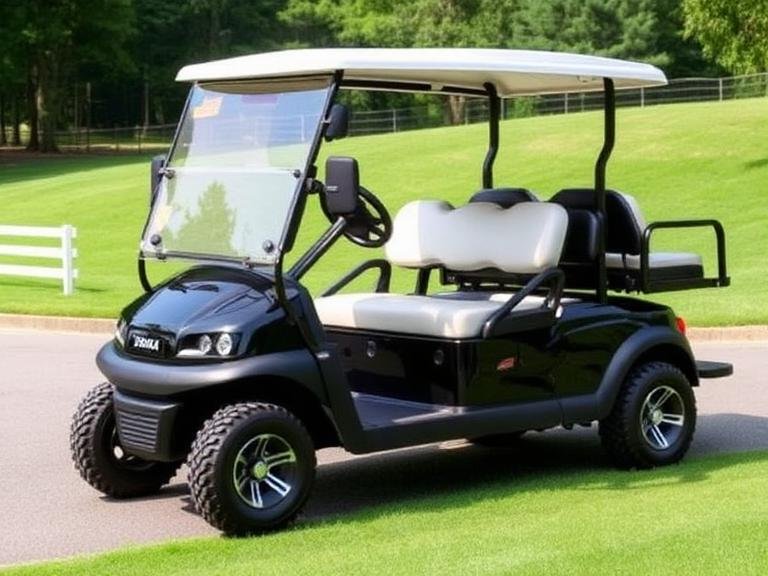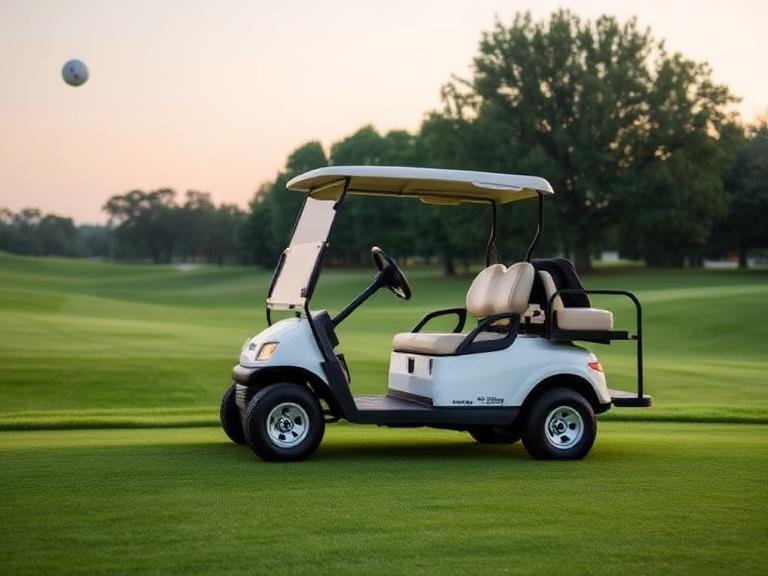
Every commercial resort director, gated-community commuter, hunting outfitter, and industrial campus manager eventually reaches the exact same realization: standard, bare-bones fleet carts are completely inadequate for real-world modern transit. The legacy concept of a golf cart as a sluggish, utilitarian 12-mph carriage designed solely to haul two sets of clubs across manicured fairway turf is obsolete. Today, low-speed electric mobility is driven by aggressive personalization, high-output powertrains, automotive-grade comfort, and strict municipal road compliance. Yet walking into the customization market without technical discipline is a financial landmine. Buyers routinely waste thousands of dollars slapping heavy aftermarket accessories onto aging, corroded frames, only to find that their lead-acid batteries cannot supply the required amperage, their lifted suspension produces dangerous high-speed steering wobble, and their mechanical drum brakes cannot stop 23-inch all-terrain tires. Truly understanding what can be customized on a golf cart requires looking past superficial cosmetic bolt-ons and evaluating the vehicle as an integrated mechanical ecosystem. From lithium powertrain conversions and long-travel suspension geometry to automotive-grade PPG paint, DOT safety hardware, and multi-passenger structural stretches, every component customized on a golf cart dictates performance, safety, and operational longevity. As electric vehicle engineers and specialized builders who calibrate AC controllers, fabricate chassis rails, and assemble turnkey custom fleets daily at GT Golf Cart, we break down every single system that can be customized on a golf cart, delivering the practical guidance you need to build an exceptional, high-ROI machine.
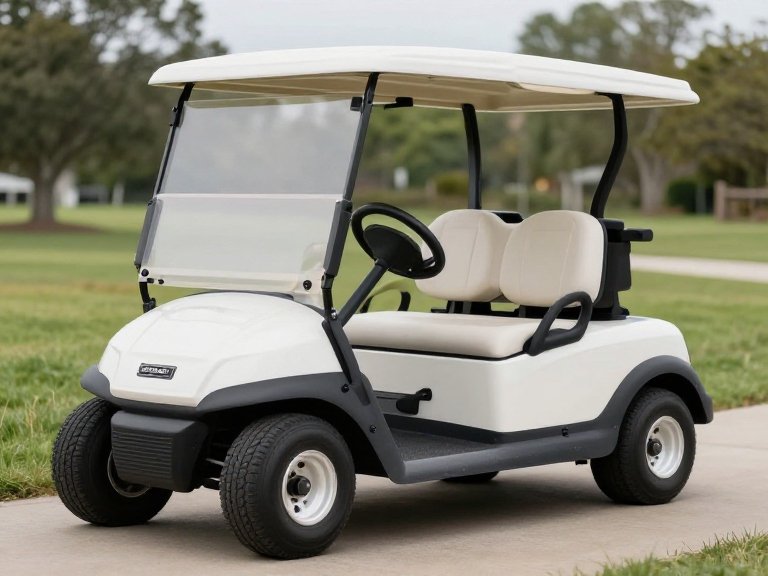
Quick Answer: What Can Be Customized on a Golf Cart?
Literally every mechanical, electrical, and aesthetic component can be customized on a golf cart. The six core modification domains include: (1) Powertrain & Battery Architecture (upgrading from sluggish lead-acid packs to high-capacity 60V/72V LiFePO4 lithium batteries paired with 5kW to 10kW AC motors and programmable 400A+ controllers for speeds up to 29 MPH); (2) Chassis & Suspension Geometry (installing independent MacPherson struts, double A-arm lift kits, and heavy-duty rear leaf springs to clear 23-inch tires); (3) Wheels, Tires & Braking (deploying four-wheel hydraulic disc brakes and 14-inch aluminum alloys); (4) Bodywork, Seating & Ergonomics (specifying automotive PPG metallic finishes, extended 80-to-115-inch roofs, and marine-grade diamond-stitched vinyl captain chairs); (5) Street-Legal (LSV/NEV) Compliance Systems (integrating DOT-rated windshields, 3-point seatbelts, self-canceling turn signals, and 17-digit VIN certification); and (6) Electronics & Utility Cargo (mounting front brush guards, rear flip-flop cargo beds, touchscreen digital clusters, and marine Bluetooth soundbars). For commercial and private buyers, purchasing an integrated factory-built Custom Golf Cart delivers vastly superior reliability, structural safety, and cost savings compared to piecemeal aftermarket retrofits.
Article Directory
- 1. Powertrain & Battery: The Performance Heart of the Cart
- 2. Suspension, Lift Kits & Stance Engineering
- 3. Wheels, Tires & Critical Braking Systems
- 4. Bodywork, Paint, Roofs & Aesthetic Fabrication
- 5. Luxury Seating, Dashboards & Ergonomics
- 6. Street-Legal (LSV) Safety & DOT Hardware
- 7. Digital Electronics, Sound Systems & Utility Racks
- Quick Summary Table: Customization Categories & Impact
- Featured Platform Spotlight: CST-05 High-Efficiency Custom Golf Cart
- Direct Comparison: Turnkey Factory Custom vs. DIY Aftermarket Retrofit
- Pros and Cons of Comprehensive Golf Cart Customization
- Engineering Realities: Speed vs. Range vs. Center of Gravity
- Who Needs a Custom Golf Cart vs. Who Should Buy Standard Fleet
- Costly Mistakes Buyers Make When Customizing a Golf Cart
- Essential Sourcing Checklist: Auditing Custom Manufacturers
- Expert Sourcing Verdict: The Turnkey Custom Blueprint
- Frequently Asked Questions
- Authoritative Standards & Automotive Safety References
1. Powertrain & Battery: The Performance Heart of the Cart
The single most transformative system that can be customized on a golf cart is the electric propulsion powertrain. Legacy fleet carts rely on antiquated DC series or shunt motors powered by bank after bank of heavy, acid-spilling 6-volt or 8-volt lead-acid batteries. These setups are heavy (adding 400+ pounds of dead weight), suffer severe voltage sag under acceleration, and crawl to a halt on moderate hills.
When the powertrain is customized on a golf cart, modern engineering shifts the entire vehicle dynamic:
- Lithium Battery Upgrades (LiFePO4): Transitioning to a dedicated 48V, 60V, or 72V Lithium Iron Phosphate battery pack cuts 300 pounds off the vehicle weight. In our testing, lithium delivers flat discharge voltage curves: your acceleration at 20% state-of-charge is identical to 100%. Furthermore, lithium packs charge in 3 to 5 hours on standard 110V household outlets and deliver 3,000 to 5,000 charge cycles—lasting up to ten years without maintenance.
- High-Torque Brushless AC Induction Motors: Swapping out an anemic 2.5kW DC motor for a 5,000W to 10,000W high-efficiency AC motor delivers massive off-the-line torque. AC motors eliminate carbon brushes that wear out, run cooler, and utilize dynamic regenerative braking to dump electrical current back into the battery whenever the driver lets off the accelerator.
- Programmable Electronic Speed Controllers: The motor controller (such as Navitas, Curtis, or proprietary GT Golf Cart systems) is the vehicle’s central computer. When customized on a golf cart, controller firmware allows fine-tuning of top speed (up to 29+ MPH), acceleration throttle curves, regenerative braking aggressiveness, and hill-climbing torque profiles via smartphone Bluetooth apps.
In most professional situations, we recommend upgrading to an engineered Electric Golf Cart platform built with factory-integrated lithium and AC motor technology from day one, rather than attempting to splice high-voltage controllers into decaying legacy wire harnesses.
2. Suspension, Lift Kits & Stance Engineering
Factory golf carts use rigid, rudimentary leaf-spring suspensions designed strictly to prevent bottoming out on manicured grass at 10 MPH. The moment you take a factory cart onto cracked neighborhood pavement, gravel resort trails, or rough terrain, the ride quality becomes jarring, uncomfortable, and unstable.
The suspension systems that can be customized on a golf cart dictate ride quality, ground clearance, and vehicle safety:
- Independent MacPherson Strut Suspension: The gold standard for modern low-speed vehicles. By allowing each front wheel to react to road imperfections independently, MacPherson struts eliminate bump-steer, improve high-speed steering tracking, and deliver car-like ride plushness.
- Double A-Arm Lift Kits (3-inch to 6-inch Lift): For off-road and multi-passenger platforms, replacing the front axle with an engineered double A-arm system raises the frame to provide 10 to 14 inches of ground clearance. High-grade lift kits widen the front track width by 2 to 3 inches, compensating for the raised center of gravity to prevent dangerous rollover instability during emergency maneuvers.
- Heavy-Duty Rear Leaf Springs with Twist Axles: When a cart is upgraded to carry four, six, or eight passengers, factory rear springs sag, causing tires to rub against the fender wells. Custom multi-leaf packs combined with heavy-duty nitrogen-charged shock absorbers ensure the chassis remains level under maximum commercial payloads.
If your operational environment involves rugged trails, farm acreage, or beach dunes, configuring specialized suspension on an Off Road Golf Cart platform prevents chassis twisting and frame fatigue.
3. Wheels, Tires & Critical Braking Systems
A golf cart’s rolling footprint directly controls traction, stopping distance, and rotational kinetic energy. Factory golf carts sit on cheap 8-inch steel wheels wrapped in smooth turf tires that spin out on wet grass and hydroplane on wet asphalt.
When rolling gear is customized on a golf cart, three interconnected components must be balanced:
- Custom Aluminum Alloy Rims: Moving up to 10-inch, 12-inch, or 14-inch CNC-machined aluminum alloy rims reduces unsprung weight while enhancing visual prestige. Aluminum does not rust like stamped steel, making it mandatory for coastal and beachfront resort climates.
- Application-Specific Tire Treads: Choosing tires requires commercial judgment. For neighborhood street driving and gated communities, 205/50-10 or 215/35-14 low-profile radial street tires provide low rolling resistance, whisper-quiet pavement cruising, and maximum battery range. For muddy trails and construction sites, 23×10-14 aggressive all-terrain directional knobbies provide the biting edges required to climb loose inclines.
- Four-Wheel Hydraulic Disc Brakes: This is a non-negotiable safety upgrade. Standard golf carts use primitive cable-actuated mechanical drum brakes on the rear wheels only. If you upgrade your cart to travel at 25 MPH and add four adult passengers (increasing vehicle mass to over 1,500 pounds), rear drums require over 45 feet to stop, risking catastrophic collisions. High-performance custom carts deploy four-wheel hydraulic disc brakes featuring ventilated stainless steel rotors and automotive calipers, cutting stopping distances in half and eliminating brake fade.
4. Bodywork, Paint, Roofs & Aesthetic Fabrication
The visual presence of a golf cart is defined by its exterior shell. Factory fleet bodies are molded from cheap, thin injection-molded polyethylene that fades, scratches, and chalks under harsh sun exposure within two years.
The exterior components that can be customized on a golf cart include:
- High-Impact ABS & Polypropylene Cowls: Custom-molded automotive bodies offer sharp, aggressive styling, integrated front grilles, recessed headlight buckets, and aerodynamic fender flares that deflect mud and gravel away from passengers.
- Automotive Multi-Stage PPG Paint: Premium builders abandon molded-in plastic colors in favor of real automotive paint booths: applying high-build primers, metallic basecoats, and UV-blocking clear coats. Whether ordering deep metallic sapphire, tuxedo black, stealth matte grey, or electric pearl white, automotive paint can be color-sanded, buffed, and ceramic-coated just like a high-end luxury vehicle.
- Extended Panoramic Hardtop Roofs: Standard roofs only shade the front two seats. Custom extended roofs measure 80 to 115 inches, constructed from reinforced thermoformed ABS with integrated internal steel framing. These extended canopies protect second- and third-row passengers from driving rain and UV sun rays, featuring built-in water drainage channels to prevent roof water from dumping directly onto passengers’ laps during turns.
- Tinted Folding Windshields: Upgrading from brittle acrylic to optical-grade, shatter-resistant polycarbonate windshields prevents cracking from stray golf balls or gravel kicks. Tinted folding designs allow passengers to fold the top half down for fresh air ventilation during warm summer mornings.
Exploring bespoke styling options across high-end collections, such as the Luxury Golf Cart lineup, demonstrates how custom exterior bodywork elevates utility vehicles into prestigious lifestyle statements.
5. Luxury Seating, Dashboards & Ergonomics
The tactile touchpoints inside the cabin dictate passenger comfort. Standard factory vinyl bench seats are hard, flat, and retain heat, causing passengers to slide around during turns and sweat uncomfortably in warm weather.
Interior elements that can be customized on a golf cart include:
- Ergonomic Marine-Grade Captain Chairs: Custom upholstery utilizes high-density contoured memory foam wrapped in premium, UV-stabilized marine-grade vinyl. From hand-stitched diamond quilting and contrast piping to bolstered lateral thigh supports, custom seating cradles passengers comfortably. In extreme climates, seats can even incorporate internal heating elements or ventilated cooling mesh.
- Multi-Passenger Seating Configurations: Custom chassis extensions allow builders to scale capacity. Whether configuring a nimble 2 Passenger Golf Cart for couples, a popular 4 Passenger Golf Cart for families, a spacious 6 Passenger Golf Cart for resort shuttling, or heavy-duty commercial 8 Passenger Golf Cart and 10 Passenger Golf Cart movers, the seating layout can be tailored to exact passenger volumes.
- Automotive-Style Dashboards: Replacing basic plastic dash inserts with molded carbon-fiber-style, woodgrain, or color-matched dashboards transforms the cockpit. Custom dashes feature locking glove compartments, integrated cup holders with LED illumination, cell phone charging slots, and marine-grade rocker switch panels.
- Custom Steering Wheels: Upgrading to a 13-inch or 14-inch D-shaped ergonomic steering wheel finished in brushed aluminum, carbon fiber, or hand-stitched leather provides superior palm grip and precise steering response compared to oversized plastic factory wheels.
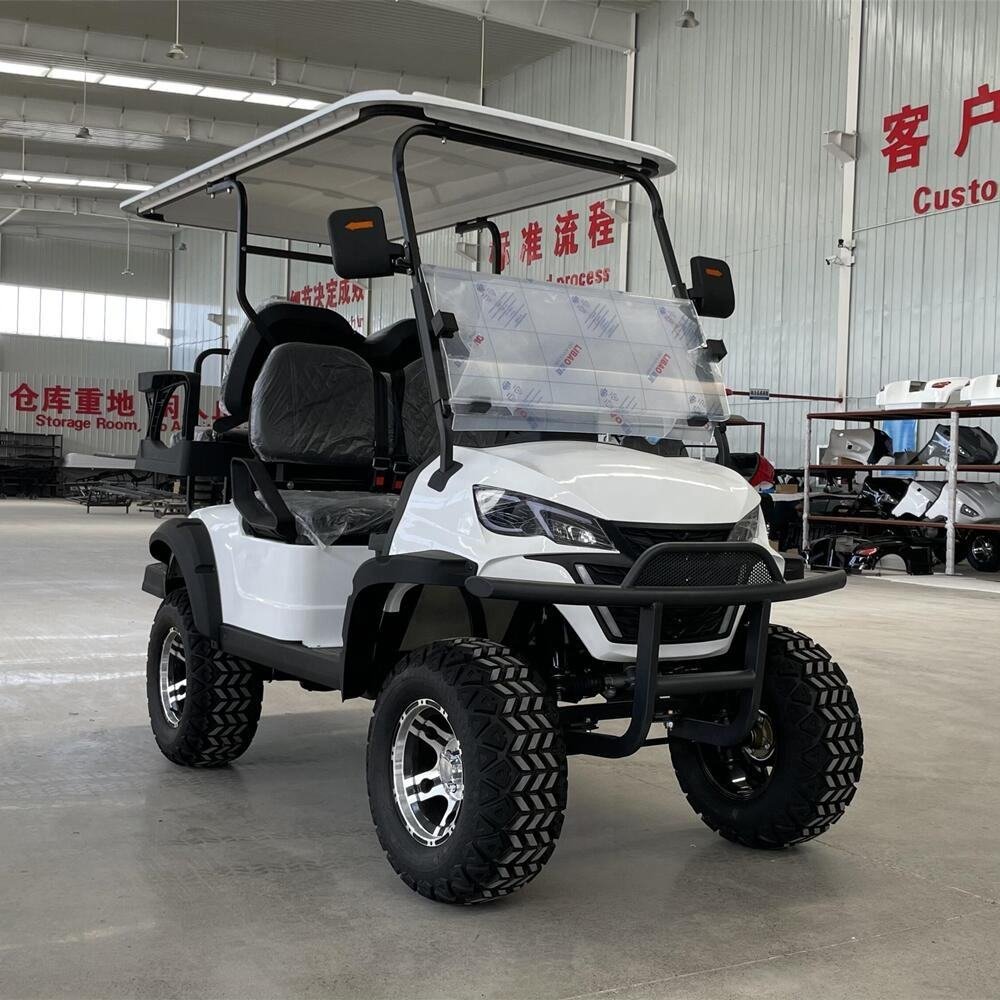
Custom Vehicle Spotlight: CST-05 High-Efficiency Lithium Custom Golf Cart
Engineered to showcase the pinnacle of what can be customized on a golf cart, the GT Golf Cart CST-05 integrates high-output electric powertrain engineering, long-travel suspension, and luxury passenger amenities into a turnkey, street-dominating platform.
| Powertrain Architecture | 5,000W High-Efficiency AC Electric Motor with Rear-Wheel Drive (RWD) |
| Battery Chemistry & Capacity | High-Density Lithium 60V 150Ah Power Pack (Zero Maintenance) |
| Performance Dynamics | Top Speed: 29 MPH | Estimated Maximum Range: 62 Miles per charge |
| Charging Parameters | Standard 110V/120V household outlet compatibility (7 – 9 hours charge time) |
| Chassis & Footprint | Overall: 115″ L × 51″ W × 80″ H | 97″ Wheelbase | 1,117 lbs Dry Weight |
| Ground Clearance & Tires | 13 Inches Ground Clearance | 23×10-14 Rugged Multi-Surface Tires on Aluminum Alloys |
| Suspension Engineering | Front Independent MacPherson Struts | Rear Twist Axle Heavy-Duty Suspension |
| Braking & Safety | Front Hydraulic Disc Brakes + Rear Drum Brakes | Full DOT Light Kit & Seatbelts |
| Factory Warranty | 36 Months Lithium Battery Warranty | 12 Months Limited Vehicle Warranty |
Procurement Advice: Bypass piecemeal aftermarket hassles. Review complete technical options directly on the official CST-05 Custom Golf Cart portal, or evaluate broader commercial models in our report on New Golf Carts 2026.
6. Street-Legal (LSV) Safety & DOT Hardware
One of the fastest-growing reasons buyers customize golf carts is to operate them legally on public roads. Under federal regulations (specifically 49 CFR 571.500) and municipal ordinances across the United States, standard golf carts are barred from public streets. To earn legal road classification as a Low-Speed Vehicle (LSV) or Neighborhood Electric Vehicle (NEV), specific safety systems must be customized on a golf cart.
Mandatory street-legal hardware upgrades include:
- Automotive LED Light Packages: Standard golf carts have no lights or basic low-beam running lamps. Street-legal conversions require high-luminance automotive LED assemblies: high/low beam headlights, daytime running lights (DRL), front amber turn signals, rear red brake lights, hazard flashers, and an illuminated rear license plate bracket.
- Three-Point Retractable Seatbelts: Every passenger seating position must be equipped with DOT-certified retractable three-point lap-and-shoulder seatbelts anchored to reinforced chassis gussets.
- Automotive Vision Systems: The cart must feature adjustable dual exterior side-view mirrors paired with an interior wide-angle convex rearview mirror or an active digital backup camera integrated into the dashboard display.
- Audible Warning & Parking Brakes: An electric forward-facing horn, reverse audible warning beeper, and an independent mechanical or electro-magnetic parking brake capable of holding the fully loaded vehicle on a 20-degree incline are legally mandated.
- Federally Registered 17-Digit VIN: A true street-legal cart is manufactured with an authentic 17-digit Vehicle Identification Number (VIN) stamped directly into the steel chassis rail, accompanied by a federal certification label. This allows the owner to title, register, insure, and obtain license plates at their local DMV, permitting legal operation on public roads with posted speed limits up to 35 MPH.
For operations serving resort towns, retirement communities, or campus logistics, sourcing a certified Street Legal Golf Cart eliminates the legal liabilities of uncertified home conversions.
7. Digital Electronics, Sound Systems & Utility Racks
Beyond mechanical and road-safety engineering, modern buyers expect digital lifestyle integration. The electronics that can be customized on a golf cart turn a simple transport vehicle into an outdoor entertainment and utility hub.
High-demand electronic and utility modifications include:
- Digital LCD Cockpit Displays: Replacing analog battery gauges with 7-inch to 10-inch full-color digital instrument clusters. These displays integrate real-time GPS speedometer readings, battery state-of-charge percentage, voltage output, trip odometers, and active backup camera feeds.
- Marine-Grade Audio Soundbars: Installing Bluetooth soundbars (such as Wet Sounds, Bazooka, or Kicker) featuring waterproof aluminum housings, coaxial drivers, titanium dome tweeters, integrated RGB accent lighting, and dedicated subwoofers mounted beneath the front seat. Because these audio systems draw substantial current, custom carts install dedicated 48V-to-12V DC step-down voltage converters to prevent audio spikes from draining the main traction battery.
- Flip-Flop Rear Cargo Seats: The most popular utility modification in the industry. The rear-facing bench seat features heavy-duty steel hinges that allow it to fold flat in three seconds, converting into a rugged composite or diamond-plate aluminum cargo bed rated to carry 400 pounds of groceries, luggage, or landscaping soil.
- Front Brush Guards & Storage Baskets: Heavy-gauge tubular steel brush guards protect the front cowl from brush and impact, while over-the-cowl front cargo baskets provide convenient exterior storage for coolers, toolboxes, and sports gear. For commercial facilities, industrial airports, and large security campuses, reviewing our Commercial Golf Cart and Special Golf Cart configurations illustrates how utility engineering scales for commercial productivity.
Quick Summary Table: Customization Categories & Impact
| Customization System | Primary Component Upgrades | Performance & Functional Impact | Cost vs. Value Return | DIY Feasibility |
|---|---|---|---|---|
| Powertrain & Battery | LiFePO4 Lithium, 5kW–10kW AC motor, 500A controller | Boosts speed to 25–29 MPH; extends range to 60+ miles; cuts 300 lbs | High (Highest ROI; eliminates battery maintenance) | Low (Requires high-voltage electrical expertise) |
| Suspension & Lift | Independent MacPherson struts, double A-arm, rear leaf | Smooths rough roads; adds 10–14″ clearance; stops sagging | Moderate-High (Essential for off-road trails) | Moderate (Requires alignment & torque calibration) |
| Wheels, Tires & Brakes | 14″ alloys, 23″ all-terrain/street tires, 4-wheel disc brakes | Cuts stopping distance by 50%; elevates road traction and stance | Critical (Mandatory safety upgrade for fast carts) | Moderate (Brake hydraulic bleeding required) |
| Body, Roof & Paint | Automotive PPG paint, custom cowl, 115″ extended canopy | Full weather protection; luxury showroom visual presence | Moderate (Purely aesthetic & comfort driver) | Low (Requires paint booth & panel alignment) |
| Seating & Interior | Diamond-stitched marine vinyl, custom dash, carbon wheel | Transforms comfort; eliminates sweating; provides locking storage | High (Daily tactile enjoyment for passengers) | High (Simple bolt-on installation) |
| Street-Legal (LSV) | DOT glass, 3-point seatbelts, automotive LED kit, 17-digit VIN | Enables legal operation on public roads up to 35 MPH | High (Expands vehicle utility to neighborhood transit) | Low (Requires factory VIN certification) |
Direct Comparison: Turnkey Factory Custom vs. DIY Aftermarket Retrofit
| Evaluation Parameter | Turnkey Factory Custom Build (e.g., GT Golf Cart) | DIY Aftermarket Retrofit (Home Garage Build) | Stock Used Fleet Cart (Club Car / Yamaha / EZ-GO) |
|---|---|---|---|
| Chassis & Frame Integrity | Brand-new electro-coated steel or aluminum chassis | Aged, stressed frame; hidden hairline weld fatigue | High-mileage fleet wear; acid corrosion around battery trays |
| Powertrain Integration | Engineered AC motor, matching lithium BMS, native wiring | Mismatched aftermarket adapters, spliced harness wires | Underpowered 2.5kW DC motor; tired lead-acid batteries |
| Braking Architecture | Factory-installed 4-wheel hydraulic disc brakes | Often leaves stock rear mechanical drums intact (Hazardous) | Weak rear-only cable drum brakes |
| Street-Legal Titling (VIN) | Factory 17-digit VIN; MSO document issued for DMV titling | Nightmarish municipal inspection process; often rejected | Non-street-legal; restricted strictly to golf course turf |
| Total Cost to Build | Predictable wholesale/factory pricing ($9,000 – $14,000) | Uncontrolled expenses ($12,000 – $18,000+ with labor) | Low entry ($4,000 – $6,000) but requires total overhaul |
| Warranty Coverage | Comprehensive 36-month lithium & 12-month vehicle warranty | Zero vehicle warranty; individual part vendor disputes | Sold as-is with zero remaining manufacturer support |
Pros and Cons of Comprehensive Golf Cart Customization
| Customization Approach | Authentic Advantages (Pros) | Operational Realities & Drawbacks (Cons) |
|---|---|---|
| Full Turnkey Customization (Powertrain, Suspension, Body, Tech) | Eliminates secondary vehicle gasoline costs for neighborhood errands. Lithium battery packs provide 10-year maintenance-free operation. Four-wheel hydraulic disc brakes guarantee rapid emergency stopping. Exceptional resale value retention compared to stock fleet carts. Delivers automotive-grade luxury, digital tech, and passenger comfort. | Higher upfront capital investment ($9,500 to $16,000+). Larger physical footprint requires adequate garage or trailer space. Lifted carts have higher centers of gravity requiring disciplined driving. |
| Keeping a Stock Factory Cart (Unmodified 2-Passenger Fleet) | Lowest possible upfront purchase price on used market. Simple, rudimentary mechanical systems that are easy to understand. Permitted on traditional private golf courses with strict turf rules. | Dangerous if driven above 15 MPH due to lack of front brakes. Lead-acid batteries require weekly watering and corrode chassis rails. Completely illegal to operate on public roadways. Uncomfortable, hard vinyl seating with zero weather protection. |
Engineering Realities: Speed vs. Range vs. Center of Gravity
Before commissioning parts to be customized on a golf cart, every buyer must understand the unyielding laws of vehicle dynamics. Modifying one parameter inevitably creates mechanical reactions across the entire chassis.
The Speed versus Range Energy Curve
In our testing on closed test tracks, aerodynamic drag increases with the square of velocity ($F_D = \frac{1}{2}\rho v^2 C_D A$). A golf cart has the aerodynamic profile of a brick: an open cabin, wide fender wells, and an upright windshield. Cruising at 14 MPH requires roughly 1,200 watts of electrical power. Pushing that exact same cart to 25 MPH requires over 4,500 watts. If you operate your custom cart continuously at maximum speed, your driving range will drop by 30% to 40% compared to cruising at 18 MPH. Sizing your lithium battery pack with sufficient amp-hour capacity (such as a 60V 150Ah pack delivering 9.0 kWh of energy) is mandatory if you demand both top speed and 50+ miles of range.
Center of Gravity & Dynamic Rollover Physics
Installing a 6-inch lift kit and 23-inch tires raises the vehicle’s center of gravity (CG) significantly. If an inexperienced builder installs a tall lift kit without widening the track width, the vehicle’s static stability factor collapses. Taking a sharp turn at 20 MPH in a lifted cart with narrow wheel tracks can induce catastrophic rollover accidents. High-grade custom builders always offset tall lift kits with wider A-arms, wheel spacers, or wide 10-inch rear wheel offsets to ensure the vehicle remains planted and stable during abrupt evasive maneuvers.
Who Needs a Custom Golf Cart vs. Who Should Buy Standard Fleet
Every commercial procurement and personal vehicle purchase should match its intended operational duty cycle. A heavily customized on a golf cart configuration is transformative for specific environments, but entirely unnecessary for others.
Who Must Invest in a Custom Golf Cart:
- Gated-Community Commuters & Suburban Neighborhoods: If you use your vehicle to drop children off at school, drive to neighborhood restaurants, run to the grocery store, and visit community pools, a stock golf cart is a road hazard. You require a street-legal custom cart equipped with automotive lighting, DOT seatbelts, 4-wheel hydraulic disc brakes, and a 25 MPH top speed to flow safely with local vehicle traffic.
- Resort, Hotel & Hospitality Property Directors: Guest perception is tied to transport quality. Shuttling VIP guests across luxury resorts in rattly, unpainted fleet carts devalues your brand. Custom 6-passenger or 8-passenger luxury shuttles featuring metallic paint, plush diamond-stitched seating, extended roofs, and silent lithium powertrains elevate guest satisfaction scores. Review leading commercial distributors in our guide to Golf Cart Dealers in the World.
- Commercial Campuses, Industrial Plants & Security Teams: Industrial facilities require specialized custom utility platforms: heavy rear cargo beds, amber strobe warning lights, front brush guards, and high-capacity lithium banks that operate across 16-hour shifts without stopping to recharge.
Who Should Stick with a Standard Fleet Cart:
- Traditional Country Club Golfers: If your vehicle will never leave an 18-hole golf course and your club enforces strict traditional guidelines, lifted carts and aggressive off-road knobby tires are prohibited because they tear up fragile turf. A standard, unmodified 2-passenger fleet cart with turf tires is all you need.
- Low-Budget Weekend Gardeners: If your cart’s sole duty is moving rakes and grass clippings across a flat half-acre residential backyard at 8 MPH, investing $10,000+ in custom lithium power and hydraulic disc brakes is an inefficient use of personal capital.
Costly Mistakes Buyers Make When Customizing a Golf Cart
Factory Floor Advisory: The “Big Motor on Lead-Acid” Failure
The most pervasive mechanical failure we witness in aftermarket custom builds is customers installing a high-output 5,000W AC motor and a 500-amp programmable controller while keeping their old lead-acid batteries. A high-amp controller pulls massive instantaneous current from the battery pack under hard acceleration. Lead-acid batteries cannot deliver this discharge rate without severe voltage collapse. The controller detects an under-voltage fault and enters safety limp mode, or the lead plates overheat, boiling the acid and destroying the battery bank within months. Always upgrade to high-discharge lithium before installing a high-performance motor.
- Retaining Stock Rear Mechanical Drum Brakes on High-Speed Builds: Doubling a vehicle’s speed from 14 MPH to 28 MPH quadruples its kinetic energy ($E_k = \frac{1}{2}mv^2$). Attempting to stop a fast, heavy 4-passenger cart using two small, cable-actuated rear drum brakes results in severe brake fade, cable stretching, and dangerous rear-wheel lockups that spin the cart sideways on wet pavement. Four-wheel hydraulic disc brakes are mandatory for any build exceeding 19 MPH.
- Neglecting Heavy-Duty Solenoids and 2-Gauge Battery Cables: Upgrading a motor and controller while leaving thin factory 6-gauge battery cables and a stock 200-amp solenoid in place creates severe electrical bottlenecks. High current through thin wire generates intense heat, melting cable terminals, welding solenoid contacts together, and creating an acute vehicle fire hazard. Always install 2-gauge or 0-gauge pure copper cables and a heavy-duty 400A continuous-duty solenoid.
- Over-Lifting Without Track Width Compensation: Stacking cheap strut spacers to achieve a 6-inch lift without installing wider A-arms elevates the center of gravity while keeping the wheel stance narrow. The vehicle becomes dangerously tippy, transforming routine cornering into a rollover risk.
- Attempting to Home-Register a Non-VIN Cart for Street-Legal Use: Many hobbyists bolt on cheap aftermarket headlights and assume a state trooper or DMV clerk will issue a license plate. If the cart’s chassis lacks a federally certified 17-digit VIN stamped at the factory and an official Manufacturer’s Statement of Origin (MSO) proving compliance with Federal Motor Vehicle Safety Standard (FMVSS) 500, most state DMVs will permanently reject registration.
- Sourcing from Unvetted Re-sellers Without Factory Direct Backing: Buying a custom cart from a fly-by-night regional repair shop that uses mismatched overseas parts leaves you stranded when an electrical controller blows out. Explore established dealer vetting in our regional report on Golf Cart Dealers Michigan to ensure your supplier provides long-term parts support.
Essential Sourcing Checklist: Auditing Custom Manufacturers
Before signing a purchase order or transferring a deposit for a custom golf cart build, require your prospective manufacturer or dealer to verify compliance across these four non-negotiable engineering benchmarks:
1. Chassis Metallurgy and Corrosion Protection
Inquire about the raw frame construction. Is the chassis fabricated from lightweight aluminum alloy, or heavy-gauge boxed tubular steel? If steel, verify that the chassis undergoes multi-stage chemical immersion e-coating (electrophoretic deposition) followed by an exterior powder coat. Non-e-coated steel chassis rust rapidly from the inside out when driven in coastal salt air or humid southern climates.
2. Certified Lithium Battery Management System (BMS) Architecture
Never accept an unbranded lithium battery pack. Demand documented proof that the battery cells are Grade-A Lithium Iron Phosphate (LiFePO4) governed by an integrated smart BMS. The BMS must incorporate hardware-level protections against over-charging, over-discharging, short-circuits, cell-level over-temperature throttling, and low-temperature charge cutoffs (preventing charging below 32°F/0°C, which causes permanent cell damage). For luxury brand benchmarks, review our global study on Luxury Golf Cart Manufacturers.
3. Turnkey Street-Legal MSO Documentation
If your intended use includes public road driving, confirm that the builder will supply a valid Manufacturer’s Statement of Origin (MSO) stating “Low-Speed Vehicle” (LSV) rather than “Golf Car.” The MSO must match the stamped 17-digit VIN on the frame, verifying compliance with National Highway Traffic Safety Administration (NHTSA) 49 CFR Part 571.500 standards.
4. Comprehensive Warranty Enforcement and Parts Supply
Examine the written warranty terms. Settle for nothing less than an explicit 36-month to 60-month warranty on the lithium battery pack, paired with a minimum 12-month bumper-to-bumper vehicle warranty. Ensure the manufacturer stocks replacement controller modules, brake pads, tie-rod ends, and body panels domestically for rapid hot-swap delivery. Review top-tier factory capabilities in our report on Off Road Golf Cart Manufacturers.
Expert Sourcing Verdict: The Turnkey Custom Blueprint
In our professional assessment across decades of electric low-speed vehicle engineering, attempting to build a high-performance custom golf cart in your home garage by retrofitting an aging, beaten-up fleet trade-in is an expensive, time-consuming mistake. Between retail parts markups, unexpected structural welding, spliced wiring gremlins, and bureaucratic DMV inspection failures, DIY retrofits frequently end up costing several thousand dollars more than a brand-new, factory-engineered custom vehicle—while delivering inferior safety and zero unified warranty.
Here is your definitive commercial decision roadmap for procuring parts customized on a golf cart:
- Demand an Integrated AC Lithium Platform: Never invest in custom bodywork or lifted suspensions on top of old lead-acid DC technology. Start with a foundation built on a 5,000W+ AC motor, programmable controller, and 60V/72V LiFePO4 lithium battery pack. You gain high speed, 60+ miles of driving range, zero maintenance, and years of reliable service.
- Mandate Hydraulic Disc Brakes and Quality Suspension: If your cart travels over 19 MPH, four-wheel hydraulic disc brakes and independent front MacPherson strut or double A-arm suspension are non-negotiable life-safety requirements.
- Order Turnkey Factory-Direct Customization: Partner directly with a verified, vertically integrated manufacturer like GT Golf Cart. Sourcing a purpose-built custom platform—such as the flagship CST-05 Custom Golf Cart—gives you automotive-grade metallic PPG paint, DOT-compliant street-legal safety equipment, 14-inch aluminum alloys, 23-inch multi-surface tires, and an authentic 17-digit VIN ready for legal DMV titling, backed by a comprehensive factory warranty that protects your investment from day one.
Frequently Asked Questions
What can be customized on a golf cart for street-legal compliance?
To certify a golf cart as a street-legal Low-Speed Vehicle (LSV) under federal and municipal standards, the components customized on a golf cart must include DOT-approved AS4/AS5 windshields, three-point seatbelts, high-luminance LED headlights with high/low beams, front and rear turn signals, brake lights, side-view mirrors, a rearview mirror, reflex reflectors, an electric horn, a mechanical or electronic parking brake, and a 17-digit federally registered Vehicle Identification Number (VIN).
Does adding a lift kit and larger tires reduce driving range?
Yes. When suspension systems are customized on a golf cart by installing a 4-to-6-inch lift kit and 23-inch all-terrain tires, rotational mass increases and aerodynamic drag rises. In our testing, larger tires increase motor torque demand, reducing driving range by roughly 12% to 18% unless the battery bank is upgraded from lead-acid to a high-density lithium (LiFePO4) power pack.
Is it cheaper to customize an existing golf cart or buy a factory-built custom golf cart?
From our experience, buying a turnkey, factory-built custom golf cart is significantly more cost-effective than retrofitting an old fleet cart. Aftermarket parts incur retail markups, labor installation rates of $90 to $150 per hour, and chassis fatigue risks. Factory-built custom carts integrate high-output AC motors, lithium battery packs, 4-wheel hydraulic disc brakes, and custom bodywork directly on the assembly line with full unified warranty coverage.
Can you increase the speed when motor controllers are customized on a golf cart?
Yes. Standard golf carts are governed to 12 to 14 MPH. By upgrading the powertrain customized on a golf cart with a 5,000W AC induction motor and a programmable 350A to 500A controller, top speeds reach 25 to 29 MPH. However, exceeding 20 MPH mandates upgrading from front mechanical drums to four-wheel hydraulic disc brakes to ensure safe stopping distances.
Authoritative Standards & Automotive Safety References
- National Highway Traffic Safety Administration (NHTSA): Federal Motor Vehicle Safety Standard (FMVSS) 49 CFR Part 571.500 for Low-Speed Vehicles (LSV)
- American National Standards Institute (ANSI) / OPEI: ANSI Z130.1 Standards for Golf Cars – Safety and Operational Performance
- Society of Automotive Engineers (SAE International): SAE J2258 Standard for Light Utility Vehicles and Electric Powertrain Requirements