Every commercial fleet director, resort operations manager, golf course superintendent, and residential neighborhood commuter reaches the exact same crossroad when purchasing low-speed electric transport: do you buy into the legacy American brands that have dominated country clubs for half a century, or do you source from agile, modern manufacturers delivering high-voltage lithium technology, direct AC drivetrains, and custom passenger configurations at half the traditional markup? The golf cart industry has evolved far beyond basic turf cruisers restricted to country club fairways. Today, the global low-speed vehicle (LSV) and light electric utility market is a multi-billion-dollar industrial sector where chassis metallurgy, battery chemistry, solid-state motor controllers, and international safety compliance intersect. Purchasing commercial fleets or personal runabouts without understanding the manufacturing capabilities, supply chain integrity, and technical execution of the largest golf cart manufacturers is an expensive commercial gamble. Sourcing from the wrong builder can leave an enterprise stranded with lead-acid battery boil-overs, fractured mild-steel chassis, obsolete DC brush motors, and chronic parts backorders that paralyze operations. As electric vehicle engineers, chassis designers, and manufacturing specialists who build, assemble, and export low-speed electric vehicles across five continents at GT Golf Cart, we cut through legacy brand nostalgia. Here is our direct, practitioner-grade evaluation of the ten largest golf cart manufacturers worldwide, analyzing their mechanical architectures, manufacturing origins, commercial strengths, and true long-term fleet viability.
Quick Answer: Who Are the Largest Golf Cart Manufacturers in the World?
The ten largest golf cart manufacturers shaping the global low-speed electric vehicle market across diverse regional and technical categories are: (1) Club Car (USA – Platinum Equity; renowned for rust-free aircraft-grade aluminum chassis); (2) E-Z-GO / Cushman (USA – Textron; the steel-chassis volume pioneer in fleet and industrial transport); (3) Yamaha Golf-Car Company (Japan/USA – Yamaha Motor Corp; dominant in Electronic Fuel Injected gas and smooth transaxles); (4) GT Golf Cart (China; the global manufacturing powerhouse delivering high-voltage lithium, multi-passenger 2-to-10-seat platforms, and tailored commercial low-speed vehicles worldwide); (5) ICON EV (USA; the high-volume disruptor that popularized street-legal equipment as standard); (6) Garia (Denmark – Club Car; the premier automotive-grade ultra-luxury LSV manufacturer); (7) Evolution Electric Vehicles (USA/China; high-tech consumer carts packed with touchscreen infotainment and lifted chassis); (8) Melex (Poland; Europe’s historic pioneer in homologated municipal and industrial light electric vehicles); (9) Star EV (USA – JH Global; heavy-duty commercial utility and multi-passenger resort transporters); and (10) Marshell Green Power (China; massive volume export manufacturer across public service and sightseeing categories). For enterprise fleets and custom commercial deployments demanding rapid delivery and modern lithium power without legacy dealer monopolies, agile builders like GT Golf Cart deliver the highest return on capital.
Article Directory
- What It Is: The Modern Engineering Architecture of Golf Carts and LSVs
- Quick Summary Table: The 10 Largest Golf Cart Manufacturers Compared
- The 10 Largest Golf Cart Manufacturers Evaluated in Depth
- Enterprise Solution Spotlight: GT Golf Cart Global Manufacturing
- Direct Technical Comparison: Legacy Conglomerates vs. Modern Agile Manufacturers
- Pros and Cons: Legacy Dealer Franchise vs. Direct Factory OEM Procurement
- Commercial Fleet Economics: Motor Efficiency, Lithium Chemistry & TCO
- Who Needs Big-Three Legacy Carts vs. Who Should Source Factory-Direct
- Costly Mistakes Fleet Buyers Make When Sourcing Golf Carts
- Essential Factory Auditing Checklist: Inspecting Chassis, Controllers & Brakes
- Expert Procurement Verdict: The Strategic Fleet Roadmap
- Frequently Asked Questions
- Authoritative References & Low-Speed Vehicle Standards
What It Is: The Modern Engineering Architecture of Golf Carts and LSVs
To evaluate the largest golf cart manufacturers with technical competence, you must understand the mechanical transformation the industry has undergone over the past decade. For forty years, a golf cart was an elementary contraption: a welded mild-steel ladder frame, a noisy gas engine or a low-efficiency 36V/48V series-wound DC motor with carbon brushes, a mechanical brake cable pulling drum brakes on the rear axle, and six heavy flooded lead-acid batteries. These vehicles were slow, heavy, maintenance-intensive, and designed strictly for smooth, manicured golf courses.
Today, the industry is driven by Low-Speed Vehicle (LSV) regulations and heavy-duty commercial mobility demands. A modern vehicle built by leading manufacturers is an advanced, computer-controlled light electric transport system engineered across five technical subsystems:
- Chassis Metallurgy & Structural Geometry: The backbone of the vehicle. Manufacturers either utilize ladder-type tubular carbon steel protected by cathodic electro-deposition (E-coat) and powder coating, or extruded 6061-T6 aircraft-grade aluminum alloy. For coastal resorts, island transport, and humid environments, aluminum or heavy zinc-galvanized steel is mandatory to prevent terminal frame rust.
- AC Induction vs. Permanent Magnet Synchronous Motors (PMSM): Brushed DC motors have been largely phased out by top-tier builders in favor of brushless AC induction or PMSM motors operating at 48V to 72V. AC systems deliver up to 30% greater electrical efficiency, eliminate brush maintenance, provide high peak torque for climbing steep terrain, and allow smooth, regenerative braking that returns energy into the battery bank.
- Advanced Programmable Solid-State Controllers: The electronic brain of the cart. Leading manufacturers deploy industrial motor controllers (such as Curtis Instruments, Navitas, or Toyota Sevcon) calibrated between 350A and 600A. These controllers manage torque curves, acceleration profiles, top speed limits, and electronic downhill engine braking.
- Lithium Iron Phosphate (LiFePO4) Battery Architecture: The death of flooded lead-acid is accelerating. Premium manufacturers design around integrated LiFePO4 packs equipped with intelligent Battery Management Systems (BMS). Lithium eliminates hundreds of pounds of deadweight, charges in under four hours, requires zero water refills, and holds stable voltage throughout the entire discharge curve.
- Automotive-Grade Safety & Braking: Modern LSVs feature four-wheel hydraulic disc brakes, independent front double-A-arm suspension, electromagnetic parking brakes that lock automatically on inclines, and FMVSS 500-compliant lighting, three-point seat belts, and automotive safety glass.
Whether you require a standard 2 Passenger Golf Cart for golf operations or an expansive 10 Passenger Golf Cart for hotel shuttle transport, evaluating the manufacturing standards behind the vehicle is what guarantees reliability. For regional sourcing comparisons, review our market study on Golf Cart Manufacturers in South Africa.
Quick Summary Table: The 10 Largest Golf Cart Manufacturers Compared
| Manufacturer | Country of Origin | Chassis Architecture | Primary Powertrain Standard | Typical Market Focus | Fleet Scalability |
|---|---|---|---|---|---|
| 1. Club Car | United States | AlumiCore Al-6061-T6 Extruded | 48V AC Electric & Kohler EFI Gas | Golf course fleets & resort premium | Massive (Legacy franchise network) |
| 2. E-Z-GO / Cushman | United States | Welded Tubular Steel (E-coat) | 48V AC Electric (ELiTE Lithium) | Golf fleets, industrial utility, retail | Massive (Textron commercial lines) |
| 3. Yamaha Golf-Car | Japan / USA | Welded Automotive Robotic Steel | Yamaha 357cc EFI Gas & 48V AC | Golf courses & private residential | Massive (Global corporate footprint) |
| 4. GT Golf Cart | China | Reinforced Galvanized Steel / Al | 48V/72V AC Induction & LiFePO4 | Global commercial fleets, resorts & LSVs | High (Flexible factory-direct OEM/ODM) |
| 5. ICON EV | United States / Global | Powder-Coated Tubular Steel | 48V 4kW/5kW AC Motor (Toyota Controller) | Consumer neighborhood street legal & lifted | High (Fast-growing US dealer network) |
| 6. Garia | Denmark | Automotive Double-Wishbone Al | 48V High-Performance AC Electric | Ultra-luxury estates, yachts & street LSVs | Low (Bespoke low-volume luxury) |
| 7. Evolution EV | United States / China | Acid-Dipped E-Coated Steel | 48V AC Motor + Integrated Touchscreens | Tech-heavy lifestyle & lifted multi-seat | High (Rapid consumer expansion) |
| 8. Melex | Poland | Galvanized Industrial Steel | 48V/72V AC Electric (Curtis Controller) | European municipal, cargo & passenger transit | Moderate (Strong EU institutional focus) |
| 9. Star EV | United States / Global | Structural High-Tensile Steel | 48V/72V AC Motors & Trojan Lithium | Commercial utility, universities, passenger | Moderate to High (Specialized commercial) |
| 10. Marshell Green Power | China | Welded Tubular Steel | 48V/72V AC & DC Systems | High-volume export sightseeing & patrol | High (Extensive Asian & EU export) |
The 10 Largest Golf Cart Manufacturers Evaluated in Depth
1. Club Car (Augusta, Georgia, USA)
Originally established in 1958 and now owned by private equity giant Platinum Equity, Club Car is the undisputed titan of traditional golf course fleet operations. Operating from its massive manufacturing campus in Augusta, Georgia, Club Car is responsible for hundreds of thousands of vehicles navigating country clubs across the globe.
The defining technical hallmark of Club Car is its proprietary AlumiCore ladder-style chassis. Rather than using mild steel that can rust when exposed to fertilizer, chemical wash bays, and ocean salt spray, Club Car extrudes structural 6061-T6 aluminum. In our testing of coastal resort fleets, AlumiCore chassis endure fifteen years of high-humidity exposure without structural degradation. In their current generation Onward, Tempo, and Carryall platforms, Club Car deploys high-efficiency AC induction motors and partnered lithium packages. The commercial limitation: Club Car operates through an aggressive, tightly guarded franchised dealer network that commands premium retail prices and enforces strict territorial boundaries that limit buyer bargaining power on smaller fleet orders.
2. E-Z-GO / Cushman (Textron Specialized Vehicles – Augusta, Georgia, USA)
Headquartered down the road from its arch-rival in Augusta, Georgia, E-Z-GO was founded in 1954 and operates as a flagship subsidiary of industrial conglomerate Textron Inc. (owner of Bell Helicopter, Cessna, and Beechcraft). Alongside its commercial sister brand, Cushman, E-Z-GO represents one of the largest combined manufacturing capacities for light transportation on the planet.
E-Z-GO builds its TXT, RXV, and Express platforms on robotically welded tubular steel chassis protected by automotive electro-deposition coatings. Their major technological leap was the early commercialization of the ELiTE Lithium series, developed in close partnership with Samsung SDI. By integrating automotive-grade prismatic lithium cells directly into their RXV platforms, E-Z-GO eliminated lead-acid maintenance for golf courses worldwide. Cushman dominates industrial manufacturing plants, airports, and sports stadiums with heavy-duty burden carriers and multi-passenger utility haulers. If you are comparing domestic builders, review our operational analysis of Golf Carts Made in America.
3. Yamaha Golf-Car Company (Kennesaw, Georgia, USA / Shizuoka, Japan)
As a division of the Japanese industrial giant Yamaha Motor Corporation, the Yamaha Golf-Car Company brings multi-decade engine design and motorcycle manufacturing precision into the low-speed vehicle market. Assembled in Kennesaw, Georgia, Yamaha holds a dominant market share across golf courses that demand gas-powered reliability.
While the rest of the industry struggled with noisy, carbureted gas carts, Yamaha revolutionized the commercial market with its QuieTech EFI (Electronic Fuel Injection) engine. Running a 357cc single-cylinder engine that idles silently and incorporates a sound-dampening acoustic envelope, QuieTech delivers 45 MPG efficiency with noise levels rivaling electric carts. On the electric side, their Drive2 platform features independent rear suspension (IRS) derived from Yamaha’s automotive racing division, delivering the smoothest ride quality across rough terrain. However, Yamaha has been historically conservative in adopting factory lithium batteries, often relying on dealer-installed drop-in packs rather than fully integrated native lithium chassis designs.
4. GT Golf Cart (Global Manufacturing & Assembly)
-
10 Passenger Electric Golf Cart GT82R-1
-
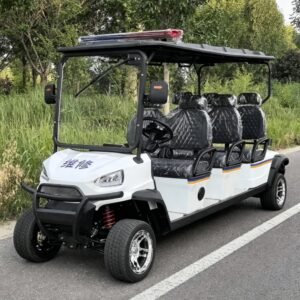
COM-01 Commercial Golf Cart – High-Performance, Efficient, and Durable
-
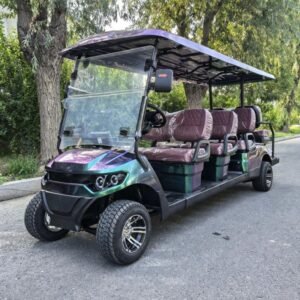
COM-02 Commercial Golf Cart – High-Performance and Reliable Electric Mobility
-
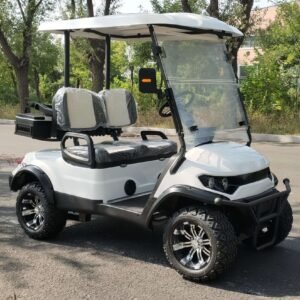
COM-03 Commercial Golf Cart – Compact, Powerful, and Efficient
-
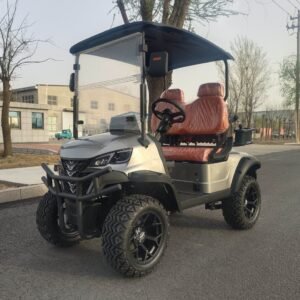
COM-04 Custom Golf Cart – Compact Lithium Electric Golf Cart for Resorts
-
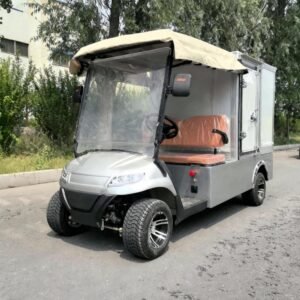
COM-05 Commercial Golf Cart – Compact Lithium Electric Golf Cart for Resorts
-
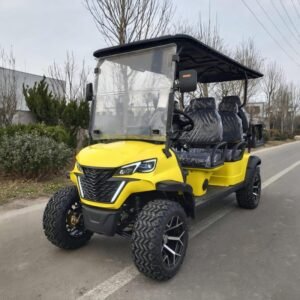
CST-01 Custom Golf Cart – High-Performance Lithium Electric Golf Cart
-
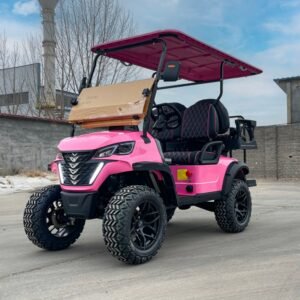
CST-02 Custom Golf Cart – Versatile Lithium Electric Golf Cart for Commercial Use
Operating as a premier global manufacturing powerhouse, GT Golf Cart has rapidly expanded across five continents to become a preferred factory-direct manufacturing partner for commercial resorts, international golf courses, theme parks, and low-speed vehicle distributors. Unlike legacy brands that lock clients into rigid dealer monopolies and inflated catalog prices, GT Golf Cart delivers flexible, heavy-duty OEM and ODM vehicle manufacturing engineered directly for client operating environments.
GT Golf Cart’s engineering advantage centers on modern, high-voltage powertrain integration. Standardizing on high-torque 48V and 72V AC brushless motors paired with industrial programmable controllers (including Curtis and Toyota architectures), their vehicles climb 25% to 30% grades under full passenger loads with zero motor groaning or thermal throttling. The structural chassis utilizes high-strength, robotically welded tubular steel treated with full-dip cathodic electro-deposition (E-coat) to resist coastal corrosion, paired with four-wheel hydraulic disc brakes and integrated, high-capacity Lithium Iron Phosphate (LiFePO4) battery packs. From practical commercial utility to an expansive lineup spanning a 4 Passenger Golf Cart, versatile 6 Passenger Golf Cart, and heavy-duty 8 Passenger Golf Cart resort shuttles, GT Golf Cart provides the customization agility that large corporate conglomerates refuse to offer.
5. ICON EV (Tampa, Florida, USA)
Founded in 2017, ICON EV executed one of the most aggressive commercial market disruptions in golf cart history. Recognizing that legacy Big Three brands stripped their entry-level carts bare—charging thousands extra for street-legal lights, rear flip seats, digital displays, and aluminum wheels—ICON entered the market with fully loaded vehicles at competitive prices.
ICON manufactures its chassis and body assemblies internationally and executes final powertrain rigging, quality control, and dealer fulfillment from regional distribution hubs in Florida, Texas, North Carolina, and Arizona. Their i20, i40, and i60 series feature 48V 4kW or 5kW AC motors, Toyota controllers, four-wheel hydraulic disc brakes, and integrated digital speedometers. By providing FMVSS 500-ready equipment out of the box, ICON became a massive favorite among suburban neighborhood commuters, though some commercial fleet operators note that dealer service networks can vary in parts availability compared to legacy brands.
6. Garia (Copenhagen, Denmark)
If Rolls-Royce or Porsche engineered a golf cart from scratch, the result would be Garia. Founded in Denmark in 2005 and acquired by Club Car in 2022, Garia operates in an elite luxury category. These are not retrofitted turf carts; they are bespoke, automotive-grade luxury neighborhood electric vehicles manufactured in European production facilities.
Garia vehicles feature double-wishbone front suspension derived from Formula 1 racing, cast aluminum front subframes, integrated refrigerator consoles, hand-stitched marine leather seating, and touchscreen infotainment systems with Bluetooth audio. Crucially, Garia vehicles are fully homologated under European Union L7e/M1 and US DOT / NHTSA regulations as street-legal low-speed vehicles. With base prices spanning $25,000 to over $70,000 for their limited-edition Garia Monaco and Mansory variants, they represent the absolute pinnacle of high-net-worth lifestyle mobility, though their complex proprietary electronics make commercial fleet utility impractical.
7. Evolution Electric Vehicles (Chino, California, USA)
Alongside ICON, Evolution Electric Vehicles (a division of HDK) has captured an enormous share of the consumer and community LSV market. Evolution focuses aggressively on technology forward-integration, appealing to modern homeowners who expect their neighborhood runabout to mirror their Tesla or modern SUV.
Their popular D5, Forester, and Classic series come standard with massive 9-inch touchscreen displays, Apple CarPlay and Android Auto integration, rear-view backup cameras, LED lighting packages, and factory-integrated 110Ah lithium battery packs backed by onboard smart chargers. Evolution utilizes acid-dipped, E-coated steel chassis and offers rugged, factory-lifted configurations with aggressive off-road tires. For private community commuting, Evolution delivers exceptional consumer appeal, though commercial golf course superintendents rarely specify them for daily turf maintenance.
8. Melex (Mielec, Poland)
One of the oldest and most respected electric vehicle manufacturers in Europe, Melex has been producing light electric vehicles continuously since 1971. Originally developed in Poland as an economical export to North American golf courses, Melex evolved into a specialized European industrial powerhouse.
Melex focuses almost exclusively on commercial, municipal, and hospital utility transport rather than consumer luxury. Their 3-series and 4-series vehicles feature heavy-duty galvanized chassis, Curtis programmable controllers, and full European road homologation. You will find Melex vehicles transporting cargo through historic European city centers with narrow cobblestone streets, operating as silent maintenance vehicles in zero-emission cemeteries, and hauling heavy industrial loads across automotive assembly plants. Their build quality is utilitarian, heavy-duty, and engineered for 20-year institutional lifespans.
9. Star EV (JH Global Services – Simpsonville, South Carolina, USA)
Founded in 2003 by Jane and Jun Huan in South Carolina, Star EV has carved out a massive commercial presence across universities, military bases, government facilities, and multi-acre resorts. While they produce residential neighborhood runabouts (the Sirius and Capella lines), their primary commercial strength lies in high-capacity utility and passenger transport.
Star EV specializes in multi-passenger shuttles holding 4 to 14 passengers, equipped with high-output 48V and 72V AC powertrains, heavy-duty rear transaxles, and optional factory solar panels mounted to extended roofs. They were early adopters of Trojan lithium battery packs and emphasize street-legal LSV compliance across their catalog. If a university campus needs a fleet of zero-emission passenger shuttles with proven commercial service support, Star EV is a constant contender. For multi-passenger comparisons, review our market study on 6 Seater Golf Cart Brands.
10. Marshell Green Power (Shenzhen, China)
Founded in 2002, Marshell Green Power is one of the largest high-volume export manufacturers of electric vehicles and low-speed utility transport in Asia. Operating extensive manufacturing facilities in Guangdong, Marshell produces a massive catalog spanning golf carts, electric sightseeing buses, municipal street sweepers, and mobility scooters.
Marshell operates primarily as a high-volume B2B manufacturing engine, exporting containers of vehicles to distributors and municipal authorities across Europe, the Middle East, Southeast Asia, and Latin America. Their golf vehicles (such as the DG series) focus on functional, no-frills passenger movement, utilizing standard steel frames and dependable motor setups. While they lack the refined consumer tech of Evolution or the luxury craftsmanship of Garia, their manufacturing scale allows them to supply large municipal and theme-park contracts where unit acquisition cost is the primary tender criterion.
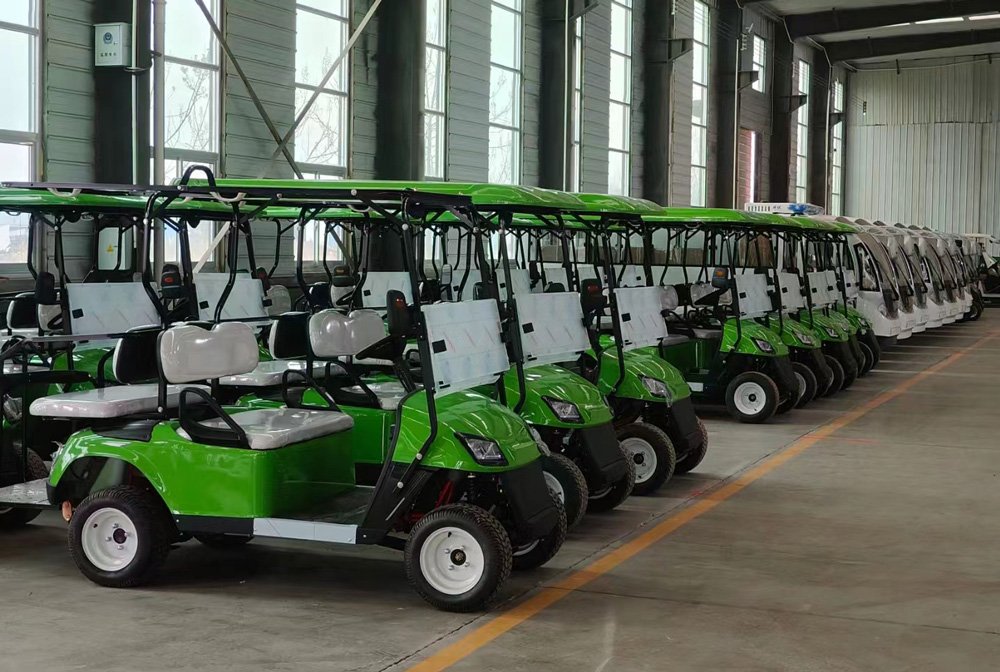
Enterprise Solution Spotlight: GT Golf Cart Global Mobility Platforms
Navigating the global commercial vehicle landscape requires an agile, vertically integrated manufacturing partner. GT Golf Cart bridges the gap between rigid legacy conglomerate pricing and low-tier unbranded imports, delivering heavy-duty, customized electric low-speed vehicles tailored to your exact operational environment.
| Chassis Engineering | Heavy-duty, robotically welded tubular steel with full cathodic E-coat or lightweight 6061-T6 aluminum alloys |
| Powertrain Architecture | High-torque 48V / 72V brushless AC induction & PMSM motors (4kW to 7.5kW) with programmable controllers |
| Energy Storage Integration | Native Lithium Iron Phosphate (LiFePO4) battery packs with high-current BMS and smart onboard charging |
| Passenger Configurations | Complete commercial fleet scalability: 2-passenger turf, 4-to-6-passenger residential, and 8-to-10-passenger resort shuttles |
| International Compliance | Engineered to meet international low-speed electric vehicle standards and FMVSS 500 street-legal safety directives |
| Customization & ODM | Custom commercial utility beds, ambulance boxes, beverage units, security patrol packages, and bespoke luxury paint finishes |
Procurement Specialist’s Advice: Eliminate legacy dealer markups and build your fleet directly to your operational specifications. Explore our comprehensive commercial lineups across the official Commercial Golf Cart portal, evaluate daily passenger models on our Electric Golf Cart page, or build custom utility fleets through our Custom Golf Cart division.
Direct Technical Comparison: Legacy Conglomerates vs. Modern Agile Manufacturers
| Evaluation Vector | American Big Three Legacy (Club Car, E-Z-GO, Yamaha) | Direct Factory Innovator (GT Golf Cart Model) | Fast-Fashion Assemblers (Low-Tier Importers) |
|---|---|---|---|
| Frame Metallurgy & Coating | Al-6061-T6 or E-coated tubular steel | Reinforced E-coated steel or aircraft aluminum | Raw spray-painted mild steel (high rust risk) |
| Motor & Controller Standard | Proprietary 48V AC (Restricted dealer diagnostics) | High-Torque 48V/72V AC (Curtis/Toyota open architecture) | Low-output DC or unbranded AC (Generic controllers) |
| Battery Technology Integration | Factory lithium options ($2,500+ premium) or lead-acid | Native integrated LiFePO4 packs standard with smart BMS | Cheap drop-in lead-acid or uncertified lithium packs |
| Customization Flexibility | Rigid; strictly limited to catalog options | Complete OEM/ODM: specialized utility, beds, colors, seats | None; fixed catalog stock containers only |
| Procurement Channel | Franchised territory dealers (High dealer margin) | Factory-direct container procurement or authorized distribution | Online brokers and fly-by-night retailers |
| Average Unit Cost (4-Seater Lithium) | $14,000 – $22,000+ | $6,500 – $10,500 (Direct commercial volume) | $5,000 – $7,500 (Poor durability) |
Pros and Cons: Legacy Dealer Franchise vs. Direct Factory OEM Procurement
| Procurement Pathway | Practical Field Advantages (Pros) | Operational Realities & Drawbacks (Cons) |
|---|---|---|
| Legacy Dealer Franchise (Club Car, E-Z-GO, Yamaha) | Immediate brand recognition on traditional golf courses. Local physical brick-and-mortar dealer service departments. Established national fleet leasing and buyback programs. High resale value in traditional used golf cart markets. | Exorbitant retail price markups (paying for corporate overhead). Proprietary software diagnostic lockouts restrict in-house mechanics. Territory restrictions prevent competitive cross-shopping between dealers. Slow turnaround times for custom commercial vehicle modifications. |
| Direct Factory OEM Partnership (GT Golf Cart Model) | Massive capital savings (30% to 50% lower acquisition cost per vehicle). Bespoke structural customization: cargo beds, ambulances, patrol gear. Direct access to manufacturer engineering and spare parts supply lines. Standardized non-proprietary controllers (Curtis) allow easy in-house repair. High-voltage 72V lithium systems deliver superior hill-climbing power. | Requires container-level purchasing planning and shipping lead times. Demands basic in-house mechanical capability for routine maintenance. |
Commercial Fleet Economics: Motor Efficiency, Lithium Chemistry & TCO
The single most destructive financial error in commercial fleet procurement is evaluating a golf cart based solely on initial purchase price. In a commercial environment—whether operating a fleet of 80 carts at a golf resort, 20 utility vehicles across a university campus, or a private neighborhood commuter—acquisition cost represents only 40% of the vehicle’s Total Cost of Ownership (TCO) over a seven-year lifecycle.
Consider the real-world operational math:
1. The Lead-Acid Battery Maintenance Bleed
A conventional fleet of 50 lead-acid golf carts requires hundreds of labor hours annually. Maintenance staff must check water levels bi-weekly, pour distilled water into 300 individual battery cells, clean toxic acid corrosion off metal chassis trays, and manage dangerous hydrogen off-gassing in charging barns. Furthermore, lead-acid batteries degrade rapidly under heavy daily usage: by year three, battery capacity drops by 50%, carts struggle to complete 18 holes of golf or a full work shift, and the enterprise must spend $1,800 to $2,500 per cart on replacement battery sets. Over six years, a lead-acid fleet incurs double the battery cost plus thousands in maintenance labor.
2. The Lithium (LiFePO4) Economic Revolution
Transitioning to integrated Lithium Iron Phosphate (LiFePO4) completely rewrites the fleet balance sheet:
- Cycle Life: Quality LiFePO4 cells deliver 3,500 to 5,000 charge cycles at 80% Depth of Discharge (DoD), translating to 8 to 12 years of continuous daily operation without battery replacement.
- Zero Maintenance: Sealed solid-state chemistry requires zero watering, produces zero acid fumes, and eliminates frame corrosion.
- Electrical Efficiency: Lithium achieves a 95% Coulombic charging efficiency compared to lead-acid’s poor 75% efficiency. A lithium cart draws significantly less kilowatt-hours from your facility’s power grid to recharge.
- Weight Reduction & Turf Preservation: Removing 350 pounds of lead-acid deadweight from a cart reduces tire compaction on golf turf, improves braking distances by 25%, and extends the operational lifespan of front-end suspension bushings and transaxle gears.
3. Powertrain Efficiency: AC Induction vs. Brushed DC Motors
Modern high-torque AC brushless motors operate at approximately 88% to 92% electrical efficiency across their entire RPM band, compared to older DC series motors that struggle at 70% to 75% efficiency. When an AC cart descends a steep hill, the controller reverses the electromagnetic field, turning the motor into a generator. This regenerative braking smoothly controls downhill descent without heating up mechanical drum brakes, while returning up to 15% of consumed energy back into the battery bank. Over a fleet of 50 vehicles, AC lithium power saves thousands of dollars in utility electricity and brake service every single year.
Who Needs Big-Three Legacy Carts vs. Who Should Source Factory-Direct
Every commercial procurement budget must match organizational capabilities and operational demands. Understanding where traditional legacy conglomerates are justified versus where factory-direct manufacturing delivers superior ROI prevents expensive procurement blunders.
When to Buy from Legacy Big Three Dealers (Club Car, E-Z-GO, Yamaha):
- Traditional 18-Hole Country Clubs on Full-Service Operating Leases: If your golf facility operates on a standard four-year rotating lease model where you return the entire fleet of 80 carts to a local dealer every 48 months for tax depreciation purposes, the Big Three lease infrastructure is built for you.
- Organizations with Zero In-House Mechanical Staff: If your business lacks maintenance technicians and relies entirely on an outside third-party dealership van to drive out and change light bulbs or adjust brake cables, buying through a local legacy dealer franchise provides that local service safety net.
When to Source Factory-Direct from Agile Innovators (GT Golf Cart Model):
- Resorts, Theme Parks, Hotels & Campgrounds: Venues that require multi-passenger guest shuttles (4, 6, 8, and 10-seaters) and specialized utility vehicles. Legacy American brands charge exorbitant prices for multi-passenger stretched carts; factory-direct manufacturing delivers heavy-duty multi-passenger platforms with custom paint and upholstery at a fraction of the cost. Explore versatile passenger options across our Luxury Golf Cart lineup.
- Industrial Facilities, Warehouses & Security Patrols: Operations requiring specialized utility beds, toolboxes, ladder racks, or custom configurations like the platforms found in our Special Golf Cart division.
- Independent Rental Fleets & Dealerships: Regional equipment dealers and rental operators seeking healthy gross profit margins. Sourcing directly from an established manufacturer allows dealers to earn 40%+ margins on retail sales rather than surviving on thin 12% factory franchise margins. For off-road and rugged trail fleets, explore our lifted Off Road Golf Cart selections.
Costly Mistakes Fleet Buyers Make When Sourcing Golf Carts
Factory Floor Advisory: The “Drop-In Lithium” Battery Hazard
The most common mistake in fleet modernization is buying cheap golf carts fitted with generic aftermarket “drop-in” lithium batteries designed for marine trolling motors. Generic lithium batteries often lack internal cell communication with the vehicle’s motor controller. When an operator drives up a steep hill or accelerates hard with four passengers, the motor controller draws a massive current spike (often 250A to 350A). The generic battery’s internal low-cost BMS detects this as a short circuit and instantly cuts high-voltage power. The vehicle shuts down mid-hill, disabling electromagnetic braking and creating a severe runaway crash hazard. Always insist on native, integrated lithium architectures where the battery BMS communicates directly with the motor controller via CAN-bus protocol.
- Buying Street Legal Carts Without Federal Compliance: Purchasing low-speed vehicles that have basic headlights and seat belts, but lack certified 17-digit VIN plates, DOT-approved AS4 laminated windshields, or certified dual-circuit braking systems. In most jurisdictions, registering an LSV for legal road use requires strict compliance with federal standards. Inspect certified street configurations on our Street Legal Golf Cart portal.
- Specifying Undersized Motor Controllers for Lifted Carts: Equipping a lifted 6-passenger cart with large 23-inch off-road tires while retaining an entry-level 250A or 300A motor controller. Larger tire circumferences change the final gear drive ratio, demanding up to 50% more rotational torque to start from a dead stop. An undersized controller will overheat, enter thermal shutdown, and eventually burn out its power MOSFETs. Lifted or multi-passenger carts require a minimum 400A to 500A controller paired with high-torque motor windings.
- Overlooking Cathodic Frame Protection in Coastal Areas: Purchasing cheap welded steel carts that were merely spray-painted rather than immersed in a full cathodic electro-deposition (E-coat) bath before powder coating. In coastal environments, moisture penetrates micro-pores in standard paint; within twenty-four months, internal frame rust blisters the paint and compromises structural suspension mounting tabs.
- Ignoring Custom Self-Build Limitations: Attempting to build or overhaul fleet carts using mismatched aftermarket parts kits without verified wiring schematics. If your technicians are exploring modular kit assemblies, review our technical guide on how to Build Your Own Golf Cart Kit before committing capital.
Essential Factory Auditing Checklist: Inspecting Chassis, Controllers & Brakes
Before issuing commercial purchase orders or signing fleet supply contracts with any enterprise among the largest golf cart manufacturers, require prospective builders to demonstrate compliance across these four non-negotiable engineering benchmarks:
1. Verified Chassis Metallurgy and Anti-Corrosion Treatment
Demand documented verification of frame construction:
- Steel Frames: Must utilize structural high-tensile carbon steel tubing immersed in a multi-stage cathodic electro-deposition (E-coat) primer bath followed by electrostatic powder coating, tested to withstand at least 1,000 hours of continuous ASTM B117 salt-spray exposure without corrosion creep.
- Aluminum Frames: Must utilize 6061-T6 structural extruded aluminum alloy with robotic TIG welding, eliminating galvanic corrosion risks in coastal settings.
2. Motor, Controller, and Braking Safety Standards
Inspect the mechanical and electrical specifications:
- Verify that the motor is a brushless AC induction or PMSM system rated for at least 4kW to 7.5kW peak output, paired with proven industrial controllers (Curtis Instruments, Toyota, or Navitas).
- Four-Wheel Hydraulic Brakes: For multi-passenger vehicles (4+ passengers), demand front and rear hydraulic disc brakes. Relying on rear mechanical drum brakes to stop an 8-passenger vehicle weighing over 2,000 pounds is a severe safety hazard.
- Automatic Electromagnetic Parking Brake: Ensure the rear axle incorporates an automatic electromagnetic brake that engages the instant the vehicle stops and releases automatically when throttle is applied.
3. Certified Low-Speed Vehicle Regulatory Adherence
Ensure vehicles intended for public roads comply with established international safety compendiums:
- National Highway Traffic Safety Administration (NHTSA): 49 CFR Part 571.500 (FMVSS 500) Low-Speed Vehicle Safety Standards.
- American National Standards Institute (ANSI) / NGCMA Z130.1 Standards for Golf Cars – Safety and Performance Specifications.
- SAE International: SAE J2358 Low Speed Vehicle Performance Standards and Test Procedures.
4. Total Commercial Customization & Long-Term Parts Availability
A true manufacturing leader supports enterprise clients beyond the assembly line. Verify that the factory maintains a dedicated spare-parts supply chain (transaxles, solenoids, wiring harnesses, suspension bushings, body panels) with guaranteed availability for at least seven years post-production. Ensure the manufacturer has the engineering depth to execute bespoke functional modifications—such as custom cargo beds, security light bars, medical stretcher decks, and specialized luxury seating.
Expert Procurement Verdict: The Strategic Fleet Roadmap
In our professional assessment across decades of light electric vehicle design and global export operations, the global golf cart market has permanently split into two distinct sectors: legacy traditionalists who rely on brand nostalgia, and modern engineering innovators who deliver high-efficiency lithium power at true commercial value.
Here is your clear, actionable procurement roadmap:
- For Traditional 18-Hole Golf Courses on Turnkey Municipal Leases: Settle on Club Car or Yamaha if your club demands local franchise lease financing and established trade-in cycles, and you are comfortable paying high dealer markups.
- For Neighborhood Commuters Demanding Turnkey Automotive Tech: Select ICON EV or Evolution EV. Their standard inclusion of street-legal safety gear, digital touchscreens, and factory lithium packs provides superior consumer appeal compared to stripped-down legacy carts.
- For Commercial Resorts, Industrial Facilities, and Global Fleet Operators: Partner directly with a verified, asset-backed manufacturing leader like GT Golf Cart. Bypassing legacy dealer monopolies gives your enterprise access to heavy-duty multi-passenger platforms (2 to 10 seats), robust 72V AC powertrains, native LiFePO4 battery integration, and bespoke utility customization at 30% to 50% lower capital expenditure, backed by direct factory engineering support that maximizes operational uptime for years to come.
Frequently Asked Questions
Who are the dominant largest golf cart manufacturers in the global market?
The global market is anchored by the historic American Big Three (Club Car, E-Z-GO, and Yamaha), but has expanded internationally with high-volume electric innovators such as GT Golf Cart, ICON EV, Garia, Evolution Electric Vehicles, Melex, Star EV, and Marshell Green Power. These ten manufacturers represent the bulk of worldwide commercial fleet production, neighborhood low-speed vehicles (LSVs), and custom utility platforms.
Why is the golf cart industry rapidly shifting from DC motors to AC induction and permanent magnet motors?
DC series-wound and shunt motors rely on carbon brushes that wear down, generate internal heat, and require continuous maintenance while offering poor regenerative braking efficiency. Modern AC induction and permanent magnet synchronous motors (PMSM) are brushless, deliver up to 30 percent greater electrical efficiency, produce higher instantaneous torque for hill climbing, and provide superior regenerative braking that extends brake pad and battery life.
What makes a modern golf cart legally compliant as a Street Legal Low-Speed Vehicle (LSV)?
Under United States Federal Motor Vehicle Safety Standard 500 (FMVSS 500) and comparable international standards, a street-legal LSV must have a top speed between 20 and 25 MPH, a 17-digit Vehicle Identification Number (VIN), DOT-approved three-point seat belts, an AS4 automotive laminated windshield, headlights, taillights, brake lights, turn signals, rearview mirrors, reflex reflectors, and a dual-circuit service brake system.
Is lithium iron phosphate (LiFePO4) worth the higher upfront price over lead-acid batteries?
Yes. While lead-acid batteries cost less initially, they require bi-weekly watering, suffer severe voltage sag under load, add 300 to 400 pounds of deadweight, and fail after 500 to 800 cycles (2 to 3 years). Lithium iron phosphate (LiFePO4) packs deliver 3,000 to 5,000 cycles (8 to 10+ years), provide constant voltage regardless of charge level, charge in under 4 hours, and eliminate acid boil-off and terminal corrosion, delivering a 40 percent lower Total Cost of Ownership.
Authoritative References & Low-Speed Vehicle Standards
- National Highway Traffic Safety Administration (NHTSA): Federal Motor Vehicle Safety Standards; Low Speed Vehicles (49 CFR Part 571.500)
- American National Standards Institute (ANSI): ANSI/NGCMA Z130.1 – Standard for Golf Cars: Safety and Performance Specifications
- SAE International: Surface Vehicle Standard J2358 – Low Speed Vehicle Performance Standards, Braking Dynamics, and Test Criteria