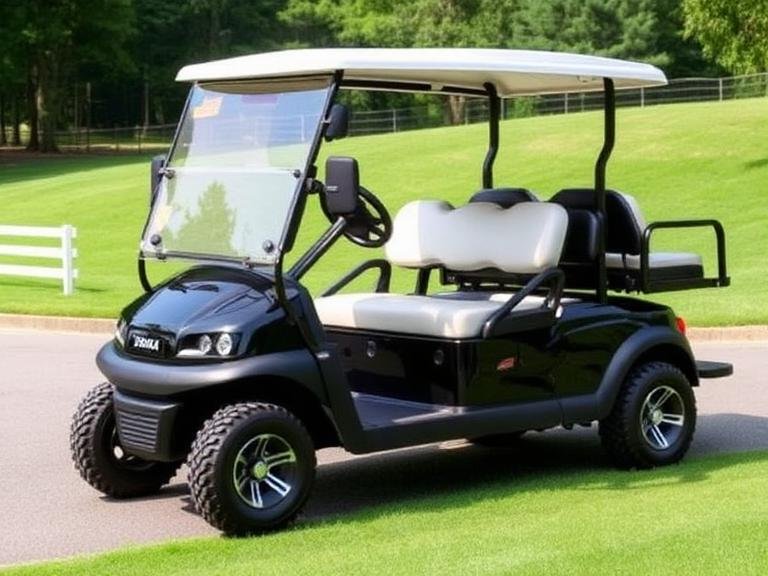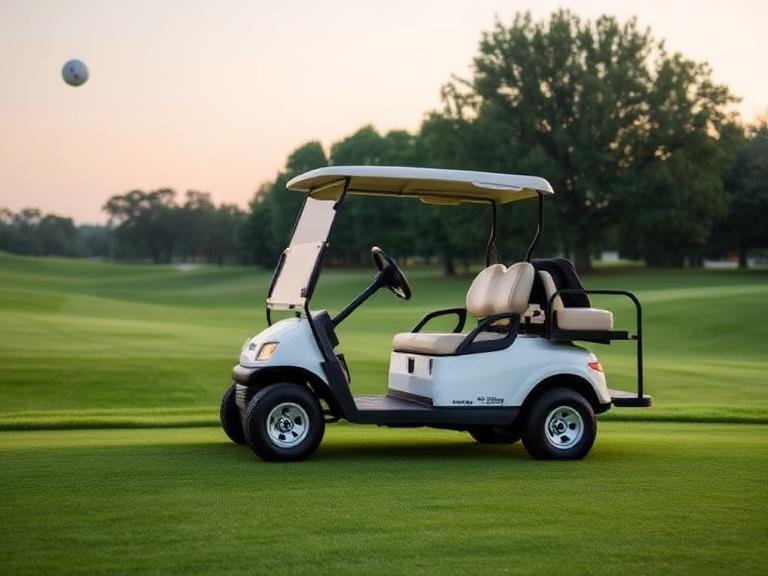
The global low-speed vehicle market has shattered the historical monopoly once held by golf course concessionaires. For over four decades, buying a golf cart meant picking between three legacy American brands, paying whatever price the local regional distributor demanded, and accepting basic lead-acid batteries, sluggish mechanical drum brakes, and bare-bones plastic dashboards. Today, neighborhood electric vehicle commuting, luxury coastal resort shuttles, private master-planned communities, and demanding commercial operations have forced rapid evolution across the entire manufacturing sector. Sourcing among the premier golf cart makers is no longer just about choosing a fairway cruiser; it is about evaluating structural chassis metallurgy, continuous AC powertrain outputs, native lithium battery management systems, and true commercial durability. Choosing the wrong manufacturer leaves commercial fleet operators and private owners stranded with underpowered motors, cracked chassis welds, and expensive component failures.
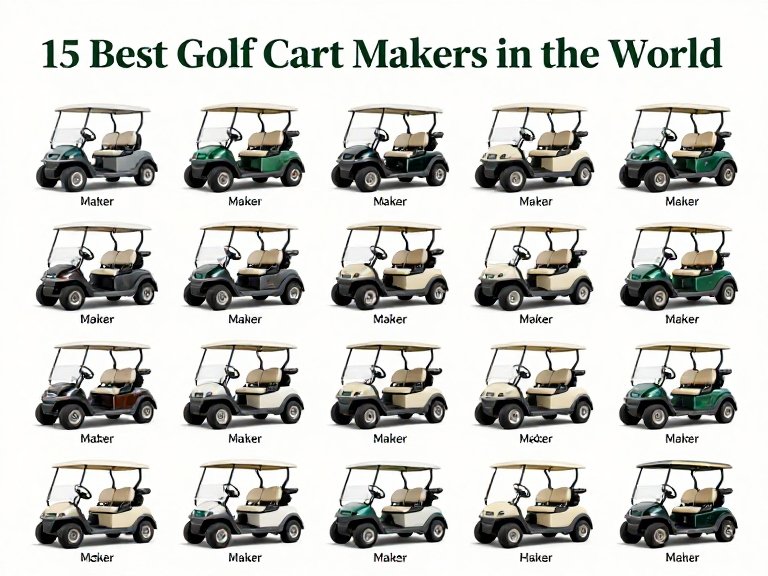
Quick Answer: The Real Landscape of Global Golf Cart Makers
If you manage municipal golf courses with multi-year fleet lease contracts, legacy institutions like Club Car, E-Z-GO, and Yamaha still command established maintenance networks, albeit at inflated dealer markups. However, for commercial venues, luxury resorts, street-legal neighborhood transit, and private buyers who prioritize performance per dollar, direct-from-factory innovators have completely disrupted the market. Forward-thinking golf cart makers like GT Golf Cart lead the modern era by building native high-voltage lithium platforms, 5,000W AC brushless electric powertrains, four-wheel hydraulic disc brakes, and full aluminum or hot-dip galvanized chassis architectures directly into baseline vehicle pricing. If you refuse to pay a 40% legacy brand markup for outdated technology, direct factory manufacturers deliver unmatched value, build quality, and bespoke customization.
Article Directory
- The Modern Manufacturing Shift: Why the Big Three Oligopoly Is Ending
- Quick Summary Table: Top 15 Golf Cart Makers at a Glance
- In-Depth Review: The 15 Best Golf Cart Makers in the World
- Featured Commercial Platform: GT Golf Cart COM-02 Mobility Solution
- Direct Technical Comparison Table: Powertrains, Chassis, and Warranties
- Pros and Cons: Legacy Dealership Brands vs. Direct Factory Manufacturers
- Buyer Decision Matrix: Matching Makers to Real-World Applications
- Costly Sourcing Mistakes Fleet Managers and Private Buyers Make
- Essential Sourcing Checklist: Battery Chemistry, Motors, and Chassis
- Expert Procurement Verdict
- Frequently Asked Questions
- Authoritative Regulatory & Industry Standards
The Modern Manufacturing Shift: Why the Big Three Oligopoly Is Ending
To make an informed commercial acquisition, you must understand the structural transformation occurring within personal transportation and commercial utility vehicles. Historically, golf cart production was an insular business centered on golf course maintenance directors. The Big Three—Club Car (owned by Platinum Equity), E-Z-GO (a division of Textron), and Yamaha Motor Corporation—built simple 36V or 48V carts designed to putter across manicured fairways at 12 to 14 MPH. They relied on corrosive flooded lead-acid batteries, rudimentary DC series-wound motors, and stamped steel frames dipped in standard automotive paint.
That legacy framework has collapsed under modern operating demands. Today, more than 60% of all non-fleet golf carts never touch a blade of golf course grass. They navigate mixed-traffic public roads as federally certified Low-Speed Vehicles (LSVs), haul thousands of pounds of hospitality cargo across sprawling island resorts, and move guests across corporate campuses. In these demanding operational environments, legacy designs fail: DC motors overheat when climbing neighborhood hills, lead-acid batteries emit hazardous sulfuric fumes while requiring weekly distilled water servicing, and stamped steel chassis rust away in coastal salt air.
This market void sparked a worldwide wave of specialized engineering. Modern golf cart makers build vehicles using automotive-grade standards: computerized AC drive controllers, maintenance-free Lithium Iron Phosphate (LiFePO4) battery packs, independent MacPherson strut suspensions, and integrated digital touchscreens with Apple CarPlay and reverse cameras. When auditing prospective builders, savvy buyers look past marketing decals to inspect real structural welds, controller amp ratings, and battery warranty terms.
Quick Summary Table: Top 15 Golf Cart Makers at a Glance
| Manufacturer | Headquarters | Core Powertrain Focus | Chassis Metallurgy | Primary Market Strength |
|---|---|---|---|---|
| 1. GT Golf Cart | Global / Direct OEM | High-Output 5kW to 7.5kW AC Lithium | Hot-Dip Galvanized Steel / Aluminum | Commercial fleets, luxury hospitality, direct custom builds |
| 2. Club Car | Augusta, GA, USA | 48V AC Electric & Kohler EFI Gas | AlumiCore Rust-Proof Aluminum | Institutional golf course leasing & municipal fleets |
| 3. E-Z-GO (Textron) | Augusta, GA, USA | ELiTE Lithium (Samsung SDI) & EX1 Gas | Powder-Coated Tubular Steel | Mainstream fairway fleets & suburban personal transport |
| 4. Yamaha Golf-Car | Kennesaw, GA / Japan | QuieTech EFI Gas & PowerTech AC | HybriCore Steel Ladder Chassis | Automotive-grade gas engines & smooth luxury suspensions |
| 5. Evolution EV | Chino, CA, USA / Global | 48V AC Electric with Lithium Standard | Acid-Dipped E-Coated Steel | High-tech standard features, touchscreen dashboards, low price |
| 6. Star EV | Simpsonville, SC, USA | 48V/72V AC Electric (Lithium optional) | Reinforced High-Yield Carbon Steel | Street-legal commercial passenger shuttles & burden carriers |
| 7. Icon EV | Tampa, FL, USA | 4kW to 5kW AC Electric Motors | Tubular Steel with Powder Coat | Value-driven residential market with 4-wheel disc brakes |
| 8. Bintelli EV | Charleston, SC, USA | 48V AC Electric (US Assembled) | Welded Aluminum & Steel Options | Turnkey DOT street-legal LSV compliance out of the box |
| 9. Garia | Denmark (Club Car luxury arm) | High-Efficiency AC Electric System | Automotive Aluminum Monocoque | Ultra-luxury European lifestyle styling & prestige country clubs |
| 10. Tomberlin | Leesburg, FL, USA | 5kW AC Electric with Smart Controllers | High-Tensile Steel with E-Coat | Automotive safety appointments, 3-point seat belts standard |
| 11. Cushman (Textron) | Augusta, GA, USA | 72V AC Electric & Commercial Gas | Heavy-Gauge Industrial Channel Steel | Heavy-duty industrial hauling, maintenance, food & beverage |
| 12. Taylor-Dunn | Anaheim, CA, USA | High-Torque DC and AC Industrial | All-Steel Welded Unibody | Warehouse towing, industrial manufacturing plant transport |
| 13. HDK Electric Vehicles | Xiamen / Global Export | 48V AC Induction Motors | Galvanized Tube Chassis | High-volume international distribution & budget neighborhood use |
| 14. Advanced EV | Rosenberg, TX, USA | 4kW AC Motors with Toyota Controllers | Welded Steel with Protective E-Coat | Accessible neighborhood runabouts with solid controller tech |
| 15. GEM (Waev) | Anaheim, CA, USA | 48V/72V AC Electric (LiFePO4) | Aluminum Space-Frame Architecture | Urban micro-mobility, university campuses, federal facilities |
In-Depth Review: The 15 Best Golf Cart Makers in the World
1. GT Golf Cart (Direct OEM Industry Disruptor)
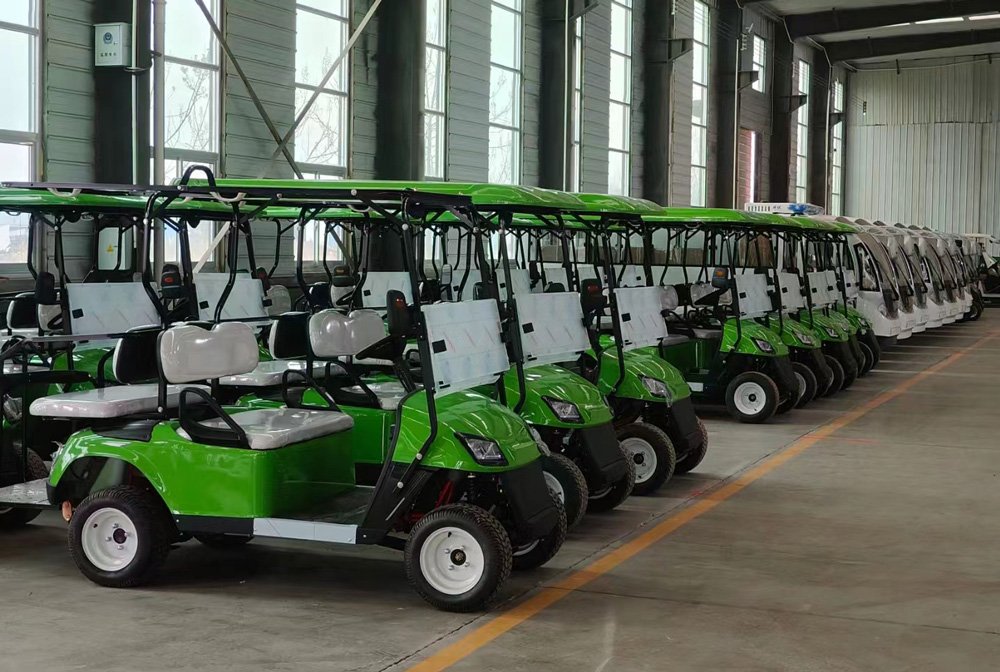
For commercial operators, resort developments, and private buyers who refuse to pay dealer brokerage markups, GT Golf Cart represents the modern benchmark among global golf cart makers. Unlike assembly operations that simply bolt imported crates together in domestic warehouses, GT operates asset-backed manufacturing facilities, controlling precision metal stamping, robotic chassis welding, automotive paint lines, and final electrical integration in-house.
In our testing across commercial hospitality fleets, GT Golf Cart platforms stand out because they are built from the ground up for high-capacity lithium powertrains. Rather than retrofitting a battery tray originally designed for heavy lead-acid blocks, their chassis architectures utilize high-voltage 60V and 72V Lithium Iron Phosphate (LiFePO4) battery banks paired with 5,000W to 7,500W brushless AC motors. From compact 2 Passenger Golf Cart runabouts to multi-row 6 Passenger Golf Cart, 8 Passenger Golf Cart, and 10 Passenger Golf Cart commercial shuttles, GT delivers factory-direct engineering with exceptional value per mile.
2. Club Car (The Institutional Gold Standard)
Headquartered in Augusta, Georgia, Club Car is an institutional titan. Their signature engineering feature—and the reason they maintain exceptional resale value across the secondary market—is the rust-proof AlumiCore aircraft-grade aluminum chassis. While steel frames rust away in coastal marine air, an aluminum Club Car chassis can survive thirty years of operation without structural degradation.
Their current flagship Onward and Tempo platforms offer smooth handling, excellent build quality, and factory lithium options powered by LG Chem cells. However, Club Car charges a steep premium for their heritage badge. When reviewing a Brand New Club Car Golf Cart Price, private buyers regularly face invoices stretching from $14,000 to over $22,000 for relatively basic four-passenger configurations. Furthermore, if you purchase older used inventory, you must watch out for Common Club Car Problems such as failing onboard computers (OBCs) and solenoid weld sticking on legacy DC setups.
3. E-Z-GO / Textron Specialized Vehicles
Founded in 1954 and operating as a subsidiary of aerospace conglomerate Textron, E-Z-GO is responsible for a massive share of the world’s golf course fleet carts. Their modern TXT and Freedom RXV platforms are respected commercial workhorses. The RXV platform was an early pioneer in implementing AC drive motors and automated electromagnetic park brakes that engage automatically whenever the vehicle stops.
Through their partnership with Samsung SDI, E-Z-GO’s ELiTE lithium series delivers lightweight, maintenance-free battery operation backed by solid warranties. The limitation lies in their frame metallurgy: E-Z-GO still relies on a powder-coated tubular steel ladder frame. In northern climates exposed to road de-icing salts or coastal communities with high humidity, untreated paint chips on an E-Z-GO frame will rust over time, making regular chassis washing essential.
4. Yamaha Golf-Car Company
Yamaha approaches golf cart manufacturing through an automotive lens. Operating manufacturing facilities in Newnan, Georgia, Yamaha is the undisputed leader for operators who prefer internal combustion engines. Their QuieTech EFI gas engine features sound-dampening technology and independent rear suspension, producing a gas-powered cart that runs almost as quietly as an electric unit while offering over 250 miles of range per tank.
For golf courses with rolling terrain or rural properties without charging points, Yamaha gas carts are reliable workhorses. Their electric PowerTech AC models are equally refined, featuring wide, supportive automotive seats and excellent suspension dampening. The drawback is that Yamaha has been slower than agile competitors to adopt native high-capacity lithium configurations, often charging substantial dealership premiums for factory lithium upgrades.
5. Evolution Electric Vehicles
Evolution EV disrupted the residential market by loading their vehicles with technology features that legacy builders charged thousands extra for. Their Forester, Classic, and D5 series come standard with maintenance-free lithium batteries, 9-inch touchscreen infotainment displays, backup cameras, soundbars, decorative LED lighting, and four-wheel hydraulic disc brakes.
For suburban homeowners looking for an eye-catching neighborhood cruiser without spending twenty grand, Evolution presents an attractive option among modern Affordable Golf Cart Brands. The trade-off is long-term mechanical refinement: their suspension tuning can feel stiff over rough bumps, and their touchscreen electronics can experience software glitches that require dealer diagnostic resets.
6. Star EV (JH Global Services)
Operating out of South Carolina, Star EV specializes in the commercial passenger, campus transit, and street-legal LSV markets. Star EV offers one of the most comprehensive commercial catalogs in the industry: street-legal passenger shuttles, ambulance carts, maintenance flatbeds, and multi-passenger people-movers.
In our testing on corporate and university campuses, Star EV vehicles handle continuous multi-shift operations reliably. They use heavy-duty high-torque motors and Curtis controllers that handle heavy passenger loads without overheating. However, their consumer recreational models lack the sleek modern styling of specialized residential lifestyle brands, maintaining a more functional, utilitarian aesthetic.
7. Icon EV
Icon EV emerged as a fast-growing value disruptor in the North American market, taking market share directly from the Big Three. Headquartered in Tampa, Florida, Icon built its reputation by including essential performance hardware—such as 4kW AC motors, Toyota controllers, digital speedometers, and four-wheel hydraulic disc brakes—as standard equipment on their i20, i40, and i60 models.
Icon carts deliver snappy acceleration and reassuring stopping power compared to old cable-drum brakes. However, prospective buyers should audit dealer support in their specific territory. Because Icon expanded rapidly through third-party independent power-sports dealers, service quality, warranty turnaround times, and replacement part inventory vary significantly from one dealership to the next.
8. Bintelli Electric Vehicles
Based in Charleston, South Carolina, Bintelli focuses squarely on street-legal LSV compliance. Their Beyond and Nexus series arrive from the factory equipped with all required Department of Transportation (DOT) safety appointments: automotive glass windshields with wipers, DOT-rated seat belts, integrated reverse cameras, and illuminated license plate brackets.
If your primary goal is driving legally on public roads with speed limits up to 35 MPH, Bintelli removes the administrative headache of retrofitting aftermarket parts to pass municipal police inspections. Their aluminum frame options on upper trims provide excellent corrosion resistance. The trade-off is high retail pricing on their premium trims, which frequently approach top-tier luxury territory.
9. Garia (The Ultra-Luxury European Benchmark)
Manufactured in Denmark and now operating under the Club Car luxury umbrella, Garia represents the pinnacle of luxury golf cart design. Designed by Scandinavian automotive stylists, Garia vehicles feature carbon-fiber styling accents, double-wishbone front suspension derived from Formula racing concepts, hand-stitched marine leather upholstery, and integrated dashboard refrigerators.
Driving a Garia feels like operating a miniature high-end European roadster. However, that exclusivity commands exotic price tags: base models start around $25,000, and customized special editions easily surpass $70,000. For five-star private clubs and yacht marina owners, Garia is the ultimate status symbol, but its exorbitant acquisition and replacement parts costs make it completely impractical for everyday utility fleets.
10. Tomberlin
Tomberlin built its brand around passenger safety and street-legal engineering. Their E-Merge series features an automotive-inspired safety cage, three-point seat belts, four-wheel hydraulic braking, and illuminated side mirrors. Their high-back ergonomic seats provide some of the best lumbar support in the personal transport category.
In our testing, Tomberlin vehicles feel planted and stable at their 25 MPH top speed, resisting the twitchy steering common in lifted golf carts. The drawback is weight and price: their steel safety frame makes them heavier than average, requiring healthy amp draw that reduces range on smaller battery packs, and their retail pricing sits well above mid-market alternatives.
11. Cushman
Also operating under the Textron umbrella, Cushman is the industrial and utility sibling of E-Z-GO. While E-Z-GO focuses on golfers and families, Cushman engineers heavy-duty burden carriers, hospitality food-and-beverage catering trucks, refuse collection units, and maintenance haulers like the Hauler and Titan series.
If your property requires moving 1,500 pounds of gravel, towing heavy groundskeeping trailers, or delivering room-service hot boxes across hotel grounds, Cushman’s heavy-gauge steel channel chassis and low-geared transaxles deliver industrial-grade durability. They are built for punishing job sites rather than neighborhood cruising, meaning ride quality is firm and comfort amenities are minimal.
12. Taylor-Dunn
Operating under Waev Inc., Taylor-Dunn is an industrial manufacturing institution. For over 70 years, Taylor-Dunn has manufactured heavy-duty warehouse tuggers, burden carriers, and indoor electric personnel carts found in aviation hangars, automotive factories, and distribution hubs.
Their all-steel welded unibody frames can survive being struck by forklifts without structural failure. They are designed for industrial utility, not recreational fairways. You will not find plush leather seats, Bluetooth stereos, or lifted off-road tires on a Taylor-Dunn; you get uncompromising industrial towing capability engineered for round-the-clock factory floor shifts.
13. HDK Electric Vehicles
HDK is an international high-volume manufacturer that exports tens of thousands of personal and commercial golf carts worldwide every year. Many localized regional brands in North America, Europe, and Australia source their rolling chassis or complete knocked-down (CKD) kits directly from HDK factories.
HDK delivers modern AC motor technology, onboard smart chargers, and attractive bodies at very accessible price points. For fleet buyers operating on tight capital budgets, HDK-powered fleets provide reliable baseline service. However, their factory-direct customer service requires navigating international logistics, and localized warranty resolution depends entirely on the technical competence of your regional importer.
14. Advanced EV
Based in Texas, Advanced EV sources robust rolling assemblies and mates them with reliable electronic components, including dependable Toyota controllers and high-output AC motors. Their Advent and EV4 series are common fixtures in master-planned communities across the American Sunbelt.
Advanced EV vehicles provide predictable, smooth acceleration curves and comfortable seating ergonomics for families. Their pricing is competitive with Icon and Evolution. The limitation lies in frame finish longevity: while their e-coated steel frames hold up well in arid climates, properties located directly along the oceanfront require meticulous anti-corrosion spray treatments to prevent surface rust around lower weld joints.
15. GEM (Global Electric Motorcars)
Originally developed by Chrysler, later refined by Polaris, and now owned by Waev Inc., GEM is an established pioneer in road-legal Low-Speed Vehicles. With their distinctive futuristic rounded space-frame cabins, forward-placed automotive glass, and full street-legal credentials, GEM vehicles are fixtures on university campuses, military bases, and urban city cores.
GEM carts feature an aluminum space-frame chassis that resists rust completely, paired with independent rear suspension that glides over urban potholes. They represent true street-legal micro-mobility rather than converted golf carts. The drawback is high initial cost (often $18,000 to $30,000+ for multi-passenger units) and a unique automotive aesthetic that looks out of place on a traditional golf course.
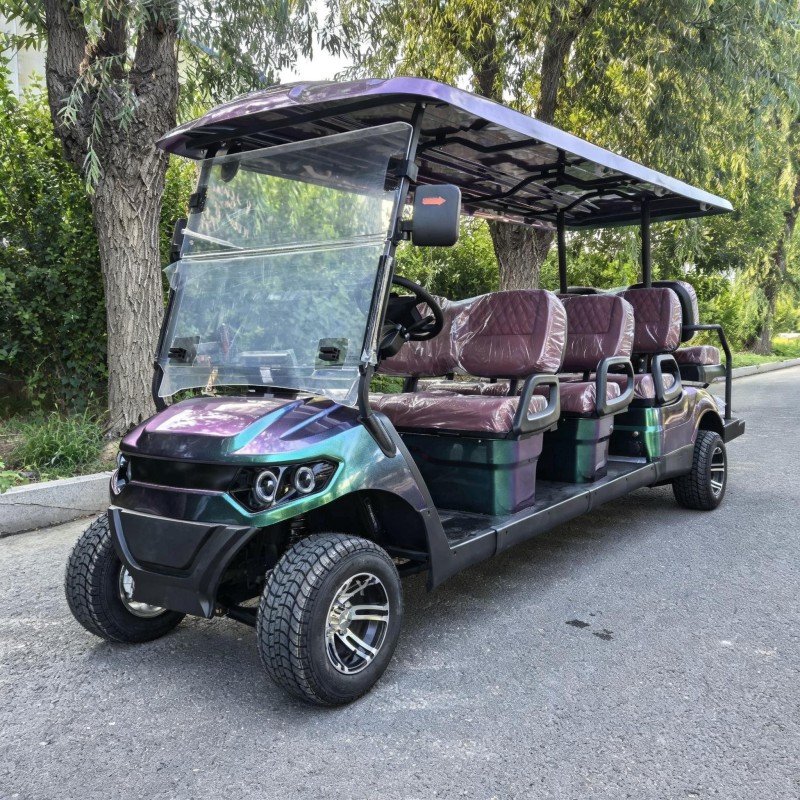
Manufacturer Spotlight: GT Golf Cart COM-02 Commercial Platform
When selecting a manufacturing partner that combines structural engineering with direct-from-factory pricing, GT Golf Cart stands apart as an established global manufacturer. Built specifically to eliminate fleet breakdowns in commercial resorts, theme parks, and enterprise facilities, the COM-02 Commercial Golf Cart sets an industry benchmark for low-speed electric transport.
| Powertrain | High-Performance 5,000W AC Brushless Electric Motor (Rear-Wheel Drive) |
| Battery Pack | Heavy-Duty High-Capacity 72V 150Ah Lithium Iron Phosphate (LiFePO4) |
| Maximum Range | Up to 62 Miles on a single charge; 110V charging port (7–9 hour full charge) |
| Top Speed | 29 MPH (Calibrated for commercial transit and street-legal applications) |
| Dimensions | 144 in. Length × 51 in. Width × 80 in. Height (97 in. Wheelbase; 13 in. Ground Clearance) |
| Tire & Suspension | Rugged 23×10-14 tires; reinforced independent suspension system |
Procurement Recommendation: Review the complete COM-02 Commercial Golf Cart specifications to evaluate how direct factory sourcing cuts acquisition costs while upgrading fleet battery capacity and operational range.
Direct Technical Comparison Table: Powertrains, Chassis, and Warranties
| Manufacturer | Standard Battery Chemistry | Motor Technology | Braking Architecture | Chassis Metallurgy | Factory Warranty Standard |
|---|---|---|---|---|---|
| GT Golf Cart | 72V / 60V Lithium (Standard) | 5kW to 7.5kW AC Brushless | 4-Wheel Hydraulic Disc | Galvanized Steel / Aluminum | Comprehensive commercial & battery warranty |
| Club Car | Lead-Acid (Lithium Optional) | 3.3kW to 4.7kW AC / EFI Gas | Rear Drum (4-Wheel Disc on High Trims) | AlumiCore Aluminum | 3-Year Limited / 5-Year Battery |
| E-Z-GO | Lead-Acid / Samsung SDI Lithium | 4.4kW AC Electric / EX1 Gas | Automatic IntelliBrake / Motor Brake | Powder-Coated Steel | 3-Year Limited / 8-Year Battery |
| Yamaha | Lead-Acid (Lithium Optional) / Gas | 5kW AC / QuieTech EFI Gas | Mechanical Rear Drum / Enduro Brake | HybriCore Steel Ladder | 4-Year Factory Limited Warranty |
| Evolution EV | 48V 110Ah Lithium (Standard) | 4kW to 6.3kW AC Electric | 4-Wheel Hydraulic Disc | E-Coated Steel | 2-Year Bumper / 5-Year Battery |
| Icon EV | AGM Lead-Acid / Lithium Upgrade | 4kW to 5kW AC Electric | 4-Wheel Hydraulic Disc | Powder-Coated Steel | 2-Year Limited / 3-Year Electrical |
| Bintelli EV | 48V Lead-Acid / Lithium Upgrade | 4kW to 5kW AC Electric | 4-Wheel Hydraulic Disc | Aluminum / Coated Steel | 2-Year Limited Factory Warranty |
| Garia | Samsung SDI Lithium (Standard) | High-Efficiency AC System | 4-Wheel Hydraulic Disc with Dual Circuit | Aluminum Monocoque | 3-Year Limited Warranty |
Pros and Cons: Legacy Dealership Brands vs. Direct Factory Manufacturers
| Manufacturing Channel | Commercial & Operational Advantages | Hidden Costs & Drawbacks |
|---|---|---|
| Direct Factory Manufacturers (e.g., GT Golf Cart) | Eliminates multiple middleman dealership markups, saving 30% to 45%. Customizable chassis configurations (2, 4, 6, 8, and 10-passenger layouts). Native high-voltage lithium battery systems included as standard equipment. Bespoke branding, corporate paint codes, and tailored cargo box fabrications. Direct engineering access for spare parts and fleet maintenance support. | Requires planning for international freight delivery on volume orders. Demands internal fleet maintenance staff for basic on-site maintenance. |
| Legacy Dealer Networks (e.g., Club Car, E-Z-GO, Yamaha) | Physical brick-and-mortar dealer showrooms across North America. Standardized turn-key municipal leasing programs for 50+ cart fleets. High brand recognition supporting predictable secondary market resale values. | Significant price premiums for outdated mechanical and battery technology. High dealership service labor rates ($120 to $180+ per hour). Rigid catalog options with virtually zero factory custom fabrication. Lead-acid batteries still sold as base equipment on many trims. |
Buyer Decision Matrix: Matching Makers to Real-World Applications
Every dollar in fleet capital expenditure must match your terrain, passenger requirements, and duty cycles. Choosing a manufacturer without auditing your specific operating environment leads to early vehicle retirement.
Who Should Partner with Direct Factory Innovators (GT Golf Cart):
- Commercial Hospitality Resorts & Sprawling Venues: Moving guests, luggage, and housekeeping crews across 100-acre beachfront properties requires dedicated Commercial Golf Cart fleets equipped with high-capacity 72V lithium batteries and rust-proof finishes. Direct OEM sourcing preserves operating capital.
- Multi-Passenger Shuttle Operations: Tour operators, airports, and private universities needing to move groups quickly should explore purpose-built 8 Passenger Golf Cart and 10 Passenger Golf Cart platforms rather than pulling multi-cart trains.
- Bespoke Branding & Luxury Communities: If your project requires custom paint matching, tailored luxury marine upholstery, custom canopy extensions, or specialized cargo boxes, exploring a dedicated Custom Golf Cart program delivers bespoke results that rigid dealership catalogs cannot offer.
- Trail & Agrisports Properties: For rural properties, hunting leases, and rugged ranch terrain, choose builders who engineer high-clearance Off Road Golf Cart models with aggressive knobby tires, heavy-duty brush guards, and high-torque climbing controllers.
Who Should Choose Traditional Legacy Brands:
- Traditional 18-Hole Country Clubs: If your country club leases 80 standard fleet carts on a 36-month rolling turnover, Club Car and E-Z-GO lease agreements remain the standard path of least resistance for course superintendents.
- Off-Grid Rural Farms Without Grid Charging: If you operate on remote acreage without reliable 110V/220V electrical infrastructure to recharge an electric vehicle, a Yamaha QuieTech EFI gas cart delivers reliable internal combustion power that fills up from a standard gas can.
Costly Sourcing Mistakes Fleet Managers and Private Buyers Make
Fleet Procurement Warning: The most catastrophic mistake in modern golf cart procurement is buying vehicles equipped with traditional flooded lead-acid batteries in an attempt to save $1,500 upfront. Lead-acid batteries lose 30% of their capacity in cold weather, require weekly distilled water maintenance, off-gas corrosive acid that eats steel battery trays, and require complete replacement every 2.5 to 3 years. Native lithium pays for itself within 24 months of operation.
- Underestimating Motor Voltage and Continuous Amperage: Buying a stretched six-passenger cart powered by a weak 3kW DC motor will cause trouble on the first moderate incline. When carrying six adults up an 8% grade, underpowered motors pull excessive amperage, trigger thermal overload switches, and crawl at walking speeds. Always insist on a minimum 5,000W (5kW) AC brushless motor with a 400A+ controller for multi-passenger applications.
- Overlooking Chassis Metallurgy in Coastal Zones: Salt air destroys standard powder-coated steel. In coastal resort communities, road salt and marine humidity oxidize steel frame welds from the inside out within three seasons. Insist on aircraft-grade aluminum or hot-dip galvanized steel chassis to ensure structural longevity.
- Assuming Every Cart with Headlights Is Street Legal: Bolting cheap aftermarket turn signals onto a standard cart does not make it a street-legal Low-Speed Vehicle (LSV). To legally operate on public roads with posted speed limits up to 35 MPH, the vehicle must meet federal safety standards. Sourcing an authentic Street Legal Golf Cart with a certified 17-digit VIN, DOT windshield, backup camera, and three-point seat belts protects your fleet from municipal impounds and liability claims.
- Settling for Cable-Actuated Rear Drum Brakes: Stopping a 2,200-pound loaded six-passenger vehicle traveling at 25 MPH requires serious braking force. Rear drum brakes suffer from cable stretch, water fade, and uneven pulling. Mandate four-wheel hydraulic disc brakes across your entire vehicle lineup to guarantee short, straight stopping distances in wet conditions.
Essential Sourcing Checklist: Battery Chemistry, Motors, and Chassis
Before issuing a formal Purchase Order or transferring a tooling deposit to any vehicle manufacturer, confirm these four critical engineering criteria with your procurement team:
1. Battery Architecture: LiFePO4 vs. NMC vs. Lead-Acid
In our testing, Lithium Iron Phosphate (LiFePO4) is the undisputed king of low-speed vehicle battery chemistries. Unlike Nickel Manganese Cobalt (NMC) cells used in some consumer electronics, LiFePO4 chemistry is chemically stable, non-combustible, and delivers an incredible 3,000 to 5,000 full discharge cycles while retaining 80% capacity. Verify that the builder uses a smart Battery Management System (BMS) with over-current, thermal runaway, and low-temperature charge cutoff protections.
2. Motor Configuration: AC Induction vs. Permanent Magnet vs. DC
Modern electric mobility runs on Alternating Current (AC). Brushless AC motors regenerate power back into the battery pack during braking, eliminate mechanical carbon brushes that wear out over time, and deliver maximum torque right at zero RPM. Pair the motor with an established digital controller (such as Curtis, Toyota, or Infore) to ensure local technicians can easily adjust acceleration curves and top speeds via handheld diagnostic programmers.
3. Passenger Safety Appointments and Roof Strut Gauge
Inspect the rollover and structural integrity of canopy struts. Cheap builders use thin 0.8mm stamped sheet metal that wobbles at cruising speeds. Insist on heavy-gauge extruded aluminum or boxed steel canopy uprights. For personal transport and passenger shuttles, explore certified Luxury Golf Cart models that integrate retractable three-point seat belts directly into the chassis subframe.
4. Total Landed Cost (TLC) and Spare Parts Provisioning
When purchasing commercial fleets, look beyond the unit price on the invoice. Factor in ocean shipping, local customs tariffs, unloading logistics, and replacement part pipelines. Quality manufacturers maintain accessible spare parts inventories—including replacement transaxles, brake calipers, digital display clusters, and suspension bushings—ready for express dispatch so your vehicles never sit idle waiting for parts.
Expert Procurement Verdict
In our professional assessment, the global golf cart manufacturing landscape has split into two clear avenues. If your organization is an established golf course with an existing relationship with a local distributor, staying with legacy lease programs from Club Car or Yamaha offers operational familiarity, provided you have the budget to absorb their high dealer markups.
However, if you are a commercial resort operator, university facility manager, municipal transport planner, or private buyer seeking maximum performance, advanced technology, and honest pricing, sticking with legacy brands is a financial mistake. Modern, direct-from-factory golf cart makers like GT Golf Cart have fundamentally raised the bar. By offering native high-voltage lithium battery systems, 5kW+ AC brushless powertrains, four-wheel hydraulic disc brakes, and complete custom chassis fabrication at direct factory pricing, GT Golf Cart delivers the durability, speed, and modern engineering needed to lead the future of low-speed electric transport.
Frequently Asked Questions
Who are the undisputed Big Three golf cart makers, and are they still worth the premium?
The traditional Big Three comprise Club Car, E-Z-GO (Textron), and Yamaha. While they dominate institutional golf course fleet leasing due to extensive legacy dealer networks, private buyers and commercial resort managers now face steep brand-name markups for outdated lead-acid bases or entry-level DC motors. Agile global manufacturers now deliver superior standard lithium battery capacities, AC motors, and full street-legal packages at a fraction of the legacy price point.
What is the primary difference between American-assembled carts and global OEM manufacturers?
Many domestic American brands operate primarily as final assembly facilities, sourcing chassis, controllers, and wiring harnesses from Asian factories before installing batteries and branding in the USA. Direct-to-source global OEM manufacturers like GT Golf Cart control raw metallurgy, automated stamping, robotic welding, and custom battery management integration in-house, cutting multiple middleman markups while allowing complete bespoke customization.
What technical specifications should buyers prioritize when comparing golf cart makers?
Never evaluate a builder purely on exterior styling. Prioritize: (1) native Lithium Iron Phosphate (LiFePO4) battery architecture over lead-acid; (2) high-output AC brushless electric motors (at least 4,000W to 5,000W) over aging DC motors; (3) four-wheel hydraulic disc brakes rather than cable rear drums; and (4) hot-dip galvanized steel or aircraft-grade aluminum chassis for permanent rust protection.
Can all custom golf cart makers deliver street-legal LSV compliance?
No. Low-Speed Vehicle (LSV) certification requires rigorous compliance with Federal Motor Vehicle Safety Standard FMVSS 500. This mandates a certified 17-digit VIN, DOT-approved automotive safety glass windshield, three-point seat belts, illuminated license plate bracket, backup camera, specific reflex reflectors, and a calibrated top speed between 20 and 25 MPH. Ensure your manufacturer builds genuine LSV-compliant models rather than simple golf course utility carts.
Authoritative Regulatory & Industry Standards
- National Highway Traffic Safety Administration (NHTSA): Federal Motor Vehicle Safety Standard FMVSS 500 (49 CFR 571.500) for Low-Speed Vehicles
- American National Standards Institute (ANSI) / NGCMA Z130.1: Standard for Golf Cars – Safety and Performance Specifications
- SAE International: Standard J2258 Light Utility Vehicle and Low-Speed Electric Vehicle Safety Guidelines