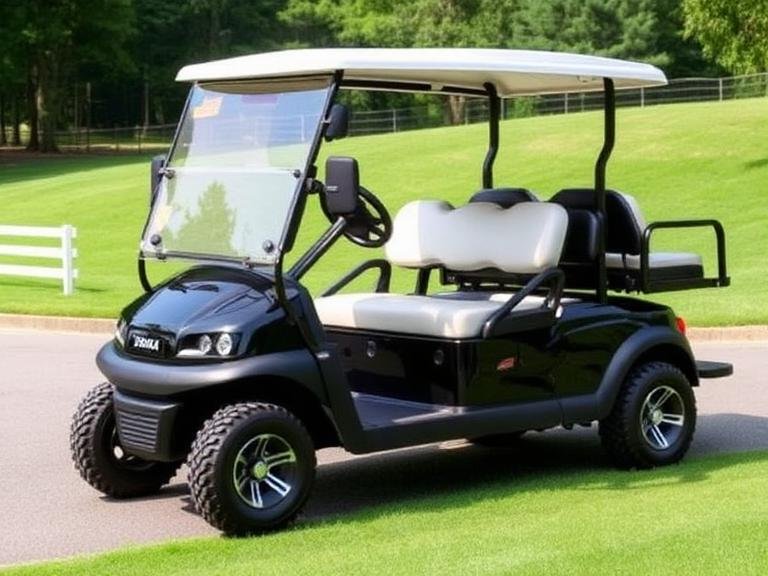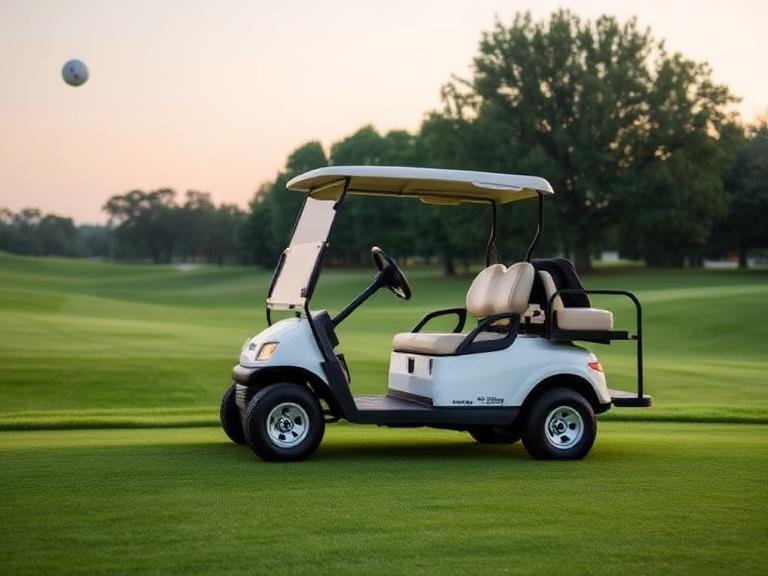
Choosing between neighborhood utility and passenger capacity is the central dilemma facing personal buyers, resort fleet managers, and commercial venue directors. When transitioning from traditional fairway cruisers to modern low-speed electric transport, the debate between a 6 Passenger Golf Cart vs 4 Passenger Golf Cart frequently gets reduced to a simple headcount comparison. Sales brochures make it look easy: if you have four people, buy a four-seater; if you have six people, buy a six-seater. That simplistic advice ignores real-world vehicle physics. Stretching a chassis frame introduces major consequences to turning radiuses, curb weight, electrical current consumption, trailer transport requirements, and garage parking clearances. Making the wrong purchasing call leaves buyers with either an unwieldy, power-hungry limousine that clips curb edges or a cramped four-seater that leaves family members or resort guests waiting at the curb.
Quick Answer: Which Chassis Configuration Should You Buy?
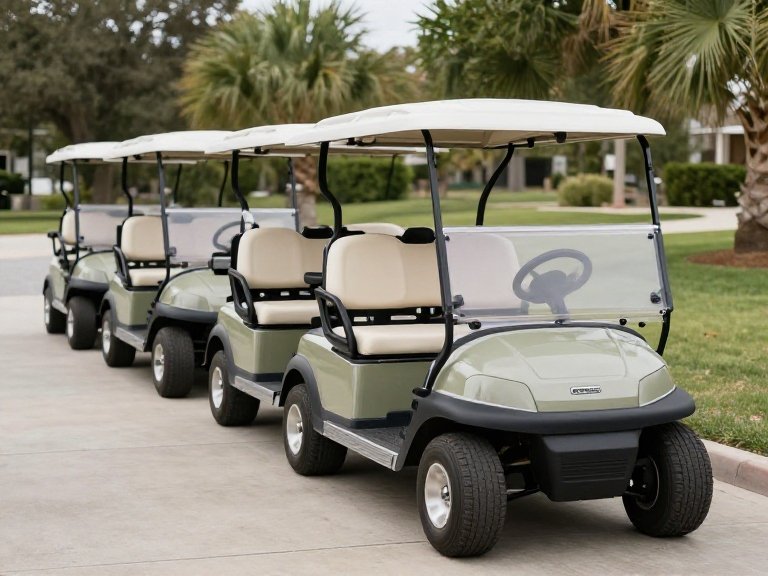
In most professional situations, the choice in the 6 Passenger Golf Cart vs 4 Passenger Golf Cart matchup comes down to usable chassis space versus battery range efficiency. A 4 Passenger Golf Cart is the benchmark choice for standard residential garages, master-planned communities, and daily family errands. It delivers superior maneuverability, tighter turning radiuses (under 10 feet), roughly 20% greater driving range on an identical battery pack, and a lower initial purchase price by $2,500 to $4,500. Conversely, a 6 Passenger Golf Cart is an absolute commercial requirement for hospitality shuttles, wedding venues, multi-generational vacation properties, and commercial fleets where passenger throughput dictates revenue. If you choose a 6-passenger build, we recommend bypassing lead-acid batteries entirely; you must pair the extended frame with a high-output AC electric motor (at least 5 kW) and a dedicated high-capacity lithium battery pack to offset the added curb weight.
Article Directory
- Chassis Mechanics: Frame Extension and Powertrain Dynamics
- Quick Summary Table: 6-Passenger vs. 4-Passenger Golf Carts
- Passenger Seating Architecture and Real-World Payload Capacities
- Battery Range, Powertrain Efficiency, and Amp-Hour Consumption
- Acquisition Cost, Maintenance Overhead, and Depreciation
- Platform Spotlight: CST-04 Custom Lithium Electric Golf Cart
- Direct Technical & Operational Comparison Table
- Pros and Cons: 6 Passenger Golf Cart vs 4 Passenger Golf Cart
- Who Needs a 6-Passenger Cart vs. Who Should Choose a 4-Passenger Model
- Costly Sourcing and Buying Mistakes to Avoid
- Essential Buying Considerations Before Finalizing an Order
- Expert Engineering and Purchasing Recommendation
- Frequently Asked Questions
- Authoritative Regulatory & Industry Standards
Chassis Mechanics: Frame Extension and Powertrain Dynamics
Understanding the mechanical divide between a 6 Passenger Golf Cart vs 4 Passenger Golf Cart requires examining structural frame geometry. A 4-passenger cart typically utilizes a standard short-wheelbase chassis (approx. 66 to 70 inches) or a mid-length wheelbase (approx. 90 to 97 inches for lifted crossover designs). In contrast, a purpose-built 6-passenger model requires an extended ladder chassis with a wheelbase stretching between 110 and 130 inches. That additional frame metal, extra passenger sub-framing, and extended roof struts add roughly 250 to 400 pounds of dead dry weight before a single passenger steps aboard.
In our testing across both commercial resorts and residential cart communities, that extended mass directly impacts the vehicle’s electrical dynamics. Moving a heavier chassis demands higher in-rush current from the speed controller during initial acceleration. If an extended 6-passenger cart relies on a budget 3 kW DC shunt motor, the motor will pull excessive amps, run hot on basic neighborhood inclines, and trigger thermal shutdown alarms. A modern Electric Golf Cart built for six passengers requires a high-efficiency AC induction or permanent magnet motor capable of handling continuous high-torque output.
Furthermore, suspension architecture must account for variable load states. A 4-passenger cart carrying two passengers on the front bench and two on a rear flip-seat experiences a rearward center of gravity shift. On an extended 6-passenger platform, three distinct seating rows spread weight along the frame rails. Without independent front suspension and heavy-duty multi-leaf or coil-over rear twist axles, an extended cart suffers from severe chassis flex, excessive body roll through roundabouts, and uneven tire wear.
Quick Summary Table: 6-Passenger vs. 4-Passenger Golf Carts
| Engineering Metric | Standard 4-Passenger Golf Cart | Extended 6-Passenger Golf Cart | Operational Impact |
|---|---|---|---|
| Overall Length | 108 to 118 inches | 140 to 155 inches | 6-seater requires 3 to 4 extra feet of garage depth |
| Wheelbase | 66 to 97 inches | 110 to 130 inches | 4-seater maneuvers in tight residential cul-de-sacs |
| Curb Weight (Dry) | 900 to 1,150 lbs | 1,200 to 1,550 lbs | Added mass reduces braking distance and acceleration |
| Rated Payload Capacity | 750 to 850 lbs | 1,100 to 1,400 lbs | 6-seater safely supports six full-grown adults |
| Average Range (Lithium 100Ah) | 35 to 50 miles | 28 to 38 miles | 6-seater consumes roughly 20% more amp-hours per mile |
| Turning Radius | 9.0 to 10.5 feet | 13.5 to 16.5 feet | 4-seater turns sharply without multi-point maneuvers |
| Average Retail Price | $8,500 to $14,000 | $11,500 to $18,500 | 6-seater commands a $2,500 to $4,500 price premium |
Passenger Seating Architecture and Real-World Payload Capacities
The operational difference between these two builds centers on passenger seating layout. When evaluating a 6 Passenger Golf Cart vs 4 Passenger Golf Cart, pay close attention to whether the seating rows face forward or backward.
4-Passenger Seating Formats: 2+2 vs. Four-Forward
-
COM-04 Custom Golf Cart – Compact Lithium Electric Golf Cart for Resorts
-
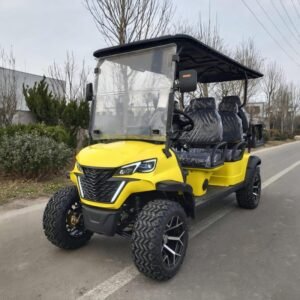
CST-01 Custom Golf Cart – High-Performance Lithium Electric Golf Cart
-
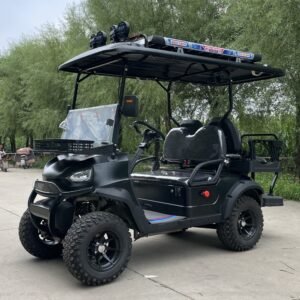
CST-04 Custom Golf Cart – Durable Lithium Electric Golf Cart
-
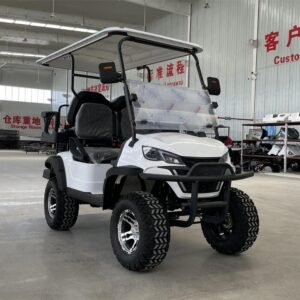
CST-05 Custom Golf Cart – High-Efficiency Lithium Electric Golf Cart
-
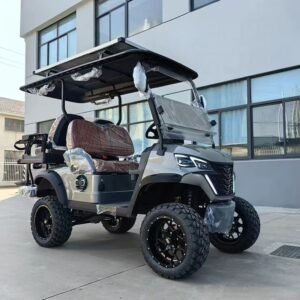
Golf Cart 4 Seater Low Speed Vehicle – GT22R Electric Golf Cart
-
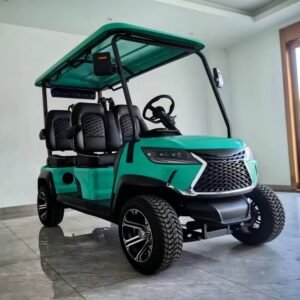
Golf Cart 4 Seater Low Speed Vehicle – Thunder Series GT40F
Most 4-passenger golf carts utilize a “2+2” layout: two forward-facing seats in the front cab and a rear-facing flip-flop bench over the rear axle. The primary advantage of the 2+2 layout is a compact footprint; the overall length matches a standard 2 Passenger Golf Cart while doubling passenger capacity. Furthermore, the rear seat folds down into a flat diamond-plate utility cargo deck for coolers, luggage, or tools.
However, from our experience with adult passengers, rear-facing seats are compromise seating. Full-sized adults have limited legroom, their feet dangle over the safety grab bar, and riding backward at 20 MPH can induce motion sickness. True four-forward-facing carts exist, but they stretch the wheelbase into mid-size territory, eliminating the compact parking advantage of the traditional 2+2.
6-Passenger Seating Formats: 4-Forward + 2-Rear vs. Six-Forward
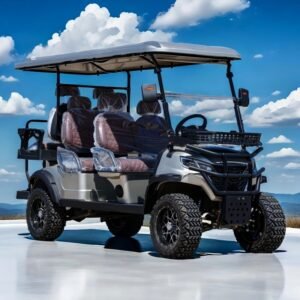
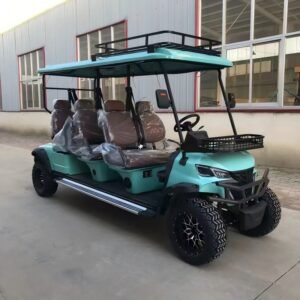
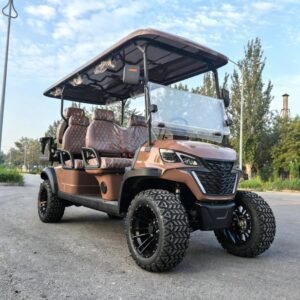
A standard 6-passenger golf cart features three rows: two forward-facing front seats, two forward-facing middle row seats, and two rear-facing seats on the aft deck. In upscale commercial shuttle platforms, all six seats face forward (a true limousine configuration). The structural advantage is immediate: four full-sized adults sit facing forward in total comfort, while the remaining two occupy the rear jump seats.
Payload capacity is where the 6-passenger configuration demonstrates its commercial engineering value. A standard 4-passenger cart carries a rated payload capacity between 750 and 850 pounds. Put four 200-pound adults in the cart along with golf bags or beach gear, and you exceed the manufacturer’s Gross Vehicle Weight Rating (GVWR). The suspension sags, bottoming out over speed bumps. A purpose-engineered 6-passenger cart features heavy-duty leaf springs, upgraded rear shocks, and reinforced axles rated for 1,100 to 1,400 pounds of payload, ensuring the vehicle carries six adults without bottoming out.
Battery Range, Powertrain Efficiency, and Amp-Hour Consumption
Range calculations represent the most misunderstood aspect of the 6 Passenger Golf Cart vs 4 Passenger Golf Cart buying decision. Energy consumption in an electric vehicle is a direct function of total moving weight, aerodynamic drag, rolling resistance, and acceleration cycles.
Consider an identical real-world operating scenario: both carts are equipped with an identical 51.2V 105Ah (approx. 5.3 kWh) lithium-ion battery pack running over rolling terrain at an average speed of 20 MPH:
- The 4-Passenger Cart: Weighing roughly 1,000 lbs curb plus two passengers (350 lbs) = 1,350 lbs gross moving mass. Under steady cruising, the motor draws approximately 45 to 60 amps. Expected driving range: 40 to 48 miles on a single charge.
- The 6-Passenger Cart: Weighing roughly 1,350 lbs curb plus four to six passengers (700 to 1,000 lbs) = 2,050 to 2,350 lbs gross moving mass. Under identical conditions, the motor draws 75 to 105 amps to sustain cruising speed and overcome acceleration inertia. Expected driving range: 26 to 34 miles on a single charge.
In our testing, an operator loses roughly 20% to 30% of their total driving range when stepping up from a 4-passenger to an extended 6-passenger chassis on an equivalent battery capacity. For heavy-duty applications—such as continuous passenger shuttling at commercial resorts or university campuses—specifying a small 100Ah battery in a 6-passenger cart leads to battery depletion before the afternoon shift finishes. Commercial buyers must upgrade to a minimum 150Ah or 200Ah lithium battery bank to match the real-world operational range of a standard 4-passenger cart.
Acquisition Cost, Maintenance Overhead, and Depreciation
The financial ledger between a 6 Passenger Golf Cart vs 4 Passenger Golf Cart extends beyond the dealer sticker price. Buyers must evaluate total cost of ownership across four distinct categories:
1. Initial Capital Outlay
On dealer showrooms, a standard 4-passenger electric cart from a reputable brand costs between $8,500 and $13,500, depending on lift kits, digital displays, and seating finishes. An equivalent 6-passenger model built on the same trim level retails between $11,500 and $18,000. That $3,000 to $4,500 price premium covers the elongated steel or aluminum chassis, extended thermoformed or fiberglass roof canopy, extra row of luxury bench upholstery, extended wiring harnesses, and higher-capacity electronic speed controller.
2. Battery Replacement and Electrical Overhead
If you purchase lead-acid carts, an extended 6-passenger model wears through battery plates significantly faster. The continuous high-amperage draw under heavy passenger loads creates deep depth-of-discharge cycles, reducing wet lead-acid or AGM battery lifespans to roughly two to three years. A 4-passenger cart with lighter loads can stretch those same batteries to four years. When upgrading to lithium, a 6-passenger cart warrants a larger 150Ah+ battery pack, which adds roughly $1,200 to $2,000 to long-term replacement budgets.
3. Wear-and-Tear Consumables: Brakes, Bushings, and Tires
Stopping a loaded 6-passenger cart weighing over 2,200 pounds requires significantly higher braking friction. Carts relying on simple rear-drum mechanical brakes suffer from severe brake fade, glazed shoes, and long stopping distances. In most professional situations, we recommend ensuring any 6-passenger cart features four-wheel hydraulic disc brakes. While safer, hydraulic disc pads on heavy 6-seaters wear out roughly 40% faster than those on light 4-passenger carts. Similarly, suspension bushings, tie-rod ends, and rear tires experience accelerated wear due to continuous load stresses.
4. Resale Value and Market Liquidity
In the secondary pre-owned market, four-passenger golf carts enjoy far higher liquidity. A used 4-passenger cart appeals to almost every buyer: golfers, retirees, single families, and small contractors. A used 6-passenger cart appeals to a narrower niche: larger families, vacation rental hosts, or commercial operations. While 6-passenger models maintain strong resale value in coastal resort areas, selling one in a traditional suburban subdivision takes longer.
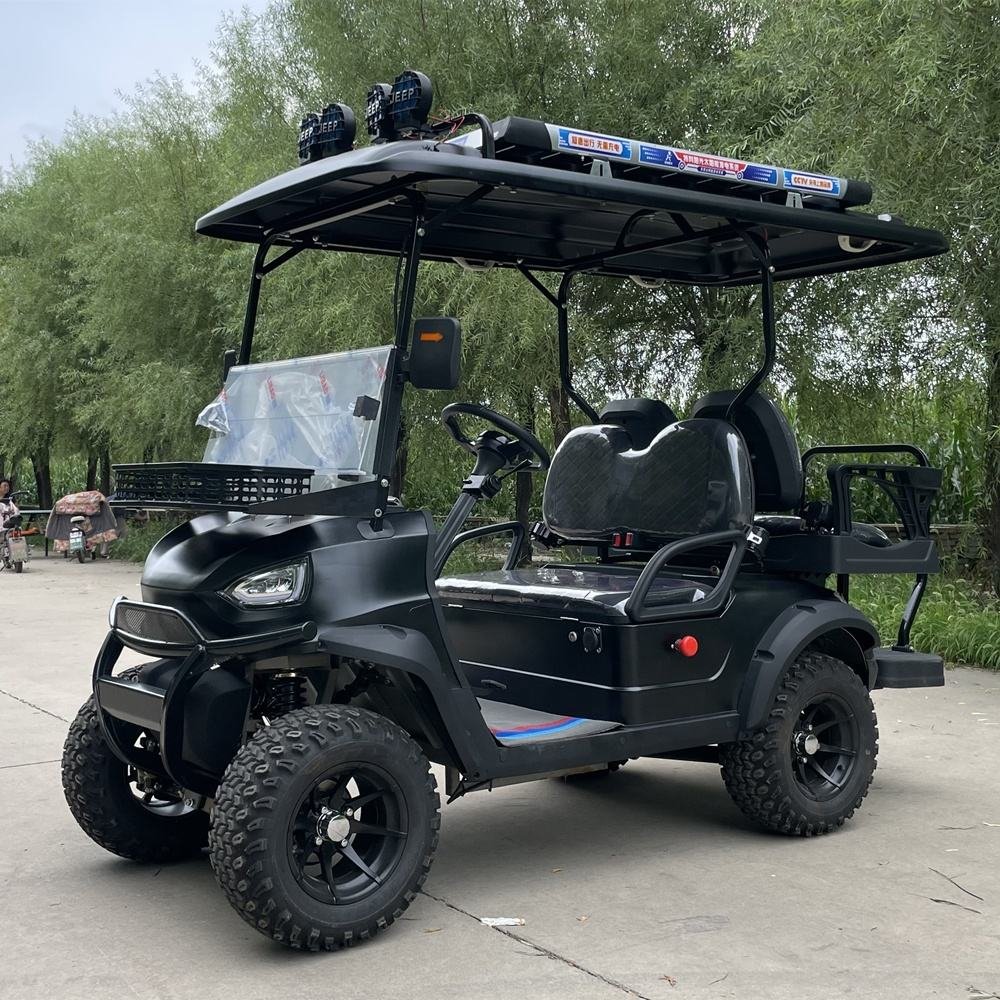
Featured Platform: GT Golf Cart CST-04 Custom Lithium Electric
When engineering an optimal balance between passenger capacity, agile chassis dynamics, and extended driving range, the CST-04 Custom Golf Cart sets an industry benchmark for personal and commercial applications. Built on a durable extended platform, it delivers high passenger capability without the excessive weight and poor turning radius of an oversized stretch cart.
| Powertrain | High-Output 5,000W AC Electric Motor (Rear Wheel Drive) |
| Battery Pack | High-Capacity 60V 150Ah Lithium Iron Phosphate System |
| Maximum Range | Up to 62 Miles on a single charge |
| Top Speed | 29 MPH (Calibrated for street and neighborhood use) |
| Chassis Footprint | 115 in. Length × 51 in. Width × 80 in. Height (97 in. Wheelbase) |
| Suspension Setup | Independent MacPherson Front Struts + Rear Twist Axle |
| Ground Clearance | Generous 13-inch clearance on 23×10-14 off-road tires |
Engineering Verdict: For buyers looking for street-ready performance, check out our full line of CST-04 Custom Golf Cart options or explore our custom-built Custom Golf Cart platforms tailored to your specific fleet requirements.
Direct Technical & Operational Comparison Table
| Operational Parameter | Standard 4-Passenger Golf Cart | Extended 6-Passenger Golf Cart | 8+ Passenger Commercial Shuttle |
|---|---|---|---|
| Primary Passenger Role | Couples, families with 1-2 kids | Large families, rental villas, tours | Airport, resort, and campus transport |
| Standard Motor Rating | 3,000W to 4,000W AC | 5,000W to 7,000W AC | 7,500W+ High-Torque AC |
| Recommended Battery | 48V/60V 100Ah Lithium | 48V/60V 150Ah+ Lithium | 72V 200Ah+ High-Voltage Lithium |
| Garage Parking Footprint | Compact; easily shares a single bay | Tight; requires deep 20-foot bay | Requires dedicated commercial bay |
| Trailer Hauling Needs | Standard 5×10 ft utility trailer | Requires 6×14 ft or 6×16 ft trailer | Heavy tandem-axle commercial hauler |
| Turning Circle Clearance | Excellent; full 180° on two-lane road | Requires multi-point turn on tight streets | Wide radius; requires clear access roads |
| Hydraulic Brake Spec | Rear drums or 2-wheel discs | Mandatory 4-wheel hydraulic discs | Heavy-duty 4-wheel commercial discs |
Pros and Cons: 6 Passenger Golf Cart vs 4 Passenger Golf Cart
| Chassis Architecture | Practical & Commercial Advantages | Operational Limitations & Drawbacks |
|---|---|---|
| 4-Passenger Golf Cart (Compact / 2+2 Setup) | Exceptional agility; turns easily in tight spaces and trails. Fits comfortably inside standard 20-foot residential garages. Can be hauled on affordable, single-axle 10-foot utility trailers. Consumes roughly 20% less battery power, extending driving range. Rear seat folds down to provide a functional flat cargo bed. Lower upfront price, cheaper replacement parts, and easy resale. | Restricted to four occupants; leaves larger groups behind. Rear-facing passengers face oncoming traffic and have less legroom. Can exceed gross vehicle weight ratings when fully loaded with adults. |
| 6-Passenger Golf Cart (Extended Wheelbase Setup) | Carries six full-sized adults simultaneously without overloading. Four passengers enjoy comfortable forward-facing seating. High commercial revenue potential for hospitality and tour fleets. Higher payload capacity backed by heavy-duty leaf springs and axles. Stable ride quality over bumps due to the extended wheelbase. | Wide turning radius requires multi-point turns on narrow streets. Consumes battery power faster; requires larger, costlier battery packs. Difficult to park in tight residential garages alongside family cars. Requires a large 14- to 16-foot tandem-axle trailer for transport. Higher acquisition cost and accelerated brake and tire wear. |
Who Needs a 6-Passenger Cart vs. Who Should Choose a 4-Passenger Model
Every dollar invested in golf cart infrastructure should match your spatial realities and passenger demands. Deciding between a 6 Passenger Golf Cart vs 4 Passenger Golf Cart requires being realistic about your daily usage.
Who Should Confidently Choose a 4-Passenger Golf Cart:
- Suburban Families & Empty Nesters: If your regular outings involve two adults running to the community pool, pickleball courts, or neighborhood clubhouse with one or two kids, a 4-passenger cart is the sweet spot. It maneuvers easily through traffic and fits comfortably in your garage.
- Traditional Golfers: If you plan to play 18 holes regularly, a 4-passenger cart (or a convertible 2-passenger model) is essential. A stretched 6-passenger cart is banned on most golf courses due to its heavy weight, long wheelbase, and propensity to damage turf on sharp turns.
- Campers and Trail Enthusiasts: If you transport your vehicle to RV parks, trail networks, or state parks on a trailer, a 4-passenger cart fits cleanly on standard 10-foot single-axle utility trailers and remains agile on tight dirt trails. Explore our specialized Off Road Golf Cart selections for trail-ready setups.
- Budget-Focused Fleet Buyers: For security patrols, facilities maintenance, or residential rental portfolios that do not need to transport large groups, 4-passenger models minimize initial fleet spend and ongoing tire and brake maintenance.
Who Must Invest in a 6-Passenger Golf Cart:
- Vacation Rental Operators & Airbnb Hosts: If you own a beach property or resort home that sleeps 8 to 12 guests, providing a 4-passenger golf cart causes guest complaints because groups are forced to make multiple shuttle trips. A 6-passenger cart serves as a major booking amenity that justifies higher nightly rental rates.
- Hospitality, Resort, and Event Venues: Wedding venues, sprawling hotel properties, winery tours, and parking shuttle operators need to move groups quickly. If your business regularly transports larger parties, look into a dedicated Commercial Golf Cart or even an 8 Passenger Golf Cart or 10 Passenger Golf Cart to maximize guest throughput.
- Multi-Generational Coastal Families: If grandparents, parents, children, and beach gear travel together to coastal access points, an extended 6-passenger cart eliminates the need to drive a full-sized gas SUV to the beach.
Costly Sourcing and Buying Mistakes to Avoid
Fleet Operations Warning: The most expensive mistake a buyer can make is purchasing an extended 6-passenger golf cart equipped with cheap lead-acid batteries and mechanical rear-drum brakes. A fully loaded 6-seater weighing 2,300 pounds going downhill will quickly experience brake fade, creating a serious safety hazard.
- Failing to Measure Garage Door Depth: Buyers frequently forget that an extended 6-passenger cart measures roughly 12 to 13 feet long (144 to 155 inches). A standard suburban garage bay measures 20 feet deep. After factoring in water heaters, workbenches, or steps, an extended cart often blocks the automatic overhead garage door from closing.
- Underpowering the Electric Motor: Purchasing a stretched 6-passenger cart with an undersized 3.5 kW DC motor to save $1,000 upfront leads to regret. When loaded with six adults on a modest 8% incline, underpowered carts slow to a crawl, draw high amperage, and frequently trip thermal breakers. Insist on a minimum 5,000W (5 kW) AC motor with a 400A+ controller.
- Assuming All Carts Are Street Legal: Never assume a factory 6-passenger cart can legally drive on municipal roads. To drive on public streets with speed limits up to 35 MPH, the vehicle must be certified as a Low-Speed Vehicle (LSV) under federal safety standards. You must verify that your cart complies with local regulations by selecting an authentic Street Legal Golf Cart equipped with automotive glass, turn signals, mirrors, horn, and three-point seatbelts.
- Overlooking Trailer Hauling Constraints: A 4-passenger cart fits cleanly on common 5×10-foot utility trailers behind a small SUV. An extended 6-passenger cart requires a heavy-duty 6×14 or 6×16-foot tandem-axle trailer, requiring a full-sized truck or commercial tow hitch just to move the vehicle for service.
Essential Buying Considerations Before Finalizing an Order
When shortlisting models across dealers or manufacturers, evaluate your prospective vehicle against these four critical technical markers:
1. Battery Chemistry: Lithium Iron Phosphate (LiFePO4) vs. Lead-Acid
In our testing, lithium batteries are practically mandatory on 6-passenger carts. Traditional lead-acid batteries add 300 pounds of dead weight, take up to 10 hours to recharge, and suffer voltage sag under acceleration. A quality LiFePO4 pack sheds 250 pounds, delivers consistent voltage across its discharge cycle, accepts fast charging, and provides an 8- to 10-year service life without fluid maintenance.
2. Braking Architecture: 4-Wheel Hydraulic Discs
Do not compromise on braking hardware. A 4-passenger cart can get by with cable-actuated rear drum brakes in flat golf course settings. However, an extended 6-passenger cart carrying over a ton of moving mass requires four-wheel hydraulic disc brakes to ensure short, controlled stopping distances in wet neighborhood conditions.
3. Suspension and Chassis Corrosion Protection
If you live near the ocean or in a humid climate, inspect the frame finish. Look for hot-dip galvanized steel or aircraft-grade powder-coated aluminum chassis to prevent road salt and humidity from rusting frame welds. In the suspension, insist on independent front A-arms (or MacPherson struts) paired with heavy-duty rear twist axles to control body roll.
4. Sourcing and Manufacturer Provenance
Whether sourcing personal luxury cruisers or commercial resort fleets, review manufacturer build quality. For enterprise buyers sourcing overseas fleets or looking for verified builders, take a look at our regional industry guides to compare Golf Cart Manufacturers in China, evaluate local American options via Golf Cart Manufacturers in Florida, or review custom boutique builders through our breakdown of Luxury Golf Cart Manufacturers.
Expert Engineering and Purchasing Recommendation
In the direct matchup between a 6 Passenger Golf Cart vs 4 Passenger Golf Cart, there is no generic, one-size-fits-all winner. The right choice comes down to functional space management and realistic route planning.
Our Recommendation for 80% of Private Buyers: Choose the 4-Passenger Golf Cart (particularly a high-end 2+2 lithium model). It gives you the flexibility to carry four people when friends visit, but keeps the vehicle light, nimble, and easy to park. It delivers 20% to 30% more driving range on an identical battery pack, fits easily inside standard garages, and saves you several thousand dollars in initial purchase costs. If you need elevated styling and craftsmanship, consider exploring our premium Luxury Golf Cart selections.
Our Recommendation for Commercial Operators & Large Vacation Rentals: Buy the purpose-engineered 6-Passenger Golf Cart. Do not try to squeeze large groups onto a 4-passenger cart; you will overload the frame, wear down the suspension, and risk passenger safety. Just be sure to configure your 6-passenger build with a high-capacity lithium battery (150Ah or greater), a 5 kW AC motor, and four-wheel hydraulic disc brakes. That mechanical foundation guarantees the power, safety, and all-day range needed to keep your passengers moving reliably.
Frequently Asked Questions
How much driving range do you lose upgrading from a 4-passenger to a 6-passenger golf cart?
When comparing identical battery pack capacities, a 6-passenger golf cart typically delivers 15% to 25% less driving range than a 4-passenger cart. The reduction stems from roughly 200 to 350 pounds of additional curb chassis weight, lengthened rolling resistance, and the increased electrical draw required to move higher payload weights.
Can a 6-passenger golf cart fit inside a standard residential garage?
A standard 6-passenger golf cart measures between 140 and 155 inches in overall length, compared to 108 to 118 inches for a 4-passenger model. While it fits within the depth of a standard 20-foot two-car garage, it leaves virtually no walking clearance around the rear or front bumper, often complicating parking alongside a full-sized SUV or truck.
Is a commercial 6-passenger golf cart automatically street legal?
No. Passenger capacity does not dictate street legality. To qualify as a Low-Speed Vehicle (LSV) under FMVSS 500 regulations, both 4-passenger and 6-passenger carts must feature an approved 17-digit VIN, DOT-certified windshield, three-point seat belts, headlights, taillights, turn signals, mirrors, horn, and a calibrated top speed between 20 and 25 MPH.
Does a 6-passenger golf cart require upgraded motor power compared to a 4-passenger model?
Yes. While a 3 kW or 4 kW motor can adequately move a 4-passenger golf cart on flat golf course terrain, a 6-passenger model loaded with adults demands at least a 5 kW (5,000W) AC electric motor and a 400A to 500A controller to tackle neighborhood hills and maintain acceleration without motor overheating.
Authoritative Regulatory & Industry Standards
- National Highway Traffic Safety Administration (NHTSA): Federal Motor Vehicle Safety Standard FMVSS 500 for Low-Speed Vehicles (LSVs)
- American National Standards Institute (ANSI) / NGCMA Z130.1: Standard for Golf Cars – Safety and Performance Specifications
- SAE International: SAE J2258 Light Utility Vehicle Safety and Operational Design Guidelines