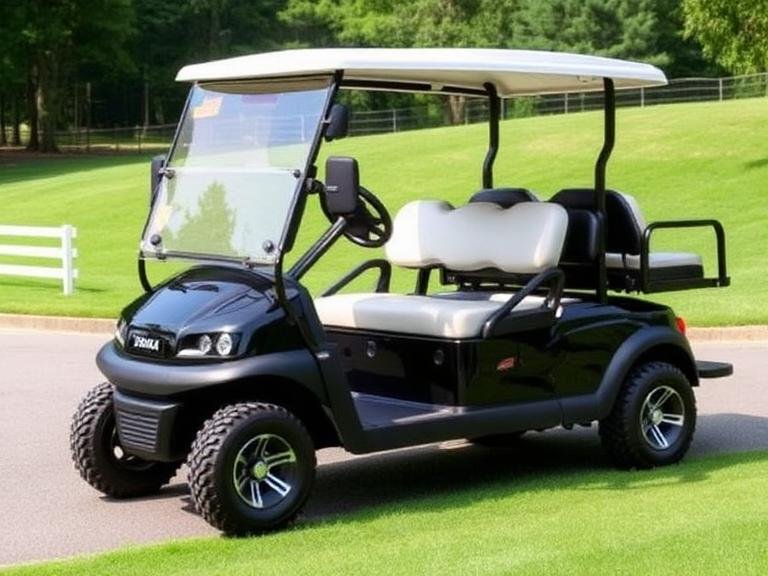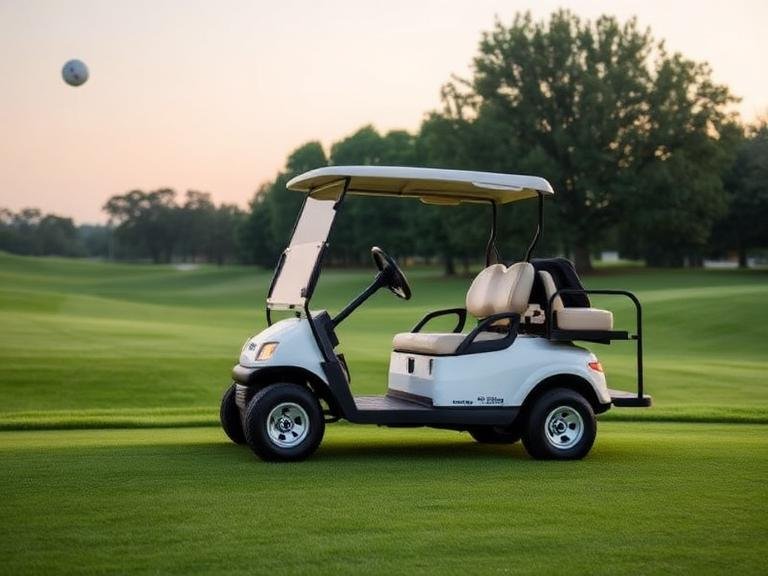
On the surface, asking about the seating capacity of a 6 seater golf cart sounds like a trick question. The obvious answer is six, right? From our experience operating inside the commercial manufacturing sector at GT Golf Cart, we can unequivocally tell you that “six seats” does not automatically mean “six full-sized adults can ride safely.” The consumer market is flooded with dangerously modified four-passenger chassis vehicles masquerading as six-passenger haulers. When you push a vehicle beyond its structural payload limit, you risk catastrophic brake failure, suspension collapse, and motor burnout.
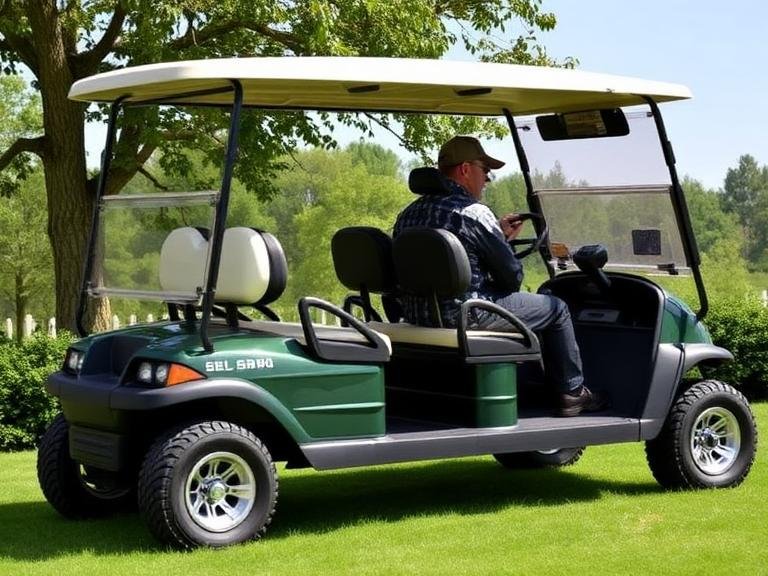
If you are managing a resort fleet, operating a shuttle service inside a gated community, or simply transporting a large family, you must understand the engineering behind the seating capacity of a 6 seater golf cart. It is not just about the number of seat belts; it is about weight distribution, chassis length, and the physical footprint of the seating configuration. In this guide, we will strip away the marketing jargon and explain exactly what you are getting when you invest in a stretched multi-passenger low-speed vehicle.
Quick Answer: Seating Capacity Explained
The seating capacity of a 6 seater golf cart is physically designed to accommodate exactly six people. However, the true functional capacity is dictated by the vehicle’s payload limit, which typically ranges from 1,000 to 1,200 pounds. Structurally, the seating is configured in a 4-forward, 2-rearward layout (four people facing the front across two bench seats, and two people facing backward on a rear flip-seat). If you attempt to load six adults weighing 250 pounds each (1,500 lbs total), you will exceed the operational payload capacity of the vehicle, regardless of the physical number of seats available.
Table of Contents
- What It Is: The Stretched Chassis Design
- How It Works: Engineering for Six Passengers
- The Benefits of High-Capacity Carts
- Limitations and Safety Constraints
- Who Should Use a 6-Seater
- Who Does Not Need It
- Common Purchasing Mistakes
- Critical Buying Considerations
- Expert Recommendation from GT Golf Cart
- Summary and Comparison Tables
- Frequently Asked Questions
What It Is: The Stretched Chassis Design
A true 6 seater golf cart is a custom-engineered Low Speed Vehicle (LSV) built on a stretched chassis. Unlike standard golf carts that measure roughly 8 feet in length, a genuine 6-passenger model typically stretches to 12 or 13 feet. This extended wheelbase is absolutely critical. It provides the necessary frame length to house a middle row of forward-facing seats.
The standard seating configuration consists of three bench seats. The front row holds the driver and one passenger. The middle row holds two passengers facing forward. The third row is a rear-facing flip-seat mounted over the rear axle, holding the final two passengers. In most professional situations, we see buyers confusing a true 6-seater with a 4-seater that has a rear-facing kit installed. A standard 4-seater cannot safely hold six people under any circumstances.
How It Works: Engineering for Six Passengers
Moving six human beings requires distinct mechanical upgrades. The seating capacity of a 6 seater golf cart is entirely dependent on the vehicle’s suspension and powertrain. When you add a middle row and stretch the wheelbase, the center of gravity shifts. To compensate, reputable manufacturers install heavy-duty leaf springs and dual hydraulic shock absorbers on the rear axle to prevent the vehicle from bottoming out under a 1,200 lb payload.
Furthermore, standard 36V or 48V DC motors with 250-amp controllers are insufficient for this payload. Hauling six people up a 15-degree incline requires a high-torque AC motor (typically 5000W or higher) paired with a 400-amp+ AC controller. The braking system must also scale; mechanical rear drum brakes are unsafe for a fully loaded 6-seater. Four-wheel hydraulic disc brakes are mandatory to stop that much rolling mass efficiently.
The Benefits of High-Capacity Carts
The primary benefit of maxing out the seating capacity of a 6 seater golf cart is operational efficiency. For commercial users operating campus tours, hotel shuttles, or wedding venues, moving six people in a single trip drastically reduces labor costs and battery drain compared to running two separate 4-passenger vehicles.
Additionally, modern 6-seaters are incredibly versatile. The rear-facing third row almost always features a flip-down mechanism that converts the seats into a heavy-duty flatbed cargo deck. This dual-purpose design allows the vehicle to transport guests in the morning and haul luggage, landscaping materials, or event supplies in the afternoon.
Limitations and Safety Constraints
We must apply commercial and practical judgment here: a 6-seater has severe spatial and physical limitations. The extended wheelbase creates a massive turning radius. You cannot navigate tight pathways, dense wooded trails, or standard residential single-car garages easily with a 13-foot vehicle. They require dedicated, extended parking spaces.
Safety is another limitation. The rear-facing passengers are seated behind the rear axle, which creates a fulcrum effect. If the driver accelerates too aggressively up a steep hill while the heaviest passengers are in the back, the front wheels can lose traction or, in extreme cases of overloading, lift off the ground. Weight distribution is a constant operational requirement.
Who Should Use a 6-Seater
We recommend 6-passenger configurations for large families living in master-planned communities, coastal vacation rental property owners, and commercial fleet managers at resorts, theme parks, and corporate campuses. If you need to legally transport groups of people on public roads with speed limits under 35 MPH, you should look into Road Legal Golf Carts configured for six passengers.
Who Does Not Need It
Traditional golfers do not need a 6-seater. Golf courses will actively ban stretched 13-foot carts because their extended turning radius destroys the turf around the greens, and they do not fit on standard cart paths. If you are a solo rider, a golfer, or someone managing a small farm, we strongly recommend a Utility Golf Cart 4 Seater or looking into Small Golf Carts for Adults instead.
Common Purchasing Mistakes
In our testing and market analysis, the most catastrophic mistake consumers make is purchasing a heavy 6-seater equipped with outdated lead-acid batteries. Six lead-acid batteries can weigh upwards of 400 lbs. When you subtract that battery weight from the vehicle’s Gross Vehicle Weight Rating (GVWR), your actual human payload capacity plummets. You might find your 6-seater can only legally haul four adults before exceeding weight limits.
Another profound error is buying a generic, unbranded stretched frame from unverified suppliers. Not all Golf Cart Manufacturers in China adhere to strict chassis welding standards. A frame that is improperly stretched will bow and sag in the middle under the weight of six passengers.
Critical Buying Considerations
When you go to purchase, prioritize the powertrain. You must insist on a Lithium-Ion battery system. A lithium pack weighs roughly 80 lbs, instantly freeing up over 300 lbs of payload capacity for your passengers. This ensures that the seating capacity of a 6 seater golf cart actually accommodates six adults without burning out the motor.
Secondly, verify the motor is an Alternating Current (AC) drive system. AC motors maintain speed up hills regardless of payload, whereas traditional DC motors will lose significant speed when hauling six people. Lastly, check for DOT-approved seatbelts on all six seats, as well as a reinforced tubular steel or aluminum roof support system.
Summary and Comparison Tables
| Specification | Standard Measurement |
|---|---|
| Total Seating Capacity | 6 Persons (4 Forward-Facing, 2 Rear-Facing) |
| Average Payload Capacity | 1,000 lbs – 1,200 lbs |
| Vehicle Length | 140 to 155 inches (Approx. 12-13 feet) |
| Recommended Motor | 5000W AC Motor (Minimum) |
| Recommended Battery | Lithium-Ion (For payload weight savings) |
| Feature | Standard 4-Seater | Stretched 6-Seater |
|---|---|---|
| Chassis Style | Standard Frame | Stretched Frame |
| Seating Layout | 2 Forward, 2 Rear-Facing | 4 Forward, 2 Rear-Facing |
| Turning Radius | Tight (approx. 9-10 feet) | Wide (approx. 14-16 feet) |
| Payload Capacity | Approx. 800 lbs | Approx. 1,200 lbs |
| Golf Course Allowed? | Yes | No (Generally restricted) |
| Pros (Advantages) | Cons (Disadvantages) |
|---|---|
| Moves large groups highly efficiently in one trip. | Requires significantly more storage space and parking room. |
| Rear seat converts to a utility cargo bed. | Higher initial purchase price compared to 4-seaters. |
| Ideal for commercial shuttle services and resorts. | Wide turning radius makes navigating tight paths difficult. |
| Forward-facing middle row is safer for young children. | Requires a high-torque AC motor to handle the heavy payload. |
Expert Recommendation from GT Golf Cart
In most professional situations, we firmly believe that attempting to transport six people using outdated DC motors and heavy lead-acid batteries is a recipe for mechanical failure. If you need to maximize the seating capacity of a 6 seater golf cart, you must invest in modern lithium-ion and AC motor technology. This combination guarantees that the vehicle has the torque to move a 1,200 lb payload and the braking power to stop it safely.
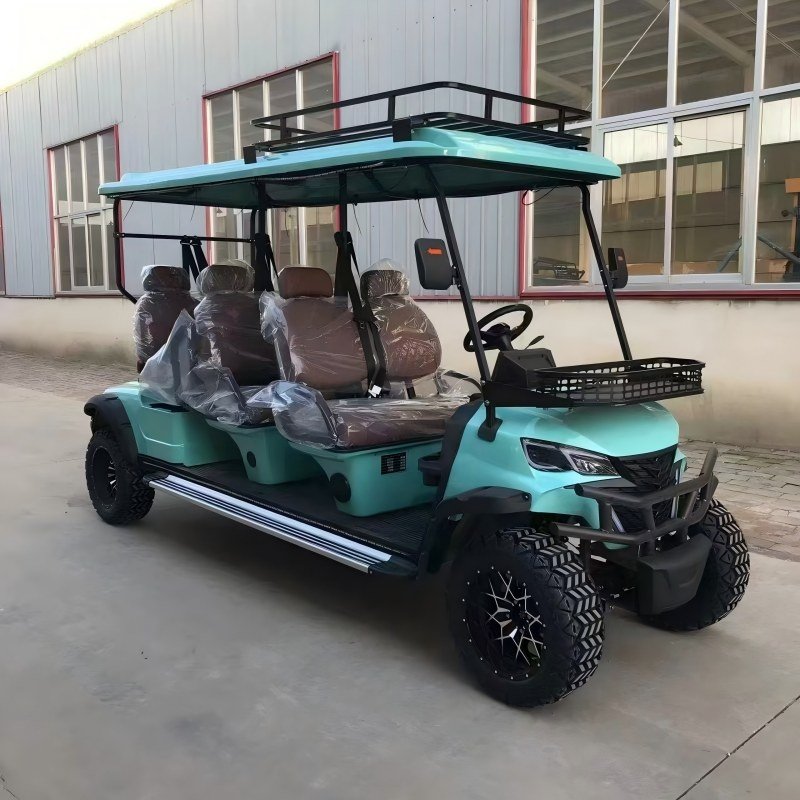
6 Passenger Electric Golf Cart – Commercial Lithium Golf Carts
Our 6 passenger electric golf cart models are explicitly designed for golf courses, resorts, hotels, tourist attractions, and community transportation. Powered by high-efficiency AC electric motors and long-range lithium batteries, these vehicles provide quiet operation, low maintenance costs, and environmentally friendly mobility.
Compared with traditional gasoline vehicles or lead-acid setups, our modern lithium electric golf carts deliver a longer range, smoother acceleration, and drastically reduced operating costs. These models feature a 5000W electric AC motor, top speeds around 25-30 MPH, and ranges up to 40-60 miles per charge. If you need reliable, heavy-duty transport, this is the uncompromising commercial solution.
View the Thunder Series 6-Passenger Carts Here
Frequently Asked Questions
Can I add a third row to my 4-seater golf cart?
No, you cannot safely add a third row to a standard 4-seater chassis. The seating capacity of a 6 seater golf cart relies on an extended, stretched frame to support the middle row. Bolting extra seats to a standard frame will destroy the vehicle’s center of gravity, causing it to flip backwards during acceleration.
Are 6-seater golf carts street legal?
A 6-seater golf cart can be street legal if it is manufactured or upgraded to meet federal Low Speed Vehicle (LSV) requirements. This means it must have DOT-approved windshields, seat belts for all six passengers, headlights, taillights, turn signals, mirrors, and a top speed capability between 20 and 25 MPH. You must also register and insure it according to your local municipal laws.
How much weight can a 6 passenger golf cart hold?
The safe operational payload capacity for a commercial-grade 6-passenger golf cart is typically between 1,000 and 1,200 pounds. This weight limit includes all passengers, cargo, and aftermarket accessories. Exceeding this limit places dangerous stress on the braking system and transaxle.
Authoritative Industry References
To ensure our safety and engineering guidelines align with federal and industry standards, we reference data from the following authorities:
- National Highway Traffic Safety Administration (NHTSA) – Federal Motor Vehicle Safety Standard No. 500 (FMVSS 500), which dictates the safety equipment and speed requirements for Low Speed Vehicles (LSVs) transporting multiple passengers.
- American National Standards Institute (ANSI) – ANSI/OPEI Z130.1 standard providing rigorous safety and performance guidelines for the manufacturing of golf cars and personal transport vehicles.
- U.S. Environmental Protection Agency (EPA) – Data regarding the environmental impact and energy efficiency metrics of lithium-ion battery integration in light-duty commercial transport vehicles.
For more details on finding specialized manufacturers, see our guide on Mini Golf Cart Manufacturers or review options for Single Golf Cart Companies.