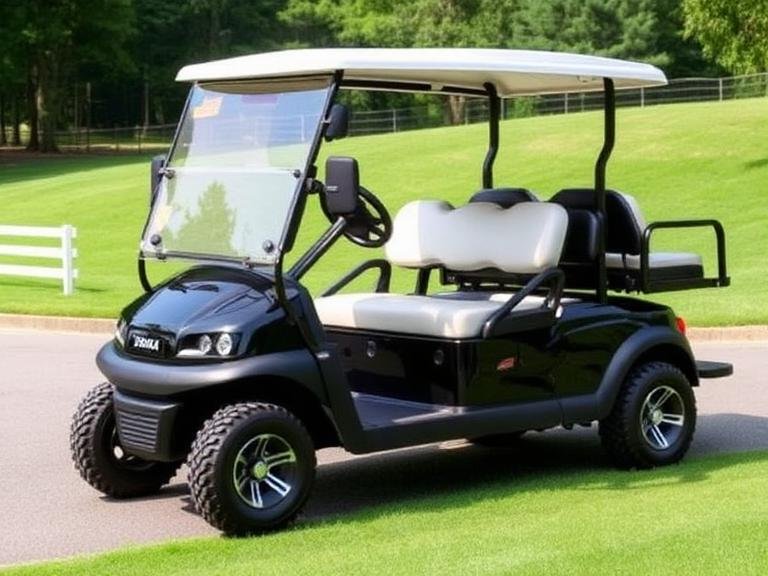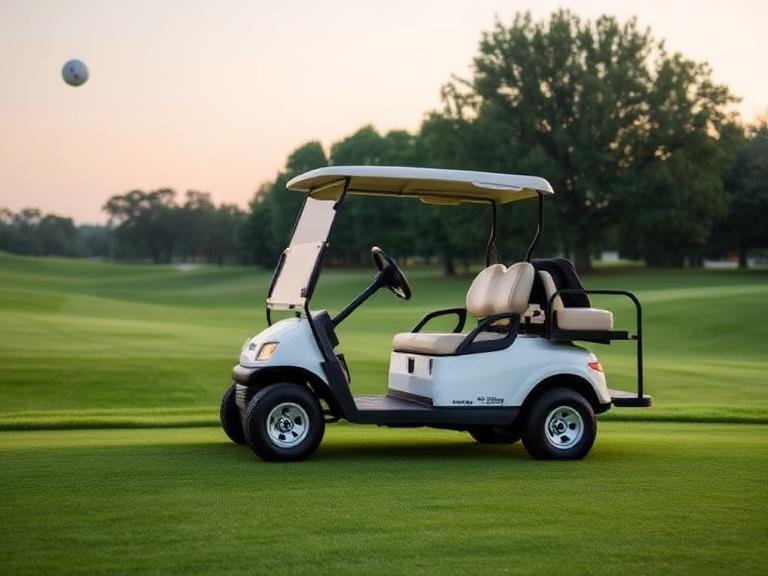
The best electric golf cart for neighborhood use is not necessarily the fastest, largest, or most expensive model. It is the one that fits your passenger needs, local road rules, typical trip distance, parking space, and expectations for comfort and safety. For most households, we recommend starting with a well-equipped 4-passenger electric cart. Choose a 2-passenger model if you mainly travel alone or with one other person, a 6-passenger cart for larger families, or a street-legal low-speed vehicle (LSV) when you need to use eligible public roads.
Neighborhood driving is different from golf course transportation. You may use the cart to visit a neighbor, take children to a community amenity, carry groceries, or travel around a planned development. Those everyday tasks make seating layout, braking, visibility, weather protection, battery capacity, and legal equipment more important than a long list of luxury features.
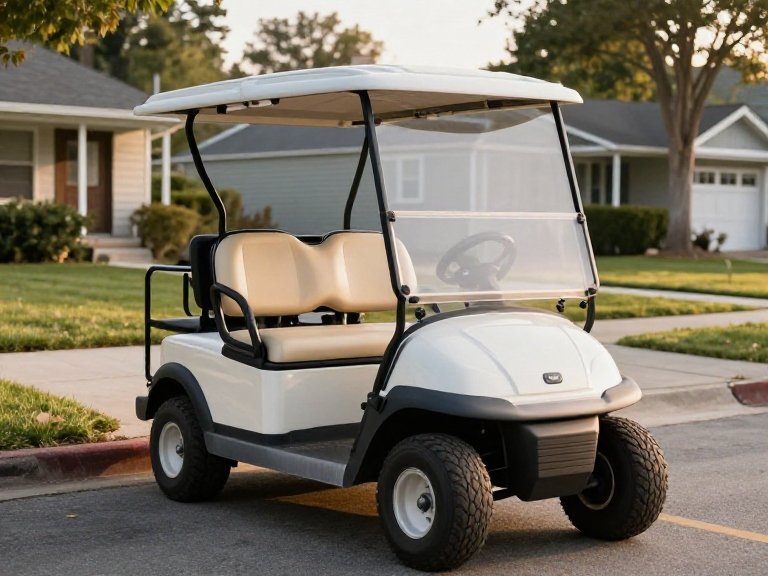
The Short Answer: Which Neighborhood Electric Golf Cart Is Best?
Quick Answer: For a typical household, a 4-passenger electric golf cart offers the strongest balance of passenger capacity, maneuverability, comfort, and everyday practicality. A 2-passenger cart is the economical choice for couples and short trips. A 6-passenger model makes more sense for larger families or frequent group transportation. If you plan to drive on public roads, prioritize a properly equipped and legally compliant street-legal LSV rather than assuming an ordinary golf cart is road legal.
Our recommendation: Buy for your normal daily use, not the occasional situation when you might need extra seats. A larger cart costs more, takes up more parking space, and can be less convenient to maneuver.
| Neighborhood use case | Best cart type | Why we recommend it | Best for |
|---|---|---|---|
| Daily errands for one or two people | 2-passenger electric golf cart | Compact footprint, simpler seating layout, and generally lower purchase and operating costs | Couples, retirees, and solo drivers |
| General family transportation | 4-passenger electric golf cart | Good balance of passenger capacity, size, comfort, and versatility | Most neighborhood households |
| Carrying larger groups | 6-passenger electric golf cart | More seating for family members and guests without needing multiple carts | Large families and community use |
| Eligible public-road travel | Street-legal electric LSV | Designed and equipped to meet applicable low-speed vehicle requirements where permitted | Residents whose routes include approved public roads |
What Makes an Electric Golf Cart Suitable for a Neighborhood?
A neighborhood cart needs to do more than move from one point to another. It should be predictable at low speeds, easy to park, comfortable over repeated short journeys, and equipped for the conditions where it will be driven. We would assess the following factors before comparing appearance, trim packages, or optional accessories.
1. Passenger capacity and seating layout
Choose the number of seats based on the people who will regularly ride together. A 2-passenger cart is often the most sensible option for a couple. A 4-passenger configuration works for many families and gives you useful flexibility for occasional guests. A 6-passenger model is worthwhile when all those seats will be used regularly.
Do not judge capacity by the number of seat cushions alone. Check the manufacturer’s rated passenger capacity and payload limit, including the combined weight of passengers, cargo, and accessories. Overloading affects handling, braking, tire wear, and the vehicle’s ability to climb slopes safely.
2. Battery range and charging convenience
Published range figures are useful for comparing models, but they are not guaranteed real-world distances. Passenger weight, hills, tire pressure, driving speed, temperature, battery age, and stop-start use all affect range. A cart used for several short trips each day may consume energy differently from one driven continuously on flat ground.
We recommend choosing a battery and range package that comfortably covers your regular route with a reserve. Avoid paying a substantial premium for maximum advertised range if your actual use is limited to a few miles around a flat community. On the other hand, do not buy a minimal battery configuration if you routinely carry several passengers or travel across a large development.
3. Speed, braking, and visibility
Higher top speed is not automatically an advantage in a residential setting. Narrow lanes, pedestrians, pets, driveways, parked vehicles, and children require controlled acceleration and predictable braking. A neighborhood cart should have suitable brakes, tires, lighting, mirrors, a horn, and seat belts where required by its vehicle classification and intended use.
For public-road use, check the applicable LSV rules rather than relying on a seller’s description. Federal vehicle standards define requirements for low-speed vehicles, but state and local rules determine where and how qualifying vehicles may be operated. An ordinary golf cart does not become street legal simply because it has headlights or can reach a particular speed.
4. Comfort, storage, and weather protection
For everyday use, comfortable seats, a stable ride, practical storage, and a useful canopy can matter more than decorative upgrades. If you regularly shop with the cart, check the available cargo area and whether the manufacturer offers a suitable rear basket or storage accessory. If your community has frequent rain or strong sun, consider a windshield, canopy, and weather enclosure that are compatible with the vehicle.
The 4 Best Electric Golf Cart Types for Neighborhood Use
1. Best overall: 4-passenger electric golf cart
Our top choice for most households is a 4-passenger electric golf cart. It gives a family enough seating for everyday trips while remaining more manageable than a longer 6- or 8-passenger configuration. It is a practical middle ground for visiting neighbors, traveling to a community pool, carrying shopping, or moving around a residential development.
From our experience with neighborhood-use requirements, this configuration is the easiest starting point for buyers who do not have an unusual passenger or cargo requirement. It offers more flexibility than a two-seat cart without committing to the size of a larger group vehicle.
When comparing models, look for a comfortable rear-facing or forward-facing seating arrangement, a stable chassis, suitable braking equipment, and enough battery capacity for your normal routine. A 4-passenger cart is not automatically suitable for public roads, so confirm its classification separately if road use is part of your plan.
Best for: Families, couples who regularly carry guests, and homeowners who want one cart for several everyday tasks.
Not ideal for: Buyers who rarely carry passengers and have limited garage or storage space. A 2-passenger model may be more cost-effective.
Explore 4 Passenger Golf Carts
2. Best compact option: 2-passenger electric golf cart
A 2-passenger electric golf cart is the right choice when your trips are usually short and you rarely need to transport more than one passenger. Its smaller seating arrangement can make it easier to park in a residential garage, maneuver through tighter areas, and store alongside other household equipment.
For beginners, this is often the easiest configuration to understand and operate. It avoids paying for seats and vehicle length that may rarely be used. It can also be a sensible choice for retirees, couples, or residents who want a convenient alternative for short trips within a private community.
The trade-off is limited flexibility. If you regularly take grandchildren, friends, or other family members along, a two-seat cart can quickly become inconvenient. Do not assume that a rear seat can be added safely to every model. Confirm that the frame, suspension, brakes, electrical system, and manufacturer specifications support the conversion.
Best for: One- or two-person households, short community trips, and buyers prioritizing compact storage.
Not ideal for: Families that regularly travel together or buyers who expect to carry several passengers and shopping bags at once.
Explore 2 Passenger Golf Carts
3. Best for larger families: 6-passenger electric golf cart
A 6-passenger electric golf cart is worth considering when transporting a group is a normal part of your routine. It can be useful for larger families, multi-generational households, and private communities where residents frequently travel together to shared facilities.
The main benefit is obvious: more people can travel in one vehicle. The less obvious issue is that a longer, heavier cart needs more space and careful attention to turning, parking, passenger loading, and braking. Its range can also be affected by the extra passenger weight. Before buying, check the total payload rating rather than assuming six seats mean the cart can carry any six adults comfortably.
For commercial users, such as property managers or operators of private residential facilities, the decision should include expected daily utilization, maintenance access, charging arrangements, and the availability of replacement parts. A 6-passenger cart may reduce the need for multiple smaller vehicles, but only if its dimensions and operating capacity suit the site.
Best for: Larger households, frequent group trips, and private community transportation.
Not ideal for: Small garages, narrow storage areas, or buyers who only occasionally need extra seating.
Explore 6 Passenger Golf Carts
4. Best for eligible public-road travel: street-legal electric LSV
If your neighborhood trips include public streets, a street-legal low-speed vehicle may be the most appropriate choice. An LSV is a defined vehicle category, not simply a regular golf cart with a few accessories. Federal requirements include specific safety equipment, and the vehicle must be manufactured and certified for the applicable classification.
This distinction matters. A standard golf cart may be permitted on certain private roads, paths, or designated local streets, but it may not qualify for public-road use. Even a compliant LSV can be restricted by local speed limits, road access rules, registration requirements, licensing rules, insurance requirements, and other state or municipal regulations.
For buyers who need public-road capability, ask the manufacturer or dealer for documentation showing the vehicle’s classification and compliance. Confirm that the exact model and configuration—not just a similar-looking version—meets the rules in your jurisdiction.
Best for: Residents whose regular routes include public roads where LSV operation is legally permitted.
Not ideal for: Buyers who only drive on private property or who have not checked local LSV access rules.
Explore Street Legal Golf Carts
Comparison: Which Neighborhood Electric Golf Cart Should You Buy?
| Buying factor | 2-passenger | 4-passenger | 6-passenger | Street-legal LSV |
|---|---|---|---|---|
| Typical household fit | One or two people | Small to medium family | Larger family or group | Depends on seating configuration |
| Parking and storage | Usually easiest | Moderate space required | More space required | Depends on body size |
| Passenger flexibility | Limited | Good for everyday use | Best for larger groups | Varies by certified model |
| Purchase cost | Often the lowest of these configurations | Usually a middle-ground option | Often higher due to size and capacity | Can cost more due to compliant equipment |
| Public-road eligibility | Not determined by seat count | Not determined by seat count | Not determined by seat count | Subject to certification and local law |
| Our verdict | Best for compact, simple use | Best overall for most households | Best when all seats are regularly needed | Best when legal road use is essential |
The key point is that passenger capacity and legal classification are separate buying decisions. A 4-passenger cart is not automatically street legal, and a street-legal LSV is not automatically the best choice for a household that only drives on private property.
Pros and Cons of Using an Electric Golf Cart in a Neighborhood
| Advantages | Limitations |
|---|---|
| Convenient for short trips within private communities and permitted areas | May not be permitted on public roads without the required vehicle classification and local authorization |
| Electric drive avoids tailpipe emissions during operation | Battery production, electricity generation, and eventual battery disposal still have environmental impacts |
| Generally quieter than a conventional gasoline-powered cart | Battery range and performance vary with load, terrain, weather, and battery condition |
| Can be easier to park and maneuver than a full-size car | Some longer passenger models need substantial garage or storage space |
| Useful for carrying passengers and small everyday loads | Payload limits, cargo capacity, and weather protection are more limited than a passenger car |
| Can have relatively simple routine operating requirements | Battery replacement and electrical-system repairs can create significant ownership costs |
Our view: an electric golf cart is a good neighborhood mobility tool when the route, vehicle classification, and passenger needs match. It is not a universal replacement for a car. Buyers who expect highway capability, extensive weather protection, or full-size vehicle crash protection should choose a vehicle designed for those requirements instead.
Battery and Range: What Should You Look For?
Battery specifications deserve careful attention because they influence purchase price, charging habits, operating range, and long-term ownership cost. Do not compare battery systems using voltage alone. Voltage, amp-hour capacity, battery chemistry, usable energy, controller settings, and vehicle efficiency all affect the result.
Lithium-ion batteries
Lithium battery systems are attractive to buyers who value lower battery weight, convenient charging, and consistent performance. Depending on the battery design and management system, they may also offer a longer service life than some traditional lead-acid configurations. However, the initial purchase price can be higher, and the exact battery warranty, replacement cost, and service support matter.
We recommend lithium when the cart will be used frequently, when reduced battery maintenance is important, or when the buyer plans to keep the vehicle for several years. Check the battery management system, charger compatibility, warranty exclusions, and availability of replacement batteries before making a decision.
Lead-acid batteries
Lead-acid batteries can offer a lower upfront cost and may suit buyers with light, occasional use and a tighter purchase budget. The trade-off is greater routine maintenance for some battery types, more weight, and a need to follow the manufacturer’s charging and care instructions closely.
For a cart used every day, calculate the full ownership cost rather than choosing the lowest initial price. Battery replacement intervals, charging efficiency, maintenance time, and downtime can change the economics considerably.
| Battery consideration | Lithium-ion | Lead-acid | Practical buying advice |
|---|---|---|---|
| Initial cost | Typically higher | Typically lower | Compare the complete vehicle price and warranty, not battery price alone |
| Weight | Generally lighter for comparable usable energy | Generally heavier | Consider payload and handling, especially on multi-passenger carts |
| Maintenance | Usually lower routine battery maintenance | May require more regular care depending on battery type | Follow the battery manufacturer’s instructions |
| Service life | Can be longer, depending on chemistry, management, use, and charging | Varies with type, depth of discharge, and maintenance | Ask for warranty terms and realistic replacement-cost estimates |
| Best fit | Frequent use and buyers prioritizing convenience | Budget-conscious or lighter-use ownership | Choose based on annual usage and expected ownership period |
Features Worth Paying For—and Features You Can Skip
Not every upgrade improves the ownership experience. We recommend spending first on safety, reliability, battery suitability, and comfort. Cosmetic extras should come later.
Features worth prioritizing
- Reliable braking system: Confirm that the brakes are appropriate for the vehicle’s weight, passenger capacity, and intended terrain.
- Seat belts and passenger restraints: Check the supplied equipment and the requirements for the vehicle’s classification and local use.
- Headlights, tail lights, brake lights, and turn signals: Essential where required and useful for visibility in appropriate operating environments.
- Mirrors and horn: Practical equipment for awareness around driveways, pedestrians, and other vehicles.
- Suitable tires and suspension: Match the tire type and suspension setup to the surfaces you actually drive on.
- Battery warranty and charger support: These can have a greater effect on long-term satisfaction than decorative upgrades.
- Canopy and windshield: Worth considering if the cart is used regularly in sun, wind, or light rain.
Upgrades that depend on your use
- Premium upholstery: Worthwhile if the cart is used daily, but not a substitute for durable seat construction.
- Enclosures: Useful in climates with frequent rain or cooler seasons; check visibility, ventilation, and fit.
- Upgraded wheels: Choose a compatible wheel and tire package, not a style-only upgrade that compromises ride or handling.
- Audio systems: Optional convenience equipment, not a reason to compromise the budget for safety or battery quality.
- Lift kits: Usually unnecessary for ordinary neighborhood roads and may affect handling, stability, and component wear if poorly selected.
7 Common Mistakes When Buying a Neighborhood Golf Cart
- Assuming every golf cart is street legal. This is the most important mistake to avoid. Confirm the exact vehicle classification and local operating rules before using public roads.
- Buying more seats than you need. Extra seating increases size and can add cost. Choose a 6-passenger model only if you regularly transport larger groups.
- Trusting advertised range without checking the conditions. Ask how range was measured and whether the figure assumes flat terrain, light loads, moderate speeds, and ideal conditions.
- Ignoring payload capacity. Passenger count does not tell you how much combined passenger and cargo weight the cart can safely carry.
- Choosing based only on the lowest purchase price. Battery replacement, warranty coverage, parts availability, and service support affect total ownership cost.
- Adding a rear seat without confirming compatibility. A conversion can affect load ratings, braking, stability, and warranty coverage. Use manufacturer-approved configurations.
- Forgetting about storage and charging. Measure your garage or parking space and confirm that you have a safe, suitable charging location.
How to Choose the Right Neighborhood Electric Golf Cart
Before requesting a quote, write down your normal use case. This prevents a sales conversation from focusing on features that do not solve your actual problem.
Step 1: Define where you will drive
Separate private-property use from public-road use. If you will only travel on private roads or designated community paths, check the property owner’s rules and any local restrictions. If you intend to cross or travel along public roads, investigate LSV requirements, registration, insurance, licensing, and permitted road types before selecting a model.
Step 2: Count regular passengers
Count the people who will travel together on a normal day, not the maximum number of guests you might carry once a year. A 4-passenger cart is our preferred starting point for many households. If two seats are enough almost all the time, a compact cart is likely the better investment.
Step 3: Estimate your daily distance
Measure your typical round trip and add a sensible reserve. If your route includes hills, frequent stops, heavy passenger loads, or long distances, discuss those conditions with the manufacturer. Ask for range estimates based on a configuration similar to the one you intend to purchase.
Step 4: Compare total ownership cost
Request a written quote that identifies the vehicle, battery chemistry and capacity, charger, included safety equipment, accessories, delivery, warranty, and any road-use certification or documentation. Ask which components are covered, who handles warranty repairs, and how replacement parts are supplied.
Step 5: Check the manufacturer and after-sales support
A low price is not a good deal if the supplier cannot provide technical documentation, replacement parts, or dependable support. For a direct purchase or a customized fleet, assess the manufacturer’s production capability, quality-control process, customization scope, delivery planning, and communication after the sale.
Our buying rule: Compare two or three complete vehicle configurations with the same passenger capacity, battery type, and included equipment. Comparing a base model against a fully equipped model produces a misleading price comparison.
Cost-Benefit Analysis: Is a More Expensive Cart Worth It?
The right question is not whether a premium cart costs more. It is whether the additional cost buys something you will use and whether it reduces future inconvenience or operating expense.
For a household that drives a few short trips each week, a dependable 2- or 4-passenger cart with a suitable battery may offer better value than a high-specification model with luxury accessories. A buyer who uses the cart every day, carries several passengers, or operates it for a residential community may benefit from investing in a higher-capacity battery, stronger service support, and more durable components.
When comparing total cost, include:
- Initial vehicle and battery price
- Charging equipment and any electrical installation work
- Expected battery replacement cost over the ownership period
- Routine service, tires, brakes, and other wear items
- Insurance, registration, or compliance costs where applicable
- Storage, weather protection, and accessories
- Warranty coverage, parts availability, and potential downtime
For commercial users, downtime deserves particular attention. A vehicle that is slightly more expensive but has reliable parts support and a clear service process may cost less to operate over time than a cheaper cart that is difficult to maintain.
Why Consider GT Golf Cart for a Customized Electric Cart?
GT Golf Cart provides electric golf cart options for different passenger capacities and use cases, including 2-, 4-, and 6-passenger configurations, as well as electric and street-legal golf cart categories. For buyers who need a vehicle matched to a specific neighborhood, fleet, or business requirement, the important question is whether the supplier can align the configuration with the intended application.
GT Golf Cart also offers OEM and ODM collaboration for customers who need customized electric golf cart solutions. Its end-to-end approach covers product conceptualization through mass production, with project scope tailored to business positioning, operational requirements, and market objectives. This can be relevant for distributors, fleet buyers, and organizations sourcing a particular configuration rather than choosing only from a standard retail specification.
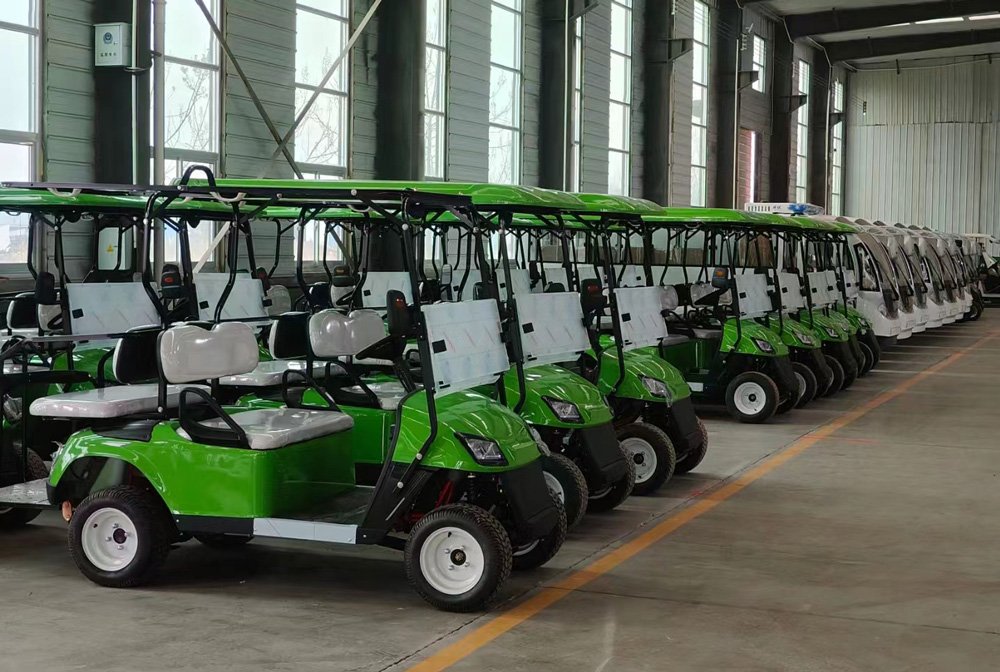
Customized Golf Cart End-to-End Solutions
GT Golf Cart supports OEM and ODM cooperation, from product concept development to mass production. With more than 12 years of electric vehicle manufacturing experience, the company works with customers to define project requirements and develop tailored solutions.
Learn about GT Golf Cart OEM/ODM services
For a neighborhood or community fleet, we recommend providing the supplier with the passenger capacity, expected daily distance, terrain, storage dimensions, operating environment, and applicable road-use requirements before asking for a quotation. This makes it easier to compare technically equivalent proposals.
Explore GT Golf Cart’s electric golf cart range, or review its luxury golf cart options if seating comfort, styling, and upgraded finishes are important to your project.
Our Expert Recommendation
For most homeowners, we recommend a 4-passenger electric golf cart with a dependable battery system, suitable brakes, practical lighting and visibility equipment, and enough range for normal trips with a reserve. It is the strongest all-around choice because it handles common family needs without the extra size of a larger group cart.
Choose a 2-passenger cart if compact storage and lower initial cost matter more than carrying extra people. Move up to a 6-passenger model when you regularly transport a larger family or group. If public-road travel is essential, make street-legal LSV compliance the first requirement—not an accessory decision after you have already selected a standard cart.
Before purchasing, confirm the vehicle’s rated passenger and payload limits, battery warranty, charger compatibility, included safety equipment, service support, and local operating rules. A well-matched cart with dependable support is a better investment than a premium-looking model that does not fit your actual route or usage.
Frequently Asked Questions
1. What is the best electric golf cart for neighborhood use?
A 4-passenger electric golf cart is the best overall choice for many households because it balances seating capacity, maneuverability, comfort, and everyday flexibility. A 2-passenger cart is better for couples or solo drivers, while a 6-passenger model suits larger families. For public-road travel, choose a properly certified street-legal LSV where local law permits it.
2. Can I drive a regular electric golf cart on neighborhood streets?
It depends on the road, property rules, and local law. Some private communities allow golf carts on internal roads, while public-road operation may require a qualifying LSV, registration, safety equipment, and compliance with state and local restrictions. Never assume that a standard golf cart is street legal.
3. Is a 4-passenger golf cart better than a 6-passenger golf cart?
For most households, yes. A 4-passenger cart is generally easier to store and maneuver while providing enough seats for common family trips. A 6-passenger cart is a better choice when you regularly transport larger groups and have enough space to park and operate it.
4. How much range do I need for a neighborhood golf cart?
Choose a range that comfortably covers your normal round trip with an operating reserve. Actual range depends on passenger weight, terrain, speed, temperature, tire pressure, battery condition, and driving style. Ask the manufacturer how its range figure was measured and whether it reflects your expected load and route.
5. Is a lithium battery worth the extra cost in an electric golf cart?
A lithium battery can be worth the higher initial cost for frequent users who value lower routine maintenance, reduced battery weight, and potentially longer service life. For occasional use and a tight budget, lead-acid may be adequate. Compare warranty coverage, usable capacity, replacement price, and charger compatibility before deciding.
6. What safety features should a neighborhood electric golf cart have?
Look for a suitable braking system, tires, mirrors, horn, and the lighting and restraint equipment required for the vehicle’s classification and intended use. For an LSV, verify that the exact vehicle meets the applicable federal and local requirements. Do not rely on a generic accessories list as proof of compliance.
7. Should I buy a street-legal golf cart if I only drive inside my community?
Not necessarily. If you only use private roads or designated community paths, a standard golf cart may meet your needs if the property owner and local rules permit it. A street-legal LSV is worth considering when you need to use public roads where that vehicle category is allowed. Check local restrictions before paying extra for road-use equipment.
8. What should I ask a golf cart manufacturer before placing an order?
Ask for the full vehicle specification, rated passenger and payload limits, battery details, real-world range assumptions, charger information, warranty terms, parts availability, service arrangements, delivery schedule, and documentation for any claimed road-legal classification. For customized orders, also confirm the design scope, sample approval process, production timeline, and quality checks.
References
- National Highway Traffic Safety Administration (NHTSA): Low-Speed Vehicle guidance and interpretations — federal context for the low-speed vehicle category and applicable vehicle safety requirements.
- Electronic Code of Federal Regulations: 49 CFR § 571.500, Standard No. 500 — Low-Speed Vehicles — federal safety standard covering specified LSV equipment requirements.
- California Department of Motor Vehicles: Low-Speed Vehicles — an example of state-level registration and operating guidance; requirements differ by jurisdiction.
Road-use rules vary by state, county, municipality, and private-property authority. The references above are starting points, not a determination that a particular cart may be operated on a particular road. Confirm current requirements with the relevant authorities before driving.