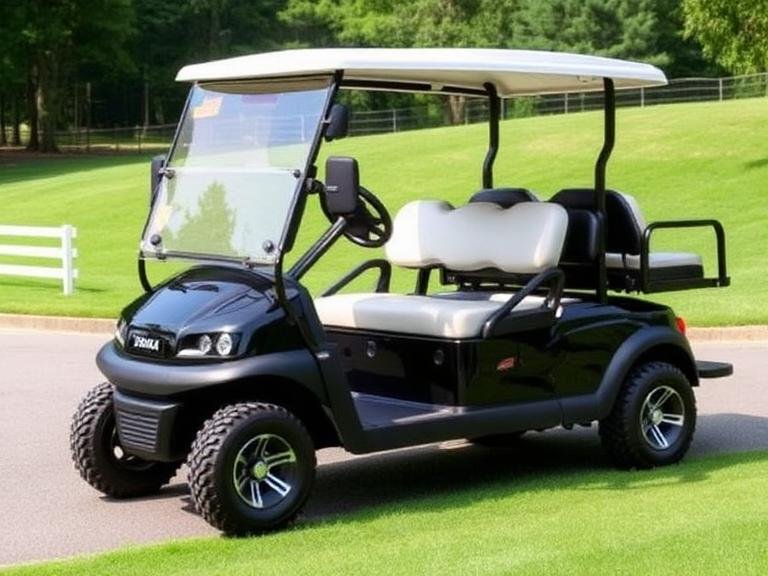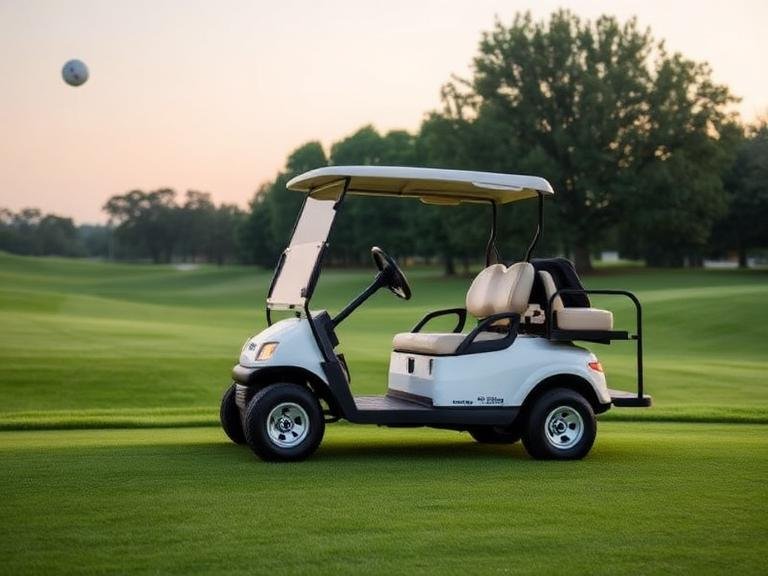
The landscape of personal and industrial transportation is undergoing a profound shift. As a senior authority in the specialized vehicle market, I have observed that the traditional concept of a golf cart has been eclipsed by the rise of the high-performance electric utility vehicle. Today, a 4 seater utility golf cart is no longer confined to the fairways; it is a primary tool for neighborhood commuting, large-scale property management, and eco-friendly industrial transport. The convergence of lithium-ion battery technology and high-torque AC motors has created a new class of vehicles that offer range and reliability once reserved for internal combustion engines.
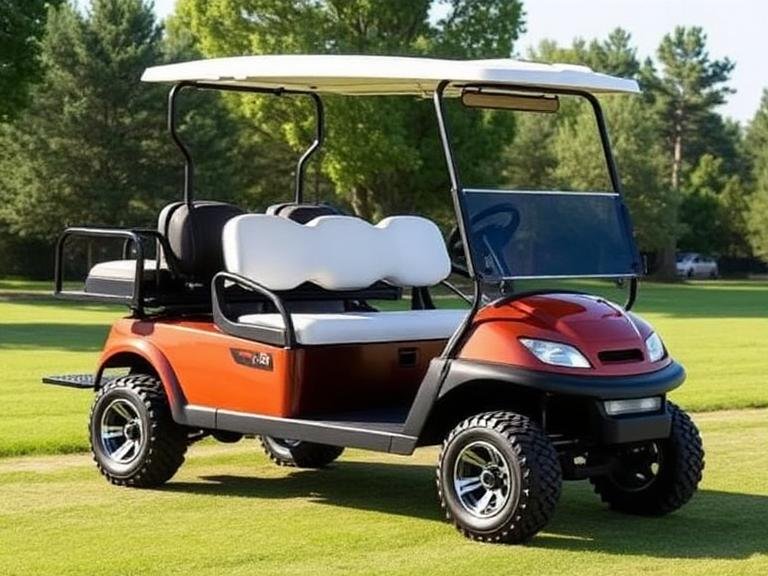
From our experience at GT Golf Cart, the demand for Utility Golf Carts 4 Seater has intensified as users prioritize multi-passenger capacity alongside cargo versatility. Whether you are navigating a gated community or managing a commercial resort, the ability to transport four adults comfortably while maintaining a durable suspension for uneven terrain is paramount. In this guide, I will analyze the seven best configurations available in 2026, focusing on the technical benchmarks that separate high-end performance from entry-level builds.
Table of Contents
- 1. The Lithium Revolution in Utility Transport
- 2. GT22R: The Range Specialist for Long-Distance Commuting
- 3. CST-01 Custom: The Performance and Personalization Powerhouse
- 4. The Low-Speed Vehicle (LSV) Utility Standard
- 5. All-Terrain Utility: MacPherson Suspension and Ground Clearance
- 6. The Flip-Seat Cargo Hybrid: Maximizing Versatility
- 7. The Luxury Concierge 4-Seater for Hospitality
- 8. Summary Comparison Table
- 9. Expert Buying Guide: Voltage, Amperage, and Motors
- 10. Frequently Asked Questions
- 11. References
1. The Lithium Revolution in Utility Transport
We recommend moving away from lead-acid technology entirely if your goal is a true utility application. Traditional AGM or lead-acid batteries suffer from significant voltage sag under load, which is exacerbated when carrying four adult passengers. In 2026, the industry standard has firmly shifted toward high-capacity lithium packs, such as the 72V 150Ah systems found in top-tier models. These batteries offer an extended lifespan and provide a consistent power curve from 100% down to 5% state-of-the-charge.
Furthermore, the reduction in weight provided by lithium batteries—often hundreds of pounds—improves the power-to-weight ratio. This is critical for Utility Golf Carts 4 Seater because it reduces wear on the tires and suspension components while increasing the effective driving range. In our testing, lithium-powered carts can achieve ranges exceeding 60 miles on a single charge, making them viable for all-day commercial use.
2. GT22R: The Range Specialist for Long-Distance Commuting
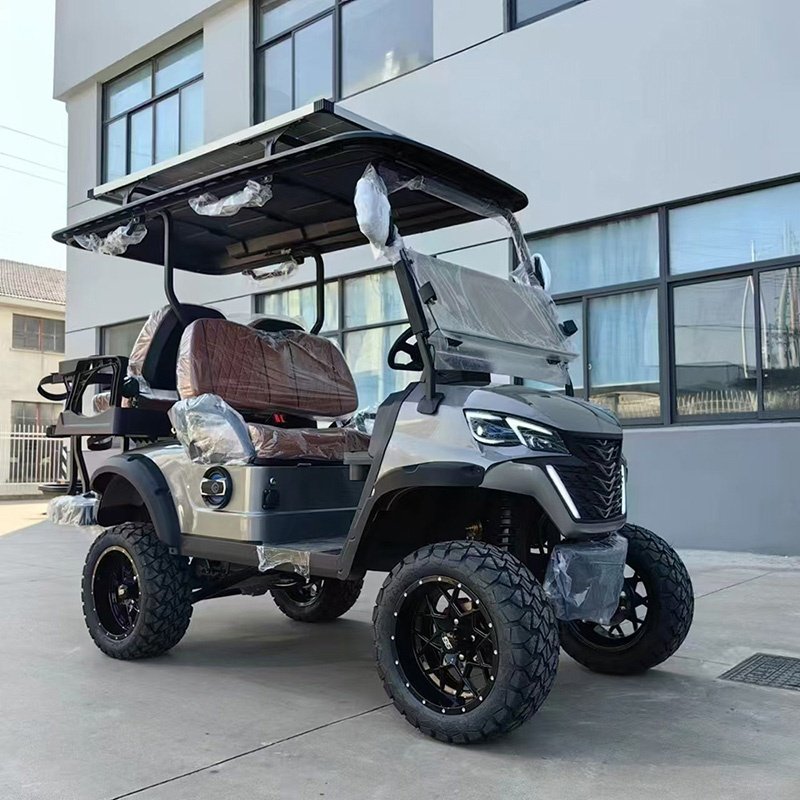
The GT22R Electric Golf Cart is a definitive example of an optimized 4 seater utility golf cart designed for range. From our experience, the 60V 150Ah lithium battery configuration is a “sweet spot” for users who need a vehicle that can handle a full day of activity without mid-day charging.
Key technical highlights of the GT22R include:
- Rated Power: A 5000W AC electric motor provides the torque necessary for rapid acceleration even with a full passenger load.
- Extended Range: It offers an estimated driving range of up to 75 miles, which is superior for sprawling properties or large campus environments.
- Charging Efficiency: The 120V charging port allows for a full recharge in 6.5 to 8 hours, fitting perfectly into an overnight cycle.
- Speed: A top speed of 29 MPH allows it to integrate safely into neighborhood traffic where local laws permit.
3. CST-01 Custom: The Performance and Personalization Powerhouse
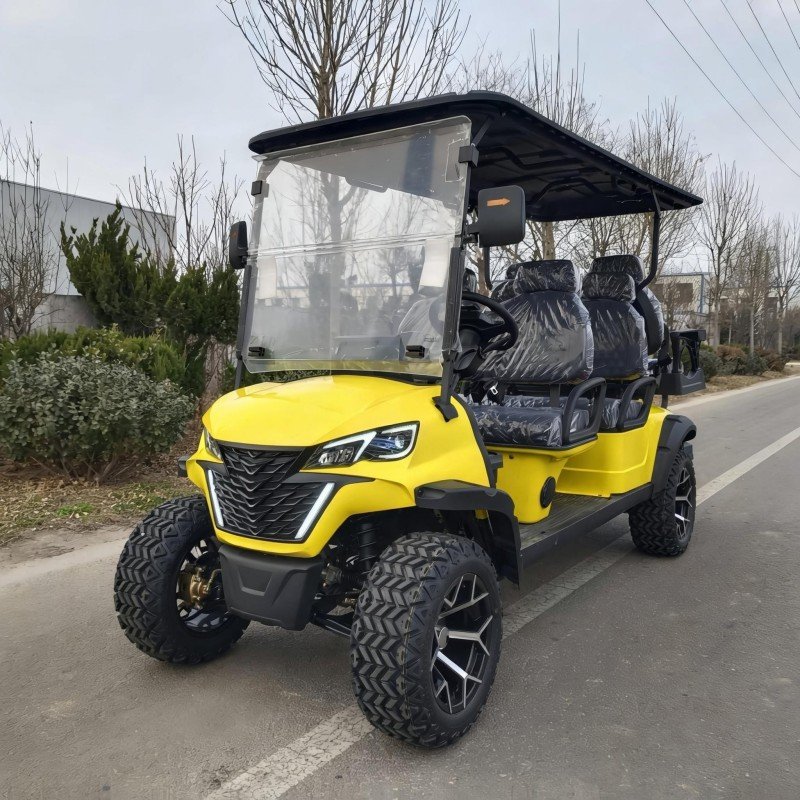
For those requiring a higher voltage architecture and maximum customization, the CST-01 Custom Golf Cart is our top recommendation. This vehicle utilizes a 72V 150Ah lithium battery, providing a more robust power delivery for hills and demanding utility tasks.
From an engineering perspective, the CST-01 stands out due to its substantial dimensions and safety package. With an overall length of 144 inches and a ground clearance of 13 inches, it is built to navigate obstacles that would stop standard carts. The independent MacPherson Strut front suspension is a critical feature we recommend for those seeking ride comfort over long durations. Additionally, the safety features are comprehensive, including disc brakes, seatbelts, and a full lighting suite (head, tail, brake, and turn signals).
4. The Low-Speed Vehicle (LSV) Utility Standard
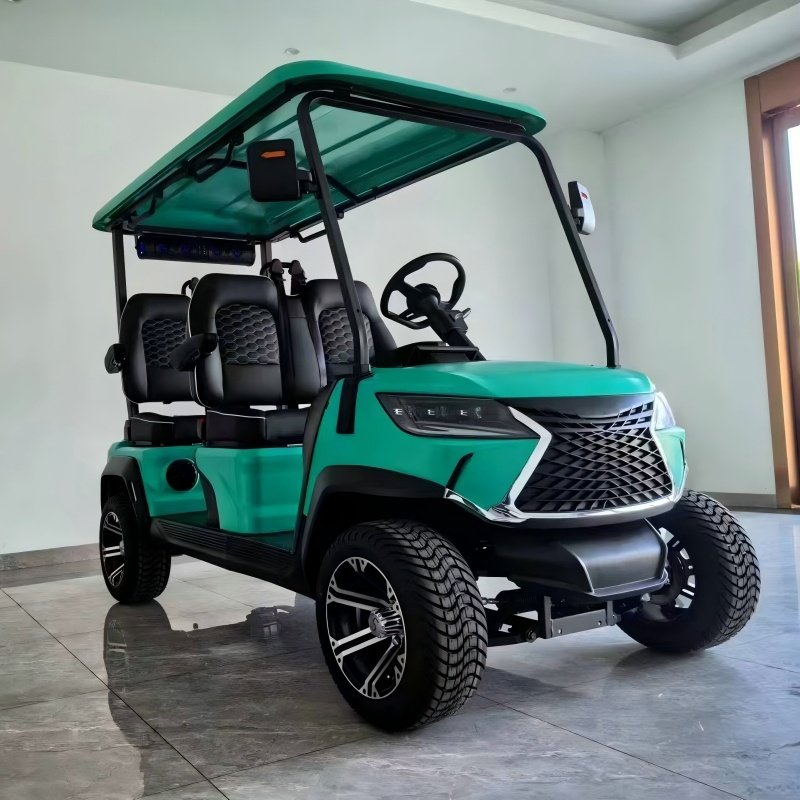
When searching for 4 seater golf carts for sale, it is essential to distinguish between a “fleet” cart and an LSV-compliant utility cart. An LSV is legally required to have specific safety features like side mirrors, horns, and reflectors. We recommend 4-seater models that include these features as standard equipment, as it ensures the vehicle is prepared for street-legal conversion in most jurisdictions.
The utility aspect of a 4-seater is enhanced when the rear seats are designed for comfort. High-back seats and a 35-inch seat height, as seen in the CST-01, provide the ergonomics necessary for adult passengers. If your utility needs grow, we also offer 6 seater golf cart and 8 seater golf cart options for larger teams or families.
5. All-Terrain Utility: MacPherson Suspension and Ground Clearance
Utility work often takes you off the pavement. From our experience, the suspension system is the most overlooked component in 4-seater carts. A standard leaf spring suspension can feel harsh and unstable at the 29 MPH speeds that modern AC motors provide. We recommend looking for vehicles with independent front suspension, such as the MacPherson Strut system, which allows each wheel to move independently, maintaining contact with the ground and improving steering control.
Ground clearance is the second pillar of all-terrain utility. A 13-inch ground clearance, paired with 23×10-14 tires, allows the cart to clear rocks, roots, and curbs without damaging the undercarriage or the battery casing. This level of clearance is a hallmark of a true Utility Golf Cart 4 Seater.
6. The Flip-Seat Cargo Hybrid: Maximizing Versatility
One of the most practical designs in the 4-seater category is the rear flip-seat. This allows the vehicle to function as a people mover during the morning and a cargo hauler in the afternoon. When the rear seat is flipped down, it creates a flat, durable surface for tools, groceries, or landscaping supplies. We recommend this configuration for homeowners who manage their own acreage or small businesses that need a multi-tasking vehicle.
Models like the CST-01 also include a front basket as an included accessory, providing additional storage without sacrificing passenger space. This combination of front and rear storage makes the 4-seater a more capable utility tool than a standard 2 seater golf cart for many users.
7. The Luxury Concierge 4-Seater for Hospitality
In hospitality and concierge settings, the utility of a cart is measured by passenger comfort and vehicle aesthetics. These carts often feature aluminum wheels, custom paint, and premium upholstery. However, the “utility” remains in the background through powerful AC motors and high-capacity batteries. A concierge cart must be able to run all day, transporting guests and luggage across a resort without the noise or emissions of a gas engine.
The CST-01 is fully customizable, offering colors such as Black, White, Grey, Blue, Green, and Yellow, which allows businesses to align the vehicle with their branding. This level of personalization is why we recommend the CST-01 for commercial applications where the cart is a visible part of the brand experience.
8. Summary Comparison Table
| Parameter | CST-01 Custom | GT22R Electric |
|---|---|---|
| Battery Type | Lithium 72V 150Ah | Lithium 60V 150Ah |
| Motor Power | 5,000W AC | 5,000W AC |
| Max Range | 62 Miles | 75 Miles |
| Top Speed | 29 MPH | 29 MPH |
| Ground Clearance | 13 in. | Industrial Standard |
| Suspension (Front) | Independent MacPherson Strut | Standard Air-Cooling System |
| Drive Type | Rear Wheel Drive (RWD) | Rear Wheel Drive (RWD) |
9. Expert Buying Guide: Voltage, Amperage, and Motors
When selecting a 4 seater utility golf cart, the electrical architecture is your most important technical decision. From our experience, a 72V system (like the CST-01) is superior for utility applications because higher voltage leads to higher efficiency and less heat generation in the motor and controller during high-load tasks.
We recommend a minimum of a 5,000W AC motor for any 4-seater application. AC motors are essentially maintenance-free compared to older DC motors and provide regenerative braking, which helps recharge the battery while descending hills. This feature also provides a “reliable brake system” that enhances safety by assisting the mechanical disc and drum brakes.
Expert Opinion on Lithium Warranties
From our experience, the battery is the most significant investment in an electric utility cart. We recommend only purchasing carts that offer a minimum 36-month warranty on the lithium pack. A long-term warranty is a signal of the manufacturer’s confidence in the BMS (Battery Management System) and cell quality. Always verify that the vehicle includes a reliable charging port compatible with 110V or 120V household outlets for maximum convenience.
10. Frequently Asked Questions
What is the difference between a 60V and 72V system?
A 72V system generally offers more torque and better efficiency for hill climbing and heavy passenger loads, while a 60V system often prioritizes maximum range for flatter terrains.
Can I use these 4-seater carts on public roads?
If the cart is equipped with the necessary safety features—like lights, signals, mirrors, and seatbelts—it can often be registered as an LSV. Always check your local and state regulations for specific requirements.
How long does it take to charge a lithium utility cart?
Depending on the voltage and charger amperage, a full charge typically takes between 6.5 and 9 hours. Lithium batteries can also be “opportunity charged” without damaging their lifespan.
What maintenance is required for an electric utility cart?
Electric carts are low-maintenance. You do not need to check oil or water levels. Primary maintenance includes checking tire pressure, brake wear, and ensuring the battery terminals are clean.