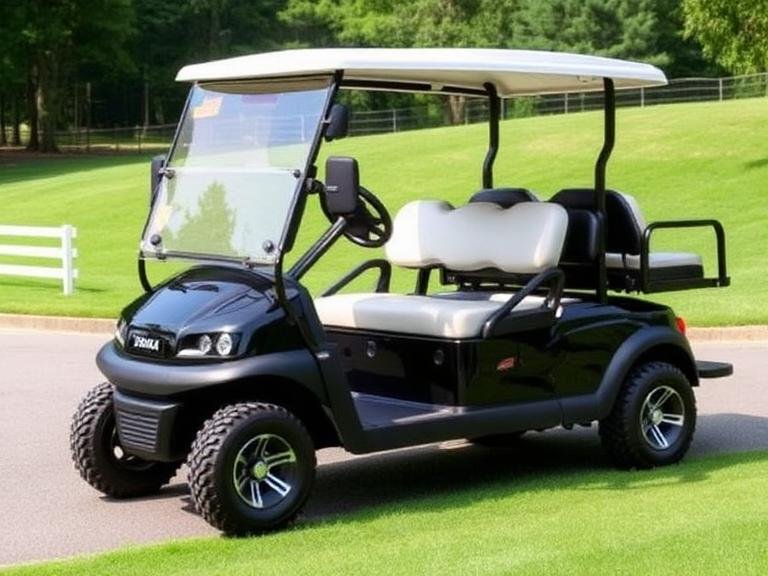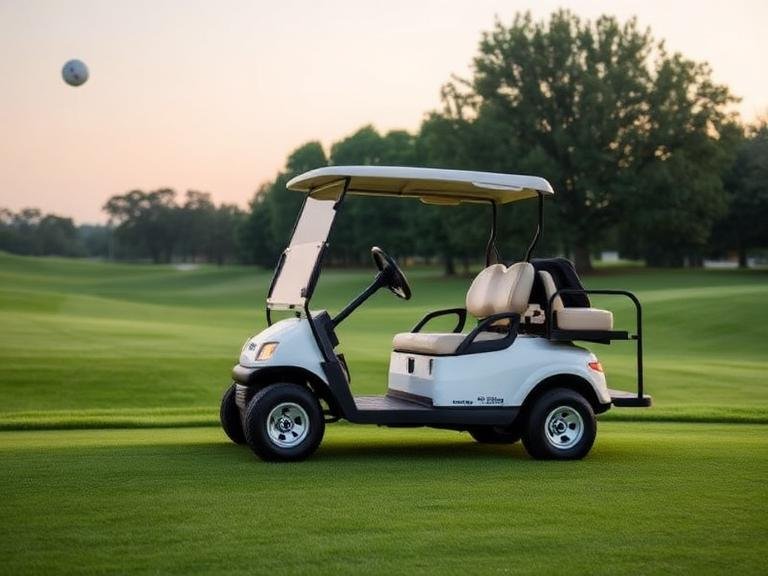
As the electric vehicle landscape continues to evolve rapidly, the transition from traditional lead-acid batteries to advanced lithium-ion technology has revolutionized the low-speed vehicle sector. At GT Golf Cart, we specialize in the design, manufacturing, and global supply of electric golf carts and low-speed vehicles. With over 12 years of industry experience, we deliver reliable mobility solutions for golf courses, resorts, communities, and commercial fleets worldwide. One of the most common questions our engineering and sales teams receive is precisely about range: just how much lithium golf cart travel can an owner expect before needing to plug back in?
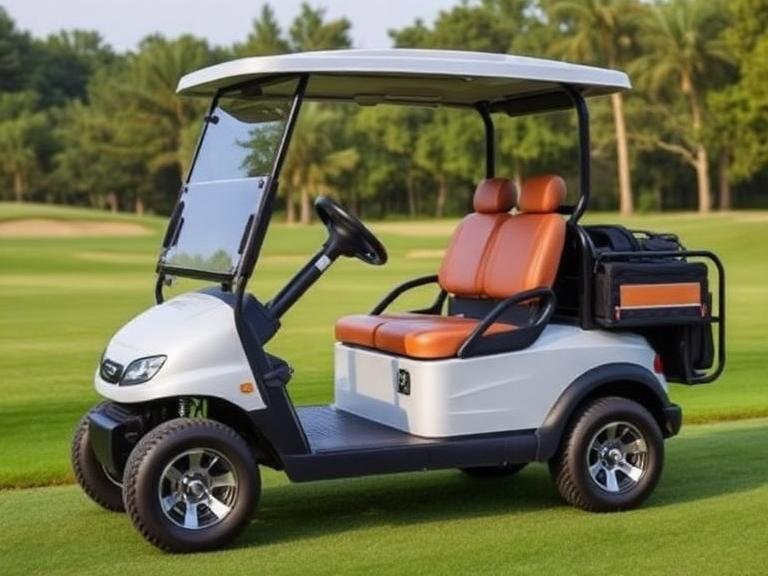
The answer is not a single, static number. Optimal lithium golf cart travel depends on a complex interplay of battery capacity, terrain, vehicle weight, and driving habits. From our experience, upgrading to or purchasing a new lithium golf cart fundamentally changes how you utilize the vehicle, offering unprecedented freedom and reliability. In this comprehensive guide, we will break down the exact metrics of lithium golf cart travel, explore the factors that influence your range, and provide actionable advice to maximize your battery life.
Table of Contents
- 1. The Baseline: Average Range for Lithium Golf Cart Travel
- 2. Key Factors Influencing Lithium Golf Cart Travel Distance
- 3. Lithium vs. Lead-Acid: The Efficiency Comparison
- 4. Maximizing Your Range: What We Recommend
- 5. Real-World Applications: Custom, Luxury, and Utility Uses
- 6. Summary Table: Expected Lithium Golf Cart Travel Ranges
- 7. Frequently Asked Questions (FAQs)
- 8. References
1. The Baseline: Average Range for Lithium Golf Cart Travel
When assessing lithium golf cart travel, it is essential to establish a baseline based on standard industry specifications. Most modern lithium-powered golf carts utilize Lithium Iron Phosphate (LiFePO4) battery chemistry. This chemistry is renowned for its thermal stability, long cycle life, and consistent power delivery. On average, a standard 48-volt, 100 Amp-hour (Ah) lithium golf cart travel distance will fall between 40 to 60 miles on a single, full charge under normal driving conditions.
To put this into perspective for traditional golfers, an average 18-hole round of golf requires approximately 5 to 6 miles of driving. Therefore, a fully charged 100Ah lithium battery can easily support 7 to 10 rounds of golf before requiring a recharge. For those using their vehicles in master-planned communities or for daily commuting, this translates to several days of typical use without experiencing range anxiety. We recommend focusing on the Amp-hour (Ah) rating when evaluating potential lithium golf cart travel, as it is the most direct indicator of your vehicle’s energy reservoir.
2. Key Factors Influencing Lithium Golf Cart Travel Distance
While the 40 to 60-mile baseline provides a solid reference point, real-world lithium golf cart travel is influenced by several mechanical, environmental, and human factors. From our experience engineering fleets for diverse global environments, we have identified the following critical variables.
Battery Capacity (Amp-Hours)
The total capacity of the lithium battery pack is the primary determinant of your lithium golf cart travel. Battery packs typically come in configurations of 50Ah, 100Ah, 105Ah, or even 150Ah for extended applications. A 50Ah battery will generally yield about 20 to 30 miles of travel, whereas a high-capacity 150Ah system can push lithium golf cart travel distances to 80 miles or more. We recommend matching your battery capacity strictly to your daily usage requirements to optimize your investment.
Terrain and Topography
The geographical environment plays a massive role in energy consumption. Flat, paved community roads offer the least rolling resistance, resulting in maximum lithium golf cart travel. Conversely, driving on steep inclines, loose gravel, deep sand, or muddy off-road trails requires the motor to draw significantly more amperage from the battery to maintain torque and speed. Navigating hilly terrain can reduce your expected lithium golf cart travel by 20% to 30% compared to flat-ground operation.
Payload Weight and Passenger Count
Physics dictates that moving a heavier object requires more energy. A standard two-passenger cart carrying two lightweight individuals will achieve vastly different lithium golf cart travel distances than an elevated six-passenger cart fully loaded with adults and cargo. Every additional 100 pounds of payload incrementally decreases the overall range. This is particularly relevant for commercial operators who utilize vehicles for heavy hauling.
Tire Type and Inflation
The footprint of your vehicle directly impacts efficiency. Standard, smooth turf tires inflated to the manufacturer’s recommended pressure minimize rolling resistance, thereby extending lithium golf cart travel. Aggressive, low-pressure off-road tires, while necessary for certain terrains, create more friction and will noticeably drain the battery faster.
3. Lithium vs. Lead-Acid: The Efficiency Comparison
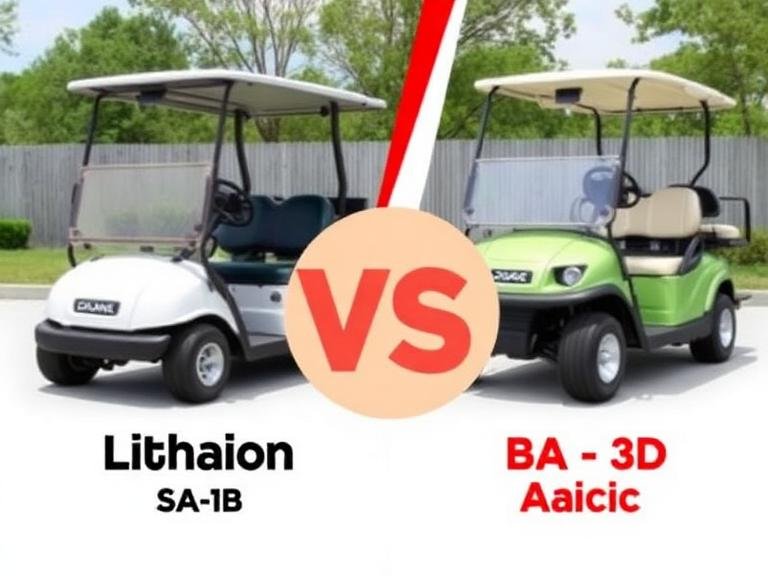
To truly appreciate the extent of modern lithium golf cart travel, one must compare it to the historical standard: lead-acid batteries. For decades, lead-acid batteries were the only viable option, but they suffer from severe limitations that negatively impact range.
Firstly, weight is a critical differentiator. A standard 48V lead-acid battery bank weighs between 300 to 400 pounds. A comparable 48V lithium battery pack weighs roughly 70 to 90 pounds. By shedding nearly 300 pounds of dead weight, the vehicle’s motor works far less strenuously, which instantly boosts the total lithium golf cart travel distance per charge.
Secondly, the voltage discharge curve of lithium is entirely different. Lead-acid batteries suffer from “voltage sag.” As the battery depletes, the voltage drops, resulting in sluggish performance, slower speeds, and a perceived loss of power long before the battery is fully empty. Furthermore, drawing lead-acid batteries below 50% depth of discharge (DoD) damages their lifespan. Lithium batteries, however, maintain a flat voltage curve. They deliver 100% of their rated power until they are nearly depleted, allowing you to safely utilize 90% to 100% of the battery’s capacity, effectively doubling your usable lithium golf cart travel range compared to a lead-acid setup of similar rating.
4. Maximizing Your Range: What We Recommend
If you want to push your lithium golf cart travel to its absolute limits, driving habits and preventative maintenance are essential. From our experience, adopting a few simple practices can increase your daily range by up to 15%.
- Smooth Acceleration: Avoid mashing the accelerator pedal to the floor. Rapid acceleration causes massive spikes in amperage draw. Smooth, gradual acceleration conserves battery capacity and extends lithium golf cart travel.
- Maintain Proper Tire Pressure: We recommend checking your tire pressure at least once a month. Under-inflated tires increase rolling resistance dramatically. Keep them inflated to the PSI indicated on the tire sidewall.
- Optimize Regenerative Braking: Many modern AC motor controllers feature regenerative braking, which captures kinetic energy during deceleration and feeds it back into the battery. Anticipate your stops and let off the accelerator early to allow the regen system to maximize your lithium golf cart travel.
- Avoid Extreme Temperatures: While lithium batteries are highly resilient, storing and charging them in temperate environments preserves their chemical efficiency. Extreme cold can temporarily reduce the usable capacity of any battery.
5. Real-World Applications: Custom, Luxury, and Utility Uses
The required lithium golf cart travel varies vastly depending on the vehicle’s intended purpose. At GT Golf Cart, our diverse lineup is engineered to meet specific operational demands.
For personal use and neighborhood cruising, custom golf carts and luxury golf carts often feature upgraded seating, advanced infotainment systems, and lighting packages. While these accessories draw a small amount of auxiliary power, a standard 100Ah lithium setup still provides ample range for days of community driving without issue.
For those navigating public roadways, the demand on the battery is slightly different. A street legal golf cart (also known as a road legal golf cart) must maintain higher top speeds (typically up to 25 mph) to keep up with neighborhood traffic. Maintaining these higher speeds continuously will draw more sustained amperage, which can slightly compress the total lithium golf cart travel distance. We often recommend 105Ah to 150Ah configurations for heavily utilized street-legal models.
In commercial, agricultural, or resort settings, a utility golf cart is subjected to heavy towing, cargo hauling, and stop-and-go driving. Because the payload is constantly fluctuating, the lithium golf cart travel range must be robust enough to handle full-shift operations. Lithium’s ability to “opportunity charge”—plugging in for 30 minutes during a lunch break without damaging the battery memory—makes it the ultimate choice for utility applications.
6. Summary Table: Expected Lithium Golf Cart Travel Ranges
To simplify your planning, we have compiled a summary table detailing the estimated lithium golf cart travel based on battery capacity and vehicle type under optimal, flat-terrain conditions.
| Battery Capacity (Ah) | Vehicle Type / Application | Average Payload | Estimated Range (Miles) |
|---|---|---|---|
| 50Ah | Standard 2-Passenger Golf Course Use | Light (400 lbs) | 20 – 30 Miles |
| 100Ah / 105Ah | 4-Passenger Custom / Luxury Carts | Medium (800 lbs) | 40 – 60 Miles |
| 100Ah / 105Ah | Street Legal Golf Cart (Higher Speeds) | Medium (800 lbs) | 35 – 50 Miles |
| 150Ah+ | 6-Passenger or Heavy Utility Carts | Heavy (1200+ lbs) | 60 – 80+ Miles |
7. Frequently Asked Questions (FAQs)
Does leaving my lithium golf cart plugged in damage the battery?
No. Modern lithium battery chargers and integrated Battery Management Systems (BMS) are highly sophisticated. They will automatically stop drawing current once the battery reaches 100% capacity. From our experience, we recommend leaving the cart plugged in when not in use for extended periods to ensure the BMS can perform cellular balancing, which ultimately preserves your long-term lithium golf cart travel range.
How long does it take to fully charge a lithium golf cart battery?
Depending on the amperage of your onboard charger, a fully depleted 100Ah lithium battery typically takes between 4 to 6 hours to reach a full charge. This is significantly faster than traditional lead-acid batteries, which can take 8 to 12 hours. Furthermore, lithium batteries accept partial charges perfectly, so you can top them off quickly without negative consequences.
Will cold weather affect my lithium golf cart travel distance?
Yes, to a minor extent. All batteries experience a temporary reduction in chemical efficiency in freezing temperatures. You may notice a 10% to 15% reduction in your lithium golf cart travel range on extremely cold days. However, the battery will not sustain permanent damage, and normal range will return as temperatures rise.
How many years will the lithium battery last before needing replacement?
LiFePO4 batteries are rated for 3,000 to 5,000 charge cycles. For the average user, this translates to 10 to 12 years of reliable service before the battery capacity drops below 80% of its original rating. This longevity makes the initial investment highly cost-effective compared to replacing lead-acid batteries every 3 to 4 years.
8. References
To ensure our clients receive the most accurate and scientifically backed information regarding electric vehicle efficiency and battery technology, we consult the following authoritative bodies:
- U.S. Department of Energy (DOE) – Alternative Fuels Data Center: Research on Lithium-Ion Battery Chemistry and Vehicle Efficiency. Energy.gov AFDC
- Institute of Electrical and Electronics Engineers (IEEE) – Studies on Battery Management Systems (BMS) and State of Charge (SoC) Optimization in Light Electric Vehicles.
- Environmental Protection Agency (EPA) – Guidelines on Electric Vehicle Emissions and Sustainable Battery Lifecycle Management. EPA.gov
Understanding your expected lithium golf cart travel allows you to plan your routes, manage your fleet efficiently, and enjoy your vehicle without the stress of range depletion. With GT Golf Cart’s commitment to advanced engineering and 12 years of industry leadership, you can trust that our electric mobility solutions are built to go the distance.