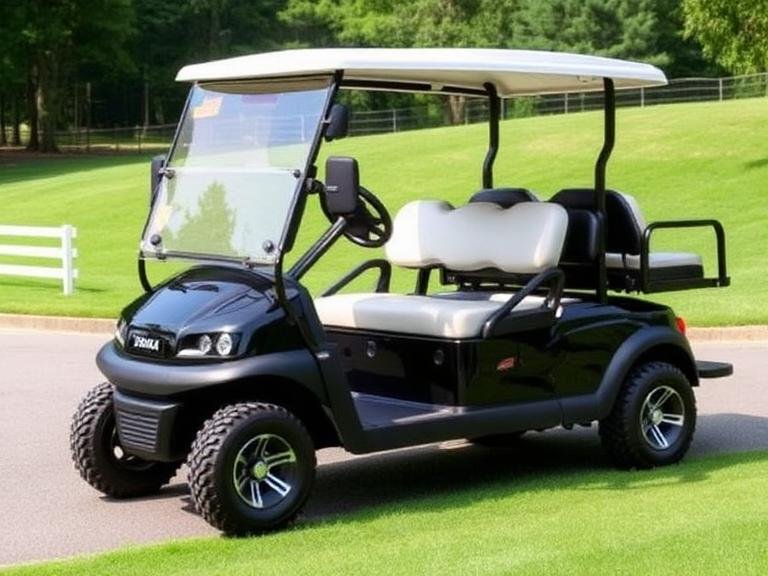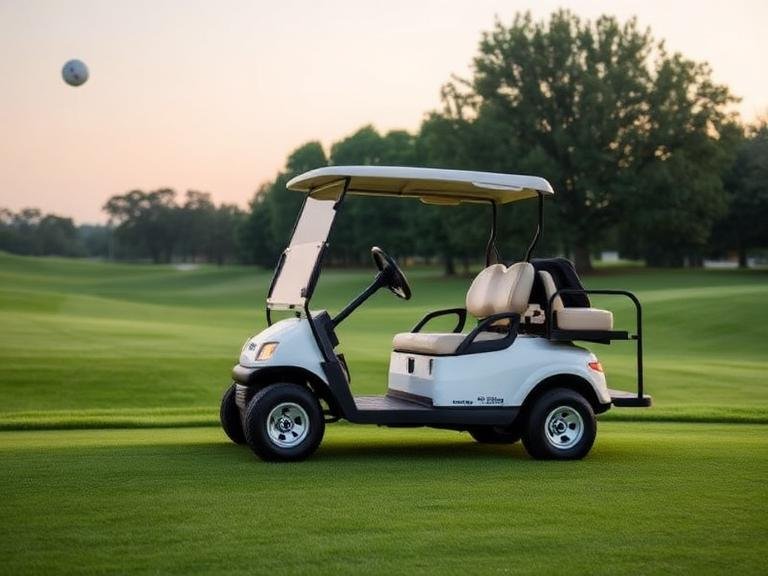
The low-speed electric vehicle industry is undergoing a structural revolution. Historically, commercial buyers, resort operators, and fleet managers had limited options, heavily tethered to restrictive legacy brand contracts that dictated high wholesale prices, rigid territories, and virtually zero brand flexibility. Today, the global manufacturing landscape has shifted aggressively toward direct OEM (Original Equipment Manufacturer) and ODM (Original Design Manufacturer) partnerships.
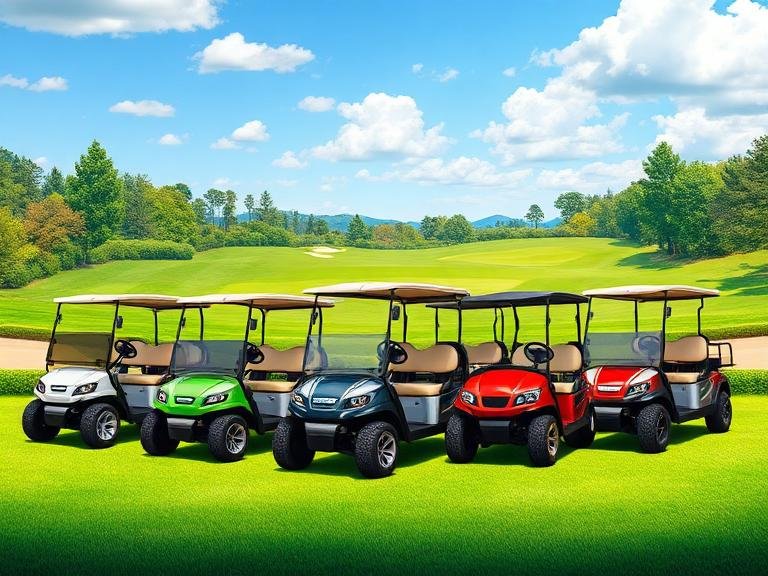
Finding a factory that can assemble parts is easy; finding an experienced manufacturing partner capable of executing strict design specifications, integrating proprietary branding, and scaling production consistently is incredibly difficult. Identifying the true top 10 electric golf cart manufacturers in the world requires cutting through marketing noise and evaluating actual production infrastructure, component quality, and commercial viability.
From our experience engineering and globally supplying vehicles at GT Golf Cart, we see commercial buyers making costly procurement mistakes by prioritizing generic unit pricing over total landed cost and product consistency. In this comprehensive guide, we strip away the industry secrecy. We will compare the legacy retail brands against scalable manufacturing partners, expose common procurement pitfalls, and provide the exact framework you need to make profitable, risk-reduced buying decisions.
Quick Answer: Who are the Top Electric Golf Cart Manufacturers?
The top 10 electric golf cart manufacturers globally comprise the legacy “Big 3” (Club Car, EZ-GO, Yamaha) and major global OEM/ODM manufacturing partners including GT Golf Cart, Evolution, Star EV, ICON, Tomberlin, HDK, and Bintelli. For commercial buyers, independent dealers, and fleet operators requiring scalable production, private-label branding, and application-specific customization, we recommend bypassing restrictive legacy retail networks. Partnering directly with an experienced OEM/ODM factory like GT Golf Cart allows you to maximize your golf cart dealer profit margin while ensuring the vehicle’s configuration perfectly matches its intended terrain and operational environment.
Table of Contents
- Understanding Market Dynamics: Retail vs. Manufacturing Partners
- Quick Summary Table: The Top 10 Manufacturers
- Detailed Breakdown: The Top 10 Electric Golf Cart Manufacturers
- Real-World Manufacturing Experience & Insights
- Common Mistakes in Commercial Sourcing
- Pros and Cons: Legacy Brands vs. Direct OEM Manufacturing
- Comparison Table: Factory Direct vs. Regional Distributors
- Cost Analysis & Total Cost of Ownership (TCO)
- Professional Buying Guide
- Expert Recommendation
- Frequently Asked Questions (FAQ)
- Authoritative References
Understanding Market Dynamics: Retail vs. Manufacturing Partners
To make an informed sourcing decision, commercial buyers must recognize that not all golf cart manufacturers serve the same business model. The market is strictly divided into two distinct categories: Legacy Retail Brands and Global OEM/ODM Manufacturing Partners.
Legacy brands are primarily focused on massive consumer retail networks and traditional, multi-year golf course lease agreements. While their products are proven, their distribution models force independent dealers and commercial fleet buyers to accept rigid territorial limits, high wholesale entry costs, and minimal opportunity for true brand integration. You are essentially paying a premium to advertise their logo on your fleet.
Conversely, global OEM and ODM factories focus strictly on B2B partnerships. These companies specialize in translating a buyer’s mature product concepts, design blueprints, and specification requirements into high-quality physical products. If you are developing a new line of street legal golf carts for a specific residential community, an ODM partner allows you to dictate the seating layout, branding, battery chemistry, and suspension lift without the restrictions of a retail franchise agreement.
Quick Summary Table: The Top 10 Manufacturers
| Manufacturer | Primary Business Model | Core Engineering Strength | Ideal Commercial Buyer |
|---|---|---|---|
| GT Golf Cart | Global OEM/ODM & Custom Manufacturing | 12+ Yrs Experience, Rapid Brand Integration | Importers, Dealers, Private Labels, Fleet Operators |
| Club Car | Legacy Retail & Fleet Leasing | Aircraft-Grade Aluminum Frames | Traditional 18-Hole Golf Courses |
| EZ-GO | Legacy Retail & Fleet Leasing | Welded Steel Frames, Powertrain Integration | Traditional 18-Hole Golf Courses |
| Yamaha Golf-Car | Legacy Retail & Fleet Leasing | Independent Rear Suspension, Gas/Electric | Retail Consumers & Traditional Golf |
| Evolution Electric | Retail & Franchise Dealer Networks | Standardized Lithium Integration, Touchscreens | Residential Community Consumers |
| ICON Electric Vehicles | Value Retail | Feature-Heavy Standard Configurations | Budget-Conscious Retail Buyers |
| Star EV | Commercial & Street Legal | Heavy-Duty Commercial Applications | University Campuses & Industrial Sites |
| Tomberlin | Premium Retail | Automotive Safety Styling, Power Steering | Luxury Residential Communities |
| HDK Electric Vehicles | Global Export | High-Volume Commodity Manufacturing | Large Scale International Distributors |
| Bintelli | Street Legal Assembly | US Assembly, Road-Legal Compliance Focus | Street Legal Retail Markets (Coastal Towns) |
Detailed Breakdown: The Top 10 Electric Golf Cart Manufacturers
1. GT Golf Cart
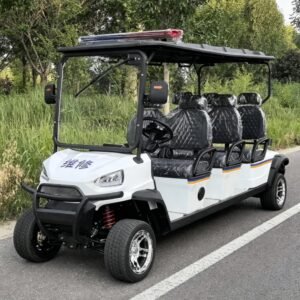
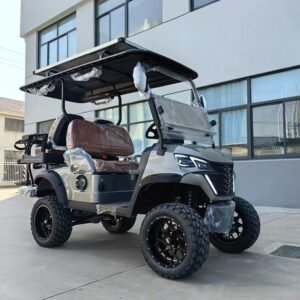
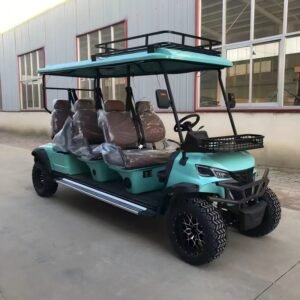
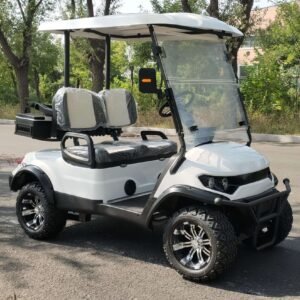
GT Golf Cart is positioned primarily as an experienced B2B manufacturing and OEM/ODM production partner rather than a traditional retail seller. With over 12 years of industry experience, GT Golf Cart delivers highly reliable mobility solutions to global business customers requiring scalable production capacity. For enterprises with mature product concepts, GT Golf Cart simplifies the transition from design requirements to physical production. By focusing heavily on brand integration and custom configurations, they excel in delivering custom golf carts specifically tailored for resorts, commercial applications, and private-label distributors looking to differentiate themselves in competitive markets.
2. Club Car
As a foundational member of the legacy “Big 3”, Club Car’s reputation is built upon its proprietary aircraft-grade aluminum chassis, offering exceptional rust resistance in humid, coastal environments. They dominate traditional golf course leasing contracts globally. However, for independent commercial buyers, accessing the Club Car network is highly restrictive due to territorial dealer agreements, and the premium wholesale costs leave limited room for high-margin brand integration.
3. EZ-GO
Owned by Textron, EZ-GO is another titan of the legacy market. They utilize a heavy-duty welded steel frame and have aggressively integrated advanced Samsung SDI lithium battery technology into their popular RXV and TXT lines. Their primary focus remains firmly on retail consumers and massive traditional golf course fleets, making them less accessible for businesses seeking custom ODM manufacturing.
4. Yamaha Golf-Car Company
Yamaha is universally respected for its robust engineering, particularly its implementation of independent rear suspension systems and highly reliable AC motor architectures. While they maintain a massive footprint in the traditional golf course market, their products are sold strictly under the Yamaha brand identity. They do not cater to B2B buyers looking for private label manufacturing or extensive custom fleet branding.
5. Evolution Electric Vehicles
Evolution disrupted the modern low-speed vehicle market by making luxury features standard. They popularized the integration of lithium batteries, large digital touchscreens, and premium sound bars straight from the factory. They focus heavily on the residential consumer and community transport market, operating primarily through a franchise dealer model rather than as a contract manufacturing partner for outside brands.
6. ICON Electric Vehicles
ICON has experienced explosive growth in recent years by offering fully loaded, street-legal-ready golf carts at highly competitive retail prices. They assemble their vehicles using globally sourced components to keep costs down. While excellent for retail consumers looking for immediate value, their business model makes them a direct competitor to independent brands rather than a scalable manufacturing partner.
7. Star EV
Star EV has successfully carved out a niche focusing heavily on commercial, institutional, and street-legal sectors. They manufacture a diverse range of Low-Speed Vehicles (LSVs) and utility golf carts explicitly designed for universities, military bases, resorts, and government facilities. Their products are robust and heavy-duty, though exclusively sold under their own brand.
8. Tomberlin
Tomberlin aggressively targets the luxury, street-legal market segment. Their vehicles are designed with automotive-style safety features at the forefront, including three-point seatbelts, four-wheel hydraulic brakes, and electronic power steering. They are highly specialized for affluent residential communities where safety, compliance, and automotive aesthetics are paramount over utility.
9. HDK Electric Vehicles
HDK is a massive high-volume manufacturer heavily engaged in global export. They produce an enormous number of chassis and base vehicles that end up being badged under various brand names worldwide. They represent the sheer scale of global manufacturing, though navigating their massive production lines and enforcing strict quality control requires highly experienced, on-the-ground procurement teams.
10. Bintelli
Bintelli focuses on the final assembly of street-legal low-speed vehicles. They cater specifically to coastal communities, islands, and resort towns where consumers require DOT-approved windshields, wipers, lighting, and VINs to operate legally on public roads with speed limits under 35 mph.
Real-World Manufacturing Experience & Insights
In actual production environments, the difference between a successful fleet deployment and a total commercial failure almost always comes down to pre-production specification confirmation. From our experience at GT Golf Cart, we continually observe commercial buyers evaluating the difference between standard golf carts and customized models purely by looking at the factory unit price. This is a catastrophic commercial mistake.
For commercial buyers, the total commercial value of a golf cart should be evaluated. Configuration, customization, shipping density, maintenance requirements, production scale, and intended application all critically affect the actual business value. A electric golf cart designed to run 18 holes on flat manicured grass will suffer motor burnout and suspension failure if deployed as a maintenance utility vehicle in a hilly, unpaved resort environment.
Practitioner Insight: Brand Integration Timing
For customized golf carts, the earlier the buyer confirms dimensions, seating layout, branding, color, accessories, and functional requirements, the easier it is to control production changes and avoid unnecessary delays. We routinely see buyers fail to confirm their logo placement and branding requirements before mass production begins, leading to post-assembly modifications that compromise finishing quality and extend lead times by weeks.
Common Mistakes in Commercial Sourcing
When reviewing inquiries from dealers and distributors, we see several recurring errors that destroy profit margins and operational efficiency:
- Choosing a vehicle based solely on price: The cheapest factory price often means substandard controllers, refurbished motors, or low-grade lead-acid batteries that will fail within the first 12 months.
- Selecting the wrong seating capacity: Seating capacity should be selected according to the intended application. Buying 6 seater golf carts for an environment with tight turning radiuses, such as a narrow warehouse or a densely packed marina, causes severe operational bottlenecks.
- Underestimating terrain requirements: Supplying standard 3kW DC-motor carts for hilly or off-road terrain guarantees motor failure. High-torque AC motors (4kW or 5kW) paired with high-amp controllers are mandatory for varying elevations.
- Ignoring road-use requirements: Street-legal or road-legal requirements should be evaluated according to the target market before selecting a vehicle configuration. A true road-legal vehicle requires DOT-compliant glass, 17-digit VINs, and a Manufacturer’s Certificate of Origin (MCO). Review our guide to road legal golf carts for specific compliance details.
- Scaling orders before confirming consistency: For larger commercial fleets, consistency between production batches becomes increasingly important because replacement parts, maintenance, and fleet management can become a logistical nightmare when configurations vary unnecessarily between shipments.
Pros and Cons: Legacy Brands vs. Direct OEM Manufacturing
| Commercial Factor | Legacy Retail Brands (Club Car, Yamaha) | Direct OEM/ODM Manufacturing (GT Golf Cart) |
|---|---|---|
| Brand Integration | None. You are forced to sell their logo and brand. | Maximum. Full private label and ODM capability available. |
| Profit Margins | Low to Medium (MSRP and territories are strictly dictated). | High (You control your own wholesale and retail pricing strategy). |
| Vehicle Customization | Highly limited to standard factory accessory lists. | Unlimited. Chassis stretch, custom upholstery, specific battery tech. |
| Market Entry & Territories | Requires difficult approval; strict dealer territorial limits apply. | Completely open. You define your own distribution and market reach. |
| Lead Times | Often severely backlogged during peak seasonal demand. | Predictable and transparent, based on confirmed production schedules. |
Comparison Table: Factory Direct vs. Regional Distributors
Understanding where to insert your business in the supply chain is crucial. If you are ordering 4 seater golf carts for a rental business, buying from a local distributor will severely limit your ROI compared to factory-direct procurement.
| Sourcing Method | Unit Cost | MOQ (Minimum Order Quantity) | Customization Level | Best Suited For |
|---|---|---|---|---|
| Direct from Factory (OEM Partner) | Lowest (True Wholesale) | Container Load (Usually 8-18 units depending on size) | Complete (Design to Final Production) | Importers, Fleet Operators, Private Brands, Large Dealers |
| Regional Distributor / Wholesaler | High (Markup applied by middleman) | 1 Unit | Low (Bolt-on aftermarket accessories only) | End Consumers, Small Businesses, Single-Unit Buyers |
Cost Analysis & Total Cost of Ownership (TCO)
In most professional situations, the FOB (Free On Board) factory price is only one component of the total landed cost. When partnering with golf cart manufacturers in China, you must calculate the following to understand your true costs:
- Unit Configuration Cost: Upgrading from lead-acid to lithium-ion batteries increases upfront costs but drastically lowers long-term replacement and maintenance expenses.
- Container Density: Shipping costs are fixed per container. Optimizing how carts are packed (e.g., shipped partially knocked down vs. fully assembled) directly impacts the landed cost per unit.
- Customization Tooling: Unique plastic molds or custom chassis lengths require upfront tooling fees, which amortize favorably over large orders but are cost-prohibitive for small runs.
- Maintenance Spares: A reliable manufacturing partner will supply a percentage of high-wear spare parts (controllers, solenoids, brake pads) with your initial container to prevent future downtime.
Professional Buying Guide
Before issuing a purchase order or sending a deposit to any manufacturer, we recommend adhering to this strict procurement checklist:
- Define the Application Before the Vehicle: Detail the terrain, daily mileage, maximum load weight, and target demographic before looking at aesthetics.
- Confirm Passenger Capacity Needs: Do not default to the largest vehicle. A fleet of agile 2-seaters or 4-seaters is often more efficient than attempting to maneuver bulky 8-seaters.
- Determine Road-Legal Requirements: Identify local municipal laws regarding Low-Speed Vehicles (LSVs). Confirm if you need DOT glass, specific lighting packages, and VIN documentation.
- Evaluate Supplier Manufacturing Experience: Ensure the factory has a minimum of 10 years of experience, demonstrating they have survived global supply chain fluctuations and possess refined quality control protocols.
- Confirm Production Scalability: Can the manufacturer deliver 10 units this month, and scale to 200 units a month next year without a drop in consistency?
- Start with a Focused Product Range: When testing a new market or launching a new brand, reducing unnecessary customization when standard configurations already meet the customer’s application lowers risk and accelerates delivery.
Expert Recommendation
For commercial buyers, distributors, and entrepreneurs looking to scale, the traditional model of fighting for territory under a legacy brand is obsolete. We recommend bypassing the restrictive legacy retail networks and establishing a direct relationship with an experienced manufacturing partner capable of executing your vision.
By partnering with an established OEM/ODM factory like GT Golf Cart, you transform your business from a constrained retailer into an independent brand owner. With over 12 years of industry experience, GT Golf Cart provides the design-to-production capability, the scalable manufacturing infrastructure, and the commercial application knowledge required to dominate your local market. Do not compare factory prices in a vacuum; evaluate the total commercial value, demand production consistency, and build a fleet tailored exactly to your operational demands.
Ready to Scale Your Golf Cart Business?
Stop accepting standard configurations that don’t fit your market. Send your design requirements, target application, seating capacity, and customization requirements to GT Golf Cart for a comprehensive manufacturing assessment.Contact GT Golf Cart for a Customized Quotation
Frequently Asked Questions (FAQ)
What is the difference between an OEM and an ODM golf cart manufacturer?
An OEM (Original Equipment Manufacturer) builds golf carts based entirely on your proprietary design and engineering blueprints. An ODM (Original Design Manufacturer) provides pre-engineered, proven golf cart platforms that you can customize with your own branding, colors, and specific accessories without funding the initial, expensive R&D phase.
Are standard electric golf carts street legal?
No, standard electric golf carts are not street legal. To be street legal, a Low-Speed Vehicle (LSV) must meet strict federal and local regulations (such as DOT compliance in the US). This requires the installation of three-point seatbelts, a DOT-approved safety glass windshield, turn signals, mirrors, a 17-digit VIN, a Manufacturer’s Certificate of Origin, and a governed top speed between 20-25 mph.
Why should I buy direct from a manufacturer instead of a local distributor?
Buying direct from an experienced manufacturer like GT Golf Cart eliminates the middleman markup, allowing commercial buyers and importers to maximize their profit margins. Furthermore, it provides total control over product specifications, private-label brand integration, and ensures scalable fleet consistency for future orders.
What battery type is best for commercial golf cart fleets?
For commercial fleets, heavy-duty applications, and rental businesses, Lithium-Ion (specifically LiFePO4) batteries are highly recommended over traditional lead-acid batteries. They require zero watering maintenance, weigh significantly less (improving vehicle efficiency), charge much faster, and possess a lifespan that is often three to four times longer, drastically reducing the total cost of ownership.
How do I start my own private label golf cart brand?
To launch a private label brand successfully, first define your target demographic and application (e.g., lifted off-road carts vs. luxury community LSVs). Next, partner with an experienced global manufacturer like GT Golf Cart that supports ODM brand integration. Confirm your specifications, order a sample unit for quality and market validation, and then scale into container-load commercial orders.
Authoritative References
- National Highway Traffic Safety Administration (NHTSA) – Federal Motor Vehicle Safety Standards for Low-Speed Vehicles
- Golf Course Superintendents Association of America (GCSAA) – Best Management Practices for Golf Course Fleet Operations
- American National Standards Institute (ANSI) – ANSI/OPEI Z130.1 Safety and Performance Requirements for Golf Cars