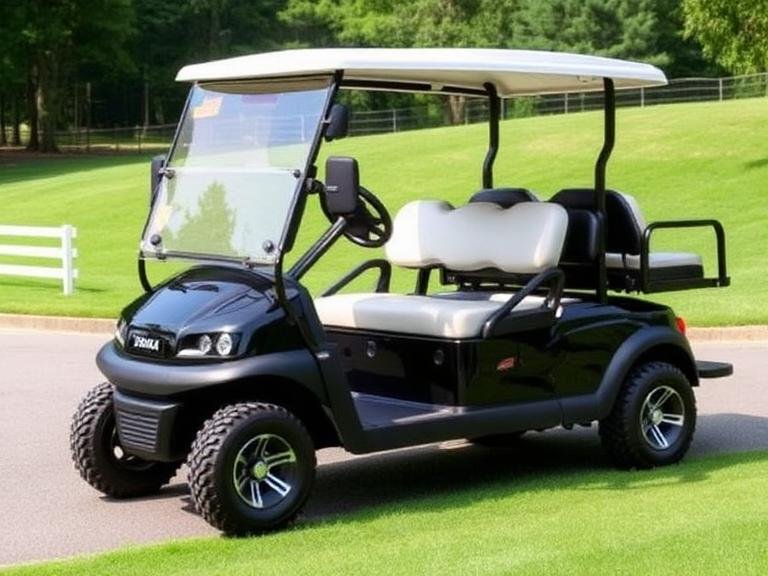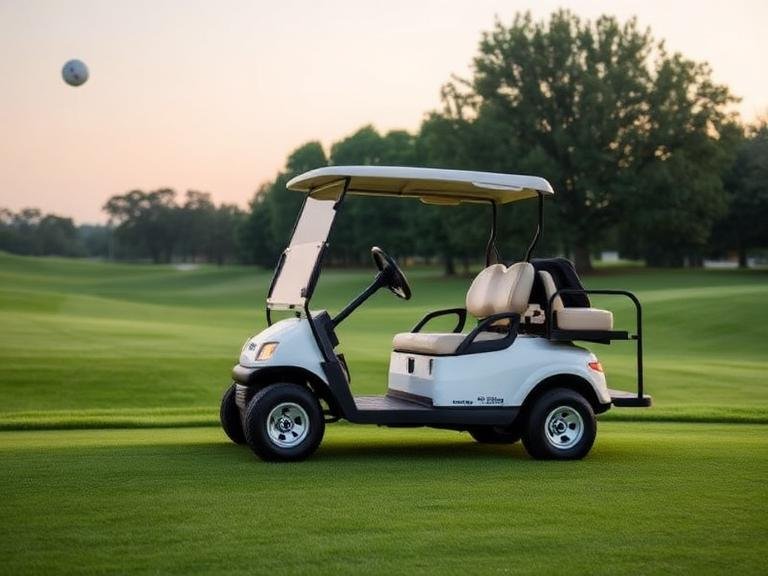
The neighborhood electric vehicle market has fundamentally transformed. The days of accepting a sluggish, beige fleet cart retired from a local country club are entirely over. Today, consumers and businesses are demanding high-performance, aesthetically dominant machines tailored perfectly to their lifestyles. However, the surge in demand for custom made golf carts has created a highly predatory secondary market. We are seeing countless dealerships taking 10-year-old, exhausted fleet chassis, slapping on a cheap plastic lift kit, spraying a quick coat of paint, and selling them to unsuspecting buyers at premium luxury prices. From our experience at GT Golf Cart, engineering and delivering genuine custom platforms, this “lipstick on a pig” approach is a severe safety hazard and a catastrophic financial investment.
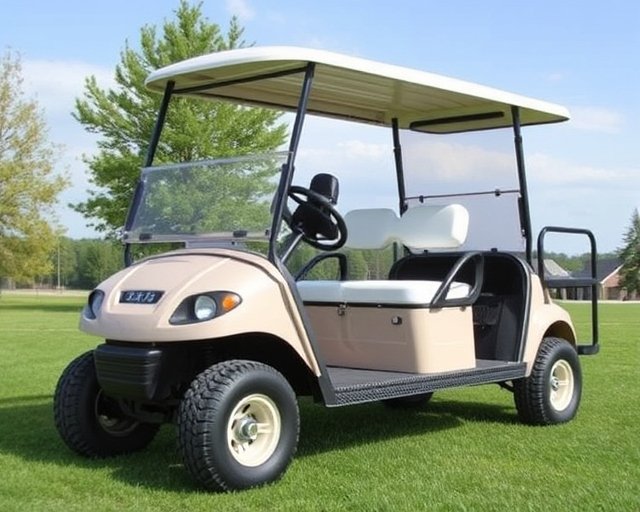
In most professional situations, building or buying custom made golf carts requires the exact same commercial and practical judgment you would apply when purchasing an automobile. You must look past the flashy wheels and Bluetooth soundbars to scrutinize the powertrain geometry, the battery chemistry, and the controller parameters. A true custom cart is engineered from the frame up to handle the increased torque and dynamic loads that standard fleet carts were never designed to endure. In this definitive guide, we take a rigid, expert stance on the mechanics of customization. We will break down the 10 absolute critical factors you must understand, expose the myths propagated by low-end dealers, and provide you with the blueprint to specify a vehicle that genuinely performs.
Quick Answer: The Custom Golf Cart Blueprint
If you are actively evaluating custom made golf carts, here is the immediate executive summary of what you must demand from your builder:
- Power Plant: Insist on an AC (Alternating Current) electric motor paired with a 400+ Amp controller. Reject outdated DC motors; they lack the torque necessary for lifted vehicles.
- Energy Storage: LiFePO4 Lithium batteries are mandatory. They drop 300 pounds of weight from the chassis, require zero watering maintenance, and last up to a decade.
- Suspension Geometry: Do not accept basic spindle lift kits. Demand an independent A-arm suspension for heavy-duty applications to prevent dangerous body roll at high speeds.
- Legality: If you intend to drive in your neighborhood, ensure the builder certifies the cart as an LSV (Low Speed Vehicle) with a valid 17-digit VIN.
We recommend that anyone spending over $10,000 completely bypass the “refurbished” market and invest in a true Custom Golf Cart built on a modern, purpose-engineered chassis.
Table of Contents
- What It Is: True Custom vs. Refurbished
- How It Works: The Engineering Process
- The 10 Things You Must Know
- Commercial and Lifestyle Benefits
- Limitations and Hidden Risks
- Who Should Commission a Custom Build
- Who Does Not Need Customization
- Common Procurement Mistakes
- Expert Buying Considerations
- Summary and Comparison Tables
- Expert Recommendation & Hardware
- Frequently Asked Questions
What It Is: True Custom vs. Refurbished
A true custom made golf cart is a vehicle where the foundational architecture is selected explicitly for the end user’s operational environment. It involves specifying the frame material (aluminum vs. steel), the powertrain, the suspension load rating, and the electrical harness. Conversely, the market is flooded with “refurbished” carts. A refurbished cart is a heavily used fleet vehicle (often 5 to 10 years old) that a dealer bought at auction, washed, and fitted with cheap aftermarket accessories. While a refurbished cart might look custom, its core components—the transaxle, the steering rack, the motor brushes—are already at the end of their lifecycle.
How It Works: The Engineering Process
How it works at a professional facility like GT Golf Cart involves holistic system integration. If you request an Off Road Golf Cart with 23-inch aggressive tires, we do not just bolt the tires on. We upgrade the motor controller to handle the increased rotational mass, recalibrate the braking system to ensure it can stop the heavier rotating weight, and install heavy-duty leaf springs or coil-overs to prevent the tires from destroying the wheel wells upon impact. Proper customization is a mathematically balanced equation, not an aesthetic afterthought.
The 10 Things You Need to Know Before Buying
1. Street Legal (LSV) Homologation is Not Automatic
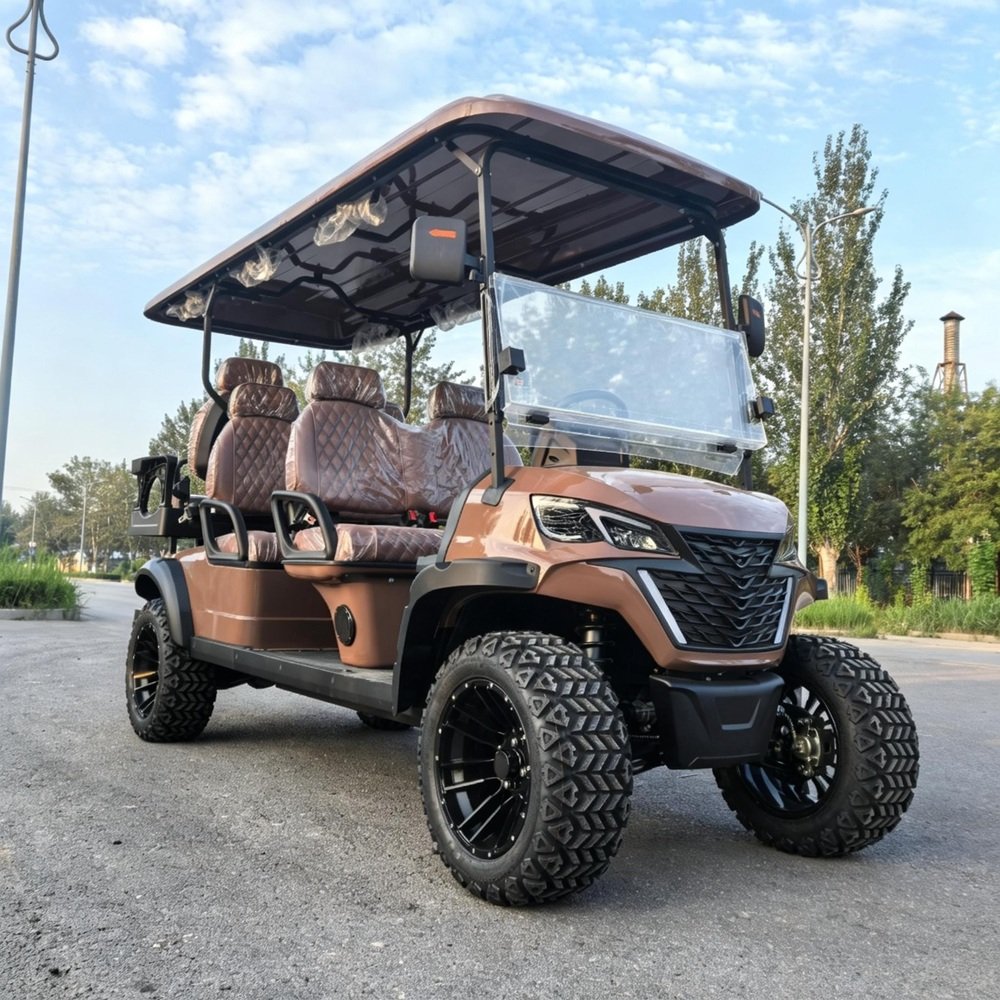
Slapping turn signals on custom made golf carts does not make them street legal. To drive on public roads, the vehicle must be classified as a Low Speed Vehicle (LSV) by the NHTSA. This requires a 17-digit VIN, DOT-approved windshields, specific seatbelt anchoring, and a maximum speed configuration. If you need a Street Legal Golf Cart, the builder must provide the Manufacturer’s Certificate of Origin (MCO) to register it.
2. Lithium is Mandatory, Lead-Acid is Obsolete
In most professional situations, accepting lead-acid batteries in a modern custom cart is a severe financial error. Lead-acid batteries require constant watering, corrode terminals, and weigh up to 400 pounds. Lithium (specifically LiFePO4) drops the vehicle weight, charges in a fraction of the time, and maintains top speed even when the battery is at 10%. Demand lithium.
3. AC Motors Destroy DC Motors
Older carts use DC (Direct Current) motors, which lose torque as they climb hills. Modern custom platforms use AC (Alternating Current) induction motors. AC motors provide significantly higher torque, higher top speeds, and feature regenerative braking that recharges the battery when you take your foot off the pedal.
4. Suspension Geometry Determines Safety
When lifting a cart, there are two methods: Spindle lifts and A-Arm lifts. Cheap builders use spindle lifts, which simply lower the wheel mounting point. This creates a terrifying, unstable ride at high speeds. For heavy-duty applications, you must demand a double A-Arm independent front suspension, which corrects camber and toe geometries for a smooth, automotive-style ride.
5. Frame Material: Aluminum vs. Steel
If you live in a coastal environment with high salt in the air, you must select an Electric Golf Cart built on an aircraft-grade aluminum frame. Steel frames, regardless of powder coating, will eventually rust from the inside out in coastal humidity.
6. Seating Capacity Alters the Wheelbase
You cannot safely put six adults on a standard chassis by bolting seats to the back. A true 6 Passenger Golf Cart or an 4 Passenger Golf Cart requires an extended, reinforced wheelbase to prevent the cart from doing an unwanted wheelie when accelerating up a hill. Payload balancing is critical.
7. Controller Programming is the Brain
The motor controller dictates how the power is delivered. Premium builders install programmable controllers (like Navitas or Curtis) that allow you to adjust the acceleration curve, top speed, and regenerative braking strength via a smartphone app. This allows you to “tame” the cart when guests are driving, and unleash it when you are off-roading.
8. Four-Wheel Disc Brakes are Non-Negotiable
Standard golf carts use rear mechanical drum brakes designed to stop a 600-pound cart traveling 12 MPH on flat grass. When you add four adults, a heavy battery bank, and increase the top speed to 25 MPH, drum brakes will fail. For safety, custom made golf carts must feature four-wheel hydraulic disc brakes.
9. Commercial Applications Require Different Specs
If you are procuring vehicles for a resort, farm, or university, aesthetic customization takes a back seat to utility. A Commercial Golf Cart requires heavy-duty transaxles, aluminum cargo utility beds, and puncture-resistant tires to survive daily industrial abuse.
10. The Difference Between a Builder and a “Bolter”
A “bolter” buys a cheap cart, orders parts from Amazon, and bolts them on in their garage. A true builder engineers the vehicle. Look for a facility that offers OEM warranties, custom paint matching via professional spray booths, and bespoke upholstery stitched in-house.
Commercial and Lifestyle Benefits
The primary benefit of commissioning custom made golf carts is operational perfection. When you design a Luxury Golf Cart to your exact specifications, you eliminate compromises. You receive the exact ride height required for your terrain, marine-grade audio systems that survive rainstorms, and seating configurations that comfortably accommodate your family. Furthermore, a professionally built custom cart holds its resale value significantly better than a generic, mass-produced fleet vehicle.
Limitations and Hidden Risks
We must use commercial and practical judgment: customization has physical limits. The primary limitation is the center of gravity. As you lift a cart to accommodate massive 25-inch tires, you raise the center of gravity, drastically increasing the risk of a rollover if driven aggressively on side-hills. Upgrading speed without upgrading the track width (via wheel spacers or offset rims) is a lethal combination. You must respect the physics of the chassis.
Who Should Commission a Custom Build
For Commercial Users and Private Estates: If you reside in a master-planned community, a sprawling ranch, or manage a high-end resort, a custom build is mandatory. It serves as daily transportation, replacing full-sized automobiles for local errands, while reflecting your personal or corporate brand aesthetic.
Who Does Not Need Customization
For Beginners Playing 18 Holes: If your sole purpose is to drive from the tee box to the green on a regulated golf course, extreme customization is a waste of capital. Course superintendents actually despise heavily lifted carts with aggressive tread tires because they destroy the manicured turf. For pure golf, a standard 2 Passenger Golf Cart with turf tires is the only acceptable choice.
Common Procurement Mistakes
From our experience, the most catastrophic mistake buyers make is ignoring the charger. They will spend $15,000 on custom made golf carts with a massive lithium battery, but the dealer supplies a cheap, off-brand charger. A poor charger will fail to balance the lithium cells correctly, eventually causing the Battery Management System (BMS) to shut the vehicle down permanently. Always demand an onboard, smart-charging algorithm specific to your battery chemistry.
Expert Buying Considerations
When finalizing your build sheet, prioritize the touchpoints. A beautiful exterior is useless if the seats are uncomfortable. Demand custom, contoured bucket seats wrapped in marine-grade, UV-resistant vinyl. Standard flat bench seats offer zero lateral support, meaning your passengers will slide uncontrollably when you take a corner at 20 MPH. Additionally, ensure the builder utilizes automotive-grade, water-resistant wiring harnesses rather than cheap butt-connectors wrapped in electrical tape.
Summary and Comparison Tables
Comparison Table: Factory Standard vs. True Custom Build
| Feature | Factory Fleet Cart | True Custom Golf Cart (GT Golf Cart) |
|---|---|---|
| Motor & Power | DC Motor (Low Torque) | 5,000W AC Motor (High Torque/Speed) |
| Battery System | Lead-Acid (Requires watering) | LiFePO4 Lithium (Zero maintenance) |
| Braking System | Rear Mechanical Drum Brakes | 4-Wheel Hydraulic Disc Brakes |
| Suspension | Basic Leaf Springs | Independent A-Arm / Coil-over Shocks |
| Legality | Course-use only (No VIN) | Street Legal LSV compliant (17-digit VIN) |
Pros and Cons of Custom Made Golf Carts
| Pros (Why you must upgrade) | Cons (The operational reality) |
|---|---|
| Automotive-grade comfort and extreme reliability. | Significantly higher upfront capital expenditure. |
| Lithium batteries eliminate weight and acid damage. | Lifted profiles alter the center of gravity, requiring driver awareness. |
| Programmable controllers allow tailored performance profiles. | Lead times for custom paint and bespoke upholstery can be 4 to 8 weeks. |
| Street-legal capabilities replace local car trips. | High-performance motors drain batteries faster if driven at maximum speeds. |
Expert Recommendation & Hardware Spotlight
Is investing the capital into premium custom made golf carts actually worth it? Emphatically, yes. The neighborhood electric vehicle is no longer a novelty; it is a primary mode of local transportation. We recommend completely bypassing the deceptive “refurbished” market. You must invest in a ground-up build that utilizes modern AC power and lithium architecture to guarantee the safety of your family and the longevity of your investment. At GT Golf Cart, we engineer machines that refuse to compromise.
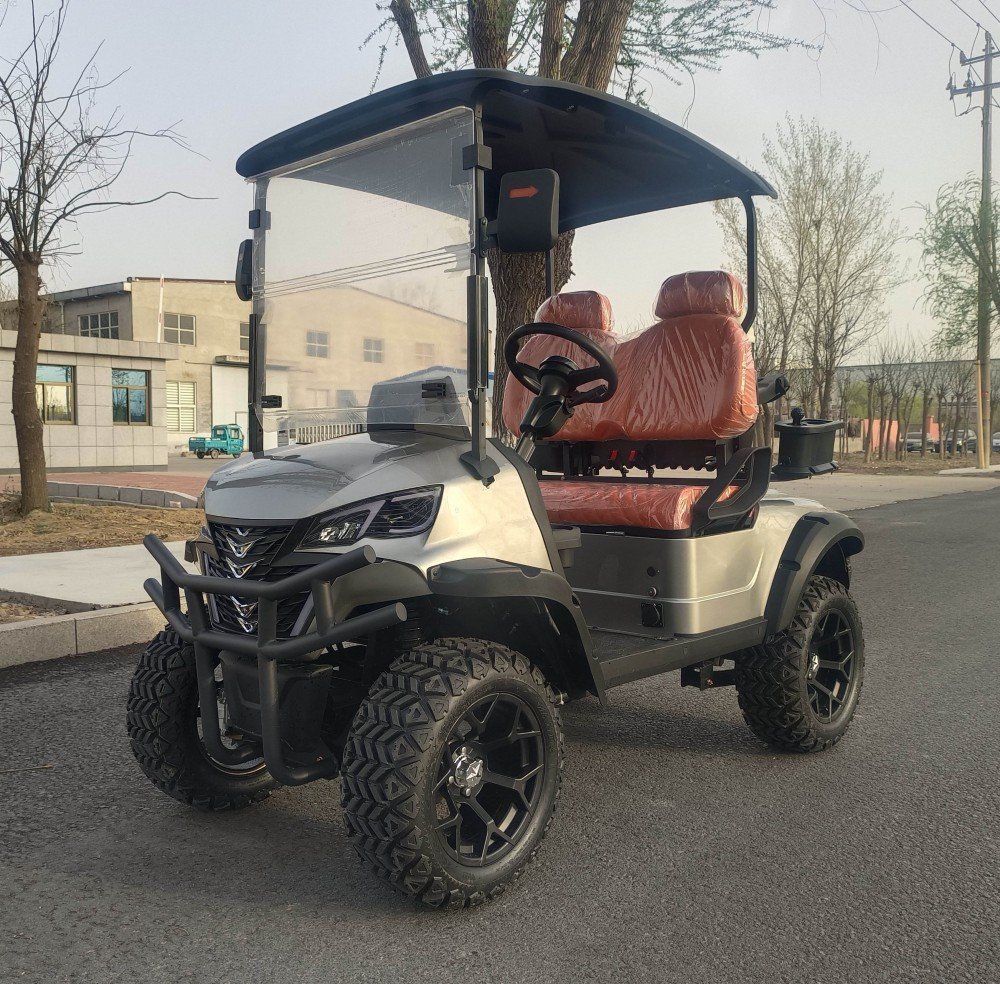
COM-04 Custom Golf Cart – Compact Lithium Electric
Do not gamble your safety on a bolted-together fleet cart. The COM-04 represents the absolute pinnacle of purpose-built custom engineering. Designed specifically for resorts, high-end communities, and heavy-duty lifestyle applications, this machine delivers uncompromised AC power and intelligent lithium storage in a flawless aesthetic package.
| Specification | Details |
|---|---|
| Engine Type | High-Torque AC Electric Motor (5,000W Rated Power) |
| Battery System | Advanced Lithium 48V 150Ah (Zero Maintenance) |
| Performance | Top Speed: 29 MPH | Max Range: 49 Miles |
| Chassis Clearance | 13 inches of ground clearance riding on 23×10-14 aggressive tires |
| Weight Profile | Ultra-light 888 lbs Dry Weight (maximizing battery efficiency) |
Explore the COM-04 Custom Build
Frequently Asked Questions
Are custom made golf carts street legal?
Not automatically. To be street legal on public roads, custom made golf carts must be homologated as Low Speed Vehicles (LSVs). This requires a 17-digit VIN provided by the manufacturer, DOT-approved windshields, seatbelts, turn signals, mirrors, reflectors, and a maximum speed capability of 20 to 25 MPH depending on local state jurisdictions.
Should I choose lithium or lead-acid batteries for a custom golf cart?
In most professional situations, lithium-ion (specifically LiFePO4) is the only logical choice for custom made golf carts. Lithium batteries weigh roughly 300 pounds less than lead-acid, require zero watering maintenance, charge three times faster, do not degrade the frame with battery acid, and have a superior lifespan of 8 to 10 years.
Why do some custom golf carts cost over $15,000?
True custom carts are built from the chassis up, integrating heavy-duty AC motors, 500-amp programmable controllers, independent A-arm suspensions, custom marine-grade upholstery, and high-capacity lithium battery banks. You are paying for automotive-grade engineering, structural safety, and high-end materials rather than cheap plastic bolt-on accessories glued to an old frame.
Can I lift a standard golf cart myself?
While DIY lift kits exist, we strongly advise against it for high-speed applications. Lifting a cart fundamentally alters its steering geometry (camber and toe). If not aligned and torqued perfectly by a professional builder, the cart will suffer from dangerous “death wobble” at speeds over 15 MPH, creating a severe rollover risk.
Industry References & Authoritative Safety Guidelines
To ensure our manufacturing guidance and safety protocols align with the highest federal and structural standards, GT Golf Cart references the frameworks established by the following authoritative organizations:
- National Highway Traffic Safety Administration (NHTSA): The federal authority defining the strict safety, equipment, and speed requirements (FMVSS 500) for Low Speed Vehicles (LSVs) operating on public roadways. Review NHTSA LSV Regulations
- Battery Council International (BCI): The definitive trade association providing strict technical guidelines on deep-cycle energy storage, lithium-ion safety parameters, and the integration of battery management systems in electric vehicles. Review BCI Battery Standards
- American National Standards Institute (ANSI) / ILCOR: Publishing the recognized consensus standards (such as ANSI/OPEI Z130.1) regarding the dynamic stability, braking performance, and manufacturing requirements for golf cars and personal transport vehicles. Review ANSI Safety Standards