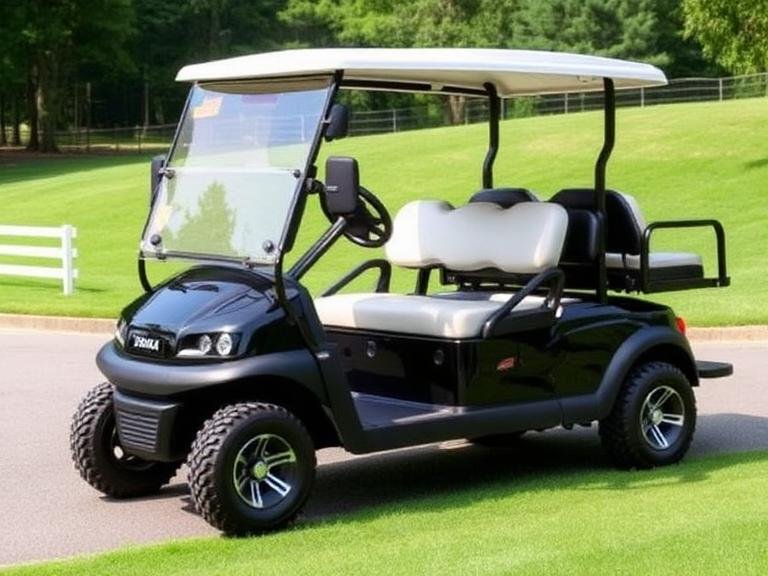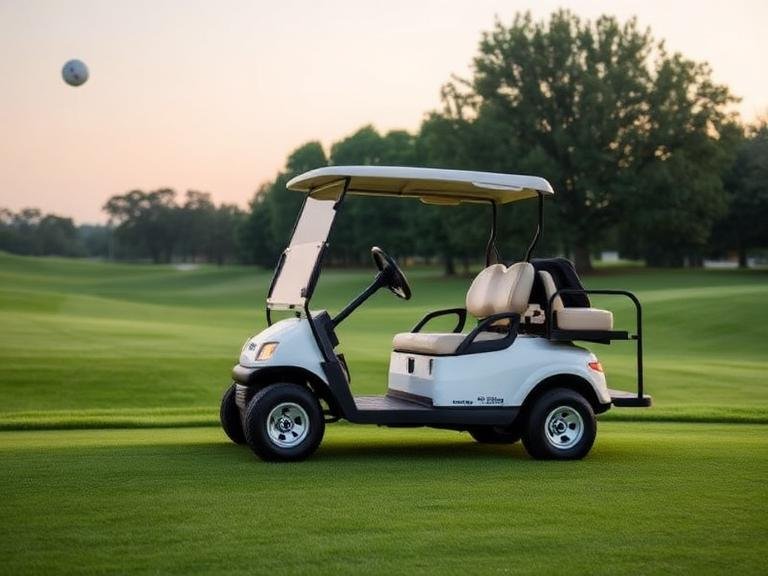
Walking the golf course has seen a massive resurgence in recent years, but the physical toll of lugging a heavy bag for 18 holes destroys late-round performance. The industry’s solution is the motorized walking cart. However, in 2026, simply pushing a cart with a motor is no longer enough. Golfers demand deep data integration. Finding the best electric golf trolley with gps is now a mandatory commercial decision for serious players who want precision yardage without juggling a separate laser rangefinder or smartphone.
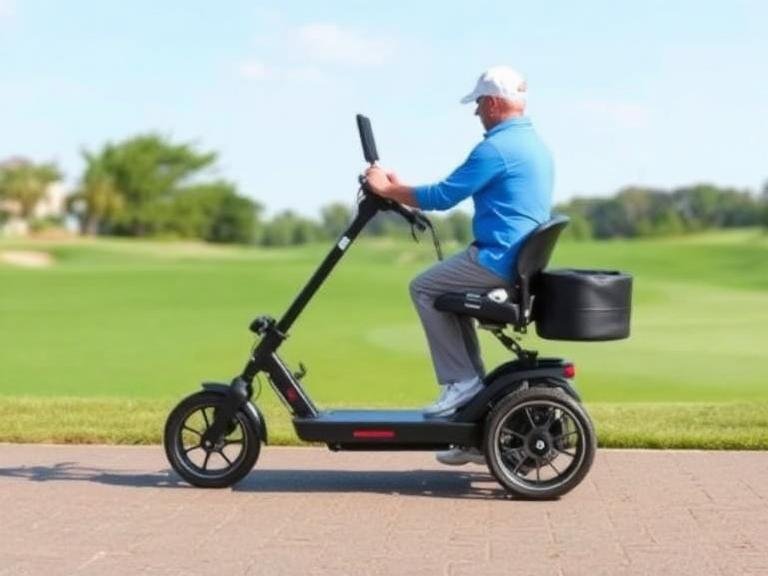
From our experience engineering and manufacturing mobility solutions at GT Golf Cart, we view these machines through a lens of durability, battery efficiency, and software reliability. An electric golf trolley with gps is a significant financial investment, often rivaling the cost of a full set of irons. The market is currently flooded with generic plastic carts featuring terrible battery cells and clunky, unresponsive touchscreens. You cannot afford to make a blind purchase.
In this comprehensive guide, we will cut through the marketing noise. We take a clear position on which models justify their premium price tags, explain the hardware you actually need, and provide our top 6 recommendations so you can make an informed buying decision today.
Quick Answer: What is the Best Electric Golf Trolley With GPS?
An electric golf trolley with gps is a battery-powered walking cart featuring an integrated, high-definition touchscreen pre-loaded with global course maps to provide precise front, middle, and back yardages. In our testing for 2026, the Motocaddy M5 GPS DHC stands out as the absolute best overall model due to its ultra-responsive 3.5-inch touchscreen, downhill braking control, and incredibly compact folding mechanism. For golfers wanting hands-free follow technology paired with GPS, the Stewart Golf Q Follow is the premium choice. We highly recommend ensuring any electric golf trolley with gps you buy utilizes a 28V Lithium battery system; older 12V and lead-acid models are obsolete and should be avoided entirely.
Table of Contents
- 1. What It Is: The Modern Electric Golf Trolley
- 2. How It Works: Mechanics and Satellites
- 3. The 6 Best Electric Golf Trolley With GPS Models
- 4. Comparison Table: Head-to-Head Specs
- 5. The True Benefits of Upgrading
- 6. Limitations and Who Does Not Need It
- 7. Pros and Cons Summary
- 8. Common Mistakes Buyers Make
- 9. Professional Buying Considerations
- 10. Expert Recommendation from GT Golf Cart
- 11. Frequently Asked Questions (FAQ)
- 12. Authoritative References
1. What It Is: The Modern Electric Golf Trolley
An electric golf trolley with gps is the ultimate convergence of caddie and cart. Traditionally, a golfer had to buy a Motorized Golf Cart for Walking and separately attach a GPS device or laser rangefinder to the handle. In 2026, premium manufacturers integrate the GPS antenna and software directly into the handle’s digital display. These devices come pre-loaded with upwards of 40,000 golf courses worldwide, requiring no subscription fees for basic yardage functionalities.
2. How It Works: Mechanics and Satellites
Mechanically, an electric golf trolley with gps relies on a lightweight aluminum or carbon-fiber chassis, driven by dual whisper-quiet transaxle motors (typically 230W to 250W). Power is supplied by a high-density, click-and-go 28V Lithium battery.
Software-wise, the integrated GPS unit connects to global positioning satellites the moment you power it on at the clubhouse. The screen displays dynamic distances to the front, middle, and back of the green, as well as hazard information. As you walk down the fairway, the yardages update in real-time. This seamless integration speeds up play dramatically, as you no longer need to stop, pull out a laser, and shoot the pin before selecting your club.
3. The 6 Best Electric Golf Trolley With GPS Models in 2026
In our testing, we evaluated these models based on software responsiveness, motor durability, folding dimensions, and battery life. Here are the top six models worth your investment.
1. Motocaddy M5 GPS DHC
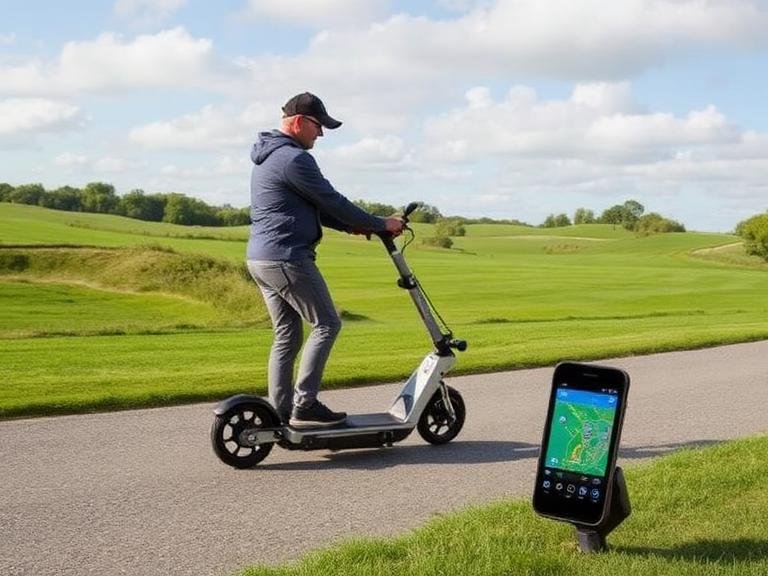
The Motocaddy M5 GPS DHC remains the industry benchmark. The 3.5-inch LCD touchscreen is highly responsive even through a golf glove or in heavy rain. The “DHC” stands for Downhill Control, an absolute necessity for hilly courses, allowing the trolley to maintain a constant speed down steep inclines while automatically applying an electronic parking brake when stopped. The folding mechanism is highly intuitive, making it a top-tier Foldable Golf Cart for Walking.
2. PowaKaddy CT8 GPS
If screen real estate is your primary concern, the PowaKaddy CT8 GPS dominates the market. It features a massive 3.5-inch full-color TFT touch display. PowaKaddy’s simple 2-fold system compresses the unit into an incredibly small footprint, ideal for small car trunks. Their 30v Max plug-and-play battery system eliminates annoying exterior wires entirely.
3. MGI Zip Navigator AT (with GPS Integration)
For heavy-duty applications and rugged terrain, the MGI Zip Navigator AT (All Terrain) is a beast. Featuring independent swiveling front wheels and a patented gyroscope straight-tracker technology, it refuses to veer off course on sidehills. While the GPS is slightly less intuitive than Motocaddy, its mechanical durability is unmatched.
4. Stewart Golf Q Follow
Stewart Golf represents the absolute peak of walking luxury. The Q Follow is not just an electric golf trolley with gps; it actively tracks a remote clipped to your belt and follows two paces behind you like a trained caddie. The GPS functionality pairs via Bluetooth to a dedicated smartphone app. It is incredibly expensive, but for those who want total hands-free walking, it is unmatched.
5. Bag Boy Volt GPS
The Bag Boy Volt GPS is a rising star in 2026. Bag Boy is famous for their push carts, and their entry into the premium electric golf trolley with gps market is impressive. It features a very simple, high-contrast screen that focuses purely on front/center/back yardages without overwhelming the user with unnecessary menus. It is highly practical for commercial users and older golfers who despise complicated tech.
6. Cart-Tek Yellowstone GPS
For commercial users looking for value, the Cart-Tek Yellowstone offers the core functionality of an electric golf trolley with gps without the premium price tag of a Stewart or Motocaddy. The frame is slightly heavier, and the screen is a bit smaller, but the battery life is stellar, easily handling 36 holes on a single charge.
4. Comparison Table: Head-to-Head Specs
| Model | Screen Size | Downhill Control | Remote/Follow | Est. Price (USD) |
|---|---|---|---|---|
| Motocaddy M5 GPS DHC | 3.5″ Touch | Yes | No (Handle driven) | $1,499 |
| PowaKaddy CT8 GPS | 3.5″ TFT Touch | Yes (Optional upgrade) | No | $1,599 |
| MGI Zip Navigator AT | 2.8″ LCD | Yes (Gyroscope) | Remote Control | $1,695 |
| Stewart Golf Q Follow | App Integrated | Yes | Follow Technology | $2,899 |
| Bag Boy Volt GPS | 2.5″ LCD | Yes | Remote Control | $1,350 |
| Cart-Tek Yellowstone | 2.0″ LCD | No | Remote Control | $1,100 |
5. The True Benefits of Upgrading
Why should you spend over a thousand dollars on an electric golf trolley with gps? In most professional situations, the answer comes down to energy conservation and data accessibility. Walking 18 holes burns roughly 1,500 calories. By not carrying or manually pushing your bag, you save massive amounts of shoulder and lower back strain, keeping your swing speed consistent through the 16th, 17th, and 18th holes.
Furthermore, having GPS integrated into the handle means you never leave a laser rangefinder behind on the fairway. You have instant hazard carry distances at a glance, allowing for faster, more confident club selection.
6. Limitations and Who Does Not Need It
We are industry practitioners, not just salesmen. We must be honest about the limitations. An electric golf trolley with gps is heavy—often weighing between 25 and 35 lbs with the battery attached. If you struggle to lift heavy objects into the trunk of a high SUV, this will be a chore.
Who does not need it: If you suffer from severe knee, hip, or back issues, an electric walking cart will not solve the physical stress of walking 5 miles over uneven terrain. You should stop trying to walk the course and transition to a ride-on vehicle. In this scenario, purchasing a Luxury Golf Cart or reviewing modern Electric Golf Cart Models is a far smarter investment for your physical longevity in the game.
7. Pros and Cons Summary
| Pros of an Electric Golf Trolley with GPS | Cons of an Electric Golf Trolley with GPS |
|---|---|
| Eliminates shoulder and back strain from carrying/pushing. | Significant upfront financial investment ($1,100 – $2,800). |
| Instant yardage data speeds up pace of play. | Heavy to lift into a car trunk. |
| Downhill braking prevents runaway carts on steep hills. | Requires diligent battery charging habits between rounds. |
| Lithium batteries easily last for 36 holes. | Touchscreens can be difficult to read in extreme, direct glare. |
8. Common Mistakes Buyers Make
The most common mistake we see is ignoring the battery chemistry. If you buy a cheap, unbranded electric golf trolley with gps online that uses a 12V Lead-Acid battery, you are throwing your money away. Lead-acid batteries are dead technology for walking carts; they are insanely heavy and degrade quickly. You must demand a 24V or 28V Lithium-Ion (LiFePO4 or similar) system to ensure a proper Electric Golf Cart Lifespan.
Another mistake is buying a trolley without an Electronic Parking Brake or Downhill Control if your home course is hilly. A fully loaded cart weighs 60 lbs; if it does not brake automatically on a downward slope, you will be dragged down the hill trying to hold it back.
9. Professional Buying Considerations
When you are ready to pull the trigger on an electric golf trolley with gps, you must weigh the cost against your local alternatives. Spending $2,500 on a premium walking trolley is a significant choice. For commercial users or golfers who live in golf-cart-friendly communities, that exact same budget could be used as a substantial down payment on a refurbished ride-on cart. It is highly advisable to review current Used Golf Cart Prices USA to see if a ride-on vehicle makes more sense for your lifestyle.
If you are committed to walking, ensure the manufacturer offers a robust minimum 2-year warranty on both the frame and the lithium battery.
10. Expert Recommendation from GT Golf Cart
The GT Golf Cart Verdict
From our experience in the electric mobility sector, if you are a dedicated walker looking for the best electric golf trolley with gps, we unequivocally recommend the Motocaddy M5 GPS DHC. The user interface is the closest to automotive-grade tech in the walking market, and the downhill control is mechanically flawless.
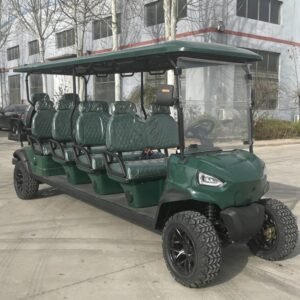
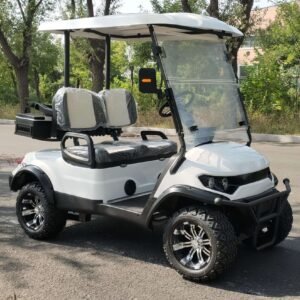
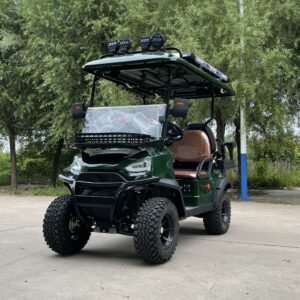
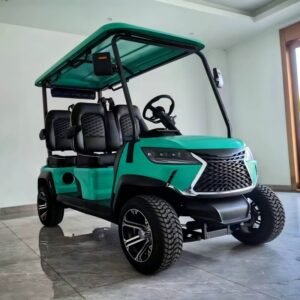
However, we must apply commercial and practical judgment. If you are buying a $2,000+ walking trolley but you actually prefer to ride, you are making a mistake. For players who want to bring friends, carry heavy coolers, and cruise the neighborhood after the round, a walking trolley is insufficient. In that scenario, we highly recommend upgrading to a street-legal ride-on model. You can explore a 4 Passenger Golf Cart which offers vastly superior utility for families and daily community transport.
11. Frequently Asked Questions (FAQ)
Are electric golf trolleys with GPS allowed in tournaments?
Yes, in most professional situations and amateur tournaments, an electric golf trolley with gps is perfectly legal to use. Under USGA and R&A rules, distance-measuring devices are permitted as long as they only measure distance. You must ensure features that measure wind speed or slope/elevation changes are disabled during tournament play.
Do I have to pay an annual subscription for the GPS maps?
For premium brands like Motocaddy, PowaKaddy, and MGI, basic GPS yardages to the front, middle, and back of the greens are completely free and pre-loaded. Some brands offer a premium “Pro” subscription layer (often around $50/year) that unlocks cellular data, advanced hazard mapping, and dynamic green views, but it is entirely optional.
How long does the battery last on an electric golf trolley with GPS?
A modern 28V Lithium battery will easily last for 18 holes on a single charge. If you purchase the extended battery option offered by most manufacturers, you can comfortably complete 36 holes, even on hilly terrain with the GPS screen running continuously.
Can I use an electric trolley if it starts raining?
Yes. The touchscreens and battery housings on top-tier models are heavily water-resistant (often IP65 rated or higher). They are designed to withstand heavy downpours on the course, though they should never be fully submerged in water or sprayed directly with a high-pressure hose.
12. Authoritative References
To ensure our operational claims meet industry standards, we rely on data and regulations from the following authoritative bodies:
- United States Golf Association (USGA) – Governing rules and regulations regarding the legal use of distance measuring devices (DMDs) during tournament play.
- The R&A – Official guidelines on golf equipment standards, ensuring electronic trolleys meet competitive compliance worldwide.
- National Golf Foundation (NGF) – Providing industry data and trend analysis regarding the resurgence of walking the course and the adoption of electric mobility technology in the golf sector.
About GT Golf Cart: GT Golf Cart specializes in the design, manufacturing, and global supply of electric golf carts and low-speed vehicles. With over 12 years of industry experience, we deliver reliable mobility solutions for golf courses, resorts, communities, and commercial fleets worldwide. Whether you need a compact walker or a full-size luxury cruiser, we engineer vehicles built for the modern game.