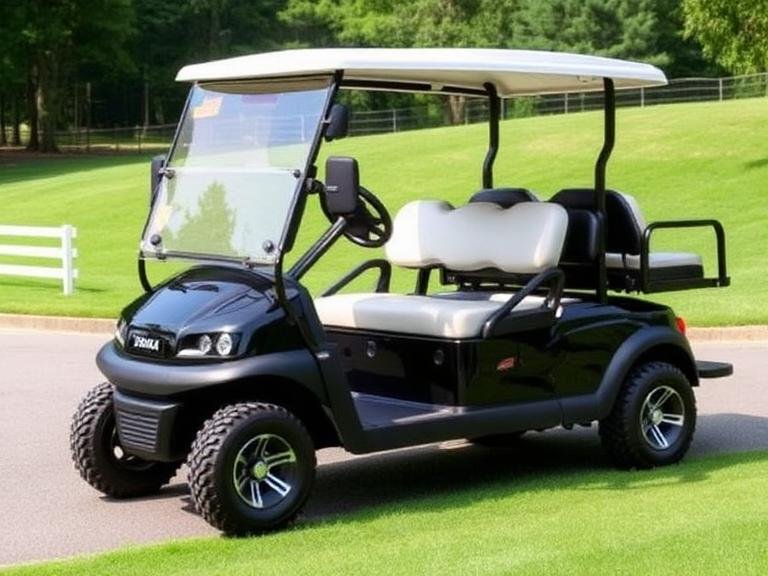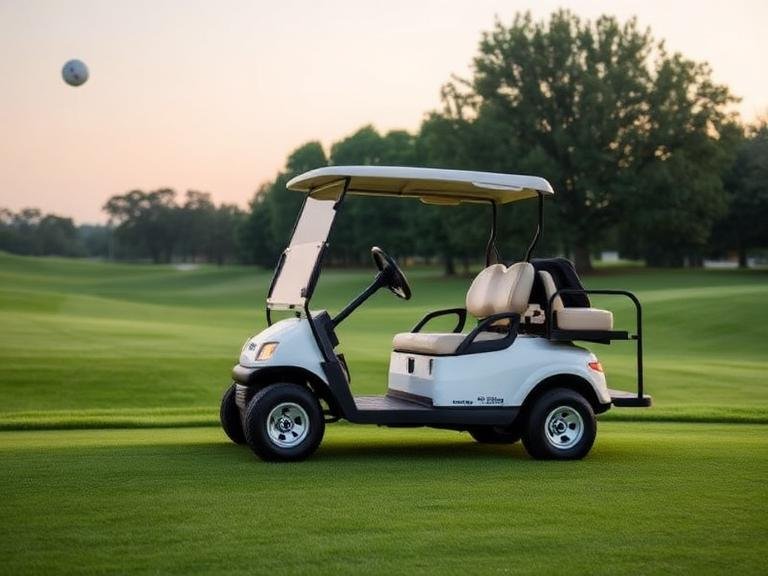
The neighborhood mobility landscape is changing rapidly. As planned communities, coastal towns, and urban centers seek eco-friendly alternatives to full-sized automobiles, the demand for street legal golf carts has skyrocketed. However, taking a stock golf cart off the 18th hole and driving it down a public road is a direct path to a police citation and vehicle impoundment. If you want to integrate a low-speed electric vehicle into your daily commute, you must understand exactly how to make an electric golf cart street legal.
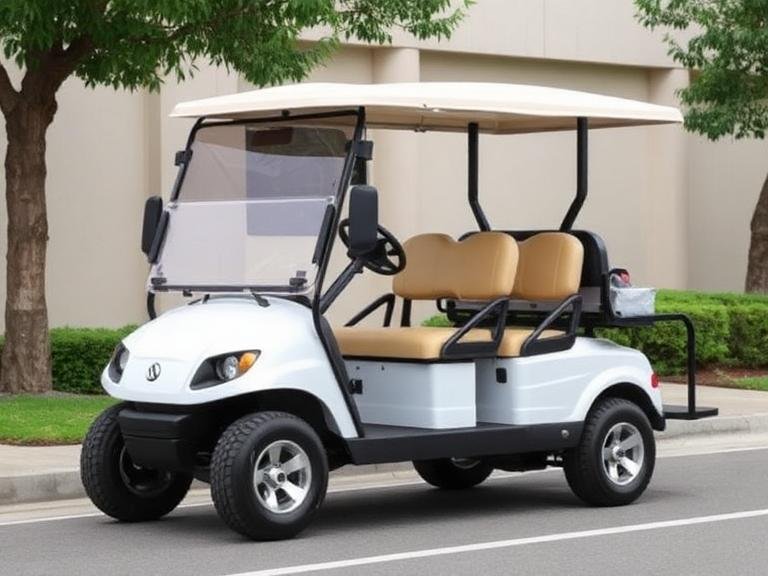
From our experience engineering advanced mobility solutions at GT Golf Cart, we see consumers drastically underestimate the mechanical and bureaucratic hurdles involved in this conversion process. Slapping a rearview mirror and a slow-moving vehicle triangle onto an aging fleet cart does not satisfy federal requirements. You are effectively attempting to reclassify a piece of recreational equipment into a registered motor vehicle. In this comprehensive practitioner’s guide, we will outline the exact Department of Transportation (DOT) requirements, evaluate the mechanical upgrades necessary, and provide strict commercial judgment on WHETHER you should undertake a DIY conversion or simply invest in a factory-built Low-Speed Vehicle (LSV).
Quick Answer: The Street Legal Checklist
To successfully make an electric golf cart street legal, the vehicle must meet the Federal Motor Vehicle Safety Standard 500 (FMVSS 500). Mechanically, the cart must be upgraded to reach a minimum speed of 20 MPH, but not exceed 25 MPH. You must install specific hardware: a DOT-approved AS1/AS4 glass or impact-resistant windshield, three-point or lap seat belts for every passenger, headlights, taillights, brake lights, front and rear turn signals, a horn, interior and exterior mirrors, and reflex reflectors. Administratively, the vehicle must be assigned a 17-digit Vehicle Identification Number (VIN), registered with your state’s Department of Motor Vehicles (DMV), equipped with a license plate, and covered by personal injury/property damage insurance.
Table of Contents
- What is a Street Legal Golf Cart (LSV)?
- How It Works: The Conversion Process
- Quick Summary Table: FMVSS 500 Requirements
- Commercial and Practical Benefits
- Limitations of DIY Conversions
- Pros and Cons: Converting vs. Buying New
- Who Should Use an LSV
- Comparison Table: Standard vs. Street Legal
- Common Conversion Mistakes
- Strategic Buying Considerations
- Expert Recommendation from GT Golf Cart
- Frequently Asked Questions (FAQ)
What is a Street Legal Golf Cart (LSV)?
In most professional situations, the term “street legal golf cart” is a colloquialism. In the eyes of federal regulators and the DMV, the correct classification is a Low-Speed Vehicle (LSV). A standard golf cart is designed exclusively for off-highway use, governed to a maximum speed of 15 MPH. It lacks the safety restraints and illumination required for mingling with civilian traffic.
An LSV is a federally recognized class of motor vehicle. By law, it must be propelled by an electric motor, have a gross vehicle weight rating (GVWR) of less than 3,000 pounds, and be capable of achieving a top speed of 20 to 25 MPH. When you research how to make an electric golf cart street legal, you are actually researching the mechanical and legal steps to convert a recreational cart into a compliant LSV.
How It Works: The Conversion Process
Converting a standard cart into an LSV requires two distinct phases: mechanical retrofitting and administrative compliance. If you are starting with a standard 2 seater golf cart, you must execute the following.
Phase 1: Mechanical and Safety Upgrades
You cannot use standard aftermarket parts designed for golf courses. Every component must meet DOT specifications.
- Speed Modification: A stock fleet cart runs at 12-15 MPH. To hit the required 20-25 MPH zone, you will likely need to upgrade the motor controller (e.g., a Navitas or Alltrax unit) and potentially the electric motor itself.
- DOT Windshield: Standard fold-down acrylic windshields are illegal on public roads. You must install a one-piece DOT-approved AS1 glass or AS4 polycarbonate windshield equipped with a functional wiper system.
- Illumination Kit: The vehicle requires a deluxe light kit including DOT-certified headlights, red taillights, brake lights (actuated by the brake pedal), and front/rear turn signals.
- Restraints and Visibility: DOT-approved seat belts must be anchored securely to the chassis for every seating position. You also need an interior rearview mirror, driver-side exterior mirror, and a DOT-approved horn.
Phase 2: Bureaucratic Compliance
Once the physical labor is done, the paperwork begins. To legally title the vehicle, it requires a 17-digit VIN. Standard golf carts only have serial numbers. You must apply for a custom-built vehicle VIN through your local DMV. This usually triggers an inspection by a state highway patrol officer or DMV official to verify the FMVSS 500 safety components are installed. Once the VIN is assigned, you must purchase auto insurance, pay standard registration fees, and mount your license plate.
| Component | Standard Golf Cart | Street Legal LSV Requirement |
|---|---|---|
| Top Speed | Max 15 MPH | Minimum 20 MPH, Maximum 25 MPH |
| Windshield | Optional (Acrylic fold-down) | Mandatory (DOT AS1 or AS4 with wiper) |
| Seat Belts | None | Type 1 (Lap) or Type 2 (Shoulder/Lap) per seat |
| Lighting | Optional | Headlights, taillights, brake lights, turn signals |
| Identification | Manufacturer Serial Number | 17-Digit Vehicle Identification Number (VIN) |
Commercial and Practical Benefits
The primary benefit of operating a road-legal electric vehicle is aggressive cost savings and hyper-local convenience. For residents in master-planned communities, utilizing a 4 seater golf cart for grocery runs, school drop-offs, and community events eliminates the wear and tear on primary combustion vehicles. Furthermore, modern 72V lithium-ion setups cost mere pennies to charge compared to volatile gasoline prices. For commercial users—such as security firms, university campuses, and event coordinators—maintaining a fleet of LSVs provides rapid, zero-emission transport across sprawling public infrastructure.
Limitations of DIY Conversions
We must apply strict commercial judgment here: attempting to make an electric golf cart street legal via a DIY retrofit is often a financial trap. The limitations are severe. Sourcing a legitimate Build Your Own Golf Cart Kit that guarantees DOT compliance is difficult. More importantly, older 36V or 48V lead-acid golf carts do not possess the suspension, braking power, or chassis rigidity required to safely handle continuous operation at 25 MPH alongside 4,000-pound SUVs. The brakes will fade, the suspension will wander, and the lead-acid batteries will drain rapidly under the higher amperage draw of an upgraded motor.
| Strategy | Pros (Advantages) | Cons (Disadvantages) |
|---|---|---|
| DIY Retrofit Conversion | Can utilize an existing chassis; spreads out the cost over time; highly customizable. | DMV registration is a bureaucratic nightmare; older chassis may lack proper braking safety at 25 MPH; high failure rate during state inspections. |
| Buying a Factory-Built LSV | Comes with a 17-digit VIN directly from the manufacturer; ready to register instantly; features modern 4-wheel hydraulic brakes and lithium power. | Higher initial capital expenditure. |
Who Should Use an LSV & Who Does Not Need It
For commercial users and neighborhood commuters: If you live in a coastal town, a retirement community, or manage a sprawling commercial campus separated by public roads, an LSV is an indispensable asset. Families seeking a 6 seater golf cart for local transport will find the street-legal designation mandatory for crossing major intersections safely and legally.
Who does not need it: If your property is entirely private (e.g., a massive farm or a private hunting lease), registering a vehicle with the DMV is an unnecessary tax burden. You are better served investing your capital into a rugged off road golf cart equipped with long-travel suspension and aggressive tires, completely ignoring DOT street parameters.
| Feature | Standard Golf Cart | Street Legal LSV |
|---|---|---|
| Legal Road Access | Strictly prohibited (off-highway only) | Legal on roads with limits ≤ 35 MPH |
| Insurance Requirement | Optional (Homeowners policy generally applies) | Mandatory (Auto Liability Insurance) |
| Braking System | Rear mechanical drum brakes | 4-Wheel hydraulic disc brakes (Highly Recommended) |
| Primary Market | Golf courses, private properties | Public roads, urban centers, master-planned towns |
Common Conversion Mistakes
In our testing and industry auditing, the most devastating mistake consumers make is confusing municipal ordinances with federal law. A local sheriff might unofficially tolerate slow golf carts driving on the shoulder of a beach road, but if an accident occurs, your insurance provider will instantly deny the claim because the vehicle was operating illegally. You must adhere to federal FMVSS 500 standards.
Another profound error is ignoring weight distribution when upgrading to an 8 seater golf cart. Adding four extra passengers to a stretched chassis operating at 25 MPH requires massive braking power. Attempting to make a heavy, stretched cart street legal using the factory rear-drum mechanical brakes is a massive liability. If you upgrade the speed, you must upgrade the stopping power.
Strategic Buying Considerations
If you are determined to execute a conversion, you must source parts from reputable vendors. Verify that the windshield is clearly stamped “AS1” or “AS4”. Ensure the light kit includes a plug-and-play wiring harness with a step-down voltage reducer (converting your 48V/72V battery pack down to 12V for the lights). However, we strongly advise comparing the total cost of conversion parts (roughly $2,500 to $4,000) against the price of exploring Road Legal Golf Carts manufactured as true LSVs from day one.
Expert Recommendation from GT Golf Cart
In most professional situations, the headache of sourcing DOT-approved parts, upgrading outdated 48V motors, and fighting with the DMV over a custom-built title is simply not worth the marginal cost savings. If you want to confidently transport your family or clients on public roads, you need a vehicle engineered for that specific purpose from the ground up.
We recommend bypassing the arduous DIY conversion process entirely. Partner with recognized Golf Cart Manufacturers that provide turn-key, road-ready solutions.
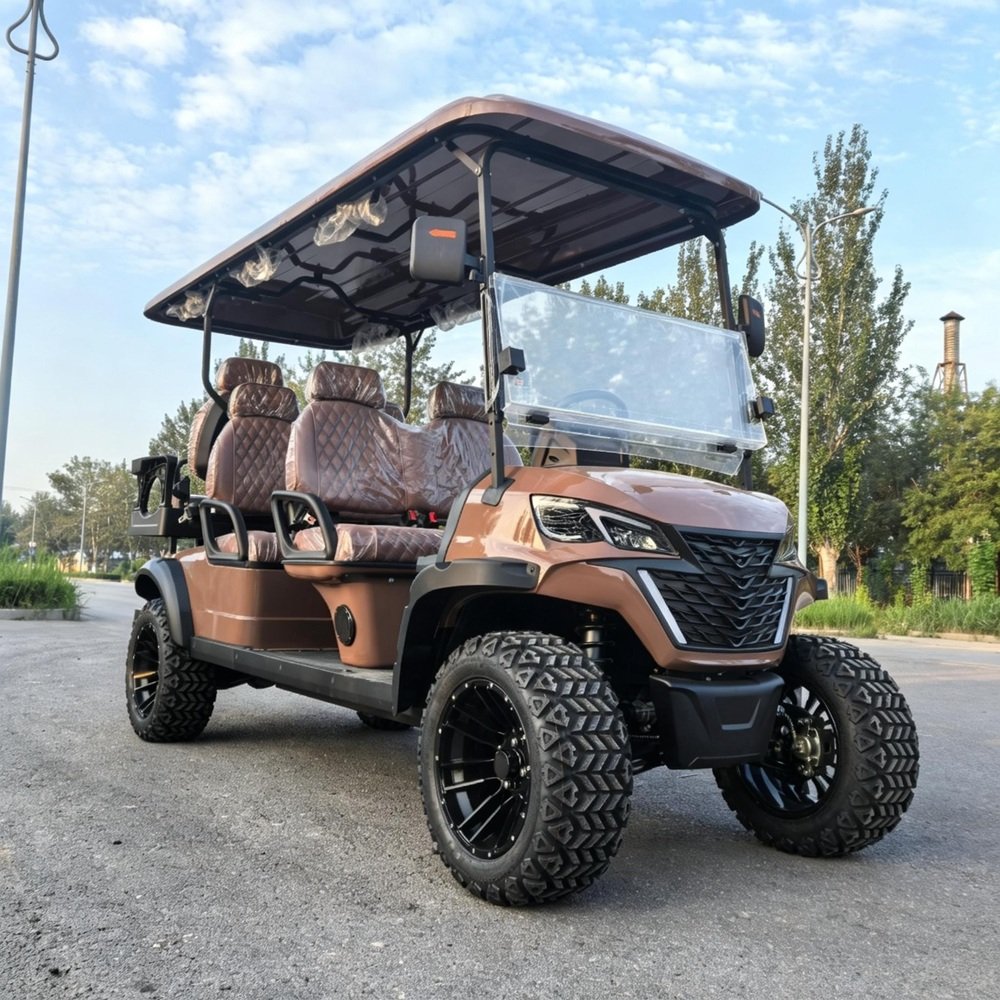
LSV-01 Street Legal Golf Cart – 72V Lithium Electric Low-Speed Vehicle
Engineered explicitly for roads and communities, the LSV-01 arrives fully compliant with a 17-digit VIN, ready for immediate registration. Forget the hassle of aftermarket bolt-ons; this unit delivers factory-integrated safety and elite performance.
- Power: High-Performance 5,000W AC Electric Motor
- Energy: 72V 150Ah Lithium Battery for extended driving range (Up to 62 Miles per charge)
- Performance: Top Speed of 29 MPH with Rear-Wheel Drive (RWD) for stable handling
- Comfort: Independent Front Suspension for enhanced ride comfort
- Compliance: Complete Road-Ready Safety Equipment installed at the factory
By investing in a purpose-built LSV, you acquire a vehicle with superior lithium technology, four-wheel hydraulic brakes, and the peace of mind that comes with absolute legal compliance. Whether you are exploring 6 Seater Golf Cart Brands for your family or sourcing fleet vehicles, prioritize factory-built safety.
Frequently Asked Questions (FAQ)
How much does it cost to make an electric golf cart street legal?
From our experience, purchasing the necessary DOT-approved components (windshield, seat belts, lighting kit, mirrors) costs between $800 and $1,500. If you also need to upgrade your motor and controller to hit the required 20 MPH minimum, expect to spend an additional $1,000 to $2,500.
Can I drive my street legal golf cart on the highway?
No. Federal and state laws strictly prohibit Low-Speed Vehicles (LSVs) from operating on highways or interstates. They are restricted to public roads with a posted speed limit of 35 MPH or less, depending on local municipal ordinances.
Do I need a license plate and insurance for a street legal golf cart?
Yes. Once you make an electric golf cart street legal and it is classified as an LSV, it is treated as a motor vehicle. You must possess a valid driver’s license, register the vehicle with your local DMV, display a license plate, and carry minimum liability insurance.
Authoritative Industry References
To ensure absolute compliance with federal and state regulations, we advise consulting the following legal frameworks before operating any LSV on public roads:
- National Highway Traffic Safety Administration (NHTSA) – The governing federal body that dictates the FMVSS 500 standards defining Low-Speed Vehicles and mandatory safety equipment.
- Insurance Institute for Highway Safety (IIHS) – Provides critical crash test data and safety research regarding the operation of micro-mobility and low-speed vehicles in mixed-traffic environments.
- Electronic Code of Federal Regulations (eCFR) – Direct access to Title 49, Section 571.500, which explicitly outlines the legal parameters, weight limits, and speed restrictions for street-legal golf cart conversions.