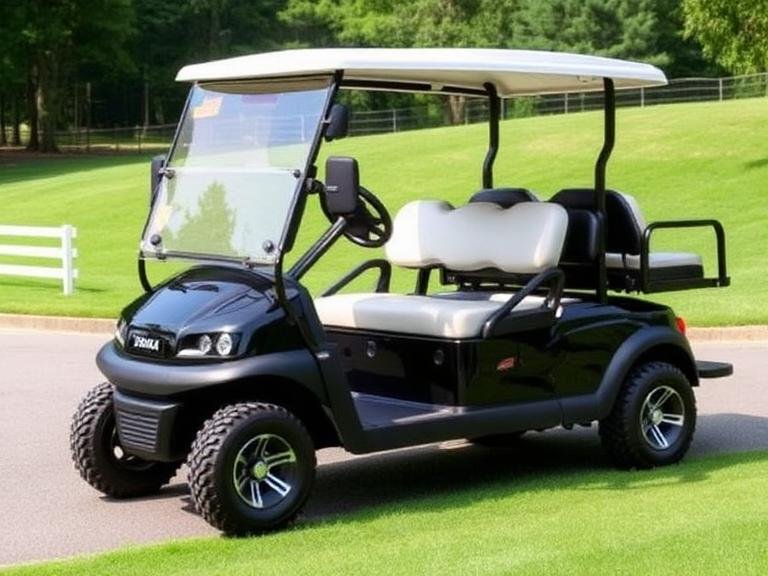
You are tired of replacing expensive lead-acid battery packs. You are frustrated by range anxiety on the back nine or struggling to climb steep inclines on your property. Naturally, you search for the best electric golf cart to gas conversion kit to gain limitless range and aggressive torque. As industry veterans, we hear this exact request every single week. Customers want to rip out their aging electrical components and drop a roaring 420cc gas engine into their chassis.
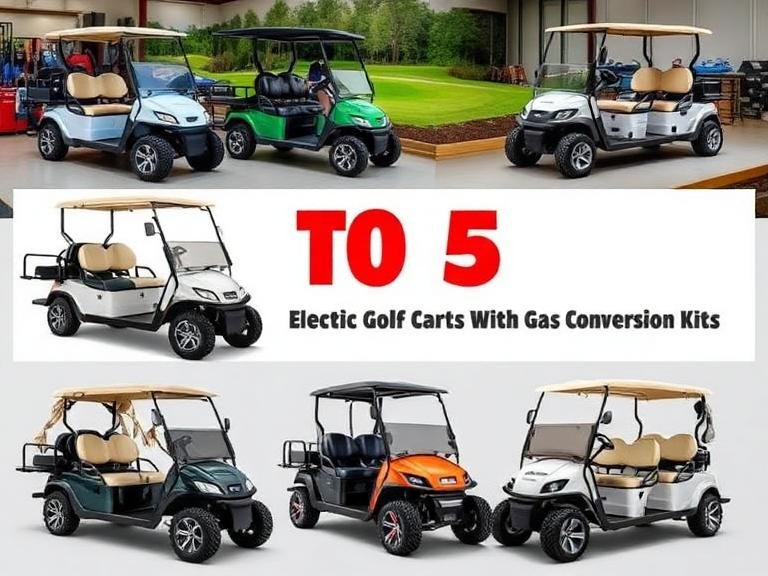
We are going to give you the honest, unfiltered truth about this process. Most generic guides and forum posts will tell you it is a simple weekend project. They are severely understating the complexity. From our experience, finding a direct bolt-on best electric golf cart to gas conversion kit is impossible because electric and gas carts utilize fundamentally different drivetrains. However, if you are committed to the mechanical surgery required, or if you want to know the absolute best alternatives that deliver gas-like power without the fabrication nightmare, we have evaluated the top solutions on the market.
Table of Contents
- Quick Answer: The Hard Truth
- What It Is: Understanding the Drivetrain Differences
- How It Works: The Fabrication Reality
- The 5 Best Electric Golf Cart to Gas Conversion Kits
- Benefits of a Gas Conversion
- Limitations and Drawbacks
- Who Should Use It
- Who Does Not Need It
- Common Mistakes We See
- Buying Considerations
- Expert Recommendation
- Frequently Asked Questions
Quick Answer: The Reality of the Swap
Is there a direct, plug-and-play best electric golf cart to gas conversion kit? No. Electric carts lack the necessary gas transaxle, forward/reverse mechanical gearing, and continuously variable transmission (CVT) clutch mechanisms. To perform a true electric to gas conversion, you must first procure a gas donor rear axle and fabricate a custom engine cradle. Once you have installed the donor transaxle, the best electric golf cart to gas conversion kit to complete the build is the Vegas Carts Predator 670cc V-Twin Swap Kit. However, in most professional situations, we recommend upgrading your electric cart with a Navitas AC Drive system instead, which delivers superior torque without destroying your chassis or resale value.
GT Golf Cart specializes in the design, manufacturing, and global supply of electric golf carts and low-speed vehicles. With over 12 years of industry experience, we deliver reliable mobility solutions for golf courses, resorts, communities, and commercial fleets worldwide.
What It Is: Understanding the Drivetrain Differences
To make an informed buying or usage decision, you must understand the mechanical anatomy of your vehicle. An electric golf cart features a direct-drive system. The electric motor is bolted directly to the input spline of the rear differential. There is no transmission, no mechanical gear selector, and no clutch. When you want to go backward, the electronic speed controller simply reverses the polarity of the motor.
Conversely, a gas golf cart requires a mechanical 4-stroke transaxle. This transaxle houses the physical forward, neutral, and reverse gears. It also features an input shaft designed to accept a driven clutch, which connects to the engine’s drive clutch via a thick rubber belt. Because these two rear axles are entirely incompatible, a standalone “best electric golf cart to gas conversion kit” cannot exist without first supplying the missing gas transaxle. If you are exploring a Build Your Own Golf Cart Kit project, sourcing that donor transaxle is your mandatory first step.
How It Works: The Fabrication Reality
If you choose to proceed with the swap, the process is labor-intensive. First, you must strip the electric cart of its batteries, motor, solenoid, and heavy-gauge wiring. Next, you will likely need to cut out the aluminum or steel battery tray using an angle grinder, as it obstructs the space required for an engine block.
Once the bay is clear, you must source a used gas transaxle compatible with your cart’s make (EZ-GO, Club Car, or Yamaha) and weld or bolt it to the suspension leaf springs. Only after this foundational work is complete can you utilize a modern engine swap kit. The kit will provide the engine mounting plate, the drive clutch, the exhaust header, and the throttle linkage adapters. In our testing, aligning the primary and secondary clutches on a fabricated engine cradle is the absolute most critical step; a misalignment of even a quarter-inch will continuously shred drive belts.
| Solution Path | Primary Component | Required Fabrication | Estimated Cost | Best For |
|---|---|---|---|---|
| Heavy-Duty Gas Swap | Predator 670cc V-Twin Kit | High (Needs Donor Axle) | $1,500 – $2,500 | Off-road utility, towing |
| Standard Gas Swap | Predator 420cc / Honda GX390 | High (Needs Donor Axle) | $1,000 – $1,800 | Budget DIY builds |
| Premium Commercial Gas | Briggs Vanguard 23HP V-Twin | High (Needs Donor Axle) | $2,200 – $3,000 | Farming, industrial use |
| Electric AC Upgrade | Navitas 600A 5KW System | None (Bolt-On) | $2,000 – $2,500 | 95% of standard users |
The 5 Best Electric Golf Cart to Gas Conversion Kits (And Alternatives)
Assuming you have sourced your donor gas transaxle, or if you are wise enough to consider a high-performance electric alternative, here are the top five kits dominating the industry in 2026.
1. Vegas Carts Predator 670cc V-Twin Swap Kit
For heavy-duty applications, Vegas Carts manufactures the premier engine mounting kits on the market. Once your gas transaxle is installed, this kit allows you to drop a massive 22-horsepower Harbor Freight Predator 670cc engine into your chassis. The kit includes a heavy-duty adjustable engine cradle, a high-performance drive clutch, and a custom exhaust header. We recommend this specific kit for hunters and farmers who need extreme low-end torque. It completely transforms a golf cart into a UTV-class machine.
2. Vegas Carts Predator 420cc / Honda GX390 Swap Kit
If you are on a strict budget, the 420cc single-cylinder kit is the most popular choice. Adapting a 13HP to 15HP engine provides a massive power bump over a tired 36-volt electric motor. This is the best electric golf cart to gas conversion kit for beginners who have sourced a donor axle but want to keep the total engine cost under $500. It utilizes the factory starter/generator, allowing for a seamless “pedal-start” experience just like a factory cart.
3. Navitas 600A 5KW AC Drive Conversion Kit (The Superior Alternative)
As industry professionals, we must state that AC conversions have largely rendered gas swaps obsolete for residential users. If your goal is more speed, more torque, and better hill-climbing ability, ripping out your chassis for a gas engine is unnecessary. The Navitas AC Drive kit replaces your weak DC electric motor with an alternating current (AC) motor and a massive 600-amp controller. It bolts directly to your existing electric axle with zero fabrication. In our testing, an AC-converted cart will out-accelerate a 420cc gas cart while remaining completely silent. If you are building Road Legal Golf Carts, this is the compliant, clean way to achieve high performance.
4. Cart Parts Plus (CPP) Briggs Vanguard 23HP V-Twin Kit
For commercial users who cannot afford engine downtime, the CPP Briggs Vanguard swap is the gold standard of reliability. Unlike the imported Predator engines, the Briggs Vanguard is a commercial-grade powerplant designed for continuous industrial use. This kit comes with superior clutch tuning tailored specifically for heavy hauling. We highly recommend this setup if you are converting a Utility Golf Cart 4 Seater that will be used for property maintenance or towing.
5. Plowman’s Yamaha G-Series Performance Gas Kit
If you own a Yamaha electric cart and have sourced a Yamaha gas transaxle, Plowman’s offers the most refined, specialized kits on the market. Rather than a universal fit, Plowman’s focuses explicitly on Yamaha geometry. Their kits optimize clutch weights and belt tensions, ensuring that engine power transfers perfectly to the wheels without slipping. This is a premium, niche option for Yamaha loyalists.
Benefits of a Gas Conversion
Despite the severe difficulty of the initial build, completing an electric to gas conversion yields undeniable benefits. The primary advantage is infinite range. As long as you carry a fuel can, the cart will never die and leave you stranded. Furthermore, high-horsepower gas engines do not suffer from voltage sag; they deliver consistent power whether pulling a heavy load up a hill or cruising on flat pavement. For rural properties entirely off the electrical grid, a gas conversion is often a functional necessity rather than a luxury.
Limitations and Drawbacks
The drawbacks are severe and must be weighed carefully. Chopping out your battery box and welding a gas axle into an electric frame officially makes your vehicle a “franken-cart.” This obliterates its standard resale value. Dealerships will not accept it as a trade-in. Additionally, the Noise, Vibration, and Harshness (NVH) levels increase dramatically. A 670cc V-Twin engine mounted in a golf cart chassis is loud, aggressive, and will vibrate the steering column significantly.
| Pros | Cons |
|---|---|
| Infinite operational range. | Requires massive custom fabrication. |
| Consistent torque unaffected by battery drain. | Destroys vehicle resale value. |
| Cheaper engine replacement costs long-term. | High noise and vibration levels. |
| Excellent for remote, off-grid locations. | Must source a rare, used gas donor transaxle. |
Who Should Use It
For commercial users and mechanical hobbyists. If you own a large farm, a hunting lease, or an industrial yard, and you have access to welding equipment, utilizing the best electric golf cart to gas conversion kit is a viable project. It is also highly recommended if you purchased a dead electric rolling chassis for under $500 and happen to have a spare gas transaxle sitting in your garage. In these specific scenarios, the labor equity makes financial sense.
Who Does Not Need It
For beginners, suburban neighborhood drivers, and golf course residents. If you use your cart to drive to the community pool or play 18 holes, do not attempt this conversion. The noise will violate neighborhood ordinances, and the labor will frustrate you. If you need reliable family transport, you are much better off purchasing a factory-built 6 Passenger Electric Golf Cart or investing in a drop-in lithium battery upgrade.
Common Mistakes We See
From our experience consulting with DIY builders, three catastrophic mistakes dominate this space:
- Ignoring Clutch Alignment: Builders often eyeball the engine placement. If the drive clutch on the engine is not perfectly parallel and offset correctly to the driven clutch on the transaxle, the belt will slip, burn, and snap within minutes of driving.
- Retaining Stock Suspension: A massive V-Twin engine and a full tank of gas weigh significantly more than standard components. Failing to install heavy-duty rear leaf springs will cause the cart’s frame to bottom out and drag.
- Buying the Engine Before the Axle: We see customers buy the best electric golf cart to gas conversion kit first, only to realize they cannot find a donor gas transaxle anywhere in their state. The axle must always dictate the build, not the engine.
Buying Considerations
When analyzing your budget, you must factor in the hidden costs. You are not just buying a $600 engine and a $500 kit. You must buy a donor transaxle ($400-$800), a new heavy-duty drive belt ($50), a custom wiring harness ($100), and likely an upgraded lift kit to clear the larger engine block. By the time the project is complete, you will easily exceed $2,000. If your only goal is more power, you must compare this $2,000 investment against the cost of an AC electric conversion, which provides similar performance with zero custom fabrication.
| Your Situation | Our Recommendation | Why It Makes Sense |
|---|---|---|
| Dead batteries, want more torque, no fabrication skills. | Navitas AC Drive + Lithium Battery | Zero cutting required; massive performance boost. |
| Have welding skills, need off-grid towing power. | Vegas Carts 670cc Swap Kit | Transforms the cart into a UTV workhorse. |
| Strictly driving in quiet residential neighborhoods. | Sell cart; buy factory Gas or AC Electric | Avoids noise complaints and retains vehicle value. |
| Want a fun, custom Small Golf Carts for Adults build. | Vegas Carts 420cc Swap Kit | Affordable entry point for garage hobbyists. |
Expert Recommendation
In most professional situations, we strongly advise against electric-to-gas conversions unless you are a skilled fabricator building a custom off-road rig. The myth of the simple bolt-on best electric golf cart to gas conversion kit is just that—a myth. If you are tired of your electric cart’s poor performance, we recommend upgrading to an AC Drive system or a 48V Lithium-Ion battery pack. You will achieve the speed and torque of a gas engine while maintaining a silent, maintenance-free, and highly valuable vehicle. If you absolutely must have gas, sell your electric cart intact and purchase a factory gas model. It is the smartest commercial and practical decision you can make.
Frequently Asked Questions
Can I put a gas engine in an electric golf cart?
Technically yes, but not directly. You cannot bolt a gas engine to an electric golf cart’s rear axle because it lacks a mechanical transmission and clutch input. You must completely remove the electric axle and install a gas donor transaxle first before dropping in a gas engine.
How much does it cost to convert an electric golf cart to gas?
A full conversion typically costs between $1,500 and $2,500. This includes purchasing a used gas transaxle ($400-$800), a high-performance engine ($400-$1,000), a conversion mounting kit ($500-$800), and miscellaneous parts like belts, clutches, and fuel lines.
What is the best electric golf cart to gas conversion kit?
Once you have successfully installed a gas transaxle into your electric frame, the Vegas Carts Predator 670cc V-Twin or 420cc Swap Kits are widely considered the best on the market due to their heavy-duty mounting plates and comprehensive hardware.
Is an AC electric upgrade better than a gas swap?
In our testing, yes. For 95% of users, upgrading an electric cart with an AC Drive motor and high-amp controller provides equal or greater torque than a gas engine, without requiring chassis fabrication, noise increases, or losing resale value.