From our experience engineering and distributing low-speed electric vehicles globally, the micro-mobility landscape has undergone a radical transformation. A decade ago, the conversation regarding the major manufacturers of golf carts was limited to three legacy brands dominating golf course fleets. Fast forward to 2026, and the industry has fractured into highly specialized segments. Today, consumer demand for street-legal certifications, lithium-ion power, and luxury automotive technology has paved the way for aggressive challengers to unseat the traditional monopolies.
Navigating this saturated market requires ruthless commercial judgment. Whether you are outfitting a municipal 18-hole course, establishing a resort transportation fleet, or simply looking for a neighborhood cruiser, buying the wrong brand can saddle you with outdated lead-acid technology and massive depreciation. In this comprehensive guide, we will dissect the 12 major manufacturers of golf carts, explaining not only what these brands offer but whether they are actually worth using, buying, or upgrading to in the current economic climate.
Quick Answer: The Top Tier of 2026
There are exactly 12 major manufacturers of golf carts dictating the global market in 2026. The legacy tier—revered for fleet reliability and dealer networks—consists of Club Car, E-Z-GO, and Yamaha. The modern tier of lithium-first and luxury challengers includes GT Golf Cart, ICON EV, Evolution Electric Vehicles, DENAGO EV, Star EV, Tomberlin, Bintelli, Epic Carts, and Atlas Carts.
If you require traditional golf course fleet management, the legacy brands remain the safest bet. However, for commercial users needing custom resort vehicles, or residential buyers seeking street-legal Low-Speed Vehicles (LSVs) with touchscreen infotainment and zero-maintenance batteries, we recommend investing in the modern challengers. These newer brands include premium upgrades as standard features, saving buyers thousands of dollars compared to legacy upcharges.
Table of Contents
- What It Is: The State of Golf Cart Manufacturing in 2026
- How It Works: Fleet Supply vs. Consumer Assembly
- The 12 Major Manufacturers of Golf Carts
- Benefits of Buying from a Major Manufacturer
- Limitations of the “Big Three” Legacy Brands
- Who Should Use Which Brand
- Who Does Not Need a Traditional Golf Cart
- Common Mistakes Buyers Make in 2026
- Buying Considerations & Cost-Benefit Analysis
- Expert Recommendation
- Frequently Asked Questions (FAQ)
GT Golf Cart specializes in the design, manufacturing, and global supply of electric golf carts and low-speed vehicles. With over 12 years of industry experience, we deliver reliable mobility solutions for golf courses, resorts, communities, and commercial fleets worldwide.
What It Is: The State of Golf Cart Manufacturing in 2026
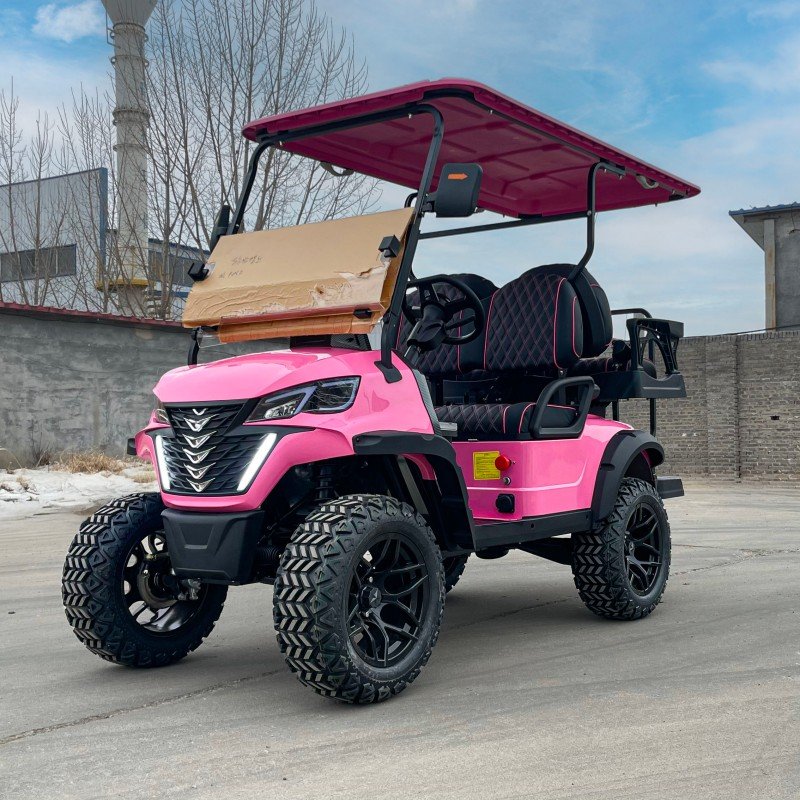
When we discuss the major manufacturers of golf carts today, we are no longer strictly talking about vehicles meant to carry two bags across a fairway. The modern golf cart is classified legally as a Low-Speed Vehicle (LSV) or Neighborhood Electric Vehicle (NEV). These machines are engineered with AC (Alternating Current) induction motors, independent suspension, four-wheel hydraulic disc brakes, and Department of Transportation (DOT) approved safety glass.
The industry is split into two distinct manufacturing philosophies. The legacy brands focus on high-volume, stripped-down fleet vehicles that can endure decades of abuse. The modern challengers focus on direct-to-consumer value, pre-loading their carts with lithium iron phosphate (LiFePO4) batteries and lifted suspensions straight from the factory floor.
How It Works: Fleet Supply vs. Consumer Assembly
In most professional situations, the manufacturing supply chain dictates the final price of the cart. Legacy manufacturers source components globally but heavily rely on domestic assembly plants in the United States to fulfill massive corporate contracts. Conversely, many of the newer Affordable Golf Cart Brands manufacture their chassis, motors, and bodies in overseas tech hubs, shipping them as “gliders” to be finalized, programmed, and quality-tested in domestic distribution centers. This globalized manufacturing approach allows modern brands to offer superior technology at a drastically reduced cost-to-consumer.
The 12 Major Manufacturers of Golf Carts
Based on market share, technological innovation, and dealer network saturation, here is the definitive list of the 12 major manufacturers of golf carts dominating 2026.
1. Club Car
Headquartered in Augusta, Georgia, Club Car is the undisputed king of the country club fleet. Their defining characteristic is the rust-proof AlumiCore aluminum frame, which makes them highly coveted in coastal and high-humidity environments. While their Onward series is popular with consumers, verifying the Brand New Club Car Golf Cart Price often reveals a steep premium. If you live on the coast, it is worth buying; if you live inland, you are paying for aluminum you may not need.
2. E-Z-GO
E-Z-GO built its empire on steel frames and unmatched reliability. Their partnership with Samsung SDI to create the ELiTE lithium battery system changed the industry. They offer the largest authorized dealer network in the world, making warranty work effortless. Their TXT and RXV models remain the gold standard for fleet managers prioritizing long-term durability over flashy aesthetics.
3. Yamaha
Yamaha Golf-Car Company brings world-renowned Japanese motor engineering to the fairway. While they produce excellent electric carts, they truly dominate the gas-powered sector with their Drive2 QuieTech EFI models, which run almost as quietly as an electric cart. Their independent rear suspension provides arguably the smoothest ride of the “Big Three.”
4. GT Golf Cart
As a premier manufacturer, GT Golf Cart bridges the gap between commercial fleet reliability and consumer luxury. We specialize in producing highly adaptable platforms, ranging from standard resort cruisers to heavy-duty 10 Passenger Electric Golf Cart shuttles. By engineering our proprietary lithium systems and AC drivetrains in-house, we eliminate the bloated middlemen, delivering customized, street-ready solutions directly to global commercial buyers and specialized dealerships.
5. ICON Electric Vehicles
ICON disrupted the market by standardizing features that legacy brands charged thousands of dollars for. Lift kits, custom wheels, 4-wheel disc brakes, and digital dashboards come standard on an ICON. They are the ultimate value play for residential users who want a rugged, custom look straight off the showroom floor.
6. Evolution Electric Vehicles
Evolution committed entirely to lithium-ion technology early on. Their D5 Ranger and Maverick models have taken the community cruiser market by storm. Featuring massive 9-inch touchscreens, soundbars, and luxury two-tone seating, Evolution carts feel more like modern automobiles than traditional golf carts.
7. DENAGO EV
DENAGO is one of the most exciting New Golf Carts 2026 has to offer. They bypassed lead-acid entirely; every DENAGO model ships with a high-capacity lithium battery. Their Rover series is engineered specifically for large families needing safe, DOT-compliant neighborhood transportation.
8. Star EV
Star EV occupies the premium commercial and consumer space. They build heavy-duty AC-powered vehicles that excel in hilly terrain and demanding commercial applications. Their Sirius line is highly regarded among Luxury Golf Cart Manufacturers for its automotive-style dashboard and superior build quality.
9. Tomberlin
Tomberlin does not build golf carts; they build “safety-first” Personal Transport Vehicles (PTVs). Featuring electric power steering, 3-point seatbelts, and advanced illuminated safety systems, Tomberlin is the brand we recommend for elderly drivers or parents heavily prioritizing structural safety in street-legal traffic.
10. Bintelli
Assembled in South Carolina, Bintelli focuses relentlessly on street-legal LSVs. Their carts come out of the factory with DOT windshields, wipers, backup cameras, and 17-digit VINs ready for DMV registration. If you need a 6 Passenger Golf Cart to legally drive kids to school, Bintelli is a prime candidate.
11. Epic Carts
A sister brand to ICON, Epic Carts targets the premium buyer who wants the aggressive styling of an ICON but demands upgraded AGM or Lithium powertrains, superior marine-grade upholstery, and refined suspension geometries.
12. Atlas Carts
Atlas is the newest heavyweight, turning heads by offering a lifetime powertrain warranty on their 2026 models. They incorporate heavy automotive styling and focus heavily on extreme range, utilizing advanced 210Ah lithium battery upgrades for users who refuse to suffer from range anxiety.
Benefits of Buying from a Major Manufacturer
The primary benefit of utilizing one of the 12 major manufacturers of golf carts is parts availability. When you buy a generic, unbranded cart imported by a pop-up dealer, finding a replacement solenoid or brake caliper three years later is impossible. Major manufacturers maintain deep supply chains and adhere strictly to safety guidelines established by the American National Standards Institute (ANSI).
Limitations of the “Big Three” Legacy Brands
While Club Car, E-Z-GO, and Yamaha are legendary, they have distinct commercial limitations in 2026. Their base models still frequently ship with antiquated lead-acid batteries. Upgrading a base legacy cart to match the speed, lithium power, and aesthetic of a standard ICON or Evolution cart can increase the purchase price by 40%. In our testing, buying a legacy brand for neighborhood cruising is often a poor allocation of funds compared to modern challengers.
Who Should Use Which Brand
For commercial users and fleet operators: We recommend sticking with E-Z-GO, Yamaha, or partnering directly with GT Golf Cart for scalable, reliable fleet solutions that interface with management software provided by organizations like the Golf Course Superintendents Association of America (GCSAA).
For beginners and residential families: Brands like Bintelli, Evolution, and DENAGO EV provide the best out-of-the-box experience with zero battery maintenance and pre-installed street-legal safety features.
For heavy-duty applications: If you are managing an agricultural property or hunting lease, you need to explore Off Road Golf Cart Manufacturers or specify a Custom Golf Cart with an upgraded 5kW+ AC motor and aggressive mud tires.
Who Does Not Need a Traditional Golf Cart
If you are traversing extreme mud, forging deep rivers, or towing multi-ton agricultural trailers, a golf cart—even a lifted one—is the wrong tool for the job. You do not need a golf cart; you need a gas-powered UTV or ATV. Golf carts are designed for turf, pavement, and light trails, not heavy off-road forestry.
Common Mistakes Buyers Make in 2026
The most catastrophic mistake a buyer can make today is purchasing a lead-acid battery cart to save $1,000 upfront. Lead-acid batteries require constant watering, corrode your battery terminals, and must be replaced every 3-4 years (costing roughly $1,200). Lithium batteries last up to 10 years, charge twice as fast, and drop 300 pounds of dead weight from the vehicle. Additionally, ignoring Common Club Car Problems like MCOR failures on older used models can lead to massive repair bills.
Buying Considerations & Cost-Benefit Analysis
| Manufacturer Tier | Brands Included | Best Suited For |
|---|---|---|
| Legacy / Fleet | Club Car, E-Z-GO, Yamaha | Golf courses, heavy commercial fleets, extreme longevity. |
| Modern Lithium Challengers | GT Golf Cart, Evolution, ICON, DENAGO EV | Residential cruisers, custom fleet solutions, tech-heavy users. |
| Premium / Street-Legal (LSV) | Tomberlin, Star EV, Bintelli, Epic, Atlas | Public road driving, luxury aesthetics, maximum safety. |
| Feature | Legacy “Big 3” Brands | Modern Challenger Brands |
|---|---|---|
| Standard Battery | Lead-Acid (Lithium is a costly upgrade) | Lithium LiFePO4 (Standard) |
| Included Accessories | Basic top and windshield | Lift kits, alloys, screens, soundbars |
| Price Point | Premium (High brand markup) | Value-driven (High feature-to-cost ratio) |
| Dealer Network | Massive global presence | Growing rapidly, but regional gaps exist |
| Component | Commercial Recommendation | Why It Matters |
|---|---|---|
| Motor Type | AC Induction Motor (4kW or higher) | AC motors provide superior torque for hills and do not lose top speed as the battery drains, unlike older DC motors. |
| Braking System | 4-Wheel Hydraulic Disc Brakes | Essential for 4- and 6-passenger carts. Mechanical drum brakes fade quickly under heavy loads. |
| Street Legality | 17-Digit VIN and DOT Certification | If you intend to drive on roads 35 MPH or under, check NHTSA regulations. You cannot legally register a non-VIN cart. |
Expert Recommendation
The GT Golf Cart Verdict: In most professional situations, clinging to brand loyalty from the 1990s will cost you money in 2026. If you are managing a 100-cart fleet for a traditional country club, the legacy brands (Club Car, Yamaha, E-Z-GO) remain untouchable due to their localized service contracts. However, if you are purchasing a vehicle for community transport, campus security, or resort shuttling, it is absolutely worth upgrading to the modern tier of manufacturers.
Brands like Evolution, ICON, and our proprietary line at GT Golf Cart deliver fully loaded, lithium-powered, AC-driven vehicles for the same price that legacy brands charge for a bare-bones fleet cart. Prioritize AC motors, insist on lithium batteries, and ensure your local dealer provides robust post-sale support.
Frequently Asked Questions (FAQ)
Which golf cart brand is the most reliable?
Historically, Club Car and Yamaha hold the highest reputation for mechanical reliability over a 15-to-20-year lifespan due to their rust-proof frames and bulletproof drivetrains. However, modern brands utilizing advanced AC motors and sealed lithium batteries are rapidly closing the reliability gap, requiring virtually zero powertrain maintenance.
Should I buy a gas or electric golf cart in 2026?
We emphatically recommend electric carts utilizing Lithium LiFePO4 batteries for 95% of users. They are silent, emit zero fumes, require no oil changes, and cost pennies to charge. Gas carts are only necessary for extreme remote applications where charging infrastructure is entirely nonexistent.
What makes a golf cart street legal?
To be street legal (classified as an LSV), the manufacturer must equip the cart with DOT-approved windshields, seatbelts, headlights, taillights, turn signals, mirrors, a horn, and a 17-digit VIN. It must be capable of reaching 20-25 MPH and registered with your local DMV.
References
- National Highway Traffic Safety Administration (NHTSA) – Low-Speed Vehicle (LSV) Safety Standards and Import Regulations.
- American National Standards Institute (ANSI) – Z130.1 Safety and Performance Requirements for Golf Cars.
- Golf Course Superintendents Association of America (GCSAA) – Fleet Management and Environmental Best Practices.