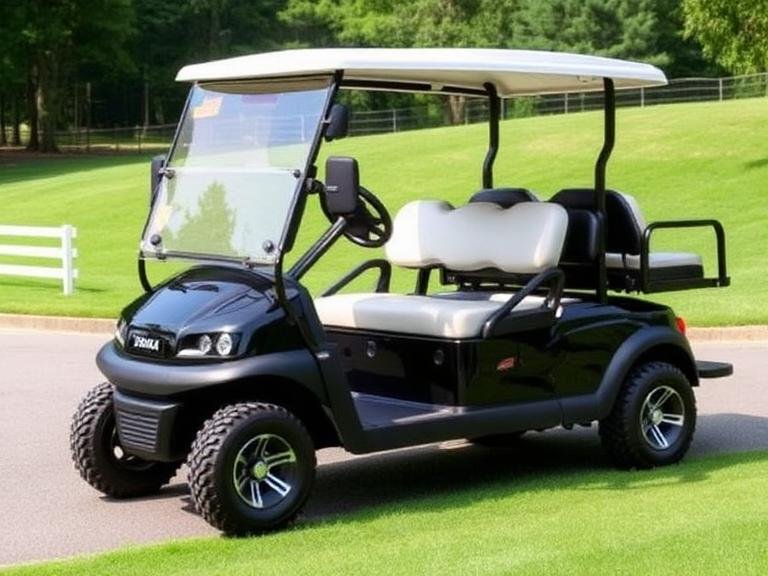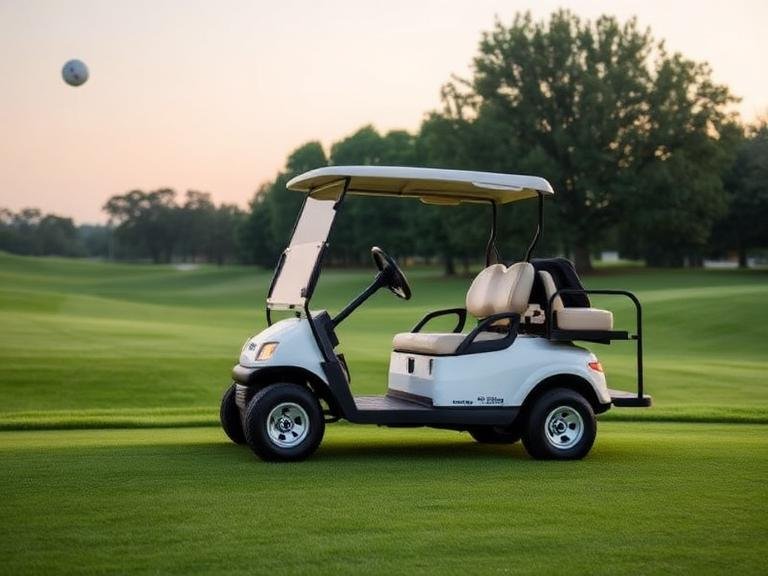
Finding legitimate golf carts under $1000 in 2026 is a challenging endeavor that requires strict commercial judgment. As the engineering team at GT Golf Cart, we design, manufacture, and distribute premium electric mobility solutions globally. We understand the market dynamics intimately. From our experience, the sub-$1000 segment is fraught with heavily used project vehicles, bare chassis rolling frames, premium electric walking caddies that get miscategorized in search engines, and unfortunately, outright internet scams.
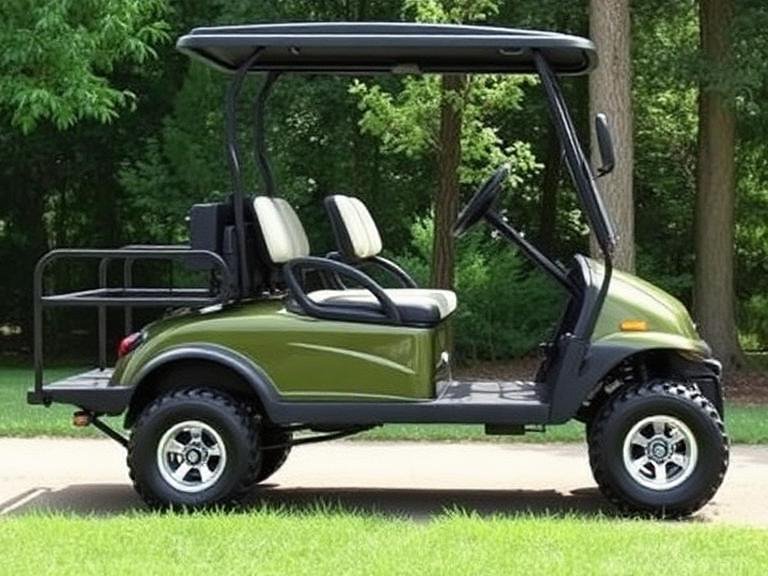
In most professional situations, a fully operational, reliable ride-on golf cart cannot be purchased for under a thousand dollars. However, if you are a DIY enthusiast, a mechanic willing to put in sweat equity, or a golfer actually looking for a motorized walking push cart, this price bracket holds immense opportunity. In this comprehensive guide, we will break down exactly what you can expect to find when shopping for golf carts under $1000, separating the worthwhile investments from the money pits.
Quick Answer: What Can You Buy for Under $1000?
In 2026, finding fully functional ride-on golf carts under $1000 is exceptionally rare. Your $1000 budget will secure one of three things: a used gas or electric ride-on cart requiring significant mechanical repairs (such as new batteries or a complete engine rebuild), a bare rolling chassis for a custom build, or a premium motorized electric walking push cart. We recommend commercial users completely avoid this price tier for ride-on models, while hobbyists and mechanics can find excellent project foundations.
Table of Contents
- What It Is: The Sub-$1000 Market Explained
- How It Works: Navigating the Budget Tier
- Benefits and Limitations
- The 9 Cheapest Golf Carts Under $1000
- Who Should Use It & Who Does Not Need It
- Common Mistakes in the Budget Market
- Essential Buying Tables
- Our Expert Recommendation
- Frequently Asked Questions (FAQ)
What It Is: The Sub-$1000 Market Explained
When consumers search for cheap golf carts, they envision a turnkey vehicle ready for the neighborhood or the fairway. The reality of the 2026 market is vastly different. The cost of raw materials, advanced lithium battery technology, and modern electronics has pushed the floor price of reliable used carts closer to the $3,000 mark. Therefore, the sub-$1000 category consists almost exclusively of “mechanic specials.”
These are vehicles that have been retired from fleet use, suffered extensive cosmetic or mechanical damage, or have completely dead lead-acid battery banks that are too expensive for the current owner to replace. Alternatively, the search algorithms frequently present premium motorized electric golf caddies in this price range, which are highly advanced walk-behind units designed to carry your clubs automatically across the course.
How It Works: Navigating the Budget Tier
Purchasing in this tier requires extensive due diligence. You are not buying a warranty; you are buying a foundation. For electric carts, the primary point of failure driving the price down is the battery pack. A set of six 8-volt lead-acid batteries costs upwards of $800, while modern lithium drop-in replacements exceed $1,200. When a cart’s batteries die, the owner often sells the entire chassis for $500 to $900 rather than investing in new power cells.
For gas carts, you are typically dealing with models from the 1990s or early 2000s that require carburetor rebuilds, new drive clutches, and starter-generator replacements. You must approach these purchases with a commercial mindset: calculate the acquisition cost plus the estimated parts cost to determine if the vehicle is actually worth buying.
Benefits and Limitations
The primary benefit of shopping in this price range is the extremely low barrier to entry. If you possess basic mechanical skills, a socket set, and a multimeter, you can acquire a high-quality aluminum or steel frame from a reputable manufacturer for pennies on the dollar. This allows you to completely customize the vehicle from the ground up, selecting your own motors, controllers, and body kits. Many enthusiasts use these cheap bases to create custom Road Legal Golf Carts.
The limitations, however, are severe. These carts offer absolutely zero reliability on day one. You cannot simply buy a $700 electric cart from a classified ad and expect it to transport your family safely. The hidden costs of restoration—including tires, bushings, wiring harnesses, and paint—can quickly push your total investment well beyond the cost of buying a certified pre-owned cart.
The 9 Cheapest Golf Carts Under $1000 in 2026
Based on our extensive industry tracking and market analysis, here are the nine distinct types of golf carts and mobility solutions you will encounter when shopping strictly under the $1000 threshold.
1. The “Dead Battery” E-Z-GO TXT (Late 1990s – Early 2000s)
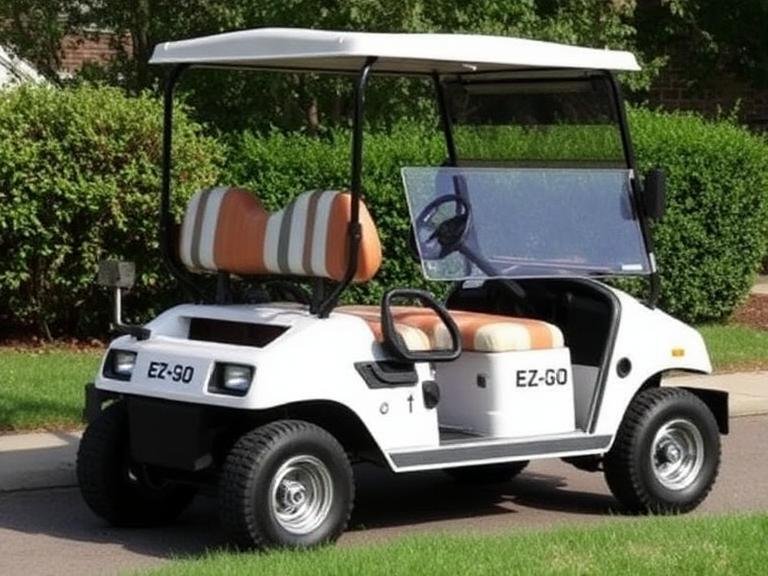
This is the most common true ride-on cart you will find under $1000. The E-Z-GO TXT features a robust steel frame that is legendary for its durability. Owners frequently list these for $600 to $900 when the 36-volt battery system completely fails. In our testing, the motors and rear axles on these units are incredibly resilient. If you purchase one, check the steel battery tray for severe acid corrosion. If the frame is solid, dropping in a modern 48-volt lithium kit will resurrect this cart into a highly capable machine.
2. The Yamaha G-Series Gas Project (G2/G9)
Yamaha has historically produced some of the finest gas-powered engines in the industry. You will occasionally find non-running Yamaha G2 or G9 models sitting in barns or behind maintenance sheds for under $800. These are fantastic projects because the internal engine components are heavily over-engineered. From our experience, a thorough carburetor cleaning, fresh fuel lines, a new spark plug, and a drive belt replacement are usually all it takes to get these reliable gas workhorses running again.
3. The 1990s Club Car DS (Aluminum Chassis Survivor)
The Club Car DS is the holy grail for budget builders because it features a rust-proof aluminum I-beam frame. While the fiberglass bodies may be cracked and the seats completely shredded, the chassis itself will outlast almost anything on the market. We recommend the Club Car DS as the ultimate foundation if your goal is to eventually Build Your Own Golf Cart Kit. Even at $900 in non-running condition, the corrosion-resistant frame makes it a spectacular long-term investment.
4. Vintage 3-Wheel Harley-Davidson Golf Carts
Yes, Harley-Davidson manufactured golf carts until the early 1980s. Today, these 3-wheel, 2-stroke gas carts frequently pop up on auction sites and local classifieds for between $500 and $1000. While they are incredibly stylish and possess tremendous collector value, they are not practical for daily use. The tiller steering is inherently unstable at higher speeds, and sourcing engine parts for a 50-year-old 2-stroke motor requires extreme patience. Buy this only if you want a conversation piece, not a daily driver.
5. Bare Rolling Chassis (For Custom Builders)
Sometimes, the best way to spend $800 is to buy a completely stripped rolling chassis. These are frames that include the steering rack, front suspension, and rear axle, but lack the motor, batteries, controller, and body panels. This is the blank canvas for extreme modifications. If you are comparing domestic bases to Golf Carts Made in America, buying a bare Club Car or E-Z-GO frame ensures you are starting with high-quality domestic steel or aluminum before adding aftermarket high-performance components.
6. Vintage Cushman Trucksters and Golfsters
Cushman built heavy-duty industrial utility vehicles that were adapted for golf courses in the mid-20th century. You can still find rusted, non-running Cushman Golfsters for around $900. They feature heavy steel bodies and direct-drive transmissions. While they lack the refined suspension of modern carts, they are phenomenal heavy-duty applications for farm work or industrial yards once the engines are rebuilt.
7. MGI Zip X1 Electric Push Cart
When searching for golf carts under $1000, search engines heavily populate the results with premium electric caddies. The MGI Zip X1 is a prime example, retailing right around $695. This is not a ride-on vehicle; it is a highly advanced, battery-powered walking cart. It features a whisper-quiet 230-watt motor, a 24V lithium battery, and advanced electronics to carry your heavy tour bag effortlessly across 36 holes. If you actually just want to walk the course without physical strain, this is where your $1000 should go.
8. Bat-Caddy X3R Remote Control Caddy
Another dominant player in the sub-$1000 mobility market is the Bat-Caddy X3R, typically priced around $799. This unit takes the electric push cart concept further by adding a fully functional remote control. You can steer the cart from across the fairway, allowing you to walk completely hands-free. For solo golfers who prioritize fitness but want to preserve their energy for their swing, investing in one of the top Single Golf Cart Companies is vastly superior to buying a broken ride-on cart.
9. The “Too Good To Be True” Scams (Buyer Beware)
We must explicitly include this category to protect consumers. If you see a pristine, lifted 2022 model listed on a local marketplace for $800, it is a scam. Fraudsters routinely steal photos of premium vehicles and list them at unbelievable prices. They will claim they are deploying in the military or going through a divorce, and they will ask you to wire money or pay through fake escrow services. A modern Utility Golf Cart 4 Seater in working condition is worth minimum $4,000. Never transfer funds for a sub-$1000 cart without standing directly in front of the vehicle with the title or bill of sale in hand.
Who Should Use It & Who Does Not Need It
For Beginners and Hobbyists: If you love turning wrenches, learning about DC voltage systems, and taking pride in bringing machinery back to life, the sub-$1000 used market is your playground. It is the perfect entry point into custom cart building.
For Commercial Users: Fleet managers, golf course operators, and resort owners must absolutely avoid the sub-$1000 ride-on market. The downtime, constant repairs, and potential liability of operating heavily degraded machinery will cost exponentially more than financing new equipment. Instead of buying a used frame, many consider working directly with Mini Golf Cart Manufacturers for cost-effective, reliable commercial fleets.
Who Does Not Need It: Families looking for safe neighborhood transportation should avoid project carts. The steering linkages and brake cables on a $700 neglected cart are highly compromised. If you need to transport your children, you require modern safety features, seatbelts, and reliable hydraulic braking systems found on modern vehicles, or perhaps exploring Small Golf Carts for Adults designed with modern safety standards.
Common Mistakes in the Budget Market
The most devastating mistake buyers make is underestimating the cost of electrical components. A buyer will enthusiastically purchase a non-running electric cart for $600, assuming it just needs a $50 part. Upon inspection, they discover the motor is burnt out ($400), the speed controller is fried ($500), and the batteries are dead ($900). Suddenly, their $600 bargain has transformed into a $2,400 nightmare.
Another severe error is ignoring frame rust on steel chassis models. While surface rust is acceptable, deep structural rot on the battery tray or the main suspension mounting points renders the cart dangerously unsafe. Always bring a heavy screwdriver to poke the frame during your inspection. If the metal flakes away in large chunks, walk away immediately.
Essential Buying Tables
Quick Summary Table
| Cart Type / Category | Average 2026 Price Range | Expected Condition | Primary Hidden Costs |
|---|---|---|---|
| Electric Project Carts (EZ-GO, Club Car) | $600 – $900 | Non-Running, Dead Batteries | Battery Replacement ($800+), Speed Controller ($400+) |
| Gas Project Carts (Yamaha) | $700 – $1,000 | Engine turns over but won’t start | Carburetor Rebuild, Clutches, Belts ($300+) |
| Electric Push Caddies (MGI, Bat-Caddy) | $600 – $999 | Brand New in Box | None (Fully Operational) |
| Vintage 3-Wheel Carts | $500 – $900 | Needs heavy restoration | Sourcing rare 2-stroke engine parts ($500+) |
Comparison Table: Gas Project vs Electric Project vs Electric Caddy
| Feature | Gas Project Cart (Sub-$1000) | Electric Project Cart (Sub-$1000) | New Electric Push Caddy |
|---|---|---|---|
| Initial Reliability | Very Poor (Requires mechanical work) | Zero (Requires new batteries to move) | Excellent (Ready out of the box) |
| Long-Term Maintenance Cost | Moderate (Oil, filters, belts) | High (Battery degradation over 5 years) | Very Low (Occasional battery charging) |
| Passenger Capacity | 2 to 4 people | 2 to 4 people | 0 (Walk-behind only) |
| DIY Skill Level Required | Advanced (Engine diagnostics) | Moderate (Electrical multimeter skills) | None (Consumer ready) |
Pros and Cons Table: Buying a Sub-$1000 Project Cart
| Pros (Benefits) | Cons (Limitations) |
|---|---|
| Incredibly low initial purchase price. | High probability of catastrophic hidden electrical failures. |
| Provides a clean slate for full custom vehicle builds. | Requires significant mechanical tools, time, and workspace. |
| Aluminum frames (like Club Car DS) retain scrap and resale value. | Absolutely no manufacturer warranty or dealer support. |
| Excellent way to learn small engine mechanics or DC electrical theory. | Cosmetics (seats, plastic bodies) are usually severely degraded. |
Buying Guide Table: What to Inspect Before Handing Over Cash
| Component to Inspect | What to Look For | Estimated Repair Cost if Failed |
|---|---|---|
| Main Chassis/Frame | Deep rust penetration, cracked aluminum welds, or bent steering columns. | Unrepairable (Do not buy) |
| Battery Bank (Electric) | Bulging cases, heavy white acid corrosion, date codes older than 4 years. | $800 – $1,500 for replacement |
| Engine Oil (Gas) | Milky white oil (blown gasket) or thick black sludge (heavy neglect). | $400 – $800 for engine rebuild |
| Tires and Suspension | Dry rotting rubber, extreme negative camber (wheels leaning inward). | $250 for tires, $150 for bushings |
Our Expert Recommendation
GT Golf Cart Official Stance: From our experience manufacturing advanced electric vehicles, we strongly advise consumers looking for neighborhood transport to avoid the sub-$1000 project cart market entirely. The safety risks associated with degraded brakes, steering knuckles, and aging electrical wiring are simply not worth the perceived financial savings. If your budget is strictly capped at $1000, use it as a down payment to finance a reliable, certified pre-owned cart or a modern, factory-direct vehicle. When compared to a modern 6 Passenger Electric Golf Cart, a rebuilt 1995 chassis will never offer the same safety, suspension geometry, or peace of mind. Conversely, if you are a golfer looking to walk the course, spending your $1000 on a premium MGI or Bat-Caddy electric push cart is a spectacular, hassle-free investment.
Furthermore, our analysis of Golf Cart Dealer Profit Margin shows why used prices are so high: dealers invest heavily in refurbishing used trade-ins to ensure they meet modern safety standards. By trying to bypass the dealer and buying a $700 cart off a neighbor’s lawn, you are assuming 100% of the mechanical liability.
Frequently Asked Questions (FAQ)
Are there any brand new ride-on golf carts under $1000?
No. In 2026, it is impossible to manufacture and ship a safe, operational ride-on golf cart for under $1000. The cost of the lithium battery cells and electric motor alone exceeds this price point. Any advertisement claiming a brand new ride-on cart for $800 is a fraudulent scam designed to steal your credit card information.
Why are electric push carts priced similarly to broken ride-on carts?
Premium electric push carts utilize advanced robotics, lightweight aerospace-grade aluminum frames, and high-density lithium-ion batteries. You are paying for miniaturized precision engineering and remote control technology, making them highly valuable to serious walking golfers, easily justifying the $700 to $1000 price tag.
Which is a better project cart to buy under $1000: Gas or Electric?
For a beginner DIY mechanic, gas carts are generally easier to get running cheaply under $1000, as they usually only require basic tools, a $30 carburetor cleaning, and fresh fuel. An electric cart bought for $800 will almost always immediately demand an $800+ battery replacement, doubling your budget instantly before you even begin cosmetic restorations.