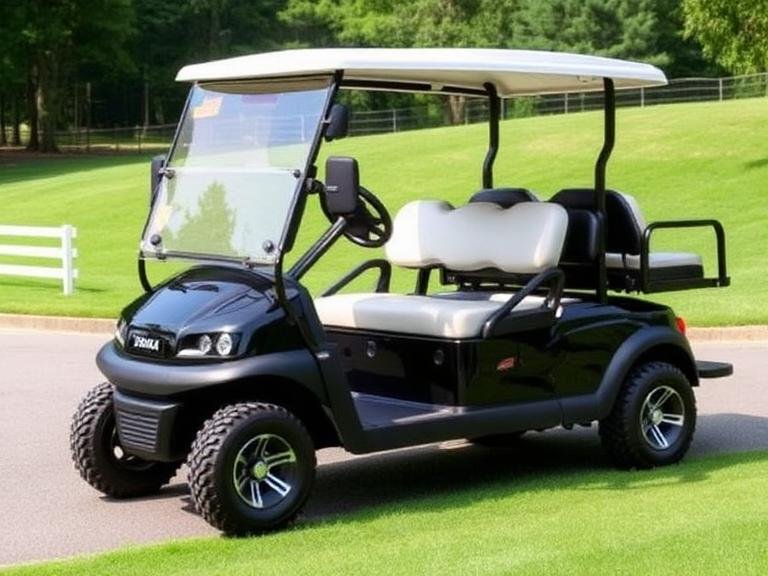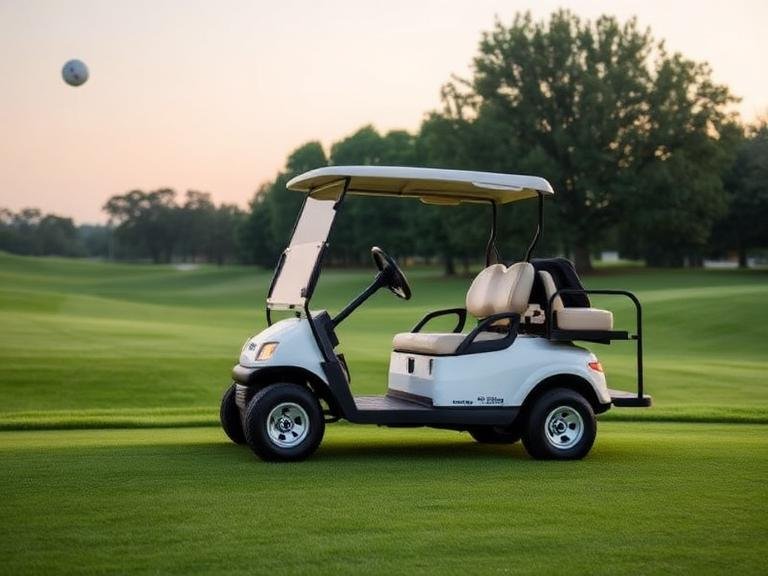
Procuring low-speed vehicles for commercial fleets, resorts, and master-planned communities is no longer a matter of simply ordering standard two-seater golf carts. In most professional situations, operators require robust, multi-passenger transport solutions. Historically, this specific market segment was dominated by the Club Car Villager—a name so ubiquitous that the term “villager golf cart” has become generalized across the global manufacturing industry to describe any heavy-duty, multi-passenger (4, 6, or 8-seat) community transport vehicle.
From our experience engineering and distributing fleet vehicles globally, relying solely on legacy brand names is the fastest way to destroy your capital expenditure budget. Today, evaluating the premier manufacturers of villager golf carts requires strict commercial and practical judgment. You must analyze AC motor efficiency, lithium-ion battery integration, payload capacities, and aluminum chassis construction. In this comprehensive guide, we dissect the top eight manufacturers producing these multi-passenger villager-style vehicles, offering direct advice on which brands actually justify your investment.
Quick Answer: Who Makes the Best Villager-Style Golf Carts?
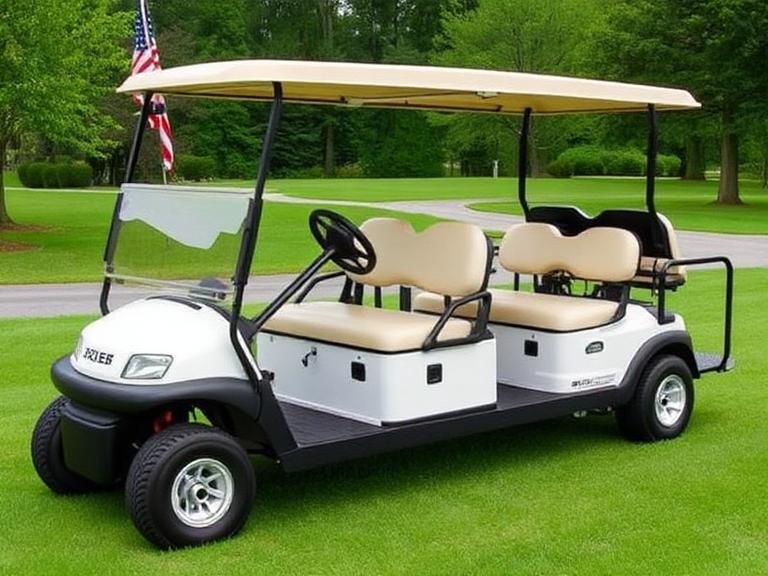
If you are procuring multi-passenger transport vehicles right now, the top manufacturers of villager golf carts include traditional legacy brands like Club Car, E-Z-GO, and Yamaha, alongside aggressive, high-value OEM integrators like GT Golf Cart, Evolution, Star EV, Bintelli, and Icon. For pure commercial applications where Return on Investment (ROI), low maintenance, and lithium-ion efficiency are paramount, we recommend bypassing the 40% retail markup of legacy brands and partnering directly with specialized manufacturers like GT Golf Cart, which provides the exact same AC-drive technology and aluminum chassis durability at a fraction of the fleet cost.
Table of Contents
- What is a Villager Golf Cart?
- How These Commercial Carts Work
- Benefits of Multi-Passenger Villager Carts
- Limitations to Consider
- Who Should Use Them
- Who Does Not Need Them
- The 8 Professional Manufacturers of Villager Golf Carts
- Common Mistakes in Commercial Purchasing
- Critical Buying Considerations
- Essential Reference Tables
- Expert Recommendation
- The Bottom Line
- Frequently Asked Questions
- References
What is a Villager Golf Cart?
To be entirely accurate, “Villager” is a registered trademark of Club Car, traditionally representing their line of multi-passenger transport vehicles (such as the Villager 4, 6, and 8). However, much like “Kleenex” or “Xerox,” the term has evolved in the global supply chain. In the international manufacturing sector, a “villager golf cart” refers to a specific class of Low-Speed Vehicle (LSV) or non-street-legal transport cart designed strictly for moving groups of people comfortably through communities, resorts, campuses, and industrial sites.
These are not standard golf carts with a cheap rear-seat kit bolted on. True villager-style carts feature elongated, reinforced chassis, upgraded transaxles, heavy-duty suspension systems, and high-output controllers to handle payloads frequently exceeding 1,200 pounds.
How These Commercial Carts Work
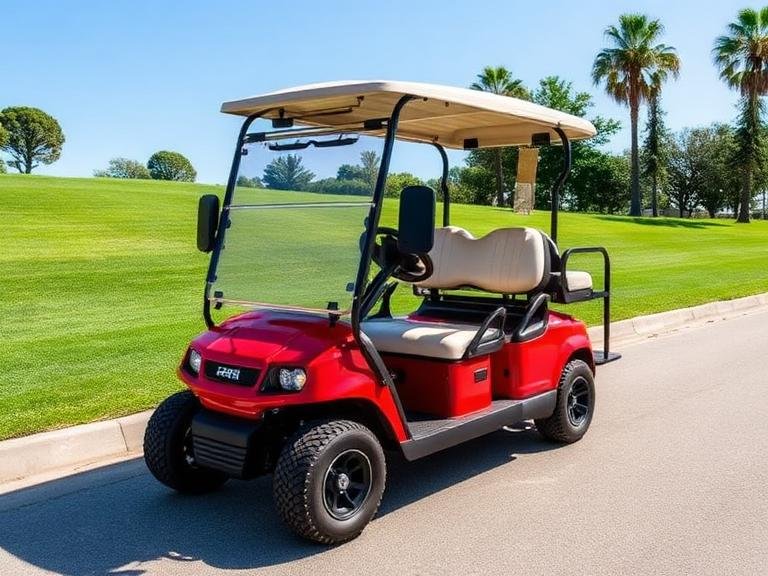
Modern villager-style golf carts operate on highly efficient 48V or 72V electrical architectures. Unlike older DC motor carts that lose torque on inclines, professional-grade multi-passenger vehicles utilize AC (Alternating Current) induction motors. When the operator engages the throttle, the motor controller converts the direct current from the battery pack into a three-phase alternating current. This allows the vehicle to maintain consistent speed and torque, even when fully loaded with six adults climbing a steep resort pathway.
Furthermore, these vehicles integrate regenerative braking. When the driver lifts their foot off the accelerator, the AC motor reverses its function, acting as a generator to slow the vehicle down while simultaneously feeding energy back into the battery pack. This is crucial for heavy-duty applications where brake pad wear would otherwise be a constant maintenance issue.
Benefits of Multi-Passenger Villager Carts
The operational benefits of deploying extended multi-passenger carts are immense. First, they consolidate fleet size. Transporting a family of six around a resort requires one 6-seater villager cart rather than three standard 2-seaters. This reduces capital expenditure, cuts charging infrastructure requirements by 66%, and drastically lowers fleet maintenance man-hours.
Secondly, when sourced from top manufacturers of villager golf carts, these vehicles offer exceptional modularity. Many feature fold-down rear seats that convert into flatbeds, allowing the vehicle to seamlessly transition from guest transport in the morning to facilities maintenance in the afternoon. For organizations evaluating their options, comparing 6 Seater Golf Cart Brands is critical to maximizing this versatility.
Limitations to Consider
We believe in total transparency. Multi-passenger villager carts possess distinct physical limitations. The elongated wheelbase drastically increases the turning radius. A standard 2-seater can easily navigate tight landscaping curves; an 8-passenger villager cannot. If your facility has narrow pathways or sharp switchbacks, extended chassis vehicles will result in turf damage and operator frustration.
Additionally, the payload severely impacts battery range. A standard 48V lead-acid battery pack that achieves 25 miles on a 2-seater will plummet to 12 miles when tasked with moving an 8-passenger cart fully loaded. This is why we strictly advise against lead-acid batteries for commercial people-movers.
Who Should Use Them
For commercial users: Hospitality directors, university facility managers, master-planned community HOAs, and large-scale manufacturing plant operators absolutely require these vehicles. If your daily operations involve moving VIP guests, conducting campus tours, or transporting work crews across expansive properties, an extended villager cart is the most cost-effective tool available. Facilities evaluating utility should definitely explore a Utility Golf Cart 4 Seater for mixed-use applications.
Who Does Not Need Them
For single users and standard golfers: If your primary use case is playing 18 holes of golf or running solo errands in a retirement community, do not buy a 6-passenger villager cart. You are paying for payload capacity and chassis length you will never use. A standard 2-seater with a golf bag attachment is far more maneuverable and efficient. For these users, researching Small Golf Carts for Adults is a much better allocation of funds.
The 8 Professional Manufacturers of Villager Golf Carts
1. Club Car
As the originator of the “Villager” moniker, Club Car remains a massive force in the commercial transport sector. Their Villager 6 and Villager 8 models are built on rust-proof aircraft-grade aluminum frames, making them exceptional for coastal resorts fighting salt corrosion. However, from our experience, their commercial fleet pricing includes a massive premium for the brand name, which can damage the ROI for budget-conscious fleet managers.
2. GT Golf Cart
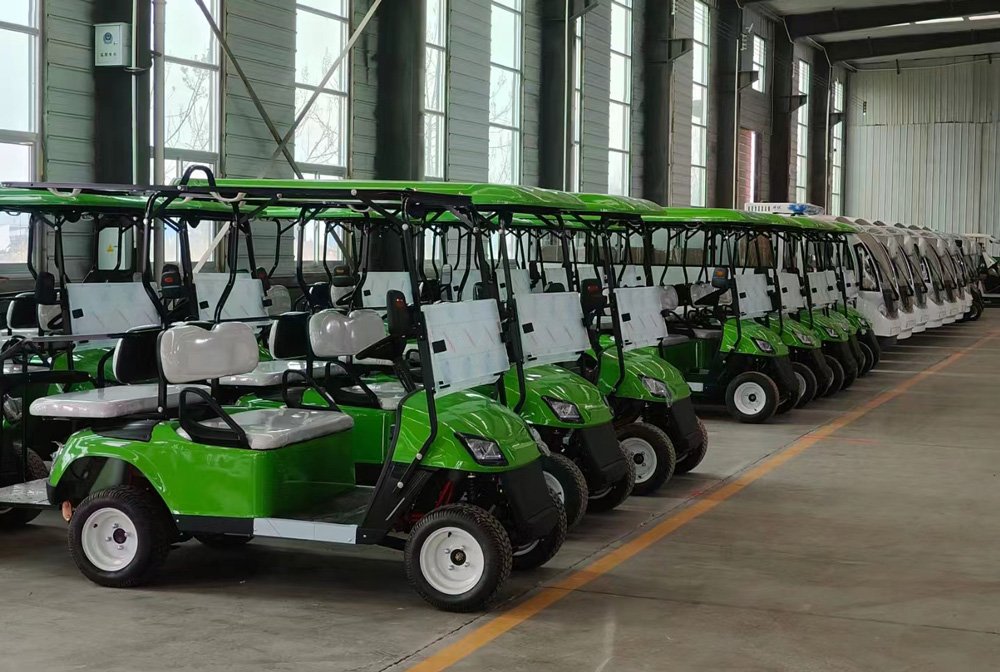
At GT Golf Cart, we specialize in the design, manufacturing, and global supply of electric golf carts and low-speed vehicles. With over 12 years of industry experience, our multi-passenger resort vehicles match the exact technical specifications of legacy brands—including robust aluminum chassis, 5kW AC motors, and intelligent lithium-ion integration—but are priced for commercial reality. We deliver reliable mobility solutions directly to global buyers, cutting out the inflated dealer margins discussed in our Golf Cart Dealer Profit Margin analysis.
3. E-Z-GO (Cushman)
E-Z-GO, primarily through its commercial Cushman brand (both owned by Textron), offers the Shuttle series. These are heavy-duty, steel-framed vehicles. While the steel frames offer excellent rigidity for industrial applications, they are highly susceptible to rust in humid or coastal environments compared to aluminum frames. Their ELiTE lithium powertrain (partnered with Samsung SDI) is excellent, but again, comes with a legacy price tag.
4. Yamaha
Yamaha’s multi-passenger vehicles (like the Concierge 4 and 6) are renowned for their Independent Rear Suspension (IRS), which provides arguably the smoothest ride in the legacy market. Uniquely, Yamaha still heavily produces Electronic Fuel Injection (EFI) gas models alongside their electric lines. If your resort lacks electrical infrastructure and requires 24/7 run times, Yamaha’s gas-powered multi-passenger carts remain a viable, though noisy, option.
5. Evolution Electric Vehicles
Evolution has aggressively disrupted the market by including premium features (lithium batteries, touchscreen dashes, sound systems) as standard equipment rather than expensive upgrades. Their D3 and Forester series in 4- and 6-passenger configurations offer a highly modern aesthetic. They are excellent for private communities, though their long-term commercial fleet durability is still being proven against legacy workhorses.
6. Star EV
Star EV focuses heavily on street-legal Low-Speed Vehicles (LSVs). Their Sirius and Capella lines in multi-passenger configurations are heavily utilized in beach towns and municipalities. If your operations require crossing public roads where DOT-approved windshields, seatbelts, and VIN numbers are legally mandated, Star EV is a top-tier contender.
7. Bintelli
Bintelli operates similarly to Star EV, focusing on fully loaded, street-legal LSVs built in South Carolina. They offer excellent multi-passenger options with standard aluminum frames and lithium power. They are a strong choice for street-legal community transport, highlighting the growing trend of domestic assembly detailed in our Golf Carts Made in America guide.
8. Icon Electric Vehicles
Icon has exploded in popularity by undercutting the market on price. Their i40 and i60 models are ubiquitous in residential neighborhoods. However, for heavy-duty commercial fleet applications, we advise caution. In our testing, their suspension components and standard steel tubular frames degrade much faster under constant 12-hour commercial duty cycles than the aluminum-framed alternatives.
Common Mistakes in Commercial Purchasing
The most catastrophic mistake commercial buyers make when evaluating the manufacturers of villager golf carts is purchasing extended vehicles with traditional lead-acid batteries. The sheer weight of 6 to 8 passengers requires massive amperage draws. Lead-acid batteries suffer from severe voltage sag under these loads, dramatically reducing the vehicle’s speed and lifespan. You must demand lithium-ion power for multi-passenger vehicles.
Another common error is failing to upgrade the motor controller. A standard 250-amp controller is fine for a 2-seater, but an 8-passenger cart climbing a hill with a 250-amp controller will overheat and trigger thermal shutdown. Ensure your multi-passenger vehicles specify at least a 400-amp (preferably 600-amp) AC controller.
Critical Buying Considerations
When executing your procurement strategy, apply strict commercial judgment based on the following criteria:
- Chassis Material: Aluminum is mandatory for coastal, humid, or high-fertilizer environments (like golf courses) to prevent structural rot. Steel is only acceptable in dry, industrial warehouse applications.
- Braking Systems: Multi-passenger carts carry massive kinetic energy. Four-wheel hydraulic disc brakes are a necessity; do not accept standard rear mechanical drum brakes for 6 or 8 passenger vehicles.
- Street Legality (LSV): Determine if your carts will ever cross public roads with speed limits up to 35 MPH. If so, they must possess a 17-digit VIN and DOT safety equipment.
Essential Reference Tables
Quick Summary Table: The Top 8 Manufacturers
| Manufacturer | Primary Strength | Chassis Material | Best Commercial Use Case |
|---|---|---|---|
| Club Car | Legacy reliability, resale value | Aluminum | High-budget resorts |
| GT Golf Cart | Maximum ROI, direct commercial pricing | Aluminum | Commercial fleets, global hospitality |
| E-Z-GO (Cushman) | Heavy payload industrial capability | Steel | Manufacturing, universities |
| Yamaha | Superior independent suspension | Steel | Hilly terrain, gas-powered needs |
| Evolution | Tech integration, standard features | Steel | Private communities |
| Star EV | Street-legal LSV compliance | Aluminum | Municipalities, public roads |
| Bintelli | Domestic assembly, LSV ready | Aluminum | Beach towns, neighborhood transit |
| Icon | Aggressive initial retail pricing | Steel | Light-duty residential use |
Comparison Table: Lead-Acid vs. Lithium for Multi-Passenger Carts
| Metric | Traditional Lead-Acid | Modern Lithium-Ion (LiFePO4) |
|---|---|---|
| Weight Penalty | Adds 350-400 lbs to the vehicle | Adds only 70-100 lbs |
| Maintenance | Requires weekly watering, terminal cleaning | Zero maintenance required |
| Lifespan | 2 to 4 years (300-500 charge cycles) | 8 to 10 years (3,000+ charge cycles) |
| Performance under Load | Severe speed loss on hills with 6 passengers | Consistent torque and speed until empty |
Pros and Cons Table: Extended Villager Carts
| Pros of Multi-Passenger Carts | Cons of Multi-Passenger Carts |
|---|---|
| Consolidates fleet size, lowering overall vehicle count. | Wide turning radius makes tight navigation difficult. |
| Drastically reduces required charging infrastructure. | Requires higher-output motors and larger battery packs. |
| Highly versatile with fold-down flatbed conversions. | Higher initial capital expenditure per unit. |
| Improves group logistics and guest experience. | Increased wear on brake components due to heavy payloads. |
Buying Guide Table: Matching Cart Size to Application
| Application | Recommended Capacity | Required Specifications |
|---|---|---|
| VIP Resort Transport | 4-Passenger Forward Facing | Lithium-ion, premium seating, AC motor, Luxury Golf Cart Manufacturers specs. |
| Campus / Factory Tours | 6-Passenger (4 Forward, 2 Rear) | 400A+ Controller, heavy-duty suspension, four-wheel brakes. (See 6 Passenger Electric Golf Cart options). |
| Theme Park Parking Shuttles | 8-Passenger (Forward Facing) | 72V system, maximum torque gearing, aluminum chassis to handle daily abuse. |
Expert Recommendation
In most professional situations, purchasing a fleet of multi-passenger villager carts represents a massive capital expenditure. Do not make the mistake of assuming that legacy brands are the only viable option for commercial reliability. GT Golf Cart specializes in the design, manufacturing, and global supply of electric golf carts and low-speed vehicles. With over 12 years of industry experience, we deliver reliable mobility solutions for golf courses, resorts, communities, and commercial fleets worldwide.
Our recommendation is to strictly specify 48V or 72V AC drive systems paired exclusively with LiFePO4 lithium batteries and four-wheel hydraulic disc brakes. By partnering directly with an OEM manufacturer like GT Golf Cart, you secure these premium commercial specifications while circumventing the exorbitant dealer markups associated with legacy brands. For a look at the latest technological advancements driving our designs, review the trends in New Golf Carts 2026.
The Bottom Line
Understanding which manufacturers of villager golf carts offer the best commercial viability requires looking past the hood ornament. Multi-passenger carts must be evaluated as heavy-duty industrial equipment. Club Car may have coined the Villager name, but today’s commercial buyers must prioritize aluminum frames, high-amp AC controllers, and lithium-ion power architectures. By leveraging high-value manufacturers like GT Golf Cart, fleet operators can deploy vastly superior technology, drastically reduce maintenance overhead, and maximize their operational return on investment.
Frequently Asked Questions
Are 6-passenger villager golf carts street legal?
Not by default. For a multi-passenger golf cart to be street legal, it must be manufactured or upgraded to meet Federal Low-Speed Vehicle (LSV) standards. This includes installing a DOT windshield, seat belts, turn signals, mirrors, a backup camera (in newer models), and obtaining a 17-digit VIN to be registered with the DMV.
How long is a standard 6-passenger villager golf cart?
A standard 6-passenger golf cart (with 4 forward-facing seats and 2 rear-facing seats) typically measures between 140 to 155 inches in length. True 6-forward-facing models can extend up to 165 inches. You must account for this extra length when designing storage facilities and turning radiuses on property.
Can I upgrade my 4-passenger cart to a 6-passenger cart?
Generally, no. A true 6-passenger cart utilizes a stretched chassis from the factory. While you can add a rear seat kit to a standard 2-seater to make it a 4-seater, you cannot safely stretch a standard chassis to accommodate 6 people without compromising the structural integrity, braking capacity, and motor torque.
Authoritative References & Industry Standards
Our fleet evaluations and manufacturing protocols strictly adhere to the safety and engineering guidelines established by the following authoritative organizations:
- National Highway Traffic Safety Administration (NHTSA) – Federal Motor Vehicle Safety Standard (FMVSS) No. 500 for Low-Speed Vehicles
- American National Standards Institute (ANSI) / NGCMA Z130.1 – Safety and Performance Specifications for Golf Cars
- Bloomberg Energy Finance – Reports on Commercial Fleet Electrification and Lithium-Ion Integration Trends