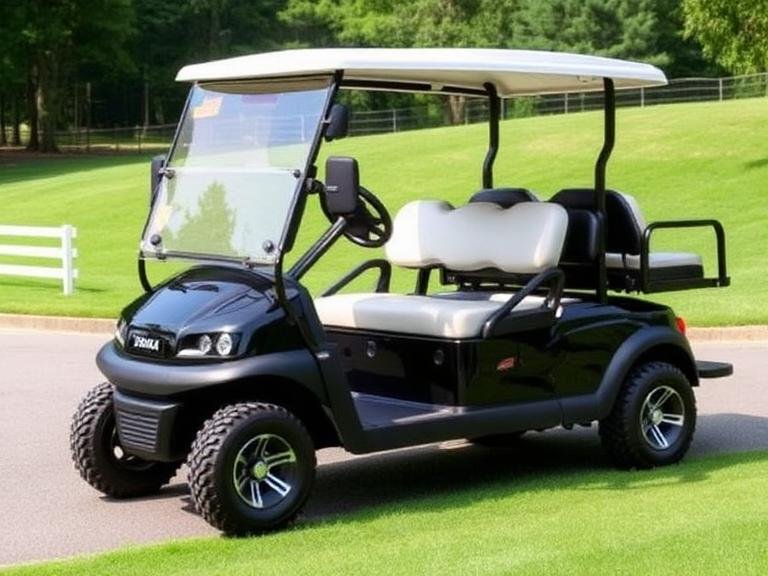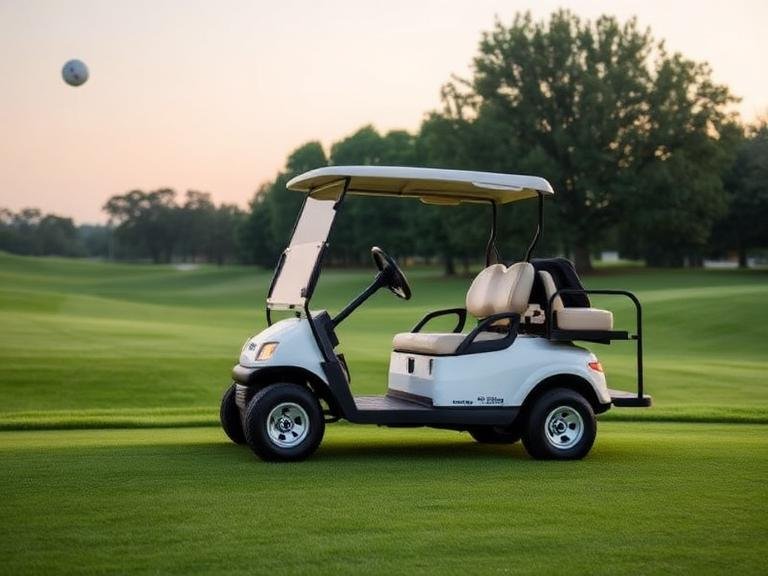
Walking into a golf car showroom expecting to drive away in a fully customized, street-ready machine for the price of a used lawnmower is an expensive illusion. The market for personal transportation vehicles has evolved far beyond basic fairway buggies that putter along at twelve miles per hour. Today, neighborhood electric vehicles (NEVs) and low-speed vehicles (LSVs) feature high-output AC drive systems, automotive-grade lithium iron phosphate (LiFePO4) battery packs, independent double A-arm suspensions, touchscreen telematics, and DOT-certified road hardware. Navigating this landscape requires understanding what drives the average cost of a custom golf cart and where your capital actually delivers tangible mechanical performance.
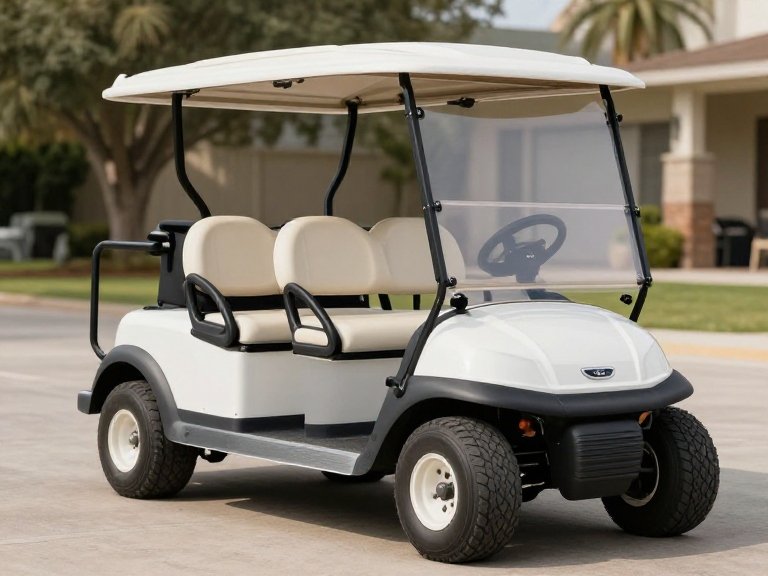
A golf car build is an engineered system governed by voltage architecture, battery capacity, controller amperage, chassis metallurgy, and passenger capacity. Opting for a low upfront price by choosing a converted second-hand fleet cart running tired lead-acid batteries frequently turns into a financial trap, requiring thousands in premature battery swaps and structural repairs within twelve months. In our testing across community roads and rugged trail routes, understanding realistic price tiers, powertrain options, and sourcing models prevents buyer remorse. We analyze the components that define the average cost of a custom golf cart, outline real-world ownership figures, and provide practical recommendations to help you configure a high-value, long-lasting ride.
Quick Answer: What Is the Average Cost of a Custom Golf Cart in 2026?
Across the North American and international markets, the realistic average cost of a custom golf cart sits between $12,500 and $18,500 for a turn-key, four-passenger, lithium-powered build. Pricing breaks down across four distinct tiers: Entry Customizations ($8,000 – $11,500) covering basic aesthetic packages (custom paint, basic wheels, seat upgrades) built on entry chassis; Mid-Tier Performance Builds ($12,000 – $16,500) delivering high-output AC electric motors, dedicated 48V or 60V lithium packs, four-wheel hydraulic disc brakes, and street-legal lighting; Luxury & Multi-Passenger Platforms ($17,000 – $24,000) featuring lifted 6-passenger configurations, premium sound bars, independent suspension, and high-amp controllers; and Exotic Bespoke Builds ($25,000 – $35,000+) engineered with extreme 72V powertrains, custom automotive paint, and luxury interiors. In most professional situations, spending between $11,500 and $14,500 on a factory-integrated custom lithium model delivers the lowest total cost of ownership per mile.
Table of Contents
- What Defines a Custom Golf Cart in Modern Micromobility?
- Quick Summary: 2026 Custom Golf Cart Cost Breakdown by Tier
- The 5 Core Engineering Levers That Drive Custom Golf Cart Pricing
- Platform Comparison: Factory-Direct Custom vs. Dealer-Built vs. DIY Conversion
- Pros and Cons of Factory-Engineered Custom Builds vs. Aftermarket Conversions
- Who Needs a High-Spec Custom Cart vs. Who Can Settle for Standard Builds
- Featured Custom Flagship: GT Golf Cart CST-04 Lithium Electric
- Costly Mistakes Buyers Make When Purchasing Custom Golf Carts
- Essential Sourcing and Procurement Considerations for 2026
- Expert Recommendation and Capital Sourcing Verdict
- Frequently Asked Questions (FAQ)
- Authoritative References
What Defines a Custom Golf Cart in Modern Micromobility?
A custom golf cart is no longer defined by simply gluing plastic hubcaps and adding a vinyl racing stripe to an off-lease course buggy. Today, a true custom build represents a purpose-engineered low-speed vehicle designed from the ground up for neighborhood transit, resort logistics, master-planned community commuting, or heavy estate maintenance. It bridges the gap between traditional recreational utility and street-legal automotive functionality.
How it works in practice comes down to five mechanical systems: the structural chassis, the battery chemistry, the motor-controller powertrain, the suspension architecture, and the passenger safety envelope. Unlike stock fleet carts engineered to carry two golfers with golf bags at low speeds over flat turf, a purpose-built custom platform must safely haul up to eight passengers, conquer steep neighborhood grades, merge smoothly with urban traffic, and brake predictably from 25 to 30 mph.
In our testing across residential communities, buyers who treat customization as purely cosmetic end up with severe performance bottlenecks. Installing heavy off-road tires and a rear flip-seat kit on a stock 2.5-horsepower DC motor causes the controller to overheat, slows hill climbing to a crawl, and burns through standard lead-acid batteries. True customization requires upgrading the electrical backbone: matching motor wattage, lithium battery discharge rates, and suspension geometry to the vehicle’s real-world gross vehicle weight rating (GVWR).
Quick Summary: 2026 Custom Golf Cart Cost Breakdown by Tier
The table below provides a quick reference to current market pricing tiers, detailing standard hardware specs, powertrain options, and expected operational performance:
| Build Category Tier | Realistic Price Range | Standard Seating & Chassis | Powertrain & Battery Tech | Typical Operational Focus |
|---|---|---|---|---|
| Entry Custom Tier | $8,000 – $11,500 | 2 to 4 Passenger / Standard Frame | 3kW AC or DC / Lead-Acid or Base Li | Basic neighborhood errands, flat communities |
| Mid-Tier Performance | $12,000 – $16,500 | 4 Passenger / Lifted or Street Stance | 4kW–5kW AC Motor / 48V–60V Lithium | Daily family transit, hilly terrain, school runs |
| Luxury & Multi-Passenger | $17,000 – $24,000 | 6 to 8 Passenger / Extended Frame | 5kW–7kW AC Motor / High-Cap Lithium | Large families, resort shuttles, estate transport |
| Commercial & Industrial | $14,000 – $22,000 | Utility Bed / Heavy Payload Frame | 5kW+ AC / High-Amp Controller | Campuses, security patrols, facility operations |
| Exotic Bespoke Build | $25,000 – $35,000+ | 4 to 6 Passenger / Custom Billet | 72V System / 10kW Peak / Air Ride | Collector fleets, luxury yacht tenders, car shows |
The 5 Core Engineering Levers That Drive Custom Golf Cart Pricing
1. Battery Chemistry: Lithium Iron Phosphate vs. Outdated Lead-Acid
The single largest determinant of the average cost of a custom golf cart is the energy storage platform. In 2026, buying a new custom golf cart with traditional flooded lead-acid or AGM batteries is an obsolete purchasing strategy. While lead-acid saves between $1,500 and $3,500 upfront, it imposes a heavy long-term cost: you carry roughly 350 pounds of dead weight, must perform weekly water-filling maintenance, endure sluggish acceleration as voltage drops, and face a mandatory $1,500 to $2,200 battery pack replacement every three to four years.
Commercial-grade custom carts deploy integrated Lithium Iron Phosphate (LiFePO4) battery packs (typically 48V, 60V, or 72V with capacities ranging from 105Ah to 150Ah+). Lithium systems maintain steady voltage output through 95% of discharge, charge in under five hours from standard 110V outlets, shed over 250 pounds of chassis weight, and provide 3,500 to 5,000 life cycles—delivering a dependable ten-year service life. For modern options, review our dedicated Electric Golf Cart lineup.
2. Passenger Capacity and Chassis Length
Seat count directly scales structural manufacturing costs. A standard 2 Passenger Golf Cart requires a compact 90-inch to 95-inch wheelbase. Moving up to an adaptable 4 Passenger Golf Cart adds either a rear flip-seat cargo assembly or extended chassis rails. When building an extended 6 Passenger Golf Cart, an 8 Passenger Golf Cart, or a heavy-duty 10 Passenger Golf Cart, the engineering demands increase significantly.
Long-wheelbase frames require reinforced steel or high-tensile extruded aluminum ladder chassis to prevent body sag under loads over 1,500 pounds. Larger passenger platforms also demand dual braking circuits, heavier coil-over springs, and wider wheelbases, which adds $3,500 to $8,000 over a standard two-seater. Compare multi-passenger configurations in our industry breakdown of 6 Seater Golf Cart Brands.
3. Powertrain Output: AC Induction Motors and High-Amp Controllers
The days of low-power 36-volt direct current (DC) motors are over for custom performance carts. Modern builds deploy brushless AC electric motors rated between 4,000W and 7,500W, managed by programmable AC controllers (such as Curtis or Toyota-Sevcon systems) pushing 350 to 500 amps. AC drivetrains deliver high low-end torque, hill climb speeds over 20 mph, and intelligent regenerative braking that returns energy to the battery when descending slopes while saving brake pad wear. Upgrading from a basic 3kW setup to a high-output 5kW motor package adds $1,200 to $2,500 to the build, but is essential for safety when carrying four or six passengers.
4. Street-Legal Road Package Equipment (FMVSS 500 Compliance)
There is a major legal and mechanical difference between a neighborhood golf cart and an official Low-Speed Vehicle (LSV) certified under Federal Motor Vehicle Safety Standard 500 (FMVSS 500). A standard golf cart is capped at 19.9 mph and legally restricted to golf courses or designated private paths. An LSV can operate on public roads with posted speed limits up to 35 mph.
Achieving street-legal certification adds between $1,500 and $3,000 to the bill of materials. This equipment includes DOT-certified automotive safety glass windshields with wipers, 3-point retractable seat belts, automotive headlights with high/low beams, daytime running lights, turn signals, dual side mirrors, a rear-view mirror, a horn, an illuminated license plate bracket, a reverse camera, four-wheel hydraulic disc brakes, and a seventeen-digit VIN. Evaluate street-ready requirements in our guide on Road Legal Golf Carts.
5. Suspension, Stance, Wheels, and Ergonomics
Chassis stance and ride comfort represent the most visible custom upgrades. Basic leaf-spring solid axles deliver a stiff, bouncy ride over road bumps. Modern custom builds deploy independent front double A-arm suspensions with adjustable coil-over hydraulic dampers, and often feature a 4-inch to 6-inch factory lift. Paired with 14-inch aluminum alloy wheels mounted inside 23-inch all-terrain tires, high-grade suspension delivers up to 13 inches of ground clearance. Add custom high-density double-stitched vinyl diamond upholstery, premium sound bars, and color-matched canopies, and customization accessories quickly contribute $2,500 to $5,000 to the final build. Browse specialized vehicles in our Luxury Golf Cart division.
Platform Comparison: Factory-Direct Custom vs. Dealer-Built vs. DIY Conversion
When purchasing a custom cart, buyers choose between three primary supply channels. Compare how these sourcing routes stack up across price, reliability, and warranty protection:
| Procurement Channel | Typical 4-Passenger Cost | Powertrain Integration | Factory Warranty Scope | Safety & Structural Cohesion |
|---|---|---|---|---|
| Factory-Direct Custom (e.g., GT Golf Cart) | $11,500 – $14,500 | Fully integrated chassis, 60V lithium, 5kW AC | 3 to 5 years (Full bumper-to-bumper) | High (Engineered as a cohesive automotive vehicle) |
| Local Dealership Custom Build | $16,000 – $22,000 | Aftermarket bolt-on accessories on base cart | Split (1-yr dealer / OEM base only) | Moderate (Dependent on local technician skill) |
| DIY Garage / Kit Conversion | $8,500 – $12,500 | Used chassis + aftermarket bolt-on kits | Zero warranty on vehicle as a whole | Low (Risk of improper wiring and brake balance) |
Pros and Cons of Factory-Engineered Custom Builds vs. Aftermarket Conversions
Weigh the structural and commercial trade-offs of purchasing a factory-engineered custom cart against modifying a used golf cart:
| Customization Strategy | Operational Advantages (Pros) | Practical Limitations (Cons) |
|---|---|---|
| Factory-Integrated Custom (Purpose-built chassis & electronics) | Powertrain, lithium battery, and brakes engineered as a balanced system. Official VIN assignment simplifies street-legal registration and insurance. Significantly lower total price than paying dealer hourly shop rates. | Higher upfront purchase price than buying an old used fleet cart. Order lead times of 3 to 6 weeks for custom factory paint and options. |
| Aftermarket Converted Used Cart (Modifying older Club Car / EZGO / Yamaha) | Lower entry cost if starting with an affordable used frame. Freedom to modify components piece-by-piece over several months. | Dealer labor rates ($120–$180/hr) quickly drive project costs above $16,000. Aging chassis components (steering racks, bushings) wear out quickly. Wiring splices for stereos and lights create frequent electrical drains. |
Who Needs a High-Spec Custom Cart vs. Who Can Settle for Standard Builds
In our experience evaluating buyer requirements, matching vehicle specifications to your daily driving environment protects your budget.
Who Needs an Advanced Custom Electric Golf Cart:
- Master-Planned Community and Coastal Commuters: Residents in golf-car-friendly towns (such as Peachtree City, The Villages, or coastal Florida/California towns) rely on their cart as an everyday primary car replacement. These routes require 25 mph speeds, hydraulic brakes, and DOT street-legal packages.
- Large Families and Neighborhood Carpoolers: Transporting four to six passengers comfortably requires extended frames, high-capacity lithium batteries, and wide seating. Explore dedicated options in our Custom Golf Cart collection.
- Commercial Facilities, Resorts, and Campuses: Operations needing clean guest transport or utility maintenance demand dependable platforms. Review commercial builds in our Commercial Golf Cart category.
Who Can Settle for a Basic Standard Cart:
- Pure Course Golfers: If the vehicle never leaves a 9-hole or 18-hole golf course and lives in a private country club barn, spending extra on lifted tires, 5kW motors, and soundbars is unnecessary.
- Occasional Campers and Flat RV Parks: If you drive 500 yards to a campground bathhouse twice a month, an entry-level cart will meet your needs without locking up capital.
Featured Commercial Equipment: GT Golf Cart CST-04 Custom Electric Flagship
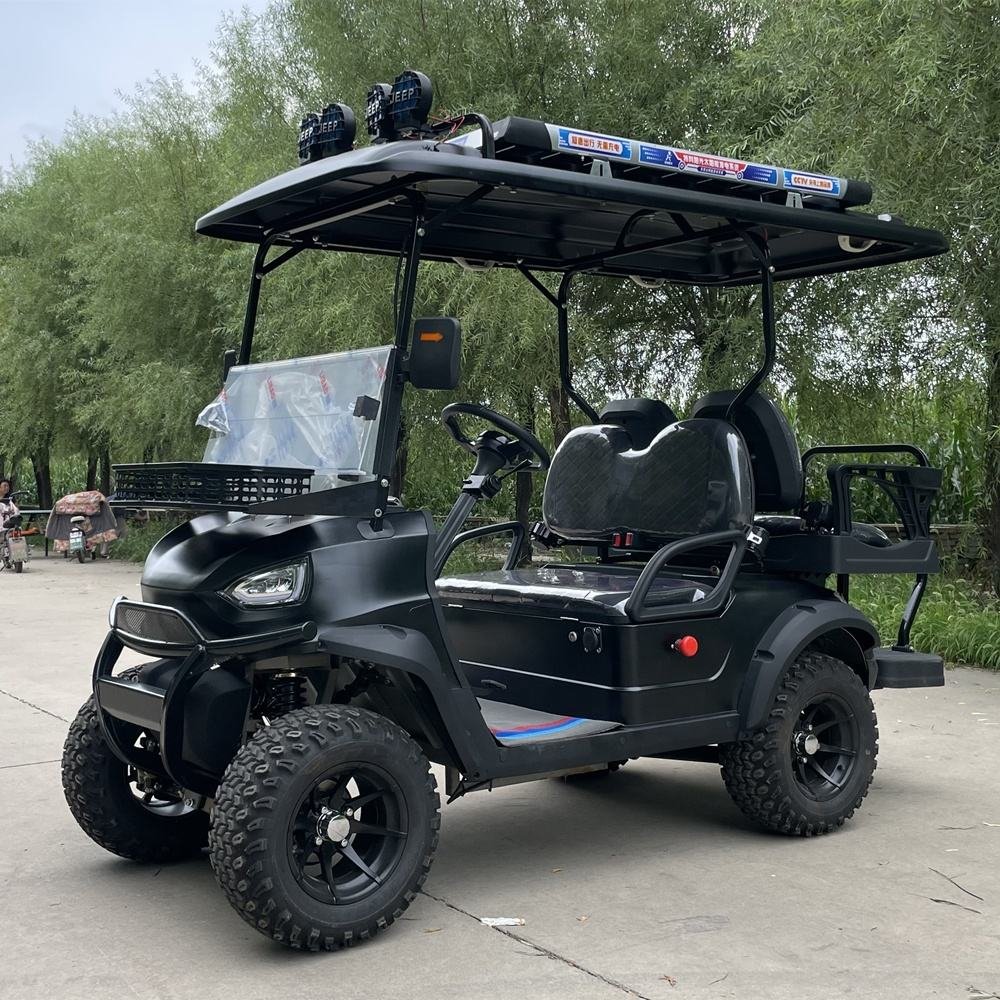
When buyers look for the optimal balance of power, range, and build quality in a modern custom cart, the GT Golf Cart CST-04 sets the benchmark. Engineered on a reinforced chassis with an integrated 60V 150Ah lithium iron phosphate battery and an AC 5,000W electric motor, the CST-04 combines 29 mph top speeds with an impressive 62-mile single-charge driving range.
Powertrain: High-Efficiency AC Electric Motor (Rated 5,000W Output)
Battery System: Integrated Lithium 60V 150Ah (Heavy-Duty LiFePO4)
Speed & Range: Top Speed 29 MPH | Max Driving Range 62 Miles
Drive Architecture: High-Torque Rear Wheel Drive (RWD)
Chassis Dimensions: Length 115″ | Width 51″ | Height 80″ | Wheelbase 97″
Ground Clearance: 13″ (Lifted Stance on 23×10-14 Off-Road Tires)
Charging System: Standard 110V/120V Port (Full Charge in 7–9 Hours)
Vehicle Mass: Dry Weight 1,117 lbs (Heavy Structural Frame)
View complete engineering data on the official CST-04 Custom Golf Cart product page. Discover international manufacturing options in our guide to Golf Cart Manufacturers in China, compare domestic options in Golf Carts Made in America, or explore building your own project via Build Your Own Golf Cart Kit.
Costly Mistakes Buyers Make When Purchasing Custom Golf Carts
In our technical audits of custom golf car builds, buyers regularly make four costly purchasing errors:
- Buying Cheap Aftermarket Lift Kits on Narrow Wheelbases: Sourcing an inexpensive 6-inch spindle lift kit and bolting it onto a narrow standard chassis raises the center of gravity without widening the wheel track. This causes dangerous body roll and rollover risks when cornering at speeds over 18 mph. High-grade custom builds deploy extended A-arms, wider front track widths, and rear sway bars to maintain stable handling.
- Overpaying for Used Fleets with Aftermarket Bolt-On Accessories: A common dealer tactic is taking a 7-year-old off-lease fleet cart (worth $3,000), adding a $500 body wrap, a cheap rear seat, and fresh hubcaps, and pricing it at $11,000. Underneath the glossy paint sits a worn DC motor, aging steering joints, and weak lead-acid batteries. You end up paying near-new prices for worn mechanicals.
- Ignoring Voltage Drop on High-Current Accessories: Adding high-output audio systems, LED underglow, front light bars, and seat warmers directly to a single 12V battery tap in a 48V series pack causes cell imbalance. The tapped battery degrades rapidly, ruining the entire battery pack. Custom electrical systems mandate heavy-duty 48V-to-12V or 60V-to-12V DC-DC step-down converters (30A to 40A minimum) to pull accessory power evenly across all cells.
- Failing to Confirm Local Street-Legal Municipal Ordinances: Every municipality enforces specific golf cart ordinances. Some towns require full FMVSS 500 LSV certification (including VIN, registration, and license plates), while others permit basic neighborhood carts with a municipal sticker. Buying a cart without verifying local road rules can leave you unable to drive on neighborhood streets.
Essential Sourcing and Procurement Considerations for 2026
Before issuing a deposit or signing a purchase agreement for a custom cart, verify these four essential engineering benchmarks:
- Battery Management System (BMS) Quality and Telemetry: Confirm that the lithium pack utilizes an advanced BMS with real-time low-temperature cutoffs, cell balancing, over-current protection, and Bluetooth or digital dashboard monitoring. A quality BMS protects your battery investment from accidental over-discharge.
- Frame Corrosion Treatment: Neighborhood carts frequently operate in coastal, humid, or golf-course environments. Insist on hot-dip galvanized steel frames or marine-grade extruded aluminum chassis. Cheap painted mild steel frames will rust along battery compartment welds within three years.
- Four-Wheel Hydraulic Disc Brakes: If your cart runs an AC motor capable of 25+ mph, traditional rear-only cable drum brakes are unsafe. Demanding four-wheel hydraulic disc brakes ensures short, straight stopping distances in wet or emergency conditions.
- Manufacturer Parts Network: Ensure the builder uses standardized, serviceable components (Curtis controllers, standard metric tie rods, accessible brake pads) so any local low-speed vehicle technician can service the vehicle.
Expert Recommendation and Capital Sourcing Verdict
In most professional situations, we recommend avoiding the temptation of building a custom cart piecemeal from an aging used golf cart. By the time you buy an older donor cart, install an aftermarket lithium conversion ($2,500–$4,000), install an AC motor kit ($1,800), add a lift kit and tires ($1,500), and pay professional shop labor rates, your investment easily exceeds $15,000 for a machine that still carries an old frame and worn mechanicals.
For most buyers in 2026, the optimal commercial value sits in purchasing a factory-integrated custom lithium electric cart in the $11,500 to $15,500 range. Platforms like the GT Golf Cart CST-04 provide a cohesive engineering package: high-torque 5,000W AC motor power, a long-range 60V 150Ah lithium battery, four-wheel hydraulic disc braking, independent suspension, and a factory warranty. You secure automotive-grade safety, ten-year battery life, and neighborhood-ready performance, ensuring your custom cart delivers reliable transportation for years to come.
Frequently Asked Questions (FAQ)
How much does an average custom golf cart cost in 2026?
In 2026, the average cost of a turn-key custom golf cart equipped with a lithium battery and modern AC powertrain ranges between $12,500 and $18,500. Basic entry custom packages start around $8,000 to $11,500, mid-tier 4-passenger street builds cost between $12,000 and $16,500, and fully loaded 6-to-8 passenger luxury vehicles reach $17,000 to $24,000+.
Is a lithium battery upgrade worth the extra cost in a custom golf cart?
Yes, upgrading to a Lithium Iron Phosphate (LiFePO4) battery is worth the upfront investment. While lithium adds $1,500 to $3,500 upfront compared to lead-acid, it lasts 3,500 to 5,000 charge cycles (8–10 years), charges in half the time, requires zero water maintenance, sheds over 250 pounds of chassis weight, and maintains consistent power without voltage sag throughout the drive.
What is the difference between a standard custom golf cart and a street-legal LSV?
A standard custom golf cart is designed for private property or golf courses, with speeds limited to 19.9 mph. A street-legal Low-Speed Vehicle (LSV) is certified under Federal Motor Vehicle Safety Standard 500 (FMVSS 500), reaches speeds up to 25 mph, carries an official 17-digit VIN, and includes safety features like automotive glass windshields, seat belts, and turn signals, allowing it to drive legally on public roads with speed limits up to 35 mph.
How fast does a custom electric golf cart go?
While standard factory golf carts are limited to 12 to 14 mph, modern custom electric carts equipped with 5,000W to 7,500W AC motors and high-amperage controllers easily achieve speeds between 25 and 30 mph on level pavement, maintaining stable speeds even when carrying full passenger loads up neighborhood inclines.
How long does a custom electric golf cart battery last on a single charge?
Driving range depends on battery pack capacity, terrain, and passenger weight. A standard 48V 105Ah lithium battery delivers 35 to 45 miles per charge, while a heavy-duty 60V 150Ah lithium pack (like that on the GT Golf Cart CST-04) delivers up to 60 to 65 miles of real-world driving on a single charge.
Authoritative References
- National Highway Traffic Safety Administration (NHTSA): Federal Motor Vehicle Safety Standard 500 (FMVSS 500 – Low-Speed Vehicles)
- SAE International: Light Utility Vehicles and Personal Transportation Vehicle Safety Standards (SAE J2258)
- American National Standards Institute (ANSI): Standard Z130.1 for Golf Cars – Safety and Performance Specifications