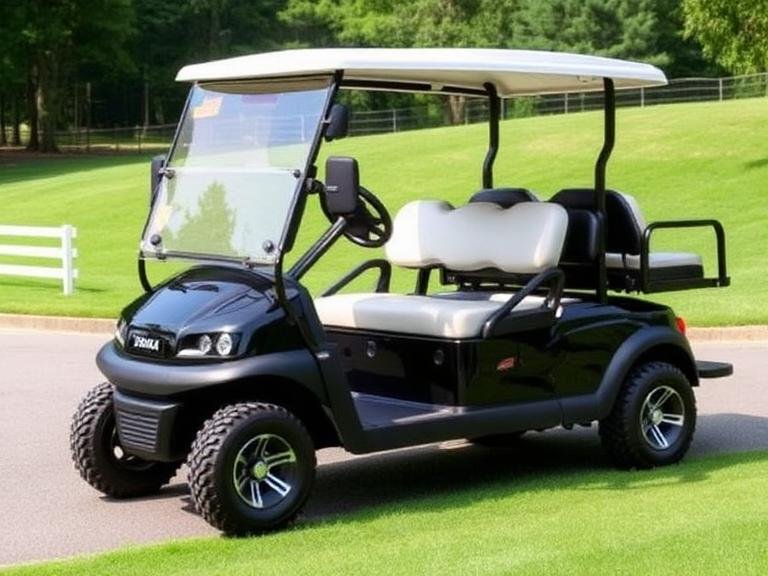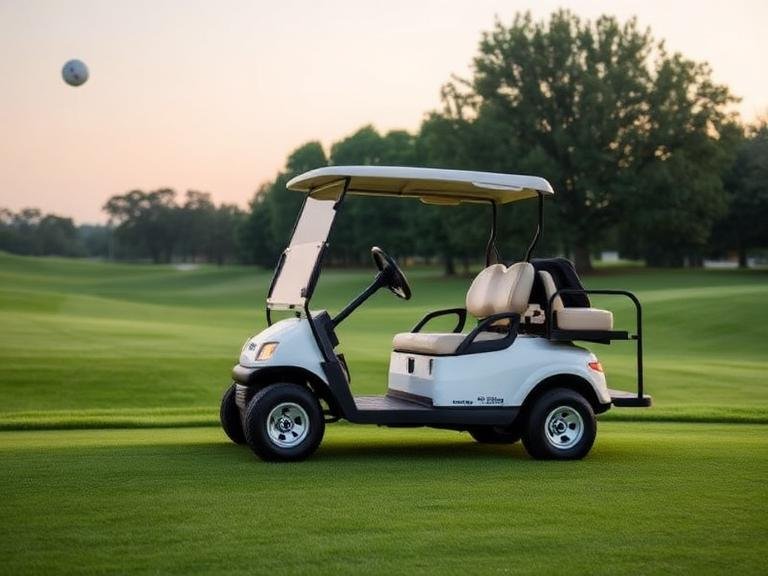
Navigating an 18-hole championship course requires more than just a keen eye and a steady swing; it requires exact data. In the modern era of golf and fleet management, relying on physical yardage markers or inaccurate smartphone applications is a profound handicap. At GT Golf Cart, we specialize in the design, manufacturing, and global supply of electric golf carts and low-speed vehicles. With over 12 years of industry experience, we have evaluated, installed, and tested hundreds of aftermarket and integrated accessories. We know exactly what separates a premium navigational tool from a poorly designed gimmick.
Recently, the rapid evolution of user interfaces has fundamentally changed how players interact with course data. Specifically, the latest trends in precision tapping on capacitive displays dictate that a high-end GPS unit must register exact, millimeter-accurate finger placements to measure layups and hazards instantly. If the touchscreen cannot handle these trends in precision tapping, the device is functionally obsolete on a moving cart. In this uncompromising guide, we will break down the absolute best golf cart GPS systems available, examine how hardware is catching up to the trends in precision tapping, and provide you with actionable commercial judgment on what to install in your personal vehicle or commercial fleet.
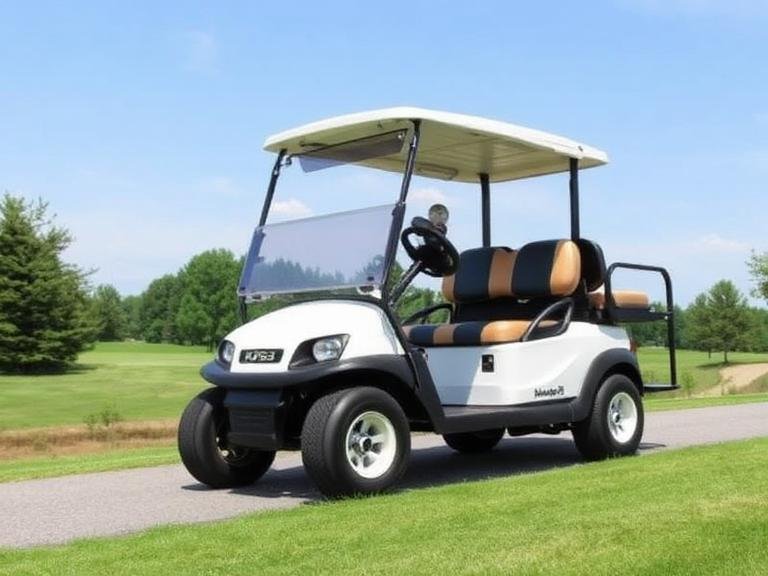
Quick Answer: The Best Golf Cart GPS Systems
In most professional situations, the best golf cart GPS depends on whether you are outfitting a personal cart or a commercial fleet. For individual owners, we recommend the Garmin Approach G80 or the SkyCaddie SX550, as both feature massive, glare-resistant screens that flawlessly support modern trends in precision tapping for hazard mapping. For commercial fleet managers seeking centralized tracking, geo-fencing, and pace-of-play monitoring, the Visage Fleet Management System remains the undisputed industry standard. Investing in a dedicated unit rather than relying on a smartphone guarantees superior battery life, all-weather durability, and uncompromised satellite accuracy.
Table of Contents
- What is a Golf Cart GPS System?
- How It Works: Satellites and Interface Technology
- Benefits of a Dedicated System
- Limitations and Drawbacks
- Who Should Use It & Who Does Not Need It
- The 5 Best Golf Cart GPS Systems
- Comparison Table: Leading GPS Units
- Pros and Cons Table
- Common Mistakes in GPS Selection
- Crucial Buying Considerations
- Expert Recommendation from GT Golf Cart
- Frequently Asked Questions (FAQ)
What is a Golf Cart GPS System?
A golf cart GPS system is a dedicated, ruggedized navigation computer designed to be mounted directly to the dashboard, steering column, or roof strut of a golf cart. Unlike generic automotive GPS units, these devices are pre-loaded with tens of thousands of highly detailed golf course maps. They provide the driver with real-time yardages to the front, middle, and back of the green, as well as exact distances to water hazards, bunkers, and doglegs.
With the current trends in precision tapping dictating software design, these systems now feature highly responsive touchscreens. Players can physically tap anywhere on the screen’s hole layout to get a precise distance to that exact pixel. This interface evolution has rendered clunky button-operated systems obsolete. Whether you are driving luxury golf carts or standard fleet models, integrating a dedicated GPS screen elevates the entire driving and playing experience.
How It Works: Satellites and Interface Technology
Golf cart GPS systems operate by communicating with multiple global satellite constellations, including GPS (US), GLONASS, and Galileo. By triangulating signals from at least four satellites, the device calculates your exact position on the earth’s surface to within an accuracy of roughly 1 to 3 yards.
The software cross-references your live coordinates with its internal database of digitally mapped golf courses. When a player approaches the tee box, the system automatically advances to the correct hole. This is where modern interface engineering shines. Due to recent trends in precision tapping, the capacitive glass screens allow the golfer to use a “touch-targeting” feature. By simply tapping the screen, the software calculates the distance from the cart to the tapped location, and from that location to the pin. To ensure this works flawlessly, the operating systems process these trends in precision tapping instantly, avoiding the lag that plagues older, cheaper devices.
Benefits of a Dedicated System
Why not just use a smartphone? From our experience outfitting thousands of custom golf carts, relying on a phone is a tactical error. A dedicated GPS system provides massive operational benefits:
- Battery Preservation: GPS applications drain smartphone batteries rapidly. A dedicated cart unit operates on its own internal battery or is hardwired directly into the cart’s 48V or 72V electrical system.
- Screen Readability: Dedicated units utilize transflective displays. Unlike an iPhone, which becomes completely unreadable under direct midday sun, golf GPS screens become clearer and brighter as sunlight intensity increases.
- Durability: If it rains, your smartphone is at risk. Dedicated golf cart GPS systems possess IPX7 waterproofing, meaning they can survive torrential downpours and high-humidity environments.
- Advanced Interactivity: Adhering to the latest trends in precision tapping, these units feature glove-friendly touchscreens, allowing users to map their shots without removing their golf gloves.
Limitations and Drawbacks
We must apply commercial and practical judgment here: these systems have limitations. First, while satellite triangulation is highly accurate, it is not as precise as a laser rangefinder. A laser will give you the exact yardage to the flagstick down to the decimal, whereas a GPS will only give you the yardage to the center of the green (unless you manually adjust the pin location via touch).
Second, some high-end units require annual subscription fees to download course updates or access advanced features like green undulation maps. Finally, for heavy-duty applications like fleet management, these systems require professional hardwiring and drilling into the cart’s dashboard, making installation a complex task for the average consumer.
Who Should Use It & Who Does Not Need It
For commercial users: Golf course operators and fleet managers absolutely must invest in integrated GPS systems. Beyond player convenience, systems like Visage offer geo-fencing (which shuts down the cart if it drives onto a protected green) and pace-of-play tracking. If you are operating a fleet of 4 seater golf carts at a resort, this technology prevents turf damage and asset theft.
Who does not need it: For beginners who strictly play par-3 courses, or individuals using a utility golf cart solely for farm or warehouse work, a golf-specific GPS is an unnecessary expenditure. Furthermore, players who exclusively walk the course should obviously invest in a GPS watch rather than a cart-mounted tablet.
The 5 Best Golf Cart GPS Systems
1. SkyCaddie SX550 (Best Overall for Personal Carts)
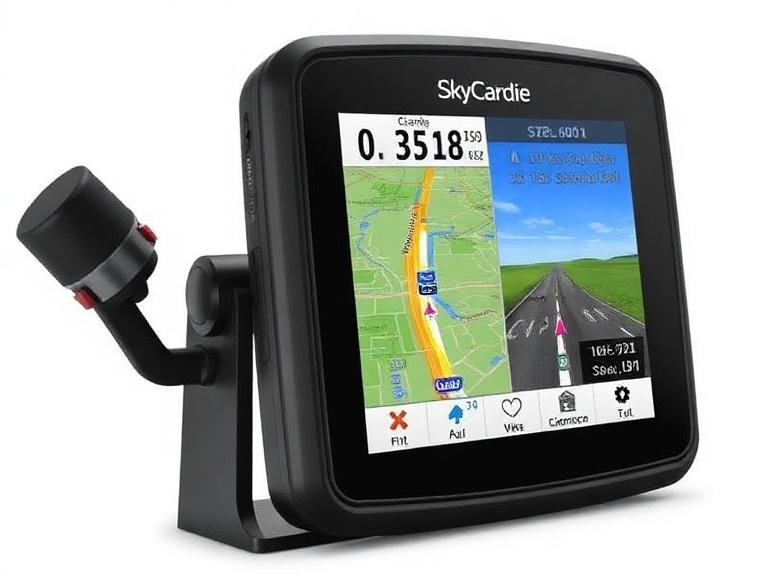
In our testing, the SkyCaddie SX550 stands out as the premier standalone unit for private cart owners. It features a massive 5.5-inch HD color touchscreen. SkyCaddie actually walks every single course with ground-mapping equipment rather than relying on outdated satellite imagery. The interface perfectly captures the trends in precision tapping, allowing you to instantly touch any point on the hole to reveal critical layup yardages. It mounts seamlessly to any steering column.
2. Garmin Approach G80 (Best Multi-Functional Device)
Garmin is the undisputed titan of GPS technology. The Approach G80 not only provides flawless course mapping but also includes a built-in launch monitor to track clubhead speed and smash factor. Its capacitive screen is highly responsive to the latest trends in precision tapping, allowing users to drag and drop the pin location for exact approach yardages. It is compact but incredibly powerful.
3. Visage Fleet Management (Best for Commercial Courses)
If you manage a fleet, Visage is the gold standard. It is not just a rangefinder; it is an enterprise asset management tool. These hardwired 10-inch screens allow the clubhouse to monitor cart locations, send messages to drivers, and enforce digital geo-fences. It turns a standard vehicle into a highly monitored asset, a critical feature for courses running high volumes of 6 Passenger Electric Golf Carts.
4. Bushnell Phantom 2 (Best Budget / Minimalist Option)
Not every golfer wants a massive screen on their dashboard. The Bushnell Phantom 2 is a compact, highly rugged device that features “Bite Technology”—a powerful internal magnet that snaps directly onto the metal roof struts of the golf cart. It lacks the advanced trends in precision tapping found on larger touchscreens, as it relies on simple, bold, easy-to-read numbers, but for pure front/center/back yardages, it is unbeatable for the price.
5. Club Car Connect (Best Integrated OEM System)
For those purchasing brand new vehicles, opting for the Club Car Connect system (or the EZ-GO equivalent) provides a factory-integrated experience. The screen is built directly into the dash assembly, preventing theft and ensuring weather-tight electrical connections. The user interface leverages modern trends in precision tapping to deliver interactive scorecards, Bluetooth audio integration, and seamless course navigation.
Comparison Table: Leading GPS Units
| System | Best Feature | Screen Type | Mounting Style | Price Tier |
|---|---|---|---|---|
| SkyCaddie SX550 | Ground-verified course maps | 5.5″ HD Touchscreen | Dash / Column Mount | Premium ($350+) |
| Garmin Approach G80 | Built-in launch monitor | 3.5″ Transflective Touch | Universal Cart Mount | Premium ($400+) |
| Visage Fleet System | Geo-fencing & Cart lockdown | 10″ HD Touchscreen | Hardwired Dash | Enterprise Lease |
| Bushnell Phantom 2 | Bite magnetic mount | High-Contrast LCD | Magnetic Roof Strut | Budget ($130) |
Pros and Cons Table
| Pros of Cart-Mounted GPS | Cons of Cart-Mounted GPS |
|---|---|
| Frees up your smartphone battery and avoids data usage. | High initial purchase cost for premium touchscreen units. |
| Large, glare-resistant screens designed for bright sunlight. | Does not account for daily pin placement changes automatically. |
| Exploits trends in precision tapping for exact hazard mapping. | Some brands require paid annual subscriptions for map updates. |
| Magnetic mounts make attaching and removing the device instant. | Units left on carts are highly susceptible to theft. |
Common Mistakes in GPS Selection
From our experience supplying street legal golf carts and course fleets, buyers frequently make critical errors. The most common mistake is purchasing a unit with a standard LCD screen rather than a transflective display. A standard screen turns into a dark mirror under the sun, rendering it useless. You must prioritize screen visibility.
Another major mistake is ignoring mounting stability. Golf carts vibrate violently over rough terrain. If you buy a cheap, generic plastic clamp to hold a heavy GPS unit, the mount will shatter. Always invest in heavy-duty column mounts or rely on industrial-strength magnets (like the Bushnell Bite system) that are explicitly rated for off-road use.
Crucial Buying Considerations
When selecting a system, evaluate these three pillars:
- Interface Responsiveness: Does the device support modern trends in precision tapping? If the screen requires a hard, physical press rather than a light capacitive touch, it is outdated technology. You want smooth panning and zooming.
- Power Source: Determine if you want a battery-operated unit you can take home to charge, or a hardwired unit. Hardwiring guarantees the unit never dies mid-round but requires tapping into the cart’s voltage reducer.
- Course Library: Ensure the manufacturer offers free lifetime course updates. Paying $50 a year just to access newly renovated local courses is an unacceptable ongoing expense for individual users.
Expert Recommendation from GT Golf Cart
The GT Golf Cart Verdict
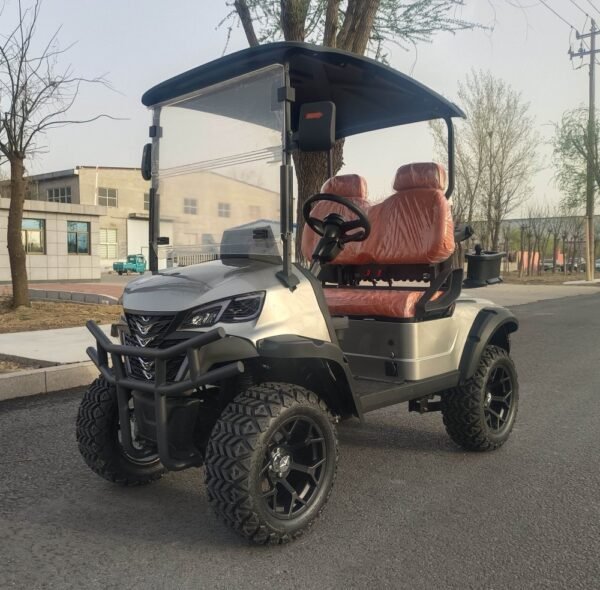
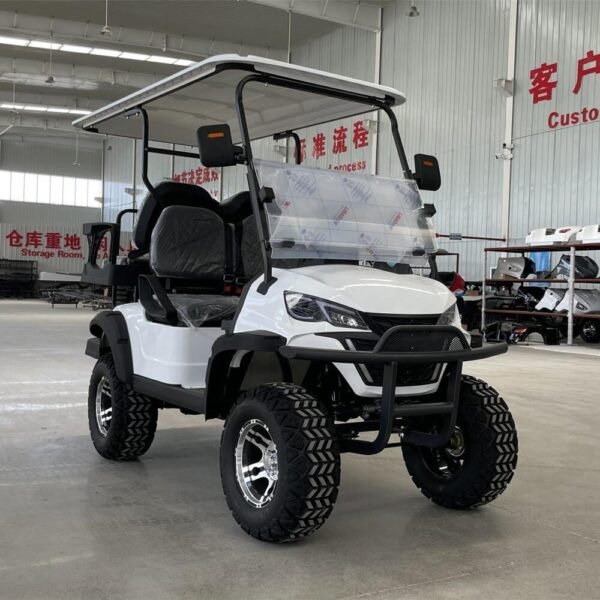
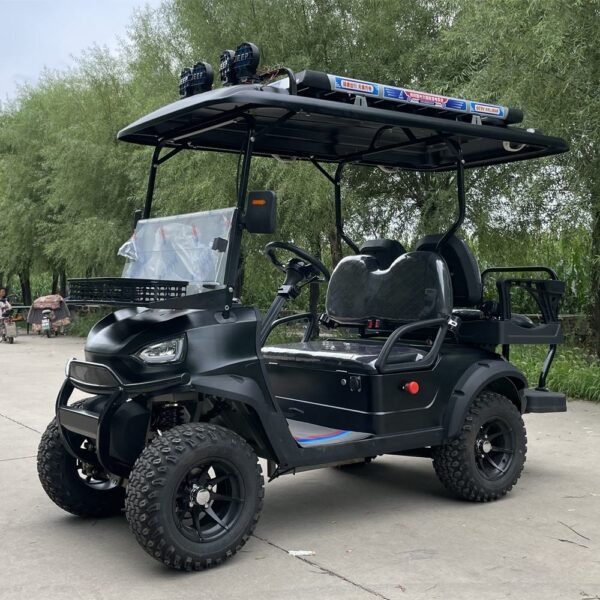
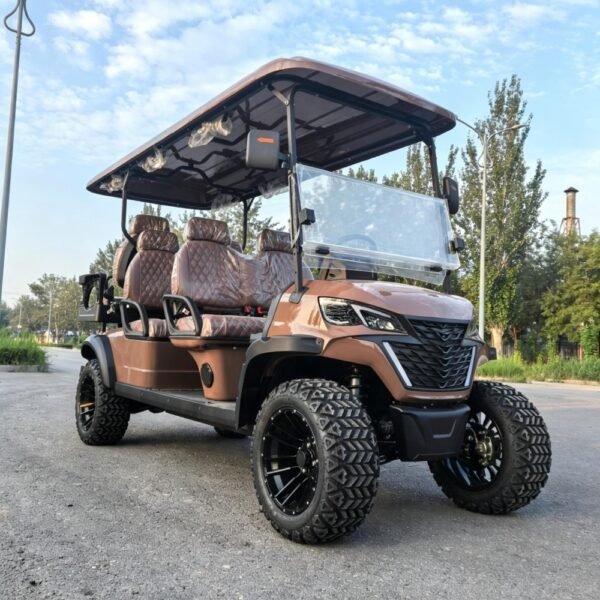
At GT Golf Cart, we understand that a premium vehicle requires premium accessories. We do not compromise on quality. We recommend the SkyCaddie SX550 for the vast majority of individual cart owners. Its massive 5.5-inch screen perfectly utilizes the latest trends in precision tapping, allowing you to drag targets and measure hazards with absolute fluidity. The ground-verified accuracy is simply unmatched by satellite-only competitors.
However, if you are outfitting a commercial resort fleet or purchasing vehicles from top Mini Golf Cart Manufacturers for rental purposes, you must pivot to an enterprise solution like Visage. The ability to physically lock a cart’s drivetrain if it enters a hazardous zone will save you thousands of dollars in turf repair and liability claims.
Frequently Asked Questions (FAQ)
Are golf cart GPS systems allowed in tournaments?
Yes. According to the USGA, distance measuring devices (including cart-mounted GPS units) are permitted during tournament play, provided they only measure distance. If your GPS device has features that measure elevation changes (slope) or wind speed, those specific features must be strictly disabled during competitive play to avoid disqualification.
Do golf cart GPS systems require a monthly subscription?
It depends entirely on the manufacturer. Devices from Garmin and Bushnell typically come pre-loaded with over 40,000 courses and offer free lifetime updates. However, premium mapping services like SkyCaddie require an annual subscription to access their highly detailed, ground-verified course databases and advanced features.
How long does a battery last on a portable golf GPS?
In most professional situations, a high-quality portable golf GPS (when not hardwired to the cart) will last between 12 to 15 hours on a single charge. This provides ample battery life to complete three to four full 18-hole rounds before requiring a recharge.
Authoritative References & Industry Standards
To ensure our operational recommendations comply with global golfing and technological standards, we reference the following authorities:
- United States Golf Association (USGA): Official Rules of Golf regarding the legal use of Distance-Measuring Devices (Rule 4.3a). Review USGA Equipment Rules
- Global Positioning System (GPS.gov): Official U.S. government information defining the standard positioning service (SPS) accuracy limits for civilian GPS receivers. Review GPS Accuracy Standards
- Golf Digest: Leading major media publication providing independent, lab-tested reviews of the latest distance measuring technology and user interface responsiveness in golf hardware. Review Golf Digest Technology Standards