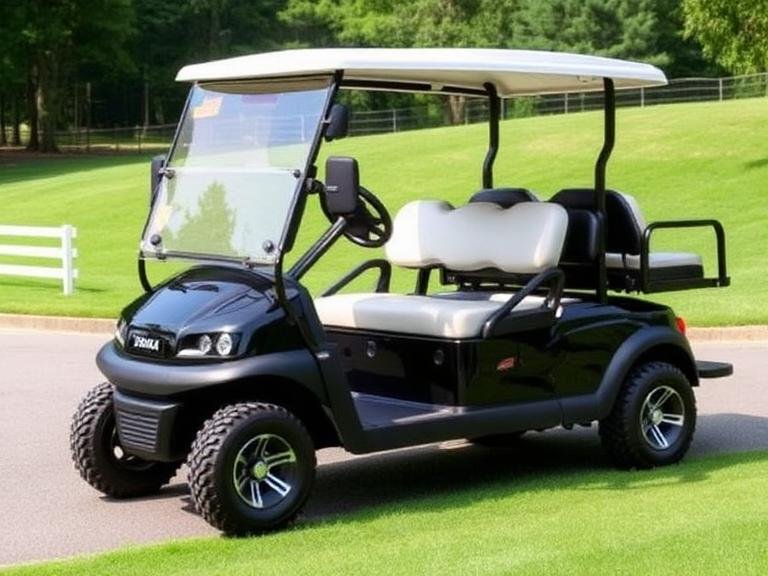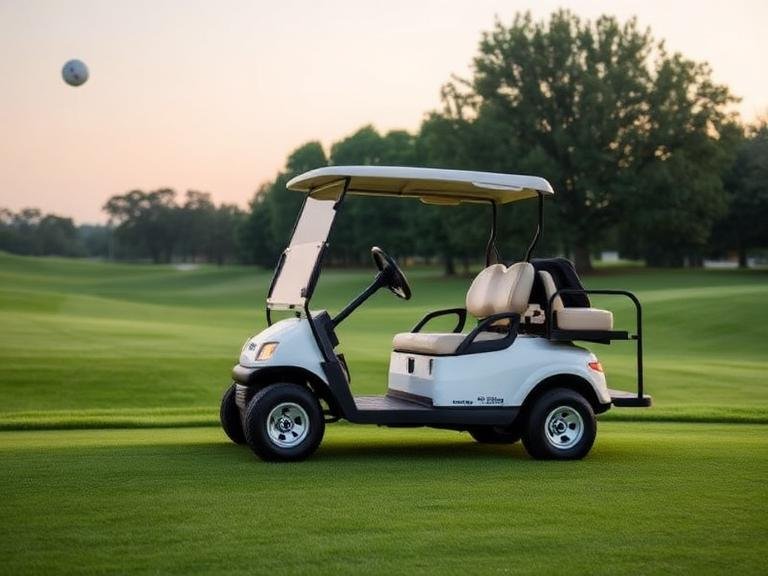
GT Golf Cart specializes in the design, manufacturing, and global supply of electric golf carts and low-speed vehicles. With over 12 years of industry experience, we deliver reliable mobility solutions for golf courses, resorts, communities, and commercial fleets worldwide.
The modern walking golf revolution is thriving, fueled predominantly by high-capacity lithium-ion battery technology and sophisticated motorized mobility solutions. If you regularly walk your local 18-hole track, you have undoubtedly witnessed the distinctive, robust chassis of an MGI Zip Navigator effortlessly scaling a steep fairway. This surge in popularity inevitably leads consumers to ask one critical question: are MGI golf trolleys any good, or are buyers simply paying a massive premium for a recognized brand name?
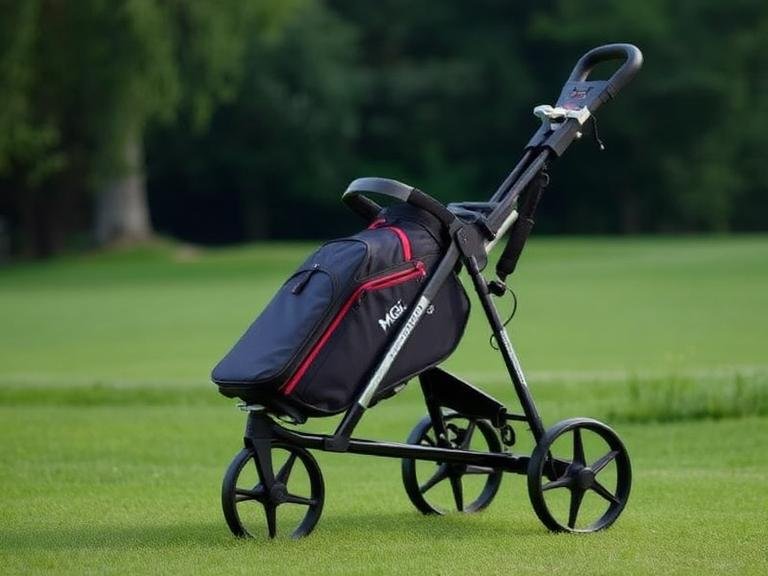
With price tags ranging from $700 for the entry-level Zip X1 to well over $1,500 for the flagship Zip Navigator and Ai 500 models, golfers are rightfully scrutinizing whether these machines justify the heavy capital expenditure. In this comprehensive industry analysis, we apply our extensive background in electric mobility to dissect the engineering behind these popular caddies. We will definitively answer whether are MGI golf trolleys any good for your specific playing style, examine the mechanical limitations you must consider, and provide five highly capable, affordable alternatives that deliver phenomenal performance without devastating your wallet.
The Direct Answer: Are MGI Golf Trolleys Any Good?
When customers come to us asking, are MGI golf trolleys any good, our professional assessment is an unequivocal yes. From an engineering standpoint, they are exceptional pieces of machinery. MGI has perfected the integration of gyroscopic stabilization, twin 230-watt calibrated motors, and high-density 24v 380Wh lithium batteries. They are built to endure the brutal torque requirements of hilly, rugged golf courses while maintaining a whisper-quiet acoustic footprint.
However, the question of whether are MGI golf trolleys any good must be contextualized by the user’s budget and course topography. For a weekend warrior playing a completely flat, 6,000-yard municipal course, a top-tier MGI trolley is drastically over-engineered. You are paying for advanced downhill electronic braking and all-terrain tracking that you will never utilize. In these commercial scenarios, pursuing affordable alternatives provides a vastly superior return on investment.
Quick Answer: Are MGI golf trolleys any good?
Yes, they are industry leaders. MGI manufactures some of the most reliable and technologically sophisticated electric walking caddies globally. Their flagship models, like the Zip Navigator, excel on extreme terrains due to their patented straight-tracker gyroscopes and automatic downhill speed control. However, this engineering carries a steep premium. If your budget is tight or your home course is flat, we highly recommend evaluating affordable alternatives like the Alphard Club Booster V2, Motocaddy SE, or BatCaddy X3R, which provide roughly 80% of the MGI experience at a fraction of the total cost.
Table of Contents
- What is an MGI Golf Trolley?
- How It Works: Motorized Course Navigation
- Quick Summary Table: The MGI Zip Series
- The Tangible Benefits of Electric Caddies
- Limitations and Drawbacks
- Who Should Use It
- Who Does Not Need It
- Common Mistakes Buyers Make
- 5 Affordable Alternatives to MGI
- Comparison Table: MGI vs Alternatives
- Buying Considerations
- Expert Recommendation
- Pros and Cons Table
- Buying Guide Checklist
- Frequently Asked Questions (FAQ)
What is an MGI Golf Trolley?

To truly evaluate are MGI golf trolleys any good, we must first define what they are. An MGI trolley is a premium, motorized walking cart designed to transport your golf bag autonomously across the golf course. Unlike a traditional push cart that relies entirely on your physical exertion, MGI models utilize high-capacity lithium battery systems to drive motorized rear wheels.
Founded in Australia over three decades ago, MGI has been at the forefront of the modern electric caddy movement. Their current product lineup, predominantly the “Zip Series,” ranges from entry-level, non-remote units that you guide manually, to full-directional remote-controlled units that function identically to a robotic, hands-free caddie.
How It Works: Motorized Course Navigation
From a mechanical perspective, investigating are MGI golf trolleys any good requires looking at their drivetrains. At the core of the higher-end MGI trolleys (like the Zip Navigator) are twin 230-watt motors housed within a heavy-duty rear axle. The user dictates movement either through a T-bar handle equipped with a variable speed dial or via a handheld remote control.
The true technological marvel is revealed on uneven, undulating terrain. MGI’s patented Gyroscope Straight Tracker technology acts as an electronic brain. If the trolley encounters a severe sidehill lie, the internal sensors immediately detect the lateral tilt. The machine’s processor then automatically adjusts the RPM of the left or right wheel independently, ensuring the trolley tracks perfectly straight across the slope, preventing it from veering off into rough or hazards. Furthermore, when descending steep hills, the electronic park brake and downhill speed control engage, utilizing the motors as generators to physically resist gravity, safely braking the 35-pound machine.
Quick Summary Table: The MGI Zip Series
| Model | Operation Type | Downhill Braking | Best Course Type |
|---|---|---|---|
| MGI Zip X1 | Manual (Speed Dial) | No | Flat to Modestly Sloped |
| MGI Zip X3 | Manual (Speed Dial) | No | Moderate Incline, Hilly |
| MGI Zip X5 | Manual (Speed Dial) | Yes (Electronic Brake) | Steep, Mountainous |
| MGI Zip Navigator | Full Remote Control | Yes (Gyro & Brake) | All Terrains, Severe Hills |
| MGI Ai 500 | Remote / GPS Integrated | Yes | Tech-focused, All Terrains |
The Tangible Benefits of Electric Caddies
When our clients ask are MGI golf trolleys any good for their physical health, we point directly to the biometric advantages of motorized walking. Pushing a 30-pound manual cart up a 15-degree incline places immense sheer stress on your lower back, shoulders, and knees. By the 15th hole, this physical fatigue translates directly into dropped shots and slower swing speeds.
An MGI trolley entirely eliminates this fatigue, preserving your physical stamina strictly for your golf swing. Additionally, with robust all-terrain tread wheels and a fully foldable 4th rear wheel for anti-tip stability, these machines conquer the harshest course conditions effortlessly. From a financial perspective, if you are currently paying a $25 cart fee per round, an electric caddy effectively pays for itself after roughly 60 walking rounds, making it an excellent long-term investment.
Limitations and Drawbacks
We believe in maintaining commercial and practical judgment, meaning we must objectively assess the limitations when determining are MGI golf trolleys any good.
The primary barrier is the exorbitant capital expenditure. Dropping $1,500 on the Zip Navigator is a massive upfront cost for a golf accessory. Secondly, the weight is substantial. Fully loaded with the lithium battery, the Zip Navigator approaches 35 pounds. Lifting this dead weight in and out of a high SUV trunk requires significant physical effort. Finally, while the zip fold mechanism successfully reduces the footprint by 25%, these machines still occupy a considerable amount of cargo space compared to ultra-compact manual push carts.
Who Should Use It
In most professional situations, we recommend MGI trolleys for serious, dedicated walkers who log 40 or more rounds per year. If your home course is highly undulating, features steep elevation changes, or requires long treks between the green and the next tee box, the investment is absolutely justified. It is also a critical mobility tool for senior players who desire the cardiovascular benefits of walking the course but can no longer tolerate the orthopedic strain of pushing a manual cart.
Who Does Not Need It
If you manage a country club fleet or reside in a sprawling golf community, a motorized walking trolley is completely irrelevant. Your commercial needs require assessing the Golf Cart Wholesale Price market. You need to transport groups efficiently, which means looking into a 4 seater golf cart or analyzing 6 Seater Golf Cart Speed to maintain the pace of play.
For massive resort transportation, the best 8 Seater Golf Cart models provide the logistics required, vastly outperforming walking carts. At GT Golf Cart, we understand these heavy-duty applications. Whether you need a Commercial Golf Cart for facility management or a luxurious Custom Lithium Golf Cart for neighborhood cruising, your investment goes toward rideable mobility rather than walking aids. Furthermore, determining the Golf Cart with Least Problems is critical for fleet longevity. If you are an individual playing a totally flat executive course, stick to a basic $200 manual push cart.
Common Mistakes Buyers Make
From our experience consulting with golfers, buyers frequently make these critical errors when evaluating are MGI golf trolleys any good for their needs:
- Ignoring Downhill Braking: Customers buy the entry-level Zip X1 or X3 for a mountainous course, only to realize those models lack the electronic downhill brake. The cart ends up dragging them down steep slopes.
- Improper Bag Securing: Mounting a lightweight stand bag without securing the legs alters the trolley’s center of gravity. This often causes the trolley to tip backward violently on steep ascents.
- Battery Neglect: Leaving the 24v lithium battery fully depleted in a freezing garage during the winter will permanently degrade the lithium cells, requiring a costly replacement.
5 Affordable Alternatives to MGI
If you have researched are MGI golf trolleys any good and determined that the premium price tag simply does not align with your budget, you have exceptional options. Here are five affordable, high-performance alternatives.
1. Alphard Club Booster V2
Instead of purchasing an entirely new trolley, the Alphard Club Booster V2 converts your existing manual push cart (like a Clicgear or Sun Mountain) into a premium remote-controlled electric caddy. At roughly $900, it features a 6-axis gyroscope and powerful dual hub motors. It is the ultimate cost-saving hack for players who already own a high-quality push cart chassis.
2. Motocaddy SE
Priced well under the premium threshold, the Motocaddy SE strips away complex LCD screens and remote controls to deliver pure, reliable propulsion. It features a highly durable motor, an ultra-fast quick-fold frame, and a resilient lithium battery. It represents the perfect entry-level motorized cart for budget-conscious walkers.
3. BatCaddy X3R
The BatCaddy X3R is a legend in the budget remote-control space. For under $1,000, you obtain a fully functional remote-controlled caddy equipped with dual motors. While the frame aesthetics and plastics are slightly less refined than an MGI, the performance-to-price ratio is outstanding for those who demand remote capabilities on a strict budget.
4. PowaKaddy FX3
PowaKaddy serves as a direct, fierce competitor to MGI in the European market. The FX3 is their entry-level powerhouse. It features a whisper-quiet 30V Max plug-and-play battery system (eliminating messy wire connections) and a brilliant 1-click folding mechanism. It is ideal for players who want premium build quality without the added cost of a remote control.
5. Cart Tek Yellowstone
A highly streamlined, lightweight, non-remote electric caddy. Its frame is constructed from aviation-grade aluminum, elegantly hiding the motors inside the axle for a sleek, minimalist aesthetic. It offers programmable speed settings and variable distance control, allowing you to autonomously send the cart 10 or 20 yards ahead toward the next tee box.
Comparison Table: MGI vs Alternatives
| Feature | MGI Zip Navigator | Alphard Club Booster V2 | Motocaddy SE |
|---|---|---|---|
| Price Range | Premium ($1,500+) | Mid-Tier ($900+) | Entry-Level ($600+) |
| Operation | Full Remote + Gyro | Full Remote + Gyro | Manual Speed Dial |
| Format | Complete Trolley Unit | Conversion Kit Add-on | Complete Trolley Unit |
| Best For | Severe Hills / Luxury | Existing Push Cart Owners | Budget Walkers / Flat Courses |
Buying Considerations
Before you commit to a purchase, you must aggressively evaluate your specific course topography and physical needs. The ultimate test of are MGI golf trolleys any good lies in matching the machine to the environment. Do not pay for a remote control if you prefer keeping your hands firmly on the handlebar for stability. Conversely, if you want to walk unrestricted on the green while your cart drives itself to the next tee, remote functionality is mandatory.
Evaluate the folded dimensions carefully. Before you spend over a thousand dollars on an electric trolley, physically measure your vehicle’s trunk space. Furthermore, always verify the Amp-hour (Ah) or Watt-hour (Wh) rating of the battery; a 380Wh battery will easily conquer 36 holes, whereas smaller batteries may struggle to finish 18 holes on a severely mountainous course.
Expert Recommendation
GT Golf Cart’s Final Verdict
As a global provider, offering everything from standard fleet vehicles to 2 seater golf cart models with complete Global Golf Cart Shipping, we deeply understand the mechanics of course transportation. If your playing partners ask you, are MGI golf trolleys any good, you can confidently tell them yes. The MGI Zip Navigator remains the absolute gold standard for remote-controlled walking, providing unmatched gyroscopic stability.
However, if budget constraints are your primary concern, we heavily recommend the Alphard Club Booster V2. Converting your current manual push cart into a remote-controlled powerhouse is an incredibly pragmatic, cost-effective solution. It preserves your capital while fully delivering the cardiovascular and energy-saving health benefits of walking the golf course.
Pros and Cons Table: MGI Golf Trolleys
| The Pros (Advantages) | The Cons (Drawbacks) |
|---|---|
| Flawless gyroscopic straight-tracking (Navigator). | Extremely high capital expenditure. |
| Automatic downhill speed control prevents runaway carts. | Heavy lifting weight when battery is attached (35 lbs). |
| Massive 24v 380Wh lithium battery easily handles 36 holes. | Base models (X1, X3) lack downhill braking features. |
| Anti-tip 4th wheel provides exceptional climbing stability. | Takes up significant cargo space in smaller vehicles. |
Buying Guide Checklist
| Feature to Check | Why It Matters for Electric Caddies |
|---|---|
| Downhill Braking | Crucial for hilly courses; prevents the heavy cart from pulling you down slopes. |
| Battery Capacity (Wh) | Determines if the cart will die on hole 16. Look for 250Wh+ for 18 holes, 350Wh+ for 36 holes. |
| Remote Control | Allows for completely hands-free walking, saving massive amounts of shoulder energy. |
| Anti-Tip Wheel | Prevents the cart from flipping backward when climbing steep, aggressive inclines. |
Frequently Asked Questions (FAQ)
Are MGI golf trolleys any good for steep, hilly courses?
Yes, but you must select the correct model. The MGI Zip X5 and Zip Navigator are phenomenal for hilly courses because they feature electronic downhill speed control and an anti-tip 4th rear wheel. The base Zip X1 and X3 models lack downhill braking and are better suited for flat to moderately sloped terrain.
How long does the MGI lithium battery last on a single charge?
The high-capacity 24v 380Wh lithium battery found on premium MGI models is designed to comfortably last for 36 holes on a single charge, even on highly undulating courses. Standard 250Wh batteries (like those on the Zip X1) will easily cover 18 holes with power to spare.
What happens if my electric golf trolley battery dies on the course?
Most premium electric trolleys, including MGI models, feature a free-wheeling or freewheel mode. You can manually disengage the motors from the wheels, allowing you to push the trolley like a traditional manual push cart for the remainder of your round without facing heavy magnetic motor resistance.
Authoritative References & Industry Standards
To ensure our mobility recommendations align with the highest standards of the game, we consult the following authoritative bodies regarding walking golf regulations and equipment testing:
- United States Golf Association (USGA) – The governing body providing extensive research on the cardiovascular benefits of walking the golf course versus riding, and the regulatory compliance of motorized caddies in amateur competition.
- Golf Monthly – A premier international publication conducting rigorous, independent on-course stress testing of electric trolleys, validating motor longevity and downhill braking claims.
- MyGolfSpy – The industry standard for unbiased, data-driven equipment testing, offering comprehensive performance comparisons between premium brands like MGI, Motocaddy, and Alphard.