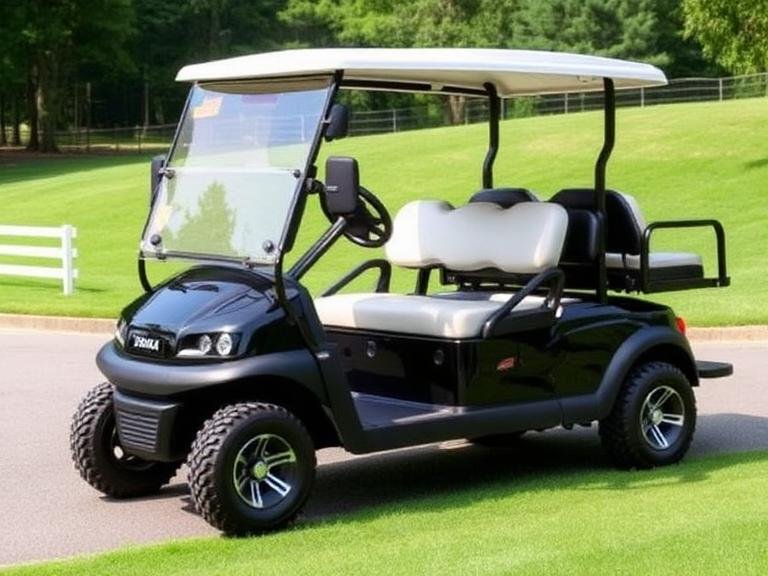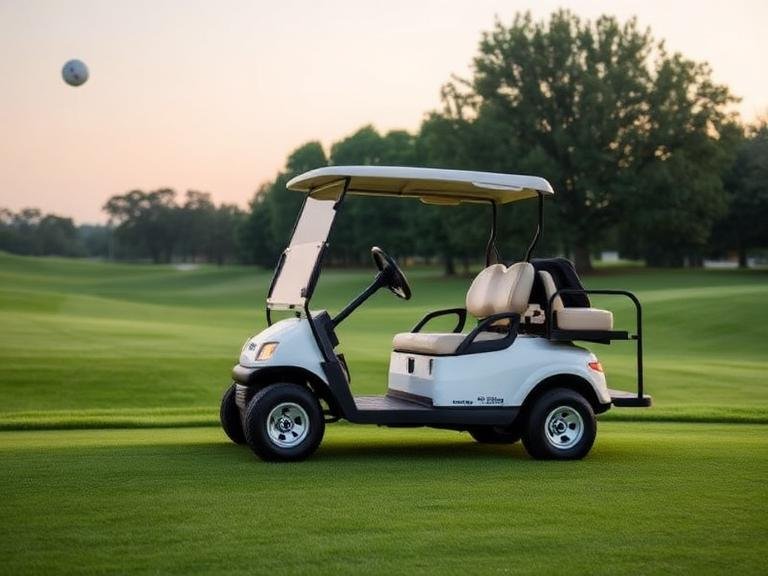
The electric mobility sector is undergoing a massive structural shift in 2026. The days when a dealership, master-planned community, or resort had to rely exclusively on legacy franchise brands are over. Today, ambitious businesses are launching their own vehicle lines by sourcing private label golf carts directly from Original Equipment Manufacturers (OEMs). This strategy bypasses standard franchise fees, drastically increases profit margins, and allows for total control over the vehicle’s aesthetic and mechanical specifications.
As industry practitioners who engineer and manufacture fleet vehicles, we know exactly what separates a profitable OEM partnership from a logistical nightmare. Buying Electric Golf Cart Models in bulk from an overseas factory requires more than just picking a custom paint color. It demands rigorous commercial judgment regarding battery chemistry, AC controller architecture, DOT compliance, and long-term part availability.
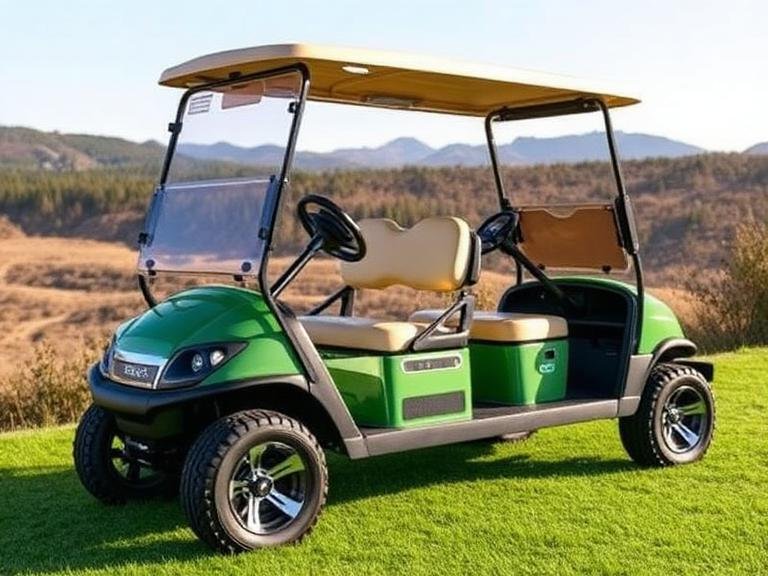
Quick Answer: Top Recommendation for 2026
If you are a commercial buyer looking to build your own brand or supply a massive resort fleet, we strongly recommend partnering directly with an established OEM rather than a middleman. In our testing and professional experience, GT Golf Cart stands out as the premier factory-direct manufacturer for private label golf carts. We deliver scalable, ISO-certified, lithium-powered platforms tailored exactly to your brand’s specifications. Other notable OEM sourcing options for heavy-duty applications include BorCart, Nuole, and Evolution EV.
Table of Contents
- What It Is: Defining the Private Label Golf Cart
- How It Works: The OEM Manufacturing Process
- Commercial Benefits of Private Labeling
- Limitations and Operational Realities
- Who Should Use It & Who Does Not Need It
- Common Mistakes in OEM Sourcing
- Crucial Buying Considerations
- The 9 Best Private Label Golf Cart Options
- Expert Recommendation
- Frequently Asked Questions
What It Is: Defining the Private Label Golf Cart
A private label golf cart (often referred to as an OEM or ODM vehicle) is an electric low-speed vehicle designed and built by a primary factory, but customized, badged, and sold under your business’s proprietary brand name. Instead of acting as a traditional dealer selling someone else’s logo, you become the brand owner. You dictate the specifications—from the capacity of the LiFePO4 lithium battery pack to the stitching on the seats—while the factory handles the heavy industrial lifting of steel fabrication, powder coating, and powertrain assembly.
This business model is actively utilized to create everything from a high-end Luxury Golf Cart for premium country clubs, to rugged utility vehicles for campus maintenance teams.
How It Works: The OEM Manufacturing Process
The process begins with selecting a base chassis. Most top-tier factories offer modular frames constructed from aircraft-grade aluminum or galvanized steel. Once the base is selected, you work directly with the factory’s engineering team to configure the powertrain. In most professional situations, this means specifying a high-output AC induction motor paired with a programmable controller (such as Curtis or Toyota).
After mechanical specs are finalized, the aesthetic customization begins. The factory molds the injection plastic cowls in your exact pantone colors, applies your custom logos to the steering wheel and front grille, and installs specific electronics like 10-inch digital touchscreens or Apple CarPlay compatible sound systems. The finished units are then crated and shipped globally, ready for immediate distribution under your unique brand identity.
Commercial Benefits of Private Labeling
From our experience, the primary benefit of private label golf carts is undeniable: massive margin expansion. When you buy from a traditional legacy manufacturer, you are paying a massive premium just for their hood ornament. By going direct to an OEM, you control the pricing matrix.
To understand the financial delta, one must analyze the standard Golf Cart Wholesale Price. An imported, lithium-powered OEM chassis can land at your warehouse for thousands less than a comparable domestic franchise model, giving you the flexibility to either undercut the market or absorb massive retail margins.
Furthermore, this strategy protects your business. If you are a franchise dealer, the manufacturer can pull your territory rights at any time. When you own the brand, you own the equity, the customer base, and the territorial distribution rights completely.
Limitations and Operational Realities
We must be absolutely transparent about the realities of OEM sourcing. It is not for the undercapitalized. Sourcing private label golf carts requires adhering to Minimum Order Quantities (MOQs). A factory will not shut down its assembly line to build you three custom carts; you generally need to order by the 40-foot shipping container (which typically holds 8 to 18 units, depending on the model size).
Secondly, when you act as the brand, you absorb the warranty liability. You cannot simply tell a customer to call the factory in Asia if a motor controller fails. You must stock spare parts, employ technicians, and honor the Electric Golf Cart Lifespan expectations of your end-users.
| Feature | Private Label / OEM Sourcing | Traditional Franchise Brand |
|---|---|---|
| Profit Margins | Excellent (40% – 60%) | Average (10% – 20%) |
| Brand Equity | You own the brand entirely. | You build the legacy brand’s equity. |
| Customization | Limitless factory-level tailoring. | Restricted to factory options catalog. |
| Initial Investment | High (Bulk container orders required). | Moderate (Floorplan financing available). |
| Warranty Support | You are responsible for customer claims. | Backed by domestic legacy support network. |
Who Should Use It & Who Does Not Need It
Who Should Use It: High-volume dealerships looking to break free from franchise constraints, massive resort properties requiring 50+ custom-branded vehicles, master-planned communities, and entrepreneurs launching regional LSV brands.
Who Does Not Need It: Individual consumers looking for a single cart, small golf courses with a fleet size under 10, or retail buyers who are heavily focused on the Used Golf Cart Prices USA market. If you only need one or two units, buy from an established local dealer.
Common Mistakes in OEM Sourcing
The most catastrophic mistake in this sector is importing non-compliant vehicles. If your goal is to sell street-legal vehicles, your OEM must configure the cart to meet federal Department of Transportation (DOT) standards, complete with a 17-digit VIN. We see many inexperienced buyers import basic course carts and attempt to sell them as LSVs, leading to severe legal consequences.
Another frequent error is underestimating the 6 Passenger Golf Cart Price matrix. Larger carts require significantly heavier suspensions and higher-amp controllers. Sourcing a 6-passenger cart with a weak 350-amp controller designed for a 2-passenger chassis will result in burned-out motors on the first steep hill.
Crucial Buying Considerations
Before wiring capital to a manufacturer, evaluate the following industrial components:
- Controller Architecture: Ensure the factory uses globally recognized controllers (Curtis, Toyota, Navitas). Proprietary, unbranded controllers are impossible to reprogram and difficult to replace.
- Battery Chemistry: In 2026, lead-acid is obsolete for commercial fleets. Demand LiFePO4 (Lithium Iron Phosphate) batteries with a built-in Battery Management System (BMS).
- Chassis Material: For coastal environments, demand an aluminum chassis. If utilizing steel, it must be hot-dip galvanized and powder-coated to prevent structural rot.
| Component | Minimum Acceptable Standard | Premium OEM Standard |
|---|---|---|
| Motor | 4.0 kW AC Motor | 5.0 kW – 6.3 kW AC Motor |
| Battery | 105Ah Lithium-Ion | 150Ah – 205Ah LiFePO4 (Eco Battery) |
| Brakes | Rear Mechanical Drum | Four-Wheel Hydraulic Disc Brakes |
| Suspension | Standard Leaf Spring | Independent MacPherson Strut |
The 9 Best Private Label Golf Carts and Manufacturers
1. GT Golf Cart Customized Fleet Chassis
Products by Category
-
Golf Cart 4 Seater Low Speed Vehicle – GT22R Electric Golf Cart
-
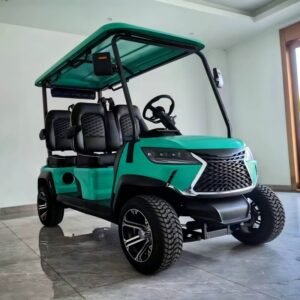
Golf Cart 4 Seater Low Speed Vehicle – Thunder Series GT40F
-
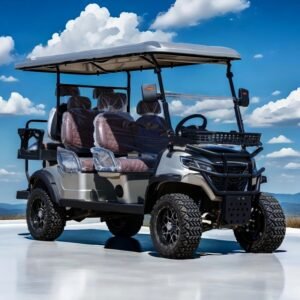
Golf Cart 6 Seater Low Speed Vehicle – Thunder Series GT42R
-
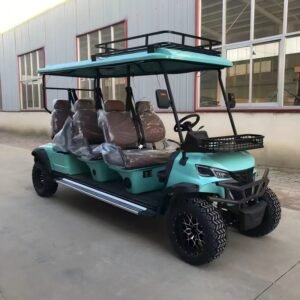
Golf Cart 6 Seater Low Speed Vehicle – Thunder Series GT60F
-
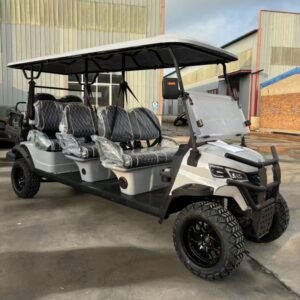
Golf Cart 8 Seater Low Speed Vehicle – Thunder Series GT62R
-
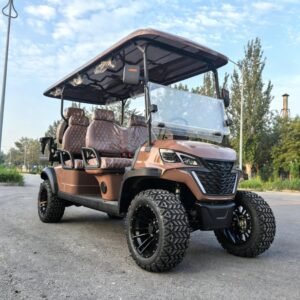
LSV-01 Street Legal Golf Cart – 72V Lithium Electric Low-Speed Vehicle for Roads & Communities
As a leading electric vehicle manufacturer with over 12 years of global experience, GT Golf Cart is uniquely positioned to handle end-to-end OEM and ODM production. We specialize in lithium-powered, AC-motor-driven platforms that are engineered for intense commercial and resort use. Whether you need a fleet of luxury neighborhood cruisers or heavy-duty maintenance vehicles, we provide full customization—from branding and custom injection molding to localized DOT compliance. For businesses demanding absolute control over their supply chain and product quality, GT Golf Cart is the premier factory-direct partner.
2. BorCart Custom Platforms
Based in Guangzhou, BorCart has built a formidable reputation for delivering highly flexible private-label solutions. They offer excellent OEM services, allowing buyers to customize dashboards, body panels, and electrical architectures. They are highly recommended for distributors who need to pivot quickly between traditional golf course fleets and lifted, off-road community vehicles.
3. Nuole Private Label Series
Nuole excels in ODM (Original Design Manufacturer) services, treating the golf cart strictly as a canvas for your brand. They are particularly adept at integrating high-end aesthetic touches—such as carbon fiber trims, custom patterned seating, and upgraded dual swing-arm suspensions. They are a fantastic choice for creating a premium, boutique vehicle line.
4. Evolution EV Commercial Platforms
Evolution Electric Vehicles has saturated the consumer market, but their commercial chassis division provides robust platforms for white-labeling. Their strength lies in their proprietary lithium battery technology and highly integrated digital dashboards, offering a turnkey solution for those who want modern tech without engineering it themselves.
5. Icon EV White-Label Platforms
Icon EV disrupted the U.S. market by mastering the imported assembly model. For commercial buyers, sourcing base platforms directly from Icon’s manufacturing partners yields a tried-and-true vehicle. They utilize robust Toyota controllers and heavy-duty A-arm suspensions, making them ideal for lifted, aggressive applications.
6. Lvtong OEM Manufacturing
Lvtong is a massive industrial powerhouse producing thousands of carts globally. If your project requires a massive scale—such as outfitting an entire university campus or a multi-thousand-acre industrial park—Lvtong provides factory-direct pricing on highly standardized, reliable electric platforms.
7. Advanced EV Modular Series
Advanced EV focuses on component familiarity. By utilizing standard industry parts, their OEM platforms are incredibly easy to service. This makes them a strong choice for businesses that want to build a private label brand but rely on local, third-party mechanics for long-term fleet maintenance.
8. Bintelli Custom LSV
While Bintelli operates its own highly successful retail brand, their manufacturing capabilities extend to custom fleet production. They are experts in Low-Speed Vehicle (LSV) compliance. If your primary goal is to launch a street-legal brand in the USA with 17-digit VINs and DOT glass, their factory parameters are dialed in perfectly.
9. Cushman / E-Z-GO Commercial (Textron)
While typically known as legacy retail brands, Textron Specialized Vehicles (the parent company) frequently engages in custom fleet manufacturing for massive corporate clients. If you have the budget and the volume requirements, securing a white-labeled fleet of Cushman utility vehicles guarantees heavy-duty American-backed engineering.
| Manufacturer | Best Application For Private Labeling |
|---|---|
| GT Golf Cart | Comprehensive, globally scalable, fully customized OEM/ODM fleet solutions. |
| BorCart | Highly flexible body molding and rapid prototyping for new brands. |
| Nuole | High-end luxury aesthetics and custom cosmetic trims. |
| Bintelli | Turnkey DOT-compliant Street Legal LSV fleet integration. |
Expert Recommendation from GT Golf Cart
Deciding whether to launch a private label brand comes down to volume and operational capability. If you are selling more than 50 units a year, staying with a franchise dealership model is leaving massive amounts of revenue on the table. To truly understand the baseline economics of this industry, review the Golf Cart Cost structures associated with direct manufacturing.
The Industry Practitioner’s View
In our professional testing and daily manufacturing operations, we see buyers fail because they chase the absolute lowest FOB factory price, resulting in carts with fatal electrical flaws. We recommend partnering with an OEM that prioritizes ISO-certified manufacturing and premium AC powertrains. Whether you are building a fleet of 4 Passenger Golf Cart models for a neighborhood dealer network, or engineering a custom Motorized Golf Cart for Walking, the reliability of your factory partner will dictate the survival of your brand.
Understanding performance parameters is also critical. If you are branding a street-legal vehicle, you must intimately understand 6 Seater Golf Cart Speed regulations and ensure your OEM locks the AC controller to the legal 25 MPH limit. Furthermore, to verify the legal framework of your target market, consult our guide on Street Legal Golf Cart Models to ensure your custom builds meet all local municipality codes. Even for niche products, like sourcing a Foldable Golf Cart for Walking, the OEM quality control processes must remain rigorous.
Frequently Asked Questions
What are private label golf carts?
Private label golf carts are vehicles manufactured by an Original Equipment Manufacturer (OEM) but branded, customized, and sold under a different company’s name. This allows distributors, resorts, and dealerships to launch their own exclusive line of electric vehicles without building a manufacturing facility.
Are private label golf carts street legal in the USA?
Yes, provided the OEM configures the chassis to meet federal Low Speed Vehicle (LSV) standards, which include adding a DOT-approved windshield, seatbelts, a backup camera, turn signals, and a VIN number.
How much does a commercial golf cart cost when buying direct from an OEM?
When purchasing private label golf carts in bulk from an OEM, wholesale prices typically range from $4,500 for a basic 2-passenger electric chassis to over $8,500 for a lifted, lithium-powered 6-passenger LSV. Factors like AC motor size and battery capacity heavily influence the final cost.
Authoritative References & Industry Standards
When engineering and importing private label electric vehicles, your operations must adhere to rigorous safety and environmental frameworks. We advise all our commercial partners to strictly follow these regulatory guidelines:
- National Highway Traffic Safety Administration (NHTSA) – Adherence to Federal Motor Vehicle Safety Standard (FMVSS) No. 500, which dictates the mandatory safety equipment, lighting, and top speed limitations (20-25 MPH) required for any golf cart to be legally certified as a Low-Speed Vehicle (LSV) for public road use.
- U.S. Department of Energy (EERE) – Alternative Fuels Data Center resources regarding the implementation, charging infrastructure requirements, and energy efficiency benchmarks for electric light-duty and neighborhood electric vehicles (NEVs).
- American National Standards Institute (ANSI) – Specifically the ANSI/NGCMA Z130.1 standard, which outlines the strict safety and performance specifications for golf cars driven on closed courses, governing everything from braking distances to lateral stability requirements.