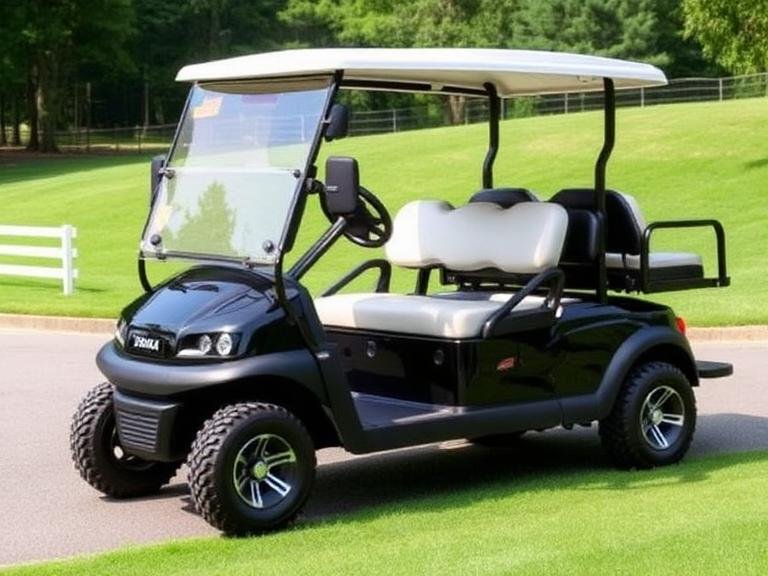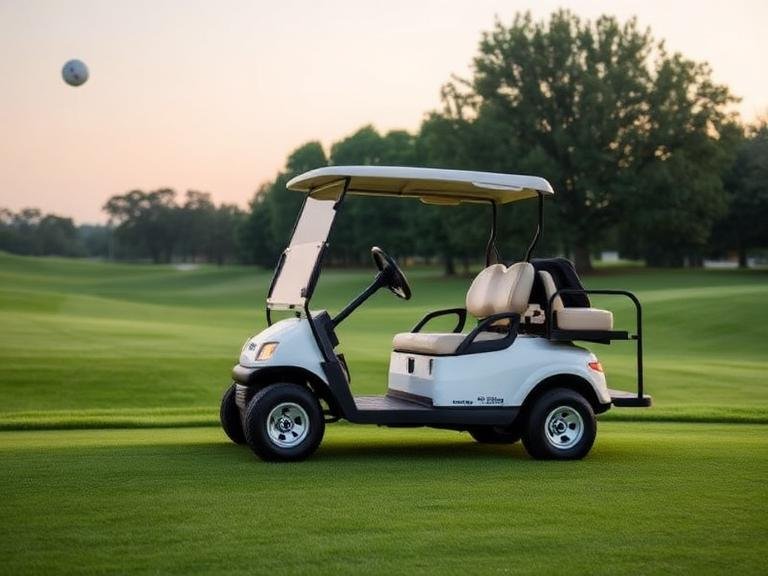
Taking a standard, bare-bones golf cart onto a public thoroughfare is not just a mild traffic infraction; it is a massive commercial and personal liability. From our experience operating in the global mobility sector, too many consumers and fleet managers mistakenly believe that slapping a slow-moving vehicle triangle on the rear bumper magically transforms a golf course cruiser into a street-legal machine. This is a dangerous, financially ruinous myth.
To safely and legally operate on public roadways, a vehicle must bridge the massive regulatory gap between recreational equipment and a federally recognized motor vehicle. The National Highway Traffic Safety Administration (NHTSA) dictates strict safety standards that govern exactly what is required to make golf carts compliant with road-legal regulations. If you are a commercial property manager outfitting a resort, or a private owner looking to expand your neighborhood mobility, you cannot cut corners on compliance. Attempting to bypass these federal mandates invites hefty fines, uninsurable accident liabilities, and vehicle impoundment.
Quick Answer: The 5 Mandatory Upgrades
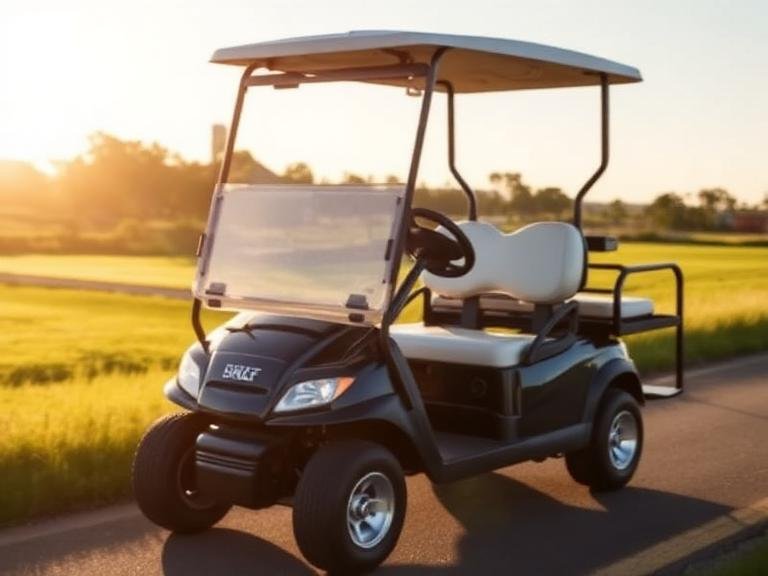
What exactly does it take to make golf carts compliant with road-legal regulations? In most professional situations, your vehicle must meet the federal definition of a Low-Speed Vehicle (LSV) by incorporating these five mandatory features:
- DOT-Approved Lighting Package: Headlights, taillights, brake lights, and front/rear turn signals.
- Impact-Resistant Windshield: A DOT-approved safety glass or heavy-duty acrylic windshield with wiper capabilities.
- Occupant Restraint Systems: Type 1 (lap) or Type 2 (lap/shoulder) seat belts for every designated seating position.
- Comprehensive Visibility System: An interior rearview mirror combined with exterior side-view mirrors.
- 17-Digit VIN & Speed Governance: A unique manufacturer Vehicle Identification Number for DMV registration, alongside a powertrain governed to travel strictly between 20 MPH and 25 MPH.
Table of Contents
- Direct Answer: Overcoming the Legal Hurdle
- What It Is: Golf Cart vs. Low-Speed Vehicle
- How It Works: Mechanical and Administrative Conversion
- The 5 Features That Make Golf Carts Compliant With Road-Legal Regulations
- Commercial and Practical Benefits
- Limitations of Street-Legal Carts
- Who Should Use It & Who Does Not Need It
- Common Mistakes in Compliance
- Buying Considerations: DIY vs. Factory Built
- Expert Industry Recommendation
- Frequently Asked Questions
Direct Answer: Overcoming the Legal Hurdle
To successfully make golf carts compliant with road-legal regulations, the vehicle must be physically upgraded and administratively reclassified from a mere “golf cart” to a “Low-Speed Vehicle” (LSV). A traditional golf cart is engineered exclusively to operate at speeds under 20 MPH on manicured, private pathways. To share the asphalt with full-sized passenger automobiles, the federal government intervenes to ensure minimum occupant protection.
By mandating DOT-approved safety glass, automotive lighting, seat belts, and precise speed governance, regulators ensure these smaller platforms behave predictably in mixed-use traffic zones. Integrating these specific features transforms your cart from a recreational toy into an insurable, registrable motor vehicle that can legally traverse public roads posted at 35 MPH or less.
What It Is: Golf Cart vs. Low-Speed Vehicle
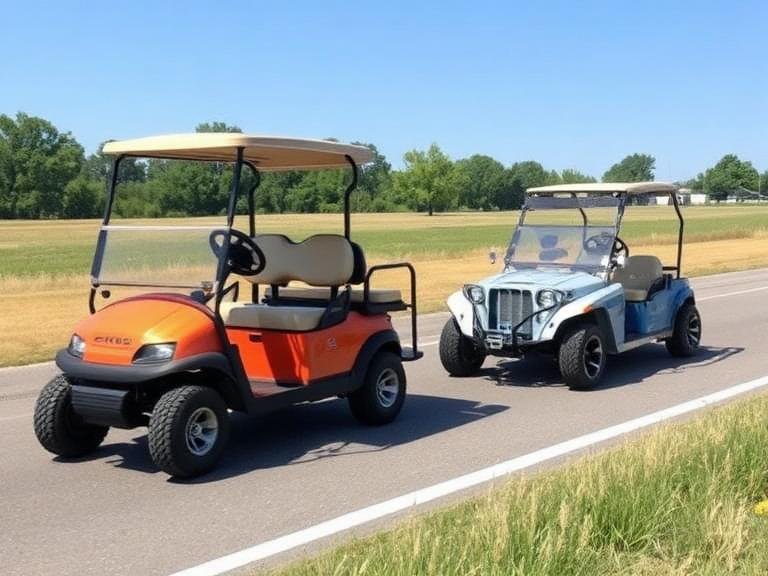
When industry practitioners discuss the requirements to make golf carts compliant with road-legal regulations, we are specifically referencing Federal Motor Vehicle Safety Standard (FMVSS) No. 500. This federal standard was established to create a distinct classification for four-wheeled motor vehicles that are too fast for sidewalks but too slow and lightweight to pass traditional highway crash testing.
Under FMVSS 500, a Low-Speed Vehicle must have a Gross Vehicle Weight Rating (GVWR) of less than 3,000 pounds. It is explicitly distinct from a standard golf cart. While a standard cart operates in an unregulated legal gray area on private property, an LSV operates under strict Department of Transportation oversight, requiring formal titling, licensing, and liability insurance just like a traditional sedan.
How It Works: Mechanical and Administrative Conversion
Achieving full road legality is a two-pronged process. Mechanically, the chassis must be retrofitted or originally manufactured with automotive-grade safety equipment. Electrically, the motor controller must be tuned so that the top speed falls strictly within the compliant 20 to 25 MPH performance band.
Administratively, the manufacturer or a certified state inspector must issue a valid 17-digit Vehicle Identification Number (VIN). This VIN is the golden ticket; it allows your local DMV to process the paperwork, issue a license plate, and legally authorize the vehicle for public infrastructure. Without the administrative paperwork, all the mechanical upgrades in the world will not protect you from a traffic citation.
The 5 Features That Make Golf Carts Compliant With Road-Legal Regulations
If you intend to bring a vehicle up to federal code, you cannot cherry-pick which safety features to install. The following five upgrades are universally mandatory across the United States.
1. Comprehensive DOT Lighting System
Standard golf cart lights are woefully inadequate for street use. To make golf carts compliant with road-legal regulations, you must install a full DOT-approved lighting package. This includes high and low-beam headlights, red taillights, illuminated brake lights that activate seamlessly with pedal depression, and front/rear turn signals. Furthermore, amber and red reflectors must be mounted on the front, rear, and sides to ensure the vehicle remains highly visible when parked at night. Other drivers must be able to anticipate your movements effortlessly.
2. DOT-Approved Safety Windshield
A flimsy, fold-down plastic windshield sourced from a generic pro shop will fail a DMV inspection immediately. Federal regulations require an impact-resistant windshield—typically AS1 or AS4 DOT-approved safety glass or shatter-resistant polycarbonate. This prevents the shield from shattering into lethal shards upon impact with road debris. For commercial users operating a 6 Passenger Golf Cart for resort shuttling, manual or electric windshield wipers are also heavily regulated and frequently required.
3. Seat Belts for All Occupants
A standard cart leaves passengers entirely unrestrained, which is a recipe for disaster during a collision with a heavier automobile. To legally integrate into public traffic, you must install Type 1 (lap) or Type 2 (lap and shoulder) seat belts at every single designated seating position. Whether you are driving a compact two-seater or transporting large groups in a 10 Passenger Electric Golf Cart, occupant retention during sudden braking or evasive maneuvers is an absolute baseline requirement.
4. 360-Degree Mirror System
Situational awareness on public roads is paramount. You cannot simply glance over your shoulder when navigating busy intersections. To safely monitor surrounding traffic and eliminate blind spots, the vehicle must be equipped with an interior multi-pane rearview mirror and at least one (but preferably two) exterior side-view mirrors.
5. Speed Governance and a 17-Digit VIN
The legal definition of an LSV dictates precise powertrain parameters. The vehicle must be capable of reaching a minimum of 20 MPH, but it absolutely cannot exceed 25 MPH on a paved, level surface. If a modified cart hits 26 MPH, it legally graduates into the passenger car category, subjecting it to highway crash-testing standards it cannot possibly pass. Finally, the cart must possess a legitimate 17-digit VIN from the manufacturer or assigned by the state. A simple serial number glued to the dashboard will not suffice for road registration.
Commercial and Practical Benefits
Upgrading to a vehicle that meets these stringent criteria unlocks massive commercial and lifestyle advantages. For commercial users, street-legal LSVs allow your staff to cross public roads legally, efficiently linking disjointed resort properties, university campuses, or municipal facilities without requiring heavy, expensive commercial trucks. You gain the ability to transport guests and move materials while significantly reducing operational costs and your corporate carbon footprint.
For residential owners, an LSV transforms a neighborhood novelty into a legitimate secondary vehicle. It becomes a viable, low-cost transport solution for grocery runs, school drop-offs, and local commuting, drastically reducing the wear and tear on your primary passenger automobile.
Limitations of Street-Legal Carts
Even when you successfully make golf carts compliant with road-legal regulations, they remain restricted vehicles. State laws universally dictate that LSVs are forbidden from operating on roadways with posted speed limits exceeding 35 MPH (though some states restrict them to 30 MPH). They can never enter highways or interstates. Furthermore, they lack airbags and crumple zones; if you are struck by a speeding SUV, the outcome will be severe. For heavy-duty applications requiring speeds of 40 MPH or extensive off-road towing, an LSV will severely underperform.
Who Should Use It & Who Does Not Need It
We highly recommend street-legal golf carts for residents of master-planned communities, university fleet managers, sprawling hospital complexes, and luxury resort operators. If your daily transit involves crossing public streets to reach local commercial plazas, investing in compliant New Golf Carts 2026 is the smartest financial and legal decision you can make.
Who does not need it: If your vehicle will absolutely never leave the private boundaries of your farm, hunting lease, or private 18-hole golf course, paying the premium for a street-legal safety package is a waste of capital. In these scenarios, exploring Off Road Golf Cart Manufacturers for rugged, non-compliant utility carts offers a far better return on investment.
Common Mistakes in Compliance
In our experience, the most catastrophic mistake consumers make is the DIY conversion attempt. Many buyers purchase cheap, used carts and buy unverified aftermarket light kits from the internet, assuming this satisfies local law enforcement. It does not. Retrofitting an older cart to secure a 17-digit VIN from the state involves rigorous police inspections, weigh station certificates, and massive bureaucratic nightmares.
The second common mistake is insurance negligence. Standard homeowner’s policies do not cover street-legal carts operating on public roads. You must purchase a specialized automotive liability policy tailored for Low-Speed Vehicles, or you risk total financial ruin in the event of an at-fault accident.
Buying Considerations: DIY vs. Factory Built
When performing a cost-benefit analysis on achieving compliance, you must weigh the agonizing price of a DIY conversion against purchasing a factory-built LSV. By the time you purchase a high-speed motor controller, DOT-rated tires, safety glass, seatbelts, and pay for state inspection fees, your total expenditure will often exceed the Brand New Club Car Golf Cart Price. For commercial fleets and serious residential users, we always advise bypassing the headache and buying a purpose-built LSV directly from premium Luxury Golf Cart Manufacturers.
Expert Industry Recommendation
At GT Golf Cart, we take commercial compliance incredibly seriously. If your operational blueprint requires public road use, we strongly recommend purchasing a vehicle that is manufactured, stamped, and documented as an LSV directly from the factory line. It guarantees immediate compliance, significantly better resale value, and immediate insurability.
Whether you are selecting from Affordable Golf Cart Brands or commissioning a high-end Custom Golf Cart, a factory-certified LSV ensures the chassis geometry, braking systems, and electrical harnesses are engineered specifically to handle 25 MPH speeds and the added weight of the safety equipment. Do not compromise your personal safety or commercial liability to save a few dollars upfront.
| Pros (Advantages) | Cons (Limitations) |
|---|---|
| Legal access to public roads (35 MPH or less). | Higher initial purchase and maintenance costs. |
| Replaces standard automobiles for short-distance errands, saving fuel. | Mandatory requirement to purchase automotive liability insurance. |
| Equipped with superior braking, lighting, and safety restraints. | Strictly prohibited from highways and roads exceeding 35 MPH. |
| Environmentally friendly mobility for eco-conscious businesses. | Requires annual DMV registration and licensing fees. |
| Feature/Requirement | Standard Golf Cart | Street-Legal LSV (FMVSS 500) |
|---|---|---|
| Top Speed | Under 20 MPH | 20 MPH to 25 MPH |
| Lighting & Signals | Optional / Basic | Mandatory (DOT Headlights, Taillights, Turn Signals, Brake Lights) |
| Restraint System | None | Mandatory (Type 1 or Type 2 Seat Belts) |
| Identification | Basic Serial Number | Mandatory 17-Digit VIN |
| Road Access | Private property / Golf courses only | Public roads with speed limits of 35 MPH or less |
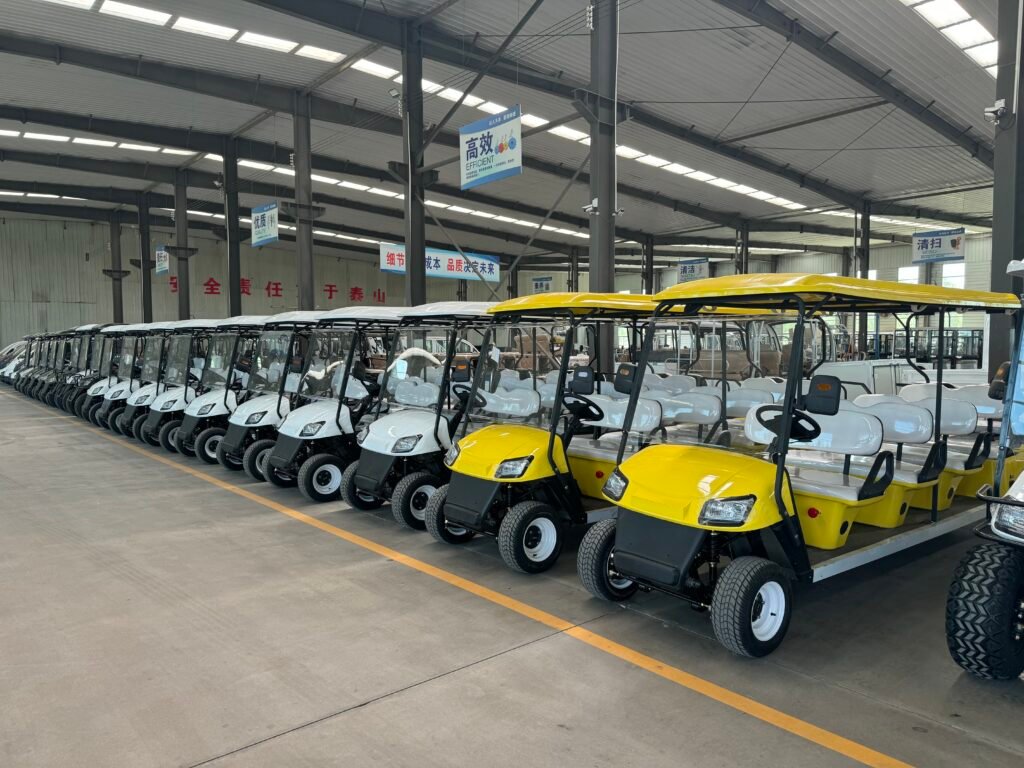
GT Golf Cart specializes in the design, manufacturing, and global supply of electric golf carts and low-speed vehicles. With over 12 years of industry experience, we deliver reliable mobility solutions for golf courses, resorts, communities, and commercial fleets worldwide.
Frequently Asked Questions
What top speed is required to make golf carts compliant with road-legal regulations?
According to federal FMVSS 500 guidelines, a Low-Speed Vehicle must be capable of reaching speeds greater than 20 MPH, but it cannot exceed 25 MPH on a paved, level surface. Carts operating under 20 MPH are generally strictly classified as off-road golf carts and cannot be legally registered for public roads.
Can I drive my street-legal golf cart on the highway?
No. Even when you make golf carts compliant with road-legal regulations, state laws universally restrict Low-Speed Vehicles from operating on roadways with a posted speed limit higher than 35 MPH. You may often cross a higher-speed road at a controlled intersection, but you cannot travel along it.
Does adding lights and seat belts automatically make a standard golf cart road-legal?
No. While adding DOT-approved lighting, seat belts, windshields, and mirrors fulfills the physical equipment requirements, you must also obtain a 17-digit VIN, pass a formal state inspection, secure title and registration, and purchase automotive liability insurance to be fully road-legal.
Authoritative References & Industry Standards
To ensure total regulatory compliance, we advise consulting the following authoritative bodies regarding Low-Speed Vehicle classifications:
- National Highway Traffic Safety Administration (NHTSA) – Governing body establishing the FMVSS No. 500 safety standards for low-speed vehicles.
- Legal Information Institute (Cornell Law School) – Full legal text of 49 CFR § 571.500 detailing mandatory LSV equipment.
- The Association for the Work Truck Industry (NTEA) – Commercial industry breakdowns of FMVSS 500 applications and exemptions.