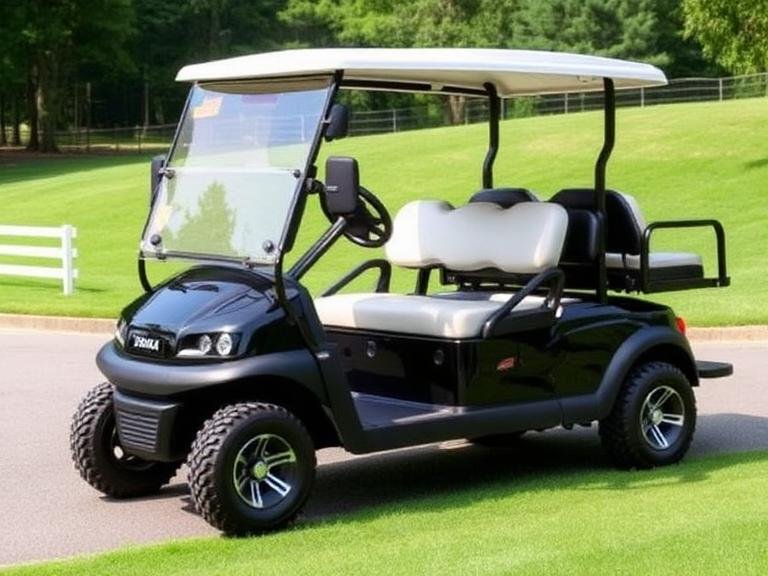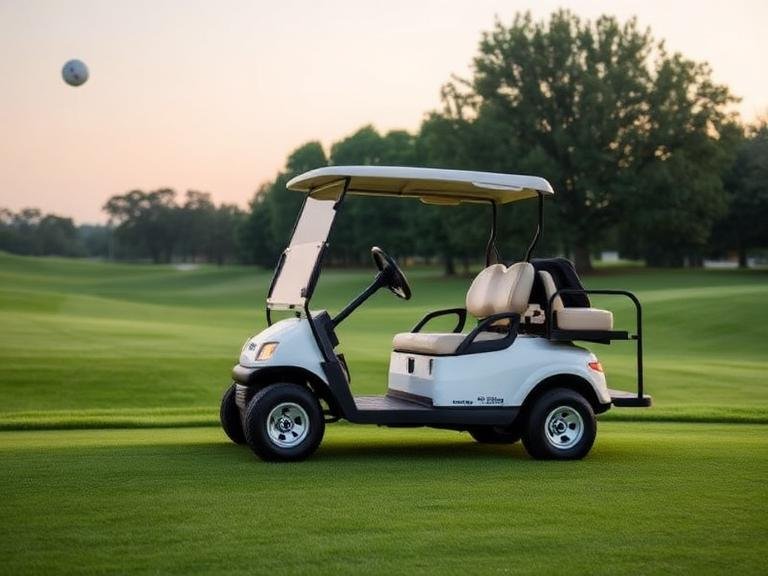
When operations managers, resort directors, and large estate owners look to move groups of people efficiently, the standard four-passenger or six-passenger vehicles quickly fall short. You end up deploying multiple vehicles, paying multiple drivers, and creating unnecessary traffic. This inevitably leads to a highly specific but increasingly common question in our industry: Is there a 10 seater golf cart?
From our experience engineering and manufacturing high-capacity vehicles at GT Golf Cart, the market for massive people movers is plagued by poorly converted, underpowered chassis that pose serious safety risks. Stretching a standard golf cart frame to fit ten people without upgrading the suspension, braking system, or drivetrain is a recipe for catastrophic failure. In this comprehensive guide, we will answer your search intent directly, break down the mechanical realities of ten-passenger vehicles, and provide you with commercial and practical judgment on whether you truly need a massive 10-seater, or if a heavy-duty 8-seater is actually the optimal solution for your fleet.
Quick Answer: Do 10-Passenger Golf Carts Exist?
Yes, there is a 10 seater golf cart. However, it is fundamentally different from a standard residential golf cart. These vehicles are highly specialized, stretched-chassis shuttles commonly referred to as multi-passenger trams or commercial personnel carriers.
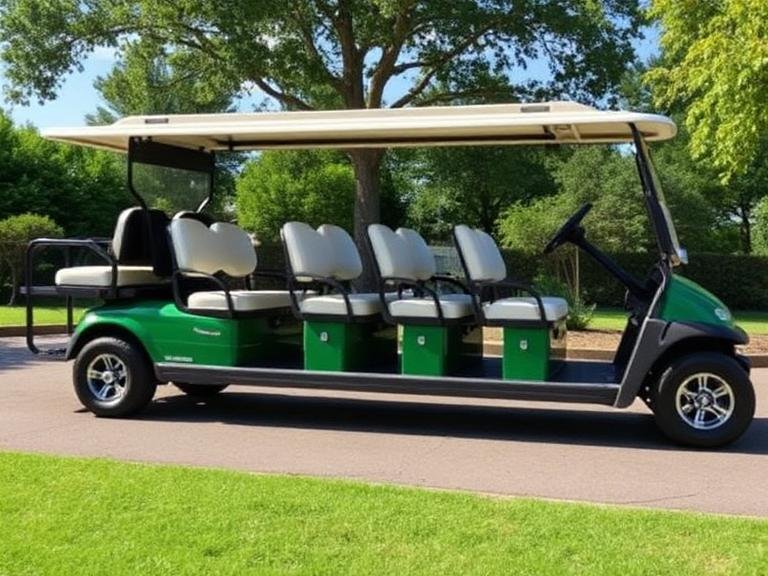
- Design: They typically feature five rows of forward-facing seats (2 passengers per row) or four rows forward with a rear-facing fold-down seat.
- Application: They are strictly designed for commercial use—resorts, theme parks, airport terminals, and massive industrial campuses.
- Performance: A legitimate 10 Passenger Golf Cart requires at least a 5000W AC motor, a massive lithium battery pack (minimum 150Ah+), and 4-wheel hydraulic disc brakes to safely stop the kinetic mass of ten adults.
In most professional situations, unless you are running a dedicated shuttle route, an 8-passenger vehicle offers a vastly superior turning radius and parking flexibility while still moving a large group.
Table of Contents
- What is a 10-Seater Golf Cart?
- How the Engineering Works (Chassis & Drivetrain)
- The Commercial Benefits
- Limitations and Hard Truths
- Who Should Use a 10-Seater
- Who Does Not Need One (The 8-Seater Argument)
- Common Procurement Mistakes
- Expert Buying Considerations
- Summary and Comparison Tables
- Expert Recommendation: The GT62R Solution
- Frequently Asked Questions (FAQ)
What is a 10-Seater Golf Cart?
A 10-seater golf cart is the apex of low-speed, high-capacity transport. You will rarely find these vehicles on a traditional golf course. Instead, they operate as a Commercial Golf Cart. To accommodate ten full-sized adults, manufacturers must stretch the wheelbase significantly—often extending the vehicle to over 160 inches in total length.
Because of this length, these vehicles belong in the category of multi-passenger trams. They are engineered with heavy-duty tubular steel or thick-gauge aluminum frames to prevent the chassis from sagging or buckling under a 1,600+ pound payload.
How the Engineering Works (Chassis & Drivetrain)
When you ask “Is there a 10 seater golf cart,” you must also ask *how* it operates. You cannot power a 10-passenger vehicle with a standard 48V DC motor and a set of old lead-acid batteries. The physical physics of moving that much mass from a dead stop requires massive torque.
An authentic, factory-built 10-seater utilizes an Alternating Current (AC) motor—typically 5kW (5000 Watts) or larger—paired with a high-amp controller (400 amps or more). AC motors are non-negotiable for heavy payloads because they do not lose torque as the vehicle accelerates, and they do not overheat on steep inclines like older DC motors.
Furthermore, stopping a fully loaded 10-passenger Electric Golf Cart requires severe mechanical intervention. Standard mechanical drum brakes on the rear wheels will physically fail. A legitimate high-capacity shuttle uses 4-wheel hydraulic disc brakes, ensuring uniform, aggressive stopping power regardless of the payload weight.
The Commercial Benefits
The return on investment (ROI) for a 10-seater in a commercial setting is immediate. If you are managing a massive sprawling resort, your goal is to move guests from the lobby to their remote villas quickly.
- Labor Efficiency: You pay one driver instead of two or three. Moving ten people in a single trip slashes your labor overhead.
- Traffic Reduction: Consolidating guests into one massive vehicle reduces the number of carts clogging up your campus pedestrian pathways.
- Guest Experience: Large families or corporate retreat groups prefer to travel together rather than being split up across multiple smaller 4 Passenger Golf Cart units.
Limitations and Hard Truths
We must use practical judgment: 10-passenger carts are logistical nightmares in tight spaces. The absolute biggest limitation is the turning radius. Because the wheelbase is incredibly long, you cannot easily make U-turns on narrow neighborhood streets or navigate tight, winding trails.
Secondly, parking is a severe issue. A 10-seater will not fit in a standard golf cart parking space, and it often will not fit inside a standard residential garage. It requires a dedicated, extended storage bay. Finally, the sheer weight of the vehicle limits its off-road capability. While you can lift it, an extended Off Road Golf Cart carrying ten people is highly susceptible to getting high-centered (stuck on its belly) on uneven terrain.
Who Should Use a 10-Seater
For commercial users and heavy-duty applications: Mega-resorts, large university campuses, factory facility tours, airport tarmac transport, and massive commercial farming operations. If you have wide, paved, dedicated thoroughfares and a strict mandate to move volume, the 10-seater is your best operational tool.
Who Does Not Need One (The 8-Seater Argument)
For residential users and standard communities: Do not buy a 10-seater for your neighborhood. It is overkill. It will dominate your driveway, scrape its undercarriage on speed bumps due to the long wheelbase, and prove impossible to park at the local community center.
If you have a large family or frequently entertain guests, we strongly recommend an 8 Passenger Golf Cart instead. An 8-seater (usually configured with three forward-facing rows and one rear-facing row) is the exact “sweet spot” of the industry. It provides massive seating capacity but maintains a manageable wheelbase, allowing it to function effectively as a Street Legal Golf Cart in standard municipal environments.
Common Procurement Mistakes
Expert Insight: The most catastrophic mistake we see buyers make is purchasing a “stretched” aftermarket 10-seater built by a third-party mechanic rather than a factory-engineered model.
Taking a standard cart, cutting the frame in half, welding in an extension, and throwing more seats on it compromises the structural integrity of the vehicle. This leads to frame sagging, snapped axles, and burned-out motors. If you are buying high-capacity, you must buy a vehicle engineered from the ground up as a Special Golf Cart with an originally extruded, one-piece chassis.
Expert Buying Considerations
When deploying capital for a multi-passenger vehicle, you must demand modern specifications:
- Lithium-Ion Power: Never buy a 10-seater or an 8-seater running on lead-acid batteries. The vehicle is already heavy; adding 400 pounds of lead-acid batteries destroys range and efficiency. Demand LiFePO4 (Lithium Iron Phosphate) battery packs.
- Electric Power Steering (EPS): Steering a fully loaded stretched cart manually is exhausting. EPS is mandatory to prevent driver fatigue.
- Suspension: Ensure the vehicle has heavy-duty front MacPherson struts or independent A-arm suspension and reinforced rear leaf springs to handle the payload.
Summary and Comparison Tables
Quick Summary Table: High-Capacity Vehicle Categories
| Vehicle Size | Typical Seating Configuration | Best Primary Use Case |
|---|---|---|
| 6 Passenger Golf Cart | 2 Forward Rows, 1 Rear-Facing | Large families, standard neighborhood cruising. |
| 8 Passenger Golf Cart | 3 Forward Rows, 1 Rear-Facing | Large estates, wedding venues, premium hospitality. |
| 10 Passenger Golf Cart | 4 Forward Rows, 1 Rear-Facing | Mega-resorts, industrial campuses, airport shuttles. |
Comparison Table: 8-Seater vs. 10-Seater
| Specification | 8-Passenger Golf Cart | 10-Passenger Golf Cart |
|---|---|---|
| Maneuverability / Turning Radius | Good. Can navigate standard streets. | Poor. Requires wide turns and open spaces. |
| Garage Storage | Fits in extended or tandem garages. | Requires dedicated commercial storage bays. |
| Motor Requirement | 4000W – 5000W AC Motor | Strictly 5000W+ AC Motor |
| Ideal Buyer | Large Families / Mid-size Commercial | Strictly Heavy Commercial / Industrial |
Pros and Cons of a 10-Passenger Golf Cart
| Pros (Advantages) | Cons (Limitations) |
|---|---|
| Moves massive groups in a single, efficient trip. | Extremely long wheelbase makes tight turns impossible. |
| Drastically cuts down on driver labor costs for resorts. | Requires a massive, expensive lithium battery to maintain range. |
| Provides a cohesive, shared experience for VIP guests. | Prone to getting high-centered on uneven terrain or speed bumps. |
| Reduces vehicle congestion on commercial campuses. | Difficult to transport; requires a highly specialized flatbed trailer. |
Expert Recommendation: The 8-Seater Sweet Spot
In most professional situations, we find that buyers searching for a 10-seater are actually better served by an elite, heavy-duty 8-seater. The 8-seater provides 80% of the passenger capacity with 100% better drivability, parking flexibility, and overall structural rigidity.
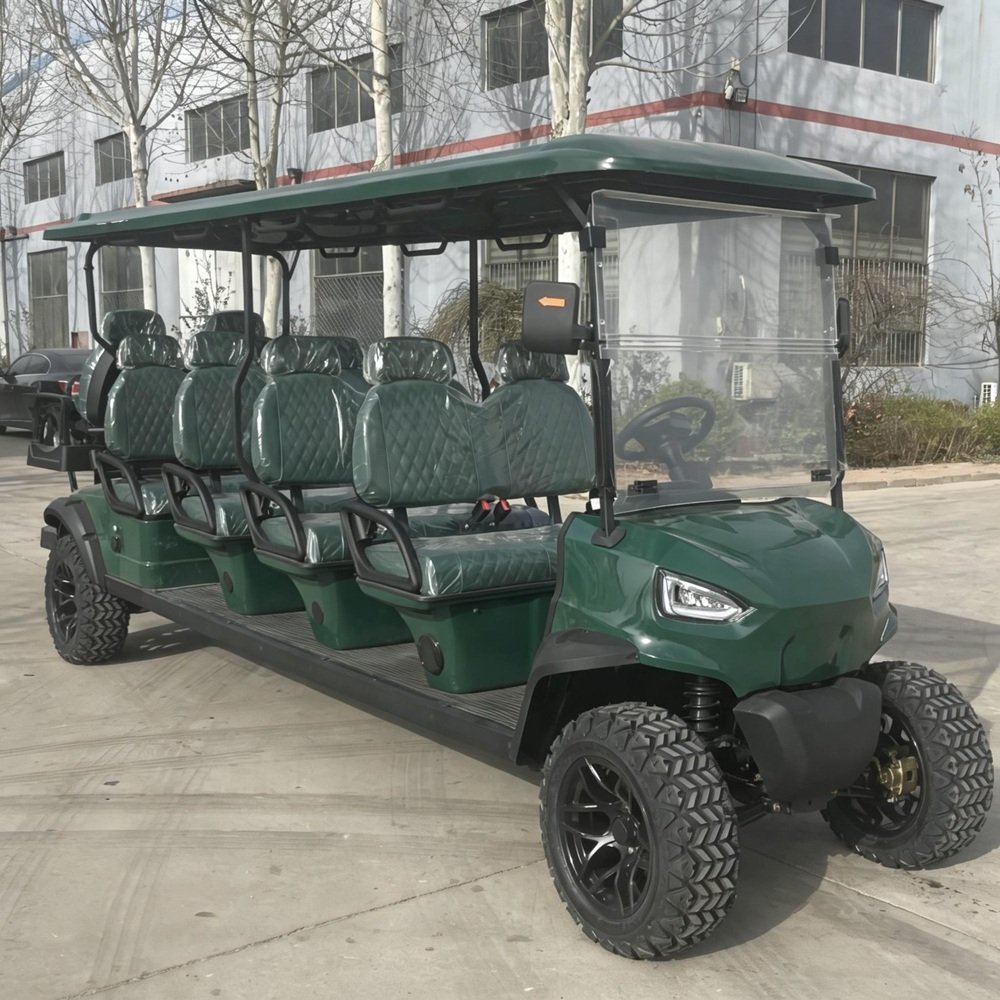
10 Passenger Electric Golf Cart GT82R-1
If you need to move a crowd but refuse to compromise on driving dynamics, the Thunder Series GT62R is our premier recommendation. It bridges the gap between massive capacity and luxury Luxury Golf Cart maneuverability.
- Power: AC 5000W electric motor for consistent and efficient power under full payload.
- Capacity: Spacious 8-seat configuration (3 rows forward, 1 row rear-facing) for optimal passenger transport.
- Ride Quality: Lifted suspension with heavy-duty shocks for improved ride comfort on uneven terrain.
- Safety: 4-wheel hydraulic disc braking system ensures aggressive, reliable stopping power.
- Control: Electric power steering included standard for effortless maneuverability, even fully loaded.
Explore the Thunder Series GT82R-1
By opting for a heavy-duty 8-seater like the GT62R, commercial operators and large families secure the capacity they need without adopting the severe logistical headaches associated with navigating a 10-passenger bus-style cart.
Frequently Asked Questions (FAQ)
Is there a 10 seater golf cart available for residential use?
While you can legally purchase a 10-seater for private use, it is highly discouraged for standard residential neighborhoods. The excessive length makes it difficult to turn around in cul-de-sacs, it will not fit in a standard garage, and it runs a high risk of scraping its undercarriage on standard residential speed bumps. For large families, an 8-passenger or 6-passenger cart is vastly superior.
Do I need a special license to drive a 10-passenger golf cart?
If the vehicle is operated on private property (like a resort or campus), a standard driver’s license is typically sufficient. However, if you intend to drive it on public roads as a Street Legal Low Speed Vehicle (LSV), you must have a valid driver’s license, the vehicle must have a VIN, DOT-approved safety features, and it must be registered and insured according to your specific local and state motor vehicle laws.
Why do high-capacity golf carts need 4-wheel hydraulic brakes?
A standard 2-passenger golf cart uses rear-wheel mechanical drum brakes, relying on a steel cable to engage the brake pads. When you stretch a cart to hold 8 or 10 passengers, the gross vehicle weight skyrockets. Cable-driven drum brakes physically cannot generate enough friction to stop that much mass quickly. 4-wheel hydraulic disc brakes use fluid pressure to clamp down on rotors on all four wheels simultaneously, providing safe, immediate stopping power.
Authoritative Industry References
To ensure our safety guidelines and vehicle classifications align with federal and industrial standards, we reference the following authorities:
- National Highway Traffic Safety Administration (NHTSA): Federal safety standards defining the classification, speed limits, and mandatory equipment for Low Speed Vehicles (LSVs). Visit NHTSA
- Occupational Safety and Health Administration (OSHA): Federal guidelines governing the safe operation of powered industrial trucks and commercial personnel carriers in workplace environments. Visit OSHA
- American National Standards Institute (ANSI): The organization overseeing the Z130.1 and Z135 safety and performance standards specifically for golf cars and personal transport vehicles. Visit ANSI