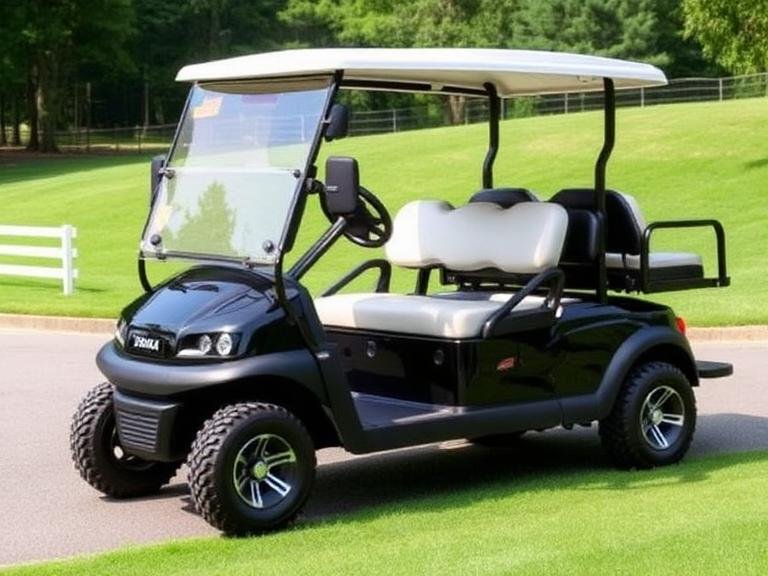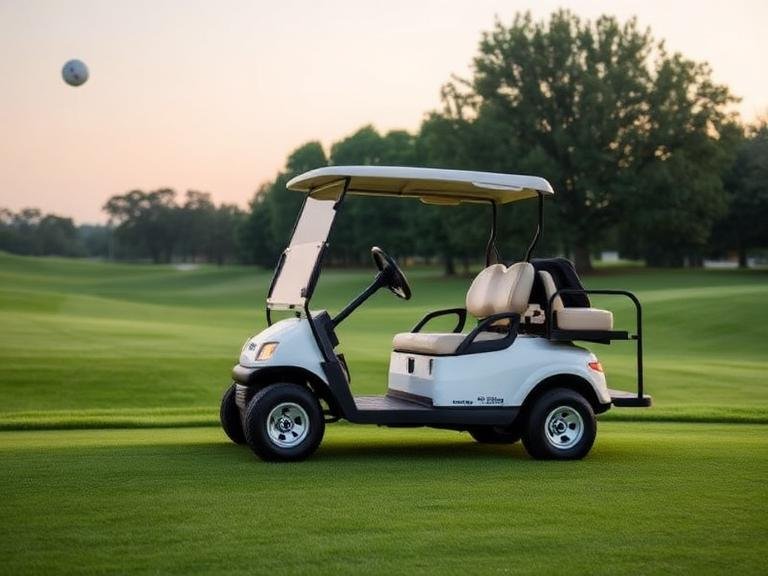
The standard 8-inch steel wheels and turf tires that roll off the assembly line are engineered for one specific environment: manicured country club grass. If you intend to use your vehicle for neighborhood commuting, off-road property management, or transporting guests around a resort, those factory specifications are a functional liability. Upgrading your rolling stock changes the entire dynamic of the vehicle, from its top speed and torque curve to its suspension clearance and aesthetic authority. However, navigating the aftermarket requires commercial and practical judgment.
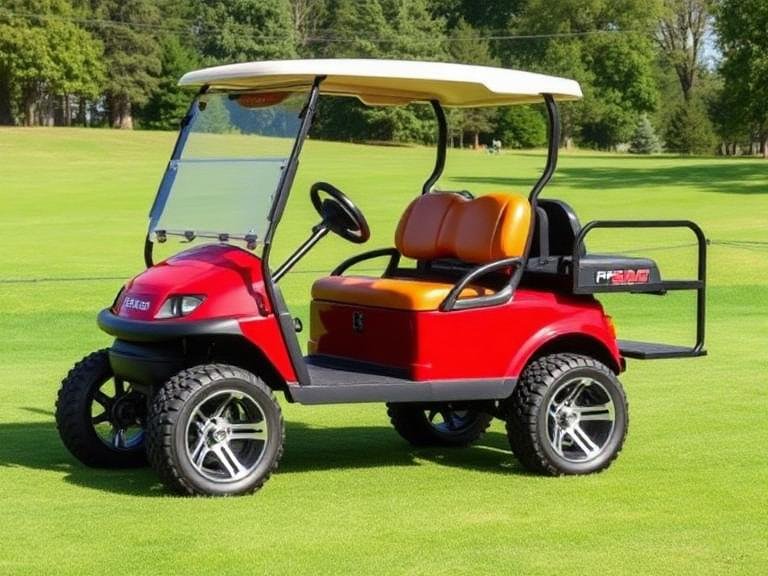
From our experience at GT Golf Cart—designing, manufacturing, and supplying electric mobility solutions globally for over 12 years—we see owners routinely damage their suspension geometry or burn out their electric motors by installing incompatible wheel combinations. You cannot simply bolt on 23-inch mud tires and expect factory performance. In this comprehensive engineering guide, we will break down exactly how custom golf cart wheels and tires interact with your chassis, the hard rules of offsets and lift kits, and whether a specific upgrade is actually worth your investment.
Quick Answer: Getting It Right the First Time
Before you invest in custom golf cart wheels and tires, you must align the tire’s overall diameter with your cart’s suspension limits and motor output:
- Up to 18.5 inches (Overall Diameter): Fits virtually all stock golf carts without a lift kit. Best for street and light turf use.
- 20 inches: Requires heavy-duty rear leaf springs or a minimal 3-inch lift on most models to prevent fender rubbing.
- 22 to 23 inches: Strictly requires a 4-inch to 6-inch lift kit and a modified wheel offset (typically 3:4) to clear the suspension components.
In most professional situations, we recommend pairing 14-inch aluminum wheels with 20-inch DOT-approved street tires for standard neighborhood cruisers, offering the perfect balance of ride comfort, speed gain, and torque retention.
Table of Contents
- What Are Custom Golf Cart Wheels and Tires?
- How Upgrading Works (The Physics)
- The 9 Critical Things You Must Know
- Commercial and Practical Benefits
- Limitations and Hard Truths
- Who Should Use Custom Wheels
- Common Mistakes to Avoid
- Expert Buying Considerations
- Summary and Comparison Tables
- Expert Recommendation
- Frequently Asked Questions
What Are Custom Golf Cart Wheels and Tires?
Custom golf cart wheels and tires represent the entire rolling assembly of the vehicle. The “wheel” refers strictly to the aluminum or steel rim, typically offered in 10-inch, 12-inch, 14-inch, or 15-inch diameters. The “tire” is the rubber casing mounted to it. The aftermarket industry categorizes these assemblies based on the final outer diameter (OD) of the inflated tire and the aggressiveness of the tread pattern.
How Upgrading Works (The Physics of the Rolling Assembly)
When you bolt larger custom golf cart wheels and tires onto your hub, you are altering the final drive ratio of the electric or gas powertrain. An electric golf cart motor spins at a fixed maximum RPM. By increasing the diameter of the tire, the cart covers more ground per single revolution of the axle. Consequently, upgrading from an 18-inch tire to a 22-inch tire will artificially increase your top speed by roughly 3 to 4 MPH without any motor modifications.
However, physics demands a trade-off. What you gain in top-end speed, you sacrifice in low-end torque. Pushing a massive, heavy mud tire requires significantly more amperage from the battery pack and controller. This is why evaluating your cart’s baseline capabilities—such as checking the latest Electric Golf Cart Models—is critical before executing a heavy-duty wheel upgrade.
The 9 Critical Things You Must Know
1. The Lift Kit Threshold
You cannot ignore clearance limits. If your selected custom golf cart wheels and tires possess an outer diameter of 20.5 inches or greater, you must install a suspension lift kit. For heavy-duty applications like a 6 Passenger Golf Cart, failing to install a lift kit will result in catastrophic fender rubbing when the rear seat is fully loaded.
2. Understanding Wheel Offset
Wheel offset dictates how far the wheel sticks out from the hub. Stock wheels have a “centered” offset (e.g., 3:3 or 4:4, meaning 3 inches of the wheel is behind the hub, and 3 inches is in front). Custom wheels generally utilize a “negative” offset (like 3:4). This pushes the tire further away from the cart’s frame, widening the stance for stability and preventing large, knobby tires from grinding against the steering tie rods.
3. Tread Type Selection
Tire tread defines utility. You must choose between Street/Turf (smooth, quiet, gentle on grass), All-Terrain (A/T – a hybrid tread suitable for gravel and pavement), and Mud-Terrain (M/T – aggressive lugs for deep mud and farm work). Using M/T tires on asphalt will result in rapid tread wear and a deafening, vibrating ride.
4. Department of Transportation (DOT) Approval
If you intend to drive your cart on public neighborhood roads as a Low-Speed Vehicle (LSV), federal and state laws mandate DOT-approved tires. These tires undergo rigorous safety testing and feature a distinct tread pattern designed to channel water and grip asphalt safely. Non-DOT tires will fail street legal inspections.
5. The Universal Bolt Pattern
Almost all major golf cart brands (Club Car, EZGO, Yamaha) use a standardized 4×4 bolt pattern. This means there are 4 lug nuts spaced 4 inches (101.6mm) apart across the center. You can generally swap custom golf cart wheels and tires across different brands without issue, assuming you account for fender clearance.
6. Impact on Battery Lifespan
Heavy rotational mass requires more energy to move. Bolting on 50 pounds of cast aluminum and aggressive rubber will draw higher continuous amperage from your batteries. If you are concerned about range anxiety, review our guide on the Electric Golf Cart Lifespan to understand how high-amp draws degrade lead-acid and lithium packs over time.
7. Metric vs. Standard Tire Sizing
Tire sizing is notoriously confusing. A standard size reads as 22×11-10 (22″ tall, 11″ wide, for a 10″ wheel). A metric size reads as 205/50-10 (205mm wide, side profile is 50% of the width, for a 10″ wheel). Metric tires are almost exclusively low-profile street tires, while standard measurements are usually reserved for lifted, off-road applications.
8. Tire Pressure Dynamics
Factory 8-inch tires usually run at 18-22 PSI. Low-profile 14-inch custom street tires require higher pressure (often 30-35 PSI) to prevent the aluminum rim from striking potholes and bending. Conversely, 23-inch mud tires are often run at lower pressures (12-15 PSI) to maximize the contact patch in soft dirt.
9. Lug Nut Pitch Variations
While the 4×4 wheel bolt pattern is universal, the threaded lug studs are not. Yamaha uses a Metric thread pitch (12mm x 1.25), whereas Club Car and EZGO use standard threads (1/2″ x 20). When addressing Common Club Car Problems, we frequently see stripped hubs because owners attempted to force metric lug nuts onto standard studs.
Commercial and Practical Benefits
Upgrading to custom golf cart wheels and tires provides profound stability enhancements. The negative offset of custom wheels widens the cart’s track width by roughly 2 to 4 inches. In most professional situations—such as traversing steep hills on a farm or navigating uneven construction sites—this wider stance drastically reduces the rollover risk. Furthermore, high-quality radial street tires eliminate the harsh, bumpy ride associated with cheap bias-ply factory rubber.
Limitations and Hard Truths
We must evaluate practical limitations. If you install 23-inch heavy tires without upgrading your motor controller, you will lose up to 20% of your hill-climbing torque. The stock 250-amp to 275-amp controllers found in basic carts will overheat if forced to push massive tires up steep inclines repeatedly. If you live in a hilly terrain, you must either stick to 20-inch tires or upgrade your electronic speed controller to a 400-amp unit.
Who Should Use Custom Wheels
We recommend custom setups for commercial users managing large properties, hunters requiring ground clearance, and neighborhood residents who use their carts primarily on paved roads. If you are evaluating a Luxury Golf Cart, 14-inch alloy wheels wrapped in DOT street tires are the undisputed standard for maximizing aesthetic appeal and ride comfort.
For strictly walking golfers and those who never leave the fairway, custom aggressive tires are unnecessary and may actually be banned by your local course superintendent for tearing up the grass.
Common Mistakes to Avoid
In our testing, the most frequent commercial error is mismatched purchasing. Buyers will purchase a gorgeous set of 12-inch wheels with 22-inch tires, bolt them onto a stock-height cart, and instantly shred the tire sidewall against the frame during the first tight turn. Always confirm your lift height compatibility before ordering.
Expert Buying Considerations
When calculating costs, remember that a proper upgrade involves more than just the tires. If you are reviewing a Brand New Club Car Golf Cart Price, you must allocate an additional $600 to $1,200 for a quality wheel, tire, and lift kit package. Do not buy cheap, unbranded cast aluminum wheels, as they are prone to cracking under heavy loads. Look for reputable brands and ensure the assemblies come pre-mounted and inflated.
Summary and Comparison Tables
Quick Summary Table: Sizing & Lift Requirements
| Tire Outer Diameter | Recommended Application | Lift Kit Required? |
|---|---|---|
| 18″ – 18.5″ | Strictly Golf Course / Paved Paths | No Lift Required |
| 20″ – 20.5″ | Neighborhood Cruising / Light Trails | No (Except on some older Club Cars) |
| 22″ | Off-Road / Farm / Heavy Duty | Yes (Minimum 4-inch Lift) |
| 23″ + | Extreme Mud / Rock Crawling | Yes (Minimum 6-inch Lift) |
Comparison Table: Tread Patterns
| Tread Type | Best Terrain | Ride Quality on Pavement | Turf Safe? |
|---|---|---|---|
| Street (Radial / DOT) | Asphalt, Concrete, Smooth Paths | Excellent (Silent, smooth) | Yes |
| All-Terrain (A/T) | Gravel, Dirt Roads, Lawns | Good (Slight hum) | Usually Yes |
| Mud-Terrain (M/T) | Deep Mud, Loose Rock, Sand | Poor (Loud, vibrates heavily) | No (Will tear grass) |
Pros and Cons of Custom Wheels and Tires
| Pros (Advantages) | Cons (Disadvantages) |
|---|---|
| Increases top-end speed by 3-4 MPH without motor tuning. | Reduces low-end climbing torque on electric models. |
| Wider negative offset drastically improves side-to-side stability. | Heavier rotational mass slightly decreases battery range. |
| Aggressive treads allow access to muddy/sandy commercial terrain. | Requires an expensive lift kit for anything over 20 inches. |
| Transforms the aesthetic from a “golf” vehicle to a custom LSV. | Mud tires provide a harsh, noisy ride on pavement. |
Expert Recommendation from GT Golf Cart
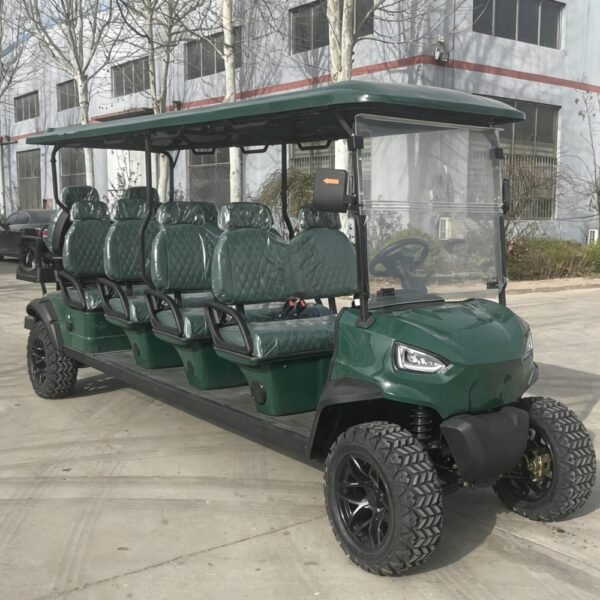
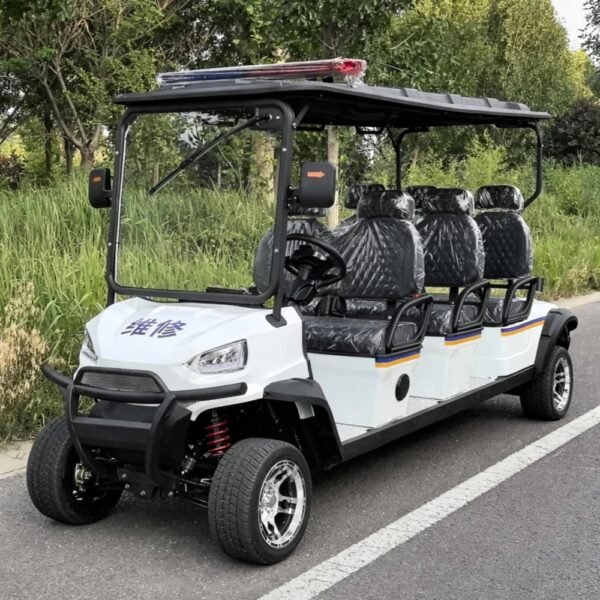
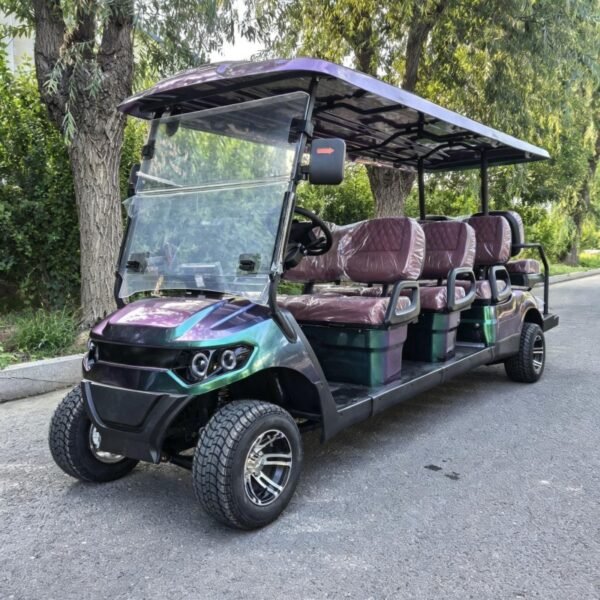
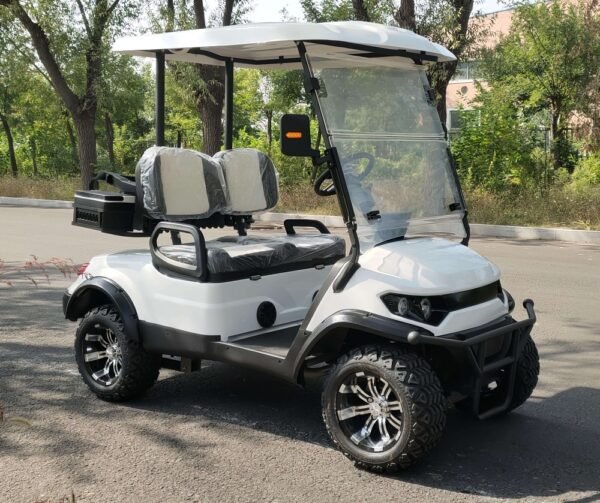
GT Golf Cart specializes in the design, manufacturing, and global supply of electric golf carts and low-speed vehicles. With over 12 years of industry experience, we deliver reliable mobility solutions for golf courses, resorts, communities, and commercial fleets worldwide.
If you are reviewing Affordable Golf Cart Brands or upgrading an existing fleet, we strongly advise against over-tiring your vehicle. For 80% of our clients operating in residential or resort environments, a 14-inch machined alloy wheel paired with a 205/30-14 DOT-approved low-profile street tire is the definitive standard. It requires no lift kit, preserves factory motor torque, and provides a sleek, modern aesthetic that drastically increases the vehicle’s resale value.
For commercial users operating in the agricultural or hunting sectors, stepping up to a Golf Cart Manufacturers in Florida standard 6-inch A-Arm lift kit with 23-inch All-Terrain tires is mandatory for ground clearance.
Frequently Asked Questions (FAQ)
Can I put 10-inch wheels on my golf cart without a lift kit?
Yes. The wheel diameter (10-inch, 12-inch, or 14-inch) does not dictate whether you need a lift kit; the overall outer diameter of the *tire* does. You can easily fit 14-inch wheels on a non-lifted golf cart as long as they are wrapped in low-profile tires that keep the total height under 18.5 inches.
Why do my new custom wheels rub when I turn?
Fender rubbing during tight turns means either your tire’s overall diameter is too large for your suspension height, or you purchased wheels with a centered offset (4:4) instead of a negative offset (3:4) which fails to push the tire away from the internal wheel well structures.
Are DOT-approved tires required for golf carts?
If you drive your golf cart exclusively on private property or a golf course, DOT tires are not required. However, if you are registering your cart as a street-legal Low-Speed Vehicle (LSV) to drive on public roads, state and federal laws mandate DOT-certified tires for safety and traction compliance.
Authoritative Industry References
To ensure our manufacturing standards and safety guidelines align with federal mobility regulations, we reference the following authoritative organizations:
- Department of Transportation (DOT): Federal regulations regarding highway safety and Low-Speed Vehicle (LSV) tire certification requirements. Visit the U.S. DOT
- National Highway Traffic Safety Administration (NHTSA): Federal safety standards for motor vehicle equipment, including tire load ratings and speed classifications. Visit NHTSA Tire Safety
- SAE International: Global engineering standards for mobility professionals, defining the structural testing protocols for aluminum and steel wheel integrity. Visit SAE Standards