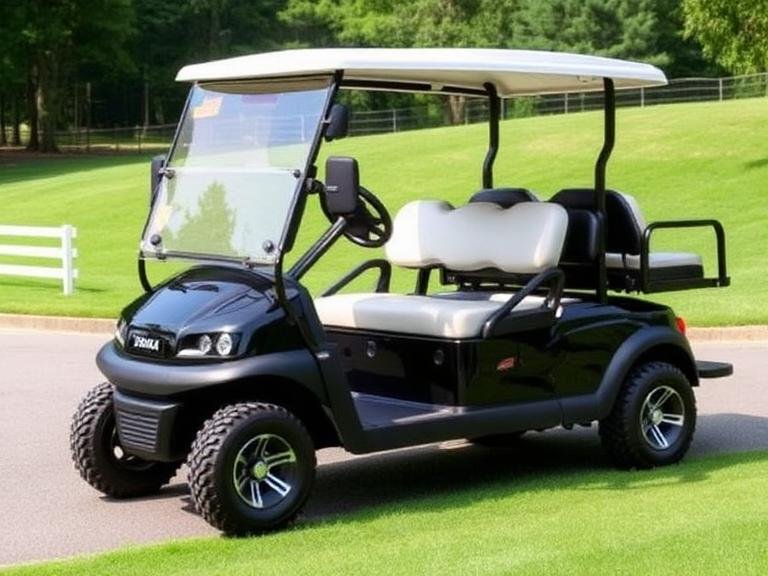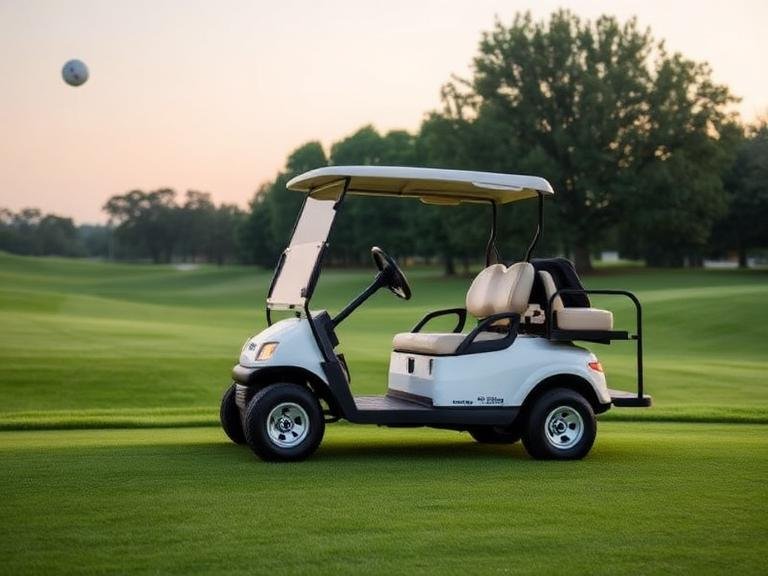
Facility managers, resort directors, and warehouse operators waste millions of dollars annually by purchasing the wrong utility vehicles for their fleets. Buying a standard residential golf cart and expecting it to survive a 12-hour daily shift hauling maintenance equipment or hotel guests is a recipe for catastrophic mechanical failure. When you need a reliable workhorse, understanding how to Choose the Right Electric Golf Cart for Commercial Use is the difference between a high-ROI asset and a constant maintenance liability.
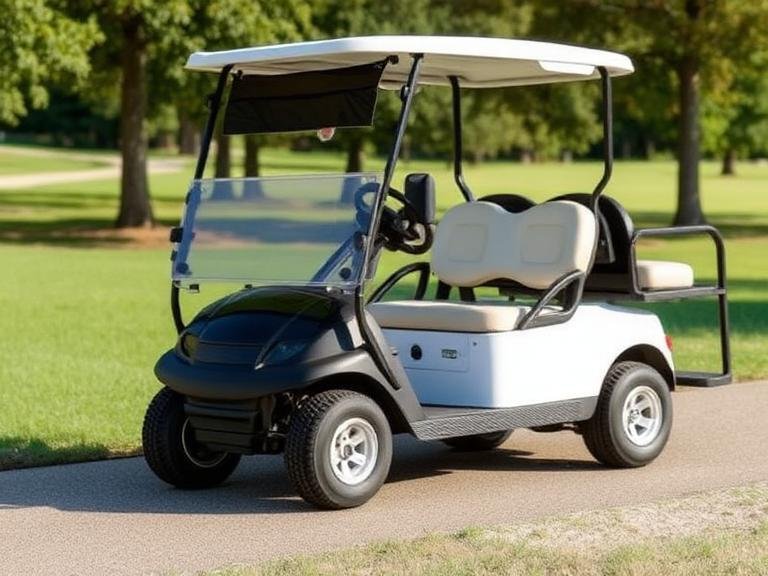
From our experience engineering and deploying fleet vehicles, the requirements for a Commercial Golf Cart are entirely distinct from what a weekend golfer needs. Commercial applications demand high-torque AC motors, high-capacity lithium battery architecture, reinforced suspension systems, and specific safety compliance measures. In this guide, we are bypassing the generic sales brochures to provide you with the hard, practical criteria industry professionals use to evaluate and procure electric fleet vehicles.
Quick Answer: How to Choose the Right Electric Golf Cart for Commercial Use
To Choose the Right Electric Golf Cart for Commercial Use, you must prioritize a 72V lithium-ion battery system and an AC (Alternating Current) electric motor capable of at least 5,000W of rated power. You must match the chassis payload capacity strictly to your daily operational weight, ensure the vehicle meets local Low-Speed Vehicle (LSV) requirements if operating on public roads, and select a suspension system designed for your specific facility terrain. Never attempt to use a standard DC-motor, lead-acid residential cart for heavy-duty commercial applications.
Table of Contents
- What is a Commercial Electric Golf Cart and How Does it Work?
- Benefits and Limitations of Commercial Electric Carts
- 10 Tips to Choose the Right Electric Golf Cart for Commercial Use
- Who Should Use It (And Who Does Not Need It)
- Common Mistakes and Buying Considerations
- Summary and Comparison Tables
- Expert Recommendation & Featured Product
- Frequently Asked Questions
What is a Commercial Electric Golf Cart and How Does it Work?
A commercial Electric Golf Cart is an industrial-grade utility or personnel transport vehicle designed for continuous, severe-duty operation. Unlike standard 36V or 48V carts built for traversing manicured fairways at 12 MPH, commercial units operate on 72V architectures.
How it works involves the integration of an AC electric motor and an advanced motor controller. When the operator presses the accelerator, the controller pulls energy from the lithium battery bank and converts it into alternating current, delivering immediate, high-torque power to the rear transaxle. This setup allows the vehicle to haul heavy payloads (often exceeding 1,000 lbs) up steep inclines without overheating or stalling, a feat impossible for older DC motor configurations.
Benefits and Limitations of Commercial Electric Carts
We recommend lithium-powered electric carts over internal combustion (gas) carts for nearly all commercial applications today. The benefits are primarily financial and operational. Electric fleets require zero oil changes, no spark plug replacements, no belt tensioning, and they eliminate the massive liability of storing highly flammable liquid fuel on your property. Furthermore, they operate silently and emit zero exhaust, making them the only viable choice for indoor warehouse use or luxury resort environments where noise pollution is unacceptable.
However, you must be aware of the limitations. Electric commercial vehicles have a higher initial acquisition cost compared to their gas counterparts. Additionally, while lithium batteries charge rapidly, you still must factor charging downtime into your operational schedule. If your facility runs continuous 24-hour operations without any stationary downtime, you will need to establish strategic opportunity-charging protocols to keep the fleet moving.
10 Tips to Choose the Right Electric Golf Cart for Commercial Use
In most professional situations, applying these ten procurement rules will prevent you from making a costly fleet purchasing error.
1. Mandate Lithium-Ion Battery Technology
Do not buy lead-acid batteries for commercial use. Lead-acid batteries require weekly watering, terminal cleaning, and they degrade rapidly if not charged perfectly. A 72V lithium-ion battery requires zero maintenance, charges in half the time, weighs significantly less, and lasts three to five times longer. The higher upfront cost pays for itself within the first two years of fleet operation.
2. Assess Passenger and Payload Capacity Realistically
Buy for your peak demand, not your average day. If you run a campus tour operation, a 6 Passenger Golf Cart might suffice for daily use, but during events, you will bottleneck your logistics. In those scenarios, upgrading to a high-capacity 10 Passenger Golf Cart shuttle is a smarter commercial decision. Ensure the chassis GVWR (Gross Vehicle Weight Rating) supports full passenger capacity plus cargo.
3. Insist on AC Motors (Alternating Current)
DC motors are obsolete for heavy-duty applications. AC motors are brushless (meaning less maintenance), more energy-efficient, and they maintain their top speed even when driving uphill under load. For commercial use, look for an AC motor rated at 5,000W or higher.
4. Verify Street Legal (LSV) Compliance
If your maintenance staff or security personnel need to cross public roads to navigate your facility, your vehicles must be street legal. A Street Legal Golf Cart (also known as a Low-Speed Vehicle or LSV) comes equipped with a 17-digit VIN, DOT-approved windshields, seatbelts, turn signals, mirrors, and headlights.
5. Match the Tires and Suspension to the Terrain
Warehouse operations need smooth, non-marking tires with standard suspension. However, if your staff is navigating construction sites or large agricultural properties, you must select an Off Road Golf Cart setup featuring lifted independent front suspensions, aggressive tread tires, and minimum ground clearance of 10 inches or more.
6. Demand On-Board Smart Charging
Commercial vehicles should not rely on bulky external charging blocks that can be lost, damaged, or driven over. Choose a cart with a built-in, on-board smart charger that plugs directly into a standard 110V/120V wall outlet. This allows your team to charge the vehicle anywhere on the property.
7. Evaluate the Braking System
When you put 1,200 lbs of cargo on a vehicle, stopping power is critical. Standard mechanical drum brakes are insufficient for heavy commercial use. Demand four-wheel hydraulic disc brakes and an electromagnetic parking brake that engages automatically when the vehicle stops.
8. Utilize Manufacturer Customization
Do not force a standard vehicle to do a specialized job. Work with a manufacturer that provides a Custom Golf Cart program. Whether you need an enclosed aluminum cargo box for housekeeping, ladder racks for maintenance, or a medical stretcher bed for campus EMS, order the vehicle built for the specific task.
9. Review the Warranty and Parts Availability
A commercial vehicle is a tool. When a tool breaks, it costs you money. Ensure the manufacturer offers a robust commercial warranty (not just a residential warranty) and maintains a deep domestic inventory of replacement parts. Ask explicitly about the lead time for replacement motor controllers and transaxles.
10. Calculate Total Cost of Ownership (TCO)
Do not base your procurement on the initial purchase price. In our testing, a lithium-powered AC cart priced 20% higher than a basic DC lead-acid cart actually costs 35% less to operate over a five-year lifecycle due to eliminated battery replacement costs, lower energy consumption, and reduced maintenance labor.
Who Should Use It (And Who Does Not Need It)
For commercial users—including universities, sprawling luxury resorts, industrial warehouses, large-scale event venues, and municipal parks departments—investing in heavy-duty electric commercial carts is non-negotiable. These entities require vehicles that can endure 40+ miles of daily driving, heavy payloads, and abuse from multiple rotating drivers.
Who does not need a commercial-grade electric cart? If you are a private individual looking to drive from your garage to the neighborhood clubhouse on weekends, a commercial unit is overkill. A standard residential 48V cart will easily serve your needs at a lower price point.
Common Mistakes and Buying Considerations
The most devastating mistake fleet managers make is buying retired fleet carts from golf courses to use as maintenance vehicles. Standard course carts have light-duty suspensions and motors geared specifically for carrying two people and two bags of clubs on flat grass. When you weld a cargo box onto the back and fill it with 500 lbs of tools, you will burn out the motor controller and destroy the leaf springs within months.
When executing your buying considerations, pay close attention to the chassis material. Coastal resorts and facilities operating in harsh winter climates (where salt is present) must insist on rust-proof aluminum chassis or heavily treated, powder-coated steel frames to prevent structural rot.
Summary and Comparison Tables
| Component | Minimum Commercial Standard | Why It Matters |
|---|---|---|
| Motor Type | 5,000W AC Motor (Brushless) | Provides immediate torque for towing; won’t slow down on hills. |
| Battery Architecture | 72V Lithium-Ion (Min 100Ah) | Zero maintenance, fast charging, handles heavy amp draws without voltage sag. |
| Chassis | Reinforced Steel or Aircraft Aluminum | Prevents frame bending under maximum payload stress. |
| Brakes | 4-Wheel Hydraulic Disc | Critical safety requirement for stopping heavy loads safely. |
| Feature | Lithium Electric Commercial Cart | Gas Powered Commercial Cart |
|---|---|---|
| Operating Cost | Pennies per charge; highly efficient. | High; tied to fluctuating gasoline prices. |
| Maintenance Needs | Minimal (Tires, brakes, suspension checks). | High (Oil, belts, filters, spark plugs, clutches). |
| Noise & Emissions | Silent operation; Zero emissions (Indoor safe). | Loud engine noise; toxic exhaust (Outdoor only). |
| Torque Delivery | Instant maximum torque at zero RPM. | Requires engine revving to build torque. |
| Pros | Cons |
|---|---|
| Dramatically lower total cost of ownership (TCO) over 5 years. | Requires a higher initial capital expenditure upfront. |
| Enhances facility safety with governed speeds and electromagnetic braking. | Staff must adhere to charging protocols (plugging in at shift end). |
| Eliminates fuel storage liabilities and environmental compliance issues. | Range is finite; requires planning for 24-hour continuous operations. |
Expert Recommendation & Featured Product
If you are tasked with upgrading a commercial fleet, do not compromise on the drivetrain. We recommend centralizing your fleet around the GT Golf Cart commercial lineup. GT vehicles are engineered explicitly for the rigors of industrial and resort use, featuring standard 72V lithium power, robust payload capacities, and intelligent AC drive systems.
For organizations requiring a versatile, heavy-duty transporter that excels in both personnel movement and cargo logistics, we specifically recommend the COM-02 Commercial Golf Cart. In our testing, this unit consistently outperforms legacy competitors in sustained torque, battery retention, and structural rigidity.
COM-02 Commercial Golf Cart – High-Performance and Reliable Electric Mobility
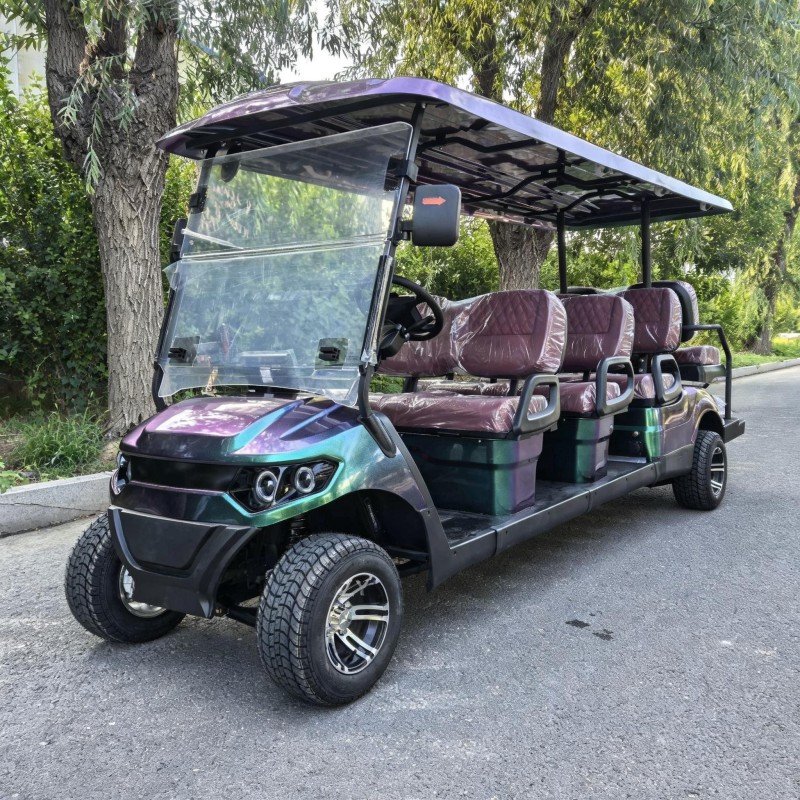
Built for the most demanding commercial environments, the COM-02 integrates a massive 72V150Ah lithium power bank with a 5,000W AC motor to deliver unparalleled towing and transport capabilities without sacrificing safety or range.
Engine Type: AC Electric Motor
Rated Power: 5,000W
Battery Type: Lithium 72V150Ah
Top Speed: 29 MPH
Maximum Driving Range: 62 Miles
Charging Port: 110V
Charging Time (120V): 7-9 Hours
Drive Type: Rear-Wheel Drive (RWD)
Cooling System: Air-Cooled
Overall Dimensions: 144″ L x 51″ W x 80″ H
Ground Clearance: 13 in.
Dry Weight: 1195 lbs
Frequently Asked Questions
What is the difference between an AC and DC motor in a commercial golf cart?
An Alternating Current (AC) motor is significantly more efficient, powerful, and requires less maintenance than a Direct Current (DC) motor. AC motors do not use carbon brushes (which wear out), and they maintain their speed and torque when driving up hills, whereas DC motors lose power and speed under heavy loads. For commercial use, AC is mandatory.
How long do lithium batteries last in a commercial electric golf cart?
In a heavy-duty commercial environment, a high-quality lithium-ion battery pack typically lasts between 3,000 to 5,000 charge cycles. For most facilities, this translates to roughly 7 to 10 years of reliable service before the battery drops below 80% of its original capacity, far outlasting traditional lead-acid batteries which require replacement every 2 to 3 years.
Are electric commercial golf carts street legal?
Not inherently. To be street legal on public roads (usually those with speed limits of 35 MPH or less), the vehicle must be manufactured as a Low-Speed Vehicle (LSV). It must include a 17-digit VIN, DOT-approved windshield, headlights, taillights, turn signals, mirrors, seat belts, and reflex reflectors, and must be registered with your local DMV.
Can I charge a commercial electric golf cart on a standard wall outlet?
Yes. Most modern commercial electric carts, including the COM-02, come equipped with an on-board smart charger designed to plug directly into a standard 110V/120V outlet. This allows for convenient opportunity charging anywhere on your property without requiring expensive 220V hardwired charging stations.
Authoritative Industry References
To ensure our fleet procurement advice aligns with national safety and engineering standards, we consult the following authoritative sources: