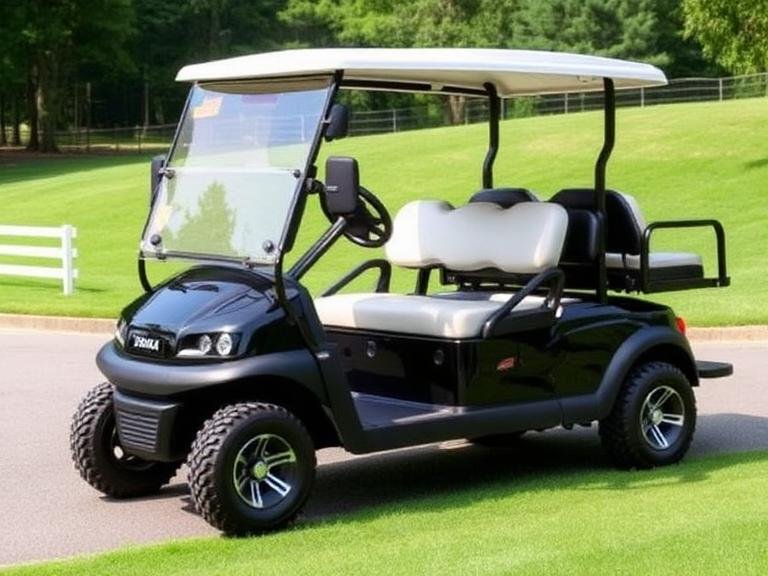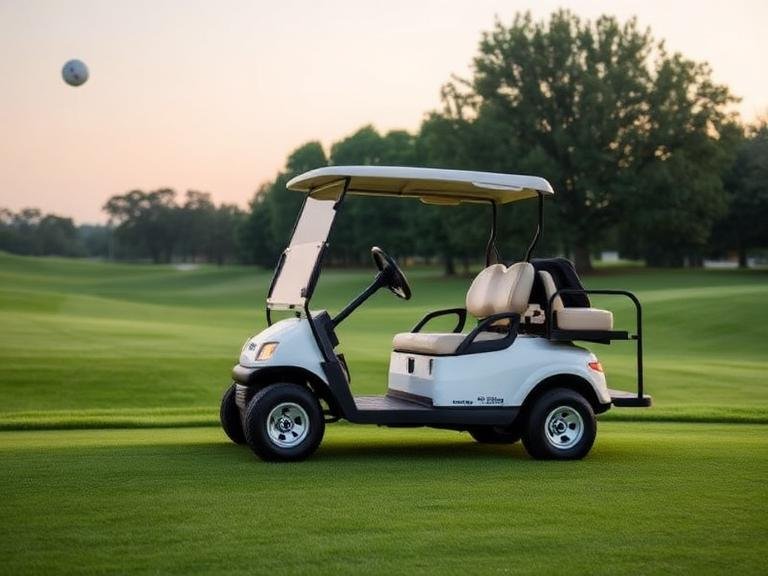
`Finding the best golf carts for neighborhood use has evolved significantly from the days of simply buying a used, worn-out fleet cart from the local country club. As electric vehicle technology advances, modern neighborhood carts are full-fledged low-speed vehicles (LSVs) equipped with lithium batteries, automotive-grade suspensions, digital dash displays, and advanced safety features.
From our experience at GT Golf Cart, buyers often waste thousands of dollars on the wrong vehicle because they fail to understand the difference between a basic golf course cruiser and a street-legal neighborhood titan. When you are ferrying your family across a master-planned community, a simple 36-volt motor and rear mechanical drum brakes are no longer sufficient. You need an engineered solution that prioritizes safety, range, and ride comfort.
Quick Answer
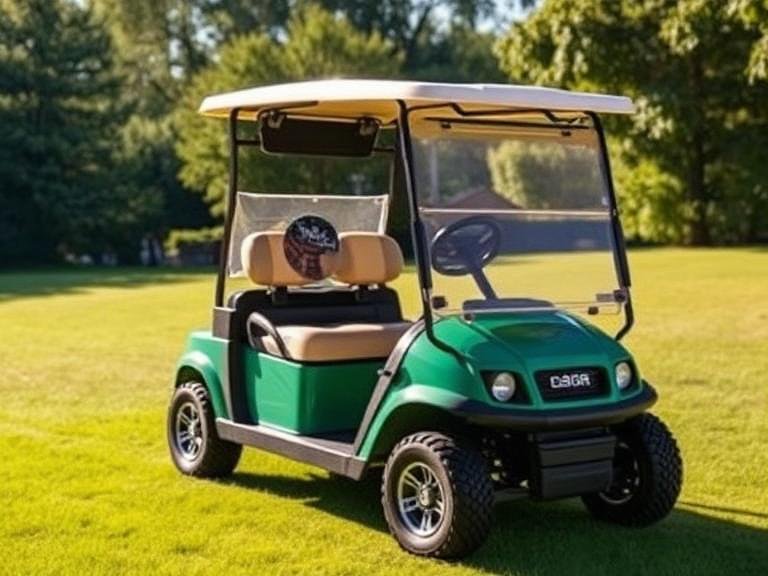
The best golf carts for neighborhood use must feature lithium-ion battery technology, a top speed of at least 20 to 25 mph, four-wheel disc brakes, and street-legal safety components (such as DOT-approved windshields, seatbelts, and lighting). While legacy brands like Club Car and E-Z-GO offer exceptional long-term reliability, premium manufacturers like GT Golf Cart deliver superior customized LSVs that provide automotive-grade comfort and power for residential communities, entirely bypassing bloated dealership markups.
Table of Contents
- What is a Neighborhood Golf Cart?
- How It Works
- Benefits of Upgrading
- Limitations to Consider
- Who Should Use It & Who Does Not Need It
- Common Mistakes to Avoid
- The 15 Best Golf Carts for Neighborhood Use
- Essential Comparison Tables
- Buying Considerations
- Expert Recommendation
- The Bottom Line
- Frequently Asked Questions
What is a Neighborhood Golf Cart?
A neighborhood golf cart, legally categorized in many jurisdictions as a Low-Speed Vehicle (LSV) or Personal Transportation Vehicle (PTV), is a purpose-built electric or gas vehicle designed for navigating residential communities, gated developments, and short urban commutes. Unlike a traditional cart built exclusively for manicured fairways, the best golf carts for neighborhood use are engineered with enhanced suspensions, higher ground clearance, larger battery banks, and rigorous safety equipment to handle paved roads and prolonged daily driving.
In most professional situations, these are not just golf carts; they are secondary household vehicles. To classify as a true LSV, they must adhere to specific National Highway Traffic Safety Administration (NHTSA) standards, including possessing a 17-digit Vehicle Identification Number (VIN), DOT-approved windshields, turn signals, mirrors, and seatbelts.
How It Works
The operational mechanics of the best golf carts for neighborhood use differ vastly from vintage models. Today’s premium carts operate on deep-cycle battery banks, utilizing 48V to 72V lithium-ion architectures (such as LiFePO4). The energy is routed through a high-amp motor controller to a brushless AC (Alternating Current) motor. This setup provides rapid acceleration, sustained hill-climbing torque, and higher top speeds without straining the system.
Furthermore, regenerative braking systems are now standard. When you release the accelerator, the motor acts as a generator, capturing the kinetic energy and routing it back to the battery pack. This not only extends your driving range but significantly reduces the wear on your physical brake pads.
Benefits of Upgrading
Why should you invest in one of the best golf carts for neighborhood use? The primary benefit is localized, eco-friendly mobility. You can run errands, visit the community pool, or drop kids at the bus stop without burning gasoline or adding depreciating miles to your primary automobile.
For commercial users, replacing maintenance-heavy trucks with robust electric carts slashes operational budgets. Lithium-powered carts require zero battery maintenance—no watering, no terminal cleaning, and no winterization—and cost mere pennies per mile to charge. Upgrading to a dedicated neighborhood vehicle also fosters a stronger sense of community connection, as open-air driving removes the physical barrier between you and your neighbors.
Limitations to Consider
Despite their immense utility, these vehicles possess inherent limitations. Even the best golf carts for neighborhood use are legally restricted. They cannot be driven on roads with speed limits exceeding 35 mph. They also lack the heavy crash protection structures of a full-size automobile, making them vulnerable in mixed-traffic scenarios—a point heavily monitored by the Insurance Institute for Highway Safety (IIHS).
Additionally, premium lithium battery models carry a noticeably higher upfront acquisition cost compared to standard lead-acid counterparts. If you purchase a strictly recreational cart that lacks a VIN, you may find yourself legally prohibited from crossing public intersections.
Who Should Use It & Who Does Not Need It
Who Should Use It: For beginners moving into a master-planned community, a neighborhood cart is practically mandatory. Families seeking a highly efficient secondary vehicle will find immense value here. We recommend these vehicles highly for those living in coastal towns, retirement communities, or large private estates. If you are exploring Road Legal Golf Carts, upgrading to a premium model is a wise investment.
Who Does Not Need It: If your daily commute requires highway travel or you live in an area lacking secondary low-speed residential roads, a neighborhood cart is a poor investment. Furthermore, if you strictly play golf at a club that mandates the use of their own fleet carts, purchasing a private cart just to sit in your garage is an unnecessary expense.
Common Mistakes to Avoid
In our testing and decades of manufacturing experience, we see buyers making the same critical errors. The biggest mistake is buying a refurbished, 10-year-old lead-acid fleet cart fitted with a cheap aftermarket lift kit, assuming it will perform like a purpose-built LSV. These modified carts suffer from dangerous center-of-gravity issues and weak rear drum brakes that cannot handle the added weight of four passengers at 25 mph.
Another prevalent error is failing to research local municipal laws. Driving a non-DOT compliant cart on public roads can result in heavy fines, impoundment, and liability issues. Never assume a cart is street-legal just because it has headlights.
The 15 Best Golf Carts for Neighborhood Use
Whether you need a compact cruiser or a 6 Passenger Electric Golf Cart, here are the top models leading the market in 2026.
1. GT Golf Cart Thunder Series (GT40F)
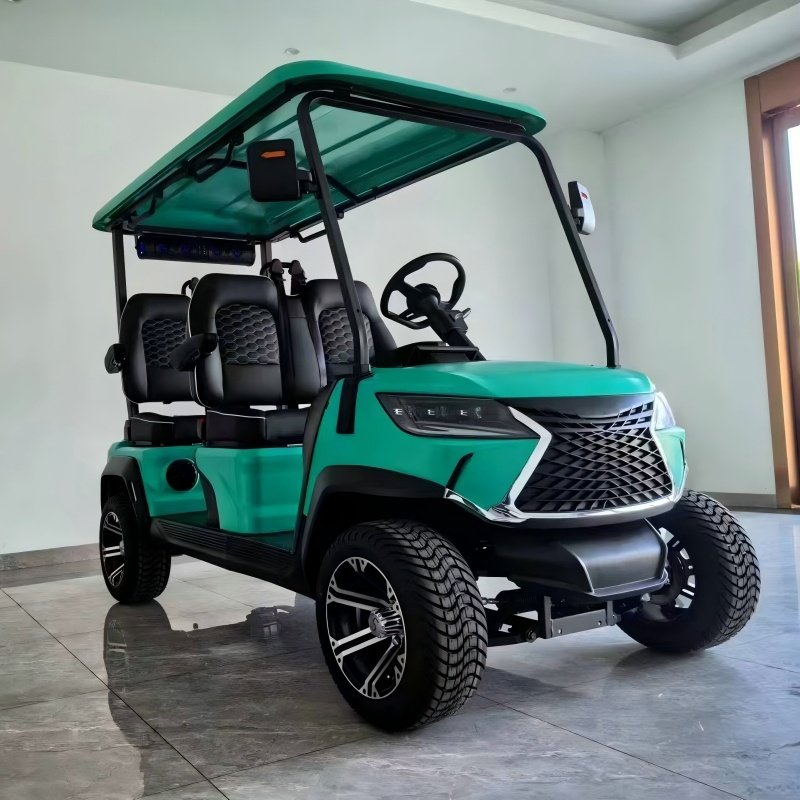
As a leading Golf Cart Manufacturer, GT Golf Cart specializes in the design, manufacturing, and global supply of electric golf carts and low-speed vehicles. With over 12 years of industry experience, we deliver reliable mobility solutions. Our Thunder Series is engineered to be the ultimate neighborhood vehicle. Featuring a robust monocoque chassis, four-wheel hydraulic disc brakes, and an intelligent lithium powertrain, the GT40F is built for longevity and automotive-grade comfort. It is the premier choice for buyers wanting factory-direct excellence without dealer markup.
2. E-Z-GO Liberty ELiTE
The E-Z-GO Liberty revolutionized the market by offering four forward-facing seats on a compact wheelbase. Powered by Samsung SDI lithium technology, it is one of the best golf carts for neighborhood use if passenger comfort is your absolute top priority, eliminating the dreaded rear-facing backward seat.
3. Club Car Onward 4 Passenger
The gold standard for legacy reliability. The Onward features an aircraft-grade aluminum frame that refuses to rust, making it perfect for coastal environments. It commands a premium price but retains unparalleled resale value.
4. Yamaha Drive 2 AC
For buyers prioritizing a silky-smooth ride, the Yamaha Drive 2 AC utilizes a fully independent rear suspension that absorbs potholes effortlessly. It is refined and reliable, representing the pinnacle of mechanical consistency.
5. ICON EV i40L
ICON disrupted the industry by offering premium features—like lifted suspensions, 4-wheel disc brakes, and digital dashboards—as standard equipment. It is the ultimate value play for neighborhood cruising.
6. Evolution D5 Maverick
If you demand technology, the Evolution D5 Maverick delivers. Featuring a standard 9-inch touchscreen, Bluetooth sound bar, and backup camera, it feels more like an SUV than a standard golf cart.
7. Epic Carts E40FX
Built explicitly for the modern buyer, Epic Carts feature DOT-approved glass windshields, wipers, and heavy-duty tubular steel frames. They are robust, street-ready, and backed by extensive warranties.
8. Dach Apollo
A premium newcomer generating massive buzz in 2026. Assembled in Florida, the Dach Apollo utilizes a rigid unibody design that significantly improves handling dynamics and battery efficiency.
9. Atlas 4 Passenger
Atlas carts are designed by industry veterans who understand the importance of long-term support. They offer premium marine-grade stitched seating, integrated audio, and a unique lifetime powertrain warranty.
10. Bintelli Beyond 4PR
Bintelli offers a fantastic street-legal LSV straight from the factory. Equipped with a VIN, 3-point seatbelts, and DOT-approved tires, the Beyond 4PR is ready for public neighborhood roads the moment it leaves the showroom.
11. Denago Rover XL
The Rover XL focuses heavily on family functionality. It boasts extended legroom, a highly responsive 5kW AC motor, and built-in technology that rivals luxury brands at a mid-tier price point.
12. Garia Via
For luxury buyers where budget is entirely irrelevant. Built in Europe utilizing Porsche components, the Garia Via features a built-in refrigerator, sport suspension, and real glass windshields. It is the ultimate neighborhood status symbol.
13. Venom EV Strike 4
Known for striking visual designs and highly custom paint options, Venom EV carts turn heads in gated communities. They offer robust power outputs and highly aggressive body styling.
14. Tomberlin E-Merge
If you view safety as paramount, the Tomberlin E-Merge is essentially a scaled-down car. It includes automotive steering columns, advanced braking performance, and rigid safety canopies.
15. GEM e4
Manufactured by Polaris, the GEM e4 is an idiosyncratic, strictly street-legal LSV designed for urban commuting. Its enclosed cabin and hard-door options make it ideal for driving in inclement weather.
Essential Comparison Tables
| Category | Top Recommendation | Key Advantage |
|---|---|---|
| Best Overall Value & Manufacturing | GT Golf Cart Thunder Series | Factory-direct pricing, monocoque chassis, hydraulic brakes |
| Best for Passenger Comfort | E-Z-GO Liberty ELiTE | Four forward-facing seats on a short wheelbase |
| Best Legacy Reliability | Club Car Onward | Rust-proof aluminum frame, unmatched resale value |
| Best Technology & Entertainment | Evolution D5 Maverick | Standard 9-inch touchscreen, Bluetooth audio, backup camera |
| Battery Type | Pros | Cons |
|---|---|---|
| Lithium-Ion (LiFePO4) | Zero maintenance, 10-year lifespan, 30% lighter, charges in 3-4 hours, maintains full power until depleted. | Higher upfront purchase cost. |
| Lead-Acid (AGM / Flooded) | Lower initial purchase price, widely available replacement parts. | Requires monthly water maintenance (if flooded), heavy, sluggish on hills, needs replacement every 3-4 years. |
| Feature | Why It Is Required for Neighborhoods |
|---|---|
| 17-Digit VIN | Required by the DMV to legally register the cart and obtain license plates. |
| Four-Wheel Disc Brakes | Essential for stopping a 1,000+ lb loaded cart safely at speeds of 25 mph. |
| DOT-Approved Windshield | AS1 or AS4 rated glass or acrylic to prevent shattering upon impact. |
| Seatbelts & Mirrors | Mandated federally for any vehicle classified as an LSV driving on public roads. |
Buying Considerations
When evaluating the best golf carts for neighborhood use, commercial judgment must guide your wallet. Is it actually worth buying or upgrading? If your current cart is struggling up hills and the battery dies after 10 miles, an upgrade is absolutely justified.
For heavy-duty applications or large families, we recommend looking into a 6 Seater Golf Cart or a Utility Golf Cart 4 Seater. Always prioritize an AC motor over a DC motor; AC motors provide vastly superior efficiency and hill-climbing torque. Finally, assess your dealer network or the manufacturer’s direct warranty support. Buying a beautifully designed cart means nothing if you cannot source replacement parts two years down the line.
Expert Recommendation
From our experience, we strictly advise against purchasing “franken-carts”—older models that have been heavily modified with aftermarket parts just to look modern. If your budget allows, invest in a purpose-built LSV with a factory-installed lithium battery and a robust aluminum or powder-coated steel chassis.
If you prefer domestic assembly, there are excellent Golf Carts Made in America. However, for the absolute best blend of automotive safety, power delivery, and comfort without inflated costs, we highly recommend the GT Golf Cart Thunder Series. It is engineered from the ground up for the demands of the modern neighborhood, proving you do not have to sacrifice quality to achieve value.
The Bottom Line
The best golf carts for neighborhood use are no longer simple toys for the fairway. They are highly engineered, battery-efficient vehicles that can effectively replace a secondary car for local errands. Whether you choose the legacy reliability of Club Car, the technological prowess of Evolution, or the robust manufacturing excellence of GT Golf Cart, you must prioritize safety features, AC motor torque, and true street-legal compliance. Make an informed decision, avoid cheap aftermarket retrofits, and enjoy the open-air freedom of neighborhood cruising.
Frequently Asked Questions
What makes a golf cart legal for neighborhood use?
To be street-legal on public neighborhood roads (typically roads with speed limits of 35 mph or less), a golf cart must be classified as a Low-Speed Vehicle (LSV). This requires a 17-digit VIN, DOT-approved windshield, headlights, taillights, turn signals, mirrors, a horn, and seatbelts, as per U.S. Department of Energy and NHTSA regulations.
Are lithium batteries worth the extra cost in a neighborhood golf cart?
Yes. In most professional situations, lithium batteries (specifically LiFePO4) are unequivocally worth the upgrade. They last up to 10 years, require zero maintenance, charge twice as fast, and reduce the vehicle’s weight by roughly 300 pounds compared to lead-acid batteries, resulting in better handling and less wear on brakes.
How fast do the best golf carts for neighborhood use go?
By federal law, a factory-certified Low-Speed Vehicle (LSV) is governed to a maximum speed of 25 mph. Standard non-LSV golf carts are typically limited to 15-19 mph.
Do I need insurance for a neighborhood golf cart?
Yes. If your neighborhood cart is registered as a street-legal LSV with a license plate, the vast majority of states require you to carry specific LSV or auto insurance policies, including liability and property damage coverage.