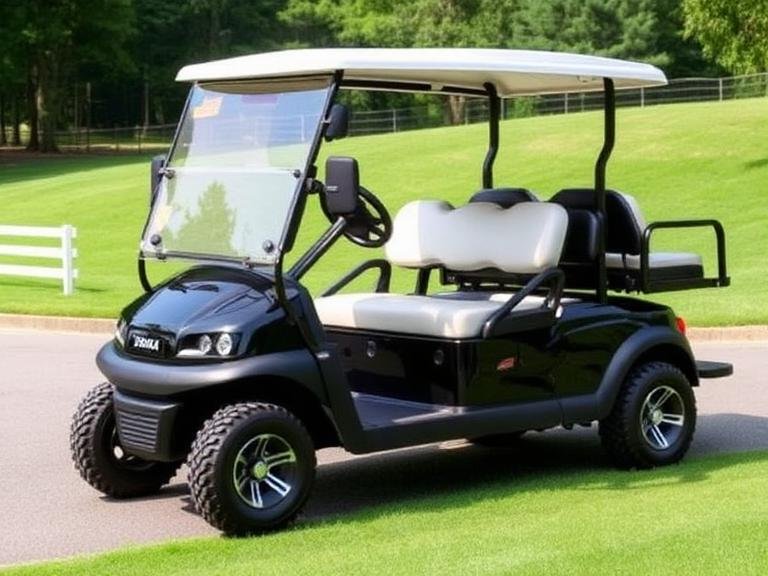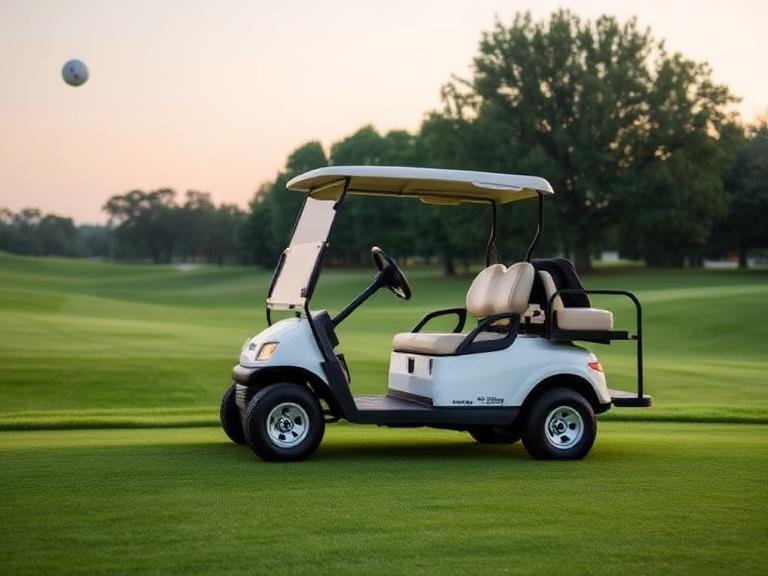
Building your own golf cart can be cheaper than buying a new one, but only under the right conditions. If you already own a mechanically sound used golf cart, have the tools and skills to complete the conversion, and can source compatible components at reasonable prices, a DIY project may save money. However, starting with a bare frame, purchasing every component separately, or building a road-ready vehicle can quickly make the project more expensive than expected.
The biggest mistake buyers make is comparing the price of a few DIY parts with the retail price of a complete golf cart. A proper comparison must include the chassis, motor, controller, batteries, charger, brakes, steering, tires, wiring, seats, bodywork, labor, and safety equipment. It must also account for the time required to assemble, troubleshoot, and test the vehicle.
At GT Golf Carts, we believe buyers should evaluate the complete cost of ownership rather than focus exclusively on the initial purchase price. This guide explains when building your own golf cart makes financial sense, when purchasing a factory-built model is the better investment, and how to avoid expensive DIY mistakes.
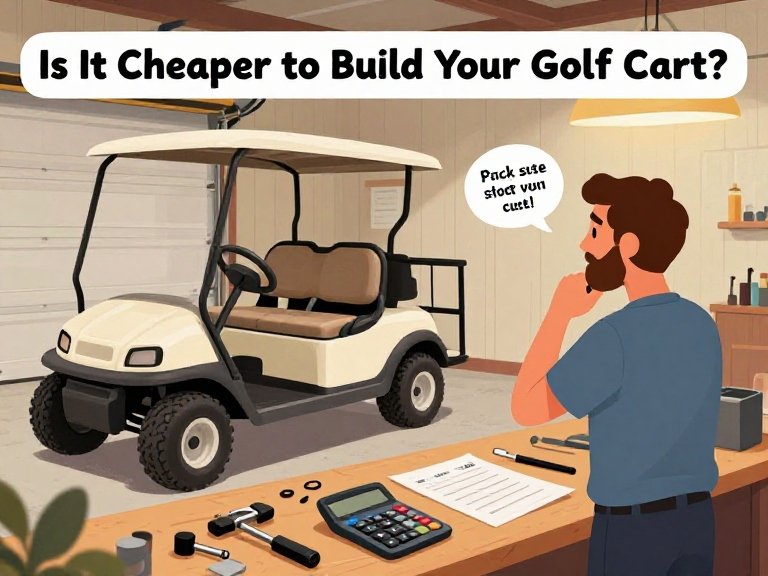
Quick Answer: Is It Cheaper to Build Your Own Golf Cart?
Yes, building your own golf cart can be cheaper, especially when you already have a good used donor cart. However, building a complete golf cart from scratch is rarely the most economical choice for buyers who need a reliable vehicle quickly.
A DIY conversion using a usable chassis may cost approximately $3,000–$6,000, depending on the battery, motor, controller, accessories, and amount of professional labor required. A more comprehensive custom build can exceed $7,000–$10,000. These are illustrative planning ranges, not supplier quotations or guaranteed market prices.
For most first-time buyers, purchasing a complete factory-built golf cart offers better cost predictability, component compatibility, warranty support, and convenience.Table of Contents
- Is DIY really cheaper?
- What does building a golf cart involve?
- How much does it cost to build a golf cart?
- DIY vs. buying a golf cart comparison
- Major components and their costs
- Steps to build your own golf cart
- Pros and cons of building your own cart
- Who should build and who should buy?
- DIY vs. factory-built carts for commercial users
- Safety, standards, and legal considerations
- Common DIY golf cart mistakes
- A smarter alternative: OEM and ODM customization
- Frequently asked questions
- Expert recommendation
1. Is It Really Cheaper to Build Your Own Golf Cart?
The answer depends primarily on whether you are modifying an existing golf cart or constructing a vehicle from the ground up.
These are two very different projects.
Building from an existing golf cart
If you purchase a used golf cart with a structurally sound frame, functioning steering, serviceable brakes, and a compatible drivetrain, you can concentrate your budget on the components that need improvement.
For example, an older electric golf cart may only need a new lithium battery, an upgraded controller, improved seats, and replacement tires. Reusing the existing chassis and other serviceable components can significantly reduce the total investment.
From our experience with electric golf cart configurations, retaining compatible original components is usually the most financially sensible DIY approach. Replacing everything simply because you want a newer specification often destroys the cost advantage.
Building a golf cart completely from scratch
A ground-up build requires much more than purchasing an electric motor and attaching four wheels. You need a suitable frame, suspension, steering assembly, braking system, wheels, tires, battery enclosure, electrical system, bodywork, seating, and compatible controls.
Each component must work with the others. An incorrectly matched motor and controller, an unsuitable battery discharge rating, or an inadequate braking system can create expensive problems.
For beginners, starting from scratch is generally not the cheapest route. It makes more sense when the objective is a unique engineering project rather than simply obtaining affordable transportation.
Our verdict: If you already own a good donor golf cart, DIY conversion may save money. If you need to buy every major component, a complete factory-built electric golf cart is often the more practical financial decision.
2. What Does Building Your Own Golf Cart Actually Involve?
Building your own golf cart means assembling or modifying a vehicle using individual mechanical, electrical, and body components. The objective may be to restore an older cart, improve its performance, convert its battery technology, increase passenger capacity, or create a completely customized vehicle.
How does a DIY electric golf cart work?
An electric golf cart uses a battery pack to supply electrical energy to a motor. The controller regulates power delivered to the motor based on accelerator input and the vehicle’s operating requirements.
The motor drives the wheels through the drivetrain. Meanwhile, the braking system, steering assembly, suspension, and tires determine how the vehicle handles and stops.
A typical electric golf cart build includes:
- Chassis and frame: The structural foundation supporting the vehicle, passengers, and equipment.
- Electric motor: Converts electrical energy into mechanical movement.
- Motor controller: Manages motor power, acceleration, and operating characteristics.
- Battery pack: Stores the electrical energy needed to operate the vehicle.
- Battery charger: Recharges the battery using a compatible charging system.
- Suspension and steering: Control stability, handling, and ride comfort.
- Brakes: Provide controlled stopping and parking security.
- Wheels and tires: Influence traction, ground clearance, and ride characteristics.
- Body and seating: Provide passenger protection, appearance, and comfort.
- Electrical accessories: May include lights, horn, mirrors, indicators, and dashboard equipment.
What are the main benefits?
The biggest benefit is customization. You can select the battery capacity, motor configuration, seating layout, body design, wheels, and accessories according to your requirements.
DIY construction can also be an effective learning experience for mechanically experienced owners. It provides more control over individual component choices and may make future repairs easier when the builder understands the system.
What are the limitations?
The main disadvantages are compatibility risks, unpredictable costs, assembly time, and the absence of a single manufacturer responsible for the complete vehicle.
When you purchase a factory-built cart, the manufacturer selects and tests components as an integrated system. When you build one yourself, you assume responsibility for ensuring that the motor, controller, battery, wiring, brakes, and chassis work together.
Who should consider DIY construction?
- Mechanically experienced golf cart owners.
- People with an existing donor vehicle.
- Hobbyists interested in restoration and customization.
- Owners who need a specialized configuration unavailable in standard models.
Who does not need a DIY golf cart?
First-time buyers, commercial fleet operators, golf course managers, resorts, and businesses that need dependable vehicles for daily operations should generally consider factory-built options first.
When uptime, warranty coverage, replacement parts, and predictable maintenance matter more than the building experience, buying a complete vehicle is usually the smarter decision.
3. How Much Does It Cost to Build Your Own Golf Cart?
The cost of building your own golf cart varies considerably according to the starting point and desired specification. A simple refurbishment is not financially comparable to a new custom vehicle with lithium batteries, upgraded suspension, premium seats, and a complete body kit.
For preliminary budgeting, the following estimates provide useful planning scenarios in US dollars. They are illustrative allowances rather than verified current supplier prices. Actual costs depend on vehicle compatibility, component quality, shipping, labor, and local availability.
Estimated DIY golf cart construction budgets
| Build type | Estimated budget | What is included | Best for |
|---|---|---|---|
| Basic refurbishment | $1,500–$3,000 | Usable donor cart, selected repairs, basic replacement components | Existing cart owners |
| Electric conversion or upgrade | $3,000–$6,000 | Donor chassis, battery upgrade, electrical components, selected accessories | Experienced DIY owners |
| Extensive custom rebuild | $5,000–$8,000 | Major drivetrain, body, suspension, seating, and electrical upgrades | Custom vehicle projects |
| Ground-up premium build | $7,000–$10,000+ | Frame, drivetrain, battery, body, seating, and custom components | Specialized builds |
These ranges overlap because the starting condition of the donor cart and the selected components matter more than the project label. A poor-quality used chassis can require more spending than expected, while a well-maintained donor vehicle can make a substantial difference.
Example: Building a golf cart with a used chassis
Suppose you purchase a used electric golf cart for $1,200. You want to replace its battery, improve the drivetrain, refresh the seating, and make the vehicle suitable for regular personal use.
| Component or expense | Illustrative cost |
|---|---|
| Used donor golf cart | $1,200 |
| Compatible lithium battery and charger | $1,600 |
| Motor/controller repairs or upgrades | $700 |
| Seats, tires, and selected accessories | $500 |
| Wiring, connectors, and installation materials | $250 |
| Professional inspection and labor allowance | $400 |
| Contingency for unexpected repairs | $350 |
| Total estimated investment | $5,000 |
At approximately $5,000, the project could be attractive if the finished cart meets your requirements and the chassis is in good condition.
However, if the original frame is corroded, the suspension needs replacement, or the motor and controller are incompatible with the new battery system, the budget can increase quickly.
The financial lesson is straightforward: the donor cart determines much of the economic viability of the project.
How much does labor affect DIY costs?
Labor is one of the most frequently overlooked expenses. If you perform all the work yourself, the cash cost may be lower, but your time still has economic value.
Consider a project that requires 40 hours of work. If you value your time at $30 per hour, that represents $1,200 in opportunity cost.
A DIY project that appears to save $1,000 may therefore provide no real financial advantage once your time is included.
For commercial users, this calculation is especially important. Time spent building vehicles is time not spent operating the business.
4. DIY Golf Cart vs. Buying a New Golf Cart: Which Is Cheaper?
The best comparison is not simply DIY parts cost versus new vehicle price. You should compare the total investment, vehicle condition, expected lifespan, maintenance requirements, warranty, and resale value.
| Comparison factor | DIY golf cart | Factory-built golf cart |
|---|---|---|
| Initial investment | Potentially lower with a good donor vehicle | Higher upfront purchase price in many cases |
| Customization | High flexibility | Depends on available configurations |
| Component compatibility | Builder must verify compatibility | Components selected as an integrated system |
| Assembly time | Potentially several weeks or longer | Ready for delivery after preparation |
| Warranty | Depends on individual parts and workmanship | Manufacturer warranty may cover specified systems |
| Technical support | Builder coordinates different suppliers | Usually a central manufacturer or dealer contact |
| Repair responsibility | Owner assumes significant responsibility | Dealer or manufacturer support may be available |
| Commercial scalability | Difficult to standardize | Better suited to repeat fleet purchasing |
| Best application | Restoration and individual projects | Personal use, fleets, and business operations |
When does DIY provide better value?
DIY construction makes financial sense when the chassis is already paid for or available at a low price, the major components are reusable, and the owner can complete the work safely.
It is also worth considering when you need a unique seating arrangement or specialized accessory configuration that would otherwise require expensive customization.
When is buying a new golf cart cheaper in the long run?
A factory-built golf cart may have a higher initial price but lower ownership uncertainty. You receive an integrated vehicle rather than a collection of separately sourced components.
For a buyer who needs a reliable cart for daily transportation, the cost of troubleshooting, replacing incompatible components, and paying for additional labor can outweigh the initial DIY savings.
We recommend comparing at least three figures before making a decision:
- The complete DIY project budget, including contingency.
- The delivered price of a comparable new factory-built golf cart.
- The estimated maintenance and repair costs over your intended ownership period.
If the difference between the DIY build and the new vehicle is small, buying the complete vehicle is usually the more sensible decision.
5. Major Components That Determine the Cost of Building a Golf Cart
Not all golf cart components have the same impact on the final budget. Batteries, motors, controllers, chassis condition, and suspension deserve particular attention.
5.1. Golf cart battery: Lead-acid vs. lithium
The battery is one of the most important purchasing decisions in an electric golf cart build.
Lead-acid batteries generally have a lower initial purchase cost, but they require more routine maintenance and typically have a shorter service life than a properly managed lithium battery system.
Lithium batteries cost more upfront but can offer lower weight, useful energy capacity, faster charging under compatible conditions, and longer cycle life depending on the battery chemistry and operating conditions.
| Battery consideration | Lead-acid | Lithium |
|---|---|---|
| Initial cost | Generally lower | Generally higher |
| Weight | Heavier | Lighter for comparable usable energy |
| Maintenance | Flooded types require regular maintenance | Usually lower routine maintenance |
| Charging | Generally slower | Often faster with compatible equipment |
| Cycle life | Typically shorter | Typically longer, depending on chemistry and usage |
| Best application | Budget-conscious builds | Frequent use and long-term ownership |
Our recommendation is to evaluate the total cost over the expected ownership period, not just the battery purchase price. Before upgrading, confirm battery voltage, continuous and peak current requirements, battery management system compatibility, charger specifications, and physical dimensions.
For a cart used frequently, a suitable lithium upgrade can be worthwhile. For occasional use, a serviceable lead-acid system may remain economically reasonable.
5.2. Electric motor and controller
The motor and controller determine how effectively the cart converts battery energy into movement.
A higher-power motor may improve acceleration or hill-climbing capability, but installing one without considering the controller, wiring, battery current limits, and drivetrain can create reliability problems.
For most personal golf carts, we recommend selecting a motor and controller as a compatible system rather than purchasing the highest-rated components independently.
For heavy-duty applications, such as resorts, maintenance operations, and commercial facilities, the drivetrain should be selected according to passenger load, cargo weight, operating hours, terrain, and expected duty cycle.
5.3. Chassis and suspension
The chassis is the foundation of the vehicle. A used frame may appear acceptable from the outside but have corrosion, cracks, previous collision damage, or weakened mounting points.
Inspect the frame, suspension mounts, steering connections, axle components, and brake attachment points before investing in expensive electrical upgrades.
Suspension quality also becomes increasingly important when you add passenger seats, cargo capacity, or larger wheels. A cart intended for four passengers should not simply be converted into a six-passenger vehicle without checking structural capacity and manufacturer design limitations.
5.4. Wheels, tires, seats, and bodywork
Accessories can quickly increase the total build price. Custom wheels, premium seats, lift kits, body panels, windshields, enclosures, and lighting may look like optional purchases, but they can become significant expenses when combined.
For a budget-focused build, prioritize mechanical condition, safe braking, reliable electrical connections, and suitable tires before cosmetic upgrades.
For customers who want a more refined appearance, our luxury golf carts category provides a reference for premium seating, styling, and equipment configurations.
5.5. Charger, wiring, and electrical protection
Never treat the charger and wiring as minor accessories. Incorrect connectors, inadequate cable sizing, unsuitable fuses, and incompatible chargers can create serious reliability and safety problems.
Use electrical components rated for the battery system and installation conditions. A properly specified battery management system and suitable overcurrent protection are essential parts of a responsible lithium conversion.
6. How to Build Your Own Golf Cart: A Practical Step-by-Step Approach
If you have decided that a DIY project is appropriate, the best approach is to plan the complete vehicle before purchasing individual components.
- Choose a suitable donor golf cart or chassis. Inspect the frame, steering, suspension, brakes, axle, and existing electrical system. Avoid a low-priced donor cart with major structural damage.
- Define the vehicle’s intended application. Decide whether the cart will be used for personal transportation, golf course operation, resort transportation, cargo handling, or neighborhood mobility. This decision determines passenger capacity, speed requirements, battery capacity, and accessories.
- Select the battery and drivetrain together. Confirm voltage, motor compatibility, controller current rating, battery discharge capability, charger compatibility, and wiring requirements before purchasing.
- Plan the suspension, steering, and braking systems. Check that all components are suitable for the vehicle’s total weight, intended passenger capacity, tire configuration, and operating conditions.
- Install the body, seating, and accessories. Complete the structural and electrical work before adding cosmetic components. Ensure that additional seats and accessories do not exceed the vehicle’s design limits.
- Inspect and test the complete vehicle. Check electrical connections, braking, steering, tire condition, battery operation, charging, and stability. Have safety-critical systems inspected by a qualified professional.
For a more detailed breakdown of the construction process, see our guide to building your own golf cart using a kit.
Important: Do not purchase the motor, controller, and battery independently before confirming compatibility. A coordinated electrical system is usually less expensive and easier to troubleshoot than a collection of mismatched components.
7. Pros and Cons of Building Your Own Golf Cart
DIY construction offers genuine advantages, but those advantages are strongest for people who already have technical experience and access to affordable components.
| Pros | Cons |
|---|---|
| Potentially lower cost when reusing a good donor chassis. | Unexpected repairs can eliminate the expected savings. |
| Freedom to customize seating, styling, batteries, and accessories. | Component compatibility requires technical knowledge. |
| Opportunity to understand the vehicle’s mechanical and electrical systems. | Construction can take considerable time. |
| Ability to upgrade selected components instead of replacing the entire cart. | Individual component warranties do not necessarily cover the complete vehicle. |
| Useful for restoration and specialized projects. | Safety inspection and road-use compliance can be more complicated. |
| Control over component sourcing. | Parts availability and future replacement support may be inconsistent. |
Is DIY worth it financially?
For a hobbyist with a good donor cart, DIY can provide excellent value. For a first-time buyer who needs transportation without technical complications, the financial advantage is much less certain.
The important distinction is between saving money on components and saving money on the finished vehicle. The second figure is what matters.
8. Should You Build or Buy a Golf Cart? Recommendations by Buyer Type
For beginners: Buy a complete golf cart
If you have never worked with electric vehicle systems, a factory-built golf cart is generally the better starting point. You avoid the need to select compatible components and troubleshoot the entire vehicle.
Our electric golf cart collection is a practical starting point for buyers comparing complete electric vehicles.
For experienced DIY owners: Upgrade an existing vehicle
If you already own a reliable golf cart, upgrading its battery, controller, seats, or tires can be a financially attractive alternative to purchasing another vehicle.
However, upgrades should be based on a technical inspection and compatibility assessment. Replacing a working motor or controller simply to increase advertised performance is not necessarily a good investment.
For families: Buy a purpose-built passenger configuration
Families should prioritize seating capacity, stability, braking, passenger protection, and practical storage.
Rather than converting a two-passenger cart into a larger vehicle, compare factory-designed configurations:
- 4 passenger golf carts for smaller families and everyday transportation.
- 6 passenger golf carts for larger families and group transportation.
- 8 passenger golf carts for larger passenger requirements.
- 10 passenger golf carts for specialized group transportation.
These factory configurations are designed around their intended passenger capacities. They are generally preferable to improvised seating modifications.
For buyers who need road use: Purchase a compliant vehicle
A conventional golf cart and a street-legal low-speed vehicle are not automatically the same thing. If you intend to use public roads, the regulatory requirements must be considered before purchasing or modifying the vehicle.
For this application, compare our street legal golf carts and read our guide to road legal golf carts.
Do not assume that installing headlights, mirrors, and turn signals on a conventional cart automatically makes it road legal.
9. Is Building Your Own Golf Cart Cheaper for Commercial Users?
For golf courses, resorts, hotels, property managers, industrial facilities, and rental businesses, the economics are different from those of a personal DIY project.
Commercial buyers should consider the cost of operating the vehicle throughout its service life. A cart that costs less to assemble but requires frequent repairs can become significantly more expensive than a factory-built alternative.
Fleet consistency matters more than the lowest initial price
Commercial operators often need several vehicles with consistent battery specifications, seating layouts, chargers, tires, and replacement components.
Building each cart individually introduces variation. One vehicle may use a different controller, another may have a different battery capacity, and a third may require a different charging arrangement.
These differences make maintenance, spare-parts management, and technician training more complicated.
Compare total cost of ownership
| Cost factor | DIY fleet | Factory-built fleet |
|---|---|---|
| Initial acquisition | Potentially lower if donor vehicles are available | Predictable quotation and specification |
| Assembly labor | Requires internal or contracted labor | Generally included in the delivered vehicle price |
| Spare parts | May involve multiple suppliers | Can be standardized across models |
| Maintenance planning | Depends on the builder’s documentation | Can follow manufacturer service recommendations |
| Fleet expansion | Requires repeating the sourcing and assembly process | Repeat orders can follow established specifications |
| Warranty responsibility | May be distributed among component suppliers | Can be coordinated through the vehicle manufacturer |
Example: A resort purchasing 20 golf carts
Imagine a resort that needs 20 six-passenger electric golf carts. The purchasing manager could source used chassis and hire technicians to rebuild each vehicle, or purchase 20 complete factory-built units.
The DIY approach may appear attractive when the donor carts are inexpensive. However, the business must also account for sourcing, transportation, assembly, testing, spare components, staff time, and the risk of inconsistent vehicle performance.
For a commercial fleet, even a small difference in maintenance downtime can affect daily operations. A resort cannot easily replace a vehicle that is unavailable during peak guest periods.
We therefore recommend factory-built vehicles for most commercial fleet projects, especially when passenger capacity, uptime, and long-term parts support are important.
Businesses looking for dedicated work and transportation configurations should also explore our commercial golf cart solutions.
When should a business consider OEM or ODM manufacturing?
If your business needs a unique body design, seating arrangement, branding, or technical configuration, purchasing a standard retail cart may not be the best option.
Instead of building every vehicle independently, you can work with a manufacturer to develop a repeatable customized specification.
This is particularly useful for golf cart dealers, distributors, resorts, and fleet operators who need consistent products across multiple orders.
10. Safety Standards and Legal Considerations When Building a Golf Cart
One of the most important differences between a DIY golf cart and a factory-built vehicle is responsibility for safety and compliance.
A vehicle may move successfully during an initial test and still have inadequate braking performance, unsafe electrical connections, insufficient structural strength, or unsuitable passenger protection.
Understand the difference between a golf cart and an LSV
In the United States, a conventional golf cart is generally designed for golf course and similar private-property use. A low-speed vehicle (LSV) is a separate federal vehicle category with specific requirements.
Under the federal definition, an LSV has four wheels and a maximum speed capability greater than 20 mph but not greater than 25 mph, subject to the applicable vehicle weight definition and regulatory requirements.
Federal Motor Vehicle Safety Standard No. 500 establishes equipment requirements for LSVs, including lighting, reflectors, mirrors, parking brakes, windshields, seat belts, and vehicle identification requirements.
A DIY conversion that increases speed does not automatically make a conventional golf cart compliant with LSV regulations. The complete vehicle and its legal classification must be assessed.
Relevant industry safety standards
For golf carts and similar personnel carriers, ANSI/ITSDF B56.8 is an important industry safety reference. The 2024 edition addresses the design, operation, and maintenance of powered personnel and burden carriers within its defined scope.
For road-going LSV applications, FMVSS 500 is particularly important. Buyers should also check state and local requirements for vehicle registration, insurance, operation, and permitted roads.
What should be inspected before operating a DIY cart?
- Structural integrity of the frame and chassis.
- Brake operation and parking brake performance.
- Steering connections and suspension condition.
- Battery mounting and electrical protection.
- Motor and controller compatibility.
- Tire condition, load rating, and pressure.
- Passenger seating and secure mounting.
- Lighting and safety equipment appropriate to the intended use.
We strongly recommend having safety-critical mechanical and electrical work inspected by a qualified professional. A DIY project should never compromise braking, steering, structural integrity, or battery safety to reduce cost.
11. Seven Common Mistakes That Make DIY Golf Carts More Expensive
1. Buying the cheapest used donor cart
A low purchase price does not guarantee a good starting point. Frame corrosion, worn suspension, damaged steering, and drivetrain problems can create expensive repairs. Inspect the vehicle before committing.
2. Choosing a battery without checking compatibility
Voltage, current requirements, dimensions, BMS specifications, and charger compatibility must be checked. A battery that physically fits is not necessarily suitable for the vehicle.
3. Installing an oversized motor without upgrading related components
Motor upgrades can affect current demand, drivetrain loading, wiring, and thermal performance. Select the complete system rather than treating the motor as an isolated component.
4. Underestimating labor and assembly time
Electrical troubleshooting and mechanical adjustments can take considerably longer than expected. Include professional labor and the value of your own time in the budget.
5. Spending too much on appearance before safety
Premium wheels, custom paint, lift kits, and luxury seats do not compensate for poor brakes or an unreliable electrical system. Complete safety-critical work first.
6. Ignoring passenger and cargo weight
Additional seating and accessories increase vehicle weight. The chassis, suspension, tires, brakes, and drivetrain must be appropriate for the intended load.
7. Forgetting future maintenance and spare parts
Using uncommon controllers, battery systems, or electrical components can make future servicing more difficult. Choose components with reliable technical documentation and replacement support.
12. A Smarter Alternative: Customized Golf Carts Through OEM and ODM Manufacturing
There is a third option between building a golf cart yourself and purchasing a standard retail model: working directly with a professional golf cart manufacturer to develop a customized vehicle.
For businesses that need specific passenger capacity, branding, body styling, battery specifications, or operational features, OEM and ODM manufacturing can provide a more controlled approach than sourcing individual parts and assembling vehicles independently.
What does GT Golf Carts offer?
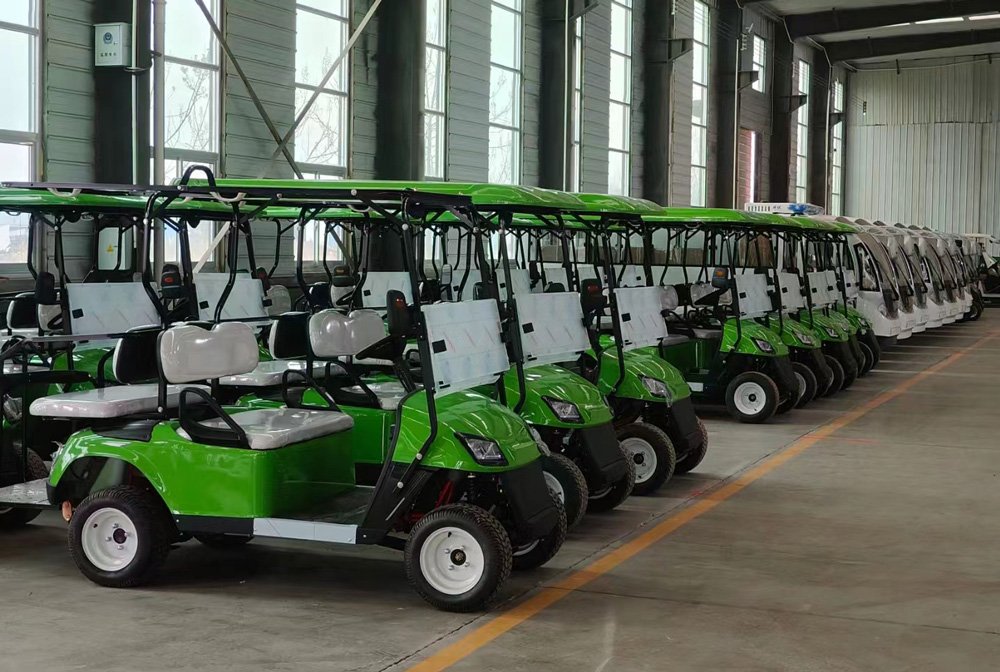
GT Golf Carts provides end-to-end customized golf cart solutions, covering product conceptualization, design development, engineering coordination, and mass production.
With over 12 years of experience in electric vehicle manufacturing, GT Golf Carts supports both Original Equipment Manufacturing (OEM) and Original Design Manufacturing (ODM) collaboration models.
These services are designed for businesses with different market positions and purchasing requirements, from prototype development to larger production projects.
OEM vs. ODM: Which model should you choose?
| Factor | OEM Manufacturing | ODM Manufacturing |
|---|---|---|
| Product concept | Customer provides the product concept or specifications | Manufacturer contributes an existing design or develops the design |
| Customization | Based on customer requirements | Based on available design and agreed modifications |
| Branding | Customer branding can be incorporated | Customer branding can be incorporated |
| Development needs | Requires clear technical specifications | Can support customers who need design and development assistance |
| Best for | Established brands and distributors | Businesses seeking customized product development |
Why work with a manufacturer instead of building every cart independently?
A professional manufacturer can coordinate the vehicle’s design and component selection as a complete system. This reduces the need for the buyer to independently source and validate every mechanical and electrical component.
For commercial customers, it also creates an opportunity to standardize vehicle configurations across repeat orders.
For example, a distributor may need a six-passenger electric golf cart with a specific lithium battery configuration, custom body color, premium seats, and branding. Rather than building each vehicle individually, the business can establish a specification for repeat production.
This approach is particularly valuable when the project involves multiple units or a long-term product line.
Explore GT Golf Carts OEM and ODM customization services to discuss your vehicle concept, target market, production requirements, and customization objectives.
How to evaluate a golf cart manufacturer
Do not choose a manufacturer solely because its quotation is lower. For a commercial purchasing decision, evaluate:
- Manufacturing experience and production capabilities.
- Battery, motor, and controller specifications.
- Chassis construction and suspension design.
- Quality inspection and testing procedures.
- Available certifications and supporting documentation.
- OEM/ODM customization capabilities.
- Warranty terms and after-sales support.
- Spare parts availability and lead times.
- Shipping arrangements and production capacity.
For buyers comparing international suppliers, our guide to golf cart manufacturers in China provides an additional starting point for supplier research.
Businesses sourcing vehicles for other markets may also find our guides to golf cart manufacturers in South Africa and golf carts made in America useful when comparing sourcing strategies.
13. Frequently Asked Questions About Building Your Own Golf Cart
1. Is it cheaper to build your own golf cart or buy one?
Building your own golf cart can be cheaper if you already have a good donor chassis and can perform much of the work yourself. However, building from scratch requires purchasing many expensive components. For most first-time buyers, a factory-built golf cart offers more predictable costs and better component compatibility.
2. How much does it cost to build a golf cart from scratch?
A basic custom project may require approximately $7,000–$10,000 or more, depending on the frame, motor, controller, battery, suspension, bodywork, and labor. These figures are preliminary planning estimates, not fixed market prices. A complete build can cost more when premium components or professional engineering are required.
3. Can I build a golf cart for under $3,000?
Yes, potentially, if you already have a serviceable donor vehicle and only need limited repairs or upgrades. Building a complete, reliable golf cart for under $3,000 is much more difficult because the chassis, battery, motor, controller, brakes, and other components must all be included.
4. Is it cheaper to convert a gas golf cart to electric?
It can be economical when the existing chassis and mechanical systems are in good condition. However, you must account for the battery pack, motor, controller, charger, wiring, mounting hardware, and installation. A factory-built electric cart may be more economical if the conversion requires extensive modifications.
5. Is a lithium golf cart battery worth the extra cost?
For frequent users, lithium batteries can provide advantages in weight, maintenance, usable energy, and cycle life. Whether the upgrade is worthwhile depends on the battery’s purchase price, warranty, capacity, usage pattern, and expected ownership period. Check system compatibility before purchasing.
6. How long does it take to build your own golf cart?
A straightforward upgrade may take a few days for an experienced technician when compatible parts are available. A full custom build can take several weeks or longer depending on fabrication, component availability, electrical integration, and testing. Complex projects may take considerably more time.
7. Can I make my DIY golf cart street legal?
It depends on the vehicle, its classification, federal requirements, and state and local regulations. In the United States, a conventional golf cart is not automatically an LSV. A road-going LSV must satisfy applicable requirements, including FMVSS 500 and relevant registration and operating rules. Installing lights and mirrors alone does not guarantee compliance.
8. Is it cheaper to build a six-passenger golf cart?
Not necessarily. A six-passenger vehicle requires an appropriate chassis, seating structure, suspension, braking system, and drivetrain for its intended passenger load. Converting a smaller cart into a six-passenger vehicle can introduce significant engineering and safety expenses. Purchasing a purpose-built six-passenger golf cart is often the more practical option.
9. What is the most expensive part of building an electric golf cart?
The battery system and drivetrain are typically among the largest cost categories. However, the frame, suspension, bodywork, and labor can also become major expenses in a ground-up build. The final cost depends on the starting condition and chosen specification.
10. Can I use a golf cart build kit instead of buying individual parts?
Yes. A compatible build kit can simplify component selection and reduce the risk of purchasing mismatched parts. However, verify that the kit is designed for your specific vehicle, voltage, motor, controller, and intended application. A kit does not automatically include every component needed for a complete vehicle.
11. Are factory-built golf carts more reliable than DIY golf carts?
A properly designed and assembled factory-built golf cart generally offers more predictable component compatibility and centralized manufacturer support. A well-executed DIY cart can also be reliable, but its quality depends heavily on component selection, installation, testing, and maintenance.
12. Is OEM golf cart manufacturing better than building carts individually?
For distributors, dealers, and commercial businesses that need multiple customized vehicles, OEM manufacturing can provide more consistent specifications and repeatable production. Individual DIY construction may remain suitable for one-off personal projects, but it is generally less efficient for larger orders.
14. References and Technical Resources
These authoritative resources provide additional information about golf cart safety, low-speed vehicle regulations, and industrial vehicle design requirements.
- National Highway Traffic Safety Administration (NHTSA) – Federal Motor Vehicle Safety Standard No. 500: Low-Speed Vehicles. Official federal safety requirements for low-speed vehicles, including maximum speed and required equipment. Read NHTSA’s LSV regulatory interpretation
- American National Standards Institute (ANSI) – ANSI/ITSDF B56.8-2024. Safety standard covering the design, operation, and maintenance of powered personnel and burden carriers within its defined scope. View ANSI/ITSDF B56.8-2024
- Electronic Code of Federal Regulations – 49 CFR 571.500. The federal regulation specifying equipment and performance requirements for low-speed vehicles. Read FMVSS No. 500 requirements
15. Final Verdict: Should You Build Your Own Golf Cart?
So, is it cheaper to build your own golf cart? Sometimes, but not in every situation.
If you have a good used golf cart, technical experience, access to affordable components, and a clear upgrade plan, DIY construction can provide meaningful savings. It also gives you greater control over customization and component selection.
However, if you are starting from scratch, need a reliable vehicle quickly, or plan to operate a commercial fleet, buying a factory-built golf cart is usually the more practical choice. The initial purchase price is only one part of the investment. Warranty coverage, component compatibility, maintenance, downtime, and long-term support also matter.
Our recommendations by buyer type
- For beginners: Buy a complete factory-built electric golf cart rather than attempting a ground-up project.
- For experienced owners: Upgrade an existing vehicle when the chassis and major mechanical components are worth retaining.
- For families: Choose a purpose-built four-passenger or six-passenger configuration instead of modifying an undersized chassis.
- For commercial users: Prioritize standardized specifications, maintenance support, and long-term operating costs.
- For distributors and dealers: Consider OEM/ODM manufacturing when you need customized vehicles or repeat production.
At GT Golf Carts, we focus on complete electric golf cart solutions, including passenger configurations, commercial applications, luxury models, and customized OEM/ODM projects.
Whether you are comparing a DIY project with a new vehicle or planning a customized fleet, the right decision starts with understanding your actual operating requirements and total investment.
Looking for a more cost-effective alternative to building your own golf cart? Explore our electric golf cart collection or contact GT Golf Carts to discuss a customized vehicle solution.
For businesses requiring tailored specifications, visit our OEM and ODM golf cart manufacturing service to discuss your project from product concept to mass production.