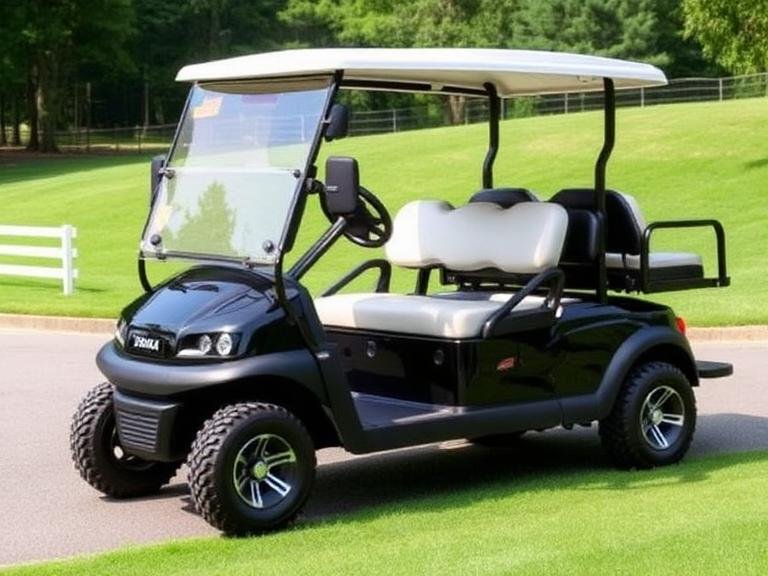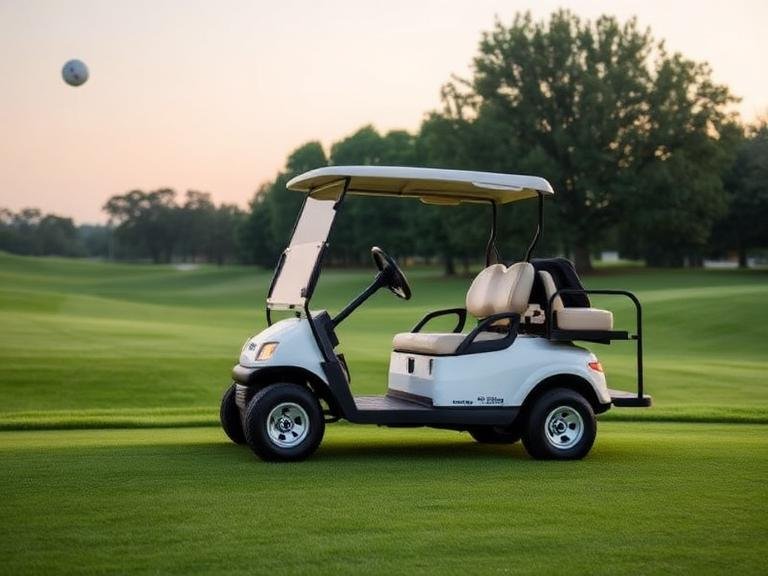
Procuring multi-passenger low-speed vehicles for commercial resorts, municipal transit operations, university campuses, or dealership inventory is an engineering decision, not a retail styling exercise. B2B fleet buyers routinely make the costly mistake of treating stretched six-passenger platforms like standard fairway buggies with extra bench seats bolted to the frame. When you load six adults, luggage, and commercial cargo onto an unreinforced ladder chassis, the physics of gross vehicle weight become unforgiving: stretched frames flex under torque, underpowered DC motors overheat on moderate grades, lead-acid battery packs drop below operational voltage within two hours, and undersized rear mechanical drum brakes fail commercial stopping distance thresholds.
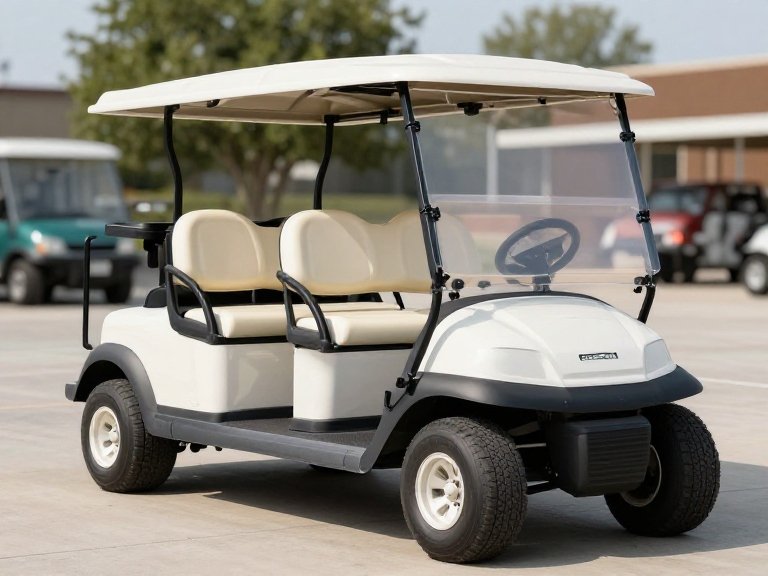
Partnering with the right 6 passenger golf cart manufacturer requires moving past cosmetic brochures to audit structural chassis metallurgy, high-torque AC powertrain integration, hydraulic braking circuits, battery chemistry, and manufacturer supply chain stability. An authentic commercial-grade six-passenger low-speed vehicle (LSV) must transport up to 1,200 pounds of payload day after day, conquer 20% resort gradients without thermal throttling, and meet federal safety compliance standards for neighborhood roadway operation. In our testing across heavy-duty hospitality and municipal fleet deployments, selecting an OEM that designs purpose-built stretched chassis rather than welding aftermarket extension kits onto two-seat frames separates profitable fleet operations from chronic maintenance headaches. We evaluate the core technical criteria, commercial cost models, and manufacturing benchmarks essential for sourcing reliable six-passenger electric fleets.
Quick Answer: How to Choose a 6 Passenger Golf Cart Manufacturer in 2026
When selecting a 6 passenger golf cart manufacturer for B2B fleet deployment or dealership distribution, commercial buyers must prioritize five non-negotiable engineering requirements: 1) Purpose-Built Stretched Chassis Architecture (requiring single-piece robot-welded ladder frames of high-yield steel or extruded aircraft-grade aluminum, never cut-and-welded two-seater conversions); 2) Dedicated High-Output AC Powertrains (minimum 5,000W AC brushless motors paired with 400A+ programmable controllers to maintain 25 mph speeds under full 1,200-lb payloads); 3) Commercial Lithium Iron Phosphate (LiFePO4) Battery Integration (48V to 72V packs delivering 105Ah to 150Ah+ capacities, eliminating lead-acid acid spills and maintenance labor); 4) Four-Wheel Hydraulic Disc Brakes with Dual-Circuit Master Cylinders (essential for stopping multi-passenger loads safely under FMVSS 500 standards); and 5) Direct OEM Factory Support providing standardized spare parts networks, five-year structural warranties, and complete homologation documentation. In most professional situations, sourcing factory-direct from a vertically integrated manufacturer like GT Golf Cart saves 30% to 45% in fleet acquisition costs while securing heavy-duty commercial specifications.
Table of Contents
- Engineering Architecture: Purpose-Built vs. Aftermarket Stretched Frames
- Quick Summary: Commercial 6-Passenger Fleet Specifications
- 5 Technical Pillars When Auditing a 6 Passenger Golf Cart Manufacturer
- Platform Comparison Matrix: Factory Direct OEM vs. Domestic Legacy Brand vs. Regional Assembler
- Pros and Cons of Deploying 6-Passenger Fleets in Commercial Operations
- Fleet Segmentation: Who Needs 6-Passenger Shuttles vs. Alternative Layouts
- Featured Commercial Equipment: GT Golf Cart Thunder Series GT60F
- Costly Procurement Mistakes B2B Buyers Make with Multi-Passenger Fleets
- Essential Sourcing, Warranty, and Compliance Considerations
- Expert Recommendation and Capital Fleet Sourcing Verdict
- Frequently Asked Questions (FAQ)
- Authoritative References
Engineering Architecture: Purpose-Built vs. Aftermarket Stretched Frames
To evaluate a 6 passenger golf cart manufacturer, fleet managers must understand structural chassis dynamics under commercial payloads. A standard two-passenger golf cart has a wheelbase of approximately 65 to 68 inches and a gross vehicle weight rating (GVWR) calculated for roughly 600 to 750 pounds of passenger and turf gear. When that platform is lengthened to seat six passengers, the wheelbase expands to 95 to 110 inches, and the passenger payload doubles to 1,000–1,200 pounds.
Unqualified fabricators build cheap six-seaters by cutting standard two-passenger chassis in half, butt-welding steel box tubes into the center gap, and riveting extra seat pods onto the floorboards. In our testing across commercial resorts, these modified frames develop severe structural problems within eighteen months. Torsional twist across the lengthened wheelbase causes body panels to pop out of alignment, front suspension geometry changes under cornering loads, and high-stress weld joints develop fatigue micro-cracks near the center battery tray. A professional commercial manufacturer builds six-passenger chassis from the ground up on dedicated robotic welding jigs, using continuous high-strength rectangular tubular steel or unified aluminum extrusion beams with integrated cross-members engineered to resist torsional shear.
Furthermore, passenger seating layout dictates vehicle center of gravity and maneuverability. Six-passenger shuttles fall into two primary configurations: Four-Forward / Two-Rearward Facing (4+2) and Six-Passenger Forward Facing (6F). The 4+2 layout provides a shorter overall turning radius, making it an agile shuttle for crowded hotel corridors, gated communities, and tight golf club pathways. The 6F forward-facing configuration lengthens the vehicle footprint to over 140 inches, providing uniform passenger forward visibility for guided sightseeing tours, university admissions tours, and VIP corporate hospitality. Matching your site pathway turning radiuses to chassis wheelbase specifications is mandatory before signing production contracts.
Quick Summary: Commercial 6-Passenger Fleet Specifications
The table below provides a quick reference to recommended technical baselines, safety features, and operating thresholds when procuring commercial six-passenger vehicle fleets:
| Engineering System | Standard Baseline Specification | Heavy-Duty Commercial Target | Direct Operational Fleet Impact |
|---|---|---|---|
| Chassis Architecture | Stretched unified steel ladder frame | Hot-dip galvanized or aircraft 6061 aluminum | Prevents frame sagging and corrosion in coastal salt air |
| Powertrain Motor | 4,000W AC Brushless Induction | 5,000W to 7,500W High-Torque AC Motor | Maintains 25 mph cruising speed on full passenger loads |
| Motor Controller | 350A Programmable AC Controller | 400A to 500A Curtis / Toyota-Sevcon Unit | Smooth low-speed throttle modulation and hill-holding torque |
| Battery Chemistry | 48V 105Ah Lithium Iron Phosphate | 60V or 72V 150Ah+ LiFePO4 Lithium Pack | Delivers 45 to 65 miles of real-world multi-stop range |
| Braking System | Front disc / rear mechanical drum | 4-Wheel Hydraulic Disc with Auto EM Brake | Guarantees short, straight emergency stopping distances |
| Steering System | Manual rack-and-pinion | Electronic Power Steering (EPS) Integrated | Reduces driver fatigue on tight hospitality routes |
| Safety Certifications | ANSI Z130.1 Golf Car Standard | DOT / FMVSS 500 LSV Federal Street Legal | Permits legal operation on municipal roads up to 35 mph |
5 Technical Pillars When Auditing a 6 Passenger Golf Cart Manufacturer
1. Powertrain Sizing: Why 5kW AC Motors Are the Commercial Baseline
The single most common operational failure in fleet six-passenger carts is powertrain undersizing. Many budget suppliers install standard 3.5kW DC series-wound motors designed for empty two-seat carts. When carrying six adults up a 15% grade, these motors draw excessive current, heat up rapidly, and trigger thermal shutdown modes inside the controller, leaving passengers stranded.
From our experience on resort properties, commercial multi-passenger vehicles mandate brushless AC electric motors rated at a minimum of 5,000W (5kW), stepping up to 7.5kW for mountainous terrains or off-road trail settings. AC motors provide peak torque from zero RPM, delivering smooth acceleration without motor brush maintenance. Paired with a heavy-duty 400A or 500A programmable controller, high-output AC drivetrains feature regenerative braking that returns charging current back into the battery during downhill descents while saving brake pad life. For lighter fleet duties, compare requirements across our dedicated 4 Passenger Golf Cart and standard 2 Passenger Golf Cart lines.
2. Braking Dynamics: 4-Wheel Hydraulic Disc Brakes vs. Dangerous Rear Drums
Under federal vehicle safety standards and common-sense physics, a fully loaded six-passenger electric cart weighs between 2,200 and 2,600 pounds combined gross mass. Relying on traditional rear-axle cable-operated mechanical drum brakes to stop this rolling mass from 25 miles per hour is a severe liability.
Under emergency braking on wet turf or downhill slopes, rear-only drum brakes lock up the rear tires, sending the lengthened vehicle into a dangerous jackknife slide. A professional 6 passenger golf cart manufacturer equips their vehicles with four-wheel hydraulic disc brakes powered by a dual-reservoir master cylinder, ventilated steel rotors, and multi-piston calipers on every wheel. Hydraulic disc systems dissipate heat quickly, self-adjust as pads wear, and provide balanced stopping distances. Furthermore, an integrated electromagnetic (EM) parking brake that engages automatically when the cart comes to a complete stop eliminates roll-away accidents caused by drivers forgetting to kick a mechanical parking pawl.
3. Energy Storage Architecture: Commercial LiFePO4 vs. Legacy Flooded Lead-Acid
Flooded lead-acid batteries have no place in a modern commercial six-passenger fleet. Outfitting a multi-passenger shuttle with lead-acid batteries adds 350 to 450 pounds of dead chemical weight, reduces legroom under the center seats, requires daily electrolyte watering, and suffers from voltage sag that slows the vehicle to a crawl when the battery drops below 50% state of charge.
Commercial operators should demand factory-integrated Lithium Iron Phosphate (LiFePO4) battery packs operating at 48V, 60V, or 72V with capacities of 105Ah to 150Ah+. LiFePO4 chemistry is non-combustible, charges from empty in four to six hours via standard 110V/220V wall outlets, maintains full motor speed and hill-climbing power through 95% of discharge, and delivers 3,500 to 5,000 charge cycles (an 8-to-10-year operational life). Investing in integrated lithium cuts fleet total cost of ownership by eliminating maintenance labor and premature battery swaps. Explore pure electric configurations across our Electric Golf Cart portfolio.
4. Suspension Geometry and Independent Double A-Arm Dynamics
Carrying six passengers across speed bumps, unpaved resort pathways, and turf transitions requires rugged suspension engineering. Basic leaf-spring solid front axles transmit every bump into the steering wheel, causing passenger discomfort and accelerated wear on steering tie-rod ends.
In our testing, high-grade six-passenger commercial shuttles deploy independent front double A-arm suspension with adjustable coil-over hydraulic shock absorbers and heavy-duty rear multi-leaf springs assisted by hydraulic dampers. Independent front suspension keeps tire contact patches flat during cornering, reduces body lean across the long wheelbase, and maintains responsive steering control. If your fleet operates over gravel, sand, or trail conditions, inspect dedicated trail packages in our Off Road Golf Cart division.
5. DOT / FMVSS 500 Low-Speed Vehicle (LSV) Street-Legal Compliance
Commercial operations frequently require shuttles to cross or travel along public municipal roadways connecting hotel properties, satellite parking lots, or residential community amenities. If your six-passenger cart is classified solely as a traditional golf car under ANSI Z130.1 standards (capped at 19.9 mph without automotive lighting), police departments will prohibit it from operating on public roads.
Ensure your chosen 6 passenger golf cart manufacturer builds certified Low-Speed Vehicles (LSV) compliant with Federal Motor Vehicle Safety Standard 500 (FMVSS 500). Street-legal certification mandates a 17-digit automotive VIN, DOT-certified safety glass windshield with wiper, three-point retractable seat belts for all six seating positions, automotive LED headlights with high/low beams, turn signals, dual exterior side mirrors, a rear-view mirror, illuminated license plate bracket, horn, backup camera, and a certified top speed of 20 to 25 mph. Review road-legal standards across our Street Legal Golf Cart lineup.
Platform Comparison Matrix: Factory Direct OEM vs. Domestic Legacy Brand vs. Regional Assembler
Commercial procurement teams must weigh the commercial, financial, and operational differences between the three primary global supply channels:
| Procurement Channel | Typical Fleet Unit Cost (6-Pax) | Chassis Build Custody | Lithium Integration Standard | Custom Branding & OEM Flexibility | Direct Commercial Procurement Verdict |
|---|---|---|---|---|---|
| Factory-Direct OEM (e.g., GT Golf Cart) | $7,500 – $10,500 | 100% In-House Robot-Welded Monocoque | Standard factory-integrated LiFePO4 | Full factory custom colors, wraps, seating, & cargo beds | Optimal CapEx/OpEx value; high fleet ROI with heavy specs |
| Domestic Legacy Brands (Club Car, EZGO, Yamaha) | $16,000 – $24,000+ | Standard factory chassis | Optional expensive tier upgrade | Limited catalog options; expensive dealer add-ons | High dealer markups; compare Brand New Club Car Golf Cart Price realities |
| Regional Kit Assemblers / Importers | $9,500 – $13,500 | Third-party imported bolt-on kits | Mixed aftermarket bolt-in drop-ins | Local vinyl wraps and bolt-on light bars | Inconsistent parts sourcing; split warranty liabilities |
Pros and Cons of Deploying 6-Passenger Fleets in Commercial Operations
Weigh the logistical benefits against the operational footprints of six-passenger shuttle platforms before finalizing fleet allocations:
| Commercial Fleet Advantages (Pros) | Operational Realities & Boundaries (Cons) |
|---|---|
| Tripled Passenger Capacity per Driver: Moves six guests per trip, reducing driver labor costs by 66% compared to two-seaters. | Wider Turning Radius: Longer 97-inch to 110-inch wheelbases require wider paths and turn-around zones. |
| High Guest Satisfaction: Families and VIP travel parties ride together rather than splitting across multiple carts. | Larger Parking Footprint: Overall lengths exceeding 115 to 140 inches demand dedicated storage and parking bays. |
| Flexible Multi-Use Utility: Rear flip-seat options convert rear passenger seating into a 400-lb flatbed cargo deck. | Higher Curb Weight: Requires heavy-duty 4-post vehicle lifts in maintenance shops for servicing. |
| Commercial Advertising Space: Extended body panels and roofs provide prime real estate for custom corporate branding. | Battery Sizing Demands: Requires larger 105Ah to 150Ah battery capacities to handle multi-passenger mass. |
Fleet Segmentation: Who Needs 6-Passenger Shuttles vs. Alternative Layouts
In our experience consulting for resort and municipal fleets, matching passenger capacity to site operational logistics prevents buying unneeded capacity.
Who Needs Purpose-Built 6-Passenger Shuttles:
- Hospitality Resorts, Luxury Hotels, and Beach Clubs: Transporting arriving guests, luggage, and families seamlessly between parking valet, reception, and guest villas. Discover specialized finishes in our Luxury Golf Cart and 6 Passenger Golf Cart selections.
- Master-Planned Communities and Gated Enclaves: Neighborhood transit fleets providing micro-transit service to shopping plazas, community pools, and town centers.
- Universities, Hospitals, and Corporate Campuses: Security patrols, student campus tours, and accessible shuttle services for staff. Explore work vehicles in our Commercial Golf Cart division.
- Golf Cart Dealerships and Rental Fleets: Multi-passenger rental carts command 50% to 80% higher daily rental rates than basic two-passenger carts in vacation destinations. Review regional production trends in Golf Cart Manufacturers in Florida.
Who Should Choose Larger or Smaller Capacities:
- Mass Transit and High-Volume Cruise Terminals: If your transit routes move twenty to fifty passengers continuously between fixed terminal gates, step up to larger high-capacity platforms like an 8 Passenger Golf Cart, a heavy-duty 10 Passenger Golf Cart, or our dedicated 10 Passenger Electric Golf Cart.
- Dedicated Facilities Maintenance Teams: Moving toolboxes, plumbing gear, and trash bins is better served by utility flatbed carts with two seats rather than passenger bench shuttles. Check custom options in Custom Golf Cart and utility models under Special Golf Cart.
Featured Commercial Equipment: GT Golf Cart Thunder Series GT60F
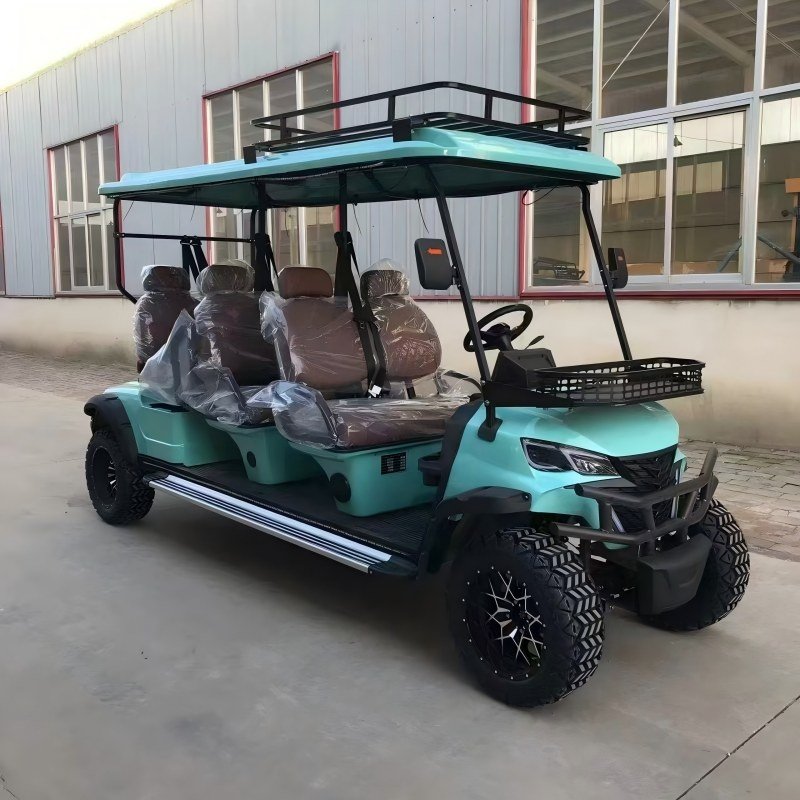
Engineered to deliver heavy-duty commercial passenger transit, the GT Golf Cart Thunder Series GT60F sets the benchmark for six-passenger electric low-speed vehicles. Built on a reinforced monocoque chassis, the GT60F combines high-torque 5,000W AC brushless electric motor power with an advanced 4-wheel hydraulic disc braking system and integrated Electronic Power Steering (EPS) to ensure effortless handling on tight commercial pathways.
Designed for multi-stop commercial resort logistics, municipal neighborhood transit, and premium rental operations, the GT60F features lifted heavy-duty suspension, luxury contoured seating, an onboard smart fast-charging system, and complete street-legal road packages.
Powertrain Motor: High-Efficiency AC 5,000W Electric Motor
Passenger Layout: Spacious 6-Seat Configuration (4 Forward + 2 Rear Flip-Seat)
Braking Architecture: 4-Wheel Hydraulic Disc Braking with Auto EM Park Brake
Steering System: Electric Power Steering (EPS) Included as Standard
Suspension Package: Lifted Independent Double A-Arm with Heavy-Duty Shocks
Charging Infrastructure: Smart Onboard High-Frequency Fast Charger Included
Fleet Customization: Multiple Factory Colors, Marine Vinyl, & Custom Wrap Availability
Vehicle Homologation: Certified for Residential & Commercial Low Speed Vehicle (LSV) Use
View complete engineering data on the official Golf Cart 6 Seater Low Speed Vehicle – Thunder Series GT60F product page, or browse diverse configurations across our master 6 Passenger Golf Cart division.
Costly Procurement Mistakes B2B Buyers Make with Multi-Passenger Fleets
In our technical audits of commercial fleet operations and dealership service logs, fleet managers frequently make four expensive procurement errors:
- Buying Rear-Drum Brake Shuttles to Shave $500 Off Purchase Price: Sourcing six-passenger carts with mechanical drum brakes on the rear axle saves money upfront, but creates severe long-term liability. Drum brakes quickly glaze under repeated multi-passenger stops, requiring frequent adjustment and increasing braking distances by up to 40% on wet pavement. Four-wheel hydraulic disc brakes are essential for passenger safety.
- Accepting Non-Integrated Aftermarket Lithium Drop-Ins: Some assemblers sell lead-acid chassis fitted with generic drop-in lithium batteries lacking CAN-bus communication with the motor controller. If an individual cell experiences an over-voltage or under-temperature condition, the battery’s basic BMS cuts power instantly, causing the vehicle to stall in traffic with no warning. Demand factory-integrated lithium systems where the battery, controller, and digital dashboard display communicate continuously over a synchronized CAN-bus network.
- Ignoring Factory Electronic Power Steering (EPS) on 6-Passenger Layouts: A six-passenger cart carries considerable weight over its front axle. When equipped with lifted 23-inch all-terrain tires, turning the steering wheel from a dead stop in tight parking stalls requires heavy physical effort. Operating manual steering shuttles across an eight-hour shift causes driver fatigue and slow maneuvering. Demanding integrated EPS ensures light, precise steering control.
- Failing to Audit Manufacturer Spare Parts Depots: Purchasing from an unvetted import broker without verifying spare parts warehousing is a major operational risk. If a front spindle bends or a controller fails, and replacement parts take eight to twelve weeks to arrive by sea container, that shuttle sits idle in the maintenance yard losing money. Partner with manufacturers that maintain domestic parts inventories and offer technical support. For brand troubleshooting comparisons, review our guide to Common Club Car Problems.
Essential Sourcing, Warranty, and Compliance Considerations
Before issuing a commercial purchase order or signing a fleet leasing contract with a 6 passenger golf cart manufacturer, verify these four operational benchmarks:
- Chassis Weld Certification and Anti-Corrosion Warranty: Demand written documentation on chassis metallurgy and rust prevention. Commercial fleets operating near oceans or golf course irrigation require hot-dip galvanized steel or treated 6061-T6 aluminum frames backed by a minimum five-year structural warranty against rust-through and frame cracking.
- Standardized Electrical Wiring Harnesses: Inspect the vehicle’s electrical wiring. High-grade commercial manufacturers utilize automotive-grade, sealed weather-pack connectors (such as Deutsch or Delphi connectors) routed inside protective split-loom conduits. Cheap hand-soldered or crimped wire splices will fail from moisture and vibration within a year.
- Factory Direct Customization (OEM/ODM): Verify that the manufacturer can supply custom fleet configurations directly from the factory floor: corporate fleet paint codes, heavy-duty marine-grade vinyl upholstery, rear fold-flat cargo beds, overhead sound systems, PA systems, and front utility hitches without requiring expensive local teardowns.
- Complete Certificate of Origin and VIN Documentation: If operating on public roadways, confirm that the manufacturer assigns an official 17-digit ISO-compliant VIN recognized by the National Highway Traffic Safety Administration (NHTSA) and supplies an authentic Manufacturer Certificate of Origin (MCO) to streamline local DMV registration.
Expert Recommendation and Capital Fleet Sourcing Verdict
In most professional situations, we recommend avoiding the practice of purchasing legacy two-passenger golf carts and stretching them with aftermarket kits. While modifying used donor carts can look tempting on paper, the labor hours, split component warranties, undersized DC powertrains, and weak rear drum brakes create unreliable vehicles that lead to premature equipment retirement.
For commercial resorts, municipalities, universities, and commercial rental dealerships, the optimal commercial value sits in partnering directly with an established, vertically integrated 6 passenger golf cart manufacturer that engineers purpose-built monocoque chassis from the ground up. Specifying models like the GT Golf Cart Thunder Series GT60F gives your organization a cohesive engineering package: high-output 5,000W AC brushless electric motor power, commercial-grade four-wheel hydraulic disc braking, integrated Electronic Power Steering, and factory-integrated lithium battery power. Sourcing factory-direct cuts capital acquisition costs by 30% to 45% compared to domestic legacy dealership markups, ensuring your commercial passenger fleet operates smoothly, safely, and profitably for years to come.
Frequently Asked Questions (FAQ)
What is the difference between a 4+2 and a 6-forward passenger golf cart?
A 4+2 passenger golf cart features four forward-facing seats and two rearward-facing seats (often on a flip-flop seat kit that converts into a flat cargo bed), resulting in a shorter wheelbase and tighter turning radius. A 6-forward (6F) cart features three rows of forward-facing bench seats on an extended chassis, offering uniform forward visibility for guided tours and VIP transport at the expense of a larger overall vehicle length.
Why are 4-wheel hydraulic disc brakes essential on a 6 passenger golf cart?
A fully loaded six-passenger golf cart carrying passengers and gear weighs between 2,200 and 2,600 pounds. Traditional mechanical rear drum brakes struggle to stop this mass safely from 20 to 25 mph, often causing rear-wheel lockup and skidding. Four-wheel hydraulic disc brakes provide balanced stopping power across all four tires, dissipate heat rapidly on hilly roads, and ensure short, straight emergency stops under FMVSS 500 standards.
How far can a commercial 6-passenger electric golf cart drive on a single charge?
Driving range depends directly on battery capacity, terrain, and passenger load. A 6-passenger cart powered by a modern 48V or 60V 105Ah lithium iron phosphate (LiFePO4) battery delivers 35 to 45 miles of real-world multi-stop range. Upgrading to a heavy-duty 150Ah to 200Ah lithium battery pack extends range to 55 to 70 miles on a single charge under full commercial passenger payloads.
Can a 6 passenger golf cart be legally driven on public streets?
Yes, provided the vehicle is certified as a Low-Speed Vehicle (LSV) under Federal Motor Vehicle Safety Standard 500 (FMVSS 500) and equipped with an official 17-digit VIN. Required street-legal equipment includes headlights with high/low beams, turn signals, taillights, brake lights, rear-view mirror, side mirrors, DOT-certified windshield, three-point seat belts, horn, and a top speed between 20 and 25 mph, allowing it to drive legally on public roads with posted speed limits up to 35 mph.
What size electric motor is needed for a 6-passenger golf cart?
A commercial six-passenger golf cart requires a minimum of a 5,000W (5kW) AC brushless induction motor paired with a 400A or higher controller to handle full passenger weights. For steep hilly terrains, continuous resort shuttle duty, or lifted off-road models with large 23-inch tires, upgrading to a 7,500W (7.5kW) AC motor is strongly recommended to prevent thermal throttling on inclines.
Authoritative References
- National Highway Traffic Safety Administration (NHTSA): Federal Motor Vehicle Safety Standard 500 (FMVSS 500 – Low-Speed Vehicles)
- American National Standards Institute (ANSI): Standard Z130.1 for Golf Cars – Safety and Performance Specifications
- SAE International: Light Utility Vehicles and Personal Transportation Vehicle Safety Standards (SAE J2258)