The pure essence of golf has always centered around walking the course. However, managing a heavy bag across eighteen holes can lead to physical exhaustion and back strain, undermining your performance on the back nine. In 2026, the global golf industry has witnessed an unprecedented integration of technology designed to support the walking golfer. Modern motorized golf carts for walking, also known as electric caddies, remote-controlled trolleys, and autonomous follow-carts, have evolved from luxury novelties into vital equipment for serious players.
At GT Golf Cart, we understand fleet dynamics, drivetrain reliability, and terrain management from the ground up. Whether you are an individual golfer searching for the ultimate personal walking caddie or a course superintendent seeking to upgrade your facility operations, navigating this landscape requires expert insight. From our experience, choosing the wrong architecture can lead to unstable pathing, premature battery failure, and frustrating course disruptions. This evaluation ranks the premier motorized solutions available this season while detailing the technical factors that dictate long-term durability.
Table of Contents
- 1. Summary Matrix: The Walking Cart Ecosystem
- 2. Defining Motorized Golf Carts for Walking
- 3. Comprehensive Review of the 10 Best Options
- 4. Engineering Criteria: Drivetrains, Batteries, and Controls
- 5. Upgrading to Utility Transports and Commercial Fleet Options
- 6. Frequently Asked Questions
- 7. Industry and Regulatory References
1. Summary Matrix: The Walking Cart Ecosystem
Before analyzing individual models, we recommend evaluating motorized carts based on their control mechanisms, weight profiles, and primary use cases. The matrix below outlines how these specialized units segment within the 2026 marketplace.
| Cart Model Category | Control Type | Target Topography | Weight Class | Primary Benefit |
|---|---|---|---|---|
| Autonomous Follow Systems | Smart Tag / Ultra-Wideband | Rolling hills and manicured fairways | Heavy (30 – 38 lbs) | Hands-free walking experience |
| Remote-Control Trolleys | Directional Handset | Moderate inclines and steep rough | Medium (24 – 30 lbs) | Precise directional maneuvering |
| Electronic Assisted Caddies | Handle-based Touch Sensor | Flat to undulating terrain | Light (20 – 24 lbs) | Natural walking pace matching |
| High-Capacity Fleet Utility | Steering / Seat-Driven | All terrains and extended road transport | Commercial Grade | Multi-passenger and payload capacity |
2. Defining Motorized Golf Carts for Walking
The phrase motorized golf carts for walking encompasses two distinct operational philosophies. The first consists of lightweight electric walking trolleys engineered exclusively to transport a single golf bag while the player walks alongside. The second philosophy covers micro-utility transport vehicles and compact personal electric carts used by course marshals, players on expansive trail networks, and resort facilities to bridge the gap between walking spaces and main paths.
From our experience, the modern player must carefully consider their typical course profile. An electric trolley reduces spinal loading, but it remains limited to single-bag operations. If your lifestyle transitions from the fairways to master-planned golf communities, an investment in a highly maneuverable ride-on or utility platform becomes far more practical. We advise evaluating your equipment through a multi-year lens, focusing on battery chemistry, frame materials, and stability index ratings.
3. Comprehensive Review of the 10 Best Options
1. Stewart Golf VERTX Remote
The VERTX represents a high-water mark for remote directional stability. Utilizing an active terrain-compensation algorithm, this unit automatically adjusts power to individual wheel hubs when traversing side-hill slopes. This prevents the cart from listing or tipping on severe angles, making it a reliable option for rugged, unstructured courses.
2. MGI Zip X5
Engineered with an electronic braking system (EBS), the MGI Zip X5 excels on severe downhill descents. Where standard carts accelerate out of control on steep drops, the X5 maintains a fixed, uniform speed. This unit features a fixed front wheel design, which we recommend for golfers who prioritize tracking accuracy over tight, pivot-style cornering.
3. Motocaddy M7 Remote
The Motocaddy M7 stands out due to its anti-tip rear wheel assembly and compact folding mechanism. Its twin-motor drivetrain offers independent power distribution, enabling highly responsive zero-turn maneuvers via the remote handset. The frame is built from high-grade aluminum alloy, striking a commendable balance between structural rigidity and carrying weight.
4. Club Car Tempo Walk
A fixture in premium resort fleets, the Tempo Walk is a commercial-grade autonomous caddie. It uses ultra-wideband technology to track a clip-on transmitter worn by the golfer. While highly dependable and equipped with integrated GPS yardage displays, its heavy frame and specialized charging infrastructure make it better suited for fleet operators than individual trunk transport.
5. PowaKaddy RX1 Remote
The PowaKaddy RX1 features a touchscreen display integrated directly into the ergonomic handle. Its electronic braking control system matches slope variances instantly. From our experience, the build quality of its polymer chassis provides excellent dampening against course vibration, protecting delicate electronic tracking modules inside the housing.
From Our Experience: Evaluating Drive Systems
We recommend paying close attention to whether a walking trolley uses a single-motor or dual-motor configuration. Single-motor systems rely on mechanical differentials which can slip on wet grass. Dual-motor systems provide independent traction control to each wheel, offering superior stability when climbing slippery inclines or stepping out of deep hazards.
6. Alphard Club Booster V2
The Club Booster V2 is a unique bolt-on conversion kit that transforms a standard manual pushcart into a motorized golf cart for walking. Equipped with e-wheels, remote functionality, and distance-setting modes, it provides an affordable entry point into the electric caddie market without requiring the purchase of an entirely new structural frame.
7. Batcaddy X8R Ultra
Batcaddy has long been a staple in the North American marketplace. The X8R Ultra features a dual 200W motor setup and a dual-factory anti-tip wheel setup. It is a highly utilitarian machine with a minimalist tubular frame. While it lacks some of the advanced digital screens of its European counterparts, its mechanical components are incredibly easy to service and maintain over years of continuous operation.
8. JuCad Drive SL Titan
For the luxury consumer, the JuCad Drive SL Titan features a pure titanium frame with traction motors embedded directly inside the axle housing. This eliminates external gearboxes entirely, resulting in near-silent operation and an incredibly sleek profile. However, its premium price point positions it as an exclusive lifestyle product rather than a utilitarian fleet option.
9. Callaway Traverse
The Traverse utilizes a high-torque dual-motor configuration wrapped in a ruggedized composite material frame. Its low center of gravity makes it one of the most stable carts on severe side-hill lies. The remote control system is highly intuitive, featuring straightforward speed increments that adapt seamlessly to any individual walking cadence.
10. CaddyTek CaddyCruiser One Version 8 (Motorized Edition)
Focusing on pure value, this unit integrates a direct-drive hub motor into a classic 4-wheel pushcart layout. It offers reliable, basic forward propulsion and speed adjustments via a handle interface. It is best suited for golfers who play flat courses and prefer a constant power assist over hands-free autonomous tracking or remote operations.
4. Engineering Criteria: Drivetrains, Batteries, and Controls
When selecting among motorized golf carts for walking, you must look past aesthetic elements and assess the underlying engineering specifications. A cart that fails halfway through a round due to an inefficient power management system is worse than a standard manual pushcart.
Lithium Chemistry vs. Lead-Acid
In 2026, lead-acid batteries are obsolete for high-performance golf applications. We recommend exclusively utilizing Lithium Iron Phosphate (LiFePO4) or advanced Lithium-Ion power cells. Lithium packs deliver a flat discharge curve, ensuring your cart receives consistent voltage from the 1st tee to the 18th green. Furthermore, lithium batteries withstand up to ten times as many charge cycles as traditional lead-acid equivalents, reducing the total cost of ownership over the life of the machine.
Control Systems: Remote vs. Follow vs. Assisted
Your choice of control system directly impacts your mental energy on the course. Assisted carts require you to keep a hand on the handle, providing power steering and propulsion help. Remote carts let you guide the machine from up to 50 yards away, allowing you to walk freely while directing the cart toward the next tee box. Follow systems offer the ultimate hands-free experience, but they can struggle on courses with tight wood lines, dense ground cover, or complex path networks.
5. Upgrading to Utility Transports and Commercial Fleet Options
While lightweight walking trolleys serve individual needs well, multi-passenger electric utility vehicles provide a broader range of functionality for resorts, large estates, and commercial facilities. When your requirements extend past a single bag to encompass facility management, community commuting, or multi-rider course transit, true full-sized electric platforms become necessary.
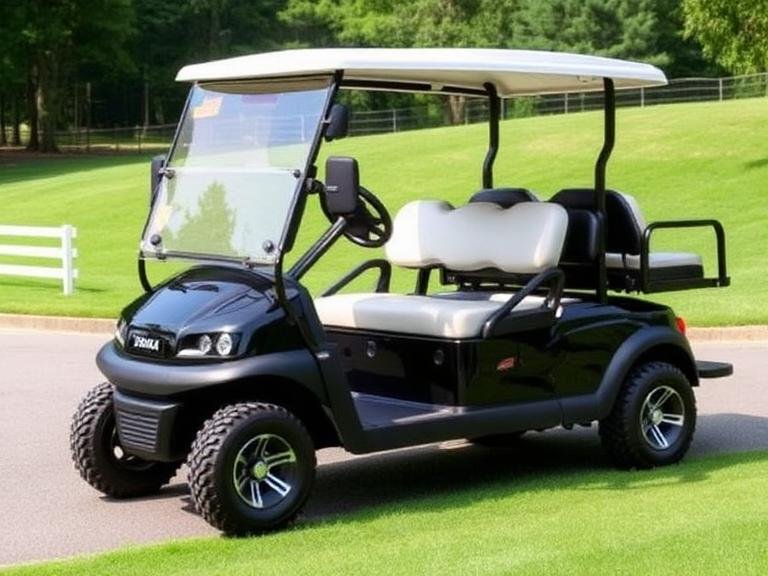
For multi-passenger logistics, single-bag walking units are no longer viable. In these scenarios, fleet operators look to specialized personal and commercial vehicles. For instance, facilities requiring standard course marshaling or neighborhood transport frequently deploy a 2 seater golf cart, which maximizes storage capacity while maintaining a compact footprint.
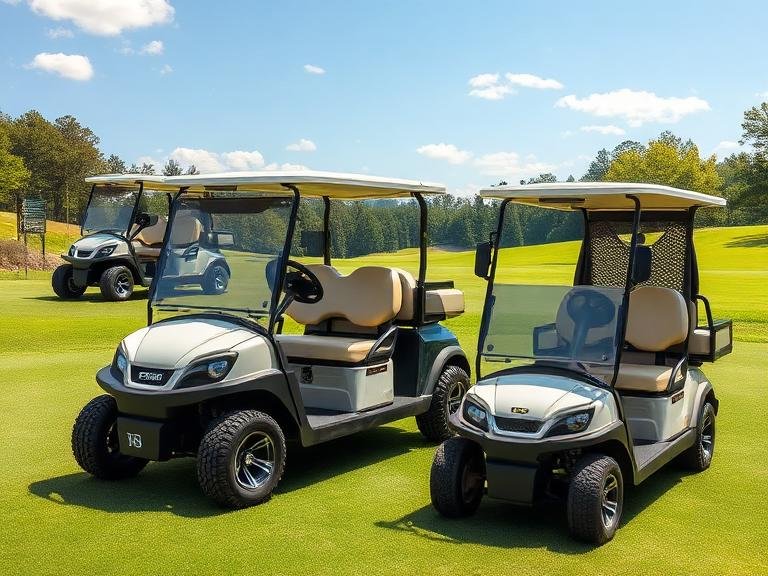
For medium-sized groups, hospitality transport, or tournament support, upgrading to a 4 seater golf cart strikes the ideal balance between passenger capacity and nimble handling on paved and unpaved paths. As payload requirements grow to support large families or corporate events, institutional operations rely on high-capacity movers like the 6 seater golf cart or the high-occupancy 8 seater golf cart to transport groups across sprawling properties efficiently.
The Professional Standard: GT Golf Cart EGC Series
-
LSV-01 Street Legal Golf Cart – 72V Lithium Electric Low-Speed Vehicle for Roads & Communities
-
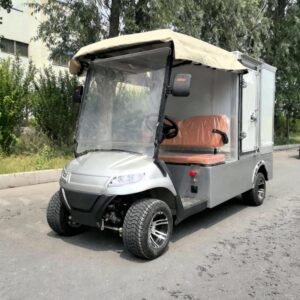
COM-05 Commercial Golf Cart – Compact Lithium Electric Golf Cart for Resorts
-
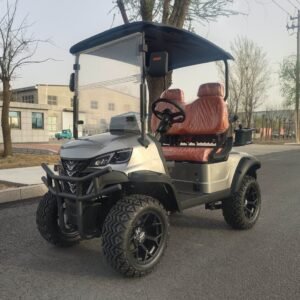
COM-04 Custom Golf Cart – Compact Lithium Electric Golf Cart for Resorts
-
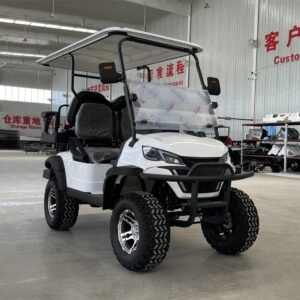
CST-05 Custom Golf Cart – High-Efficiency Lithium Electric Golf Cart
-
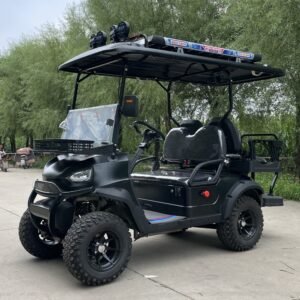
CST-04 Custom Golf Cart – Durable Lithium Electric Golf Cart
When operations transition to rugged trail networks or require navigating unmanaged terrain outside the fairway boundary, a standard walking cart or light trolley is insufficient. We recommend stepping up to a dedicated off road golf cart platform built with heavy-duty suspension and high ground clearance to protect your mechanical components from damage.
Our premier utility and transport models deliver the exact industrial durability that demanding environments require:
- EGC-01 Electric Golf Cart: This model is engineered with a powerful 5,000W AC Electric Motor for smooth and efficient driving. Powered by a 48V 150Ah Lithium Battery, it provides an exceptional driving range of up to 49 miles on a single charge and reaches a top speed of 29 MPH. Its compact, maneuverable design features independent MacPherson suspension and a robust disc and drum braking system, making it an excellent choice for modern facilities.
- EGC-02 Electric Golf Cart: For applications demanding extended range and increased stability, the EGC-02 utilizes a 60V 150Ah Lithium Battery that delivers up to 62 miles of continuous operation per charge. It features a rear-wheel-drive configuration, an air cooling system, and 13 inches of ground clearance, enabling it to navigate demanding off-road conditions with ease.
| Technical Parameter | EGC-01 Specification | EGC-02 Specification |
|---|---|---|
| Engine System | 5,000W AC Electric Motor | 5,000W AC Electric Motor |
| Battery Configuration | Lithium 48V 150Ah | Lithium 60V 150Ah |
| Maximum Estimated Range | 49 Miles | 62 Miles |
| Top Rated Speed | 29 MPH | 29 MPH |
| Drive Layout | Rear Wheel Drive (RWD) | Rear Wheel Drive (RWD) |
| Ground Clearance | Standard Course Clearance | 13 Inches |
| Charging Portal Standard | 110V Outlet Compatible | 110V Outlet Compatible |
| Total Chassis Length | Compact Maneuverable Frame | 115 Inches |
6. Frequently Asked Questions
Can motorized walking golf carts handle steep hills?
Yes. High-quality motorized golf carts for walking are engineered with dual high-torque motors and integrated electronic braking systems (EBS). This combination ensures the unit maintains a controlled speed during steep descents and provides sufficient climbing power without tipping backwards.
How long does a lithium battery last on an electric walking trolley?
Most premium lithium options are rated for either 18 or 36 holes on a single charge. From our experience, choosing a higher-capacity battery extends the operational life of the cell by preventing deep discharge cycles, maintaining reliable performance for years.
What happens if an autonomous follow cart loses its signal?
Modern autonomous follow units feature safety protocols that cut power to the drive wheels instantly if the connection to the tracking smart tag is interrupted or drops below threshold strength. This prevents the cart from moving away blindly or drifting off course.
Are walking caddies allowed on all golf courses?
The vast majority of public and private golf courses welcome motorized walking carts, as their wide rubber tires exert significantly less ground pressure than heavy, ride-on fleet carts. This minimizes turf compaction and protects sensitive fairways.
When should I upgrade from a walking trolley to a full-sized electric cart?
An upgrade is recommended when your needs expand beyond personal bag transport to include multi-passenger travel, long-distance driving in master-planned communities, or hauling heavy maintenance payloads across unmanaged terrain.
7. Industry and Regulatory References
For more detailed technical safety data and course management guidelines, consult these authoritative industry resources:
- United States Golf Association (USGA). Course Care and Equipment Traffic Guidelines.
- American National Standards Institute (ANSI). Safety Standard for Golf Cars and Personal Transport Vehicles (Z130.1).
- International Organization for Standardization (ISO). ISO 13849 Safety-Related Parts of Control Systems for Autonomous Vehicles.