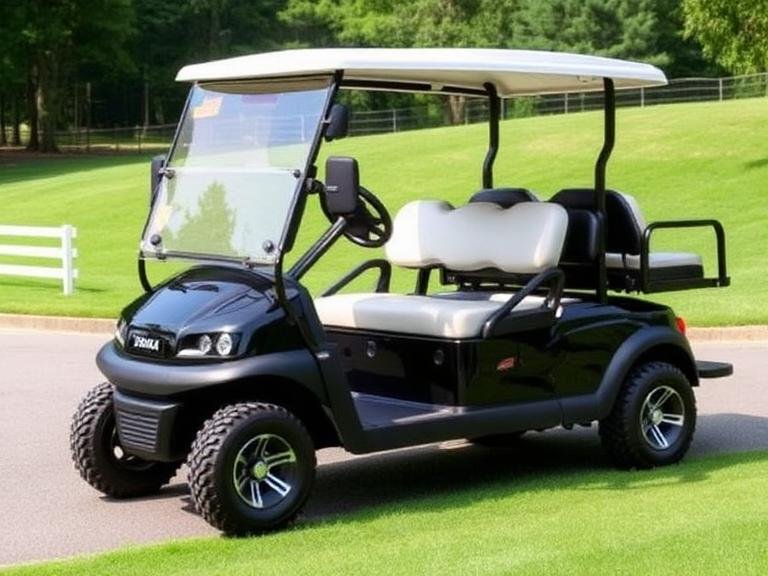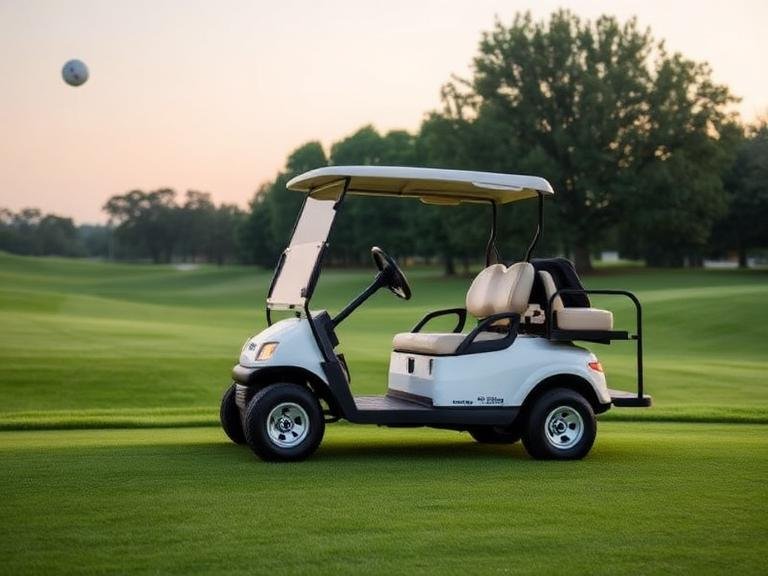
The utility vehicle industry has experienced a paradigm shift. Historically confined to manicured fairways and paved resort paths, the humble golf cart has evolved into a rugged, highly capable machine. At the forefront of this evolution are 4×4 Golf Carts. These specialized vehicles combine the compact footprint and efficiency of traditional models with the raw torque and traction required to conquer challenging terrains. For property managers, farmers, hunters, and outdoor enthusiasts, upgrading to a four-wheel-drive platform is no longer a luxury—it is an operational necessity.
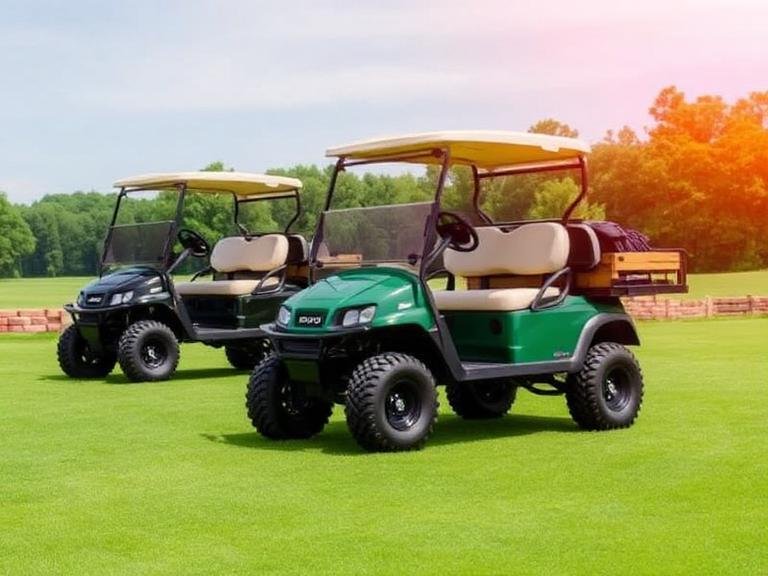
At GT Golf Cart, we specialize in the design, manufacturing, and global supply of electric golf carts and low-speed vehicles. With over 12 years of industry experience, we have witnessed firsthand the exponential demand for off-road mobility solutions. We deliver reliable mobility solutions for golf courses, resorts, communities, and commercial fleets worldwide. From our experience, buyers frequently underestimate the technical advantages of four-wheel drive in low-speed vehicles. In this authoritative guide, we will analyze the engineering advantages, operational benefits, and precise pricing structures of 4×4 Golf Carts in the current market.
Table of Contents
- 1. The Engineering Dynamics of 4×4 Golf Carts
- 2. Primary Benefits of Operating 4×4 Golf Carts
- 3. Matching Passenger Capacity to Off-Road Needs
- 4. Comprehensive Pricing Analysis of 4×4 Golf Carts
- 5. Summary Table: Pricing and Feature Matrix
- 6. Expert Buying Advice from GT Golf Cart
- 7. Frequently Asked Questions (FAQs)
- 8. Industry References
1. The Engineering Dynamics of 4×4 Golf Carts
Understanding the value of 4×4 Golf Carts requires a brief technical overview of their drivetrain architecture. Standard golf carts utilize a rear-wheel-drive (2WD) configuration, which is perfectly adequate for flat, predictable surfaces. However, when navigating mud, loose sand, snow, or steep inclines, a 2WD system quickly loses traction, resulting in wheel spin and vehicle immobilization.
Conversely, 4×4 Golf Carts distribute torque across all four wheels. Modern iterations, particularly the advanced Electric Golf Cart models we manufacture, utilize dual-motor configurations—one AC motor driving the front axle and another driving the rear. This independent torque vectoring eliminates the need for heavy mechanical transfer cases, drastically reducing the vehicle’s weight while maximizing instantaneous power delivery. This electronic four-wheel-drive system provides superior grip without compromising the quiet, emission-free operation that makes electric mobility so desirable.
2. Primary Benefits of Operating 4×4 Golf Carts
The operational scope of 4×4 Golf Carts extends far beyond recreational use. We recommend these vehicles for any application where terrain predictability is low and operational reliability is critical. Below are the core benefits derived from integrating a four-wheel-drive low-speed vehicle into your fleet or personal garage.
Superior Traction and Stability
The most immediate advantage is traction. Whether you are managing a sprawling agricultural property or navigating a muddy hunting trail, 4×4 Golf Carts maintain continuous forward momentum. By engaging the front wheels, the vehicle pulls itself over obstacles rather than simply pushing from the rear. This mechanical advantage significantly reduces the risk of getting stuck and prevents turf damage caused by rear-wheel spin.
Enhanced Towing and Payload Capability
Utility requires strength. A Commercial Golf Cart equipped with a 4×4 drivetrain offers vastly superior towing capacities. The distributed traction allows the vehicle to pull heavy trailers, landscaping equipment, or feed carts up steep gradients without losing grip. For commercial fleet operators, this translates directly to increased productivity and reduced reliance on larger, more expensive heavy machinery.
All-Weather Operational Reliability
Resorts, industrial campuses, and large private estates cannot cease operations due to inclement weather. 4×4 Golf Carts excel in adverse conditions. Snow, sleet, and heavy rain are easily mitigated by the all-wheel traction. When equipped with proper all-terrain tires and an enclosed cab, these vehicles become year-round assets rather than seasonal commodities.
3. Matching Passenger Capacity to Off-Road Needs
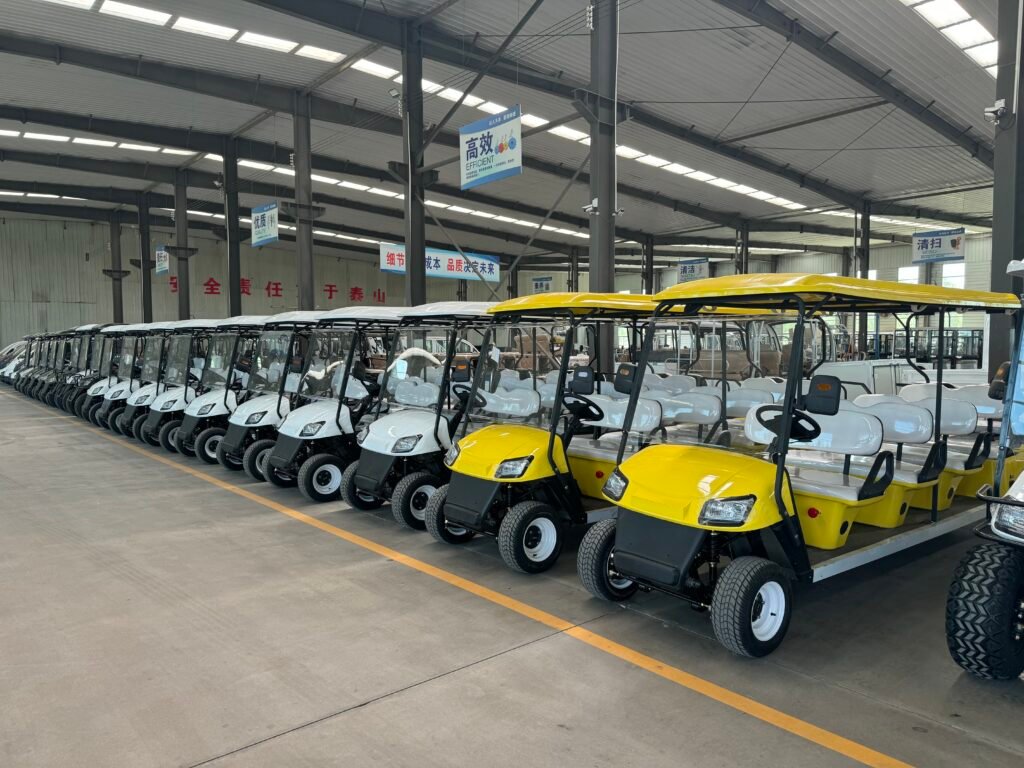
The utility of 4×4 Golf Carts is heavily influenced by their seating and payload configurations. At GT Golf Cart, our product lineup is engineered to accommodate diverse group sizes and cargo requirements. Selecting the correct chassis is paramount for balancing maneuverability with capacity.
For individuals, couples, or property managers conducting solo patrols, a 2 Passenger Golf Cart configured with a 4×4 drivetrain and a rear cargo bed is the ultimate agile utility vehicle. It features a short wheelbase, allowing for a tight turning radius in dense wooded areas or narrow barn aisles.
For families, hunters, and small work crews, the 4 Passenger Golf Cart and 6 Passenger Golf Cart models are the industry standard. These units provide the necessary seating while retaining the robust suspension required to support the additional passenger weight over rough terrain.
In high-capacity commercial settings, such as eco-tourism tours, large-scale event management, or massive resort properties, moving large groups through varied terrain requires specialized engineering. This is where our heavy-duty 8 Passenger Golf Cart and 10 Passenger Golf Cart models excel. When upgraded to a 4×4 platform, these multi-row vehicles ensure that guests and staff are transported safely and comfortably, regardless of the topography.
4. Comprehensive Pricing Analysis of 4×4 Golf Carts
The capital expenditure required for 4×4 Golf Carts is naturally higher than that of standard 2WD models due to the addition of front differentials, secondary motors, upgraded controllers, and heavy-duty suspensions. From our experience, understanding the cost breakdown helps buyers make informed, long-term investments.
The entry point for a baseline two-passenger 4×4 utility cart typically ranges from $12,000 to $14,000. This price assumes standard lead-acid batteries and a basic utility bed. However, the market has largely shifted toward lithium-ion technology. Upgrading an Electric Golf Cart to a high-capacity lithium battery pack adds approximately $2,000 to $3,500 to the initial cost, though we highly recommend this upgrade. Lithium batteries reduce the overall vehicle weight by hundreds of pounds—which dramatically improves off-road performance—and they require zero maintenance while lasting up to three times longer.
As passenger capacity increases, so does the necessary chassis length and motor output. A four to six-passenger 4×4 model generally commands a price between $15,000 and $19,000. For extreme applications requiring an 8 or 10 passenger configuration, the engineering complexity pushes the price into the $20,000 to $25,000 range. Furthermore, if your application requires highly specialized modifications—such as medical transport beds, specialized hunting racks, or ADA-compliant ramps—investing in a Custom Golf Cart will incur additional fabrication costs tailored exactly to your specifications.
5. Summary Table: Pricing and Feature Matrix
| Vehicle Configuration | Ideal Application | Base Drivetrain | Estimated Pricing (USD) |
|---|---|---|---|
| 2 Passenger 4×4 Utility | Farming, Property Maintenance, Solo Hunting | Dual AC Motor Electric | $12,000 – $14,500 |
| 4 to 6 Passenger 4×4 | Family Estates, Small Tour Groups, Hunting Parties | Dual AC Motor Electric | $15,000 – $19,000 |
| 8 to 10 Passenger 4×4 | Resort Shuttles, Eco-Tourism, Commercial Campuses | Heavy-Duty Dual AC Motor | $20,000 – $25,000 |
| Commercial / Custom 4×4 | Industrial Transport, EMS, Specialized Fleet Operations | Configurable | Varies by Specification |
6. Expert Buying Advice from GT Golf Cart
With over a decade of design and manufacturing expertise, we advise clients to look beyond the sticker price and evaluate the Total Cost of Ownership (TCO) when purchasing 4×4 Golf Carts. We recommend always opting for an independent front suspension system. Solid front axles, while cheaper to produce, result in a jarring ride over rocky terrain and reduce the vehicle’s articulation capability.
Additionally, pay strict attention to the braking system. 4×4 Golf Carts carry more weight and are frequently operated on steep declines. We mandate four-wheel hydraulic disc brakes for any off-road low-speed vehicle, as traditional mechanical drum brakes are insufficient for the payload capacities of modern commercial and multi-passenger carts. By prioritizing advanced battery technology, independent suspension, and hydraulic braking, your investment will yield a safer, more reliable, and ultimately more cost-effective mobility solution.
7. Frequently Asked Questions (FAQs)
Absolutely. In fact, modern electric 4×4 Golf Carts equipped with dual AC motors produce immediate torque, allowing for superior rock crawling and hill climbing capabilities compared to gas engines, which must rev up to reach their optimal power band.
Engaging all four wheels requires more energy, which naturally reduces the maximum range by 15% to 20% compared to a 2WD model. This is why we recommend pairing 4×4 Golf Carts with high-capacity lithium-ion battery packs to ensure full-day operational capability without range anxiety.
While aftermarket kits exist, we strongly advise against this. True 4×4 Golf Carts require specialized chassis reinforcement, upgraded suspension geometry, and specifically calibrated motor controllers. Converting a 2WD cart often leads to mechanical failure and compromised safety. It is much safer and more economical to purchase a factory-built 4×4 unit.
8. Industry References
- U.S. Department of Energy: Electric Vehicle Technology and Efficiency
- National Highway Traffic Safety Administration (NHTSA): Regulations for Low-Speed Vehicles
- U.S. Department of Agriculture (USDA): Utility Vehicle Applications in Modern Farming
- Environmental Protection Agency (EPA): Green Vehicles and Zero-Emission Standards