Introduction to Golf Cart Fleet Maintenance
Managing a fleet of golf carts or low-speed vehicles requires a deep understanding of mechanical and electrical systems. At GT Golf Cart, we specialize in the design, manufacturing, and global supply of electric golf carts and low-speed vehicles. With over 12 years of industry experience, we deliver reliable mobility solutions for golf courses, resorts, communities, and commercial fleets worldwide. Through our extensive work in the industry, we have encountered countless maintenance scenarios, giving us unique insights into the engineering flaws and wear patterns of legacy vehicles.
Table of Contents
- Introduction to Golf Cart Fleet Maintenance
- MCOR Failures: The Source of Acceleration Issues
- On-Board Computer (OBC) and Charging Faults
- The Solenoid Click: Power Distribution Errors
- Speed Sensor Malfunctions and Roll-Away Braking
- Front Suspension and Steering Rack Wear
- When to Repair vs. When to Upgrade Your Fleet
- Summary Table of Diagnostics
- Frequently Asked Questions
- Industry References
One of the most frequent inquiries we receive from facility managers involves diagnosing common Club Car problems. While Club Car is a recognized name in the industry, aging fleets frequently suffer from specific, recurring electrical and mechanical failures. Understanding how to identify and resolve these common Club Car problems is essential for minimizing downtime and maintaining a profitable operation. In this comprehensive guide, we will explore the technical realities behind these malfunctions and provide expert recommendations on how to address them.
MCOR Failures: The Source of Acceleration Issues
When discussing common Club Car problems, the Motor Controller Output Regulator (MCOR) is often the primary culprit for drivability issues. The MCOR is a potentiometer linked to the accelerator pedal. As the driver presses the pedal, the MCOR signals the motor controller to deliver the appropriate amount of voltage to the motor. Over time, the internal contacts of the MCOR become dirty, worn, or corroded.
Symptoms of MCOR failure include a hesitant start, jerky acceleration, or a vehicle that will not move at all despite the batteries being fully charged. From our experience, if your vehicle operates smoothly only when the pedal is pressed to the floor, but stutters at lower speeds, the MCOR is failing. We recommend testing the MCOR by turning the key off, placing the vehicle in neutral, and pumping the accelerator pedal rapidly twenty to thirty times. This can temporarily clean the internal contacts. If the vehicle drives smoothly afterward, you have isolated the MCOR as the source of your common Club Car problems and it must be replaced.
At GT Golf Cart, we engineer our modern Electric Golf Cart models with advanced, sealed electronic throttle controls that are highly resistant to the moisture and dust ingress that typically destroy legacy MCOR units.
On-Board Computer (OBC) and Charging Faults
Another prevalent issue that plagues fleet managers revolves around the On-Board Computer (OBC). The OBC is responsible for regulating the battery charge. It tells the external charger when to turn on, how many amps to deliver, and when to shut off. One of the most frustrating common Club Car problems is when a user plugs in their vehicle, and the charger simply does not activate.
Facility managers often waste capital replacing expensive chargers or entire battery banks when the OBC has actually locked out the charging circuit. Symptoms of a failed OBC include batteries boiling over from overcharging, or a charger that remains completely silent when connected. From our experience, you can perform an OBC reset by disconnecting the main negative battery cable for ten minutes. If the problem persists, the OBC must be bypassed or replaced.
The Solenoid Click: Power Distribution Errors
Hearing a distinct clicking sound when pressing the accelerator, followed by no movement, is a hallmark of common Club Car problems. This click is the sound of the solenoid engaging. The solenoid acts as a heavy-duty relay, bridging the high-amperage power from the battery pack to the motor controller.
Diagnosing Solenoid Wear
If the solenoid clicks but the vehicle does not move, the low-amp side of the circuit is functioning, but the high-amp internal contacts are likely burnt or pitted, preventing power transfer. Conversely, if there is no click at all, the issue lies within the micro-switches in the pedal box, the key switch, or the forward/reverse selector. We recommend utilizing a multimeter to test continuity across the large terminals of the solenoid while the pedal is depressed. If continuity is absent despite the clicking sound, the solenoid has failed.
For heavy-duty applications, such as moving cargo or transporting multiple guests in an 8 Passenger Golf Cart or a 10 Passenger Golf Cart, ensuring your solenoids are rated for high continuous amperage is critical to preventing thermal failure.
Speed Sensor Malfunctions and Roll-Away Braking
Club Car vehicles utilizing the IQ drive system rely heavily on a speed sensor mounted to the end of the electric motor. This sensor communicates the motor’s RPM to the controller, allowing for regenerative braking and top-speed regulation. A cracked speed sensor magnet is a frequent source of common Club Car problems.
If your vehicle suddenly feels sluggish, drops its top speed by half, or fails to engage the regenerative motor braking when rolling down a hill, the speed sensor is the likely culprit. To test this, manually push the vehicle while the key is turned on and the cart is in forward or reverse. You should feel resistance and hear a reverse buzzer warning you of a roll-away. If the cart rolls freely without resistance, the speed sensor has failed. Addressing these common Club Car problems immediately is vital for passenger safety, especially in hilly resort environments.
Front Suspension and Steering Rack Wear
Mechanical wear and tear present another category of common Club Car problems. The front suspension on older models utilizes leaf springs, A-arms, and urethane bushings. Over years of use, particularly in demanding environments, these bushings disintegrate. This leads to loose steering, excessive vibration, and severe, uneven tire wear (camber issues).
Steering Rack and Pinion
If you experience excessive play in the steering wheel, the rack and pinion assembly or the tie rod ends are worn. We recommend a full front-end inspection every 100 hours of operation. Proper lubrication of all zerk fittings can significantly extend the life of these components. For facilities operating in rugged terrain, transitioning to an Off Road Golf Cart from GT Golf Cart provides a heavy-duty, independent suspension architecture designed to withstand impacts that would destroy standard golf course vehicles.
When to Repair vs. When to Upgrade Your Fleet
Constantly battling common Club Car problems drains maintenance budgets and damages the reputation of your facility. At a certain point, the cost of replacing OBCs, MCORs, solenoids, and battery packs exceeds the value of the aging fleet. From our experience, vehicles older than seven years operating in commercial environments face a steeply accelerating curve of component failure.
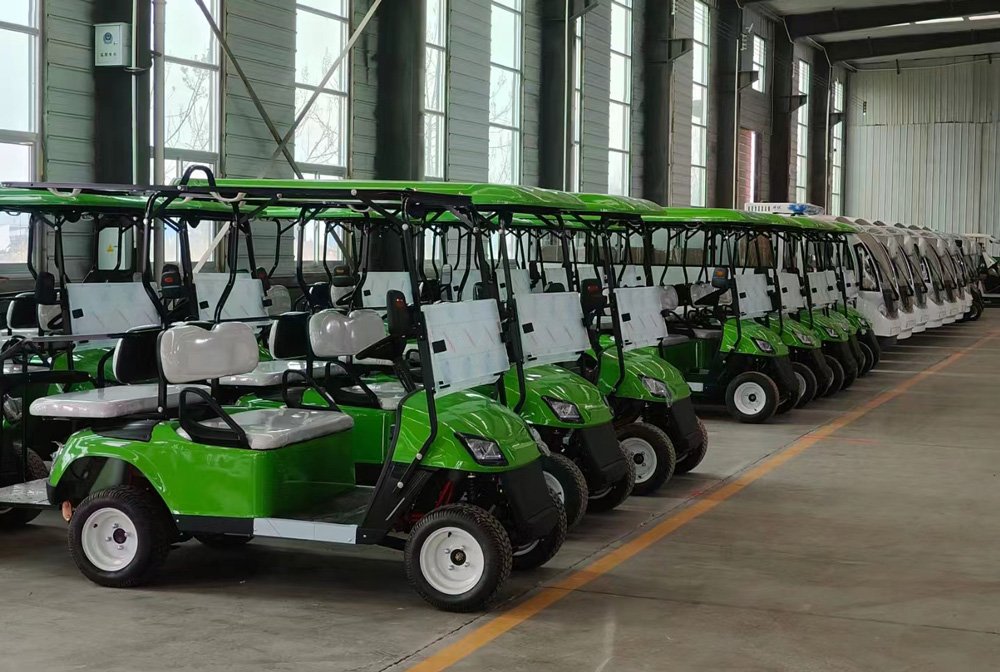
When the time comes to modernize your operations, GT Golf Cart offers a comprehensive portfolio of reliable mobility solutions. Whether you require a fleet of traditional 2 Passenger Golf Cart models for the fairways, a 4 Passenger Golf Cart for resort transportation, or a DOT-compliant Street Legal Golf Cart for neighborhood commuting, our manufacturing processes prioritize longevity and intelligent engineering.
For specialized needs, our custom division can produce a Special Golf Cart tailored precisely to your operational requirements, from utility beds to ADA-compliant passenger setups. By upgrading to a modern 6 Passenger Golf Cart or Commercial Golf Cart from GT Golf Cart, you eliminate the legacy engineering flaws that cause common Club Car problems, ensuring a superior return on your investment and a flawless experience for your guests.
Summary Table of Diagnostics
| Symptom Observed | Likely Component Failure | Expert Diagnostic Approach | GT Golf Cart Solution |
|---|---|---|---|
| Jerky acceleration or dead pedal | MCOR (Motor Controller Output Regulator) | Pump pedal 30 times with key off to clean contacts; test resistance. | Upgrade to our vehicles featuring sealed, contactless throttle sensors. |
| Batteries not charging or boiling over | OBC (On-Board Computer) | Perform OBC reset by removing main negative cable for 10 minutes. | Adopt GT Golf Cart smart-charge onboard technology. |
| Solenoid clicks, but vehicle won’t move | Solenoid Contacts / Motor Brushes | Test continuity across large solenoid posts under load. | Utilize our heavy-duty contactors standard on all commercial models. |
| Loss of top speed and no regenerative braking | Speed Sensor / Cracked Magnet | Perform push test to check for roll-away braking resistance. | Rely on our advanced AC motor technology with integrated precise sensors. |
| Loose steering and uneven tire wear | A-Arm Bushings / Rack and Pinion | Inspect front end for play; check urethane bushings for disintegration. | Deploy our Off Road Golf Cart or Commercial models with robust independent suspension. |