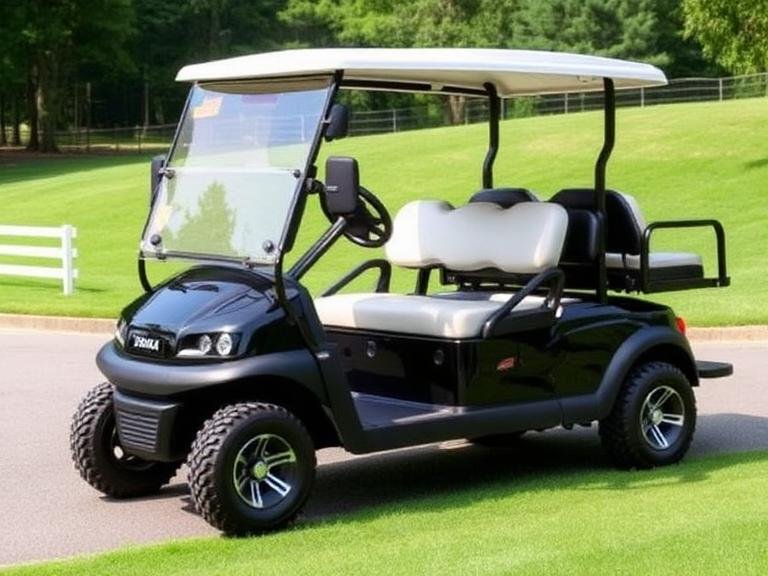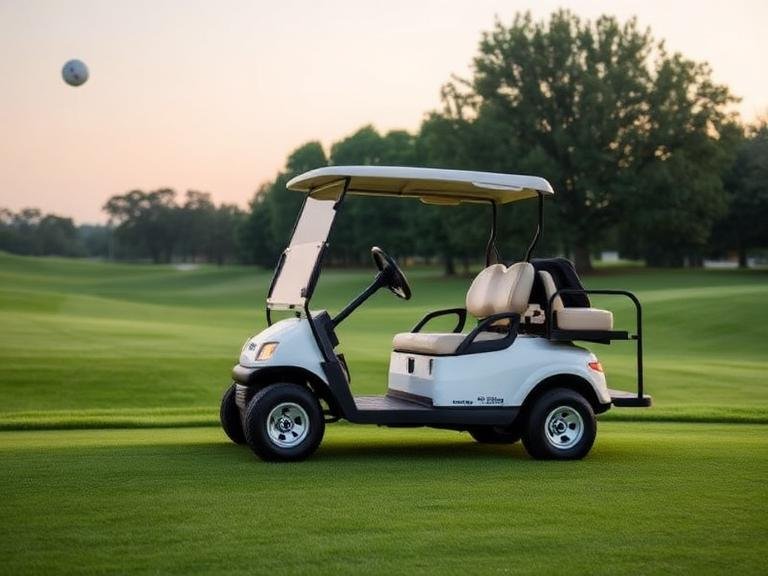
GT Golf Cart specializes in the design, manufacturing, and global supply of electric golf carts and low-speed vehicles. With over 12 years of industry experience, we deliver reliable mobility solutions for golf courses, resorts, communities, and commercial fleets worldwide.
We see it all too often on neighborhood streets and coastal roads: enthusiastic owners driving their standard, unmodified golf carts straight into active traffic, only to be hit with hefty municipal fines, vehicle impoundments, or worse—devastating liability claims from preventable accidents. The requirements for operating a street-legal golf cart are not mere suggestions or guidelines. They are rigid legal mandates set forth by federal highway regulators and strictly enforced by your local police departments.
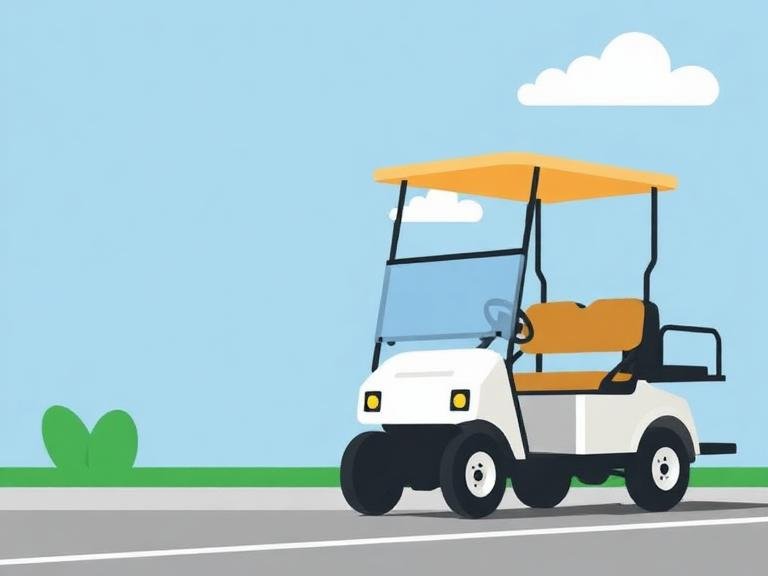
From our experience, the root of the confusion stems entirely from the terminology used by consumers. A traditional golf cart belongs on the fairways, operating at slow speeds away from heavy motor vehicles. If your intention is to take your vehicle onto the asphalt and mix with vehicular traffic, you are no longer driving a golf cart. You are operating what the federal government officially classifies as a Low-Speed Vehicle (LSV). Making that transition legally and safely is a matter of strict engineering compliance.
Understanding the exhaustive requirements for operating a street-legal golf cart is absolutely mandatory before you ever turn the key on a public road. We recommend taking this compliance seriously because the legal distinction dictates everything from the safety equipment required to the structural integrity of the chassis, and the type of insurance policy you are legally obligated to carry. In this authoritative guide, we break down every federal, state, and local parameter you must meet to ensure your vehicle is road-ready, compliant, and fundamentally safe.
Summary at a Glance: Standard Golf Cart vs. Street-Legal LSV
| Specification | Standard Golf Cart | Street-Legal Low-Speed Vehicle (LSV) |
|---|---|---|
| Top Speed Capability | Under 20 mph (Typically 12-15 mph) | Between 20 mph and 25 mph |
| Road Access | Private property, golf courses, designated paths | Public roads with posted limits of 35 mph or less |
| Safety Equipment | Minimal (No DOT requirements) | Mandatory DOT lighting, mirrors, seatbelts, windshield |
| Vehicle Identification | Serial Number | 17-Digit federally compliant VIN |
| DMV Requirements | None | Registration, License Plate, and Liability Insurance |
Table of Contents
- 1. The Legal Distinction: Golf Carts vs. LSVs
- 2. Federal Mandates: FMVSS 500 Standards
- 3. The Indispensable Safety Equipment Checklist
- 4. Powering the LSV: Drivetrain and Electrical Expectations
- 5. State and Local Permitting Requirements
- 6. Practical Implications for Different Cart Sizes
- 7. The Financial Impact: Conversion vs. Buying Factory-Direct
- 8. Frequently Asked Questions (FAQs)
- 9. Authoritative References
1. The Legal Distinction: Golf Carts vs. LSVs
To accurately grasp the requirements for operating a street-legal golf cart, you must first separate the physical form of the vehicle from its legal classification. A vehicle that looks identical to a golf cart can either be an unregulated recreational toy or a heavily regulated motor vehicle, depending entirely on its speed capabilities and factory safety certifications.
By default, conventional golf carts are excluded from federal motor vehicle safety regulations because they are designed for off-road, slow-speed use of an incidental nature. However, the moment a vehicle is designed—or modified—to exceed 20 miles per hour, it crosses a critical legal threshold. It is immediately subjected to the safety frameworks established to protect drivers on public roadways. Attempting to bypass these classifications is illegal and incredibly dangerous for the occupants.
2. Federal Mandates: FMVSS 500 Standards
The foundational requirements for operating a street-legal golf cart stem from the Federal Motor Vehicle Safety Standard (FMVSS) No. 500. This highly specific regulation was established by the National Highway Traffic Safety Administration (NHTSA) to govern the safe operation of small, limited-speed vehicles in controlled environments.
Under this federal standard, an LSV must be a four-wheeled vehicle with an attainable speed of more than 20 mph, but strictly not more than 25 mph, measured on a paved, level surface. Furthermore, it must possess a Gross Vehicle Weight Rating (GVWR) of less than 3,000 pounds. This weight limit is intentional; it prevents manufacturers from categorizing heavier, full-sized passenger vehicles as LSVs to skirt full-scale crash testing requirements.
We recommend that any consumer evaluating a purchase verify these two critical metrics immediately. If a vehicle cannot reach 20 mph, it cannot be legally titled for the street in most jurisdictions. If it exceeds 25 mph, it ceases to be an LSV and enters passenger car territory, which it will inevitably fail to comply with.
3. The Indispensable Safety Equipment Checklist
You cannot simply attach a fluorescent slow-moving vehicle triangle to the rear bumper of your cart and assume it is street legal. From our experience, law enforcement officers are exceptionally well-trained to spot non-compliant vehicles. The federal requirements for operating a street-legal golf cart mandate a rigorous, non-negotiable checklist of safety equipment.
Lighting and Visibility
Your LSV must feature automotive-grade headlamps that meet DOT brightness standards, alongside highly visible tail lamps and stop lamps (brake lights). In addition, front and rear turn signal lamps are required, completely integrated into the steering column. Reflex reflectors must be installed on the sides and the rear of the vehicle. This comprehensive lighting array ensures that you are fully visible to much larger, faster-moving passenger vehicles during both day and night operations.
Physical Restraints and Glazing
Every designated seating position must be equipped with a DOT-approved seat belt assembly, typically a Type 1 (lap belt) or Type 2 (lap and shoulder belt). Whether you are driving an intimate 2 seater golf cart for quick community errands or transporting a large group, these physical restraints are mandatory to prevent occupant ejection during abrupt stops. Additionally, your vehicle must feature an AS-1 or AS-4 DOT-approved safety glass windshield. The standard, flimsy acrylic windshields found on golf courses will shatter into lethal shards upon impact and are strictly prohibited on public thoroughfares.
Mirrors, Alerts, and Identification
Proper spatial awareness requires an exterior rearview mirror on the driver’s side and either an interior rearview mirror or a secondary exterior mirror on the passenger side. A mechanical parking brake capable of holding the fully loaded vehicle on a grade is required, along with an audible warning device (a horn audible from at least 200 feet). Crucially, the vehicle must be assigned a permanent, 17-digit Vehicle Identification Number (VIN), structured identically to the VIN on your daily driver.
4. Powering the LSV: Drivetrain and Electrical Expectations
While safety equipment is the most visible aspect of compliance, the powertrain must be robust enough to handle the demands of public traffic. To genuinely satisfy the requirements for operating a street-legal golf cart, the vehicle must consistently maintain its top speeds between 20 and 25 mph, even when fully loaded or climbing moderate inclines. Traditional 36-volt DC motors often struggle to meet these demands, leading to dangerous speed drops that impede the flow of traffic.
We highly recommend utilizing a minimum of a 48-volt or 72-volt AC drivetrain for street applications. AC motors provide significantly superior torque profiles, reliable sustained top speeds, and essential regenerative braking capabilities. Regenerative braking is particularly vital for an LSV, as it actively assists the mechanical drum or disc brakes in safely decelerating the heavier, faster-moving vehicle before intersections.
Additionally, the electrical architecture must feature a dedicated DC-to-DC voltage reducer. Running heavy-draw items like DOT-approved halogen headlights, turn signals, and digital speedometers requires a stable 12-volt supply. Attempting to tap directly into a single battery within a series pack will rapidly destroy the battery’s lifespan. A proper converter is an engineering necessity to reliably power your street-legal safety suite.
5. State and Local Permitting Requirements
While the federal government defines the physical and structural criteria of an LSV, state and municipal governments hold the authority to dictate exactly where, when, and how you can drive them. The requirements for operating a street-legal golf cart on public roads can vary significantly depending on your zip code, but there are universally enforced baselines.
Licensing, Title, and Insurance
Operating an LSV on a public roadway is legally identical to driving a car. You must hold a valid state-issued driver’s license. The days of letting an unlicensed teenager joyride to the community clubhouse end the second the vehicle’s tires touch public asphalt. Furthermore, you must obtain a title, register the vehicle with your local DMV to receive a license plate, and carry mandatory minimum liability insurance. To navigate the complex nuances of specialized coverage policies, we strongly advise referencing expert resources regarding LSV insurance standards and liability.
Road Access Limitations
In nearly all North American jurisdictions, LSVs are strictly restricted to public roads with a posted speed limit of 35 mph or less. You are absolutely prohibited from driving an LSV on highways, interstates, or heavily trafficked commercial arterials. From our experience dealing with community planners, local municipalities frequently pass their own ordinances further restricting LSV access to specific neighborhoods, designating specific crossing zones, or prohibiting night driving entirely. You must consult your local police department before assuming your intended route is legal.
6. Practical Implications for Different Cart Sizes
As you increase the passenger capacity of your vehicle, the physical and engineering requirements for operating a street-legal golf cart scale exponentially. Safety is not a one-size-fits-all metric. For instance, when outfitting a 4 seater golf cart, the manufacturer must provide four distinct DOT-compliant seat belt assemblies and ensure the GVWR calculation accommodates the weight of four adults without exceeding the 3,000-pound federal threshold.
If you are operating a much larger 6 seater golf cart or an expansive 8 seater golf cart, the gross weight calculations become incredibly tight. The chassis must be reinforced, and the braking system—often requiring four-wheel hydraulic disc brakes—must be powerful enough to halt the fully loaded, heavy vehicle safely within federally mandated stopping distances.
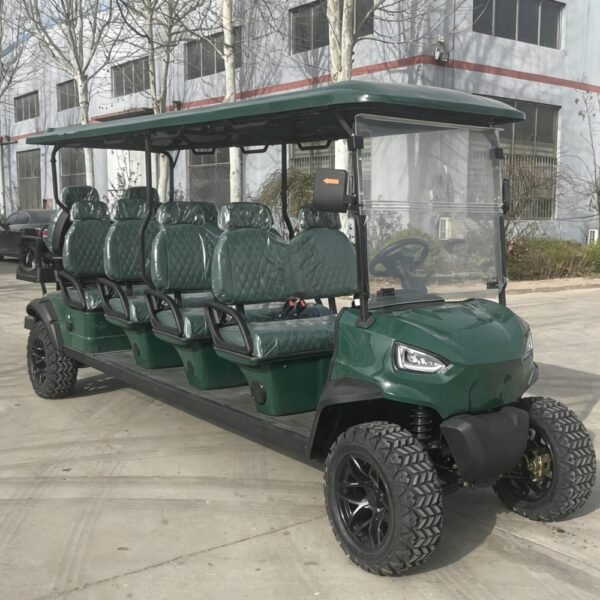
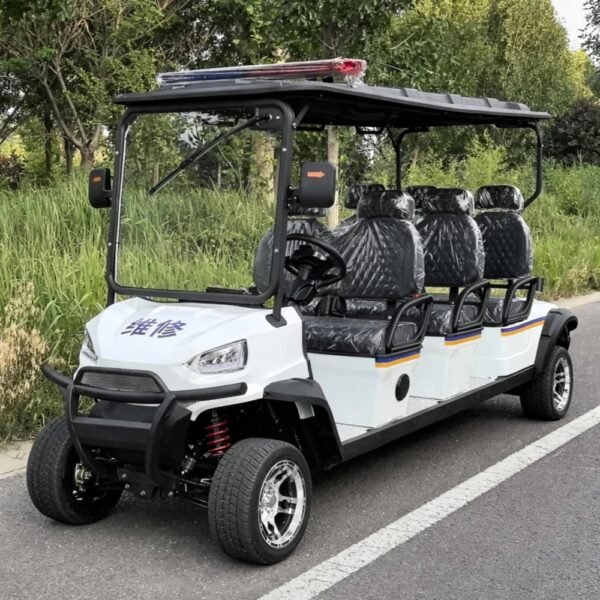
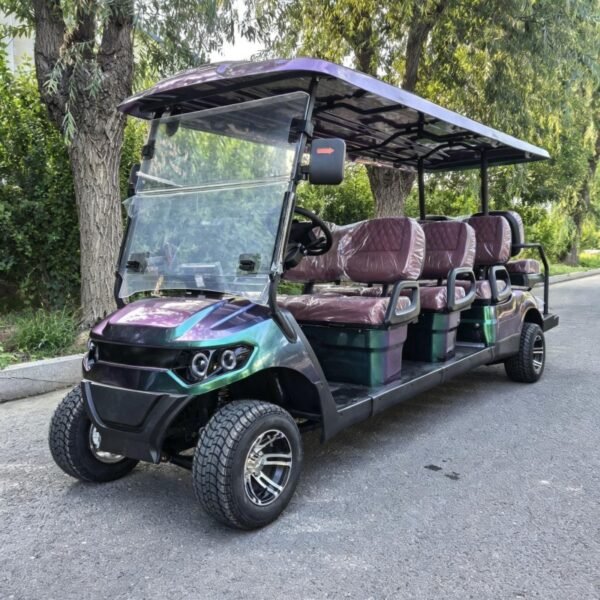
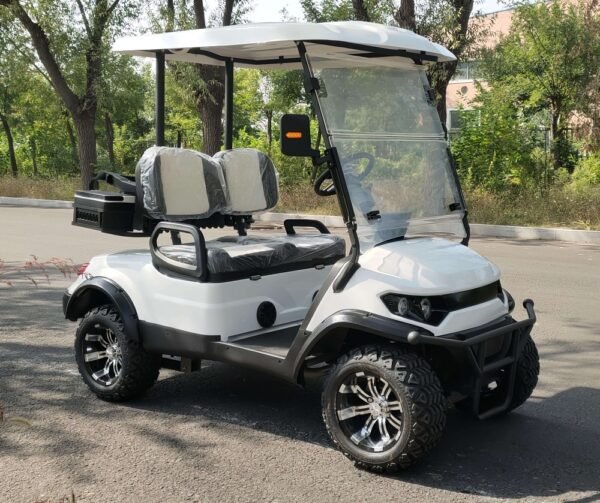
It is equally vital to distinguish between street readiness and rugged terrain capability. A heavy-duty off road golf cart may feature extreme lifted suspensions and aggressive mud tires, but those aesthetic and functional modifications do not inherently make it street legal. In fact, aggressive off-road treads frequently lack the necessary DOT highway approval, and extreme suspension lifts can severely interfere with federal bumper height regulations and critical rollover safety thresholds.
7. The Financial Impact: Conversion vs. Buying Factory-Direct
Many owners attempt to cut corners by converting their existing standard fleets using aftermarket street-legal golf cart conversion equipment. While this is mechanically feasible for a skilled technician, it is an administratively exhausting process. You must coordinate third-party safety inspections, submit detailed affidavits of modification to the DMV, and endure lengthy bureaucratic delays simply to obtain a state-issued VIN for a formerly unregulated cart.
We recommend bypassing this frustrating headache entirely. Purchasing a purpose-built, factory-certified LSV from a reputable manufacturer ensures that the vehicle arrives with a fully compliant 17-digit VIN already stamped on the chassis, certified DOT components factory-installed, and the necessary Manufacturer’s Certificate of Origin (MCO) in hand. This transforms a complex, month-long registration nightmare into a simple, 15-minute transaction at your local motor vehicle office. Your time, safety, and legal security are worth the investment in factory compliance.
8. Frequently Asked Questions (FAQs)
Can I drive my street-legal golf cart on the sidewalk or in bike lanes?
No. LSVs are classified as motor vehicles. They must be operated on the main roadway with the flow of traffic. Driving an LSV on sidewalks or dedicated bicycle lanes is illegal and poses a severe threat to pedestrians and cyclists.
Do I need to install child car seats in an LSV?
Yes. Because an LSV is legally treated as a motor vehicle when operating on public roads, your state’s standard child restraint laws apply. If your child is required by age, weight, or height to be in a car seat or booster seat in a passenger car, they must be securely strapped into a compliant seat within the LSV.
Are there restrictions on operating an LSV at night?
Federal law requires LSVs to be equipped with headlights and taillights, making them physically capable of night driving. However, state and local municipalities frequently restrict LSV operation strictly to daylight hours (sunrise to sunset) for safety reasons, regardless of the lighting equipment installed. Always check your local city ordinances.
Can I increase the speed of my LSV above 25 mph?
Absolutely not. The requirements for operating a street-legal golf cart mandate a maximum speed of 25 mph. Modifying the motor controller or gearing to exceed this speed illegally alters the vehicle’s classification. If caught, your vehicle can be impounded, and your insurance policy will be immediately voided in the event of an accident.
9. Authoritative References
To ensure total compliance with federal law, we strongly encourage reviewing the primary legislative documents and standards that govern Low-Speed Vehicles. The following links provide direct access to the regulatory frameworks discussed in this guide:
- NHTSA Standard Interpretation for Low Speed Vehicles – Official guidance on the classification and modification of golf carts into motor vehicles.
- Federal Motor Vehicle Safety Standards (FMVSS No. 500) – The Federal Register publication detailing the 3,000 lbs GVWR limit and safety expectations.
- 49 CFR § 571.500 – Standard No. 500; Low-speed vehicles – The exact legal text from the Code of Federal Regulations outlining mandatory safety equipment.