As communities, resorts, and commercial properties transition toward eco-friendly mobility solutions, the demand for high-capacity passenger vehicles has skyrocketed. The modern golf cart is no longer confined to the fairways; it has evolved into a premier neighborhood and commercial transport vehicle. For large families and facility managers, maximizing passenger count without sacrificing maneuverability is critical. If you are exploring fleet upgrades or family cruisers, you might find yourself asking what configurations do 6-seater golf carts actually offer. The answer lies in a highly customizable array of seating layouts, power trains, and suspension systems tailored to specific terrain and passenger needs.
At GT Golf Cart, we specialize in the design, manufacturing, and global supply of electric golf carts and low-speed vehicles. With over 12 years of industry experience, we deliver reliable mobility solutions for golf courses, resorts, communities, and commercial fleets worldwide. From our experience, selecting the right model requires understanding exactly which configurations do 6-seater golf carts come in and how those features translate to real-world performance. In this authoritative guide, we will break down the most popular layouts, performance packages, and regulatory configurations available in the market today to help you make an informed investment.
Table of Contents
- 1. Seating Layouts: The Core Configurations Do 6-Seater Golf Carts Offer
- 2. Powertrain and Battery Technologies
- 3. Suspension and Stance: Lifted vs. Non-Lifted
- 4. Street-Legal (LSV) vs. Standard Packages
- 5. GT Golf Cart 6-Passenger Specifications Summary
- 6. Frequently Asked Questions (FAQs)
- 7. Industry References
1. Seating Layouts: The Core Configurations Do 6-Seater Golf Carts Offer
When buyers ask what seating configurations do 6-seater golf carts come in, the industry essentially categorizes them into two distinct structural layouts. Each layout serves a vastly different operational purpose, from maximizing cargo utility to prioritizing passenger comfort during long scenic tours.
1.1 The 4+2 Configuration (Forward and Rear-Facing)
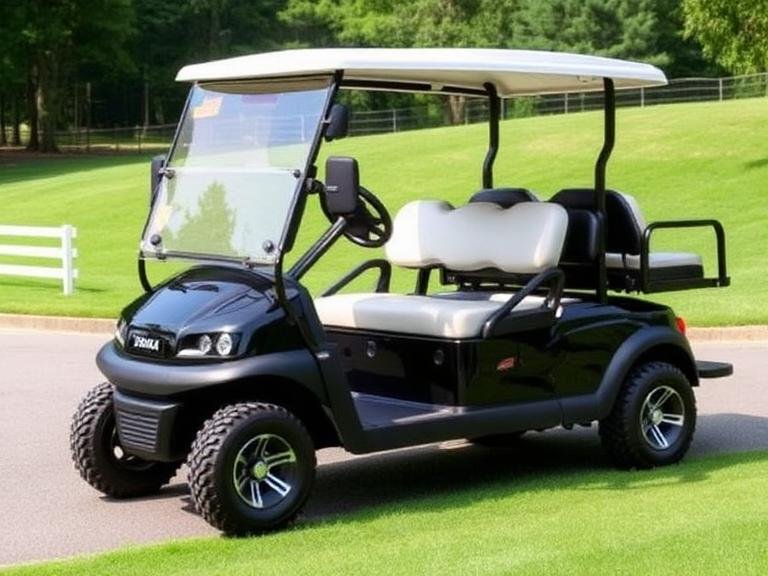
The most popular and versatile format on the market is the 4+2 layout. In this design, the vehicle features two rows of forward-facing bench seats (accommodating four passengers) and one rear-facing bench seat for the final two passengers. We highly recommend this setup for private residential use and light commercial duties. The primary advantage of the 4+2 configuration is the integrated flip-down rear seat. When the rear-facing passengers step off, the rear seat folds completely flat to create a durable cargo bed, perfect for hauling groceries, beach gear, or maintenance equipment.
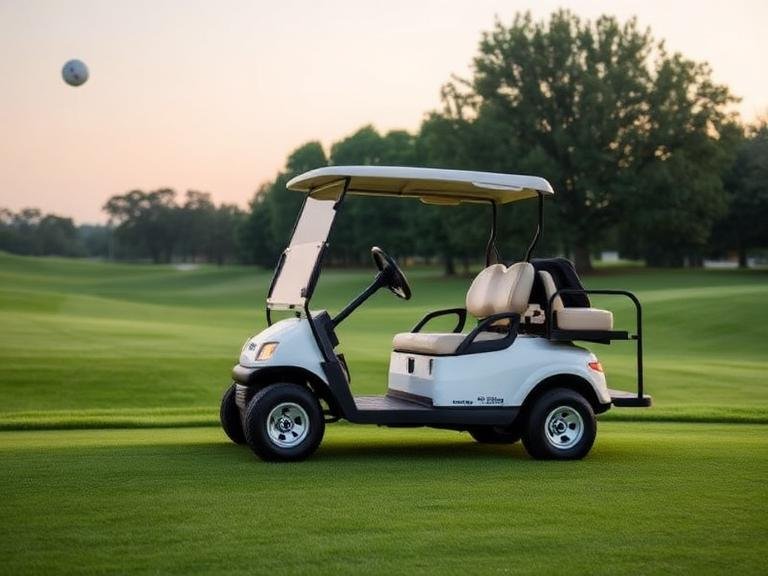
Because it shares a similar extended chassis with standard stretch models, it bridges the gap between a standard 4 seater golf cart and a massive commercial transport. The 4+2 configuration keeps the wheelbase manageable, allowing for tighter turning radiuses in suburban cul-de-sacs and parking garages.
1.2 The 6-Forward-Facing Configuration (Three Rows)
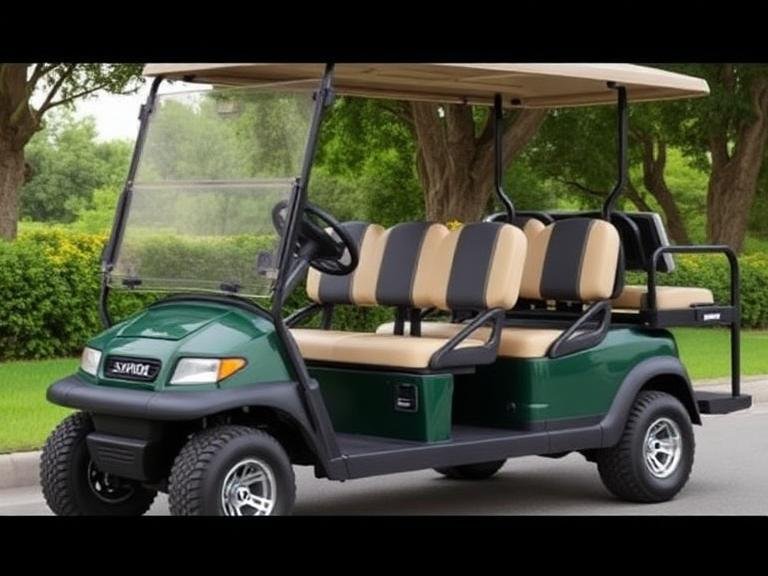
For operations focused purely on passenger comfort, such as campus tours, resort shuttles, or VIP event transport, the 6-forward-facing layout is superior. This setup utilizes an extra-long wheelbase to accommodate three distinct rows of forward-facing bench seats. From our experience, adults greatly prefer facing forward, as it prevents motion sickness and allows everyone to enjoy an unobstructed view of the path ahead.
If you are managing a massive facility and need to move even more people efficiently, you might eventually need to explore an 8 seater golf cart. However, the 6-forward-facing cart hits the sweet spot for many resorts by providing substantial capacity without the extreme length of an 8-passenger tram. Knowing which seating configurations do 6-seater golf carts offer is step one in matching the vehicle to your daily operational profile.
2. Powertrain and Battery Technologies
Moving a fully loaded six-passenger vehicle requires substantial torque and sustained power. When investigating what mechanical configurations do 6-seater golf carts utilize, the powertrain is the heartbeat of the investment. While gas models still exist for extremely remote off-grid applications, the industry has aggressively shifted toward high-efficiency electric motors.
2.1 Advanced Lithium-Ion Packages
We recommend outfitting any multi-passenger vehicle with a modern lithium-ion battery pack. A premium lithium golf cart provides consistent, non-degrading power even when climbing steep grades with six adults on board. Lithium configurations drastically reduce the overall gross vehicle weight, which in turn reduces wear and tear on suspension components and tires. Furthermore, they require zero watering maintenance and offer significantly faster charging times (typically 6 to 9 hours) compared to outdated lead-acid banks.
2.2 High-Output AC Motors
Older DC motors often struggle under the immense payload of six passengers. Today, the best configurations do 6-seater golf carts come with feature 5,000W (or higher) Alternating Current (AC) electric motors. AC drive systems provide superior regenerative braking, which captures energy during deceleration and feeds it back into the lithium battery, thereby extending the driving range. AC motors also deliver instantaneous torque, ensuring smooth and safe acceleration from a dead stop, regardless of passenger payload.
3. Suspension and Stance: Lifted vs. Non-Lifted
The terrain you intend to conquer dictates the stance and suspension geometry of your vehicle. When you look at what stance configurations do 6-seater golf carts feature, the choices generally fall into two categories.
3.1 Non-Lifted (Standard) Cruisers
Standard, non-lifted configurations are engineered for paved neighborhood roads, master-planned communities, and flat resort paths. They feature a lower center of gravity, which enhances high-speed stability and makes it incredibly easy for elderly passengers and young children to step into the vehicle. These carts typically ride on 10-inch to 12-inch wheels with street-tread turf tires that will not damage manicured grass or leave aggressive marks on concrete driveways.
3.2 Lifted and Off-Road Packages
If your property features uneven terrain, dirt trails, or beach access, we recommend opting for a lifted configuration. An off road golf cart package typically includes a 4-inch to 6-inch factory lift kit, heavy-duty independent MacPherson strut front suspension, and aggressive 23-inch all-terrain tires. These configurations do 6-seater golf carts a great service by increasing ground clearance and providing maximum traction in mud, loose sand, or gravel. The reinforced coil springs ensure the heavy frame does not bottom out when navigating deep ruts or steep inclines.
4. Street-Legal (LSV) vs. Standard Packages
Compliance is a major factor in modern golf cart ownership. In many municipalities, you cannot legally drive a standard golf cart on public roads. Therefore, you must look into what regulatory configurations do 6-seater golf carts offer.
A Low-Speed Vehicle (LSV) is a federally recognized classification that allows the cart to be driven on public roads with speed limits up to 35 mph. To achieve LSV status, the manufacturer must equip the 6-seater cart with a specific array of safety components. These configurations include DOT-approved AS1 glass windshields with electric wipers, three-point seatbelts for all six passengers, illuminated license plate brackets, full LED turn signals and brake lights, side and rearview mirrors, a horn, and a digital speedometer.
While a basic 2 seater golf cart used strictly for 18 holes of golf requires none of this, a 6-passenger vehicle used to shuttle families to the local beach or restaurant almost certainly requires an LSV street-legal configuration to avoid ticketing and liability.
5. GT Golf Cart 6-Passenger Specifications Summary
Products by Category
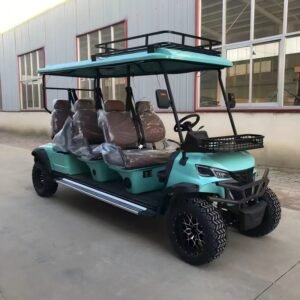
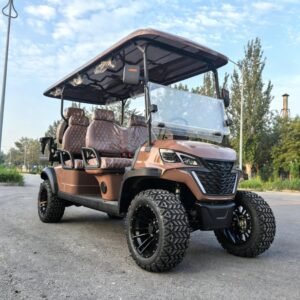
To provide a clear picture of the premium engineering involved in these vehicles, below is a detailed summary table outlining the technical specifications of our flagship 6-passenger electric vehicle. This illustrates exactly what performance configurations do 6-seater golf carts boast when sourced from a top-tier manufacturer.
| Specification | Typical Value |
|---|---|
| Passenger Capacity | 6 Passengers (4+2 seating layout) |
| Motor Power | 5,000W AC Electric Motor |
| Battery Type | Lithium Battery 48V / 60V / 72V |
| Driving Range | 40 to 62 Miles Per Charge |
| Top Speed | 25 to 29 MPH |
| Charging Port | 110V / 120V Standard Charging |
| Charging Time | 6 to 9 Hours |
| Drive System | Rear Wheel Drive (RWD) |
| Front Suspension | Independent MacPherson Strut |
| Rear Suspension | Twist Axle or Coil Spring |
| Brake System | Front Disc + Rear Drum Brakes |
| Tire Size | 23×10-14 All-Terrain Tires |
| Safety Features | LED Lights, Turn Signals, Mirrors, Horn, Seatbelts |
At GT Golf Cart, we ensure that every chassis, motor, and battery system passes rigorous quality control protocols. To view our complete line of high-capacity vehicles, explore our GT Golf Cart 6 Passenger Golf Cart inventory today.
6. Frequently Asked Questions (FAQs)
What is the difference between a 4+2 and a 6-forward-facing cart?
The 4+2 configuration features four forward-facing seats and two rear-facing seats, typically with a fold-down cargo bed mechanism in the rear. A 6-forward-facing cart features three distinct rows of forward-facing seats on an extended chassis, offering superior passenger comfort but eliminating the cargo bed utility. Understanding these configurations do 6-seater golf carts a great service in matching buyer intent to vehicle design.
Can a 6-seater golf cart climb steep hills when fully loaded?
Yes, provided it is equipped with the correct powertrain. From our experience, an AC motor producing at least 5,000W combined with a high-discharge lithium battery pack is required to prevent sluggish performance on steep inclines. Standard DC motors with heavy lead-acid batteries will struggle under the weight of six adults on a hill.
Do 6-seater golf carts fit in a standard residential garage?
This depends heavily on the specific configurations do 6-seater golf carts utilize. A standard 4+2 configuration is roughly 11.5 to 12.5 feet long and will typically fit into a standard deeper residential garage. However, a 6-forward-facing cart can exceed 13.5 feet in length, which often requires a tandem garage, a dedicated cart barn, or outdoor covered storage.
7. Industry References
To ensure the accuracy and reliability of the technical and regulatory information provided regarding the configurations do 6-seater golf carts offer, we rely on established guidelines from the following authoritative bodies: