GT Golf Cart specializes in the design, manufacturing, and global supply of electric golf carts and low-speed vehicles. With over 12 years of industry experience, we deliver reliable mobility solutions for golf courses, resorts, communities, and commercial fleets worldwide.
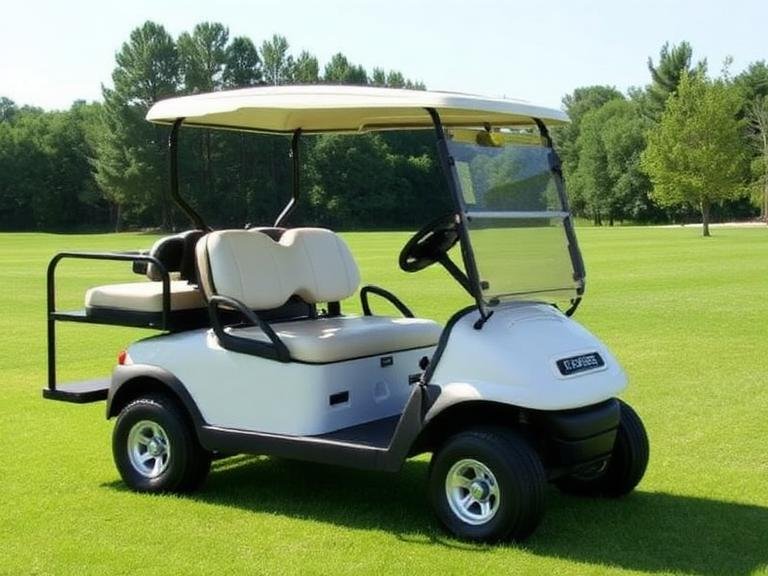
If you are actively searching for reliable mobility solutions without absorbing the initial depreciation hit of a showroom model, exploring the secondary market is a shrewd commercial move. Club Car is arguably the most resilient brand in the golf cart industry. Their proprietary rust-proof aluminum frames give them a multi-decade lifespan that steel-framed competitors simply cannot match. However, the secondary market is a minefield. When looking for Used club car golf carts for sale by owner, you are completely bypassing dealer warranties, certified pre-owned inspections, and standardized pricing structures.
From our experience engineering and distributing heavy-duty LSVs at GT Golf Cart, we see buyers constantly getting burned by purchasing an aesthetically pleasing cart that requires a $2,000 battery replacement two weeks later. This guide takes a clear position: buying directly from an owner is highly profitable if you understand exactly what to inspect and where to source legitimate sellers. We will outline the six most effective channels in the USA to find these private sales, what to inspect before handing over cash, and whether a private transaction makes sense for your specific usage.
Quick Answer
The primary advantage of buying Used club car golf carts for sale by owner is avoiding the 20% to 30% markup typical of retail dealerships. The 6 best ways to locate these carts in the USA are: 1. Local Golf Cart Forums (e.g., Buggies Gone Wild), 2. Retirement Community Newsletters, 3. Facebook Marketplace, 4. Craigslist, 5. eBay Motors, and 6. Country Club Notice Boards.
Before purchasing, you must independently verify the battery pack’s age and voltage via a multimeter, check the aluminum frame for impact damage (Club Car frames do not rust, so any damage is structural), and inspect the steering assembly for excessive play. If the lead-acid batteries are older than four years, you must factor an immediate $1,200 to $1,800 replacement cost into your final offer.
Table of Contents
- What It Is: The Private Club Car Market
- How It Works: Navigating Private Transactions
- 6 Ways to Buy Used Club Car Golf Carts for Sale by Owner
- Benefits of Buying from an Owner
- Limitations and Risks
- Who Should Use It & Who Does Not Need It
- Common Mistakes Buyers Make
- Technical Buying Considerations
- Comparison Table: Private Owner vs. Dealership
- Pros and Cons Table
- Expert Recommendation
- The Bottom Line
- Frequently Asked Questions (FAQ)
What It Is: The Private Club Car Market
The private golf cart market consists of individual consumers selling their personal vehicles directly to other consumers, completely bypassing authorized commercial retailers. When discussing Club Car specifically (which encompasses popular models like the DS, Precedent, Tempo, and Onward), this market is vast. Because Club Car utilizes a highly durable aluminum chassis, these vehicles are frequently passed down through three or four different owners over a 20-year lifespan. Buyers seek out these private sales to secure lower prices, negotiate directly, and often inherit expensive aftermarket upgrades—such as lift kits, rear flip seats, or lithium battery conversions—at a fraction of their original installation cost.
How It Works: Navigating Private Transactions
In most professional situations, purchasing a fleet involves financing, warranties, and commercial contracts. The private market works purely on “As-Is, Where-Is” terms. You locate a listing, arrange a physical inspection, negotiate a cash or secure digital payment, and organize your own transportation to haul the cart away. There is no recourse if the motor seizes the next day. Therefore, the burden of diagnosing Common Club Car Problems falls entirely on your shoulders during the 15-minute test drive.
6 Ways to Buy Used Club Car Golf Carts for Sale by Owner
In our testing and market monitoring throughout 2026, these are the six most effective channels to locate legitimate, private-party Club Cars in the USA:
- Retirement Community Newsletters/Portals: Places like The Villages in Florida or Sun City in Arizona run heavily on golf carts. Residents frequently upgrade or move, listing meticulously maintained, garage-kept Club Cars on localized community boards or Nextdoor groups. This is the absolute best place to find unmodified, gently used carts.
- Specialized Golf Cart Forums: Websites like Buggies Gone Wild have dedicated classified sections. The advantage here is that the sellers are usually enthusiasts who understand the mechanics of their carts, provide honest technical histories, and have performed high-quality maintenance.
- Facebook Marketplace: The highest volume platform available. While it offers immense local variety, it is also rife with scammers and “flippers” pretending to be private owners. You must scrutinize the seller’s profile and demand a physical inspection.
- Craigslist: Though losing ground to Facebook, Craigslist remains a viable local search engine, particularly in rural or semi-rural areas where heavy-duty utility Club Cars (like the Carryall series) are often listed by farmers or property managers.
- eBay Motors: Best for high-end, heavily customized carts or vintage models. While you may have to arrange freight shipping, eBay offers structural buyer protection that local classifieds lack.
- Local Country Club Notice Boards: Members frequently sell their private carts directly to other members or local players when the club upgrades its fleet or changes storage policies. These carts rarely see rough terrain and are usually maintained by the club’s on-site mechanic.
Benefits of Buying from an Owner
The primary benefit is aggressive price negotiation. A dealership has overhead, showroom costs, and employee commissions baked into their pricing. A private owner simply wants the vehicle out of their garage. Additionally, private owners do not charge “destination fees,” “setup fees,” or “document fees.” Furthermore, private sellers often include valuable accessories—like custom covers, battery chargers, or premium enclosures—for free to sweeten the deal, whereas a dealer will upcharge for every accessory.
Limitations and Risks
We must use practical judgment here: the risks are substantial. The most severe limitation is the lack of warranty. If you buy a 48V Club Car Precedent and the controller burns out during your first week, you are absorbing a $500 to $800 repair bill immediately. Secondly, many buyers unknowingly purchase stolen carts. Without a dealership processing the VIN/Serial number, you must independently verify the serial number against local police registries. Lastly, private sellers cannot offer financing; you must have liquid cash ready.
Who Should Use It & Who Does Not Need It
For beginners and DIY enthusiasts: If you are mechanically inclined, own a multimeter, and enjoy tinkering, buying from a private owner is highly lucrative. You can buy a cosmetically rough but mechanically sound Club Car for $2,500 and upgrade it over time.
For commercial users and heavy-duty applications: Who does not need to buy from private owners? Facility managers, resort operators, or anyone requiring a 6 Passenger Golf Cart for commercial liability transport. If you are operating a business, you need the indemnification, warranties, and fleet consistency provided by authorized Golf Cart Dealers in the World. Buying mismatched used carts from Facebook Marketplace is a massive commercial liability.
Common Mistakes Buyers Make
- Trusting the “Batteries are Good” Claim: Never take a seller’s word on battery health. A golf cart will drive perfectly fine on a test drive even if the batteries are operating at 40% capacity. You must look at the date codes stamped on the lead posts and use a digital multimeter to check the voltage under load.
- Ignoring the Bushings and Suspension: Club Cars use a specific front suspension design (the A-Arm on older models, independent on newer). If you push down on the front bumper and it squeaks violently or refuses to bounce back smoothly, the bushings are destroyed.
- Buying a Series Cart When You Need an IQ Cart: Older Club Car DS models (Series) are highly durable but terrible for hilly terrain as they lose speed going uphill. Newer IQ systems (Sepex) maintain speed much better. Buyers often fail to identify the drive system before purchasing.
Technical Buying Considerations for Club Cars
When standing in a stranger’s driveway looking at a Club Car, execute this specific checklist:
- Check the Aluminum Frame: Look under the battery tub. The massive advantage of a Club Car is the aluminum chassis. It will not rust. However, battery acid can still corrode the battery tray, and physical impacts can crack the aluminum welds. Inspect for weld cracks.
- Test the MCOR / Controller: On a test drive, accelerate smoothly, then decelerate, then accelerate again. The power delivery should be seamless. If it stutters, jerks, or drops power, the MCOR (Motor Controller Output Regulator) is likely failing—a very common Club Car specific issue.
- Verify the Serial Number: On a Club Car Precedent or Tempo, the serial number is located under the passenger side glove box area. The first two letters dictate the model, and the next two numbers dictate the year (e.g., AQ14 means an IQ Precedent from 2014). If the sticker is scratched off or missing, walk away immediately.
If you find that the used market pricing in your area is too close to retail, it is worth evaluating the Brand New Club Car Golf Cart Price to see if a warranty justifies the price difference.
Comparison Table: Private Owner vs. Dealership
| Feature | Private Owner (Secondary Market) | Authorized Dealership (CPO or Used) |
|---|---|---|
| Price Point | Lowest available; highly negotiable. | Premium pricing; fixed margins. |
| Warranty & Recourse | Zero. As-Is transaction. | Usually 6 to 12 months on CPO units. |
| Battery Condition | Highly variable; often nearing end-of-life. | Usually replaced with new batteries or load-tested. |
| Transaction Security | High risk of scams or undisclosed mechanical faults. | Legally binding contracts; guaranteed clear titles. |
| Financing Options | Cash only. | Installment loans (e.g., 6.99% for 48 months). |
Pros and Cons Table: Buying a Used Club Car
| Pros of Used Club Cars | Cons of Used Club Cars |
|---|---|
| Rust-proof aluminum frame ensures structural integrity lasts decades. | OEM parts and controllers can be slightly more expensive than EZ-GO. |
| Massive aftermarket parts availability for custom upgrades. | Older DS models have rigid, outdated suspension systems. |
| Exceptional resale value; depreciation curve is very flat. | MCOR failure is a frequent, known diagnostic headache. |
| Excellent turning radius compared to competitors. | Lead-acid battery replacement costs remain universally high. |
Expert Recommendation
The GT Golf Cart Verdict
-
COM-01 Commercial Golf Cart – High-Performance, Efficient, and Durable
-
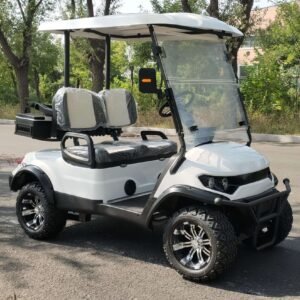
COM-03 Commercial Golf Cart – Compact, Powerful, and Efficient
-
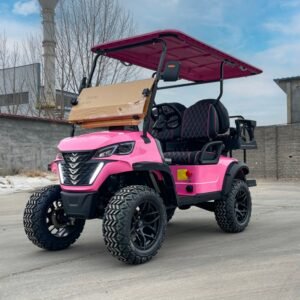
CST-02 Custom Golf Cart – Versatile Lithium Electric Golf Cart for Commercial Use
-
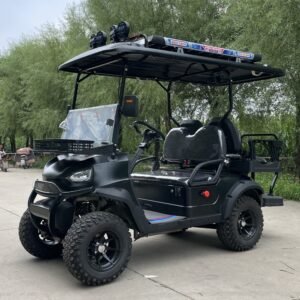
CST-04 Custom Golf Cart – Durable Lithium Electric Golf Cart
-
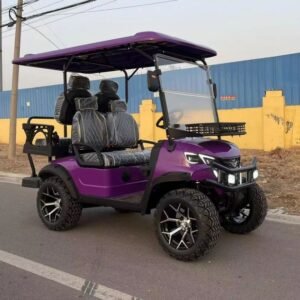
EGC-02 Electric Golf Cart
-
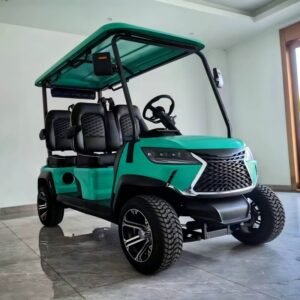
Golf Cart 4 Seater Low Speed Vehicle – Thunder Series GT40F
-
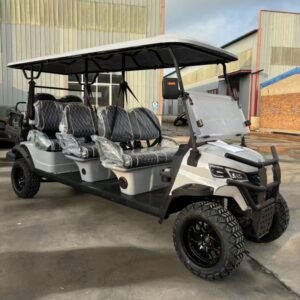
Golf Cart 8 Seater Low Speed Vehicle – Thunder Series GT62R
-
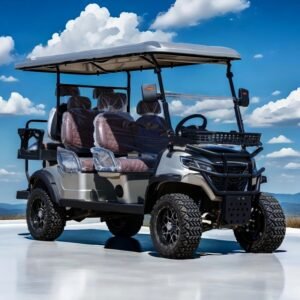
Golf Cart 6 Seater Low Speed Vehicle – Thunder Series GT42R
We recommend buying a private-party Club Car exclusively if you are purchasing a model year 2015 or newer (Precedent, Tempo, or Onward) and you intend to perform your own maintenance. The aluminum frame of a Club Car makes it the safest used bet in the industry because you do not have to worry about hidden structural rot. However, if the seller is asking a premium price for a cart with flooded lead-acid batteries older than 36 months, you must aggressively negotiate the price down by at least $1,000. In 2026, the market is shifting rapidly toward lithium. If you are exploring New Golf Carts 2026, factory lithium is standard. If you buy a used lead-acid cart, factor a future lithium drop-in conversion into your total cost-benefit analysis.
The Bottom Line
Navigating the market for Used club car golf carts for sale by owner requires vigilance, a multimeter, and a firm understanding of current market values. By utilizing targeted channels like retirement community boards and specialized forums, you can bypass the chaotic noise of general classifieds and find meticulously maintained vehicles. Club Car’s aluminum chassis makes them the premier choice for secondary market buyers, but you must independently verify battery health and controller responsiveness. Treat the private market not as a place to find a cheap toy, but as a commercial transaction requiring proper inspection protocols.
Frequently Asked Questions (FAQ)
How can I tell the exact year of a used Club Car?
You determine the year by locating the serial number decal. On DS models, it is under the passenger side glove box. On Precedent/Tempo models, it is located on the passenger side dash or behind the accelerator pedal. The first two letters define the model, and the following two digits denote the manufacturing year (e.g., PH18 indicates a Precedent manufactured in 2018).
Are Club Car golf carts better than EZ-GO or Yamaha?
In terms of structural longevity, yes. Club Car is the only major manufacturer to utilize an aircraft-grade aluminum frame, making them entirely rust-proof. This is a massive advantage in coastal, humid, or high-salt environments. While EZ-GO and Yamaha make excellent carts, their steel frames will eventually succumb to corrosion over a 15-year period.
What is an acceptable price for a used Club Car Precedent in 2026?
Pricing is heavily dependent on battery age and upgrades. A base model 2016-2019 Precedent with standard lead-acid batteries will range from $3,500 to $5,000 in the private market. If the cart features a recent lithium battery conversion, an upgraded AC motor, and custom lifted suspension, prices can easily range between $6,500 and $8,500.
Authoritative References & Industry Standards
- Club Car Official Certified Pre-Owned Guidelines – Manufacturer specifications outlining the exact refurbishing standards, frame inspections, and battery testing protocols required for certified status.
- Golf Cart Resource – The leading independent authority on consumer golf cart valuations, battery degradation analytics, and secondary market pricing trends in the USA.
- CartFinder Industry Analytics – Market data regarding private sale depreciation curves, average holding periods, and regional pricing discrepancies for LSVs and golf carts.
For buyers considering bespoke options instead of standard used models, we suggest reviewing the requirements for a Custom Golf Cart to see if building a cart to your exact specifications aligns better with your budget and operational needs.