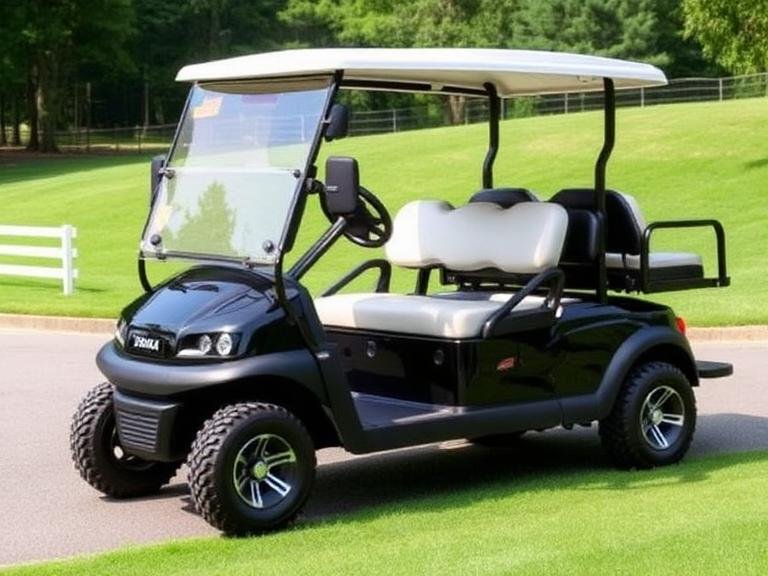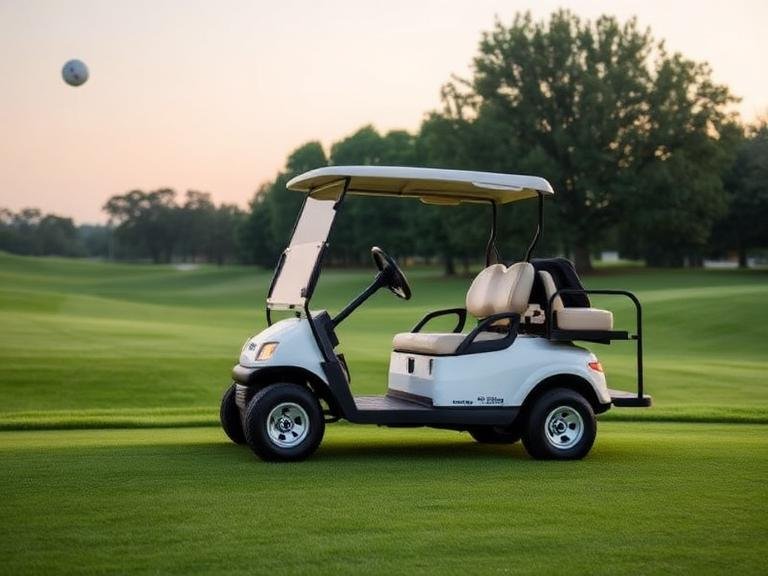
At GT Golf Cart, we specialize in the design, manufacturing, and global supply of electric golf carts and low-speed vehicles. With over 12 years of industry experience, we deliver reliable mobility solutions for golf courses, resorts, communities, and commercial fleets worldwide. One of the most critical decisions our clients face when investing in a fleet or a personal vehicle is determining the optimal powertrain. The ongoing debate of Electric vs. Gas Golf Carts requires a deep engineering and operational analysis to ensure the selected vehicle aligns perfectly with its intended application.
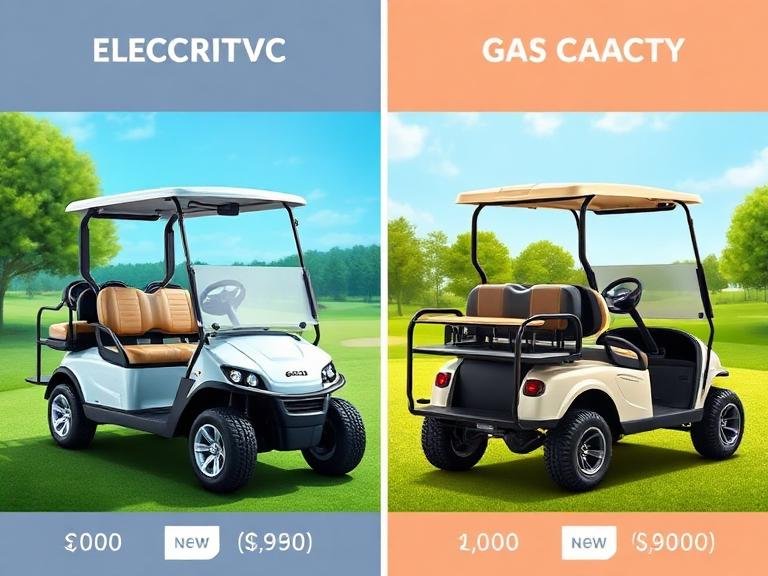
From our experience, evaluating Electric vs. Gas Golf Carts goes far beyond simply choosing a fuel source. It involves a rigorous assessment of acceleration curves, total cost of ownership, payload metrics, and environmental regulations. As communities and commercial facilities transition toward modernized transportation, understanding the nuances between these two platforms is paramount. In this authoritative guide, we will meticulously compare Electric vs. Gas Golf Carts across three primary pillars: Speed, Price, and Load Capacity.
Table of Contents
Summary Table: Electric vs. Gas Golf Carts
To provide a clear baseline for our technical analysis, the following summary table highlights the core operational differences between Electric vs. Gas Golf Carts.
| Feature / Metric | Electric Golf Carts | Gas Golf Carts |
|---|---|---|
| Top Speed | 15-25 mph (programmable) | 15-19 mph (governor restricted) |
| Acceleration | Instant maximum torque | Gradual power delivery |
| Initial Price | Moderate to High (depending on Lithium vs. Lead-Acid) | Moderate |
| Long-Term Maintenance Cost | Low (minimal moving parts) | Moderate to High (oil changes, belts, filters) |
| Load Capacity & Torque | Excellent for stop-and-go with heavy loads | Excellent for sustained climbing with heavy loads |
| Environmental Impact | Zero local emissions, silent operation | Exhaust emissions, engine noise |
Speed and Acceleration Dynamics
When analyzing Electric vs. Gas Golf Carts, speed is frequently the first metric scrutinized by commercial operators and private owners alike. Historically, gas-powered vehicles were perceived as faster. However, advancements in modern alternating current (AC) electric motor technology have completely inverted this paradigm.
A standard gas golf cart utilizes a small, internal combustion engine (typically ranging from 11 to 14 horsepower) paired with a continuously variable transmission (CVT). To comply with safety regulations, these engines are equipped with mechanical governors that physically restrict the top speed to approximately 15 to 19 miles per hour. While bypassing the governor is possible, doing so causes excessive wear on the engine components and voids manufacturer warranties.
Conversely, an electric golf cart equipped with a modern AC drivetrain is governed electronically via a high-amperage controller. From our experience at GT Golf Cart, AC electric motors deliver instant torque the moment the pedal is depressed, resulting in superior acceleration compared to gas variants. Furthermore, electric controllers can be programmed to achieve speeds up to 25 mph, a strict requirement for vehicles classified as Low-Speed Vehicles (LSVs). If you are operating in a master-planned community or municipality, a street legal golf cart or road legal golf cart almost exclusively relies on programmable electric powertrains to meet precise Department of Transportation speed mandates.
Price and Total Cost of Ownership (TCO)
The financial analysis of Electric vs. Gas Golf Carts must be divided into the initial acquisition price and the Total Cost of Ownership (TCO) calculated over a five to ten-year lifecycle.
At the point of purchase, the price of gas carts and standard lead-acid electric carts is relatively comparable. However, as the industry rapidly shifts toward advanced energy storage, incorporating lithium-ion batteries into electric vehicles increases the initial capital expenditure. Buyers seeking bespoke features will also notice price variations when exploring custom golf carts or high-end luxury golf carts, where advanced electric dashboards and infotainment systems add to the base cost.
Despite a potentially higher initial cost for premium lithium-equipped electric models, the long-term TCO heavily favors electric platforms. Gas engines require routine preventative maintenance, including oil changes, spark plug replacements, fuel filter swaps, and drive belt adjustments. Furthermore, the fluctuating cost of gasoline heavily impacts daily operational budgets for commercial fleets. In contrast, an electric powertrain contains remarkably few moving parts. Aside from maintaining proper tire pressure and ensuring fluid levels in traditional lead-acid batteries (a non-issue with lithium-ion setups), electric vehicles cost merely pennies to recharge overnight, resulting in an exponentially lower TCO over a decade of use.
Load Capacity, Torque, and Seating Configurations
The structural demands placed on a vehicle change drastically depending on its seating configuration and intended utility. Evaluating the load capacity of Electric vs. Gas Golf Carts requires an understanding of how torque is applied to the transaxle under heavy strain.
For a standard 2 seater golf cart used exclusively on a golf course, both gas and electric platforms perform flawlessly. The distinction becomes critical when the payload increases. As you move into transporting small groups with a 4 seater golf cart or larger parties with a 6 seater golf cart, the gross vehicle weight rises significantly. Electric carts with high-amperage AC controllers excel here, delivering maximum torque at zero RPM, which allows the vehicle to climb steep gradients smoothly from a dead stop without straining the system.
In high-capacity scenarios, such as deploying an 8 seater golf cart for resort shuttling or a heavy-duty utility golf cart for agricultural and industrial hauling, both systems have distinct merits. Electric variants provide silent, odor-free operation, making them perfect for moving guests through enclosed resort spaces or quiet neighborhoods. However, for remote agricultural use where a vehicle will be hauling maximum payloads all day without access to a charging port, a gas-powered utility cart provides the advantage of continuous operation as long as fuel is available.
Maintenance and Environmental Impact
As a senior industry supplier, we must address the environmental footprint in the Electric vs. Gas Golf Carts discussion. Environmental sustainability is no longer an optional corporate initiative; it is a regulatory requirement for many institutions.
Electric carts emit zero tailpipe emissions, making them the only viable choice for indoor use, such as in warehouses, convention centers, or enclosed event spaces. The silent operation preserves the tranquility of golf courses, nature reserves, and residential communities. Conversely, even modern gas carts equipped with Electronic Fuel Injection (EFI) produce carbon monoxide, nitrogen oxides, and noticeable engine noise.
We recommend electric solutions for 95% of our clients based solely on the reduction of noise pollution and the elimination of hazardous fluid storage (gasoline and motor oil) on their properties. This transition not only reduces the carbon footprint but also drastically reduces the liabilities associated with fleet maintenance.
Our Expert Recommendations
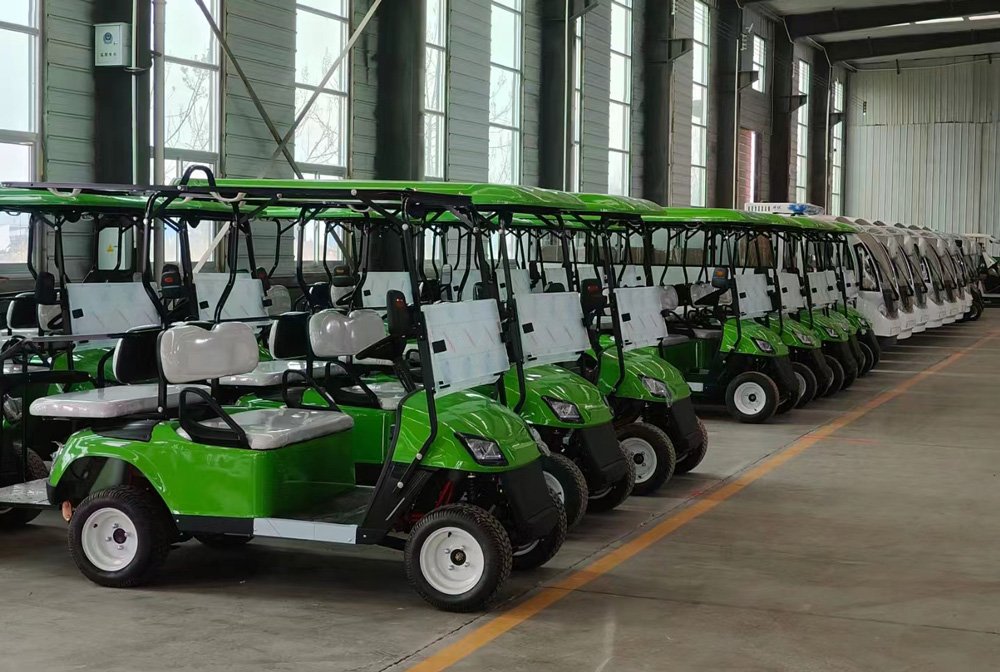
From our 12 years of specialized experience at GT Golf Cart, navigating the Electric vs. Gas Golf Carts dilemma ultimately depends on the specific operational environment:
- We recommend Electric Golf Carts for: Master-planned communities, golf courses, luxury resorts, street-legal LSV applications, and any facility looking to minimize long-term maintenance costs and noise pollution.
- We recommend Gas Golf Carts for: Remote farming operations, sprawling hunting reserves, and rural commercial sites where daily mileage is exceptionally high and access to electrical charging infrastructure is unavailable.
Frequently Asked Questions (FAQs)
Which is faster in the Electric vs. Gas Golf Carts comparison?
Electric carts with AC motors typically accelerate faster due to instant torque and can be electronically programmed to reach LSV speeds of 20-25 mph. Gas carts are generally mechanically governed to 15-19 mph to prevent engine damage.
Do electric golf carts struggle with heavy load capacities or steep hills?
Not with modern technology. An electric cart equipped with a high-amperage controller and an AC motor generates massive immediate torque, allowing a fully loaded 6-seater or 8-seater to climb steep inclines efficiently without the lag associated with gas CVT clutches engaging.
Are gas golf carts cheaper to maintain than electric?
No. While electric carts require battery replacements every 4 to 10 years (depending on lead-acid vs. lithium), gas carts require continuous ongoing maintenance, including oil, filters, spark plugs, belts, and fuel. Over a ten-year lifespan, electric carts have a significantly lower total cost of ownership.
Which type of golf cart is better for street-legal use?
Electric carts are overwhelmingly preferred and often required for street-legal use. Their ability to be precisely programmed to meet local Department of Transportation speed limits, combined with zero emissions, makes them the ideal platform for road-legal low-speed vehicles (LSVs).
References
For further authoritative information on vehicle emissions, electric powertrain efficiency, and low-speed vehicle regulations, please consult the following government and academic resources: