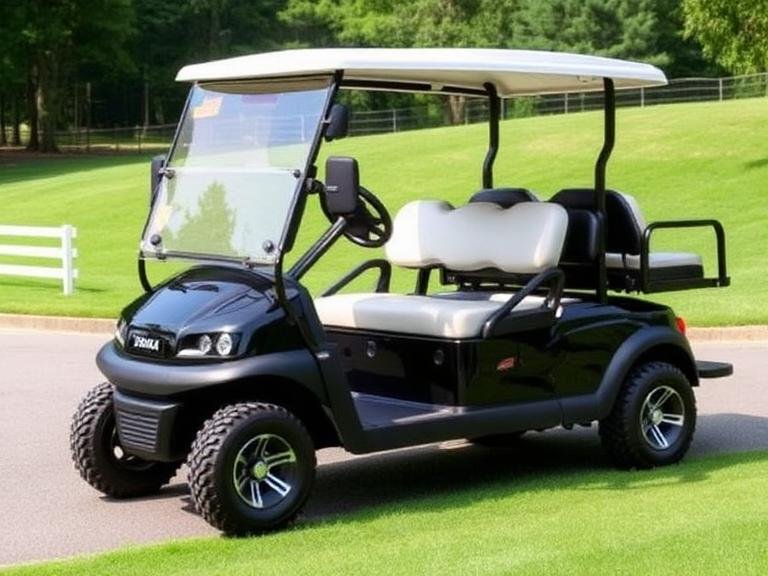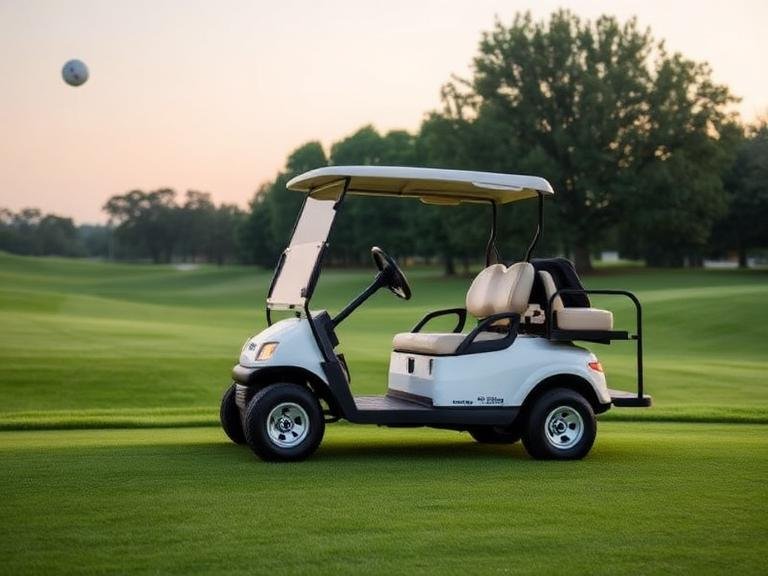
Introduction to Modern Mobility Solutions
From our experience engineering and manufacturing mobility solutions for over a decade, the landscape of personal and commercial transportation has fundamentally shifted. Master-planned communities, sprawling corporate campuses, and luxury resorts are increasingly turning away from full-sized internal combustion engine vehicles. Instead, they are adopting more efficient, eco-friendly, and perfectly scaled alternatives. At the center of this transportation revolution are Low Speed Vehicles. While many outside the industry casually refer to any small electric transport as a golf cart, professionals understand that Low Speed Vehicles represent a distinct, highly regulated, and immensely versatile category of transportation.
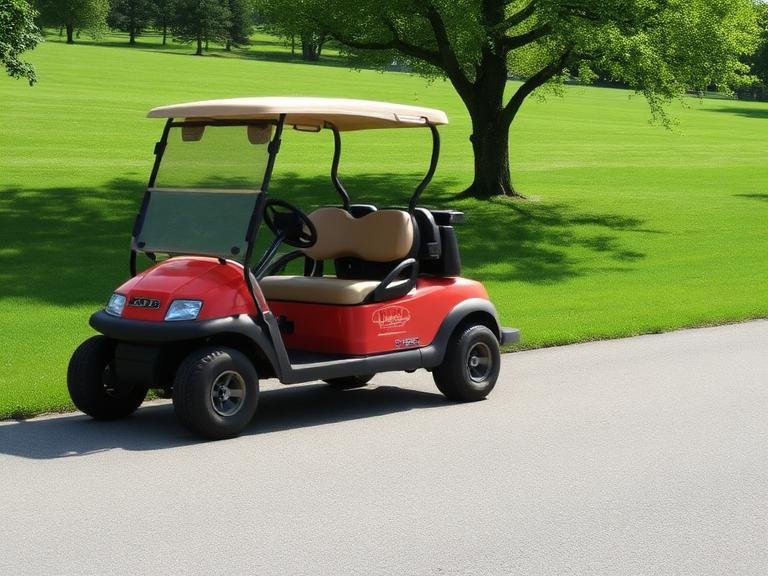
Table of Contents
- Introduction to Modern Mobility Solutions
- The Exact Definition of Low Speed Vehicles
- Federal and State Regulations Governing Low Speed Vehicles
- Standard Golf Carts vs. Low Speed Vehicles
- Commercial and Residential Applications for Low Speed Vehicles
- Scaling Your Fleet: From 2 to 10 Passenger Configurations
- How to Ensure Your Vehicle is Street Legal
- Summary Table: Low Speed Vehicles Characteristics
- Frequently Asked Questions (FAQs)
- References
As the primary engineers and suppliers at GT Golf Cart, we have spent the last 12 years refining the technology that powers these units. We recommend Low Speed Vehicles to our commercial partners not just as a novelty, but as a core logistical asset. In this authoritative guide, we will break down exactly what defines these vehicles, the safety regulations they must meet, and how to select the right configuration for your specific operational needs.
The Exact Definition of Low Speed Vehicles
To accurately answer the question of what Low Speed Vehicles are, we must look to the federal guidelines established by transportation authorities. By legal definition in the United States, Low Speed Vehicles are four-wheeled motor vehicles whose top speed is more than 20 miles per hour (mph) but not more than 25 mph on a paved, level surface. Furthermore, their Gross Vehicle Weight Rating (GVWR) must be less than 3,000 pounds.
From a manufacturing standpoint at GT Golf Cart, building Low Speed Vehicles requires adhering to strict tolerances. These are not simply golf carts with upgraded motors. They are purpose-built machines designed to safely integrate with standard automotive traffic on roads with speed limits typically restricted to 35 mph or less. Because they operate in mixed-traffic environments, Low Speed Vehicles must feature a specific array of safety equipment that is fundamentally absent from traditional fleet golf carts used exclusively on fairways.
Federal and State Regulations Governing Low Speed Vehicles
We recommend that any municipality, resort manager, or private buyer thoroughly understand the regulatory environment before purchasing a fleet. The National Highway Traffic Safety Administration (NHTSA) classifies Low Speed Vehicles under Federal Motor Vehicle Safety Standard (FMVSS) 500. This standard dictates that to be legally classified and sold as Low Speed Vehicles, the units must be equipped with the following mandatory safety features:
- Headlamps, front and rear turn signal lamps, and taillamps.
- Stop lamps and reflex reflectors (one red on each side as far to the rear as practicable, and one red on the rear).
- An exterior mirror mounted on the driver’s side of the vehicle and either an exterior mirror mounted on the passenger’s side or an interior mirror.
- A parking brake capable of securing the vehicle on a grade.
- A windshield that meets the FMVSS 205 glazing standards (typically AS1 or AS4 certified glass or impact-resistant acrylic).
- A Vehicle Identification Number (17-digit VIN) that complies with standard automotive formatting.
- Type 1 or Type 2 seat belt assemblies conforming to FMVSS 209.
From our experience navigating global supply chains, we ensure that every Street Legal Golf Cart rolling off the GT Golf Cart assembly line meets or exceeds these stringent FMVSS 500 standards. However, it is vital to note that while federal law defines the manufacturing standards of Low Speed Vehicles, individual states and local municipalities govern their actual usage on public roads. Always consult local ordinances regarding required registration, insurance, and allowable road networks.
Standard Golf Carts vs. Low Speed Vehicles
A frequent point of confusion among consumers is the distinction between a standard golf cart and proper Low Speed Vehicles. While they share a similar aesthetic and chassis footprint, their operational DNA is entirely different.
A standard 2 Passenger Golf Cart designed for course use operates at maximum speeds of 12 to 15 mph. It is stripped of heavy safety equipment to protect the delicate turf of a golf course and reduce manufacturing costs. It does not have a 17-digit VIN, nor does it possess DOT-approved tires or seatbelts. If you drive a standard cart onto a public roadway, you are operating an unregulated, non-compliant vehicle.
Conversely, Low Speed Vehicles are designed from the ground up for street performance. They feature upgraded suspension systems to handle potholes and uneven asphalt, higher-output electric AC motors to maintain 25 mph even on inclines, and advanced hydraulic braking systems rather than the mechanical drum brakes found on standard carts. When clients approach us looking for a Luxury Golf Cart that they can drive to the local grocery store, we immediately steer them toward our compliant Low Speed Vehicles line.
Commercial and Residential Applications for Low Speed Vehicles
Over our 12 years in the industry, we have seen the application of Low Speed Vehicles expand exponentially. Their zero-emission electric powertrains, minimal noise pollution, and low total cost of ownership make them superior to gas-powered vans or trucks in specific environments.
Hospitality and Resorts
Luxury resorts utilize Low Speed Vehicles for guest transportation, housekeeping, and grounds maintenance. A 6 Passenger Golf Cart or an 8 Passenger Golf Cart configured as an LSV is the perfect shuttle vehicle. It allows resorts to move families securely across expansive properties that intersect with public roads, without the liability of using non-street-legal equipment.
Master-Planned Communities and Campuses
In master-planned retirement communities and large university campuses, Low Speed Vehicles serve as the primary mode of internal transit. Residents use a 4 Passenger Golf Cart (street legal) to run errands, visit neighbors, or commute to community centers. The 25 mph speed limit perfectly aligns with the traffic calming measures implemented in these neighborhoods.
Industrial and Security Fleets
Industrial parks and private security firms utilize Low Speed Vehicles for perimeter patrols and facility management. The enclosed cab options and robust lighting packages allow for year-round, 24/7 operational capability.
Scaling Your Fleet: From 2 to 10 Passenger Configurations
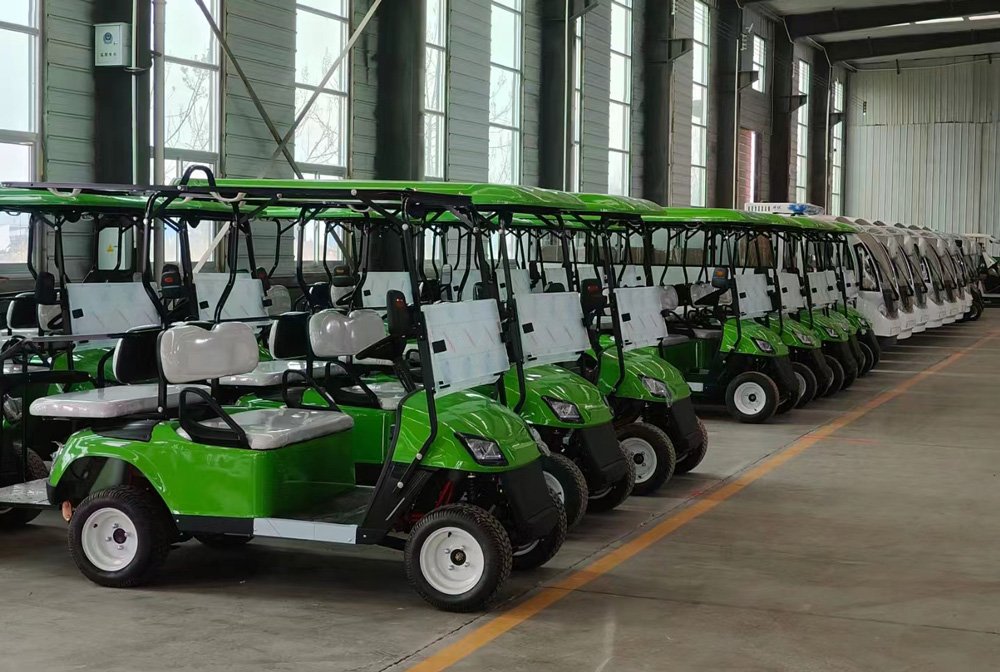
At GT Golf Cart, we understand that mobility requirements are not one-size-fits-all. Therefore, we engineer Low Speed Vehicles in multiple chassis lengths to accommodate varying passenger and cargo loads.
- 2 Passenger Golf Cart: Ideal for couples in residential communities or security personnel conducting individual patrols. It offers the tightest turning radius and highest efficiency.
- 4 Passenger Golf Cart: The industry standard for families. Often configured with a rear-facing flip seat that converts into a flatbed cargo area, making it highly versatile for both people-moving and light utility work.
- 6 Passenger Golf Cart: We recommend this configuration for medium-sized resort shuttles or large families. The stretched wheelbase provides a smooth ride, and the forward-facing rows ensure guest comfort.
- 8 Passenger Golf Cart: Built on a reinforced heavy-duty chassis, this is a serious commercial people mover. It is heavily utilized in theme parks, large hotel properties, and campus tours.
- 10 Passenger Golf Cart: Our maximum capacity transit solution. Replacing the need for a full-sized minibus, the 10-passenger LSV can efficiently move a large group silently and safely, dramatically cutting down on fuel and maintenance costs associated with traditional buses.
How to Ensure Your Vehicle is Street Legal
Transitioning a fleet to Low Speed Vehicles requires more than just buying the right equipment; it requires administrative compliance. Because these are classified as motor vehicles, acquiring a Street Legal Golf Cart means it will come with a Manufacturer’s Certificate of Origin (MCO). You will take this MCO to your local Department of Motor Vehicles (DMV) to obtain a title, registration, and a license plate.
Furthermore, operators of Low Speed Vehicles must possess a valid driver’s license, and the vehicle must be covered by standard automotive liability insurance. From our experience, commercial operators should closely integrate their LSV fleet into their overarching commercial auto insurance policies. We also recommend scheduling bi-annual maintenance checks focusing specifically on the safety equipment—ensuring turn signals, DOT tires, and hydraulic brake lines remain in factory condition.
Summary Table: Low Speed Vehicles Characteristics
| Specification / Feature | Standard Golf Cart | Low Speed Vehicles (LSV) | Full-Size Automobile |
|---|---|---|---|
| Maximum Speed | Under 15 mph | 20 mph to 25 mph | Varies (70+ mph) |
| Legal Road Use | Prohibited (unless locally exempted) | Roads with limits of 35 mph or less | All roads and highways |
| VIN Requirement | No (Uses Serial Number) | Yes (17-Digit Standard VIN) | Yes |
| Seatbelts & Windshields | Optional / Not DOT Approved | Mandatory (DOT/FMVSS Approved) | Mandatory |
| Typical Passenger Capacity | 2 to 4 Passengers | 2 to 10 Passengers | 4 to 8 Passengers |
| Ideal GT Golf Cart Product | Standard 2 Passenger Golf Cart | Street Legal Golf Cart / Luxury Golf Cart | N/A |
Frequently Asked Questions (FAQs)
While you can add lights, mirrors, and seatbelts to a standard cart, legally converting it into an LSV is incredibly difficult and often impossible. Low Speed Vehicles must be manufactured with a 17-digit VIN and certified to meet FMVSS 500 standards at the factory level. We recommend purchasing a factory-built Street Legal Golf Cart to ensure full compliance and avoid legal liabilities.
While gas-powered LSVs exist, the vast majority of modern Low Speed Vehicles, including the premium fleets manufactured by GT Golf Cart, are 100% electric. They utilize advanced AC powertrains and can be equipped with high-capacity Lithium-ion or maintenance-free lead-acid batteries, offering quiet, zero-emission transportation.
Yes, provided they are driven on approved roads (typically those with speed limits of 35 mph or under). Because they are equipped with DOT-approved tires, hydraulic brakes, seatbelts, automotive safety glass, and full lighting systems, they are highly visible and safe for local community transit.
From our experience, maintenance is significantly lower than that of an internal combustion shuttle bus. Routine maintenance involves checking tire pressure, verifying brake fluid levels, inspecting the suspension, and managing battery health. Since there is no engine oil, spark plugs, or transmission fluid, operational downtime is minimal.
References
- National Highway Traffic Safety Administration (NHTSA) – Federal Motor Vehicle Safety Standards (FMVSS) No. 500
- Electronic Code of Federal Regulations – Title 49, Subtitle B, Chapter V, Part 571, Subpart B, Section 571.500
- GT Golf Cart Engineering & Manufacturing Standards (Internal Data, 12 Years Industry Experience)