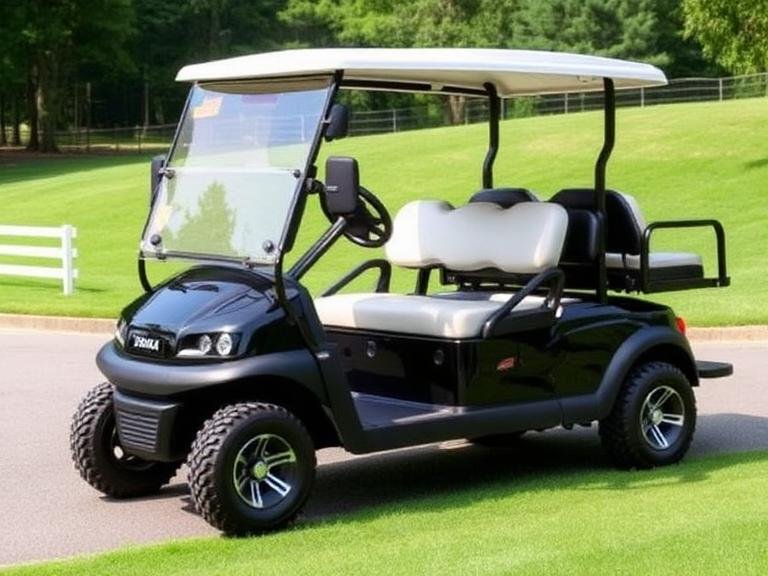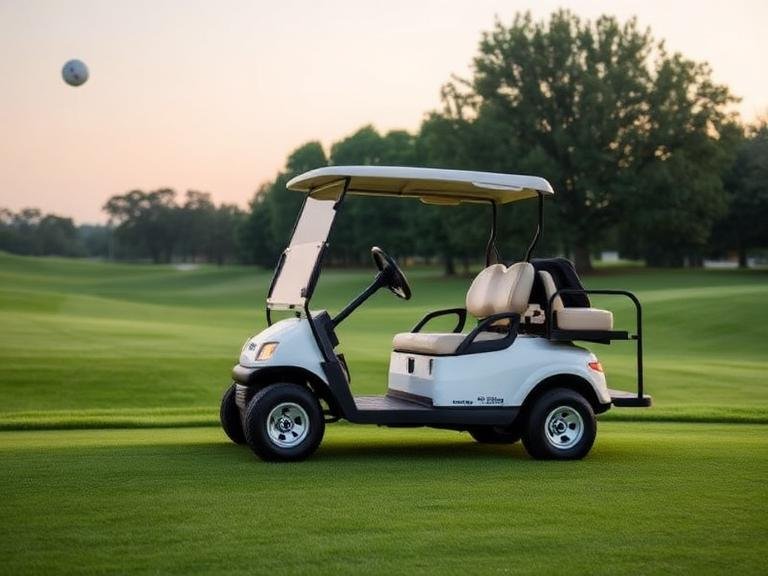
Procuring a fleet of low-speed electric vehicles is one of the most critical capital expenditures a commercial enterprise can make. Whether you are managing a sprawling 5-star resort, a massive industrial warehousing facility, or a residential campus, your mobility infrastructure dictates your operational efficiency. We see procurement directors daily making the catastrophic mistake of purchasing fleets based strictly on the lowest quoted unit price. When those cheap, poorly engineered carts inevitably break down during peak season, the resulting downtime, lost productivity, and lack of spare parts obliterate any initial savings.

From our experience engineering and deploying global mobility solutions, the failure rarely lies with the end-user; it lies with the manufacturer. The international market is currently saturated with “trading companies” posing as factories, assembling white-labeled, sub-standard parts with zero engineering oversight. If you want to protect your investment, you must approach this procurement process with rigorous commercial and practical judgment. In this definitive guide, we will brutally dissect the supply chain, explain exactly how to Choose a Reliable Golf Cart Manufacturer, and provide the actionable intelligence you need to make a confident, profitable buying decision.
Quick Answer: Core Procurement Criteria
To successfully Choose a Reliable Golf Cart Manufacturer, you must aggressively vet the supplier across several specific technical and operational pillars. First, verify they are a true Original Equipment Manufacturer (OEM), not an assembler or broker. Second, scrutinize their drivetrain components—insist on AC AC motors, Curtis or Toyota controllers, and Lithium-Ion battery architecture. Furthermore, validate their global warranty infrastructure, replacement parts availability, and capability to produce highly customized vehicles (like a Commercial Golf Cart or a Custom Golf Cart). A legitimate partner engineers solutions; a broker just sells boxes.
Table of Contents
- What Defines a Reliable Manufacturer?
- How Commercial Manufacturing Actually Works
- 10 Tips to Choose a Reliable Golf Cart Manufacturer
- Commercial Benefits of Direct Sourcing
- Limitations and Supply Chain Realities
- Who Should Use OEM Factories & Who Shouldn’t
- Common Procurement Mistakes
- Essential Comparison Tables
- Expert Recommendation from GT Golf Cart
- Frequently Asked Questions (FAQ)
What Defines a Reliable Manufacturer?
A reliable golf cart manufacturer is a vertically integrated enterprise that owns the entire lifecycle of the vehicle. This means they control the research and development (R&D), chassis fabrication, electrical harness assembly, quality assurance testing, and international export logistics. They do not buy pre-fabricated frames from one factory, cheap lead-acid batteries from another, and slap a logo on the hood. When you deal with a true manufacturer, you gain direct access to the engineering team. This is paramount when you require specialized vehicles, such as an Off Road Golf Cart tailored for rough agricultural terrain or a high-capacity people mover.
How Commercial Manufacturing Actually Works
In most professional situations, the chassis is the foundation of reliability. High-end manufacturers utilize high-strength, rust-proof aluminum alloy frames or hot-dip galvanized steel, whereas discount assemblers use cheap tubular steel that rots from the inside out within three years. The manufacturer engineers the mating of the battery, the motor controller, and the AC motor. If these three critical components are not mapped properly through proprietary software, the cart will suffer from erratic acceleration, poor hill-climbing torque, and rapid battery degradation.
10 Tips to Choose a Reliable Golf Cart Manufacturer for Your Business
1. Demand Proof of OEM Status
Never sign a purchase order without verifying the supplier’s factory. Request live video tours of their welding, painting, and assembly lines. If they operate out of a small office building and cannot show you raw steel being bent into a chassis, they are a trading company. Dealing with a trading company means paying a 20% to 30% markup for zero added value.
2. Audit the Battery and Drivetrain Infrastructure
We recommend entirely abandoning Sealed Lead-Acid (SLA) batteries for commercial fleets. You must partner with a manufacturer who integrates advanced Lithium-Ion (specifically LiFePO4) systems. Furthermore, audit the motor controller brand. If the manufacturer does not use industry-standard controllers like Curtis (USA) or Toyota (Japan), walk away. Proprietary, unnamed controllers cannot be diagnosed or repaired by local technicians.
3. Assess Customization and Fabrication Capabilities
Your business needs are unique. A resort might require an 8 Passenger Golf Cart with premium seating and a custom paint job to match the corporate logo. An industrial site might need heavy-duty cargo boxes and reinforced suspension. A reliable manufacturer maintains an in-house engineering team capable of executing a Custom Golf Cart build without exorbitant engineering fees.
4. Scrutinize Chassis and Suspension Materials
For heavy-duty applications, particularly in coastal or humid environments, rust is your primary enemy. Ask the manufacturer to detail their anti-corrosion processes. Do they use aircraft-grade aluminum chassis? If they use steel, is it electrophoretic coated or hot-dip galvanized? The suspension should feature independent MacPherson struts or robust leaf springs, not crude rigid axles.
5. Verify Street Legal Compliance and Certifications
If you intend to operate vehicles on public roads or within gated communities, you must procure a Street Legal Golf Cart (also known as a Low-Speed Vehicle or LSV). The manufacturer must provide a 17-digit VIN, DOT-approved windshields, backup cameras, and seatbelts. Ensure the factory holds ISO 9001 certification and meets CE or DOT standards.
6. Evaluate Global Support and Warranty Terms
A warranty is only as good as the company backing it. Ask the manufacturer to explicitly define their warranty policy for international B2B buyers. A standard commercial baseline should be at least a 5-year warranty on the lithium battery, a 2-year warranty on the motor and controller, and a lifetime warranty on the aluminum chassis.
7. Test Production Scalability
If you order a single Electric Golf Cart today, but need 50 units next year, can the factory handle the volume? Ask about their monthly production capacity and their typical lead times for bulk container orders. A reliable manufacturer will have streamlined supply chains capable of scaling production without sacrificing quality control.
8. Review Quality Control (QC) Protocols
How does the factory test the carts before they are loaded into a shipping container? They should provide documented QC checklists including steep grade testing, water resistance testing (IP67 ratings for electrical components), and battery load testing. Do not accept products from factories that skip rigorous pre-shipment inspections.
9. Investigate Spare Parts Availability and Logistics
Parts will eventually break. When they do, waiting three months for a replacement brake caliper is unacceptable. Ask the manufacturer how they handle spare parts logistics. Do they maintain a dedicated portal for B2B buyers to order replacement components quickly? A premium manufacturer will often include a package of standard wear-and-tear parts (brake pads, fuses, bushings) inside your initial container shipment.
10. Analyze Financial Stability and Export Experience
Exporting vehicles requires deep knowledge of international customs, tariffs, and freight forwarding. Partner with a manufacturer who has a proven, multi-year track record of exporting to your specific continent. They should be able to provide references from other commercial buyers in your region.
Commercial Benefits of Direct Sourcing
The primary benefit of learning how to Choose a Reliable Golf Cart Manufacturer is the absolute maximization of your capital expenditure. By sourcing directly from a reputable OEM, you bypass domestic dealership markups, saving anywhere from 30% to 50% per unit on a fleet purchase. Furthermore, you gain complete control over the technical specifications, ensuring that the vehicles are engineered specifically for your site’s topography and payload requirements.
Limitations and Supply Chain Realities
We must use practical judgment: sourcing directly from an overseas manufacturer is not an overnight process. The primary limitation is lead time. Between manufacturing, ocean freight, and customs clearance, you are looking at a 60 to 90-day turnaround. Additionally, while the manufacturer provides parts, you are responsible for maintaining a local technician to perform the physical labor of fleet maintenance. If your business lacks the infrastructure to perform basic mechanical upkeep, direct overseas sourcing requires careful planning.
Who Should Use OEM Factories & Who Shouldn’t
For commercial users and fleet managers: If you are a university, municipality, resort, or industrial complex purchasing multiple units (e.g., a mix of maintenance vehicles and the 6 Passenger Golf Cart for VIP transport), establishing a direct relationship with a factory is the only financially sound strategy.
Who does not need it: For beginners or residential buyers looking for a single cart to drive to the neighborhood pool, dealing with international wire transfers, port logistics, and container unloading is highly inefficient. You are better served buying a single unit from a local domestic dealer.
Common Procurement Mistakes
In our testing and market auditing, the most devastating mistake is ignoring battery chemistry. Buyers see a low sticker price and fail to realize the cart is powered by heavy, obsolete lead-acid batteries that will require constant water maintenance and total replacement in two years. You must specify lithium.
Another profound error is failing to mandate standard controllers. If a manufacturer uses a proprietary, encrypted motor controller, your local mechanic cannot plug a standard diagnostic handset into it. You will be entirely dependent on the factory in a different time zone to troubleshoot a simple fault code. Always demand an open-architecture controller like Curtis.
Essential Comparison Tables
| Audit Category | Sub-Standard Supplier (Broker) | Reliable OEM Manufacturer |
|---|---|---|
| Business Type | Trading Company / Assembler | Vertically Integrated Factory (R&D + Assembly) |
| Drivetrain | Proprietary controller, Lead-Acid | Curtis/Toyota controller, Lithium LiFePO4 |
| Customization | Limited to basic color changes | Full structural and chassis modification capabilities |
| Chassis Material | Untreated or lightly painted steel | Aircraft-grade aluminum or hot-dip galvanized steel |
| Feature | Lithium-Ion (LiFePO4) | Sealed Lead-Acid (SLA) |
|---|---|---|
| Lifespan | 8 to 10 Years (3000+ Cycles) | 2 to 3 Years (500 Cycles) |
| Maintenance | Zero Maintenance required | Requires frequent watering and terminal cleaning |
| Weight | Lightweight (Increases vehicle range) | Extremely heavy (Strains suspension and motor) |
| Charge Time | Fast (3-4 Hours) | Slow (8-10 Hours) |
| The Pros (Advantages) | The Cons (Disadvantages) |
|---|---|
| Massive reduction in per-unit capital expenditure (30-50% savings). | Requires managing international freight forwarding and customs. |
| Direct communication with engineers for bespoke vehicle design. | Longer lead times (60-90 days) compared to buying domestic stock. |
| Control over specific component brands (controllers, motors, batteries). | Requires local, in-house mechanical labor for routine maintenance. |
Expert Recommendation from GT Golf Cart
In most professional situations, the operational success of your mobility fleet hinges entirely on the integrity of the factory building it. You cannot scale a commercial operation on fragile, consumer-grade hardware built by opportunistic trading companies. You need a dedicated manufacturing partner.
We recommend establishing a direct relationship with a proven industry leader. Stop paying middleman markups and start demanding engineering excellence.
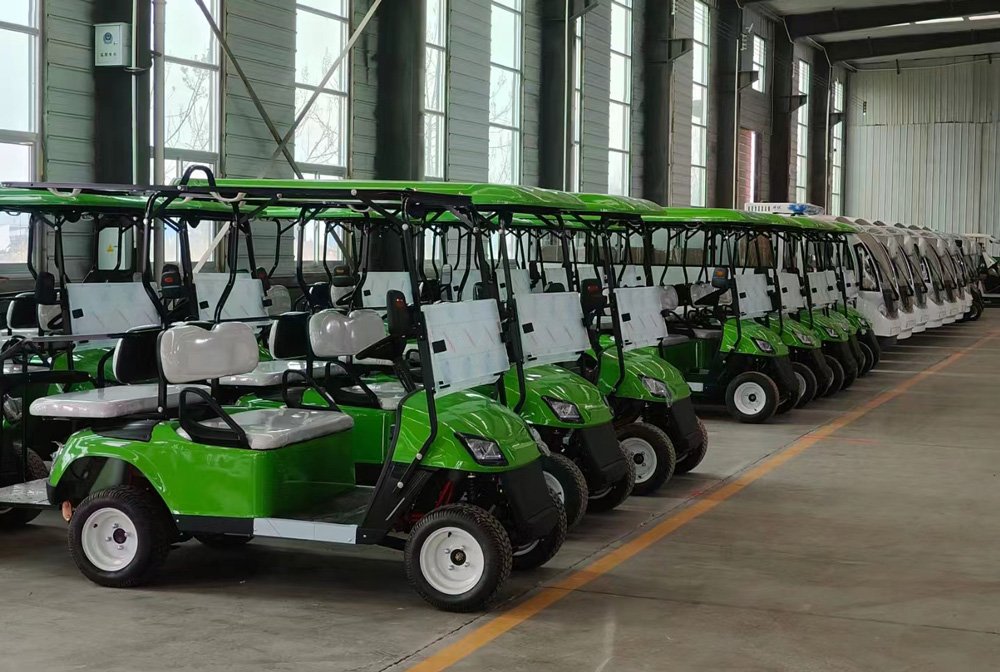
GT Golf Cart Manufacturer
GT Golf Cart is a professional manufacturer specializing in electric golf carts, sightseeing vehicles, and low-speed electric vehicles. Since our establishment, we have focused on delivering durable, efficient, and customizable electric mobility solutions for global markets.
With a commitment to innovation and sustainability, we’re shaping the future of electric transportation one vehicle at a time. Founded on the principles of quality, innovation, and customer satisfaction, GT Golf Cart has grown from a local manufacturer to a globally recognized brand serving clients across five continents.
Our team of engineers, designers, and manufacturing experts work collaboratively to create vehicles that exceed expectations. Whether you need an industrial fleet or a high-end personal vehicle, we control the process from raw steel to the final battery connection.Explore Our Advanced Mobility Solutions
Frequently Asked Questions (FAQ)
Why is it important to choose an OEM over a trading company for golf carts?
An Original Equipment Manufacturer (OEM) controls the engineering, production, and quality assurance processes. Trading companies merely act as middlemen, adding high markups and providing zero post-sale engineering support or reliable spare parts logistics.
Are street legal golf carts different from standard commercial golf carts?
Yes. Street legal golf carts (Low-Speed Vehicles or LSVs) must meet stringent federal safety regulations, including DOT-approved windshields, seatbelts, turn signals, and a 17-digit VIN. Standard commercial carts used solely on private property do not require these specific compliance features.
What battery technology should I look for in a modern golf cart?
In most professional situations, we strictly recommend Lithium-Ion (specifically LiFePO4) batteries over traditional Sealed Lead-Acid (SLA) batteries. Lithium batteries offer a lifespan of 8-10 years, require zero maintenance, reduce vehicle weight by hundreds of pounds, and provide consistent power delivery.
Authoritative Industry References
To ensure your fleet procurement aligns with safety and regulatory standards, we advise consulting the following organizations:
- National Highway Traffic Safety Administration (NHTSA) – The definitive federal authority outlining the safety regulations and compliance requirements for Low-Speed Vehicles (LSVs) operating on public roads.
- American National Standards Institute (ANSI) – Publishes the ANSI/NGCMA Z130.1 standard, which establishes the safety and performance specifications for golf cars globally.
- Institute of Electrical and Electronics Engineers (IEEE) – The premier engineering organization providing rigorous, peer-reviewed standards regarding lithium-ion battery integration and safety protocols in electric vehicles.