As we navigate through 2026, the landscape of personal and commercial mobility has shifted dramatically. Golf carts are no longer confined exclusively to the fairway; they have become the primary mode of localized transportation in master-planned communities, sprawling industrial complexes, college campuses, and coastal resort towns. With brand-new, premium lithium-powered models easily pushing past the $15,000 to $20,000 threshold, the secondary market has exploded. However, navigating used golf cart prices USA can feel like walking through a minefield of hidden mechanical issues, failing controllers, and dying battery packs.
At GT Golf Cart, we specialize in the design, manufacturing, and global supply of electric golf carts and low-speed vehicles. With over 12 years of industry experience, we deliver reliable mobility solutions for golf courses, resorts, communities, and commercial fleets worldwide. From our expert vantage point, we see countless buyers make catastrophic financial errors simply because they do not understand how depreciation mechanics operate within this specific industry. We refuse to offer the standard, watered-down advice you will find on generic dealership blogs. If you are going to invest your hard-earned capital into a secondary market vehicle, you need uncompromising, engineering-based facts.
In this relentlessly practical guide, we will brutally dissect the current state of used golf cart prices USA. We will break down the true costs by seating capacity, scrutinize the premium demanded for lithium-ion power over traditional lead-acid and gas powertrains, and expose the hidden maintenance expenses that high-volume liquidators hope you overlook. Whether you are searching for a basic neighborhood cruiser or a heavy-duty transport fleet, this is the definitive intelligence you need to secure a fair, long-term investment in 2026.
Table of Contents
- 1. The 2026 Market Dynamics: Depreciation and Supply
- 2. Pricing Breakdown by Passenger Capacity
- 3. Powertrains: Gas vs. Lead-Acid vs. Lithium
- 4. The Hidden Costs and Valuation Metrics
- 5. Specialized Vehicles: LSVs and Utility Carts
- 6. Summary Matrix: 2026 USA Pricing
- 7. Frequently Asked Questions (FAQs)
- 8. Authoritative References
1. The 2026 Market Dynamics: Depreciation and Supply
Before we analyze specific dollar amounts, you must comprehend the macroeconomic forces driving used golf cart prices USA right now. In 2026, the market is heavily saturated with three-to-five-year-old lease returns from major country clubs and municipal golf courses. These fleet vehicles form the baseline pricing floor of the used market. However, there is a massive bifurcation occurring between legacy lead-acid battery carts and the first generation of factory-integrated lithium-powered models that are now hitting the resale circuit.
From our experience, the depreciation curve on a golf cart is entirely different from an automobile. A brand-new cart loses roughly 15% to 20% of its value the moment it is delivered to your driveway. By year three, it retains about 60% to 70% of its original MSRP. By year five—which is historically when traditional lead-acid batteries require complete and costly replacement—the vehicle’s value plummets to roughly 40% of its original cost. Therefore, when you evaluate used golf cart prices USA, you are not merely pricing the aluminum chassis, the AC motor, or the suspension; you are predominantly pricing the remaining lifecycle of the battery pack. A five-year-old cart listed at a suspiciously low price is almost certainly a Trojan horse hiding a $1,500 battery replacement invoice. We recommend that buyers demand a computerized battery load test printout before even initiating price negotiations.
2. Pricing Breakdown by Passenger Capacity
The most immediate factor influencing used golf cart prices USA is the physical footprint and structural capacity of the vehicle. You must match the cart’s seating capacity to your actual operational requirements. Purchasing more seating than you require adds unnecessary dead weight, reduces your battery range, strains the motor on inclines, and artificially inflates your initial purchase price.
The 2-Seater: The Foundation of the Fleet
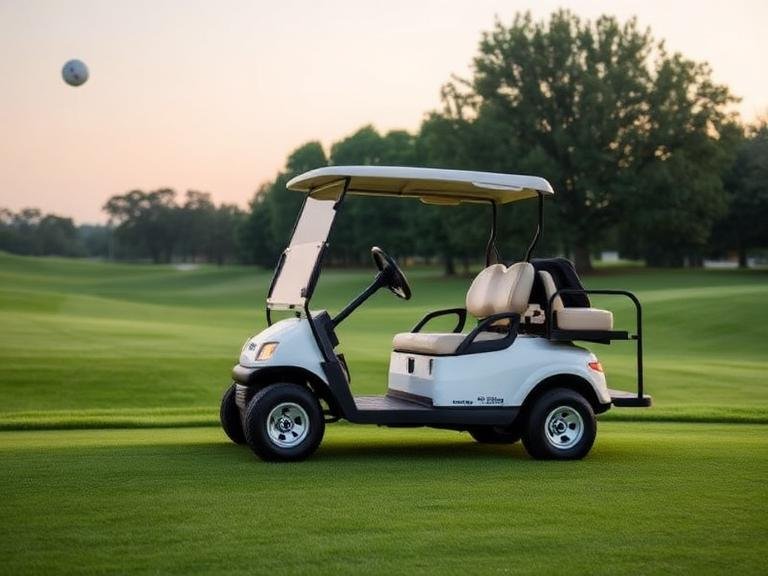
The traditional 2 seater golf cart remains the most abundant vehicle on the secondary market. Because commercial golf courses cycle these units out of their fleets every three to four years, the supply is consistently immense, keeping prices highly competitive. In 2026, a standard used two-passenger electric cart with healthy lead-acid batteries typically ranges from $3,500 to $5,000. If the cart has been recently refurbished by a dealer—including new upholstery, fresh bushings, and a new battery pack—that price will climb closer to $5,500 to $6,500. We consider this the sweet spot for budget-conscious buyers who require simple, point-A-to-point-B transportation.
The 4-Seater: The Neighborhood Standard
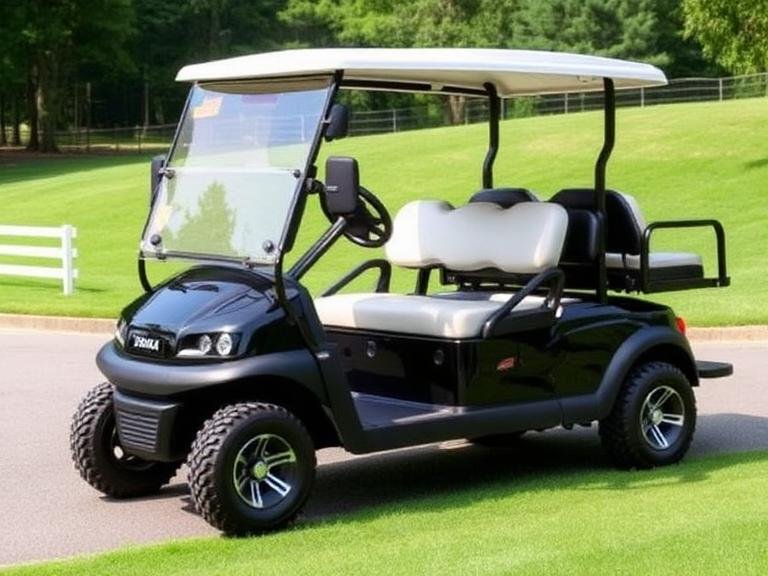
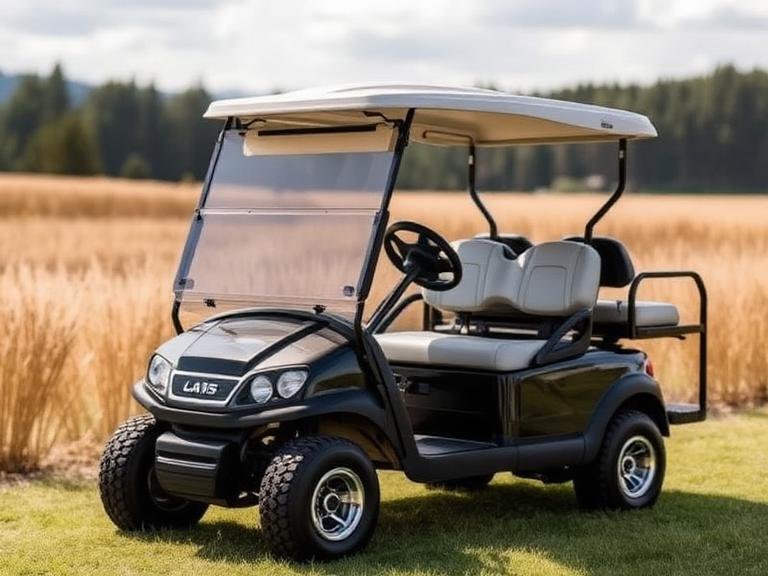
For residential and community use, the 4 seater golf cart is the undisputed king of the market. The vast majority of these models are essentially two-seaters that have been retrofitted with a rear-facing flip seat kit and heavier rear leaf springs. Because residential demand for these units is exceptionally high across the Sunbelt states, they hold their value significantly better than basic fleet carts. You can expect to pay between $6,000 and $9,000 for a quality used four-passenger model. The price variance largely depends on whether the cart includes premium upgrades like a 6-inch lift kit, 23-inch all-terrain tires, and an extended 80-inch roof to shield the rear passengers from the elements.
The 6-Seater: The Family Transporter
When you move into extended wheelbases, the engineering requirements change drastically. A 6 seater golf cart requires a significantly more robust AC motor and a higher-amp controller (typically 400 amps or more) to handle the increased payload, especially when navigating steep inclines with six adults aboard. In the used market, these vehicles are highly sought after by large families, coastal rental agencies, and vacation property owners. Current 2026 data indicates that a reliable, late-model used six-passenger cart will run between $9,500 and $13,000. We strongly advise buyers in this tier to prioritize carts that have been upgraded to lithium power, as shedding 300 pounds of lead batteries massively improves the vehicle’s braking distance and uphill torque.
The 8-Seater: Commercial and Resort Shuttles
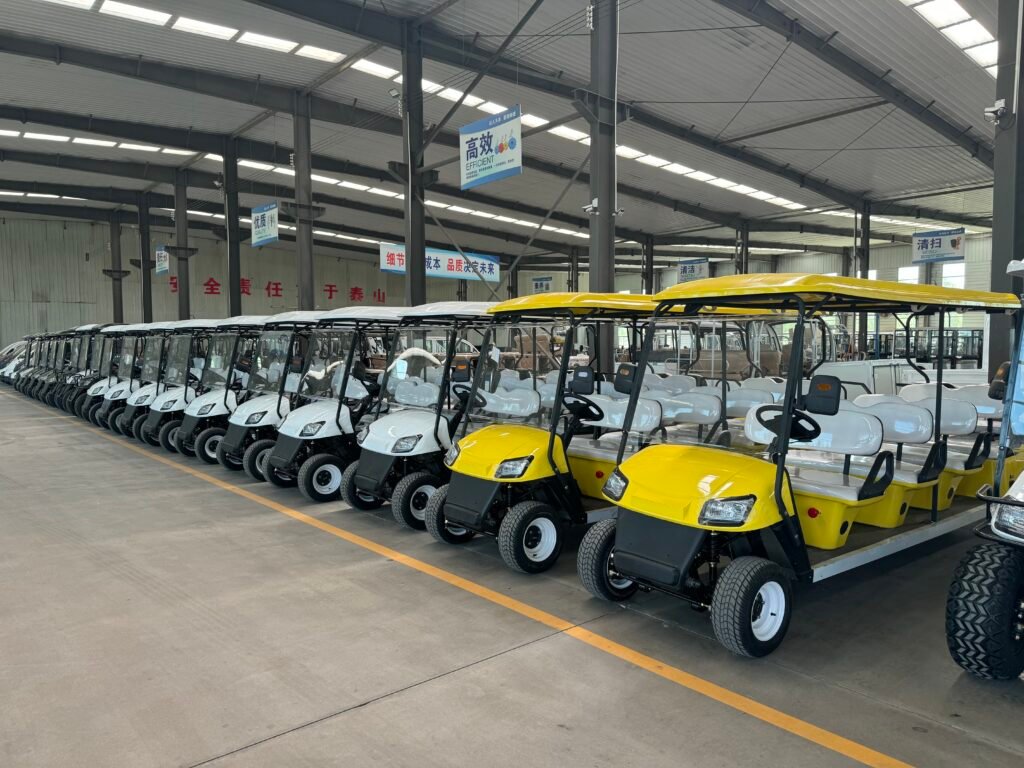
The 8 seater golf cart is a highly specialized piece of commercial machinery. These are typically utilized as tram alternatives in massive resorts, airports, university campuses, and private facilities. Because their original MSRP often exceeds $22,000, finding a deep discount on the used market is notoriously challenging. Currently, used eight-passenger models range from $12,000 to $17,000. Due to their commercial operational history, we recommend subjecting these vehicles to a rigorous mechanical inspection, as they frequently accrue massive hours and undergo severe structural frame stress compared to gently used residential carts.
3. Powertrains: Gas vs. Lead-Acid vs. Lithium
You cannot accurately assess used golf cart prices USA without ruthlessly dissecting the powertrain. The power source dictates not only your upfront acquisition cost but your total cost of ownership (TCO) over the next decade.
Gas-Powered Carts
While the industry is aggressively electrifying, gas carts still hold a specific, undeniable niche—particularly in rural areas, massive agricultural properties, or hunting camps where charging infrastructure is entirely nonexistent. Because they offer unlimited range as long as you have a fuel can, gas carts typically command a $1,000 to $1,500 premium over their lead-acid electric counterparts on the used market. A well-maintained used gas cart will generally range from $5,500 to $8,500. However, you must factor in the perpetual maintenance: frequent oil changes, drive belt replacements, spark plugs, valve adjustments, and primary clutch wear. From our engineering perspective, unless you absolutely require the unlimited range, the noise vibration and harshness (NVH) alongside the emissions make gas carts an inferior choice for quiet residential communities.
Lead-Acid Electric Carts
This is the bargain basement of used golf cart prices USA. Deep-cycle lead-acid batteries have powered this industry for decades, but they are an antiquated technology. They are immensely heavy, require constant distilled water maintenance, off-gas corrosive acid that destroys aluminum frames, and suffer from severe voltage sag as they deplete. A used cart with three-year-old lead-acid batteries might seem like a phenomenal steal at $4,000, but you will inevitably be purchasing a new $1,200 to $1,500 battery pack within 12 to 18 months. When evaluating these specific carts, assume the batteries are mathematically dead unless the seller can provide a physical receipt proving replacement within the last 90 days.
Lithium-Ion Electric Carts
The defining technological trend of 2026 is the absolute market dominance of lithium-iron-phosphate (LiFePO4) powertrains. A used cart equipped with a factory lithium system will cost you $1,500 to $3,000 more upfront than a lead-acid model, but it is an investment we unequivocally endorse. Lithium batteries require zero watering maintenance, charge in a fraction of the time, shed hundreds of pounds of dead weight, maintain 100% torque until they are completely empty, and routinely last 8 to 10 years. In the context of maximizing your ROI, paying an $8,000 premium for a three-year-old lithium cart is mathematically superior to paying $5,000 for a lead-acid cart that will soon require life support.
4. The Hidden Costs and Valuation Metrics
Do not let fresh metallic paint and polished aluminum wheels blind you to underlying structural realities. Independent dealerships are masters of putting aesthetic “lipstick on a pig.” They will frequently take an abused, seven-year-old fleet cart, install a cheap $300 plastic body kit, bolt on inexpensive LED lights, and aggressively mark it up by $3,500.
When analyzing used golf cart prices USA, you must separate superficial aesthetic upgrades from functional, mechanical value. A custom carbon-fiber steering wheel or a Bluetooth LED soundbar adds negligible real-world value to the vehicle’s lifespan. Instead, you must inspect the core components. Examine the aluminum or steel frame for severe salt-air oxidation or stress fractures near the suspension mounts. Check the kingpin bushings and tie rods in the front steering assembly for excessive play. Examine the date codes stamped onto the battery terminals, and verify if the vehicle utilizes a modern AC drive motor (which offers regenerative braking and higher efficiency) rather than an older DC motor.
Furthermore, regional geography plays a massive role in valuation. A used cart originating from Florida or Arizona has likely been subjected to brutal UV radiation and battery strain from extreme heat, whereas a cart from the Midwest might only see five months of active use per year. Always inquire about the cart’s geographical history.
5. Specialized Vehicles: LSVs and Utility Carts
You must also consider the vehicle’s legal and functional classification. A factory-built road legal golf cart (federally designated as a Low-Speed Vehicle or LSV) comes heavily equipped with a 17-digit VIN, DOT-approved AS1 glass windshields, three-point seatbelts, a backup camera, and registered license plates. These vehicles command top dollar on the used market—often ranging from $9,000 to $14,000—because they can be legally driven on public municipal roads with speed limits up to 35 mph. Do not confuse a standard golf cart with a few aftermarket turn signals for a true LSV; if it does not have a federally recognized VIN, you cannot legally register it as a motor vehicle in most jurisdictions.
Similarly, if you are procuring a vehicle for a working farm, an equestrian center, or an industrial manufacturing site, a utility golf cart equipped with an aluminum cargo bed and heavy-duty front shocks will fetch a premium over a standard passenger cart. Used utility models typically start around $6,500 and can scale upward of $10,000 depending on their payload capacity and integrated hydraulic dump features.
6. Summary Matrix: 2026 USA Pricing
To provide absolute operational clarity, we have synthesized our extensive market data into an uncompromising reference matrix for used golf cart prices USA in 2026. These figures represent carts in “good to excellent” condition.
| Vehicle Configuration | Powertrain Type | Average 2026 Used Price Range | Optimal Buyer Profile |
|---|---|---|---|
| 2-Seater Standard | Lead-Acid Electric | $3,500 – $5,500 | Budget buyers, avid golfers, flat terrain usage. |
| 4-Seater Lifted | Gasoline | $6,500 – $8,500 | Rural properties, off-road applications, no charging access. |
| 4-Seater Lifted | Lithium-Ion (LiFePO4) | $7,500 – $10,500 | Residential neighborhoods, hilly terrain, low maintenance seekers. |
| 6-Seater Limo | Lithium-Ion (LiFePO4) | $9,500 – $13,000 | Large families, coastal rentals, gated communities. |
| Street Legal LSV (4-6 Seats) | Lithium-Ion / AC Motor | $9,000 – $14,000 | Urban commuters crossing public roads up to 35 mph. |
| Heavy-Duty Utility | Gas or Lithium-Ion | $6,500 – $10,000 | Industrial facilities, agriculture, property maintenance. |
7. Frequently Asked Questions (FAQs)
Why are used golf cart prices USA so high for lithium models compared to lead-acid?
The upfront cost reflects long-term economic reality. A lithium battery pack (LiFePO4) typically costs $2,000 to $3,000 on its own and lasts 8 to 10 years without requiring any maintenance. A lead-acid pack requires constant water refilling and must be replaced every 3 to 5 years at a cost of $1,200+. You are paying a premium upfront for a lithium cart to avoid the guaranteed, recurring expense of buying heavy lead-acid batteries multiple times over the vehicle’s lifespan.
Does an aftermarket lift kit increase the value of a used golf cart?
Yes, but conditionally. A professionally installed, high-quality A-Arm or double-A-arm lift kit with premium all-terrain tires will add $800 to $1,200 to the resale value, as it is highly desirable for neighborhood cruising. However, cheap spindle lift kits can ruin the vehicle’s steering geometry and create a dangerously unstable ride, which sophisticated buyers will actively penalize during price negotiations.
How many years is a golf cart considered “good” before it loses its value?
Assuming the aluminum frame has not been compromised by saltwater corrosion, the chassis and electric AC motors of premium brands can easily last 15 to 20 years. The primary devaluation occurs entirely around the battery lifecycle. A cart that is 8 years old but features a brand-new lithium battery system and upgraded suspension will often command a higher price than a 4-year-old cart operating on dying factory lead-acid batteries.
8. Authoritative References
To ensure your procurement strategy aligns with verified economic data and federal battery standards, we strongly advise consulting the following specialized technical resources:
- U.S. Department of Energy (DOE) – Electric Vehicle Battery Lifespan: The definitive federal authority outlining the degradation curves, thermal stability, and long-term lifecycle expectations of lithium-ion versus traditional lead-acid energy storage systems in low-speed mobility applications.
- Mordor Intelligence – Global Golf Cart Market Size & Share Analysis: A leading global market research firm providing uncompromising macroeconomic data regarding the compound annual growth rate (CAGR), electrification trends, and regional pricing dynamics driving the secondary low-speed vehicle sector through 2026.