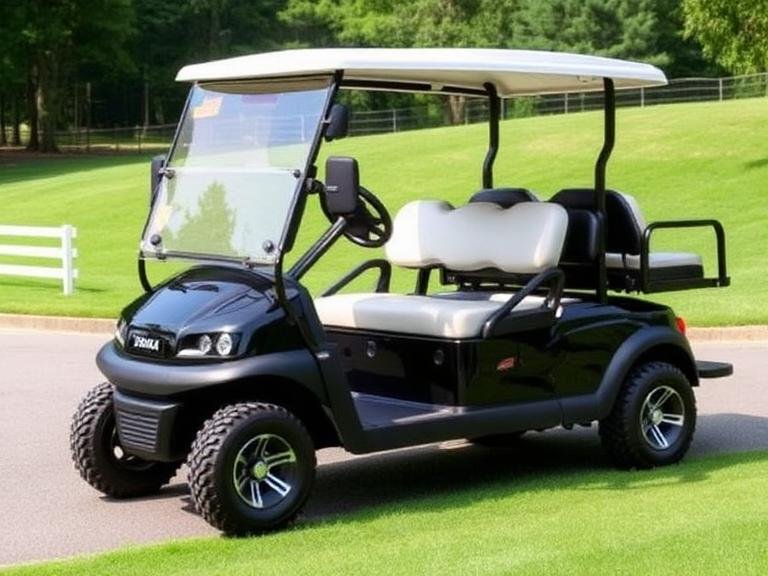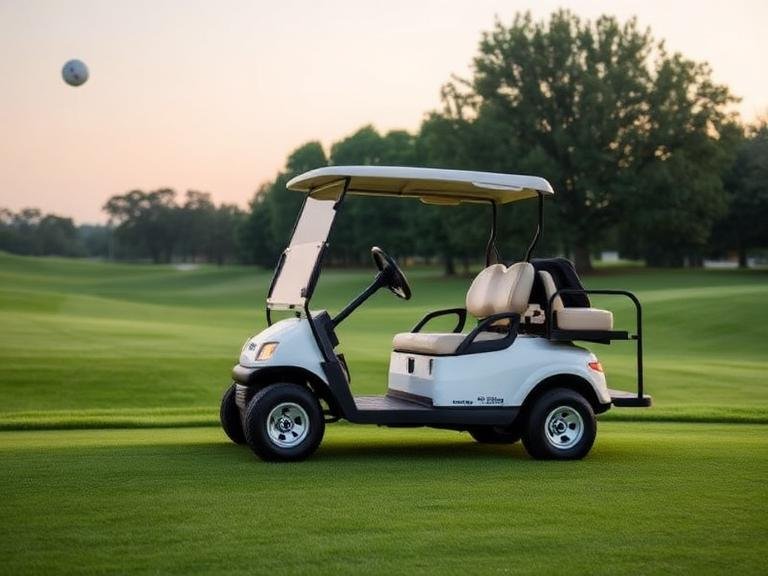
The modern low-speed vehicle landscape has shifted dramatically over the past decade. What was once a strictly utilitarian vehicle confined to manicured fairways has morphed into a rugged, highly customizable machine used for hunting, neighborhood commuting, and facility management. As consumer demands have evolved, one persistent question continues to dominate dealership floors and online forums alike: is a lifted golf cart better than a standard, factory-height model?
GT Golf Cart specializes in the design, manufacturing, and global supply of electric golf carts and low-speed vehicles. With over 12 years of industry experience, we deliver reliable mobility solutions for golf courses, resorts, communities, and commercial fleets worldwide.
We refuse to offer a neutral, fence-sitting answer. From our experience, determining whether a lifted golf cart better serves your needs depends entirely on an uncompromising assessment of your primary use case, your budget for complementary performance upgrades, and your tolerance for altered driving dynamics. A lift kit fundamentally changes the geometry, stability, and utility of your vehicle. In this comprehensive guide, we will dissect the mechanical realities of lifting a golf cart, explore the environments where a lifted golf cart better performs, and highlight the scenarios where keeping your vehicle stock is the undisputed superior choice.
Table of Contents
- 1. The Aesthetic and Functional Appeal of Lift Kits
- 2. Off-Road Dominance: Where a Lifted Golf Cart Better Performs
- 3. The Drawbacks: Stability, Center of Gravity, and Ride Quality
- 4. Necessary Performance Upgrades and Industrial Reliability
- 5. Golf Course Regulations and Turf Management
- 6. Summary Table: Lifted vs. Standard Carts
- 7. Frequently Asked Questions (FAQs)
- 8. Authoritative References
1. The Aesthetic and Functional Appeal of Lift Kits
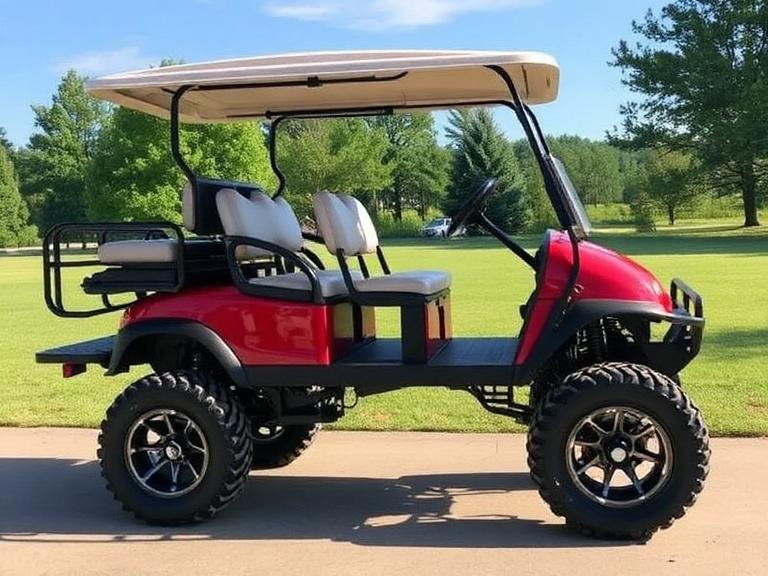
Let us address the most common catalyst for modifying a low-speed vehicle: visual appeal. There is an undeniable intimidation factor and rugged aesthetic associated with a custom lift. When clients ask us if a lifted golf cart better reflects personal style, the answer is an overwhelming yes. A standard cart sits relatively low to the ground, accommodating 18-inch tires at maximum. Installing a 4-inch to 6-inch lift kit opens the wheel wells, allowing owners to mount aggressive 22-inch or 23-inch all-terrain tires paired with custom machined alloy wheels.
However, we recommend looking past the aesthetics. If you are modifying a vehicle simply to turn heads in a master-planned community, you must understand the mechanical trade-offs. The installation of a spindle lift, A-arm lift, or long-travel suspension system alters the steering geometry. While an A-arm lift provides a smoother ride by replacing the entire front suspension, cheaper spindle lifts simply increase the distance between the axle and the hub, resulting in a significantly stiffer, rougher ride on paved surfaces. A lifted golf cart better looks the part, but you must be prepared to invest in a premium suspension kit if you expect it to ride as smoothly as a factory model.
2. Off-Road Dominance: Where a Lifted Golf Cart Better Performs
If your intended use case involves traversing rural properties, navigating woodland trails, or operating on construction sites, a lifted golf cart better performs than any stock equivalent. The primary functional advantage is ground clearance. Factory carts typically offer about 4.5 inches of clearance, which is entirely inadequate for navigating over exposed roots, deep ruts, or rocky terrain. By lifting the chassis and increasing the tire diameter, you can easily achieve 8 to 10 inches of clearance.
From our experience supplying commercial fleets, off-road utility requires robust undercarriage protection. When a cart is elevated, the transaxle and motor sit higher above potential hazards. This is crucial for agricultural and hunting applications. Furthermore, the installation of large, aggressive tread patterns provides the necessary traction to traverse mud and loose gravel. If you are utilizing your vehicle as a true utility terrain vehicle (UTV) substitute, there is no debate: a lifted golf cart better equips you to handle unpredictable environments.
3. The Drawbacks: Stability, Center of Gravity, and Ride Quality
We believe in total transparency. Elevating a vehicle inherently raises its center of gravity. Does a lifted golf cart better handle tight corners at top speed? Absolutely not. The increased height introduces a profound risk of lateral rollover, especially if the vehicle is driven aggressively by inexperienced operators or teenagers. If you are utilizing your cart primarily as a neighborhood cruiser on flat, paved streets, a lifted golf cart better serves your ego than your safety.
To combat this instability, owners must install offset wheels or wheel spacers to widen the vehicle’s stance. This increases the track width, attempting to counter the raised center of gravity. Additionally, the massive, heavy tires required for a lifted setup dramatically increase the unsprung weight. This excess weight strains the factory steering rack, leading to premature wear on tie rod ends and wheel bearings. We firmly assert that if you choose to lift your vehicle, you must implement a rigorous, frequent maintenance schedule to inspect these critical steering components.
4. Necessary Performance Upgrades and Industrial Reliability
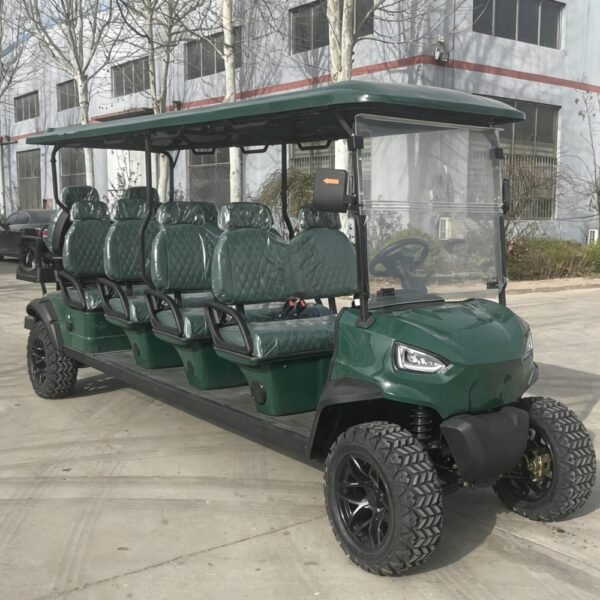
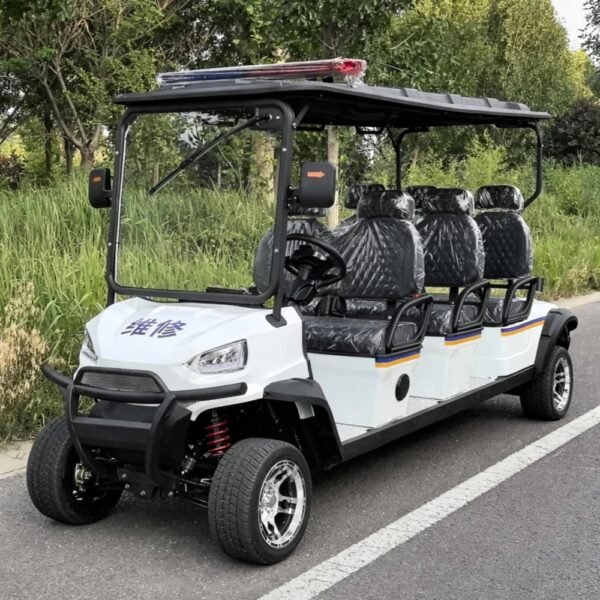
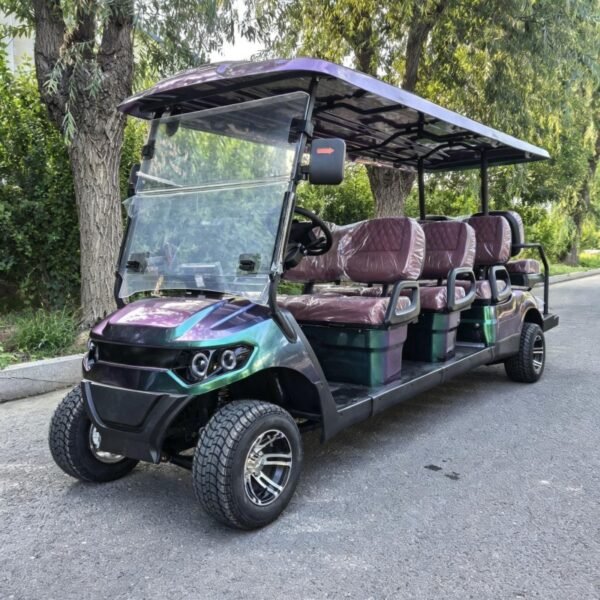
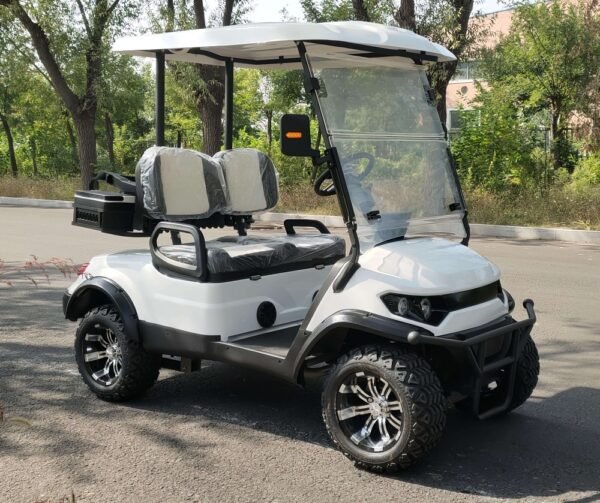
A fatal mistake made by novice owners is assuming that a lift kit is a standalone upgrade. It is not. When you add a 6-inch lift and 23-inch tires, you change the final drive ratio of the vehicle. The cart will require significantly more torque to turn those massive, heavy wheels. If you do not upgrade your power delivery systems, a lifted golf cart better destroys its stock motor and controller than it climbs a steep hill.
We recommend upgrading to a high-amperage electronic speed controller (navigating from a stock 250-amp to a 400-amp or 500-amp unit) and installing heavy-duty 4-gauge battery cables to handle the increased electrical draw. The manufacturing principles required to build carts capable of handling these loads parallel advanced industrial manufacturing. For instance, the high-stress electrical environments inside upgraded electric drivetrains often require superior thermal management and isolation, akin to facilities relying on the best ceramic insulators for industrial use to prevent catastrophic thermal runaway.
Furthermore, structural integrity is paramount. When we assess the suspension components required for long-travel lift kits, the structural rigidity required mirrors heavy industrial tooling debates, much like a ceramic rod vs metal rod comparison in advanced machining. If you are pushing your cart to its mechanical limits, the raw materials matter. Engineers designing high-performance motor casings often consult an engineering ceramics material guide for heat dissipation. Similarly, upgrading the braking systems to handle the increased rotational mass of a lifted cart requires hydraulic disc brakes, whose master cylinders rely on tight tolerances similar to those found in industrial pumps—a concept easily understood when looking at a ceramic plunger vs metal plunger dynamic. In fact, many high-end fabrication shops rely on custom ceramic machining services and industrial ceramic solutions for pumps to maintain the precise factory machinery that produces premium golf cart components.
5. Golf Course Regulations and Turf Management
Let us pivot to the traditional use case: playing golf. If your primary objective is traversing 18 holes on a Saturday morning, is a lifted golf cart better? Unequivocally, no. In fact, it is often a massive liability.
Golf course superintendents are fiercely protective of their manicured fairways and delicate greens. The aggressive, deep-lug tread patterns associated with lifted tires tear up the turf, leaving lasting damage, particularly in wet conditions. Furthermore, the widened stance and increased weight distribute ground pressure poorly compared to standard turf tires. Consequently, the vast majority of private country clubs and municipal golf courses strictly prohibit lifted golf carts on their premises.
If you intend to use your vehicle for actual golfing, a standard-height cart with smooth, turf-friendly tires is mandatory. Attempting to bring a modified, lifted machine onto a premium course will quickly result in expulsion. In this highly specific environment, a standard cart reigns supreme.
6. Summary Table: Lifted vs. Standard Carts
To assist in your decision-making process, we have compiled an uncompromising comparison of both configurations based on our extensive industry tenure.
| Feature / Capability | Standard Golf Cart | Lifted Golf Cart |
|---|---|---|
| Ground Clearance | Low (approx. 4.5 inches). Prone to bottoming out on trails. | High (8 to 10+ inches). Easily clears rocks, roots, and debris. |
| Rollover Risk (Center of Gravity) | Very Low. Highly stable on paved surfaces and moderate slopes. | Elevated. Requires widened wheel track and cautious cornering. |
| Golf Course Compliance | Universally accepted. Turf-friendly weight distribution. | Frequently banned. Aggressive tires cause severe turf damage. |
| Ride Quality (Pavement) | Smooth, engineered for comfortable community cruising. | Stiffer, bouncier ride unless equipped with a premium A-arm kit. |
| Required Upgrades | None. Operates efficiently on factory controllers and motors. | Requires high-amp controllers, heavy-duty cables, and brake upgrades. |
| Overall Aesthetic | Traditional, utilitarian, conservative. | Aggressive, rugged, highly customizable and imposing. |
7. Frequently Asked Questions (FAQs)
Does a lifted golf cart better handle heavy payloads?
Not necessarily. While a lift kit increases clearance, it does not inherently increase the weight capacity of the leaf springs or the chassis. If you plan to carry heavy loads or add a rear seat kit, we strongly recommend installing heavy-duty rear leaf springs or dual-action springs, regardless of whether the cart is lifted or standard.
Will lifting my golf cart drain the battery faster?
Yes, absolutely. The installation of massive 23-inch tires drastically increases rolling resistance and rotational mass. The electric motor must draw significantly more amperage from the battery pack to achieve and maintain cruising speeds. From our experience, owners can expect a 15% to 25% reduction in overall range when switching from a stock setup to a heavy lifted configuration.
Is it legal to drive a lifted golf cart on public roads?
Street legality for Low-Speed Vehicles (LSVs) depends entirely on local municipal and state regulations. A lifted golf cart better complies with visibility requirements because it sits higher in traffic, but it must still be equipped with DOT-approved windshields, seatbelts, turn signals, and headlights. Some jurisdictions strictly regulate bumper height, so you must verify your local ordinances before modifying your cart for street use.
8. Authoritative References
To ensure our clients have access to the most accurate regulatory and engineering data, we recommend reviewing the following authoritative sources regarding low-speed vehicle safety and mechanical dynamics:
- National Highway Traffic Safety Administration (NHTSA) – Official federal guidelines detailing the safety standards, maximum speed constraints, and structural requirements for Low-Speed Vehicles operating on public roads.
- U.S. Department of Energy – Comprehensive scientific data analyzing electric vehicle drivetrain efficiency, battery torque output, and the effects of unsprung weight on rotational mass in battery-powered mobility systems.