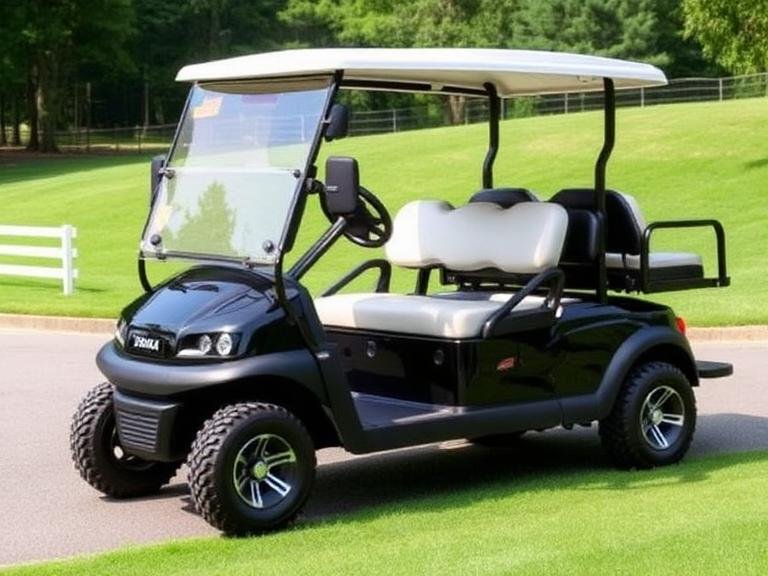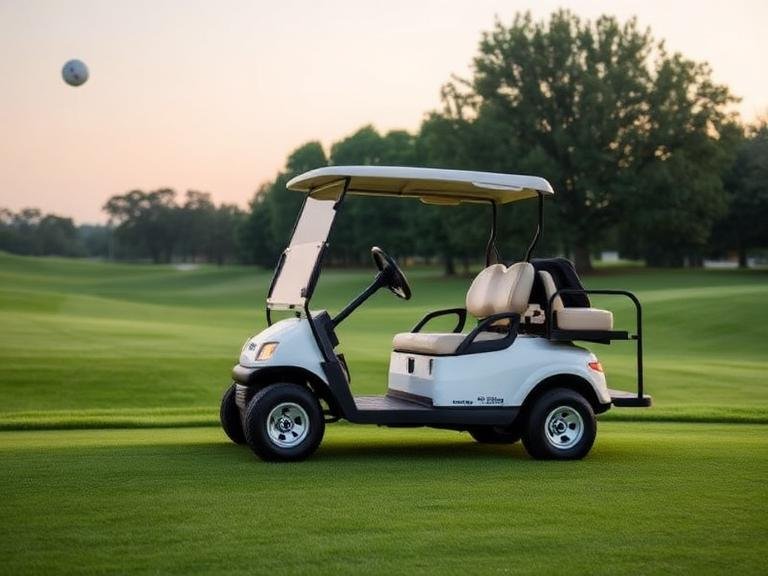
Let’s cut right to the chase: when you upgrade from a standard two-passenger buggy to a stretched-out, multi-passenger people mover, the physics change dramatically. Whether you are hauling your extended family to the neighborhood pool, shuttling resort guests, or managing a commercial fleet, you inevitably end up asking the same crucial question: how fast does a 6 seater golf cart go?
If you scour generic internet forums, you will find wildly conflicting answers. Some claim these stretched carts max out at a sluggish 12 mph, while others brag about hitting 35 mph down residential streets. From our experience, neither extreme paints an accurate picture of what you should safely expect out of the box in 2026. The real answer depends entirely on your cart’s classification, motor output, battery chemistry, and—perhaps most importantly—the massive payload weight of six human beings.
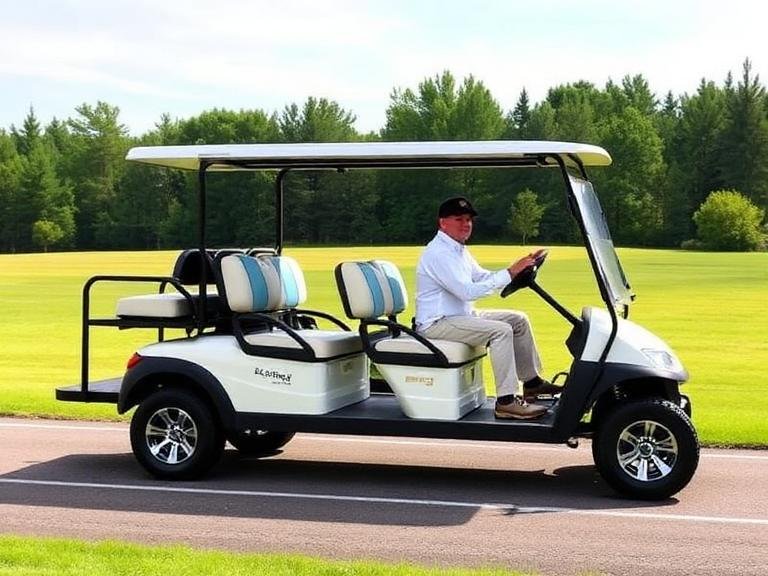
GT Golf Cart specializes in the design, manufacturing, and global supply of electric golf carts and low-speed vehicles. With over 12 years of industry experience, we deliver reliable mobility solutions for golf courses, resorts, communities, and commercial fleets worldwide. We don’t just sell carts; we engineer performance mobility tailored to your specific terrain and passenger needs.
At GT Golf Cart, we refuse to sugarcoat vehicle dynamics. We know exactly what these machines are built to do. In this rigorously opinionated, expert-led guide, we are tearing down the myths surrounding stretched carts. We will break down exactly how fast does a 6 seater golf cart go straight from the factory, how heavy passenger loads slaughter your top speed, the brutal realities of aftermarket speed upgrades, and why your braking system dictates your true maximum safe velocity.
Table of Contents
- The Baseline: Factory Standard vs. LSV Speeds
- The Physics of Payload: Why 6 People Slow You Down
- Electric vs. Gas Powertrains in Stretched Carts
- Can You Make a 6 Seater Go 35+ MPH? (And Should You?)
- Matching Capacity to Need: 4, 6, or 8 Passengers?
- Summary Table: 6 Seater Speed Benchmarks
- Frequently Asked Questions (FAQs)
- Regulatory and Safety References
The Baseline: Factory Standard vs. LSV Speeds
When someone asks us how fast does a 6 seater golf cart go, we first have to determine if we are talking about a traditional golf course fleet vehicle or a neighborhood cruiser.
If you purchase a standard 6 seater golf cart directly from a major manufacturer intended purely for private, off-road, or golf course use, the top speed is electronically governed to 12 to 15 mph (19 to 24 km/h). This is not a mechanical limitation; it is a liability limitation. Golf courses do not want six people careening over fairways at 25 mph, tearing up the turf and risking catastrophic rollovers.
However, the modern consumer rarely buys a 6-seater just to play golf. In 2026, these are primary neighborhood vehicles. When equipped with a street-legal package—turning the cart into a Low-Speed Vehicle (LSV)—the performance profile shifts. A certified LSV is legally permitted, and mechanically tuned, to reach a top speed of 20 to 25 mph (32 to 40 km/h). To achieve this speed legally on public roads with a posted speed limit of 35 mph or less, the vehicle must be equipped with DOT-approved windshields, seatbelts, headlights, turn signals, and a VIN number.
So, the baseline answer to how fast does a 6 seater golf cart go is this: 15 mph for a basic fleet model, and up to 25 mph for a street-legal LSV. But that is only in perfect conditions.
The Physics of Payload: Why 6 People Slow You Down
Here is the brutal reality that most salespeople ignore: a cart with a top speed of 25 mph will rarely hit 25 mph when fully loaded. A standard 2 seater golf cart carries roughly 350 to 400 pounds of human payload. A stretched 6-seater, assuming six average adults, is hauling upwards of 1,000 to 1,200 pounds of human cargo. Add the extended heavy-duty chassis, and you are driving a massive piece of equipment.
When you ask how fast does a 6 seater golf cart go up a steep hill fully loaded, prepare for disappointment if you are running an outdated 36V lead-acid battery system. The voltage sag under extreme load will drop your speed from 20 mph down to a crawling 8 to 10 mph. Weight is the enemy of speed and torque.
To combat this, modern 6-seaters must be equipped with a minimum of a 48V (or preferably 72V) AC drive motor and a high-amperage controller. AC (Alternating Current) motors maintain their speed on inclines far better than legacy DC motors. If you live in a hilly community, do not even consider buying a 6-seater unless it features an AC powertrain and lithium-ion batteries. Lithium batteries shed hundreds of pounds of useless lead weight from the chassis, instantly giving you back 2 to 3 mph of lost top-end speed.
Electric vs. Gas Powertrains in Stretched Carts
The debate between gas and electric is magnified when you add four extra seats. Historically, if you asked an old-school mechanic how fast does a 6 seater golf cart go under load, they would tell you to buy gas. Gas engines (typically 14hp EFI setups) do not suffer from “voltage sag.” A gas cart will push 6 people up a hill at a steady 18 mph without breaking a sweat, all day long.
However, the industry has evolved. An advanced electric golf cart equipped with a 5kW to 7.5kW AC motor and a 105Ah+ lithium battery pack will obliterate a gas cart in raw acceleration and top-end speed. The torque delivery of a modern electric AC motor is instantaneous. Furthermore, electric carts are silent—a massive benefit when you are trying to hold a conversation with passengers in the rear-facing seat.
Unless you are managing a massive agricultural property where plugging in is impossible, we emphatically recommend high-voltage lithium electric systems for 6-seater models. They offer superior speed consistency and require practically zero maintenance compared to internal combustion engines.
Can You Make a 6 Seater Go 35+ MPH? (And Should You?)
Spend five minutes on a neighborhood vehicle forum, and you will see owners bragging about hitting 35 to 40 mph in their lifted 6-passenger rigs. By installing aftermarket high-speed gears, massive 600-amp Navitas AC controllers, and 72V lithium battery banks, you can absolutely push a cart past 35 mph.
But from our experience as vehicle manufacturers, we must ask a critical question: Are you out of your mind?
“It’s not the ‘going’ 35mph that’s hard to do, it’s the ‘turning at’ and ‘stopping from’ 35mph that presents difficulty. A doubling in speed, say from 17 to 35, quadruples the kinetic energy of the moving object.”
A golf cart is not a car. It does not have crumple zones, airbags, or an anti-lock braking system (ABS). When you take a lifted off road golf cart carrying six passengers and push it to 35 mph, the mechanical drum brakes designed for 15 mph stopping distances are functionally useless. The center of gravity is too high, and the suspension geometry is not built for high-speed cornering. If a child runs into the street, you will not stop in time, or you will roll the vehicle attempting evasive maneuvers.
If you want to know how fast does a 6 seater golf cart go safely, the answer firmly stops at 25 mph. If you need to go 40 mph, you do not need a golf cart; you need a registered automobile.
Matching Capacity to Need: 4, 6, or 8 Passengers?
-
10 Passenger Electric Golf Cart GT82R-1
-
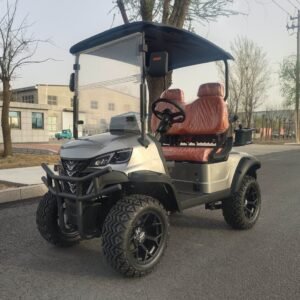
COM-04 Custom Golf Cart – Compact Lithium Electric Golf Cart for Resorts
-
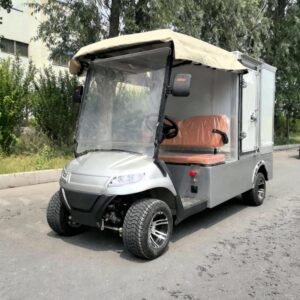
COM-05 Commercial Golf Cart – Compact Lithium Electric Golf Cart for Resorts
-
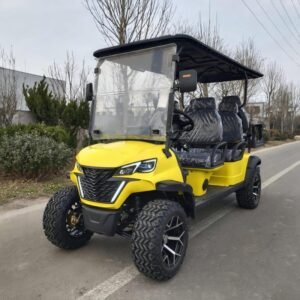
CST-01 Custom Golf Cart – High-Performance Lithium Electric Golf Cart
-
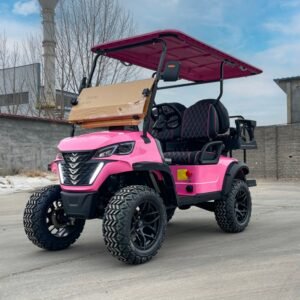
CST-02 Custom Golf Cart – Versatile Lithium Electric Golf Cart for Commercial Use
-
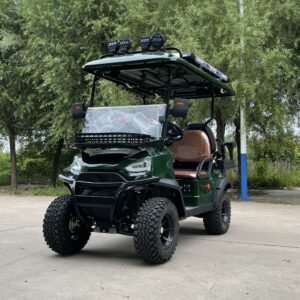
CST-03 Custom Golf Cart – Reliable Lithium Electric Golf Cart for Commercial
-
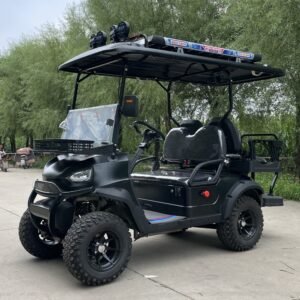
CST-04 Custom Golf Cart – Durable Lithium Electric Golf Cart
-
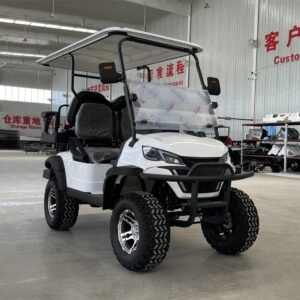
CST-05 Custom Golf Cart – High-Efficiency Lithium Electric Golf Cart
-
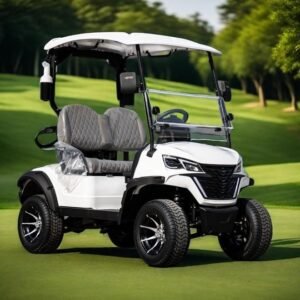
Golf Cart 2 Seater Low Speed Vehicle – Thunder Series GT20F
Sometimes, a 6-seater is a clumsy compromise. If you only occasionally haul extra passengers, dragging a massive extended chassis around your community every single day is inefficient. You will suffer a wider turning radius and lower overall speeds.
If your daily payload is just a family of four, a standard 4 seater golf cart ( featuring two forward-facing seats and a rear flip-seat) is significantly lighter, faster, and more nimble. Conversely, if you operate a commercial resort, a wedding venue, or large campus tours, squeezing adults into a 6-seater might be uncomfortable. Upgrading to a dedicated 8 seater golf cart provides the immense payload capacity you require, though you must accept that top speeds will remain firmly governed at 15 to 20 mph for sheer safety reasons.
Summary Table: 6 Seater Speed Benchmarks
To give you a definitive answer on how fast does a 6 seater golf cart go across different configurations, we have compiled this performance matrix.
| Cart Configuration | Average Top Speed | Impact of Full Passenger Load (6 Adults) |
|---|---|---|
| Standard Fleet (Course Use) | 12 – 15 mph | Drops to 8-10 mph on inclines (Lead-Acid DC). |
| Gas-Powered 6-Seater | 18 – 20 mph | Maintains 18 mph consistently on hills; loud operation. |
| Street-Legal LSV (Electric) | 20 – 25 mph (Legally Capped) | Maintains 20-25 mph (if equipped with 48V/72V Lithium & AC Motor). |
| Heavily Modified / Unregulated | 30 – 38+ mph | Highly dangerous; massive braking distance increase; severe rollover risk. |
Frequently Asked Questions (FAQs)
1. Will putting larger tires on my 6-seater make it faster?
Yes, but at a cost. Installing larger 23-inch tires will increase your top-end speed by a few miles per hour because the wheel covers more ground per revolution. However, larger tires effectively change your gear ratio, meaning you will lose low-end torque. If you carry six passengers up steep hills, larger tires will make the cart struggle to accelerate from a dead stop.
2. Why does my electric 6-seater slow down so much on hills?
If you are experiencing severe slowdowns on inclines, you are likely running an older 36V or 48V DC motor with heavy lead-acid batteries. The immense weight of the cart and passengers causes voltage sag under load. Upgrading to a modern AC motor system with a lithium-ion battery pack eliminates this issue, providing consistent torque and speed regardless of the terrain.
3. Is it legal to drive a 6-seater golf cart at 25 mph in my neighborhood?
Legality depends entirely on your local and state ordinances. Generally, if your cart is certified as a Low-Speed Vehicle (LSV) with a VIN, seatbelts, and DOT lighting, you can legally drive it at speeds up to 25 mph on public roads where the posted speed limit is 35 mph or lower. Always check your municipal laws before taking a stretched cart onto the street.
Regulatory and Safety References
To ensure you are operating your multi-passenger vehicle within the bounds of federal safety and physical limits, we highly advise consulting the following authoritative bodies:
- National Highway Traffic Safety Administration (NHTSA). “Low-Speed Vehicles (LSV) Federal Motor Vehicle Safety Standards.” (Federal regulations defining the 25 mph maximum speed limit and safety equipment required for neighborhood vehicles).
- Consumer Product Safety Commission (CPSC). “Off-Road Vehicle and Golf Cart Safety Data.” (Analysis on kinetic energy, passenger weight limits, and rollover risks associated with modified low-speed vehicles).