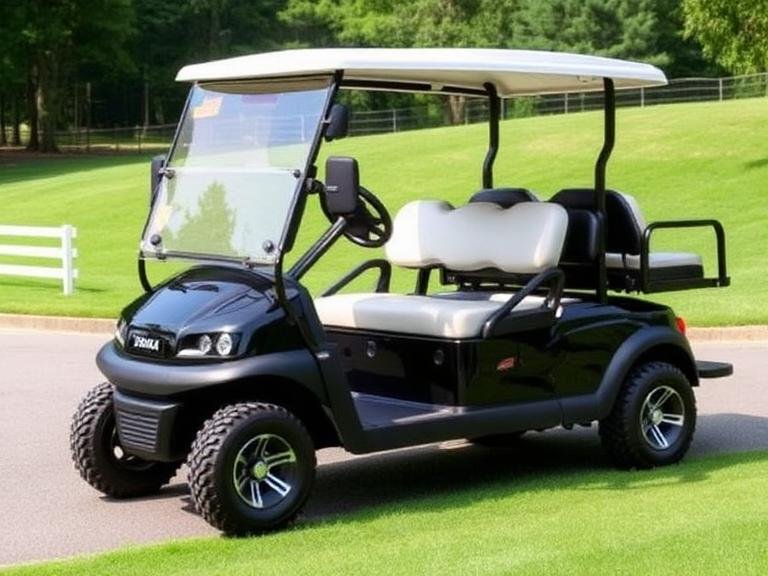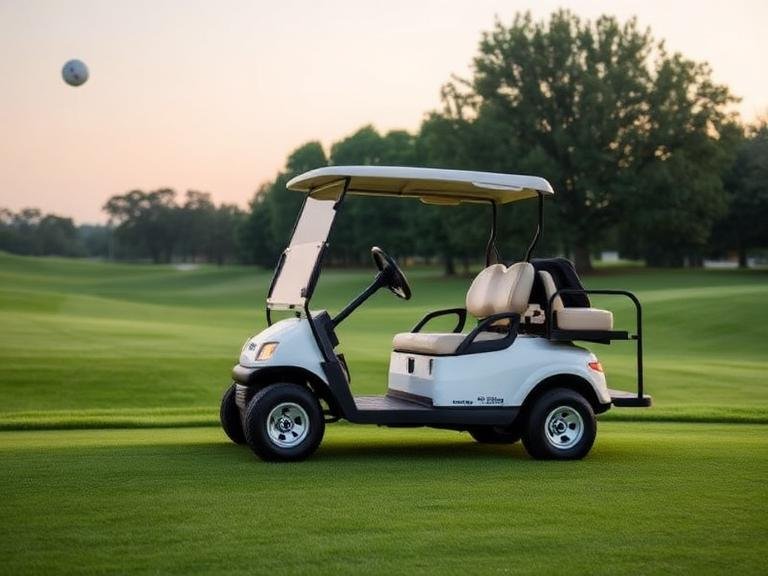
The evolution of community mobility has pushed the humble golf cart far beyond the manicured greens of the fairway. Today, large families, sprawling resort managers, commercial fleet operators, and neighborhood commuters are demanding highly versatile, high-capacity electric vehicles. However, navigating the modern low-speed vehicle market can be an incredibly daunting endeavor. The process of select—specifically, chooseing the right 6 seat golf cart—requires a profound understanding of vehicle dynamics, regulatory compliance, battery chemistry, and structural engineering. From our experience at GT Golf Cart, buyers frequently rush into a purchase based solely on aesthetic appeal or a flashy exterior color, entirely neglecting the crucial mechanical and spatial considerations that dictate long-term satisfaction.
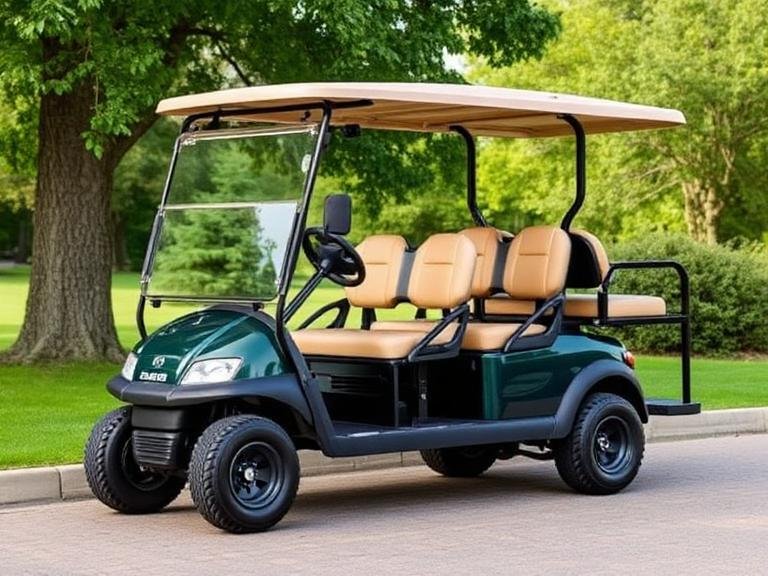
We recommend approaching this significant financial investment exactly as you would when purchasing a standard highway automobile. Moving six adult passengers is a serious physical undertaking that places massive stress on a vehicle’s chassis, powertrain, and braking systems. You need a platform that not only safely transports your family, friends, or paying guests, but also complies flawlessly with strict local traffic ordinances and delivers unyielding reliability over thousands of miles. Whether you are transporting VIPs across an expansive hotel property or simply driving your children to the community pool, precision matters.
In this comprehensive, authoritative guide, we will break down the eight foundational pillars of purchasing a high-capacity electric vehicle. We will expose common industry pitfalls, highlight the critical engineering specifications you must demand, and provide you with an unfiltered expert perspective on perfectly chooseing the right 6 seat golf cart for your unique lifestyle and environment.
Table of Contents
- 1. Understand the Dimensional Footprint and Storage Reality
- 2. Determine Street-Legal (LSV) vs. Private-Use Compliance
- 3. Evaluate the Powertrain: The Lithium-Ion Imperative
- 4. Assess Seating Configuration and Ergonomics
- 5. Ground Clearance and Suspension Selection
- 6. Non-Negotiable Safety Features for Heavy Loads
- 7. Cargo Solutions and Maximum Payload Ratings
- 8. Partner with a Reputable Manufacturer
- Summary Specifications Table
- Frequently Asked Questions (FAQs)
- Industry References
1. Understand the Dimensional Footprint and Storage Reality
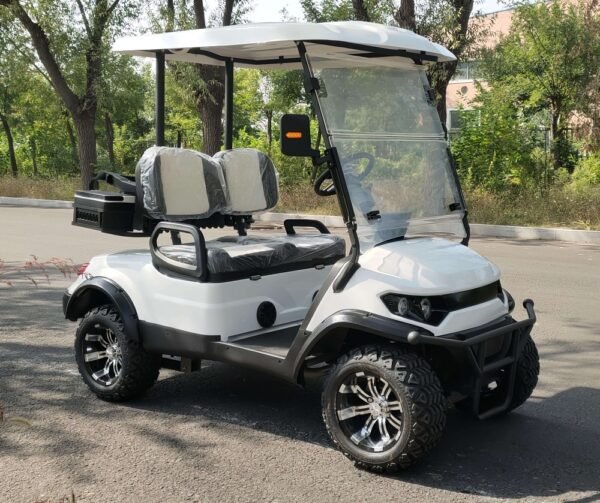
When families decide to upgrade from a standard 4 seater golf cart, they are frequently caught entirely off guard by the sheer, imposing length of a six-passenger model. A typical two-seater or compact four-seater measures roughly 8 feet (96 inches) in length, making it incredibly easy to park inside a standard garage bay alongside a primary commuter car. However, a 6 seater golf cart is essentially a stretched limousine in the realm of micro-mobility.
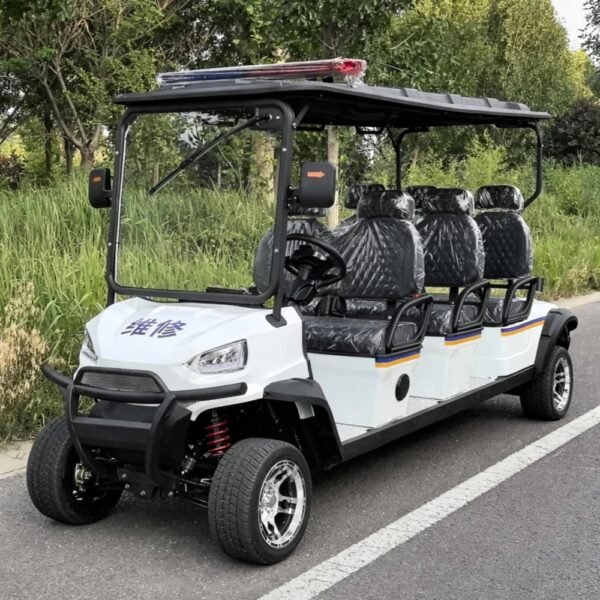
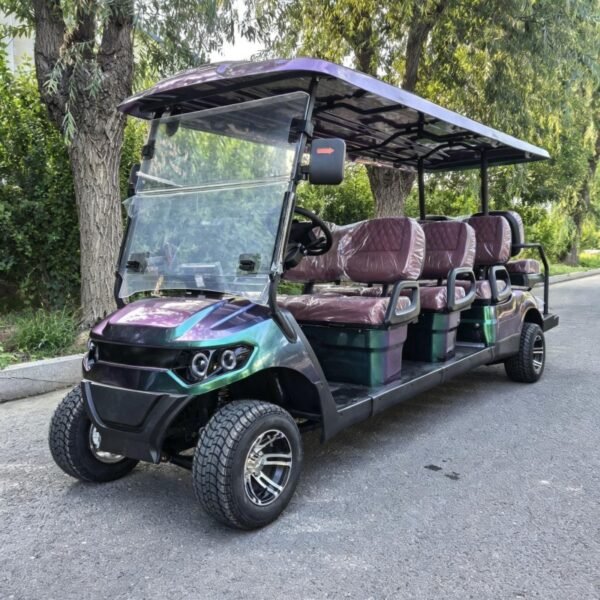
These elongated vehicles typically measure between 140 and 148 inches (nearly 12.5 feet) in total length. While the overall width generally remains consistent at around 48 to 51 inches, that massive wheelbase drastically alters how the vehicle handles, stores, and transports. We highly recommend measuring your garage depth, dedicated carport, or custom transport trailer before ever signing a purchase agreement. A 148-inch cart commands significant floor space. If you plan to trailer the vehicle to a distant vacation home or hunting lodge, a standard 10-foot utility trailer will no longer suffice; you will absolutely require a 14-foot or 16-foot flatbed trailer. Furthermore, that extended wheelbase widens the turning radius significantly—often exceeding 170 inches. This means you must critically evaluate the narrow pathways, tight cul-de-sacs, and winding trails you intend to navigate daily. Chooseing the right 6 seat golf cart means respecting the physics of its footprint.
2. Determine Street-Legal (LSV) vs. Private-Use Compliance
Where exactly do you intend to drive this massive vehicle? If your goal is to cruise down public roads, ferry your children to a local school, or run errands in town on streets with posted speed limits up to 35 mph, you cannot simply buy a standard fleet golf cart and merge into traffic. You require a vehicle that is legally classified by the federal government as a Low-Speed Vehicle (LSV). Successfully chooseing the right 6 seat golf cart requires navigating this strict regulatory landscape.
According to the National Highway Traffic Safety Administration (NHTSA) and FMVSS 500 regulations, a street-legal LSV is heavily regulated. It must possess a federally registered 17-digit Vehicle Identification Number (VIN), a DOT-approved impact-resistant windshield, high-beam and low-beam headlights, taillights, turn signals, reflective side mirrors, a mechanical parking brake, a backup camera, an audible horn, and DOT-certified Type 1 or Type 2 seat belts for all six passengers. The vehicle must also be electronically speed-governed to a maximum of 25 mph. From our experience, attempting to retrofit an old, unregulated cart to meet these federal DOT standards is an expensive, bureaucratic nightmare fraught with insurance liabilities. We strongly recommend purchasing a factory-certified LSV directly from the manufacturer if you have any intention of driving outside the boundaries of private, gated property.
3. Evaluate the Powertrain: The Lithium-Ion Imperative
Moving six grown adults is a severe physical burden. A fully loaded six-seater can easily tip the scales at over 2,200 pounds of gross vehicle weight. Therefore, the powertrain and battery architecture you select dictates your entire driving experience. Historically, carts were powered by banks of flooded lead-acid batteries. While lead-acid is cheaper upfront, it is incredibly heavy, requires constant distilled water maintenance to prevent acid sulfation, and suffers from terrible voltage sag under heavy loads. This means a lead-acid cart will sluggishly crawl up hills when fully occupied.
We adamantly recommend lithium-ion (specifically LiFePO4) battery architectures for any high-capacity vehicle. Lithium batteries are virtually maintenance-free, charge up to 40% faster, and weigh hundreds of pounds less than their lead-acid counterparts—which directly improves suspension handling and braking distance. More importantly, lithium chemistry provides a perfectly flat discharge curve. This guarantees that you have maximum torque, rapid acceleration, and top speed whether the battery meter reads 100% or 20%. When you are transporting your family, you cannot afford power loss in the middle of a busy intersection.
4. Assess Seating Configuration and Ergonomics
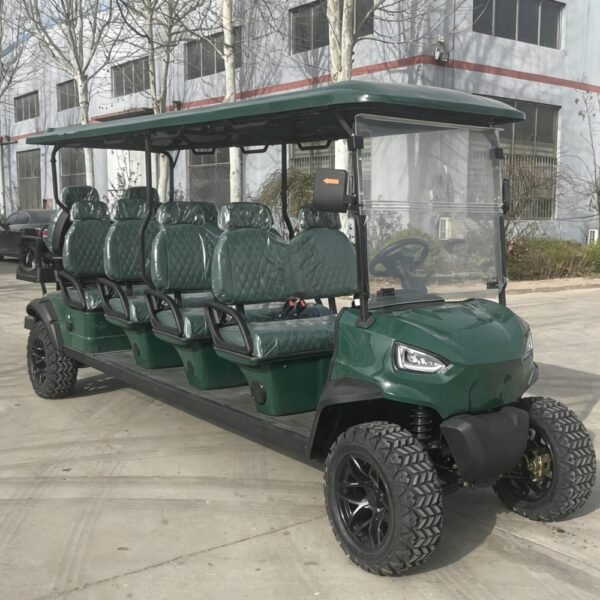
Not all six-passenger carts are configured identically, and the layout you choose impacts passenger comfort and cargo utility. The most common and popular layout is four forward-facing seats and two rear-facing seats mounted on a flip-down cargo bed. This is an excellent, versatile hybrid design if you occasionally need to haul groceries, luggage, or yard supplies without passengers in the back. However, riding backward can induce motion sickness for some passengers, and communication between the front and rear rows is difficult.
If you are purchasing a vehicle for luxury resort tours, commercial shuttling, or purely maximizing passenger comfort, you might seek a model equipped with six forward-facing seats. Forward-facing layouts require an even longer, specialized chassis and are less common in residential neighborhoods, but they offer unparalleled comfort and legroom for all occupants. Chooseing the right 6 seat golf cart means assessing the primary demographic of your passengers—are they energetic children, elderly adults, or high-paying corporate clients? Upgrading to high-back bolstered seats, premium marine-grade vinyl, and integrated armrests makes a monumental difference on long scenic drives.
5. Ground Clearance and Suspension Selection
Where will your tires touch down? A standard, non-lifted cart typically offers a conservative 4.5 inches of ground clearance. This is perfectly adequate for smooth paved neighborhood streets, manicured golf courses, or flat commercial warehouse floors. But if your property features unpaved gravel driveways, rutted dirt trails, or if you frequently navigate deep sandy beaches, a standard suspension will violently bottom out and damage the fragile undercarriage.
In these rugged scenarios, you need a dedicated off road golf cart build, which features a robust factory lift kit (typically 4 to 6 inches of vertical lift) and larger, aggressive all-terrain tires wrapped around 14-inch alloy wheels. Lifted suspensions provide the necessary ground clearance to roll over exposed roots, rocks, and curbs without getting stuck. However, we warn buyers that a lifted 6-seater fundamentally alters the physics of the vehicle; it raises the center of gravity, which can reduce stability during sharp, high-speed turns. You must match the suspension profile directly to your primary driving environment.
6. Non-Negotiable Safety Features for Heavy Loads
When you upgrade from a lightweight, nimble 2 seater golf cart to a heavy, elongated 6-seater, the vehicle’s momentum and kinetic energy increase exponentially. Standard mechanical rear drum brakes, which are perfectly fine for stopping a two-seater on a golf course, are often dangerously inadequate for stopping a fully loaded six-passenger vehicle traveling at 25 mph on a public road.
From our experience engineering these vehicles, four-wheel hydraulic disc brakes are an absolute necessity for this weight class. Disc brakes provide superior, fade-resistant stopping power and dramatically shorter braking distances. We also highly recommend looking for models equipped with advanced electromagnetic parking brakes that automatically engage the moment the vehicle stops moving, entirely preventing disastrous roll-aways on steep inclines. A robust tubular steel or aircraft-grade aluminum chassis, combined with reinforced roof struts, is also critical to protect passengers in the rare event of a rollover collision.
7. Cargo Solutions and Maximum Payload Ratings
A frequent and frustrating realization among 6-seater owners is that when all six seats are occupied, there is absolutely nowhere to put the cargo. If you opt for the 4-forward/2-rear seat configuration, the rear seat often flips down to create a flatbed—but doing so instantly negates your ability to carry the fifth and sixth passengers.
To solve this logistical nightmare, we recommend outfitting your cart with heavy-duty roof racks, front brush-guard basket assemblies, or hidden under-seat storage compartments. You must also strictly and rigorously adhere to the manufacturer’s gross payload capacity, which is typically capped at around 1,200 pounds for a 6-seater. Exceeding this limit strains the electric motor, overheats the controller, degrades the suspension, and presents a severe safety hazard. If you routinely need to move larger crowds and heavy equipment simultaneously, it might be worth exploring a massive 8 seater golf cart or equipping your 6-seater with a heavy-duty towing hitch to pull a specialized utility trailer.
8. Partner with a Reputable Manufacturer
The recent explosion in popularity of the low-speed vehicle market has led to an unfortunate influx of cheap, unregulated imported carts built with substandard electrical components, thin plastics, and absolutely zero post-sale factory support. Chooseing the right 6 seat golf cart ultimately means choosing the right brand and the right dealer network. You need a manufacturer that provides comprehensive multi-year warranties, readily available domestic replacement parts, and adheres to strict, certified quality control standards.
GT Golf Cart specializes in the design, manufacturing, and global supply of electric golf carts and low-speed vehicles. With over 12 years of industry experience, we deliver reliable mobility solutions for golf courses, resorts, communities, and commercial fleets worldwide.
Summary Specifications Table
| Specification Category | Standard 2-Seater / 4-Seater | Standard 6-Seater Vehicle | Expert Recommendation for 6-Seaters |
|---|---|---|---|
| Overall Length | 92 – 110 inches | 140 – 148+ inches | Verify garage depth and trailer size prior to purchase. |
| Powertrain / Battery | Lead-Acid or Lithium | Requires High Torque | Lithium-Ion (LiFePO4) is mandatory for weight management. |
| Braking System | Rear Mechanical Drum | Requires Heavy-Duty Stopping | 4-Wheel Hydraulic Disc Brakes for safety. |
| Street Legality | Off-Road / Private Only | LSV Capable | Must meet FMVSS 500 standards (VIN, belts, DOT glass). |
| Payload Capacity | 600 – 800 lbs | Approx. 1,200 lbs | Never exceed payload; utilize front/roof baskets. |
Frequently Asked Questions (FAQs)
Do I need a special driver’s license to drive a 6-seat LSV?
If the vehicle is classified as a street-legal Low-Speed Vehicle (LSV) and is operated on public roadways, yes. You must possess a standard, valid driver’s license, and the vehicle must be registered and insured in accordance with your state’s Department of Motor Vehicles (DMV) regulations.
Will a 6-passenger golf cart fit in a standard garage?
It is highly dependent on your garage layout. The average 6-seat golf cart measures over 12 feet long. While it may fit in a standard two-car garage bay, it will consume the entire length of the space, leaving very little room for storage shelves or walking behind the vehicle. Always measure before buying.
Is it possible to convert a 4-seater into a 6-seater?
While technically possible through aftermarket “stretch” kits that involve cutting and welding the chassis, we strongly advise against this. Cutting the frame compromises the structural integrity of the vehicle, voids all factory warranties, and makes the cart extremely dangerous at high speeds. It is always safer and more economical to purchase a factory-built 6-seater.
What is the top speed of a 6-seat golf cart?
If the cart is federally certified as a Low-Speed Vehicle (LSV), it is electronically governed to a strict top speed of 25 mph to comply with DOT safety regulations. Standard non-LSV fleet carts are typically governed to much lower speeds, usually between 14 and 19 mph.
Industry References
- National Highway Traffic Safety Administration (NHTSA) – FMVSS No. 500: Low-Speed Vehicles Safety Standards. Review NHTSA Standards
- U.S. Department of Transportation (DOT) – Regulatory requirements for street-legal golf carts and neighborhood electric vehicles (NEVs). Review DOT Regulations
- ANSI/OPEI Z130.1 – American National Standard for Golf Cars – Safety and Performance Specifications. Review ANSI Guidelines